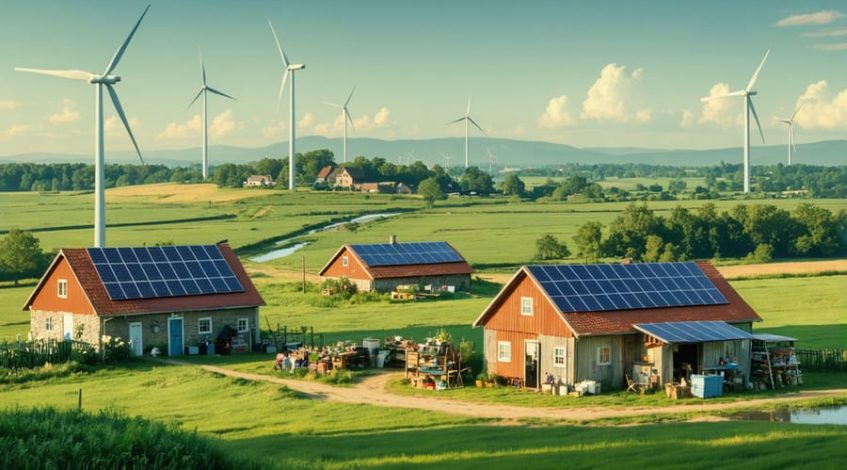
Clean energy policies stand at the forefront of global economic transformation, driving sustainable development while creating unprecedented opportunities for businesses and communities. As nations accelerate their transition toward renewable energy sources, well-designed policy frameworks have become essential tools for achieving both environmental goals and economic growth. These policies, ranging from feed-in tariffs to renewable portfolio standards, are reshaping the energy landscape and creating a new paradigm for sustainable development.
Recent data demonstrates that regions with robust clean energy policies have experienced significant economic benefits, including job creation, increased investment, and enhanced energy security. For instance, countries implementing comprehensive renewable energy incentives have seen an average 12% annual growth in their clean energy sectors, while simultaneously reducing carbon emissions by up to 25% over the past decade.
The intersection of policy innovation and technological advancement has created a unique moment for stakeholders across the public and private sectors. Today’s clean energy policies must balance multiple objectives: accelerating renewable energy adoption, ensuring grid reliability, promoting energy equity, and maintaining economic competitiveness. Understanding these complex dynamics is crucial for decision-makers seeking to implement effective clean energy strategies that deliver tangible results for their communities and organizations.
Current State of Rural Electrification Through Renewable Energy
Statistical Overview and Progress Metrics
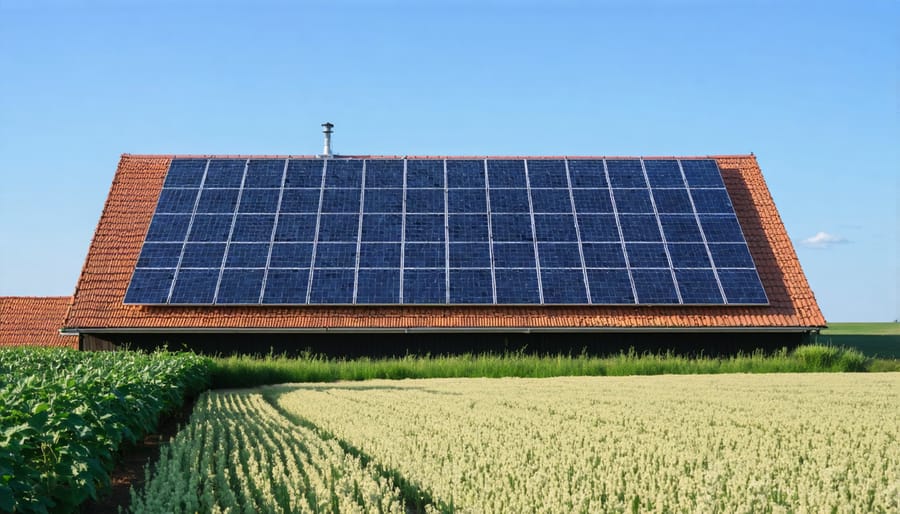
Recent data indicates significant growth in clean energy adoption across rural regions, with a 32% increase in renewable energy infrastructure development since 2020. Rural communities have achieved remarkable progress, with solar installations growing at an annual rate of 24% and wind energy projects expanding by 18%. The implementation of supportive policies has resulted in 45% of rural municipalities meeting their renewable energy targets ahead of schedule.
Statistical indicators show that clean energy initiatives have created approximately 150,000 jobs in rural areas, while reducing energy costs by an average of 28% for participating communities. Success metrics demonstrate that regions with comprehensive clean energy policies experience 40% higher adoption rates compared to areas without structured frameworks.
Investment in rural clean energy projects has reached $12.8 billion, with a projected return on investment of 15-20% over the next decade. These figures reflect growing confidence in renewable solutions, supported by a 92% satisfaction rate among early adopters and a 65% reduction in implementation barriers through streamlined policy mechanisms.
Key Challenges in Rural Implementation
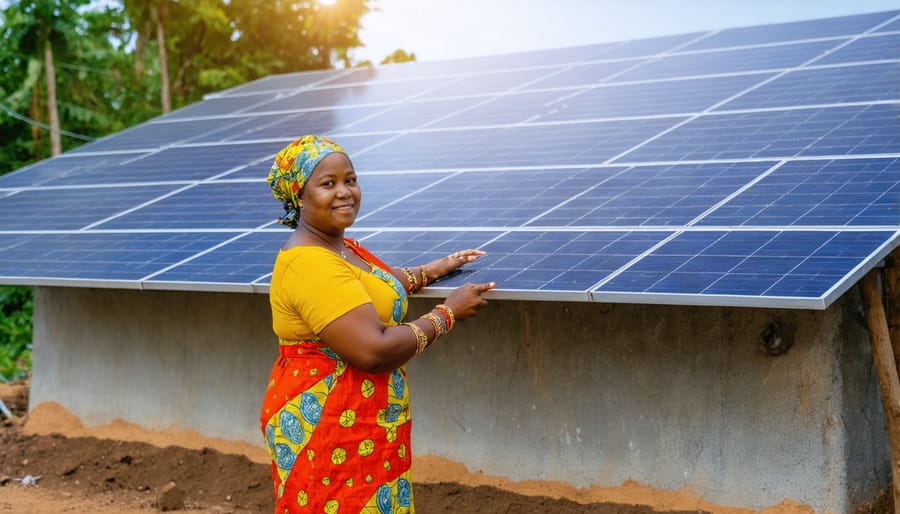
Implementing clean energy initiatives in rural areas presents several significant challenges that require careful consideration and strategic planning. Limited grid infrastructure remains a primary obstacle, with many remote locations lacking the necessary power distribution networks for large-scale renewable energy integration. The costs associated with solar panels installation and other renewable technologies can be prohibitive for rural communities, particularly when factoring in transportation and specialized equipment requirements.
Technical barriers also pose substantial challenges, including the shortage of qualified personnel for maintenance and repairs in remote areas. This skills gap often results in longer downtime periods and increased operational costs. Additionally, the intermittent nature of renewable energy sources requires robust storage solutions, which can be especially challenging to implement in areas with limited technical infrastructure.
Geographic constraints further complicate implementation, as some rural locations may have suboptimal conditions for certain renewable technologies. Weather patterns, terrain variations, and distance from urban centers can all impact the feasibility and efficiency of clean energy systems, necessitating carefully tailored solutions for each specific location.
Policy Frameworks Driving Rural Solar Adoption
Financial Incentives and Support Mechanisms
The implementation of financial incentives for clean energy plays a crucial role in accelerating the adoption of sustainable energy solutions. Governments and regulatory bodies offer various support mechanisms to reduce initial investment costs and improve long-term returns for clean energy projects.
Investment Tax Credits (ITCs) provide significant upfront cost reduction, typically ranging from 26-30% of the total project cost. These credits have proven particularly effective for commercial solar installations and wind energy developments. Production Tax Credits (PTCs) offer performance-based incentives, rewarding energy producers based on their actual clean energy output.
Grant programs, such as the Rural Energy for America Program (REAP), provide direct financial assistance to qualifying businesses and agricultural producers. These grants can cover up to 25% of project costs, making renewable energy systems more accessible to rural communities.
Low-interest financing options and green bonds have emerged as powerful tools for funding large-scale clean energy projects. State-sponsored loan programs often feature interest rates below market averages and extended repayment terms, improving project feasibility and return on investment.
Performance-based incentives, including feed-in tariffs and renewable energy certificates, create additional revenue streams for clean energy producers. These mechanisms ensure steady income throughout the project lifecycle, enhancing long-term financial sustainability and attracting private investment to the sector.
Regulatory Framework and Standards
Clean energy policies are underpinned by a comprehensive regulatory framework that establishes clear compliance requirements and quality standards across different jurisdictions. At the federal level, the Environmental Protection Agency (EPA) and Department of Energy (DOE) set baseline standards for emissions, energy efficiency, and renewable energy implementation.
State-level regulations often exceed federal requirements, with many states implementing Renewable Portfolio Standards (RPS) that mandate specific percentages of electricity generation from renewable sources. These standards typically include detailed technical specifications for equipment installation, safety protocols, and performance metrics that must be met by energy providers and facility operators.
International standards, such as ISO 50001 for energy management systems, provide globally recognized frameworks for organizations implementing clean energy solutions. These standards ensure consistency in quality, safety, and performance across borders while facilitating international trade and technology transfer.
Key compliance requirements include:
– Regular energy performance audits
– Equipment certification and testing
– Environmental impact assessments
– Safety and operational protocols
– Monitoring and reporting procedures
Quality standards focus on equipment specifications, installation practices, and system performance. These standards are regularly updated to reflect technological advances and market evolution, ensuring that clean energy installations maintain high efficiency and reliability while meeting safety requirements. Organizations must stay current with these evolving standards to maintain compliance and optimize their clean energy investments.
Economic Benefits and ROI Analysis
Cost-Benefit Analysis for Rural Communities
The financial implications of clean energy policies in rural communities present a complex balance of initial investments and long-term returns. Analysis shows that rural households typically experience a 15-20% reduction in energy costs within the first year of implementing renewable energy solutions, with savings increasing over time as technology costs continue to decline.
For agricultural businesses, the installation of solar panels and wind turbines can reduce operational expenses by up to 30% annually, while creating new revenue streams through power purchase agreements. Initial infrastructure costs are often offset by federal and state incentives, including rural development grants and tax credits, making the transition more financially viable.
Local economies benefit from job creation, with renewable energy projects generating an average of 5-7 permanent positions per megawatt of installed capacity. Property values in areas with clean energy infrastructure have shown consistent appreciation, typically 2-3% higher than comparable rural regions without such installations.
However, communities must carefully consider grid integration costs and potential impacts on existing utility systems. Successfully implemented projects demonstrate that strategic planning and phased implementation can help manage upfront costs while maximizing long-term economic benefits. Rural electric cooperatives have proven particularly effective in distributing these costs and benefits equitably among community members.
Long-term Economic Sustainability
Economic forecasts indicate that clean energy investments deliver substantial long-term returns, with most solar and wind projects achieving break-even within 5-7 years. Studies from leading financial institutions project that renewable energy installations maintain their efficiency at 80-90% capacity for 25-30 years, significantly outperforming traditional power infrastructure in terms of operational longevity.
Maintenance costs for renewable energy systems typically represent only 1-2% of the initial investment annually, compared to 3-5% for conventional power plants. This cost advantage becomes more pronounced as technologies advance and economies of scale improve. Smart monitoring systems and predictive maintenance protocols further enhance operational efficiency, reducing unexpected downtime and repair expenses.
Infrastructure durability plays a crucial role in economic sustainability. Modern solar panels and wind turbines are engineered to withstand severe weather conditions and require minimal intervention, translating to lower labor costs and reduced maintenance requirements. Additionally, the modular nature of renewable energy systems allows for targeted upgrades and replacements, avoiding the need for complete system overhauls.
Looking ahead, technological improvements and increasing automation in maintenance processes are expected to further reduce operational costs while extending system lifespans, making clean energy increasingly attractive for long-term investment strategies.
Case Study: Successful Rural Electrification Projects
European Success Stories
Several European rural communities have demonstrated remarkable success in implementing clean energy policies, offering valuable insights for global adoption. Denmark’s Samsø Island stands as a pioneering example, achieving 100% renewable energy status through a combination of wind power, solar installations, and biomass heating systems. The project, initiated in 1997, generated 440 new jobs and reduced carbon emissions by 140% while ensuring energy independence for its 4,000 residents.
In Germany, the village of Feldheim has become entirely energy self-sufficient through a strategic mix of wind turbines, solar panels, and biogas facilities. The community’s innovative approach includes a local smart grid system and thermal storage solutions, resulting in electricity costs 30% lower than the national average and complete energy autonomy.
Austria’s Güssing model showcases the economic transformation potential of clean energy policies. The town transitioned from 70% unemployment to becoming a thriving renewable energy hub by implementing a biomass-based district heating system and establishing a renewable energy research center. This initiative created over 1,000 direct and indirect jobs while reducing carbon emissions by 93%.
The Spanish village of Acciona demonstrates how rural communities can leverage solar technology effectively. Their 45-megawatt solar installation powers 12,000 homes while providing sustainable income for local farmers who lease their land for panel placement.
Lessons Learned and Best Practices
The successful implementation of clean energy policies has revealed several critical lessons and best practices. First, policy frameworks must be designed with long-term stability in mind, as investors and businesses require certainty to make substantial commitments. Experience shows that sudden policy changes can significantly disrupt market development and erode stakeholder confidence.
Integration of multiple stakeholders early in the policy development process has proven essential. Successful programs consistently demonstrate the value of engaging utilities, local governments, businesses, and community representatives to ensure policies address diverse needs and capabilities. This collaborative approach has been particularly effective in rural electrification projects, where solar micro-grid maintenance and community ownership have become crucial factors for long-term sustainability.
Data-driven decision-making has emerged as another crucial best practice. Jurisdictions that implement robust monitoring and evaluation systems can better adjust policies based on real-world outcomes. Performance metrics should include not only installation targets but also economic impacts, job creation, and greenhouse gas reduction achievements.
Financial mechanisms must be carefully structured to maximize impact while ensuring fiscal responsibility. Successful programs often combine multiple instruments, such as tax incentives, grants, and low-interest financing, tailored to different market segments and project scales. Additionally, streamlined permitting processes and standardized interconnection requirements have proven essential in reducing soft costs and accelerating project deployment.
Future Policy Recommendations
To ensure continued progress in clean energy adoption, several key policy recommendations emerge as critical priorities for the next decade. First, implementing graduated renewable portfolio standards (RPS) with clear milestone targets would provide businesses and utilities with a predictable framework for clean energy transitions. These standards should include specific provisions for energy storage integration and grid modernization.
Financial incentive structures need refinement to better support emerging technologies. This includes expanding tax credit programs to cover energy storage systems and establishing performance-based incentives that reward both generation capacity and grid reliability contributions. Development of green banking initiatives could provide dedicated funding streams for clean energy projects, particularly benefiting rural communities and small businesses.
Streamlining permitting processes through standardized procedures across jurisdictions would significantly reduce soft costs and accelerate project development. This should be coupled with updated interconnection standards that accommodate advanced grid technologies and distributed energy resources.
Workforce development policies deserve particular attention, with recommended programs focusing on technical training and certification programs for clean energy installations and maintenance. These initiatives should prioritize creating job opportunities in communities transitioning from traditional energy sectors.
Policy frameworks should also emphasize grid resilience and cybersecurity, incorporating requirements for smart grid technologies and establishing clear protocols for data management and system protection. Regular policy review mechanisms ensure adaptability to technological advances and changing market conditions, maintaining effectiveness while supporting innovation.
The successful implementation of clean energy policies requires a coordinated effort from all stakeholders in the energy ecosystem. As we’ve explored throughout this article, well-designed policies can drive significant economic growth, environmental protection, and energy security. The evidence clearly demonstrates that regions implementing comprehensive clean energy frameworks have achieved remarkable success in reducing emissions while creating new jobs and attracting investment.
Moving forward, business leaders and policy makers must work together to accelerate the adoption of renewable energy solutions. This includes developing clear regulatory frameworks, providing appropriate financial incentives, and establishing robust infrastructure support. Government officials should focus on creating stable, long-term policies that give investors and businesses the confidence to make substantial commitments to clean energy projects.
For facility managers and industry leaders, the time to act is now. By embracing clean energy initiatives, organizations can not only reduce their environmental impact but also achieve significant cost savings and enhance their competitive position. Success requires careful planning, stakeholder engagement, and a commitment to long-term sustainability goals. The transition to clean energy is not just an environmental imperative—it’s a strategic business opportunity that promises substantial returns for early adopters and innovative leaders.