
Solar energy’s viability has evolved from an environmental aspiration to a compelling business imperative, transforming how modern enterprises approach their energy strategies. With global solar installations surpassing 1,000 GW in 2022 and production costs plummeting by 89% over the past decade, solar power now represents one of the most cost-effective energy solutions available to organizations.
For decision-makers evaluating solar energy implementation, the evidence is increasingly clear: properly designed solar installations can deliver ROI within 5-7 years while providing 25+ years of reliable power generation. Major corporations like Apple, Amazon, and Walmart have already achieved 100% renewable energy operations, demonstrating solar’s scalability across diverse business environments.
Yet viability extends beyond pure economics. Advanced solar technologies, coupled with smart grid integration and energy storage solutions, now offer unprecedented reliability and grid independence. This technological maturity, combined with favorable government incentives and growing corporate sustainability mandates, creates a powerful argument for solar adoption.
This analysis examines the technical, financial, and operational factors that determine solar energy’s viability across different organizational contexts, providing decision-makers with concrete data to evaluate their solar potential.
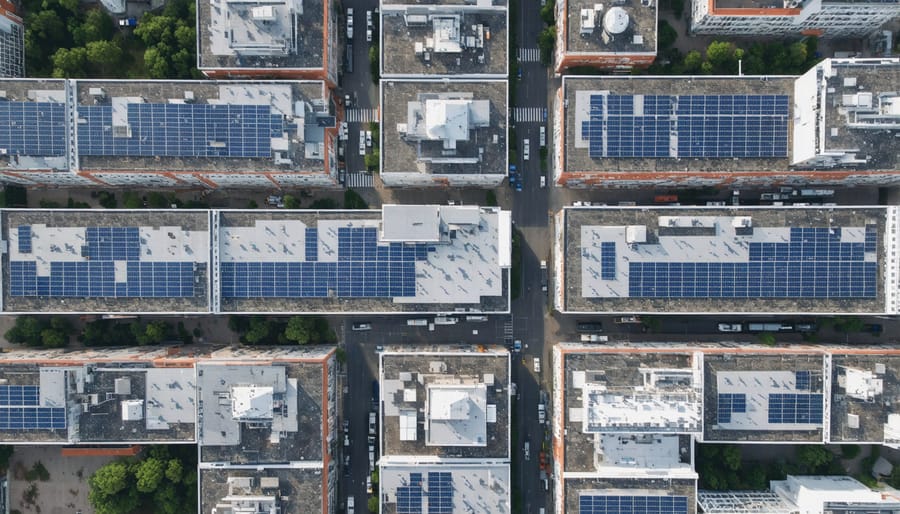
The Technical Foundation of Solar Integration in Smart Cities
Smart Grid Integration Capabilities
Modern solar energy systems have evolved beyond simple power generation to become integral components of intelligent urban infrastructure through smart grid integration. These advanced systems utilize bi-directional communication technologies, enabling real-time monitoring and optimization of energy distribution across the network.
The integration capabilities include sophisticated load balancing, automated demand response, and predictive maintenance features. Solar installations equipped with smart inverters can automatically adjust their output based on grid conditions, helping maintain stability and power quality. This intelligence allows facilities to maximize self-consumption during peak production periods and optimize grid export when most profitable.
Recent implementations in cities like Amsterdam and Singapore demonstrate how solar systems can participate in demand-side management programs, providing grid services while generating additional revenue streams for system owners. Advanced metering infrastructure (AMI) enables precise monitoring of energy flows, while intelligent control systems optimize storage deployment and consumption patterns.
For business owners and facility managers, these capabilities translate into tangible benefits: reduced peak demand charges, enhanced energy reliability, and the ability to participate in emerging energy markets. The technology also facilitates virtual power plant arrangements, where multiple solar installations can be aggregated and managed as a single resource, increasing both grid stability and financial returns for participants.
Energy Storage Solutions
Energy storage solutions have emerged as a critical component in making solar energy systems truly viable for widespread adoption. Modern battery technologies, particularly lithium-ion systems, have revolutionized our ability to store and utilize solar power effectively. These advanced storage systems enable businesses and facilities to maintain consistent power supply even during non-peak production hours or adverse weather conditions.
Grid-scale battery installations are becoming increasingly common, with utility companies implementing large-scale storage facilities to enhance grid stability. For instance, the Hornsdale Power Reserve in Australia demonstrates how battery storage can provide both grid stability and economic benefits, having saved consumers over $150 million in grid stabilization costs within its first two years of operation.
Commercial facilities are adopting hybrid systems that combine solar panels with on-site battery storage, allowing them to maximize self-consumption and reduce dependency on grid power during peak pricing periods. These systems typically achieve payback periods of 5-7 years while providing energy security and price stability.
Recent technological advances have also improved battery efficiency and longevity while reducing costs. Current battery systems maintain approximately 80% of their original capacity after 10 years of operation, making them a reliable long-term investment. Additionally, smart grid technologies and advanced energy management systems help optimize the integration of stored solar energy with existing power infrastructure, ensuring smooth operation and maximum return on investment.
Economic Viability Analysis
Installation and Infrastructure Costs
The initial investment in solar energy systems represents a significant consideration for organizations evaluating renewable energy adoption. Modern solar infrastructure solutions typically range from $15,000 to $40,000 per 10kW system for commercial installations, with costs varying based on location, system size, and specific requirements.
Key cost components include solar panels (40-50% of total cost), inverters (10-15%), mounting equipment (10%), labor and installation (15-20%), and permits and inspections (5-10%). Additional infrastructure modifications, such as roof reinforcement or electrical system upgrades, may be necessary and should be factored into the budget.
For large-scale commercial installations, economies of scale can significantly reduce per-watt costs. Organizations typically see installation costs decrease by 10-20% for systems exceeding 100kW. Recent technological advances and manufacturing efficiencies have contributed to a steady decline in equipment costs, with solar panel prices dropping approximately 70% over the past decade.
Financial incentives can substantially offset initial costs. Federal tax credits currently offer a 30% reduction in system costs, while state and local incentives may provide additional savings. Many utilities offer performance-based incentives, rebates, or net metering programs that enhance the financial proposition.
When evaluating installation costs, organizations should consider the long-term infrastructure benefits, including increased property value, reduced maintenance requirements, and enhanced energy security. Most commercial solar installations carry warranties of 25-30 years, ensuring reliable performance and predictable returns on investment throughout the system’s lifetime.
Long-term ROI and Energy Savings
Solar energy investments consistently demonstrate strong financial returns through substantial long-term cost savings and decreased operational expenses. Recent market analyses indicate that commercial solar installations typically achieve payback periods of 4-7 years, with proven ROI strategies yielding returns of 15-20% annually over the system’s lifetime.
The financial benefits extend beyond direct energy savings. Modern solar installations typically maintain 80% efficiency for 25-30 years, providing predictable energy costs that hedge against utility rate increases, which historically rise 2-3% annually. Organizations implementing solar solutions report average energy cost reductions of 40-75%, depending on system size and local utility rates.
Consider a typical 100kW commercial installation: With current incentives and tax benefits, the initial investment of $200,000-250,000 generates lifetime savings exceeding $800,000, accounting for maintenance costs and degradation factors. This calculation assumes conservative energy price increases and excludes additional benefits like increased property value and enhanced corporate sustainability metrics.
The ROI framework becomes even more compelling when factoring in:
– Federal and state tax incentives
– Accelerated depreciation benefits
– Renewable energy credits
– Reduced maintenance costs compared to traditional energy systems
– Protection against future carbon pricing and regulations
Furthermore, technological improvements continue to enhance system efficiency while reducing installation costs, making solar investments increasingly attractive for organizations of all sizes. This trend, combined with rising traditional energy costs, suggests that solar energy’s financial advantages will only strengthen over time.

Real-World Success Stories
European Smart City Implementations
European cities are leading the charge in smart cities going green through innovative solar energy implementations. Amsterdam stands out with its comprehensive Solar Atlas program, which has mapped over 500,000 rooftops for solar potential and facilitated the installation of more than 100,000 solar panels across residential and commercial buildings.
Barcelona’s smart solar initiatives have transformed public spaces, incorporating photovoltaic panels into urban furniture and bus stops while generating over 500 MWh annually. The city’s innovative approach combines energy generation with practical urban infrastructure, demonstrating the versatility of solar solutions in dense urban environments.
Munich has successfully integrated solar technology into its public transportation system, with solar-powered charging stations for electric buses and trams. The city’s SolarZentrum project has achieved a remarkable 40% reduction in municipal energy costs through strategic solar installations on public buildings.
Copenhagen’s sustainable district of Nordhavn showcases how solar energy can be integrated into new urban development, featuring building-integrated photovoltaics (BIPV) that generate power while serving as architectural elements. The district’s smart grid system optimizes solar energy distribution, achieving 63% renewable energy usage across the neighborhood.
These implementations demonstrate the practical viability of solar energy in urban environments, providing replicable models for cities worldwide.
Measurable Impact Metrics
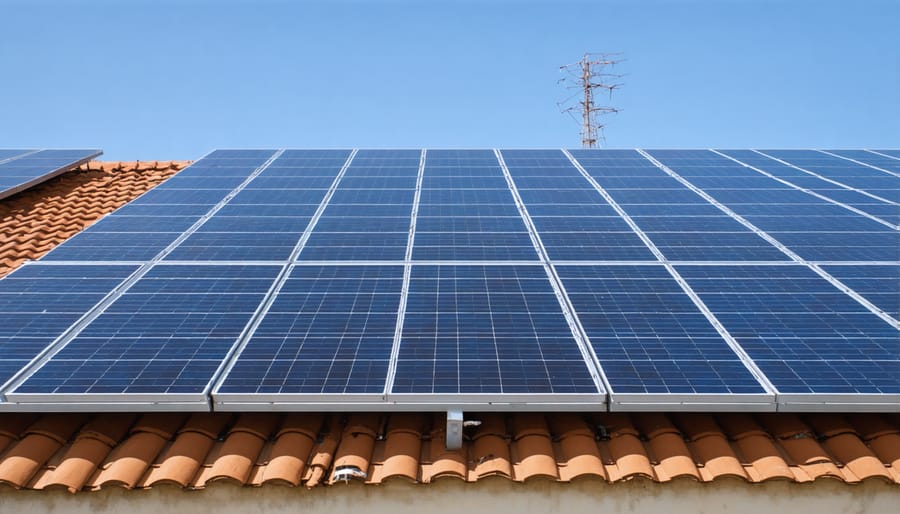
Solar energy installations have demonstrated significant measurable impacts across various metrics, validating their viability as a sustainable energy solution. Recent industry data shows that commercial solar installations typically achieve a 15-25% reduction in overall energy costs within the first year of operation, with some facilities reporting savings of up to 40% after optimization.
In terms of environmental impact, a typical 100kW commercial solar system prevents approximately 120 metric tons of CO2 emissions annually, equivalent to removing 26 passenger vehicles from the road. Performance metrics from large-scale installations indicate that modern solar panels maintain 85-90% of their original efficiency even after 25 years of operation.
Return on investment (ROI) calculations demonstrate that most commercial solar installations achieve payback periods of 4-6 years, with system lifespans extending beyond 30 years. Energy independence metrics show that businesses with solar installations reduce grid dependency by 60-80% during peak sunlight hours.
Performance monitoring data from multiple installations reveals that solar systems consistently exceed projected energy generation estimates by 5-10% when properly maintained. Reliability metrics indicate 99.9% uptime for well-maintained systems, with minimal maintenance requirements averaging just 1-2 service visits per year.
These concrete metrics provide compelling evidence of solar energy’s viability as a sustainable and cost-effective power solution for modern businesses and facilities.
Implementation Roadmap
Successfully implementing solar energy in urban environments requires a structured, phased approach that considers local conditions, regulatory requirements, and stakeholder interests. Cities considering solar integration should begin with a comprehensive energy audit to establish baseline consumption patterns and identify optimal installation locations.
The first phase involves conducting feasibility studies and establishing clear objectives. This includes analyzing solar irradiance data, evaluating available roof space or land area, and assessing grid infrastructure capacity. Cities should also review local building codes and zoning regulations to identify potential barriers or necessary modifications.
During the planning phase, stakeholders should develop detailed financial models incorporating initial costs, available incentives, and projected returns. This phase should include securing funding through various mechanisms such as public-private partnerships, green bonds, or federal grants. Establishing partnerships with utilities and securing necessary permits should occur simultaneously.
Implementation typically follows a pilot program approach, starting with municipal buildings or public facilities. This allows cities to demonstrate success, gather performance data, and refine installation procedures before expanding to larger-scale deployments. Key considerations include:
– Selecting qualified contractors and equipment suppliers
– Establishing monitoring and maintenance protocols
– Developing workforce training programs
– Creating public awareness campaigns
– Implementing quality control measures
The expansion phase should incorporate lessons learned from pilot programs. Cities should develop standardized processes for permitting, installation, and interconnection to streamline deployment. Creating a solar map or registry can help identify prime locations and track progress toward renewable energy goals.
Finally, establishing a robust monitoring and evaluation framework ensures long-term success. This should include regular performance assessments, maintenance schedules, and updates to implementation strategies based on technological advances and changing market conditions. Cities should also develop contingency plans for equipment replacement and system upgrades as technology evolves.
Successful implementation requires ongoing commitment from city leadership, clear communication with stakeholders, and regular updates to strategies based on performance data and emerging technologies.
The evidence clearly demonstrates that solar energy is not just viable but increasingly essential for smart city development and sustainable urban growth. With technological advancements driving down installation costs by over 70% in the past decade, solar power has become economically competitive with traditional energy sources. Cities worldwide are successfully integrating solar solutions into their infrastructure, achieving significant reductions in operational costs and carbon emissions.
The future outlook for solar energy in smart cities is exceptionally promising. Industry projections indicate that solar capacity will triple by 2027, driven by improved energy storage solutions, smart grid integration, and supportive policy frameworks. Business owners and facility managers can expect continued improvements in solar panel efficiency, with new technologies pushing beyond the current average of 20% conversion rates.
For decision-makers considering solar implementation, the timing has never been better. The combination of federal incentives, decreasing installation costs, and proven ROI makes solar energy a strategically sound investment. As smart cities continue to evolve, solar power will play an increasingly crucial role in ensuring energy security, sustainability, and economic efficiency.
Looking ahead, the integration of artificial intelligence and IoT technologies with solar systems will further enhance their value proposition, offering unprecedented levels of energy optimization and management capabilities. This convergence of technologies positions solar energy as a cornerstone of future urban development and sustainable business operations.