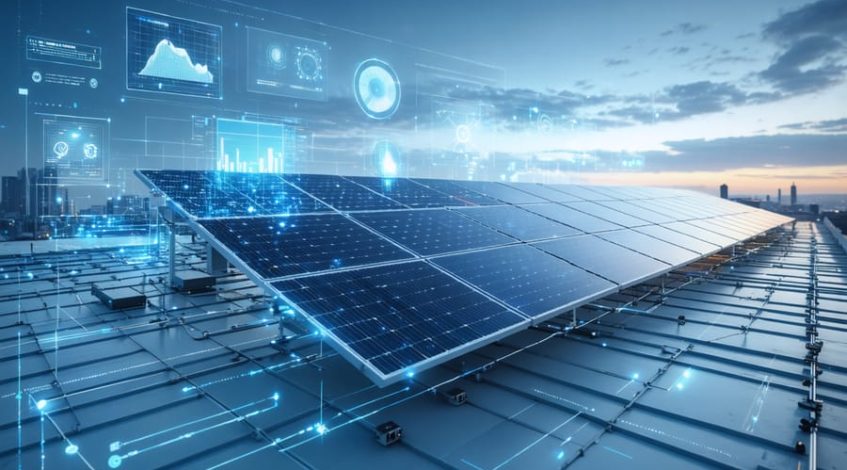
Solar energy technologies have revolutionized the commercial power landscape, delivering unprecedented commercial energy savings while advancing sustainable business practices. Modern photovoltaic systems now achieve conversion efficiencies exceeding 23%, transforming facility operations across industries and scales. These innovations, coupled with advanced energy storage solutions and smart grid integration capabilities, provide businesses with reliable, cost-effective power alternatives that significantly reduce operational expenses.
The convergence of artificial intelligence, IoT sensors, and sophisticated power management systems has elevated solar technology from a simple energy alternative to a comprehensive business asset. Industry leaders implementing these solutions report average ROI periods of 3-7 years, with some achieving complete energy independence within a decade. As global markets increasingly prioritize sustainable practices, solar technologies offer facilities a strategic advantage in meeting both environmental commitments and financial objectives.
Through continued technological advancement and decreasing installation costs, solar energy solutions have emerged as a cornerstone of modern facility management, providing scalable, future-proof power infrastructure that adapts to evolving business needs while ensuring long-term operational resilience.
Next-Generation Photovoltaic Systems
Bifacial Solar Panels
Bifacial solar panels represent a significant advancement in photovoltaic technology, offering enhanced energy generation capabilities by capturing sunlight on both sides of the panel. These innovative modules can absorb direct sunlight on the front surface while simultaneously collecting reflected light on the rear surface, potentially increasing energy yield by 5-30% compared to traditional monofacial panels.
The effectiveness of bifacial panels largely depends on the albedo (reflectivity) of the surface beneath them. Installations over light-colored surfaces such as white gravel, concrete, or snow can significantly boost energy production. Commercial facilities with white TPO roofing systems have reported particularly impressive gains in energy generation.
A notable case study from a retail distribution center in Nevada demonstrated a 27% increase in energy yield after switching to bifacial panels, resulting in substantial cost savings and improved ROI. The facility’s white roof membrane proved ideal for maximizing reflected light capture.
While bifacial panels typically come with a higher initial investment, their increased energy generation capability often justifies the cost, especially in commercial installations. Modern bifacial systems also feature sophisticated tracking mechanisms that can optimize the angle of both surfaces throughout the day, further enhancing their effectiveness.
For facility managers considering solar installations, bifacial technology offers compelling advantages in terms of space efficiency and energy density, particularly in areas with high ground reflectivity or elevated mounting configurations.
PERC Cell Technology
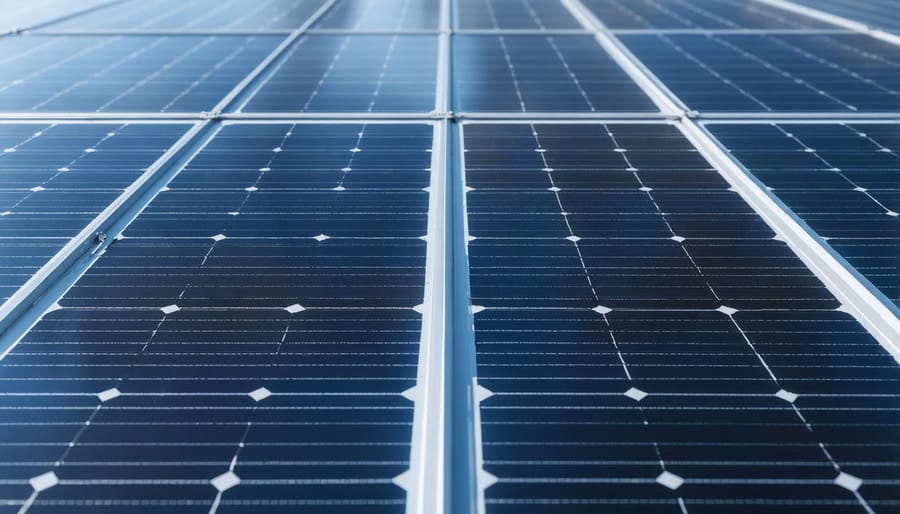
PERC (Passivated Emitter and Rear Cell) technology represents a significant advancement in solar cell efficiency, offering enhanced power output compared to traditional solar cells. This innovative architecture incorporates a passivation layer on the rear side of the solar cell, which reduces electron recombination and captures more sunlight that passes through the cell.
The key advantage of PERC technology lies in its ability to improve cell efficiency by up to 1-2% absolute points over conventional cells, typically achieving efficiencies between 20-22%. This improvement translates to greater energy generation from the same surface area, making it particularly valuable for installations with space constraints.
Commercial applications of PERC cells have demonstrated compelling results. For instance, a 500kW installation using PERC modules in California showed a 15% increase in energy yield compared to standard modules over a two-year period. The technology’s superior performance in low-light conditions and high temperatures makes it especially suitable for diverse climate conditions.
From a cost perspective, while PERC modules command a slightly higher initial investment, the increased energy yield typically results in a shorter payback period. Manufacturing improvements have steadily reduced production costs, making PERC technology increasingly accessible to commercial and industrial applications. The durability and reliability of PERC cells, combined with their enhanced performance, have established them as the current industry standard for high-efficiency solar installations.
Smart Solar Integration Systems
AI-Powered Performance Optimization
Artificial Intelligence is revolutionizing solar energy systems through advanced performance optimization algorithms and predictive analytics. Modern smart solar integration leverages machine learning to significantly improve energy capture and system efficiency.
These AI systems continuously monitor and analyze multiple variables, including weather patterns, solar panel performance metrics, and historical data to optimize energy production. Real-time adjustment capabilities ensure maximum energy harvest throughout the day by fine-tuning panel positioning and power conversion parameters.
For example, predictive maintenance algorithms can identify potential equipment issues before they impact performance, reducing downtime and maintenance costs. AI-driven monitoring systems can detect panel soiling, shading issues, or performance degradation with remarkable accuracy, enabling proactive maintenance scheduling.
Machine learning algorithms also optimize energy storage and distribution by predicting demand patterns and adjusting storage strategies accordingly. This intelligent management results in improved grid stability and more efficient energy utilization.
Case studies have shown that AI-optimized solar installations typically achieve 15-20% higher energy yields compared to traditional systems. A notable example is the Melbourne Commercial Center, which implemented AI optimization in 2022 and reported a 17.8% increase in annual energy production.
The integration of AI also enables sophisticated fault detection and automated reporting, providing facility managers with actionable insights through user-friendly dashboards. This enhanced monitoring capability ensures optimal system performance while reducing operational overhead and improving return on investment.
Remote Monitoring Solutions
Remote monitoring solutions have revolutionized the management and maintenance of solar energy systems, enabling real-time performance tracking and predictive maintenance capabilities. These sophisticated systems utilize IoT sensors, data analytics, and cloud-based platforms to provide comprehensive oversight of solar installations.
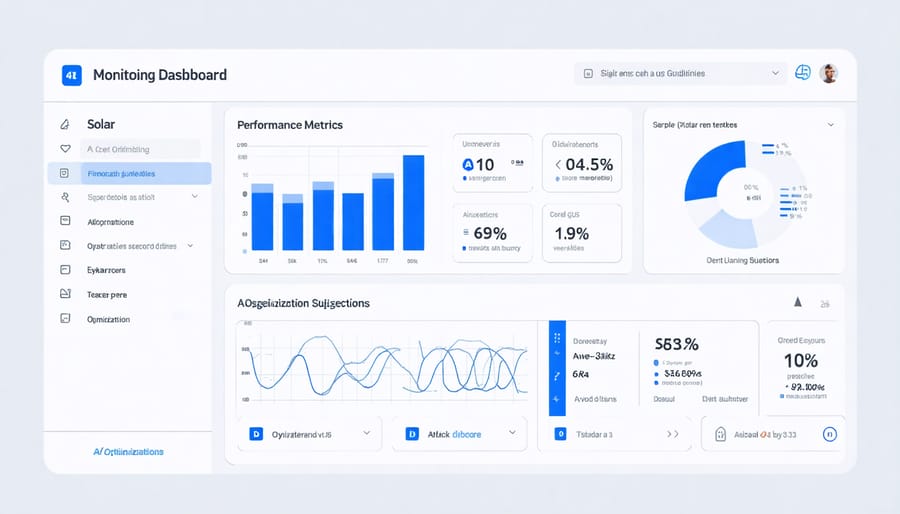
Modern monitoring platforms offer detailed performance metrics, including power output, panel efficiency, and environmental conditions. Facility managers can access this information through user-friendly dashboards on desktop or mobile devices, allowing for immediate response to any performance issues. The systems automatically generate alerts when parameters deviate from expected ranges, helping prevent potential system failures before they occur.
Advanced analytics capabilities enable trend analysis and performance optimization. By collecting and analyzing historical data, these systems can predict maintenance needs, optimize cleaning schedules, and identify opportunities for efficiency improvements. This proactive approach typically reduces maintenance costs by 15-25% while increasing system uptime by up to 30%.
Integration with weather forecasting services allows for accurate production forecasting and better grid management. For utility-scale installations, this capability is particularly valuable for maintaining grid stability and optimizing energy trading strategies.
Many remote monitoring solutions now incorporate artificial intelligence and machine learning algorithms to enhance their diagnostic capabilities. These systems can differentiate between temporary environmental factors affecting performance and actual equipment issues, reducing false alarms and unnecessary maintenance visits.
Security features are also paramount, with monitoring systems employing enterprise-grade encryption and authentication protocols to protect sensitive operational data. This ensures that while system performance data is readily accessible to authorized personnel, it remains secure from potential cyber threats.
Energy Storage Innovations
Commercial-Scale Battery Systems
Commercial-scale battery systems have revolutionized the way businesses harness and utilize solar energy. Modern lithium-ion battery installations now offer storage capacities ranging from hundreds of kilowatt-hours to several megawatt-hours, enabling enterprises to maximize their solar investments through strategic energy management.
These advanced storage solutions feature sophisticated battery management systems (BMS) that optimize charging cycles, monitor performance metrics, and ensure safe operation. Leading manufacturers like Tesla Powerpack and Fluence provide scalable solutions that can be customized based on facility size and energy requirements.
A notable advancement is the integration of artificial intelligence and predictive analytics, allowing systems to automatically adjust storage and discharge patterns based on energy prices, weather forecasts, and consumption patterns. This smart functionality helps businesses reduce peak demand charges and optimize electricity costs.
Recent implementations demonstrate compelling ROI figures. For example, a 2MW/4MWh battery system installed at a manufacturing facility in California achieved a 35% reduction in energy costs within the first year of operation. The system’s peak-shaving capabilities alone delivered savings of $180,000 annually.
Modern battery systems also offer grid services capabilities, enabling businesses to participate in demand response programs and generate additional revenue streams. With warranties typically extending to 10-15 years and degradation rates below 2% annually, these systems provide reliable long-term energy storage solutions while supporting sustainability goals.
Grid Integration Technologies
Modern solar installations require sophisticated grid integration solutions to ensure seamless power distribution and optimal system performance. Smart inverters, advanced monitoring systems, and automated control mechanisms work together to manage the variable nature of solar energy production while maintaining grid stability.
Energy management systems (EMS) play a crucial role in optimizing solar power integration by balancing supply and demand in real-time. These systems utilize artificial intelligence and machine learning algorithms to predict energy consumption patterns, adjust power flow, and maximize renewable energy utilization while minimizing grid dependency.
Storage solutions, such as battery systems and thermal storage, complement grid integration technology by providing buffer capacity during peak demand periods and ensuring continuous power availability. Advanced power electronics enable bi-directional power flow, allowing facilities to participate in demand response programs and benefit from dynamic electricity pricing.
For commercial installations, smart meters and power quality monitoring devices ensure compliance with utility requirements while providing valuable data for system optimization. Modern grid integration technologies also incorporate cybersecurity measures to protect against potential threats and ensure reliable operation of connected solar assets.
The implementation of these technologies has demonstrated significant improvements in system efficiency and return on investment, with many facilities reporting energy cost reductions of 30% or more through optimized solar integration and management.
Water Conservation Integration
Solar energy technologies play a crucial role in water conservation efforts, offering innovative solutions that reduce water consumption while maximizing energy efficiency. Traditional power generation methods typically require substantial water resources for cooling and operation, but solar photovoltaic (PV) systems operate with minimal water requirements, making them an environmentally responsible choice for businesses and facilities.
In commercial applications, solar technologies integrate seamlessly with water-saving initiatives through several key mechanisms. Solar-powered water pumping systems, for instance, enable efficient irrigation and water distribution while eliminating the need for grid electricity. These systems are particularly valuable in agricultural settings and large commercial properties where water management is critical to operations.
Floating solar arrays, an emerging technology, demonstrate the symbiotic relationship between solar power and water conservation. When installed on retention ponds or reservoirs, these systems reduce water evaporation by up to 70% while simultaneously generating clean energy. The water bodies also help maintain optimal panel temperature, increasing overall system efficiency.
Solar thermal technologies further contribute to water conservation by enabling efficient water heating without continuous water circulation through traditional heating systems. In commercial facilities, solar thermal systems can significantly reduce both water and energy consumption for heating purposes, particularly in industries requiring large volumes of hot water.
Case Study: A California manufacturing facility implemented a comprehensive solar solution that included both PV panels and solar thermal systems, resulting in a 40% reduction in water consumption and a 60% decrease in energy costs. The integration of smart monitoring systems allows facility managers to track both energy production and water usage in real-time, enabling data-driven optimization of resources.
For maximum impact, businesses are increasingly adopting hybrid approaches that combine solar technologies with water recycling systems and rainwater harvesting. These integrated solutions not only conserve water but also provide significant cost savings and enhance corporate sustainability profiles, making them attractive investments for forward-thinking organizations.
The rapid evolution of solar energy technologies has fundamentally transformed the commercial and industrial energy landscape. From advanced photovoltaic systems to innovative storage solutions, these technologies are driving unprecedented efficiency gains and cost reductions across sectors. The continued advancement in solar cell efficiency, coupled with smart grid integration and AI-powered energy management systems, positions solar power as a cornerstone of our sustainable energy future.
Industry projections indicate that solar technology costs will continue to decline while system performance improves, making adoption increasingly attractive for businesses of all sizes. The integration of blockchain technology for energy trading and the development of building-integrated photovoltaics (BIPV) are opening new opportunities for facility optimization and revenue generation.
Looking ahead, the solar energy sector is poised for significant growth, driven by technological innovation, supportive policies, and increasing corporate sustainability commitments. The convergence of solar technologies with energy storage, smart building systems, and electric vehicle infrastructure will create comprehensive energy solutions that optimize operational efficiency while reducing environmental impact. As these technologies mature, businesses that invest in solar energy systems today will be well-positioned to leverage future innovations and maintain competitive advantages in an increasingly sustainability-focused market landscape.