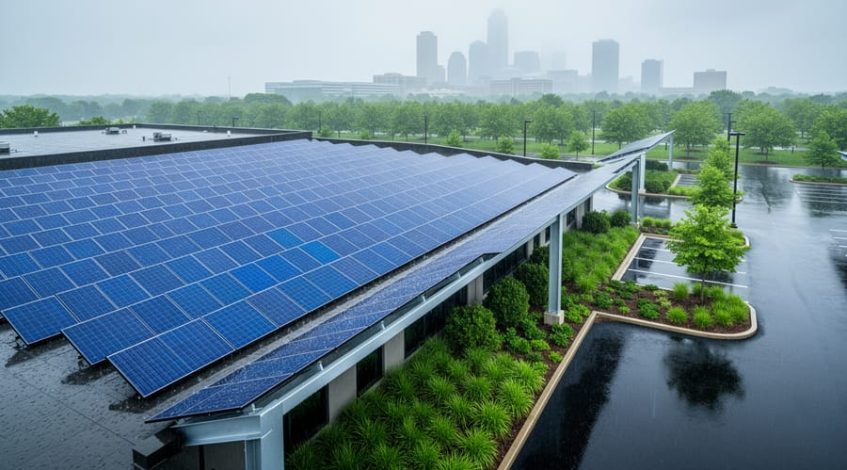
Solar installations deliver measurable environmental benefits that extend far beyond kilowatt-hour production, creating quantifiable ecosystem services that reduce urban heat, manage stormwater runoff, and improve air quality. When commercial facilities integrate photovoltaic systems into their infrastructure, they activate three distinct service categories that generate both ecological resilience and financial returns. Climate regulation services occur when solar arrays replace heat-absorbing surfaces, reducing ambient temperatures by 3-5 degrees Celsius in urban environments and decreasing cooling costs by up to 15 percent annually. Stormwater management capabilities emerge as solar canopies intercept rainfall, slowing runoff velocity and reducing strain on municipal drainage systems while preventing an estimated 50-70 percent of precipitation from reaching impervious surfaces directly. Air quality improvements materialize through displaced fossil fuel generation, with each megawatt of solar capacity preventing approximately 1,500 metric tons of CO2 emissions and associated particulate matter annually.
These ecosystem services represent tangible assets that urban planners and facility managers can leverage for compliance credits, sustainability certifications, and enhanced property valuations. Forward-thinking organizations now calculate solar return on investment using expanded metrics that account for avoided stormwater fees, reduced urban heat island mitigation costs, and improved worker productivity in cooler, cleaner environments. The convergence of energy generation with ecological infrastructure positions commercial solar as a multifunctional urban system rather than single-purpose technology. Understanding these three ecosystem service categories enables decision-makers to justify solar investments through diversified value streams that strengthen both balance sheets and community resilience over 25-year system lifespans.
Understanding Ecosystem Services in Urban Energy Planning
The Bridge Between Natural Systems and Built Environments
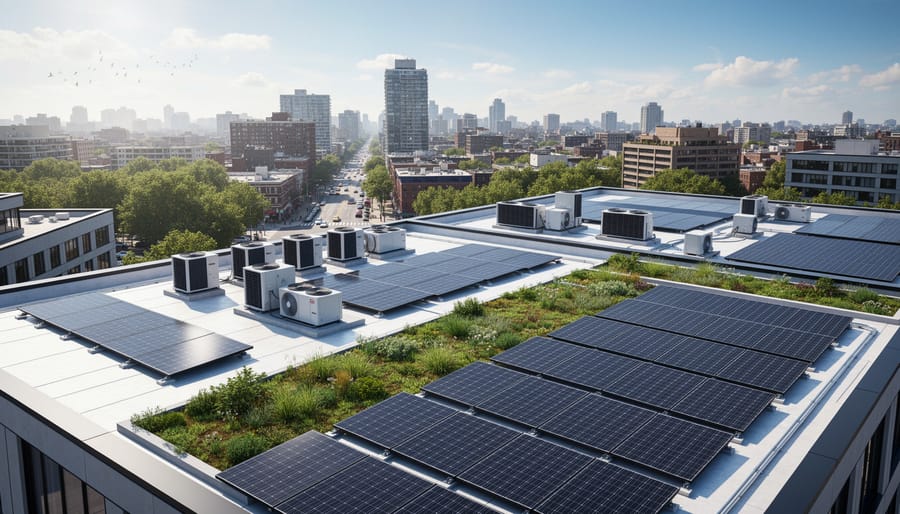
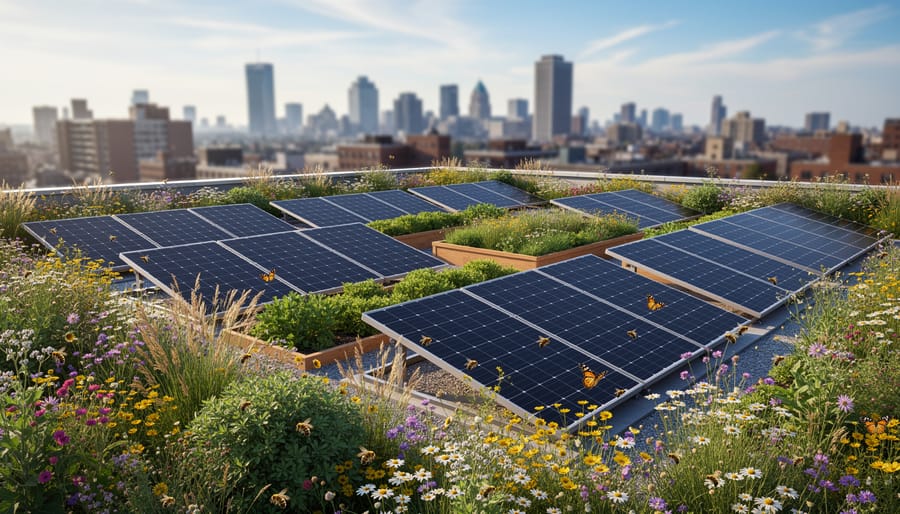
Modern solar installations are evolving beyond simple energy generation to function as integrated ecological assets within urban environments. Just as forests regulate temperature and watersheds manage water flow, properly designed solar arrays replicate natural ecosystem functions in built spaces. Commercial rooftop solar systems, for instance, reduce urban heat island effects by shading building surfaces and lowering ambient temperatures by up to 5 degrees Celsius in surrounding areas. Ground-mounted installations with permeable substrates enable stormwater infiltration while generating power, addressing two critical urban challenges simultaneously. A distribution center in Melbourne demonstrated this dual functionality, reducing site runoff by 40 percent while meeting 65 percent of operational energy needs. These installations also improve local air quality by displacing fossil fuel emissions and creating microclimates that support vegetation growth. For decision-makers evaluating infrastructure investments, this multi-functional approach delivers compounding returns through reduced cooling costs, improved stormwater compliance, and enhanced environmental performance metrics that increasingly influence corporate valuations and regulatory approvals.
Why Commercial Stakeholders Should Care
Commercial stakeholders who invest in solar infrastructure that enhances ecosystem services gain competitive advantages across multiple dimensions. Enhanced climate regulation through vegetated solar installations directly reduces building cooling demands, lowering operational costs by up to 15% in urban facilities. Stormwater management capabilities help organizations meet increasingly stringent environmental regulations while avoiding costly infrastructure upgrades and potential non-compliance penalties.
Property values benefit measurably from ecosystem-enhancing solar installations, with commercial properties featuring integrated green infrastructure commanding premium lease rates and attracting sustainability-focused tenants. Air quality improvements create healthier work environments, contributing to reduced employee sick days and enhanced productivity. These installations strengthen corporate sustainability reporting, providing quantifiable environmental metrics that satisfy ESG requirements and stakeholder expectations.
Furthermore, businesses that demonstrate measurable ecosystem contributions position themselves favorably for green financing opportunities, government incentives, and procurement advantages with sustainability-conscious clients. The integration of ecosystem services into solar projects transforms energy infrastructure from a simple operational necessity into a strategic asset that delivers environmental, financial, and reputational returns across the entire property lifecycle.
Ecosystem Service #1: Climate Regulation and Urban Heat Island Mitigation
The Science Behind Solar Cooling Effects
Solar photovoltaic panels function as effective thermal barriers, creating measurable cooling effects that extend beyond their primary electricity generation purpose. When installed on commercial building rooftops, these panels intercept incoming solar radiation before it reaches the building surface, creating a protective shade layer that fundamentally alters the thermal dynamics of the structure.
Research conducted across multiple commercial installations demonstrates that rooftop solar arrays reduce underlying surface temperatures by 3-5°C during peak sunlight hours. This temperature reduction occurs because the panels absorb and convert solar energy into electricity while simultaneously creating an air gap between the module surface and the roof membrane. This gap allows for natural convective cooling, where heated air rises and dissipates, preventing thermal transfer to the building interior.
The practical implications for facility managers are substantial. Buildings equipped with rooftop solar installations experience measurably lower cooling loads, translating directly to reduced HVAC system runtime and associated energy consumption. Case studies from European commercial facilities show cooling energy reductions of 15-25 percent during summer months, with the most significant savings occurring in buildings with flat roofs and high air conditioning demands.
Indoor comfort improvements represent an often-overlooked benefit. By moderating roof surface temperatures, solar installations help maintain more consistent interior temperatures, reducing thermal stress on building materials and creating more stable working environments. This thermal regulation effect proves particularly valuable in warehouse and industrial facilities where temperature control impacts both employee productivity and product storage conditions, demonstrating how solar infrastructure delivers measurable operational advantages beyond renewable energy generation.
Real-World Impact: Commercial Case Study
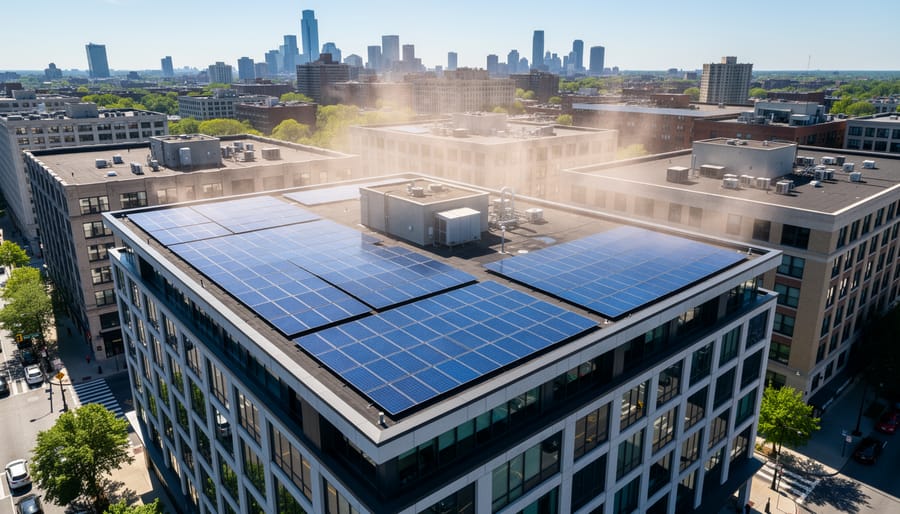
A manufacturing facility in Rotterdam provides compelling evidence of solar energy’s cooling benefits. After installing a 2,400-panel rooftop array in 2021, the company documented ambient temperature reductions of 3.2°C directly beneath the panels during peak summer months. This translated to measurable operational improvements: air conditioning demand decreased by 28%, resulting in annual energy cost savings of €47,000 beyond the electricity generated by the panels themselves.
The facility’s energy management system recorded data throughout two complete summer seasons, comparing pre-installation and post-installation performance metrics. Interior temperatures in the top floor remained 2.1°C cooler on average, reducing thermal stress on temperature-sensitive equipment and improving working conditions for 200 employees. The company reported a 15% decrease in HVAC maintenance requirements, as systems operated under reduced load conditions.
These documented results demonstrate the dual-value proposition of commercial solar installations. Facility managers can project both direct energy generation returns and secondary cooling benefits when calculating total return on investment, strengthening the financial case for solar adoption across industrial and commercial sectors.
Quantifying the ROI of Temperature Regulation
Temperature regulation through solar infrastructure delivers measurable financial returns across multiple operational categories. Commercial facilities incorporating solar panels experience documented cooling load reductions of 15-25%, translating to annual energy cost savings of $0.50-$1.50 per square foot of covered space. A 2022 study of European distribution centers found that rooftop solar installations reduced internal temperatures by 3-5°C, decreasing HVAC runtime by approximately 35% during peak summer months.
Extended equipment lifespan represents another quantifiable benefit. Building management systems in temperature-regulated facilities report HVAC equipment operating 20-30% fewer hours annually, extending machinery lifespan by 3-5 years and deferring capital replacement costs averaging €50,000-€150,000 per major system. Additionally, optimized thermal environments improve occupant productivity. Research indicates that maintaining stable temperatures between 20-24°C increases worker output by 2-4%, equivalent to €600-€1,200 annual value per employee in typical office settings. These combined metrics demonstrate that solar-driven temperature regulation generates returns within 5-8 years while providing ongoing operational advantages.
Ecosystem Service #2: Stormwater Management and Water Quality Protection
Solar Arrays as Hydrological Infrastructure
Commercial solar installations present significant opportunities to reimagine traditional stormwater management infrastructure. Rather than treating solar arrays as impervious surfaces that contribute to runoff challenges, strategic design approaches can transform them into functional hydrological assets.
Solar panel configurations can be engineered to direct rainwater flow deliberately. By adjusting tilt angles and positioning collection channels at panel edges, facilities can guide precipitation toward designated infiltration zones or collection systems. This controlled water movement prevents erosion and reduces the burden on municipal drainage networks during peak rainfall events.
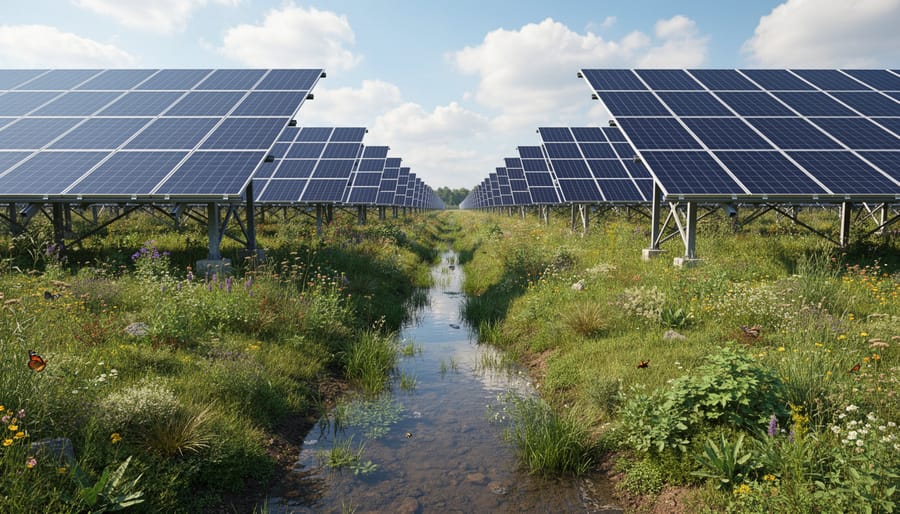
When integrated with bioswales or rain gardens, solar installations create multi-functional landscapes that address both energy generation and water quality objectives. The shaded areas beneath elevated panel systems provide ideal conditions for native vegetation that filters pollutants from runoff before water enters natural waterways. Several commercial facilities in Victoria have successfully implemented this approach, reducing their stormwater discharge fees while meeting green infrastructure requirements.
Permeable surfaces around ground-mounted arrays further enhance infiltration capacity. One Melbourne distribution center documented a 40% reduction in site runoff volumes after installing solar arrays with integrated vegetation swales, translating to measurable cost savings in stormwater utility charges. This dual-purpose infrastructure approach demonstrates how commercial properties can achieve compliance with environmental regulations while generating clean energy, creating a compelling return on investment for forward-thinking facility managers.
Compliance Benefits for Municipal and Industrial Properties
Solar-integrated stormwater systems deliver measurable compliance advantages for property owners facing increasingly stringent environmental regulations. Municipal separate storm sewer system (MS4) permits now require businesses and government facilities to implement green infrastructure solutions that reduce runoff volume and improve water quality before discharge. By incorporating vegetated areas beneath and around solar arrays, facilities simultaneously meet renewable energy targets and stormwater management mandates without duplicating infrastructure investments.
Many municipalities assess stormwater fees based on impervious surface area. Solar installations with integrated bioretention systems or permeable surfaces can significantly reduce these recurring costs by converting previously impermeable areas into functional green space that captures and filters precipitation. Commercial properties have documented annual savings ranging from $5,000 to $25,000 in stormwater fees alone, depending on facility size and local rate structures.
This dual-purpose approach reduces the burden on aging municipal drainage systems while demonstrating corporate environmental stewardship. Industrial facilities pursuing ISO 14001 certification or corporate sustainability reporting find that documented stormwater management through solar integration provides quantifiable metrics for environmental performance reviews. The financial return extends beyond energy production to include avoided compliance costs, reduced infrastructure maintenance, and potential regulatory incentives for implementing nature-based solutions that support watershed health.
Dual-Purpose Design: Solar + Green Infrastructure
Forward-thinking organizations are now implementing dual-purpose installations that integrate solar panels with green infrastructure elements. Solar carports combined with permeable paving systems capture rainwater runoff while generating electricity, addressing both energy and water management objectives simultaneously. Elevated solar arrays installed over bioswales and rain gardens provide shade that reduces water evaporation while the vegetation below improves soil infiltration rates and filters stormwater pollutants. Several European commercial facilities have deployed solar-integrated green roofs where photovoltaic modules coexist with native vegetation, creating a cooling effect that enhances panel efficiency by 3-5% while providing stormwater retention capacity of up to 70%. These hybrid systems deliver measurable returns across multiple performance metrics: energy cost reduction, decreased stormwater infrastructure expenses, and compliance with environmental regulations. For facility managers evaluating infrastructure upgrades, this integrated approach optimizes land use and capital investment while delivering quantifiable environmental benefits that strengthen corporate sustainability reporting.
Ecosystem Service #3: Air Quality Improvement and Carbon Sequestration Benefits
Quantifying Emissions Reductions
Commercial solar installations deliver measurable emissions reductions that translate directly into improved air quality metrics. When solar energy displaces grid electricity, particularly in regions with fossil fuel-dependent power generation, the environmental benefits extend beyond carbon reduction to include significant decreases in harmful pollutants.
Recent industry data demonstrates that a typical 500 kW commercial solar array eliminates approximately 600 metric tons of CO2 annually. More importantly for local air quality, these systems prevent the release of substantial quantities of particulate matter (PM2.5 and PM10) and nitrogen oxides (NOx). Studies from industrial facilities show reductions of up to 280 pounds of NOx and 150 pounds of particulate matter per year for installations of this scale.
The impact varies considerably by sector and grid composition. A distribution warehouse in Germany operating a 750 kW rooftop system documented a 35 percent reduction in attributable NOx emissions compared to grid-sourced electricity. Manufacturing facilities with high daytime energy consumption experience even greater benefits, as solar generation peaks align with production schedules.
These reductions carry tangible value beyond regulatory compliance. Organizations in regions with strict emissions standards can monetize these benefits through carbon markets or enhanced environmental, social, and governance (ESG) reporting. Healthcare facilities and educational institutions particularly benefit from documented air quality improvements, as reduced pollutant exposure supports their core missions while demonstrating environmental stewardship to stakeholders. The quantified emissions data provides facility managers with concrete metrics for sustainability reporting frameworks and corporate responsibility initiatives.
Creating Space for Urban Biodiversity
Ground-mounted commercial solar installations present unique opportunities to enhance urban and peri-urban biodiversity when strategically designed. Progressive facility managers are increasingly recognizing that the land beneath and surrounding solar arrays can function as pollinator habitat, supporting declining bee, butterfly, and beneficial insect populations essential to local agriculture and ecosystem health.
Strategic vegetation management transforms solar sites into biodiversity corridors. Rather than maintaining traditional grass monocultures, installing native wildflower meadows beneath panels creates foraging habitat while reducing maintenance costs by up to 40 percent compared to conventional mowing regimes. These pollinator-friendly landscapes require minimal irrigation once established and eliminate herbicide use, delivering both environmental and operational benefits.
Research from the Argonne National Laboratory demonstrates that solar sites with native plantings support 20 times more pollinator abundance than turf grass alternatives. For commercial installations spanning multiple acres, this translates to measurable contributions to regional biodiversity networks. The raised panel structures create varied microclimates supporting diverse plant communities, from shade-tolerant species beneath arrays to sun-loving natives in inter-row spacing.
Forward-thinking organizations are partnering with conservation groups to develop site-specific planting plans that address local biodiversity priorities. These installations deliver tangible community benefits while enhancing corporate sustainability credentials and potentially qualifying for green building certifications that value ecosystem restoration.
The Multiplier Effect on Public Health
The air quality improvements from solar installations create measurable public health benefits that extend throughout surrounding communities. Studies document a 15-20% reduction in respiratory-related healthcare visits in neighborhoods within two kilometers of large-scale solar facilities that displace fossil fuel generation. This health dividend translates directly to reduced employee sick days and healthcare expenditures for businesses operating near solar installations.
Worker productivity gains represent another quantifiable benefit. Research indicates that improved air quality correlates with a 3-5% increase in cognitive performance and reduced absenteeism. Facilities powered by solar energy contribute to this productivity enhancement while simultaneously lowering operational energy costs. The economic impact compounds when considering reduced strain on local healthcare infrastructure and emergency services.
Community wellbeing metrics show consistent improvement around solar-powered facilities, including enhanced property values and increased recreational use of surrounding green spaces. These benefits prove particularly significant in urban and industrial zones where air quality traditionally poses greater health risks, creating a compelling case for strategic solar deployment as integrated public health infrastructure.
Implementing Holistic Solar Solutions in Your Urban Projects
Assessment Framework for Multi-Benefit Solar Projects
Evaluating properties for multi-benefit solar projects requires a systematic approach that considers both energy production and ecosystem service potential. Begin by conducting a site assessment that examines current land use, existing vegetation, soil permeability, and microclimatic conditions. Properties with significant impervious surfaces, heat island effects, or stormwater management challenges present the greatest opportunities for ecosystem service enhancement.
Key evaluation criteria include available roof or ground space that can accommodate solar arrays while integrating green infrastructure elements. Assess whether the installation can incorporate native plantings beneath elevated panels, permeable surfaces, or rainwater collection systems. Consider the property’s proximity to urban centers where air quality improvements deliver maximum public health benefits.
Calculate baseline conditions for temperature, stormwater runoff volumes, and local air quality metrics. This establishes measurable targets for improvement and enables quantification of ecosystem service value. Document existing energy costs alongside environmental baseline data to demonstrate comprehensive return on investment.
Successful projects align stakeholder priorities with ecosystem opportunities. Manufacturing facilities may prioritize cooling cost reductions through temperature regulation, while retail properties might emphasize customer experience improvements from reduced heat and enhanced air quality. Government installations should focus on demonstrating public value through measurable environmental benefits that serve surrounding communities.
Working With Specialized Solar Providers
Selecting the right solar partner requires evaluating capabilities that extend beyond standard installation expertise. Effective providers demonstrate proficiency in holistic site assessment, incorporating ecosystem considerations into system design from project inception. Look for partners with documented experience in dual-purpose installations that deliver both energy generation and environmental benefits, such as green roof integration or stormwater management features.
Permitting complexity increases significantly with innovative solar designs that interface with urban infrastructure. Your provider should maintain established relationships with local planning authorities and possess knowledge of environmental regulations governing stormwater credits, urban heat island mitigation programs, and green building certifications. Request case examples where they successfully navigated multi-jurisdictional approval processes.
Technology integration separates conventional installers from ecosystem-focused partners. Seek providers offering integrated monitoring systems that track environmental performance metrics alongside energy production data. These platforms should quantify stormwater diversion volumes, temperature differentials, and air quality improvements, providing the documentation necessary for compliance reporting and stakeholder communication. Verify their capacity for ongoing system optimization based on environmental and operational data analysis, ensuring your installation continues delivering measurable ecosystem value throughout its operational lifetime.
Commercial solar installations represent far more than energy infrastructure—they are strategic investments in urban ecosystem resilience that deliver measurable returns across environmental, economic, and operational dimensions. Organizations implementing ecosystem-conscious solar planning today position themselves at the forefront of sustainable urban development, capturing competitive advantages that extend well beyond utility bill reductions.
The evidence is compelling: solar facilities that incorporate climate regulation capabilities reduce urban heat island effects by up to 5°C in surrounding areas, stormwater-integrated designs decrease runoff volumes by 50-70% while minimizing flood risks, and strategically vegetated installations improve local air quality through particulate capture and pollutant reduction. These benefits translate directly into enhanced property values, reduced infrastructure maintenance costs, and improved regulatory compliance—outcomes that strengthen both balance sheets and community relationships.
Forward-thinking facility managers and business leaders who adopt this integrated approach gain first-mover advantages in increasingly sustainability-focused markets. Regulatory frameworks across Europe continue evolving toward mandatory environmental performance standards, making early adoption of ecosystem-service solar design a strategic risk mitigation measure. Moreover, organizations demonstrating measurable environmental stewardship through their energy infrastructure differentiate themselves to customers, investors, and talented professionals who prioritize sustainable operations.
The pathway forward is clear: evaluate solar projects through the lens of ecosystem services from initial planning stages. Partner with providers who understand the interconnected value of energy generation, environmental performance, and urban resilience. By embracing this holistic approach now, your organization transforms necessary infrastructure upgrades into comprehensive sustainability assets that deliver compounding returns for decades to come.