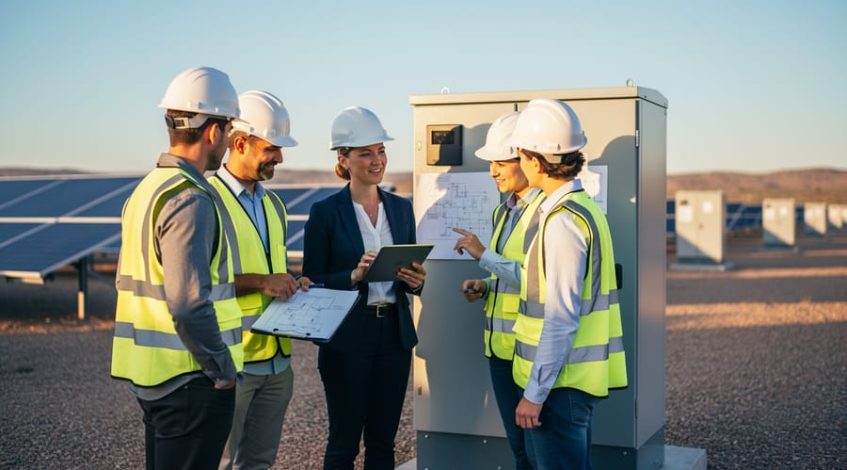
The solar industry’s explosive growth has created an unprecedented talent crisis. As installations surge 40% year-over-year, companies face critical skill shortages in electrical engineering, project management, and specialized technical roles. Workforce development consultants bridge this gap by designing targeted training programs, establishing certification pathways, and creating sustainable talent pipelines that align with industry demands.
These consultants operate at the intersection of business strategy and human capital development. They analyze workforce data to identify skill gaps, partner with educational institutions to develop curriculum, and coordinate industry partnerships that accelerate talent acquisition. Their work extends beyond traditional recruitment, focusing on long-term ecosystem development that benefits entire regional solar markets.
Within workforce development consortia, consultants serve as strategic architects who unite competing companies around shared talent challenges. They facilitate knowledge transfer between established energy professionals and emerging solar specialists, design apprenticeship programs that reduce training costs by 60%, and establish competency frameworks that standardize qualifications across organizations. This collaborative approach transforms talent development from a competitive disadvantage into a collective strength.
For business leaders and consortium managers, engaging a workforce development consultant represents a strategic investment in operational resilience. The right consultant delivers measurable outcomes: reduced time-to-productivity for new hires, increased retention rates, and improved project execution quality. Understanding how to evaluate and select these specialists becomes essential for organizations committed to scaling solar operations while maintaining technical excellence and workforce stability.
The Growing Demand for Skilled Solar Professionals

Critical Skill Shortages in Solar Installation and Maintenance
The solar installation sector demands specialized technical competencies that extend far beyond basic electrical knowledge. Professionals must demonstrate proficiency in photovoltaic system design, understanding electrical load calculations, DC and AC wiring protocols, inverter configuration, and battery storage integration. Additionally, installers need expertise in structural assessments to determine roof loading capacity, mounting system installation, and compliance with local building codes and National Electrical Code standards.
Accreditation requirements present another significant barrier to workforce expansion. The North American Board of Certified Energy Practitioners (NABCEP) certification remains the industry gold standard, yet achieving this credential requires extensive field experience and passing rigorous examinations. Many jurisdictions also mandate state-specific electrical licenses, adding layers of complexity to the qualification process. These requirements create a bottleneck in workforce supply, as training programs struggle to provide the hands-on experience necessary for certification.
Traditional hiring approaches prove inadequate because they focus on individual recruitment rather than systematic skill development. Organizations competing for the same limited talent pool drive up labor costs without expanding overall capacity. A real-world example illustrates this challenge: a mid-sized installation company in California spent eight months searching for three certified installers, ultimately having to delay projects worth $2.3 million due to staffing constraints.
The disconnect between educational institutions and industry needs further exacerbates shortages. Community colleges and technical schools often lack current equipment and instructors with recent field experience, producing graduates who require extensive additional training before becoming productive team members.
The Business Impact of Workforce Gaps
Talent shortages in the solar industry create measurable consequences that extend far beyond hiring challenges. For commercial and government clients investing in renewable energy infrastructure, workforce gaps directly compromise project outcomes and return on investment.
Project timelines represent the most immediate impact. When qualified installers, electricians, and technicians remain scarce, solar installations experience delays averaging 30-45 days beyond original schedules. These postponements translate to deferred energy savings and extended reliance on conventional power sources, undermining the financial projections that justified initial capital expenditures.
Installation quality suffers when inexperienced workers fill critical positions. A 2023 industry analysis revealed that projects completed by inadequately trained teams face 40% higher callback rates for performance issues within the first year. Improper mounting techniques, suboptimal electrical connections, and configuration errors diminish system efficiency and increase maintenance costs throughout the asset lifecycle.
Long-term system performance depends fundamentally on installation precision. Government facilities and commercial properties expect 25-30 year operational lifespans from solar investments. However, systems installed by under-qualified personnel demonstrate 12-18% lower energy production over time compared to properly executed installations. For a municipal building investing $500,000 in solar infrastructure, this performance gap represents substantial unrealized savings and extended payback periods that affect budget planning and sustainability commitments.
What Workforce Development Consultants Bring to Solar Consortia
Strategic Workforce Planning and Needs Assessment
Workforce development consultants begin their engagement by conducting comprehensive assessments of an organization’s current talent landscape and future staffing requirements. This systematic approach involves analyzing existing workforce capabilities, evaluating upcoming project pipelines, and identifying critical skill gaps that could impede growth objectives. In the solar industry, where technological advancements occur rapidly, consultants examine both technical competencies—such as photovoltaic system installation, energy storage integration, and grid interconnection expertise—and soft skills essential for customer interaction and project management.
The needs assessment process typically incorporates workforce data analytics, examining metrics like employee turnover rates, time-to-productivity for new hires, and skills obsolescence patterns. Consultants interview key stakeholders across departments to understand operational challenges and strategic priorities. For solar consortia members, this might reveal shortages in certified electricians familiar with DC systems or a lack of professionals trained in emerging battery storage technologies.
Based on these findings, consultants develop data-driven strategies that align workforce capabilities with business growth trajectories. These strategies balance immediate hiring needs against long-term talent development investments, often recommending a combination of external recruitment, internal upskilling programs, and partnerships with educational institutions. A practical example involves a regional solar consortium that, through strategic workforce planning, identified a 40 percent skills gap in advanced inverter technologies. The resulting strategy included targeted recruitment campaigns and specialized training programs that reduced project delays by 25 percent while improving installation quality metrics across member companies.
Building Partnerships with Educational Institutions
Workforce development consultants serve as strategic bridge-builders, establishing robust partnerships between solar companies and educational institutions to ensure a steady pipeline of qualified talent. By facilitating relationships with technical schools, community colleges, and specialized training programs, these consultants create pathways that benefit both employers seeking skilled workers and students pursuing careers in renewable energy.
These professionals assess the specific skill requirements of solar companies and work with academic institutions to develop curricula that align with industry needs. They coordinate apprenticeship programs, internships, and hands-on training opportunities that provide students with practical experience while giving employers early access to emerging talent. Through these collaborations, consultants help design certification programs that meet industry standards and employer expectations.
The most effective partnerships often involve public-private partnerships, where consultants coordinate between government agencies, educational institutions, and private solar companies to secure funding and resources for training programs. For example, a consultant might facilitate a partnership where a solar installation company provides equipment and instructors for a community college photovoltaic systems program, resulting in graduates who are immediately job-ready.
These educational partnerships create long-term value by establishing consistent talent pipelines that reduce recruitment costs and training time for solar companies. Consultants monitor program outcomes, gather feedback from employers and graduates, and continuously refine these relationships to ensure they meet evolving industry demands, ultimately strengthening the entire solar workforce ecosystem.
Key Functions of Workforce Development Consultants in Solar Consortia
Curriculum Development and Training Program Design
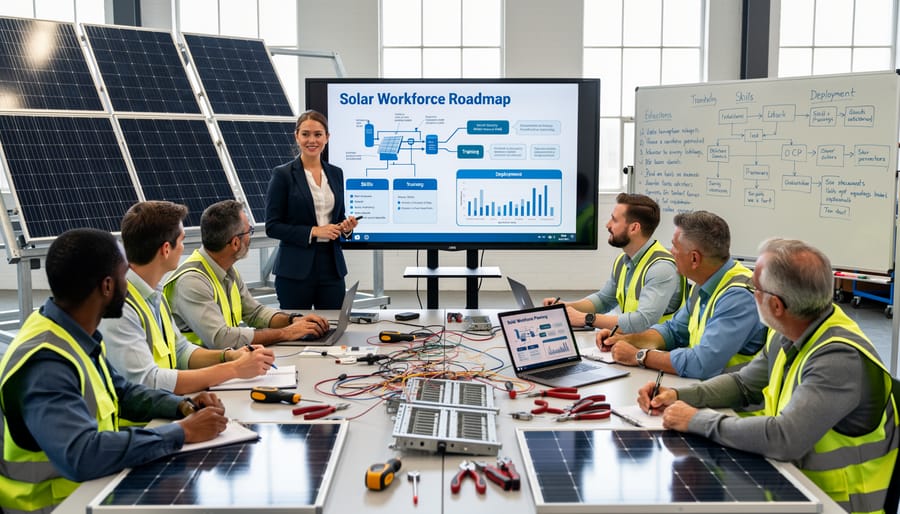
Workforce development consultants design comprehensive training programs that directly address the solar industry’s evolving technical requirements. These specialists conduct thorough industry assessments to identify skill gaps, then develop curriculum modules covering photovoltaic system installation, electrical safety standards, grid integration protocols, and maintenance procedures. The programs incorporate hands-on training components that align with certification requirements from organizations like NABCEP and OSHA.
Effective curriculum development balances foundational knowledge with emerging technologies such as bifacial panels, energy storage integration, and smart inverter systems. Consultants structure training in progressive tiers, enabling workers to advance from entry-level positions to specialized roles in system design or project management. A midwest solar consortium recently implemented a consultant-designed training program that reduced installation errors by 34% while accelerating technician certification timelines from eight months to five months.
The programs also emphasize safety protocols specific to rooftop work, electrical systems, and extreme weather conditions. Consultants regularly update training materials to reflect technological advancements and regulatory changes, ensuring workforce competencies remain current. This systematic approach to curriculum design delivers measurable improvements in installation quality, worker safety, and overall project efficiency, directly impacting consortium members’ return on investment.
Certification and Credentialing Support
Workforce development consultants play a critical role in establishing rigorous certification frameworks that align with industry standards and regulatory requirements. These professionals work directly with training institutions and industry bodies to develop credentialing programs that validate installer competencies across photovoltaic system design, electrical safety, and grid integration protocols.
Consultants facilitate partnerships between consortia members and accreditation organizations such as the Clean Energy Council or equivalent regional bodies, ensuring that certification pathways meet both current and emerging market demands. They establish assessment criteria that verify technical proficiency while incorporating evolving technologies like battery storage integration and smart inverter functionality.
A practical application involves consultants designing tiered certification systems that allow installers to progress from residential installations to complex commercial projects. This structured approach provides clear career progression while maintaining quality assurance throughout the solar supply chain. Consultants also implement tracking systems that monitor credential renewals and continuing education requirements, ensuring workforce competencies remain current as technology advances. By standardizing credentialing processes across consortium members, consultants reduce barriers to workforce mobility while maintaining consistent quality benchmarks that protect consumer interests and strengthen industry reputation.
Recruitment Strategy and Talent Pipeline Development
Effective workforce development consultants implement comprehensive recruitment strategies that extend beyond traditional hiring channels to build robust talent pipelines. These professionals leverage partnerships with military transition programs to attract veterans, whose technical training and discipline align well with solar installation and maintenance roles. One successful approach involves collaborating with community colleges and vocational institutions in underrepresented communities, creating pathways that combine education with guaranteed job placement upon certification completion.
Career changers represent another valuable talent pool, particularly professionals from declining industries seeking stable, future-oriented opportunities. Consultants develop targeted messaging that emphasizes the solar industry’s growth trajectory, competitive compensation, and environmental impact. A case study from California demonstrated how targeted outreach to former oil and gas workers resulted in a 40 percent reduction in training time, as these candidates possessed transferable technical skills.
Diversity-focused recruitment initiatives include establishing relationships with women in trades organizations, minority business associations, and workforce development boards serving economically disadvantaged areas. Consultants also implement apprenticeship programs that remove financial barriers to entry, allowing candidates to earn while learning. By tracking recruitment metrics and continuously refining outreach strategies, these professionals ensure consortia maintain consistent access to qualified, diverse candidates who reflect the communities they serve.
Real-World Applications: Consortia Success Stories
Regional Solar Partnership Model
In the southwestern United States, twelve mid-sized solar installation companies faced a common challenge: high turnover rates and inconsistent installer quality that drove up project costs and extended timelines. Rather than competing for the same limited talent pool, these organizations formed the Regional Solar Partnership and engaged a workforce development consultant to design a collaborative solution.
The consultant conducted a comprehensive skills assessment across all member companies, identifying core competencies and standardized training requirements. This analysis revealed that individual companies were spending an average of $8,500 per apprentice with completion rates below 60 percent. The consultant then structured a shared apprenticeship program that pooled resources and distributed training costs across the consortium.
The program established a centralized training facility with rotating hands-on assignments at member company job sites. Apprentices received exposure to diverse installation environments while companies shared equipment costs and administrative overhead. Within eighteen months, training costs per apprentice dropped to $5,200, while completion rates increased to 84 percent.
Member companies reported a 35 percent reduction in installation errors and a 22 percent improvement in project completion times. The consultant’s ongoing role includes quarterly performance reviews, curriculum updates aligned with emerging technologies, and coordination of advanced certification pathways. This collaborative model demonstrates how strategic workforce development consulting transforms industry-wide challenges into competitive advantages through shared investment and standardized excellence.
Government-Industry Collaborative Training Initiative
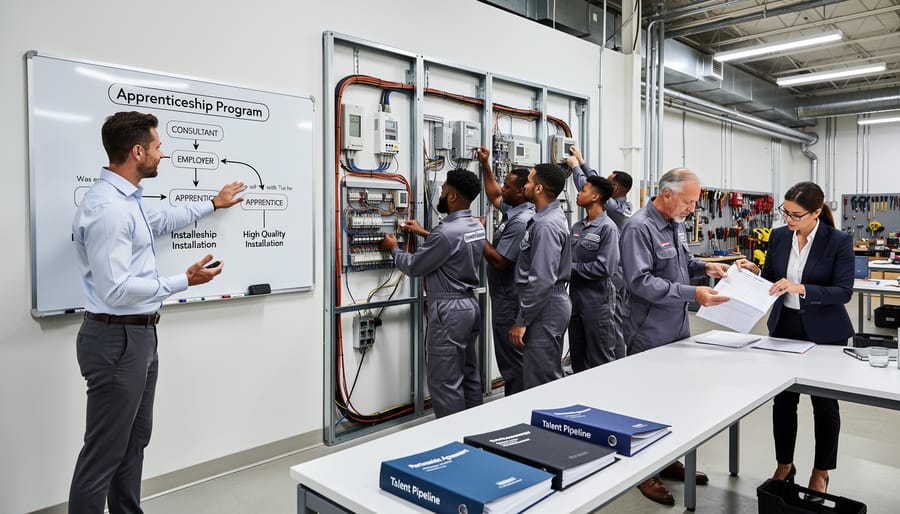
Workforce development consultants play a pivotal role in establishing government-industry collaborations that accelerate public sector solar adoption. A compelling example involves a consultant who bridged the gap between a regional commercial solar provider and a state energy department to create a comprehensive training program.
The consultant identified a critical shortage of certified solar installers capable of handling large-scale government projects. By conducting workforce assessments and stakeholder interviews, they designed a curriculum combining theoretical knowledge with hands-on installation experience on actual government facilities. The program integrated safety protocols specific to public infrastructure and compliance requirements unique to government contracts.
The partnership resulted in a 12-month apprenticeship program that trained 45 technicians, with 89% achieving industry certification. Participating government agencies reduced their installation costs by 18% through access to qualified local talent, while the commercial provider secured a pipeline of skilled workers for expanding public sector projects.
This collaborative model demonstrated measurable returns: faster project completion timelines, enhanced quality standards, and sustainable workforce capacity. The consultant’s expertise in aligning industry capabilities with government workforce needs created a replicable framework that has since been adopted by three additional jurisdictions, proving the scalability of strategic workforce partnerships.
Selecting the Right Workforce Development Consultant for Your Consortium
Selecting the right workforce development consultant requires careful evaluation of both qualifications and alignment with your consortium’s specific needs. Start by assessing candidates’ track record in the renewable energy sector, particularly their experience with technical training programs, industry partnerships, and workforce pipeline development. Look for consultants who demonstrate familiarity with solar installation standards, electrical certifications, and evolving technology requirements.
During the selection process, ask targeted questions about their approach to curriculum development, employer engagement strategies, and metrics for measuring program success. Request case studies demonstrating tangible outcomes such as job placement rates, employer retention statistics, and training cost-per-hire reductions. A qualified consultant should present data-driven methodologies and proven frameworks for addressing skills gaps specific to solar energy roles.
Evaluate their network within the industry. Effective consultants maintain relationships with equipment manufacturers, certification bodies, educational institutions, and funding agencies that can enhance your consortium’s resources. Their connections to workforce development boards and government programs can unlock additional funding opportunities and streamline compliance with training regulations.
Consider the consultant’s capacity for needs assessment and customization. Generic training solutions rarely address the unique challenges of regional labor markets or specific technical requirements. The right consultant will conduct comprehensive assessments of your member companies’ workforce needs before proposing solutions.
Regarding return on investment, expect measurable improvements in recruitment efficiency, reduced onboarding time, and decreased turnover rates. Industry benchmarks suggest well-executed workforce development programs can reduce hiring costs by 30-40 percent while improving employee productivity within the first six months. Request transparent pricing structures and defined deliverables tied to performance metrics. The most valuable consultants focus on building sustainable, long-term workforce systems rather than short-term fixes, ensuring your consortium develops lasting competitive advantages in talent acquisition and development.
The strategic importance of workforce development consultants in the solar industry cannot be overstated. As commercial solar installations continue to expand across residential, industrial, and public sectors, the need for skilled professionals grows exponentially. Organizations that invest in workforce infrastructure today position themselves to meet rising demand while maintaining the quality standards that distinguish industry leaders from competitors.
Workforce development consultants serve as catalysts for sustainable growth, connecting training programs with real-world application and ensuring companies have access to qualified talent pipelines. Through strategic solar partnerships and consortia initiatives, these consultants facilitate knowledge transfer, standardize certification processes, and support community economic development by creating pathways to well-paying careers in renewable energy.
The return on investment extends beyond immediate hiring needs. Companies working with workforce development consultants build resilient operational frameworks capable of adapting to technological advances and market shifts. They contribute to regional economic vitality while securing competitive advantages through superior talent acquisition and retention. For organizations committed to long-term success in the solar sector, partnering with experienced workforce development consultants represents an essential strategic decision.