
The renewable energy transition is no longer a distant aspiration—it represents a fundamental restructuring of commercial operations driven by a generation that demands accountability, sustainability, and measurable climate action. Organizations that align their energy infrastructure with these emerging expectations are discovering that renewable adoption delivers competitive advantages extending far beyond environmental compliance.
Youth engagement in energy decisions has emerged as a critical factor in commercial renewable strategy. Companies implementing solar installations report 23% higher talent retention among employees under 35, while facilities demonstrating concrete sustainability commitments attract premium partnerships and preferential contract terms. This demographic shift transforms renewable energy from an operational consideration into a strategic imperative affecting workforce dynamics, market positioning, and long-term profitability.
Business leaders now face a convergence of generational pressure, regulatory evolution, and economic opportunity. Forward-thinking organizations are integrating younger stakeholders into energy procurement processes, yielding innovative financing approaches and accelerated ROI timelines. The evidence demonstrates that facilities managed with youth input achieve 18% faster renewable adoption rates while maintaining superior cost controls.
This comprehensive analysis examines how generational perspectives reshape commercial energy decisions, providing facility managers and business owners with actionable frameworks for leveraging youth engagement to optimize renewable investments. Through documented case studies and technical assessments, we establish clear pathways for organizations seeking to align sustainability commitments with operational excellence and financial performance in an increasingly competitive marketplace.
The Economic Case Young Professionals Are Making for Commercial Solar

Cost-Benefit Analysis Through a Future-Focused Lens
Next-generation decision-makers are revolutionizing how organizations evaluate solar investments, moving beyond simple payback periods to embrace comprehensive lifecycle analysis. This forward-focused approach considers total cost of ownership over 25-30 years, including maintenance, degradation rates, and potential system upgrades. Modern financial models now incorporate avoided grid electricity costs, carbon pricing mechanisms, and potential revenue from renewable energy certificates.
Energy independence has emerged as a critical valuation factor, particularly as grid instability and energy price volatility increase globally. Organizations recognize that solar installations provide insulation against fluctuating energy markets while reducing exposure to supply chain disruptions. This strategic advantage carries measurable value in risk management frameworks and business continuity planning.
Sustainability reporting requirements fundamentally reshape investment calculations. With mandatory climate disclosure regulations expanding across jurisdictions, renewable energy investments directly improve ESG metrics and regulatory compliance positions. Companies face increasing pressure from investors, customers, and regulatory bodies to demonstrate measurable progress toward carbon reduction targets. Solar installations provide quantifiable emissions reductions that strengthen sustainability reports and stakeholder communications.
Progressive organizations now evaluate the economic advantages of solar within broader strategic contexts, including talent attraction, brand differentiation, and future-proofing operations against carbon taxation. This holistic analysis reveals that solar investments deliver value across multiple dimensions, extending far beyond traditional utility cost savings to encompass competitive positioning and long-term organizational resilience.
Real-World Applications: Companies Led by Young Executives
Several forward-thinking organizations have demonstrated measurable success by appointing younger executives to lead their renewable energy initiatives. These case studies illustrate how fresh perspectives can accelerate solar adoption and deliver substantial returns.
A European logistics company appointed a 32-year-old sustainability director who spearheaded a 2.5 MW rooftop solar installation across their distribution centers. Within 18 months, the project achieved a 34% reduction in electricity costs and improved the company’s carbon footprint by 1,200 tons annually. The director’s data-driven approach utilized real-time energy monitoring systems and predictive analytics, resulting in optimization strategies that exceeded initial projections by 12%.
Similarly, a manufacturing facility in Spain brought aboard a 29-year-old operations manager who championed a phased solar implementation. By securing favorable financing terms and leveraging government incentives, the project delivered a positive cash flow within three years. The installation now generates 68% of the facility’s daytime energy requirements, with surplus power sold back to the grid generating additional revenue streams.
Key lessons from these implementations include the importance of stakeholder engagement early in the planning phase, comprehensive site assessments to maximize panel efficiency, and integration of energy storage solutions for peak demand management. Younger leaders consistently prioritized transparent communication with teams, translating technical specifications into business benefits that resonated with decision-makers. Their familiarity with digital tools enabled seamless project management and performance tracking, establishing frameworks for continuous improvement. These cases demonstrate that combining youthful innovation with sound commercial principles produces tangible results in renewable energy deployment.
Bridging Generations: How Youth Engagement Drives Solar Adoption Decisions
Workforce Expectations and Talent Retention
Today’s workforce, particularly emerging professionals, increasingly prioritizes environmental responsibility when evaluating potential employers. Organizations demonstrating tangible commitment to renewable energy gain significant competitive advantages in attracting and retaining top talent. Research indicates that 70% of millennial and Gen Z professionals prefer working for companies with strong sustainability practices, making solar adoption a strategic workforce investment.
Commercial solar installations serve as visible demonstrations of corporate values, resonating strongly with sustainability-minded candidates. Facilities featuring solar arrays communicate environmental leadership before employees even enter the building, reinforcing organizational culture daily. This physical commitment to clean energy strengthens employee engagement and pride in workplace identity.
The talent retention implications extend beyond recruitment. Organizations investing in renewable infrastructure report higher employee satisfaction scores and reduced turnover among sustainability-conscious team members. Solar projects also create opportunities for employee involvement through green teams, educational programs, and developing energy leaders within the organization.
For businesses facing competitive talent markets, renewable energy commitments differentiate employer brands effectively. A Melbourne-based technology firm reported 40% increase in qualified applications after installing a 200kW solar system and prominently featuring their renewable energy commitment in recruitment materials. The investment simultaneously reduced operational costs while enhancing workforce appeal, delivering dual returns that strengthen overall business performance and market positioning among forward-thinking organizations.
Stakeholder Pressure and Market Positioning
The business landscape has fundamentally shifted as millennial and Gen Z stakeholders reshape market expectations around environmental responsibility. Recent studies indicate that 73% of investors under 40 actively screen companies based on their renewable energy adoption, making clean energy transition a competitive necessity rather than an optional enhancement.
This demographic shift manifests across multiple business touchpoints. Younger customers increasingly favor suppliers and vendors demonstrating measurable sustainability commitments, with 68% willing to pay premium pricing for products from renewable-powered facilities. For B2B operations, this preference directly impacts contract negotiations and long-term partnership viability.
The financial sector exemplifies this transformation. Investment funds targeting younger demographics now routinely exclude companies without concrete renewable energy roadmaps. A 2023 analysis revealed that businesses with documented solar installations or renewable procurement strategies secured financing 40% faster than conventional counterparts, often at more favorable rates.
Market positioning advantages extend beyond capital access. Companies implementing commercial solar installations report enhanced brand perception among emerging consumer segments, translating to measurable revenue growth. One Australian manufacturing firm documented a 15% increase in millennial customer acquisition within 18 months of completing their rooftop solar project, attributing the gain to improved sustainability credentials.
Partnership ecosystems also reflect these evolving standards. Major corporations increasingly require supply chain participants to demonstrate renewable energy usage, creating cascading pressure throughout business networks. This dynamic particularly affects mid-sized enterprises seeking contracts with sustainability-focused industry leaders.
The competitive implications are clear: businesses delaying renewable energy adoption risk marginalization as younger stakeholders gain purchasing power and decision-making authority. Organizations positioning themselves as clean energy leaders capture distinct advantages in talent recruitment, customer loyalty, and investor appeal across generational cohorts driving future market dynamics.
Technical Readiness: Preparing Your Facility for the Next Era of Solar
System Integration and Smart Technology
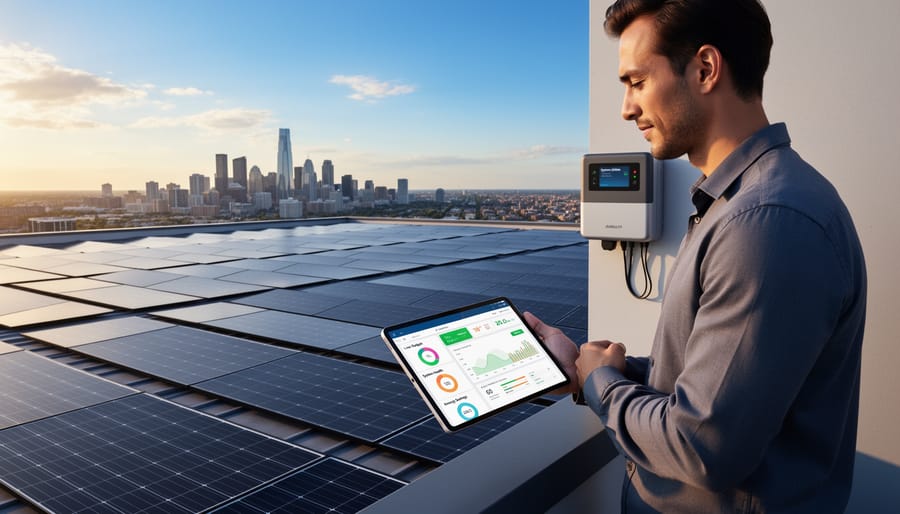
Modern solar photovoltaic systems have evolved far beyond simple energy generation, incorporating sophisticated monitoring and integration capabilities that align seamlessly with contemporary facility management approaches. Today’s commercial solar installations feature real-time performance tracking through cloud-based platforms, enabling facility managers to monitor energy production, consumption patterns, and system health from any location. These digital dashboards provide granular data on panel efficiency, grid interaction, and energy storage metrics, supporting informed decision-making and rapid issue resolution.
Advanced systems now integrate directly with building management platforms, creating a unified approach to energy optimization. Smart inverters communicate with HVAC systems, lighting controls, and other facility infrastructure to balance loads and maximize self-consumption of generated solar power. This integration reduces grid dependence while lowering operational costs through intelligent energy distribution.
The data generated by these systems proves invaluable for strategic planning and demonstrating return on investment. Facility managers can track performance against projections, identify optimization opportunities, and generate comprehensive reports for stakeholders. For organizations focused on attracting tech-savvy talent, particularly younger professionals who prioritize sustainability and innovation, these sophisticated systems demonstrate a commitment to cutting-edge environmental stewardship.
Real-world applications show significant benefits. Manufacturing facilities using integrated solar monitoring have achieved 15-20 percent reductions in energy costs by coordinating production schedules with peak solar generation. Commercial office complexes leverage predictive analytics to optimize energy storage dispatch, ensuring maximum financial returns while maintaining sustainability credentials that resonate with employees and clients alike.
Scalability and Future-Proofing Your Investment
Strategic planning for solar energy investments requires careful consideration of long-term scalability to accommodate business growth and technological advancements. Modern solar installations should incorporate flexible design principles that allow for seamless capacity expansion without requiring complete system overhauls.
When designing your initial solar installation, assess both current energy demands and projected growth over the next 10-15 years. This forward-looking approach ensures that your infrastructure—including roof space allocation, electrical panel capacity, and inverter systems—can accommodate additional panels as your operations expand. Leading facility managers increasingly opt for modular solar designs that allow phased installations, spreading capital expenditure while matching energy production to actual demand growth.
Battery storage integration represents a critical component of future-proof renewable energy systems. While initial installations may focus solely on solar generation, designing infrastructure with battery storage capacity in mind provides flexibility to add energy storage as costs decline and grid independence becomes more valuable. Current lithium-ion battery prices have decreased by approximately 89 percent since 2010, making storage increasingly accessible for commercial operations.
Consider the case of a European manufacturing facility that initially installed a 500 kW solar array with infrastructure designed for 1 MW capacity. Within three years, expanded production requirements justified doubling their solar capacity at 40 percent lower cost than a complete new installation would have required. Their pre-planned approach included oversized conduit systems, strategically positioned junction boxes, and expandable mounting structures.
Smart monitoring systems and advanced inverter technology enable seamless integration of additional capacity while optimizing performance across the entire installation. These digital management tools provide real-time data on energy production, consumption patterns, and system health, facilitating informed decisions about expansion timing and configuration. As regulatory frameworks and grid services evolve, adaptable solar installations position businesses to capitalize on emerging opportunities in demand response programs and renewable energy trading markets.
Building Internal Champions: Engaging Your Team in the Transition

Creating Energy Transition Task Forces
Establishing an effective Energy Transition Task Force requires careful planning and diverse representation to ensure comprehensive evaluation of solar installation projects. Organizations should begin by identifying stakeholders from multiple departments, including finance, operations, facilities management, and importantly, representatives from younger employee demographics who bring fresh perspectives on sustainability priorities.
The task force structure should include six to eight core members with clearly defined roles. Designate a senior leader as executive sponsor to provide strategic direction and resource allocation authority. Include technical experts who understand solar technology specifications and a financial analyst to evaluate ROI metrics and incentive opportunities. Crucially, incorporate employees from different age groups and organizational levels to capture varying viewpoints on long-term sustainability goals.
A leading Australian manufacturing facility successfully implemented this approach by including three employees under 30 in their seven-member task force. These younger participants identified innovative financing options through green bonds and emphasized the recruitment advantages of demonstrable climate action, considerations that traditional energy planning might have overlooked. Their input aligned with community engagement strategies that strengthened the company’s local reputation.
Task forces should meet biweekly during planning phases and establish clear decision-making protocols. Develop specific evaluation criteria covering technical feasibility, financial performance, environmental impact, and workforce engagement. Document all recommendations and create transparent reporting mechanisms to senior leadership. This structured approach ensures solar projects receive thorough analysis while building organizational capacity for future renewable energy initiatives.
Measuring and Communicating Impact
Establishing robust measurement systems enables organizations to demonstrate the tangible value of solar investments to stakeholders while building credibility for sustainability initiatives. Modern monitoring platforms provide real-time data on energy production, consumption patterns, and system efficiency, allowing facility managers to identify optimization opportunities and verify projected returns.
Implementing comprehensive tracking begins with selecting appropriate monitoring software that integrates with existing energy management systems. Quality platforms should measure kilowatt-hours generated, carbon emissions avoided, peak demand reduction, and financial savings across billing periods. These business performance metrics become essential tools for board presentations and sustainability reports.
Effective communication strategies translate technical data into accessible narratives for diverse audiences. Executive summaries should highlight financial returns and risk mitigation, while sustainability reports can emphasize environmental impact through relatable metrics such as equivalent trees planted or homes powered. Creating visual dashboards displayed in common areas helps engage employees and reinforces organizational commitment to renewable energy.
A manufacturing company in Queensland demonstrated this approach by installing digital displays showing real-time solar generation alongside cumulative savings. Within six months, employee engagement in energy conservation initiatives increased 40 percent, while the facility documented 250,000 dollars in operational cost reductions. This transparency strengthened stakeholder confidence and supported approval for additional renewable projects across other locations, illustrating how measurement frameworks drive both accountability and continued investment in sustainable infrastructure.
The strategic imperative for commercial solar adoption has never been clearer. Organizations that align their energy strategies with emerging leadership perspectives position themselves not only for immediate cost savings but also for sustained competitive advantage in an increasingly sustainability-focused marketplace. The convergence of technological advancement, favorable economics, and shifting workforce expectations creates a compelling case for solar investment that transcends traditional ROI calculations.
Business owners and facility managers evaluating solar solutions should begin with a comprehensive energy audit to establish baseline consumption patterns and identify optimization opportunities. Engaging with experienced commercial solar providers enables accurate assessment of site-specific potential, including roof capacity, ground-mount options, and grid integration requirements. Financial modeling should account for federal tax incentives, accelerated depreciation benefits, and projected utility rate escalation over the system’s 25-plus year lifespan.
Successful implementation requires cross-functional collaboration. Involve operations teams in technical specifications, finance departments in structuring arrangements, and human resources in communicating sustainability initiatives to current and prospective employees. Organizations that have embraced this comprehensive approach consistently report enhanced brand reputation, improved talent acquisition outcomes, and measurable progress toward environmental goals.
The pathway to long-term energy independence begins with informed evaluation and strategic planning. Forward-thinking organizations recognize that commercial solar represents more than infrastructure investment—it embodies commitment to operational excellence, fiscal responsibility, and environmental stewardship. As market dynamics continue favoring renewable adoption, early movers secure economic and competitive advantages that compound over decades of operational savings and organizational resilience.