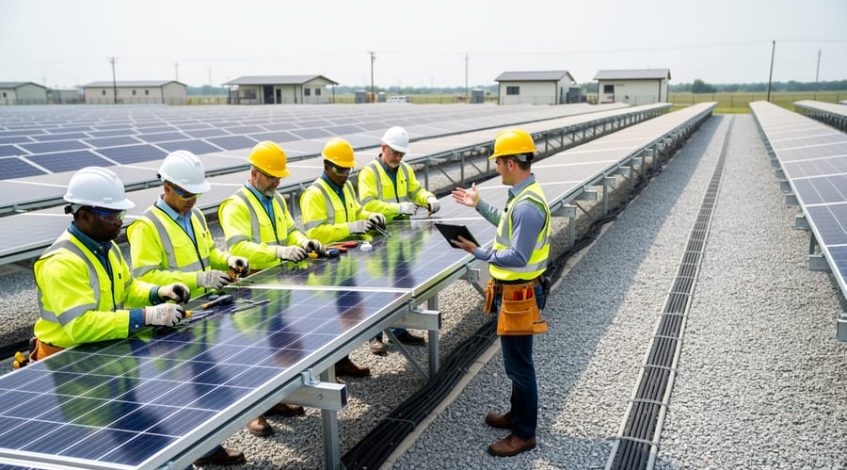
Workforce Solutions operates as a quasi-governmental network of workforce development boards funded primarily through federal grants administered by the U.S. Department of Labor, while maintaining organizational structures that blend public oversight with private sector partnerships. These agencies function under the Workforce Innovation and Opportunity Act (WIOA), making them publicly funded entities that collaborate with local businesses, educational institutions, and industry stakeholders to address critical skills gaps.
For commercial solar stakeholders, understanding this public-private framework directly impacts access to training programs, hiring qualified installers, and securing talent pipelines. Workforce Solutions boards partner with solar companies to develop certified installer training programs, apprenticeships, and recruitment services at subsidized or no cost to employers. The solar industry faces a projected shortage of 500,000 workers by 2035, making these workforce development resources essential for project timelines and quality assurance.
The legitimacy and accessibility of Workforce Solutions stem from their dual accountability structure. While receiving federal and state funding, local boards maintain autonomy to address regional economic needs, including renewable energy sector growth. Business owners seeking to expand solar installation capabilities can leverage these agencies for employee training reimbursements, on-the-job training grants, and access to pre-screened candidate pools with industry-specific certifications. Understanding this organizational model enables facility managers and government officials to maximize workforce development investments while advancing solar adoption goals through strategic talent acquisition partnerships.
Understanding Workforce Solutions: Government Agency or Public-Private Partnership?
The Federal Framework Behind Workforce Development
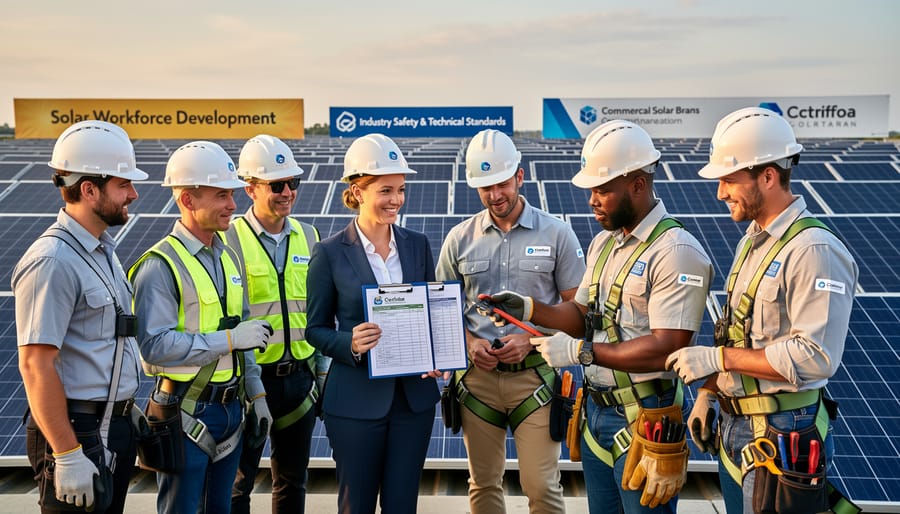
The Workforce Innovation and Opportunity Act (WIOA) of 2014 establishes the federal framework governing workforce development programs across the United States. This legislation channels federal Department of Labor funding to states, which then distribute resources to Local Workforce Development Boards (LWDBs). These boards operate under a unique hybrid structure that combines government funding with independent governance, creating entities that are publicly funded but not traditional government agencies.
LWDBs function as nonprofit organizations governed by boards comprising business leaders, educational institutions, labor representatives, and economic development officials. Business representatives must constitute a majority, ensuring private sector priorities drive program design. This governance structure enables workforce programs to respond quickly to regional labor market demands without traditional bureaucratic constraints.
For solar industry stakeholders, this framework means access to publicly funded training programs designed with business input. The system creates partnerships between government funding sources and private sector expertise, producing qualified solar installers and technicians aligned with actual industry requirements. Understanding this federal-state-local funding cascade helps business owners identify legitimate workforce resources while recognizing that these organizations maintain operational independence from direct government control, despite their public funding origins.
Regional Variations in Workforce Solutions Organizations
Workforce development infrastructure varies significantly across regions, reflecting diverse governance models and funding mechanisms. In Texas, Workforce Solutions operates as a network of local workforce development boards overseen by the Texas Workforce Commission, functioning as quasi-governmental entities with public-private partnerships at their core. California employs a similar structure through its America’s Job Center network, combining state oversight with regional autonomy.
Several states utilize non-profit intermediaries to administer workforce programs, creating a buffer between direct government control and service delivery. This model enables greater flexibility in responding to regional economic conditions, particularly beneficial for emerging sectors like solar energy where training requirements evolve rapidly. Florida and Georgia exemplify this approach, contracting with community-based organizations to deliver workforce services.
For solar industry stakeholders, understanding regional structures proves essential when seeking qualified installers or establishing training partnerships. States with integrated workforce boards typically offer streamlined access to grant funding and apprenticeship programs. Direct engagement with your regional workforce entity, regardless of its specific governance structure, facilitates access to vetted talent pools and customized training initiatives that address technical skill gaps in solar installation and maintenance.
Workforce Development Consortia in the Solar Industry
Why Solar Energy Demands Specialized Workforce Training
Commercial solar installations demand a workforce with specialized technical competencies that extend far beyond traditional electrical work. The industry requires professionals certified in photovoltaic system design, advanced inverter technology, battery storage integration, and grid interconnection protocols. These installations involve high-voltage DC systems, structural engineering considerations for roof-mounted arrays, and sophisticated monitoring equipment that requires ongoing technical expertise.
Safety certifications represent another critical barrier to entry. Solar installers must obtain OSHA-approved training for fall protection, confined space entry, and arc flash hazards. Additionally, professionals need National Electrical Code (NEC) Article 690 expertise specific to solar photovoltaic systems, plus state-specific licensing requirements that vary significantly across jurisdictions.
The quality standards for commercial installations further complicate workforce readiness. Projects must meet manufacturer specifications for warranty compliance, utility interconnection requirements, and increasingly rigorous building codes. Installers need proficiency in commissioning procedures, performance verification, and long-term maintenance protocols that ensure systems deliver projected returns on investment.
Currently, the solar industry faces a substantial skills gap. The Bureau of Labor Statistics projects solar installer positions will grow faster than nearly any other occupation, yet training programs struggle to keep pace with demand. Many electrical contractors lack the specialized knowledge required for complex commercial systems, while recent graduates need hands-on experience with evolving technologies. Organizations focused on solving solar’s talent crisis have become essential partners for businesses planning significant solar investments, ensuring access to qualified professionals who can deliver reliable, code-compliant installations.
How Consortia Connect Solar Companies with Qualified Talent
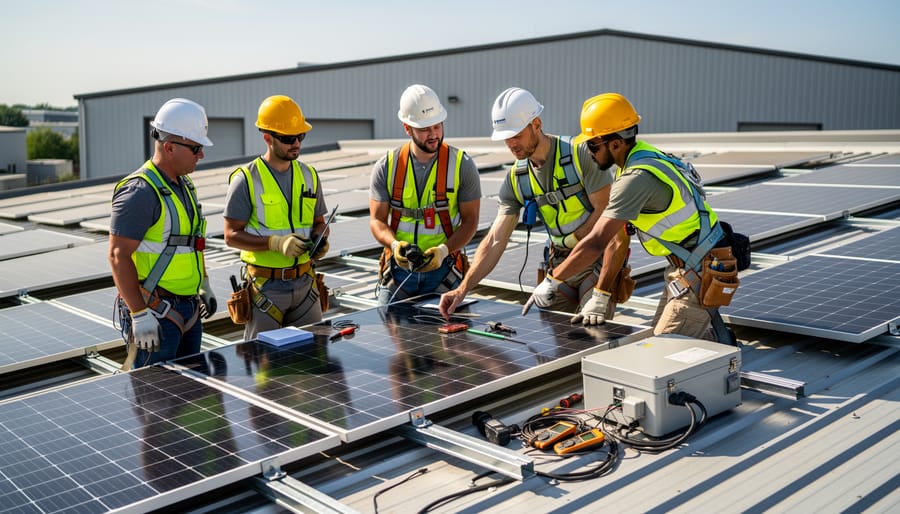
The consortium model represents a strategic partnership approach where workforce development agencies facilitate collaboration between solar companies, community colleges, technical schools, and industry certification bodies. These agencies serve as coordination hubs, identifying skill gaps within the solar installation sector and designing training programs that directly address employer needs.
In practice, workforce agencies conduct regular labor market assessments to understand the specific competencies solar companies require—from photovoltaic system design to electrical code compliance and safety protocols. They then work with educational institutions to develop curriculum aligned with industry-recognized certifications such as NABCEP credentials. The agency typically provides funding support, connects employers with training providers, and may subsidize tuition for qualifying participants.
A notable example comes from Texas, where Workforce Solutions boards partnered with local solar contractors and community colleges to establish accelerated training programs. Participating companies provided input on course content, offered equipment for hands-on training, and committed to interviewing program graduates. The workforce agency facilitated employer engagement, managed grant funding, and tracked employment outcomes.
This collaborative framework benefits all stakeholders: solar companies gain access to pre-screened, certified installers; educational institutions maintain relevant curriculum with direct employer feedback; and workforce agencies fulfill their mandate to connect job seekers with growing industries. For commercial solar developers managing large-scale projects, these partnerships provide reliable talent pipelines while reducing recruitment costs and onboarding time. The consortium approach transforms workforce agencies from simple job placement services into strategic workforce development partners.
Accessing Workforce Solutions Resources for Your Solar Business
Funding Opportunities and Tax Incentives
Workforce Solutions agencies administer several government-backed programs designed to reduce the financial burden of developing a skilled solar workforce. For businesses entering the commercial solar sector, these incentives can significantly offset operational costs while building internal expertise.
The On-the-Job Training program reimburses employers up to 50% of trainee wages during the initial employment period, typically covering 3-6 months. This subsidy allows solar installation companies to expand their workforce while maintaining profitability during the training phase. Real-world application has shown that businesses utilizing this program reduce hiring costs by an average of $4,000 per employee.
Registered Apprenticeship programs offer additional benefits, including tax credits of up to $5,000 per apprentice and access to structured curriculum development support. These programs particularly benefit medium-sized solar contractors seeking to establish standardized training protocols without dedicating substantial internal resources.
Work Opportunity Tax Credits provide further incentives when hiring from specific demographics, including veterans and long-term unemployed individuals, with credits ranging from $2,400 to $9,600 per qualified hire. Combined with Workforce Solutions coordination services, these programs create a comprehensive financial ecosystem that supports sustainable workforce development while advancing commercial solar deployment goals. Facility managers and business owners should consult local Workforce Solutions offices to determine program eligibility and application procedures.
Building Strategic Partnerships with Local Workforce Boards
Solar companies seeking qualified installation professionals should follow a systematic approach when engaging their regional Workforce Solutions board. Begin by identifying your local board through the national CareerOneStop directory or state workforce agency website. Initial contact should include a clear articulation of your hiring needs, projected workforce growth, and specific skill requirements for solar installation positions.
Schedule a needs assessment meeting with the board’s business services team. During this consultation, discuss your technical training standards, safety certifications, and timeline for filling positions. Workforce boards can provide labor market data, competitor hiring trends, and insights into available talent pools within your region. Many boards offer employer councils specifically focused on clean energy sectors, providing opportunities for strategic partnerships with complementary businesses.
Collaborate with the board to develop customized training programs that align with industry certifications such as NABCEP or OSHA standards. Many boards can fund incumbent worker training, reducing your costs for upskilling current employees. Additionally, explore registered apprenticeship programs that combine classroom instruction with paid on-the-job learning, creating a pipeline of qualified installers while offsetting training expenses through tax credits and potential grant funding available to participating employers.
Real-World Impact: Case Studies in Solar Workforce Development
Commercial Solar Installation Training Program Success
The Texas Gulf Coast Workforce Solutions consortium partnered with state energy officials in 2021 to address the critical shortage of certified solar installers across the commercial sector. This collaborative initiative, funded through public workforce development grants and private industry contributions, launched a 12-week intensive training program combining classroom instruction with hands-on installation experience at actual commercial facilities.
The program graduated its first cohort of 45 participants in June 2022, with 89 percent securing employment within 60 days at average starting salaries of $48,000 annually. By December 2023, the initiative had trained 187 certified installers across four cohorts, with completion rates exceeding 82 percent. Participating employers reported a 94 percent satisfaction rate with graduate performance and technical competency.
The curriculum aligned with North American Board of Certified Energy Practitioners standards while incorporating specific training on commercial-scale systems, safety protocols, and equipment maintenance. Local facility managers partnering with the program received priority access to graduates, reducing their recruitment timelines by an average of 45 days compared to traditional hiring methods.
This success model demonstrates how government-supported workforce agencies effectively bridge skill gaps in emerging industries. The program’s structured approach to certification, employer engagement, and outcome tracking established a replicable framework now being adapted by workforce boards in Arizona, California, and Florida to support their regional solar installation workforce needs.
Government Facilities Solar Projects and Workforce Training
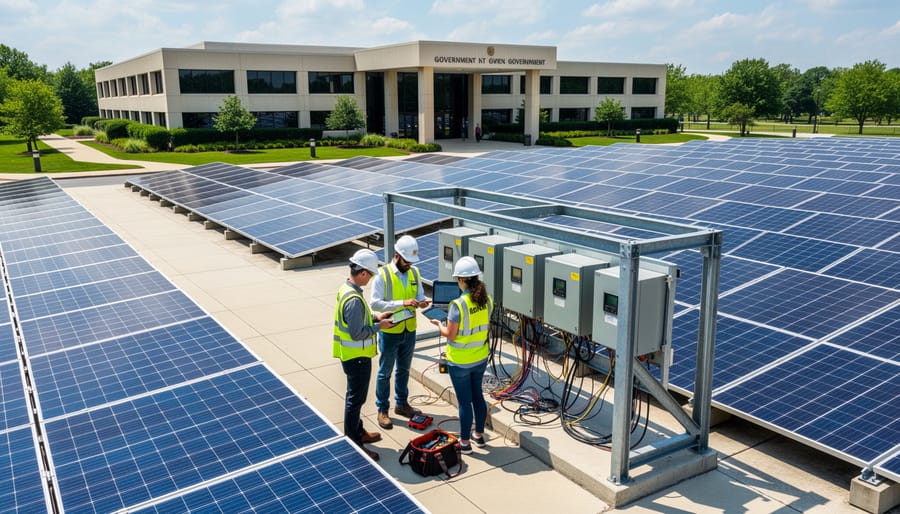
Government agencies nationwide have transformed solar installations at public facilities into valuable workforce development opportunities through strategic partnerships with Workforce Solutions boards and training providers. These initiatives address the dual challenge of upgrading aging infrastructure while simultaneously building a qualified talent pipeline for the renewable energy sector.
Federal facilities, military bases, and municipal buildings have served as training laboratories where participants gain hands-on experience with large-scale photovoltaic systems under real-world conditions. The Department of Defense, for instance, has integrated workforce training components into solar procurement contracts at installations across multiple states, requiring contractors to collaborate with local workforce development agencies to provide apprenticeships and certifications.
One successful model involves phased construction approaches where trainees work alongside experienced installers on government solar projects, earning credentials while contributing to project completion. State workforce boards coordinate with contractors to ensure participants meet industry standards and obtain NABCEP certifications or equivalent qualifications.
These partnerships deliver measurable returns for all stakeholders. Government entities achieve infrastructure modernization goals while supporting economic development initiatives. Training organizations secure practical learning environments that enhance program credibility. Contractors access a growing pool of qualified candidates to meet increasing demand. The structured nature of government projects provides ideal conditions for comprehensive training, from initial site assessment through system commissioning and maintenance protocols.
Understanding the nature of Workforce Solutions entities clarifies a significant strategic opportunity for solar industry stakeholders. While these organizations receive government funding and oversight, they operate as accessible business partners designed specifically to connect employers with qualified talent. For commercial solar installation companies, this public-private framework represents a valuable resource rather than bureaucratic complexity.
The government support behind Workforce Solutions ensures program stability, standardized training quality, and accountability in workforce development outcomes. However, their business-focused operational model means solar companies can engage with these resources through straightforward partnerships without navigating extensive governmental procedures. This balanced approach delivers the reliability of publicly supported programs with the responsiveness businesses require.
For facility managers and business owners evaluating commercial solar projects, partnering with Workforce Solutions-connected training programs offers distinct advantages. These relationships provide access to pre-screened candidates with industry-recognized certifications, reducing hiring risks and accelerating deployment timelines for solar installations. The investment in workforce development through these channels translates directly to improved project quality, enhanced safety compliance, and stronger return on investment for solar infrastructure.
Government officials promoting renewable energy adoption within their jurisdictions benefit from understanding these workforce development mechanisms as critical enablers of regional solar capacity. By facilitating connections between Workforce Solutions entities and commercial solar employers, public leaders can accelerate the transition to sustainable energy while simultaneously strengthening local employment opportunities. The strategic engagement with these workforce resources positions all stakeholders to capitalize on the expanding commercial solar market through a skilled, qualified labor pool capable of delivering high-performance installations.