
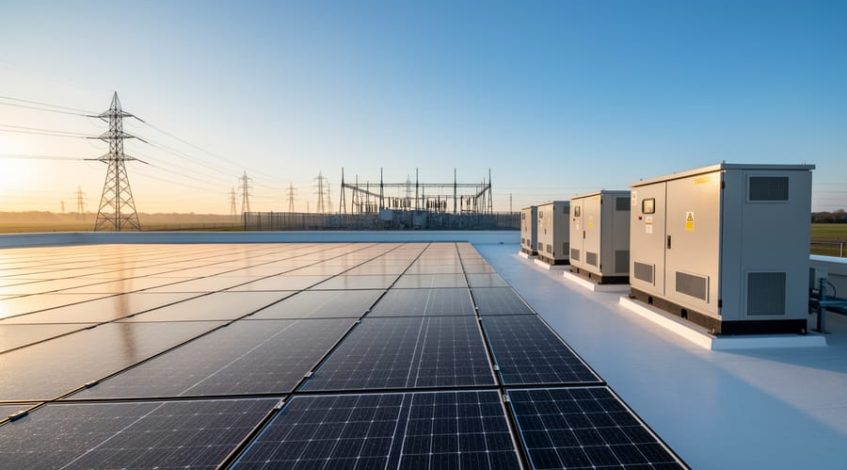
Energy independence no longer means choosing between grid reliability and renewable power. Hybrid solar systems combine photovoltaic arrays, battery storage, and grid connectivity to deliver uninterrupted operations while dramatically reducing electricity costs and carbon footprints. These integrated solutions address the primary challenge facing modern facilities: maintaining 24/7 operational continuity without exclusive dependence on utility providers whose rates continue climbing and whose infrastructure faces increasing strain.
Unlike conventional grid-tied systems that cease functioning during outages or off-grid installations requiring oversized battery banks, hybrid configurations intelligently manage three power sources. Solar panels generate electricity during daylight hours, batteries store excess production for evening demand or emergency backup, and grid connection provides supplementary power during extended low-production periods. This architecture eliminates the vulnerability of single-source dependence while maximizing solar utilization rates that typically reach 85-95% in properly designed commercial installations.
The financial proposition proves compelling across sectors. Manufacturing facilities reduce demand charges through peak shaving, agricultural operations power irrigation systems with stored solar energy during expensive evening rate periods, and government buildings demonstrate fiscal responsibility while meeting sustainability mandates. Real-world implementations show payback periods of 4-7 years with 25-year system lifespans, translating to substantial long-term savings that improve as grid rates escalate.
Today’s hybrid systems incorporate sophisticated energy management platforms that optimize power routing in real-time, predict consumption patterns, and provide transparent operational data. This intelligence transforms solar from an intermittent supplement into a strategic asset that enhances energy security, stabilizes operational costs, and positions organizations ahead of inevitable regulatory shifts toward renewable requirements. The question for forward-thinking decision-makers is not whether to adopt hybrid solar technology, but how quickly implementation can begin delivering measurable returns.
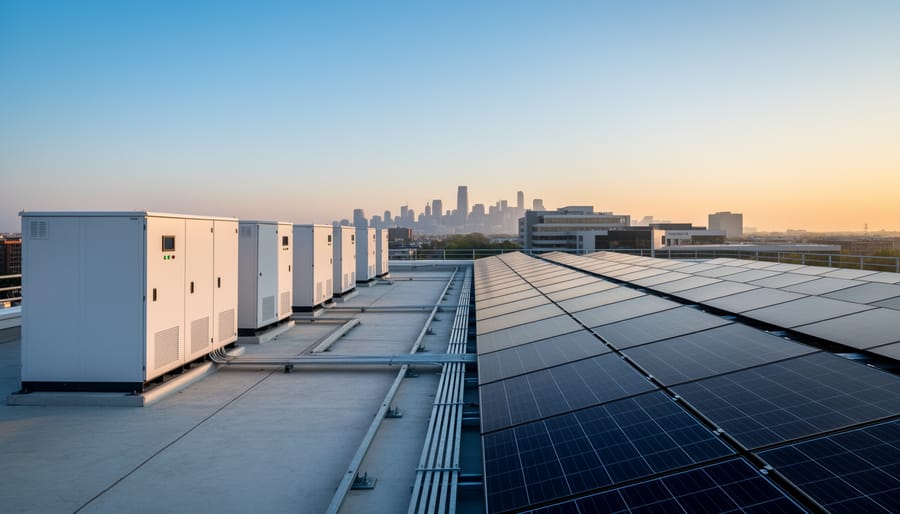
What Makes a Solar System ‘Hybrid’
The Three Energy Sources Working in Harmony
Solar hybrid systems operate through intelligent coordination of three distinct energy sources, each activated according to operational priorities and economic optimization. During daylight hours, solar panels serve as the primary energy source, directly powering facility operations while simultaneously charging battery storage. This reduces immediate grid dependence and maximizes the utilization of renewable energy generation.
When solar production exceeds consumption, excess energy flows into battery storage systems until capacity is reached. Advanced energy management systems continuously monitor production levels, consumption patterns, and battery state-of-charge to optimize power distribution. Once batteries reach full capacity, surplus energy can be exported to the grid where feed-in tariffs make this economically viable.
During peak demand periods or after sunset, the system draws from battery reserves, effectively time-shifting solar energy to high-cost periods. This strategy proves particularly valuable for businesses facing demand charges or time-of-use tariffs, as it minimizes expensive grid purchases during premium pricing windows.
The grid functions as a reliable backup source, automatically engaging when both solar production and battery reserves prove insufficient. This seamless transition ensures uninterrupted operations while maintaining cost efficiency. Modern hybrid controllers can be programmed to prioritize battery discharge during peak tariff periods, reserve battery capacity for critical loads, or maintain grid connection for baseload stability, depending on your facility’s specific operational requirements and energy cost structure.
Key Components That Enable Independence
The foundation of energy independence in hybrid solar systems rests on three interconnected technologies that work in concert to optimize power generation, storage, and distribution.
At the heart of the system, the hybrid inverter serves as the intelligent command center, managing power flows between solar panels, battery storage, and the grid. Unlike traditional inverters that simply convert DC to AC power, hybrid units incorporate sophisticated algorithms that determine whether to store excess energy, use it immediately, or export it to the grid. Modern hybrid inverters can seamlessly switch between power sources in milliseconds, ensuring uninterrupted operations even during grid fluctuations.
Battery management systems (BMS) protect and optimize energy storage by monitoring cell health, temperature, and charge cycles. Advanced BMS technology prevents overcharging, manages discharge rates, and extends battery lifespan by up to 30%, directly impacting long-term ROI. For commercial facilities, this translates to predictable maintenance costs and reliable backup power when it matters most.
Smart controllers complete the ecosystem by learning consumption patterns and making real-time decisions about energy allocation. These systems analyze historical data, weather forecasts, and electricity pricing to maximize savings through peak shaving and load shifting strategies. In practical applications, a manufacturing facility in Portugal reduced grid dependency by 68% using predictive algorithms that anticipated production schedules and adjusted battery charging accordingly.
Together, these components create a resilient energy infrastructure that maintains operational continuity while progressively reducing dependence on conventional power sources, delivering both sustainability goals and measurable cost reductions.
Energy Independence Without the Risks of Going Off-Grid
Maintaining Operations During Grid Failures
Grid failures pose significant operational and financial risks to businesses, from production downtime to compromised safety systems. Hybrid solar systems address this vulnerability by maintaining continuous power delivery without the substantial capital investment required for complete off-grid independence.
When grid power fails, hybrid systems seamlessly transition to battery reserves, ensuring critical operations continue uninterrupted. Unlike off-grid installations that must be sized to handle worst-case scenarios and extended periods without sun, hybrid systems strategically size battery capacity for typical outage durations in their region. This targeted approach reduces battery bank requirements by 40-60% compared to off-grid configurations, significantly lowering upfront costs while maintaining operational continuity.
A manufacturing facility in Germany demonstrates this advantage. Their hybrid installation provides 8 hours of backup power for essential production lines and climate control systems. During the 2021 grid disruptions, the facility maintained operations while competitors experienced costly shutdowns. The system cost approximately €180,000 less than an equivalent off-grid solution while delivering the required reliability.
The intelligent management systems in hybrid installations optimize battery usage, preserving capacity for genuine emergencies rather than routine evening loads. When grid power returns, the system automatically resumes normal operations and begins recharging batteries from both solar generation and grid electricity during off-peak hours.
This balanced approach delivers enterprise-grade reliability without the oversizing penalties inherent to off-grid systems, making hybrid configurations the practical choice for businesses prioritizing both energy independence and financial efficiency.
Scalability for Growing Energy Demands
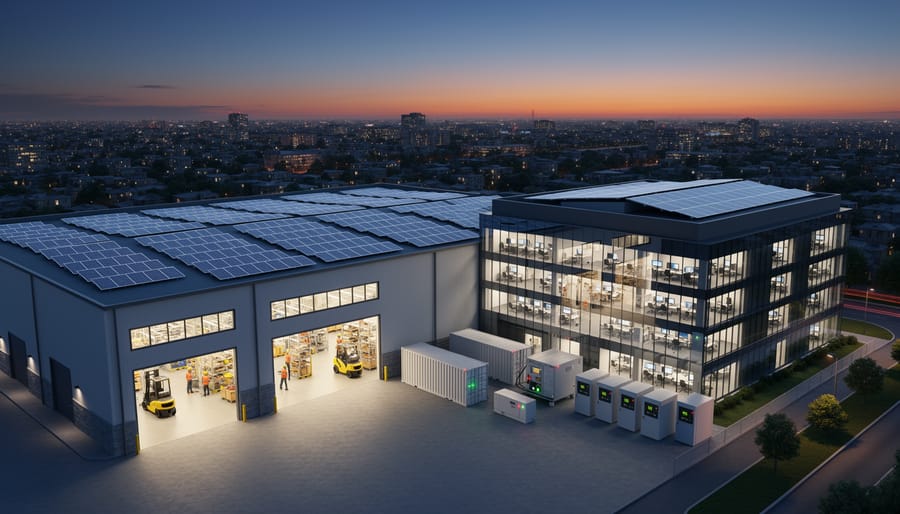
One of the most compelling advantages of hybrid solar systems is their inherent scalability, allowing businesses to expand their energy capacity in alignment with operational growth. Unlike traditional grid-tied systems that require substantial infrastructure modifications, hybrid configurations can accommodate increasing power demands through modular expansion.
Businesses experiencing growth can incrementally add solar panels, battery storage units, or inverter capacity without overhauling the existing system architecture. This phased approach distributes capital expenditure over time, making expansion financially manageable while maintaining uninterrupted operations. For example, a manufacturing facility that initially installed a 100 kW hybrid system can seamlessly scale to 250 kW as production lines expand, simply by adding panels and storage banks to the existing framework.
The intelligent energy management systems inherent to hybrid solutions automatically integrate new components, optimizing energy flow across expanded infrastructure. This adaptability proves particularly valuable for businesses in growth sectors or those planning facility expansions, as the system evolves alongside operational needs rather than becoming obsolete.
Furthermore, hybrid systems accommodate seasonal demand fluctuations and changing business cycles without requiring permanent infrastructure changes, offering a future-proof energy solution that protects long-term investment value while supporting ambitious growth objectives.
Financial Benefits That Drive ROI
Reducing Peak Demand Charges
For commercial and industrial operations, demand charges often represent 30-50% of total electricity costs. These charges, calculated based on your facility’s highest power consumption during specific time intervals, can significantly impact your bottom line even if your overall energy usage remains moderate. Hybrid solar systems with integrated battery storage offer a strategic solution to this challenge through peak shaving.
The battery component of a hybrid system allows you to store excess solar energy generated during off-peak hours and deploy it precisely when your facility experiences maximum power draw. When your consumption approaches or exceeds predetermined thresholds, the system automatically discharges stored energy to supplement grid power, effectively capping your peak demand. This intelligent load management prevents costly demand spikes from triggering higher utility rate tiers.
A manufacturing facility in Germany implemented this approach and reduced peak demand charges by 42% within the first year. The system’s monitoring capabilities identified their highest consumption periods—typically during production shifts between 2-6 PM—and scheduled battery discharge accordingly. The facility maintained full operational capacity while avoiding premium demand charges that previously cost them approximately €85,000 annually.
The return on investment for demand charge reduction alone often justifies battery storage integration. When combined with energy arbitrage opportunities—charging batteries during low-rate periods and using stored power during high-rate times—hybrid systems deliver compounding financial benefits that traditional grid-tied solar installations cannot achieve.
Time-of-Use Optimization
Intelligent energy management systems embedded in modern hybrid solar solutions enable businesses to strategically deploy stored energy based on real-time electricity pricing. During peak demand periods when grid rates reach their highest levels—typically between 2 PM and 8 PM in most commercial tariff structures—the system automatically draws from battery reserves accumulated during solar generation hours. Conversely, when off-peak rates apply overnight or during shoulder periods, the system can recharge batteries from the grid if solar production was insufficient, ensuring full capacity for the next high-rate cycle.
This automated optimization requires no manual intervention. Advanced controllers continuously analyze tariff schedules, weather forecasts, and historical consumption patterns to determine the most cost-effective energy source at any given moment. A manufacturing facility in Adelaide reduced its annual electricity costs by 43 percent by combining time-of-use optimization with demand charge management, demonstrating how hybrid systems slash energy bills through strategic energy deployment.
For businesses with predictable operational schedules, this functionality transforms energy storage from a backup solution into an active revenue protection tool, maximizing the financial return on solar investment while maintaining complete grid connectivity for operational certainty.
Long-Term Price Protection
Hybrid solar systems provide a strategic hedge against escalating energy costs, delivering predictable electricity expenses over their 20-25 year operational lifespan. Historical data shows that grid electricity tariffs have increased by an average of 3-5% annually across most markets, while solar-generated power costs remain fixed after initial investment. This creates an expanding cost differential that significantly enhances return on investment over time.
For facility managers planning long-term budgets, this price stability translates into substantial competitive advantages. A manufacturing facility installing a hybrid system today locks in a portion of its energy costs at current rates, insulating operations from future tariff increases, regulatory changes, and fuel price volatility. Financial modeling demonstrates that businesses typically recoup their initial investment within 5-8 years, after which they benefit from dramatically reduced electricity expenses for the remainder of the system’s lifespan.
Real-world applications confirm these projections. Commercial installations from 2015 have already realized 30-40% savings compared to facilities relying exclusively on grid power, with projected lifetime savings exceeding several million dollars for medium-sized operations. This predictable cost structure enables more accurate financial forecasting and protects profit margins against energy market fluctuations, making hybrid systems a sound long-term investment for forward-thinking organizations.
Real-World Applications Across Industries
Manufacturing and Industrial Facilities
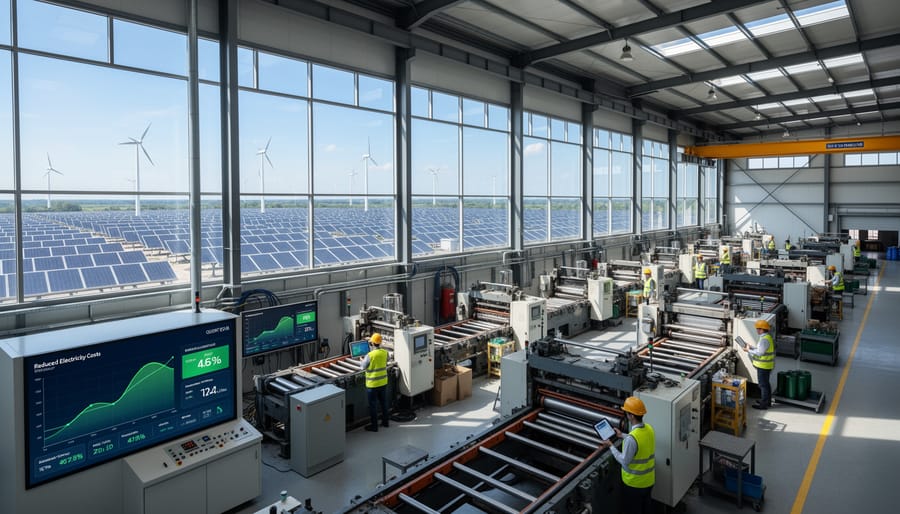
Manufacturing and industrial facilities face significant energy challenges, with continuous operations demanding reliable power and stable costs. Hybrid solar systems address these requirements by combining solar generation, battery storage, and grid connectivity to deliver uninterrupted power supply while substantially reducing operational expenses. During peak production hours, industrial solar systems generate electricity to meet immediate demand, while excess energy charges battery banks for use during evening shifts or periods of high grid pricing. This configuration enables facilities to minimize demand charges and avoid costly peak-rate electricity consumption.
Battery storage provides critical backup power during grid outages, preventing production downtime that can cost thousands per hour. For manufacturers operating heavy machinery, refrigeration systems, or sensitive equipment, this reliability translates directly to protected revenue streams and maintained production schedules. Real-world implementations demonstrate 30-50% reductions in energy costs, with payback periods typically ranging from 4-7 years depending on facility size and energy consumption patterns. The system’s scalability allows incremental expansion as operations grow, making hybrid solutions a strategic investment in operational resilience and long-term cost management.
Government and Municipal Buildings
Government and municipal buildings increasingly demonstrate leadership in renewable energy adoption through hybrid solar installations. Public facilities such as city halls, community centers, and administrative offices have successfully implemented these systems to reduce operational costs while meeting climate action commitments.
A notable example involves municipal recreation centers installing 100-250 kW hybrid systems that reduce grid consumption by 60-70% during peak hours. These installations typically achieve payback periods of 5-7 years through reduced utility expenses and available government incentives. The battery storage component ensures continued operation of critical services during grid interruptions, particularly valuable for emergency coordination centers and public safety facilities.
Educational institutions within the public sector report similar success, with hybrid systems powering administration buildings while serving as educational tools for sustainability programs. These installations demonstrate fiscal responsibility by redirecting energy budget savings toward core public services.
Public sector adoption also accelerates broader market acceptance, as transparent reporting requirements provide valuable performance data for other organizations considering similar investments. Many municipalities now incorporate hybrid solar specifications into new construction and renovation projects, establishing best practices for energy independence that private sector facilities can replicate.
Commercial Real Estate and Office Complexes
Commercial real estate portfolios and corporate office complexes represent ideal candidates for hybrid solar implementation due to their substantial daytime energy consumption patterns and critical need for uninterrupted operations. Multi-tenant buildings typically experience peak demand during business hours when solar generation is optimal, allowing hybrid systems to offset grid consumption while simultaneously charging battery reserves for after-hours HVAC, security, and common area lighting.
Corporate campuses benefit significantly from the load-shifting capabilities of hybrid configurations. A recent implementation at a 200,000 square-foot office complex in California demonstrated 68% grid independence during operational hours, with battery storage managing evening cleaning operations and maintaining emergency systems overnight. The facility reduced demand charges by 42% within the first year, achieving a projected seven-year payback period.
Property managers value hybrid systems for their ability to maintain elevator operations, data centers, and critical building management systems during grid disruptions without the noise and emissions associated with diesel generators. For Class A office buildings where tenant satisfaction and property value depend on service reliability, hybrid solar systems provide quantifiable risk mitigation alongside measurable operational cost reductions. The scalability of these systems allows phased implementation across multiple properties, making them accessible for portfolio-wide energy strategies that align with corporate sustainability commitments while delivering consistent return on investment.
Designing Your Hybrid System for Maximum Independence
Calculating Your Energy Independence Ratio
Understanding your energy independence ratio begins with comprehensive analysis of your facility’s consumption patterns. Start by collecting 12 months of utility data to identify peak demand periods, baseline loads, and seasonal variations. This historical data reveals opportunities where solar generation and battery storage can offset grid dependence most effectively.
Your energy independence ratio represents the percentage of power your facility generates and stores versus what you draw from the grid. For most commercial operations, a 60-70% independence ratio proves financially optimal, balancing capital investment with operational savings. Complete grid independence typically requires oversized systems that may not deliver proportional returns.
Calculate your optimal solar-to-battery-to-grid ratio by mapping your load profile against available roof space and solar irradiance data for your location. A typical commercial facility might deploy a 100kW solar array with 150kWh battery storage, achieving 65% energy independence while maintaining grid connectivity for reliability.
Consider implementing a solar energy management system to optimize this ratio continuously. These platforms analyze real-time consumption, weather forecasts, and electricity pricing to automatically adjust battery charging cycles and grid interaction.
A manufacturing facility in Queensland achieved a 72% independence ratio by installing 250kW of solar capacity with 300kWh storage, reducing annual energy costs by $180,000. Their system prioritizes battery discharge during peak tariff periods while drawing grid power overnight when rates drop, demonstrating how strategic ratios maximize both independence and financial returns.
Critical Load Identification
Accurately identifying critical loads represents a fundamental step in designing an effective hybrid solar system with appropriate backup capacity. This process involves systematically evaluating which equipment, processes, and systems must continue operating during grid outages to maintain essential business functions, safety protocols, and regulatory compliance.
Begin by categorizing operations into three tiers: mission-critical systems requiring uninterrupted power, important functions that can tolerate brief interruptions, and non-essential loads that can be temporarily suspended. For manufacturing facilities, critical loads typically include refrigeration units, security systems, data servers, and specialized equipment requiring constant power. Healthcare facilities prioritize life-support systems, emergency lighting, and climate-controlled storage areas. Commercial operations often designate point-of-sale systems, communication infrastructure, and safety equipment as essential.
Conducting a comprehensive load audit provides the data needed to calculate total backup capacity requirements. Document the power consumption patterns, startup surge requirements, and operational duration for each critical system. This analysis enables precise battery storage sizing and prevents over-investment in unnecessary backup capacity. A European distribution center successfully reduced its hybrid system costs by 30% after identifying that only 40% of its total load required continuous backup power, allowing for optimized battery configuration while maintaining operational resilience during outages.
Installation Considerations and System Integration
Working with Accredited Professional Installers
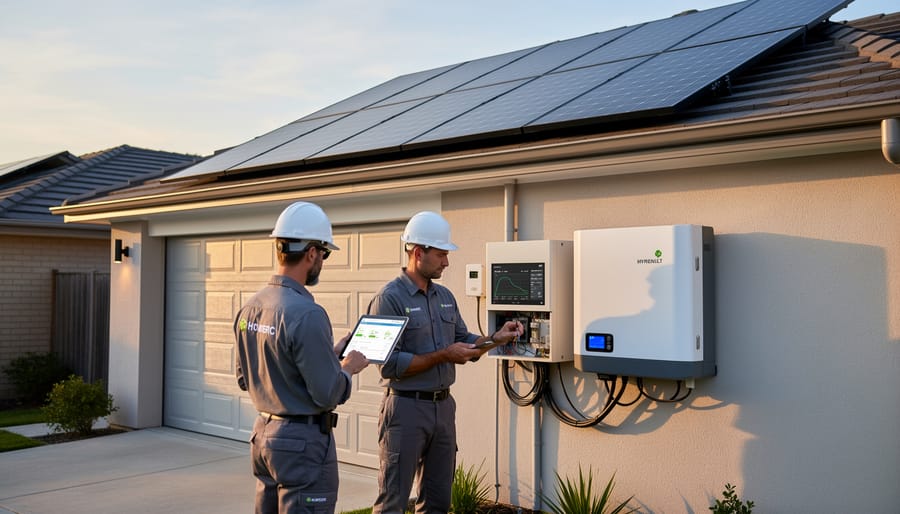
Hybrid solar systems require specialized expertise due to their complex integration of solar arrays, battery storage, inverters, and grid connectivity. Professional installers bring critical capabilities including structural engineering assessments, electrical system design, and regulatory compliance knowledge that ensure optimal system performance and safety.
During the design phase, accredited installers conduct comprehensive site evaluations, analyzing your facility’s energy consumption patterns, available roof or ground space, and grid connection parameters. They develop customized system specifications that align with your operational requirements and budget constraints. Expect detailed load calculations, shading analysis, and equipment recommendations based on proven performance data.
The implementation process typically involves obtaining necessary permits, coordinating utility interconnection agreements, and managing installation timelines to minimize operational disruption. Professional installers ensure compliance with local electrical codes, building regulations, and safety standards while maintaining warranty validity for all components.
Working with certified professionals also provides access to post-installation support, system monitoring setup, and maintenance protocols. Many commercial installations have achieved 15-20% higher efficiency rates compared to non-professional installations, directly impacting return on investment timelines. Verify installer credentials, request references from similar commercial projects, and review proposed equipment specifications against your long-term energy independence goals before proceeding.
Monitoring and Ongoing Support
Effective system monitoring is essential for maintaining optimal hybrid solar performance and achieving sustained energy independence. Advanced monitoring platforms provide real-time visibility into energy production, battery status, consumption patterns, and grid interactions, enabling facility managers to identify inefficiencies and respond proactively to potential issues.
Regular performance analysis helps optimize energy usage patterns, ensuring battery reserves are strategically deployed during peak demand periods when grid electricity costs are highest. Leading commercial installations demonstrate that continuous monitoring can improve overall system efficiency by 15-20% through data-driven adjustments.
Comprehensive maintenance support extends system lifespan and protects your investment. Scheduled inspections, firmware updates, and component testing prevent minor issues from escalating into costly failures. Many commercial operators implement predictive maintenance protocols based on monitoring data, reducing downtime and maximizing return on investment.
Professional support services typically include remote diagnostics, annual site visits, and priority response for system alerts. For organizations prioritizing energy independence, ongoing technical support ensures your hybrid system continues delivering reliable, cost-effective power while adapting to evolving operational requirements and grid conditions over its 25-year operational life.
Future-Proofing Your Energy Strategy
The energy landscape is undergoing rapid transformation, and hybrid solar systems offer businesses the architectural flexibility to adapt to these changes while protecting their infrastructure investments. Unlike traditional grid-only configurations, hybrid systems create an adaptable foundation that accommodates emerging technologies and regulatory shifts without requiring complete system overhauls.
Grid modernization initiatives across Europe are introducing dynamic pricing structures and demand response programs that reward energy flexibility. Hybrid systems position facilities to capitalize on these opportunities through intelligent load management and strategic battery discharge during peak pricing periods. A manufacturing facility in the Netherlands recently achieved 31% additional savings by participating in grid balancing services, utilizing their hybrid system’s storage capacity during periods of renewable energy surplus.
Electric vehicle integration represents another critical consideration for future energy planning. Hybrid systems can seamlessly incorporate EV charging infrastructure while managing the substantial electrical loads these installations create. Battery storage enables businesses to charge fleet vehicles during optimal times without triggering demand charges or overwhelming existing electrical infrastructure. A logistics company operating 25 delivery vehicles integrated their charging requirements into their hybrid solar system, avoiding an estimated EUR 180,000 in electrical service upgrades.
Regulatory environments continue evolving toward stricter emissions requirements and renewable energy mandates. Hybrid systems provide compliance pathways while maintaining operational control. When feed-in tariff structures change or net metering policies adjust, battery storage offers alternative value propositions through self-consumption optimization and backup power capabilities.
The modular nature of hybrid systems allows incremental expansion as business needs grow or technologies advance. Organizations can increase battery capacity, add solar panels, or integrate hydrogen production systems without fundamental redesign, ensuring their energy infrastructure remains relevant across multiple technology generations and market conditions.
Hybrid solar systems represent a strategic investment in energy resilience, delivering the optimal balance between grid independence, operational continuity, and environmental responsibility. For organizations committed to reducing energy costs while maintaining reliable power supply, these systems provide a proven pathway to measurable energy independence. The integration of solar generation, battery storage, and grid connectivity ensures that businesses maintain productivity during outages while capitalizing on renewable energy’s long-term financial advantages.
The evidence from diverse commercial installations demonstrates that hybrid systems consistently outperform traditional grid-only approaches in total cost of ownership. Organizations across manufacturing, healthcare, data centers, and municipal facilities have achieved 60-80% reductions in grid dependence while securing protection against escalating utility rates and supply disruptions. The flexibility to scale battery capacity and solar arrays according to operational requirements makes hybrid systems adaptable to evolving business needs and future expansion.
Taking the next step toward energy independence requires a thorough assessment of your facility’s consumption patterns, operational priorities, and financial objectives. Professional consultation can identify the optimal system configuration that aligns with your organization’s specific requirements and deliver accurate projections for ROI and energy autonomy levels. The transition to hybrid solar technology represents more than an infrastructure upgrade—it positions your organization at the forefront of sustainable operations while securing long-term competitive advantages through energy cost predictability and resilience. Connect with qualified solar professionals today to evaluate your energy independence potential and develop a customized implementation strategy.