Understanding balance-of-system components is essential for maximizing your solar investment’s performance and longevity. While selecting quality solar panels receives considerable attention, the supporting infrastructure determines whether your system delivers promised returns or underperforms for decades.
Prioritize inverter specifications that match your facility’s load profile and future expansion plans, as undersized units create bottlenecks that waste generated power. Specify mounting systems engineered for your region’s wind loads and corrosion conditions, since structural failures compromise both safety and production guarantees. Verify that all electrical components meet relevant Australian standards and carry appropriate certifications, particularly for protection devices that prevent catastrophic failures.
Commercial solar installations depend on properly integrated balance-of-system equipment to convert DC power efficiently, protect against environmental stresses, and maintain grid compliance. Each component category, from combiner boxes to monitoring systems, serves distinct functions that collectively determine system reliability and operational costs over 25-plus years.
This comprehensive guide examines seven critical component categories that facility managers and procurement teams must evaluate during solar project development. You will gain practical frameworks for assessing quality specifications, understanding performance interdependencies, and making informed decisions that align with your organization’s risk tolerance and financial objectives. The following sections provide technical clarity without unnecessary complexity, supported by real-world validation from commercial installations across diverse applications.
Understanding PV Balance-of-System Architecture
What Balance-of-System Actually Means for Your Operation
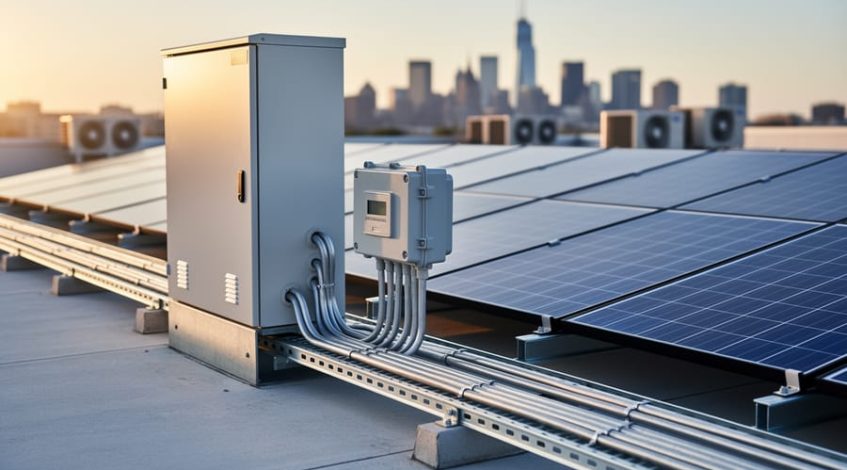
Balance-of-System (BOS) encompasses all equipment beyond the solar panels themselves—including solar inverters, mounting structures, electrical components, monitoring systems, and installation labor. For commercial operations, understanding BOS is essential since these components typically represent 40-50% of total system costs.
The quality of your BOS directly influences system performance, longevity, and return on investment. Premium mounting systems ensure structural integrity for 25+ years, while robust electrical components minimize downtime and maintenance expenses. Commercial-grade monitoring systems provide real-time performance data, enabling proactive maintenance that protects your investment.
A manufacturing facility in Queensland reduced their BOS costs by 15% through strategic component selection without compromising quality. Their procurement team specified locally-certified mounting hardware and Australian Standards-compliant electrical components, streamlining installation while ensuring compliance. This approach delivered a 6.8-year payback period compared to the industry average of 7.5 years for similar-sized installations. Understanding BOS economics allows facility managers to make informed decisions that balance upfront investment with long-term operational efficiency and system reliability.
The Hidden Cost of Inadequate Protection Equipment
Underspecified balance-of-system components create financial and operational risks that extend far beyond initial cost savings. When protection equipment fails to meet system demands, facilities face cascading consequences that impact both bottom-line performance and long-term viability.
Downtime represents the most immediate financial impact. A case study from a 500kW commercial installation in the Netherlands revealed that inadequate surge protection led to inverter failure during a lightning storm, resulting in 12 days of lost production valued at €8,400. The replacement cost, including emergency service fees, exceeded €15,000—substantially more than proper surge protection would have cost initially.
Safety risks compound these concerns. Undersized disconnects or low-quality circuit breakers may not trip appropriately during fault conditions, creating fire hazards and potentially endangering personnel. Insurance claims related to such failures often face rejection when investigators determine that non-compliant components were installed.
Warranty implications prove equally significant. Most inverter manufacturers explicitly void warranties when substandard protection equipment causes damage. This leaves facility owners financially exposed for equipment replacement costs that can reach tens of thousands of euros. Additionally, underperforming systems affect projected energy savings and sustainability targets, undermining the business case that justified the initial investment. Proper specification of all BOS components ensures reliable operation and protects your solar investment over its 25-year lifespan.
Essential Electrical Protection Components
Overcurrent Protection and Circuit Breakers
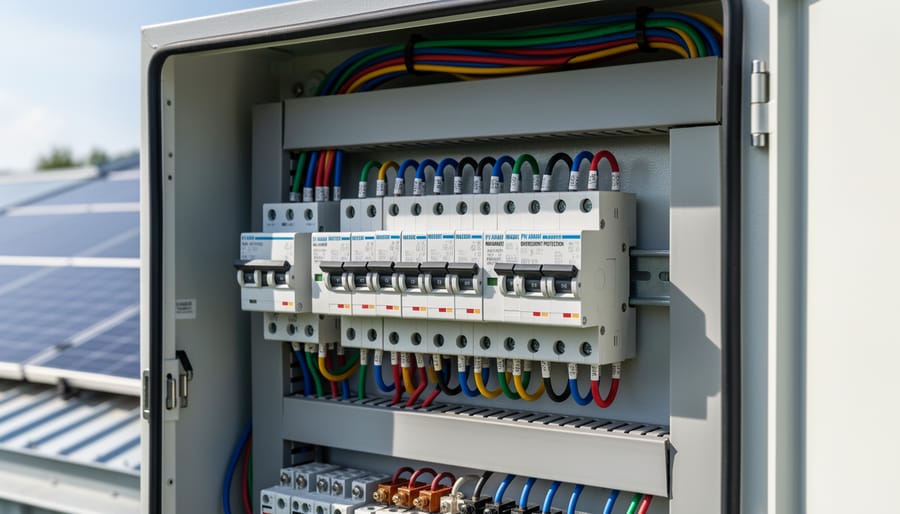
Circuit protection represents a critical safety component in photovoltaic systems, safeguarding both equipment and personnel from electrical faults. Commercial installations require robust overcurrent protection on both the DC side (between solar arrays and inverters) and AC side (from inverters to the electrical grid or facility distribution panel).
DC circuit breakers must withstand the unique characteristics of direct current, which forms sustained arcs more readily than alternating current. Properly rated DC breakers prevent fires and equipment damage by interrupting current flow when electrical faults occur. Selecting breakers rated for the system’s maximum voltage and short-circuit current ensures reliable protection under all operating conditions.
AC circuit protection follows similar principles but addresses alternating current characteristics. These breakers protect inverters, transformers, and downstream electrical infrastructure from overload conditions and ground faults. Ground fault protection devices are particularly important in commercial settings, where large roof-mounted arrays present increased exposure to lightning strikes and environmental factors.
Commercial installations demand higher-grade protection equipment than residential systems due to several factors. Larger system capacities generate higher fault currents, requiring breakers with greater interrupt ratings. Additionally, commercial facilities often maintain 24/7 operations where system downtime directly impacts revenue, making reliability paramount. Industrial-grade circuit breakers offer enhanced durability, longer service life, and more precise trip characteristics.
Proper sizing considerations extend beyond simple amperage ratings. Factor in ambient temperature conditions, altitude, and the breaker’s specific duty cycle when selecting protection equipment. A manufacturing facility in Arizona installing a 500kW rooftop system, for example, required specialized high-temperature-rated breakers to ensure reliable performance despite extreme ambient conditions, demonstrating how environmental factors influence equipment specifications in real-world applications.
Surge Protection Devices (SPDs)
Lightning strikes and voltage surges pose significant risks to photovoltaic installations, potentially causing equipment damage and costly downtime. Implementing appropriate surge protection devices (SPDs) is essential for safeguarding your solar investment and ensuring long-term system reliability.
SPDs are categorized into different types based on their application and protection level. Type 1 SPDs, also known as lightning current arresters, provide primary protection against direct lightning strikes and are typically installed at the service entrance or main distribution board. These devices handle high-energy surges from external sources. Type 2 SPDs offer secondary protection against switching overvoltages and residual surge currents that bypass Type 1 protection. They are commonly installed at subdistribution boards and near sensitive equipment like inverters and monitoring systems.
For large-scale commercial installations, establishing protection zones is critical. The lightning protection zone concept divides your facility into areas with progressively lower surge exposure, with SPDs installed at each zone boundary. Type 1 devices protect at the AC main service entrance, while Type 2 devices safeguard individual inverter connections and control systems.
Proper placement requirements include installing DC-side SPDs between the solar array and inverter, and AC-side SPDs between the inverter and grid connection point. Ground connections must be short and direct to maximize effectiveness.
A manufacturing facility in southern Germany demonstrated the value of comprehensive surge protection when a nearby lightning strike occurred during summer storms. Their properly specified SPD system prevented equipment damage, avoiding an estimated €45,000 in replacement costs and production losses.
Ground Fault Protection and Arc Fault Detection
Ground fault detection and arc fault protection represent critical safety systems that protect commercial solar installations from electrical hazards and potential fire risks. These components continuously monitor electrical circuits for abnormal conditions that could compromise system safety or performance.
Ground fault detection identifies unintended electrical paths to ground, which occur when current leaks from the intended circuit pathway. In commercial PV systems, ground faults can result from insulation degradation, moisture intrusion, or physical damage to wiring. If left undetected, these faults generate heat and create serious fire hazards, particularly in rooftop installations where early detection is paramount. Modern ground fault protection devices interrupt power flow within milliseconds when they detect current imbalances, preventing equipment damage and protecting personnel.
Arc fault circuit interrupters (AFCIs) address a different but equally critical safety concern. Electrical arcing occurs when current jumps across gaps in damaged or loose connections, generating temperatures exceeding 5,000 degrees Fahrenheit. In a 2019 case study involving a 500kW commercial rooftop system in California, AFCI technology prevented a potential fire by detecting series arcing in a damaged cable connector during routine operation. The system automatically shut down the affected circuit before any structural damage occurred.
The National Electrical Code requires both ground fault protection and AFCI technology in commercial PV installations. These requirements reflect documented evidence that proper implementation reduces fire incidents by over 80% compared to systems without such protection. For facility managers evaluating system specifications, ensuring comprehensive fault detection capabilities provides essential risk mitigation while protecting long-term investment value.
Structural and Mounting Systems
Commercial Racking Solutions for Different Roof Types
Commercial solar installations require racking solutions engineered for specific roof configurations and structural limitations. The selection process directly impacts system performance, installation costs, and long-term reliability.
Ballasted racking systems represent the primary solution for flat commercial roofs, distributing weight through concrete blocks or trays rather than penetrating the roofing membrane. This approach preserves roof warranties while providing adequate wind resistance through calculated mass distribution. These systems work particularly well on buildings with sufficient structural capacity to support the additional load, typically 3-5 pounds per square foot. A manufacturing facility in Ohio implemented a 500-kW ballasted system that maintained existing roof warranties while achieving a 15-year payback period.
Attached racking systems utilize roof penetrations with proper flashing and waterproofing, making them suitable for sloped commercial roofs and structures where ballast weight exceeds load capacity. Metal roofing applications often employ standing seam clamps that attach directly to roof seams without penetrations, providing secure mounting while maintaining weather protection. A warehouse distribution center in Texas utilized standing seam mounting for their metal roof installation, eliminating penetration concerns entirely while supporting a 750-kW array.
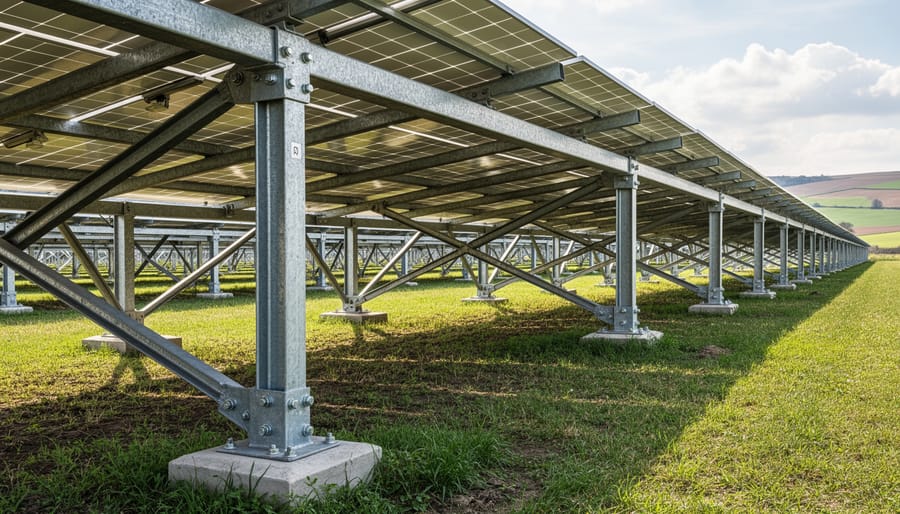
Ground-mount systems offer advantages for properties with available land, eliminating roof load considerations and simplifying maintenance access. These installations also accommodate parking structures through elevated canopy designs that provide dual functionality—generating power while offering weather protection for vehicles. A corporate campus in Arizona installed solar canopies over 400 parking spaces, generating 1.2 MW while improving employee satisfaction through shaded parking areas. This dual-purpose approach often delivers stronger financial returns than roof-mounted alternatives.
Wind Loading and Engineering Requirements
Structural integrity represents a critical consideration when designing commercial PV installations. Mounting systems must withstand significant environmental forces, particularly wind loads that vary by geographic location and installation height. Engineering teams evaluate wind zone ratings based on local building codes and international standards such as Eurocode, which classify regions according to expected wind speeds and pressure coefficients.
Properly engineered mounting systems account for both uplift forces that can pull arrays from rooftops and lateral forces that create shearing stress on attachment points. A manufacturing facility in coastal Portugal, for example, required enhanced anchoring specifications due to its exposure to Atlantic weather systems. The installation team conducted detailed structural assessments of the existing roof membrane and load-bearing capacity before selecting ballasted mounting systems designed for wind speeds exceeding 150 kilometers per hour.
Quality mounting hardware includes corrosion-resistant materials, redundant attachment points, and compliance with relevant safety certifications. For ground-mounted installations, foundation depth and concrete specifications directly influence long-term stability. Professional engineering reviews ensure that racking systems meet or exceed local requirements while accounting for combined loads from wind, snow, and seismic activity. This proactive approach protects your capital investment and minimizes operational disruptions caused by weather-related damage.
Wiring, Conduit, and Interconnection Equipment
PV Wire and Cable Specifications
Selecting appropriate wire and cable specifications ensures your PV system operates safely and efficiently over its 25-year lifespan. Commercial installations require careful consideration of conductor sizing, which depends on system voltage, current capacity, and cable run distances to minimize voltage drop and maintain optimal energy transfer.
DC wiring between solar panels and inverters must withstand harsh outdoor conditions, requiring cables with specialized insulation ratings. UV-resistant jackets prevent degradation from constant sun exposure, while temperature ratings typically range from -40°C to 90°C to accommodate extreme weather variations. These cables must also resist moisture, ozone, and chemical exposure common in industrial environments.
AC wiring from inverters to grid connection points follows different requirements, typically using standard electrical cable with appropriate ampacity ratings. However, both DC and AC circuits demand proper wiring configurations to ensure system safety and code compliance.
For commercial applications, using double-insulated, sunlight-resistant cables specifically designed for photovoltaic systems provides long-term reliability and reduces maintenance costs. Quality cables meeting international standards like EN 50618 or UL 4703 ensure compatibility with other system components while providing the durability necessary for protecting your solar investment against environmental stresses and maintaining consistent performance throughout the system’s operational life.
Combiner Boxes and Junction Boxes
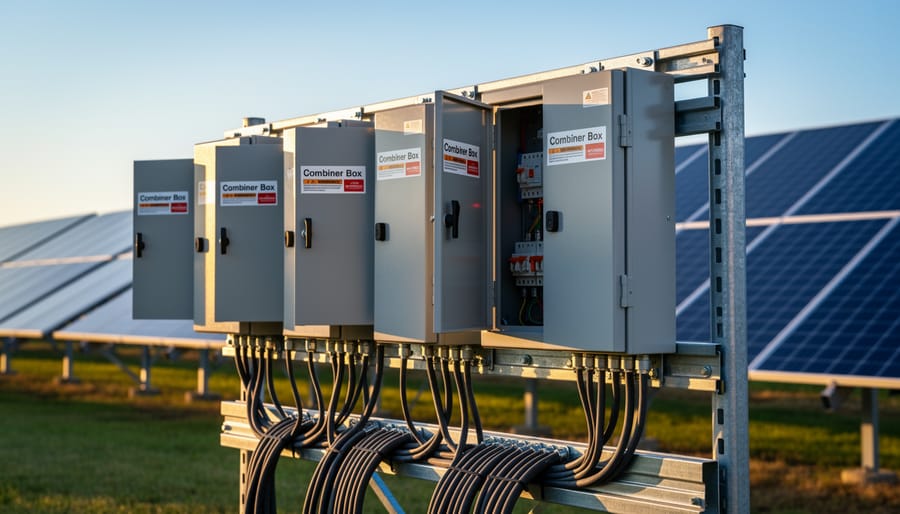
In commercial PV installations, combiner boxes consolidate multiple strings of solar panels into a single circuit before directing power to the inverter. This string-combining function reduces wiring complexity and installation costs while providing a centralized point for overcurrent protection and circuit isolation. Each string typically includes fusing or circuit breakers that protect against reverse current flow and allow individual string disconnection during maintenance without shutting down the entire array.
Junction boxes serve as weatherproof connection points throughout the array, housing wire terminations and providing transition points between quality connectors and hardwired circuits. Both combiner and junction boxes must meet appropriate NEMA (National Electrical Manufacturers Association) ratings for environmental protection. NEMA 3R enclosures provide basic weather resistance suitable for most installations, while NEMA 4X ratings offer superior corrosion resistance essential for coastal or industrial environments with chemical exposure.
Proper specification ensures long-term reliability in commercial configurations. A manufacturing facility in Brisbane reduced maintenance incidents by 40 percent after upgrading to NEMA 4X-rated combiner boxes in their marine-adjacent location. When evaluating these components, facility managers should verify adequate amperage ratings, appropriate fusing for system voltage, and sufficient terminal capacity for future expansion requirements.
Disconnects and Isolation Equipment
Commercial PV installations require comprehensive disconnect and isolation equipment to ensure both operational safety and regulatory compliance. Rapid shutdown systems, mandated by modern electrical codes, automatically de-energize DC conductors within seconds during emergencies, protecting first responders and maintenance personnel. These systems typically integrate with the inverter controls to reduce voltage levels to safe thresholds when activated.
Emergency disconnect switches provide visible isolation points where facility managers can safely interrupt power flow during maintenance or emergency situations. These devices must be clearly labeled, easily accessible, and strategically positioned at key system locations including the inverter, array junction points, and grid interconnection. For commercial facilities, lockout/tagout provisions are essential for maintenance safety protocols. Properly designed disconnect equipment features provisions for mechanical locking devices that prevent inadvertent re-energization while work is in progress. This protection is particularly critical for larger installations where multiple contractors may perform simultaneous maintenance activities. Implementation of compliant disconnect systems not only satisfies code requirements but also minimizes liability exposure and supports long-term operational efficiency by enabling safe, routine maintenance procedures.
Monitoring and Communication Infrastructure
Revenue-Grade Monitoring for Commercial Operations
For commercial and utility-scale installations, revenue-grade monitoring systems provide the financial accountability necessary for performance guarantees, power purchase agreements, and investment validation. These systems go beyond basic production tracking to deliver certified measurement accuracy that satisfies regulatory requirements and contract obligations.
Revenue meters certified to IEC 62053 or ANSI C12.20 standards measure energy production with accuracy levels of 0.5% or better, creating legally defensible data for billing and financial reporting. Advanced data logging systems capture granular performance metrics at one-minute or sub-minute intervals, enabling precise identification of production anomalies and system optimization opportunities.
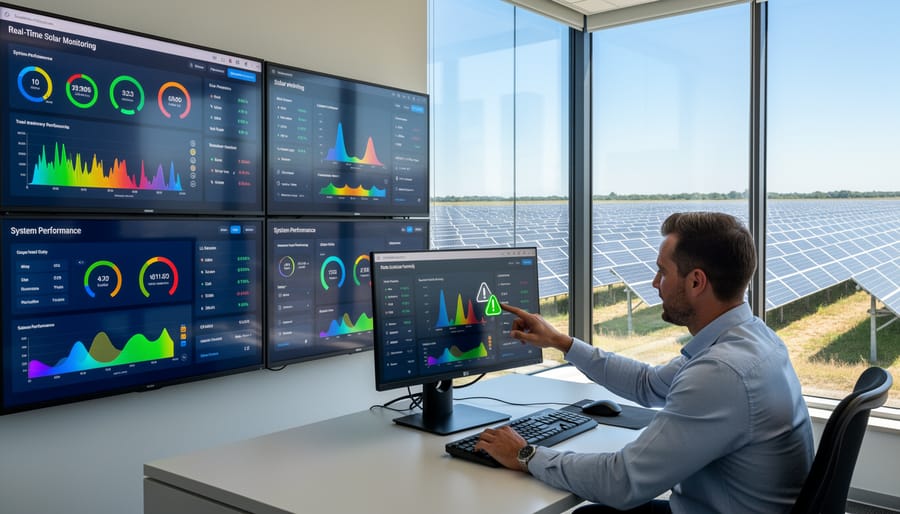
Modern monitoring platforms integrate weather station data, inverter performance metrics, and grid export measurements into unified dashboards that facility managers can access remotely. This real-time visibility supports proactive maintenance scheduling and validates energy production against feasibility study projections.
A notable implementation at a 2.5 MW industrial facility in Valencia demonstrated the value of comprehensive monitoring when production data revealed a 7% underperformance within the first quarter of operation. The monitoring system’s detailed diagnostics identified specific inverter configuration issues, enabling swift correction and full warranty compliance. This level of transparency protects investment returns and ensures that performance guarantees deliver measurable value throughout the system’s operational lifetime.
Remote Diagnostics and Alerting Systems
Modern commercial PV systems incorporate sophisticated remote diagnostics and alerting capabilities that significantly reduce operational costs and maximize energy production uptime. These systems continuously monitor performance metrics across all system components, from individual panel output to inverter efficiency and grid connection stability, transmitting data to cloud-based platforms accessible from any location.
Advanced monitoring solutions employ machine learning algorithms to detect performance anomalies before they escalate into costly failures. When parameters deviate from expected ranges—whether due to inverter malfunctions, panel degradation, or connection issues—the system automatically generates alerts sent directly to facility managers and maintenance teams via email or mobile applications. This proactive approach enables rapid response, often resolving issues remotely without dispatching technicians.
For commercial installations, these capabilities translate into measurable financial benefits. A manufacturing facility in Germany reported reducing annual system downtime by 47% after implementing comprehensive remote diagnostics, directly improving their energy cost savings. The system identified underperforming string inverters and detected shading patterns that required tree trimming, issues that would have otherwise gone unnoticed for months.
Integration with existing building management systems allows facility managers to correlate solar production with overall energy consumption patterns, enabling data-driven decisions about energy usage optimization. This visibility proves particularly valuable for businesses seeking to demonstrate sustainability commitments to stakeholders while maintaining operational efficiency and maximizing return on investment.
Code Compliance and Safety Standards
Navigating code compliance and safety standards represents a critical aspect of commercial PV system design and installation. Balance-of-system components must adhere to stringent regulatory frameworks that ensure system safety, grid stability, and long-term reliability.
The National Electrical Code (NEC) establishes fundamental requirements for all electrical components in photovoltaic installations. Article 690 specifically addresses solar PV systems, mandating standards for conductor sizing, overcurrent protection, grounding, and disconnecting means. These requirements directly impact BOS component selection, from the gauge of wiring to the specifications of circuit breakers and combiner boxes. Compliance with NEC standards is non-negotiable for commercial installations, as local building inspectors verify adherence before issuing certificates of occupancy.
Beyond federal standards, local building codes introduce additional requirements that vary by jurisdiction. These may include wind and snow load calculations affecting racking system design, fire setback requirements influencing panel placement, and specific grounding protocols based on regional soil conditions. Facility managers planning commercial installations should engage with local authorities early in the design process to identify jurisdiction-specific requirements that could affect component procurement and installation timelines.
Utility interconnection agreements add another layer of compliance, particularly for commercial-scale systems. Electric utilities establish technical specifications for inverters, metering equipment, and protective relaying to maintain grid stability. These specifications often exceed minimum NEC requirements, mandating specific anti-islanding features, voltage ride-through capabilities, and communication protocols. A manufacturing facility in Ohio, for example, discovered during permitting that their utility required additional rapid shutdown equipment beyond initial specifications, affecting both timeline and budget.
Working with experienced solar integrators familiar with local regulatory landscapes helps commercial buyers navigate this complex compliance environment efficiently. Proper documentation of component certifications, including UL listings and IEEE standards compliance, streamlines the approval process and ensures long-term system reliability and insurance coverage.
Real-World Application: Manufacturing Facility Case Study
When ABC Manufacturing commissioned their 500kW rooftop solar installation in 2020, the project team made strategic decisions about balance-of-system components that would prove invaluable over the following three years. This mid-sized facility in the industrial sector provides clear evidence of how proper component specification directly impacts long-term performance and financial outcomes.
The installation team selected commercial-grade string inverters from a tier-one European manufacturer, specifically choosing units with IP65 weather protection and advanced monitoring capabilities. Rather than opting for the most economical option, facility management invested in inverters with proven thermal management systems, recognizing that the rooftop environment would subject equipment to significant temperature fluctuations. This decision resulted in zero inverter failures over three years of operation, while a neighboring facility using budget inverters experienced two costly replacements within the same period.
For the mounting system, engineers specified aluminum rails with stainless steel hardware, accounting for the facility’s coastal location and potential corrosion exposure. The initial cost premium of 12 percent compared to standard galvanized steel components proved justified when routine inspections revealed no degradation, while competitors’ installations showed early signs of corrosion requiring preventive maintenance.
The combiner boxes featured marine-grade enclosures with individual string monitoring, enabling rapid identification of underperforming arrays. This capability prevented a potential 15 percent production loss when monitoring detected a damaged cable connection within 48 hours, allowing immediate repair before significant revenue impact occurred.
Most significantly, the installation incorporated DC surge protection devices rated for the specific system voltage with backup thermal disconnects. During a lightning strike in year two, these components absorbed the surge and isolated the affected string, preventing damage estimated at 45,000 euros to inverters and panels.
Over three years, the system achieved 98.7 percent uptime and generated 1,847 MWh, exceeding initial projections by 4.2 percent. The total avoided maintenance and replacement costs attributed to quality component selection reached approximately 68,000 euros, delivering a return on the initial component investment premium within the first operational year.
Making Informed Procurement Decisions
Selecting balance-of-system components requires a strategic approach that prioritizes both immediate budget constraints and long-term operational performance. Decision-makers should begin by establishing clear quality benchmarks for critical components including inverters, mounting systems, and protection equipment.
When evaluating component quality, request detailed product datasheets that specify performance warranties, efficiency ratings, and testing certifications. Inverters warrant particular attention, as premium models offering 97-98% efficiency and 15-year warranties typically deliver superior return on investment compared to budget alternatives with shorter lifespans. Similarly, corrosion-resistant mounting hardware designed for your specific environmental conditions prevents costly premature failures.
The temptation to minimize upfront expenditure often leads to higher total cost of ownership. A comprehensive lifecycle cost analysis should account for replacement intervals, ongoing system maintenance requirements, and potential production losses from component failures. Premium components commanding 15-20% higher initial investment frequently generate net savings through extended operational life and reduced maintenance interventions.
Effective collaboration with installation partners begins with clearly defined project specifications. Request itemized proposals that identify manufacturer and model numbers for all major components rather than generic descriptions. Verify that proposed equipment carries appropriate certifications for Australian standards and climatic conditions relevant to your location.
During vendor selection, prioritize installers who demonstrate willingness to explain component choices and provide technical justification for their recommendations. Experienced professionals should readily discuss trade-offs between different component options and align specifications with your operational priorities, whether emphasizing maximum efficiency, extended warranty coverage, or specific monitoring capabilities.
Finally, establish clear performance metrics and acceptance criteria before project commencement. This proactive approach ensures accountability and provides objective standards for validating that installed components meet agreed specifications and quality expectations.
The foundation of reliable commercial solar performance extends far beyond the photovoltaic panels themselves. Balance-of-system components and comprehensive protection equipment represent the critical infrastructure that determines whether your solar investment delivers consistent returns over its 25-year lifespan or becomes a source of costly maintenance and downtime.
Quality inverters, properly specified combiner boxes, robust mounting systems, and comprehensive surge protection work together as an integrated system. When one component underperforms or fails, the entire array’s efficiency suffers. A recent industrial facility installation demonstrated this principle clearly: the difference between standard and premium-grade disconnect switches resulted in a 15 percent reduction in maintenance calls over three years, translating to significant operational savings.
Working with experienced solar installers who understand proper component selection makes the difference between adequate performance and exceptional returns. Qualified professionals evaluate your facility’s specific electrical characteristics, environmental conditions, and operational requirements to specify components that match your needs rather than simply meeting minimum standards.
The upfront cost difference between standard and premium protection equipment typically represents less than 5 percent of total project costs, yet this investment directly impacts system reliability, insurance premiums, and long-term maintenance expenses. For commercial solar projects where downtime means lost revenue and unmet sustainability commitments, selecting quality BOS components and protection equipment isn’t optional—it’s essential to maximizing your solar investment returns.