
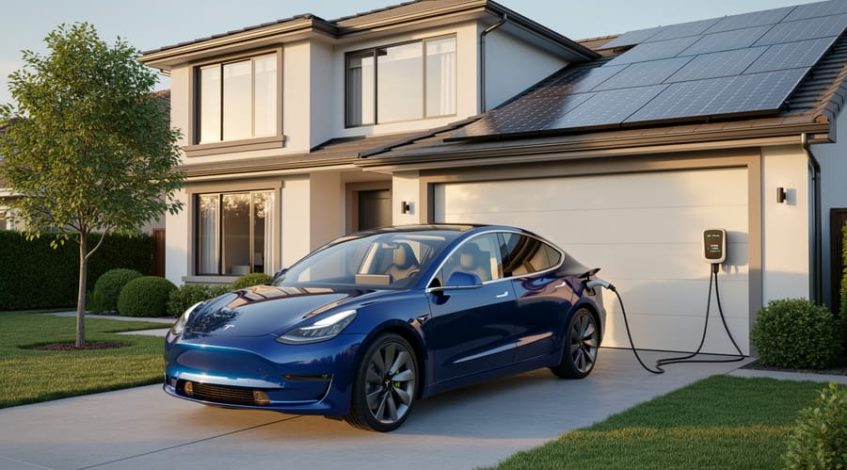
Assess your property’s electrical capacity before selecting a charging solution—most residential EV chargers require 240-volt circuits with 40-60 amp capacity, which may necessitate panel upgrades costing $1,500-$3,000. Contact a licensed electrician to evaluate your existing infrastructure and determine whether your main service panel can support Level 2 charging stations that deliver 25-30 miles of range per hour.
Calculate total ownership costs by combining equipment ($500-$2,500), installation ($750-$1,500), and ongoing electricity expenses, then compare against potential fuel savings of $800-$1,200 annually per vehicle. Property managers overseeing multiple units should factor in smart charging systems with load management capabilities that prevent grid overload while servicing multiple vehicles simultaneously.
Integrate solar power generation to maximize return on investment and achieve energy independence—pairing a residential charging station with rooftop solar panels reduces operating costs by 60-80% while insulating against utility rate increases. Analysis of commercial installations demonstrates payback periods of 5-7 years when combining renewable energy solutions with EV charging infrastructure, particularly in regions with time-of-use electricity pricing.
Prioritize networked charging stations with monitoring capabilities that track energy consumption, schedule charging during off-peak hours, and provide usage analytics essential for facility managers overseeing shared charging resources. These smart systems enable dynamic load balancing across multiple charging points, reducing demand charges that can account for 30-50% of commercial electricity costs.
The convergence of electric vehicle adoption and distributed energy resources creates unprecedented opportunities for property owners to reduce operational expenses while meeting sustainability objectives. Strategic implementation of residential charging infrastructure positions facilities for long-term competitiveness as transportation electrification accelerates across commercial and residential sectors.
The Business Case for Residential EV Charging Infrastructure
Understanding Level 2 vs. Level 1 Charging Economics
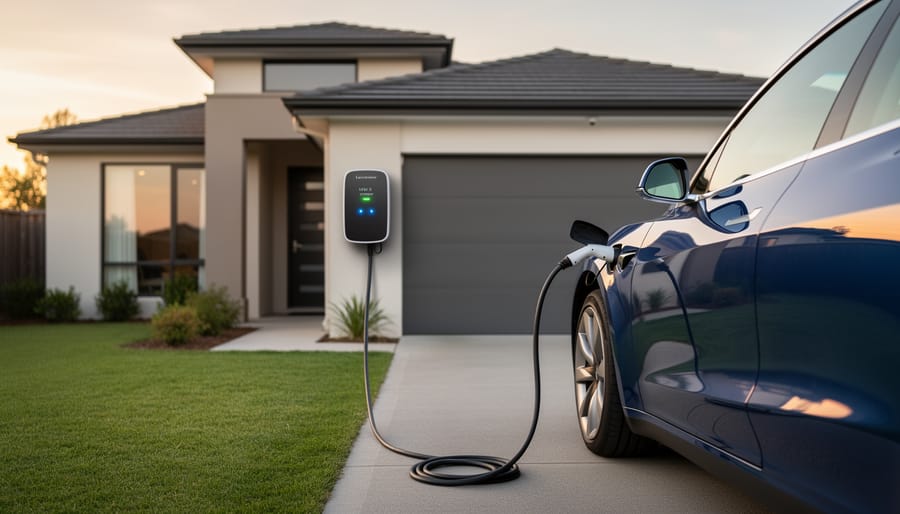
Residential electric vehicle charging primarily occurs at two levels, each offering distinct operational and financial characteristics. Level 1 charging utilizes standard 120-volt household outlets, delivering approximately 4-5 miles of range per hour. While installation costs are negligible since existing infrastructure suffices, the extended charging times make Level 1 impractical for most residential applications, particularly for households with daily commuting needs exceeding 40 miles.
Level 2 charging operates on 240-volt circuits, similar to those powering major appliances. These stations deliver 25-30 miles of range per hour, fully charging most EVs overnight. Installation costs typically range from $1,200 to $2,500, including equipment, electrical panel upgrades when necessary, and professional installation. Despite higher upfront investment, Level 2 stations provide superior long-term value through enhanced convenience and flexibility.
The economic case for Level 2 strengthens when examining usage patterns. Business owners and facility managers benefit from the operational efficiency of faster charging cycles, enabling multiple vehicle charges within standard overnight periods. This proves particularly valuable for households operating multiple EVs or requiring rapid turnaround times.
Installation costs decrease substantially when paired with complementary electrical work, such as solar panel system integration. Many property owners scheduling electrical panel upgrades for solar installations simultaneously install Level 2 charging infrastructure, reducing combined labor costs by 20-30 percent. This strategic coordination maximizes return on investment while future-proofing residential electrical systems for expanding EV adoption and increasing energy independence through renewable integration.
Impact on Property Values and Tenant Appeal
Installing residential EV charging infrastructure delivers measurable returns on investment through enhanced property values and increased market appeal. Recent studies from the National Association of Realtors indicate that homes equipped with EV charging capabilities command premium pricing, with valuations increasing between 3% and 5% in metropolitan markets where electric vehicle adoption exceeds 10% of registered vehicles.
The competitive advantage extends beyond immediate valuation metrics. Properties featuring integrated EV charging systems experience reduced time-on-market, averaging 23 days faster sales compared to equivalent properties without charging infrastructure. This acceleration reflects shifting buyer preferences, particularly among younger demographics and sustainability-conscious purchasers who prioritize future-ready amenities.
For multi-family residential developers, charging infrastructure has transitioned from optional amenity to essential feature. Market research demonstrates that 76% of prospective renters aged 25-40 consider EV charging availability when evaluating rental properties, directly impacting occupancy rates and tenant retention. Properties offering charging access report 18% higher tenant satisfaction scores and reduced vacancy periods.
The financial impact amplifies when combining charging infrastructure with renewable energy systems. Residential developments integrating solar power generation with EV charging capabilities demonstrate premium market positioning, attracting environmentally conscious buyers willing to pay 7-10% above comparable properties. This integration strategy creates differentiated value propositions while addressing growing consumer demand for sustainable living solutions.
Property owners should view EV charging infrastructure as long-term asset enhancement rather than discretionary expense, particularly as regulatory environments increasingly favor electrified transportation and building codes evolve to mandate charging readiness in new construction.
Solar-Powered EV Charging: The Integration Advantage
System Sizing and Energy Production Requirements
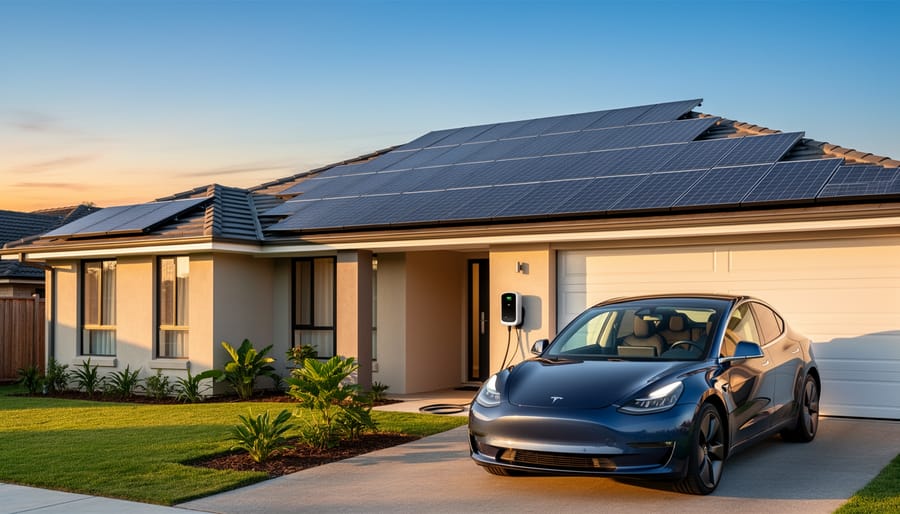
Determining the appropriate solar array capacity for residential EV charging requires a methodical assessment of both existing household consumption and anticipated charging loads. Most residential charging stations operate at Level 2 capacity (240V, 7.2-11 kW), adding approximately 1,500-3,000 kWh annually to household energy consumption, depending on driving patterns and vehicle efficiency.
Begin by analyzing baseline household energy usage through utility billing history. The average American home consumes roughly 10,500 kWh annually, though this varies significantly by region, climate, and household size. Add projected EV charging requirements based on estimated annual mileage—typically 30-40 kWh per 100 miles for modern electric vehicles.
For comprehensive energy independence, a solar array producing 125-150 percent of combined household and EV charging loads ensures adequate coverage during seasonal variations and less-productive weather periods. A household consuming 10,500 kWh annually with one EV adding 2,400 kWh would require an approximately 10-12 kW solar installation in most regions, generating 13,000-16,000 kWh annually depending on local solar insolation levels.
System sizing should also account for charging patterns. Daytime charging aligns perfectly with peak solar production, maximizing self-consumption and reducing grid dependency. Evening charging requires either battery storage integration or grid supplementation. Real-world applications demonstrate that properly sized systems can offset 70-90 percent of combined loads without storage, rising to nearly 100 percent with adequate battery capacity.
Consider future scalability when sizing arrays. Multiple EVs, increased household consumption, or additional electrical loads may develop over the system’s 25-year lifespan. Designing with 20-30 percent excess capacity provides flexibility while maintaining favorable return on investment through net metering credits. Professional load analysis and site-specific solar assessments ensure optimal sizing for long-term performance and financial returns.
Net Metering and Time-of-Use Optimization
Residential EV charging combined with solar energy systems offers substantial cost savings when strategically aligned with utility programs. Net metering allows homeowners to export excess solar generation to the grid during peak production hours, earning credits that offset nighttime charging costs. This bidirectional energy flow transforms your home into a dynamic energy hub, particularly valuable for multi-vehicle households or properties with commercial applications.
Time-of-use rate structures present optimization opportunities through smart charging schedules that align EV charging with off-peak electricity rates. Advanced charging stations equipped with programmable timers or mobile applications enable automatic charging initiation during low-cost periods, typically between 10 PM and 6 AM. When integrated with solar battery storage, this strategy maximizes self-consumption by prioritizing stored solar energy before drawing from the grid.
A Sydney-based facility manager implementing this dual approach reported 73 percent reduction in grid-sourced electricity for EV charging across a fleet of six vehicles. The installation combined a 15kW solar array with intelligent load management software that sequenced charging sessions based on available solar generation and battery state-of-charge.
Utility rebate programs further enhance return on investment. Many Australian energy retailers offer reduced rates for controlled load connections dedicated to EV charging, with discounts reaching 40 percent below standard residential tariffs. Coupling these programs with solar generation creates compounding savings while reducing strain on grid infrastructure during peak demand periods.
Implementation requires coordination between solar installers, electricians, and utility providers to ensure proper metering configuration and program enrollment. The initial planning investment typically pays dividends within the first operational year through optimized energy flows and program participation.
Smart Charging Technology and Load Management
Load Balancing for Multi-Unit Residential Properties
Multi-unit residential properties face unique challenges when implementing EV charging infrastructure, primarily due to limited electrical capacity and the high costs associated with service panel upgrades. Load management systems offer a practical solution by intelligently distributing available power across multiple charging stations without exceeding existing electrical infrastructure limits.
Dynamic load balancing technology monitors real-time power consumption throughout the property and automatically adjusts charging rates for each vehicle based on available capacity. When electrical demand is high, the system reduces charging speeds proportionally across all active stations. During off-peak hours, it maximizes charging rates to ensure vehicles are ready when residents need them. This approach allows properties to install significantly more charging stations than would otherwise be possible with their existing electrical service.
Advanced load management systems can prioritize charging based on configurable parameters such as resident parking assignments, time-of-arrival, or state of charge. Property managers can set policies that ensure equitable access while preventing any single user from monopolizing available capacity. Some systems integrate with utility time-of-use rates, automatically scheduling charging during lower-cost periods to reduce operational expenses for both property owners and residents.
For apartment complexes and condominiums, implementing load balancing typically costs 40-60 percent less than upgrading electrical infrastructure to support unmanaged charging stations. A 50-unit residential development in California successfully deployed 30 charging stations using load management technology, avoiding a projected 180,000 dollar electrical service upgrade. The system has operated reliably for three years, maintaining 98 percent user satisfaction while accommodating growing EV adoption among residents. This demonstrates how strategic implementation of load balancing technology delivers immediate value while future-proofing properties for expanding EV ownership.
Battery Storage Integration Strategies
Integrating residential battery systems with solar panels and EV charging stations creates a comprehensive energy ecosystem that maximizes efficiency and cost savings. This three-way integration enables homeowners to store excess solar generation during the day and deploy it strategically for evening EV charging, effectively eliminating grid dependence during peak rate periods.
Battery storage systems serve as intelligent energy managers, automatically directing solar power to either immediate household consumption, EV charging, or battery reserves based on programmed priorities. During grid outages, battery-backed charging stations maintain functionality, ensuring vehicle availability during emergencies. This reliability proves particularly valuable for business owners operating from home offices who depend on transportation continuity.
From a financial perspective, battery integration enables advanced peak demand management. Systems can charge batteries during off-peak hours when electricity rates are lowest, then discharge stored energy during peak periods when grid electricity costs premium rates. For facilities managing multiple vehicles, this strategy delivers substantial monthly savings by flattening demand profiles and avoiding costly demand charges.
A residential case in Victoria demonstrated the practical benefits of this approach. The property owner installed a 13.5 kWh battery system alongside solar panels and a 7 kW EV charger. The configuration achieved 85 percent solar self-consumption, reduced monthly energy costs by 62 percent, and provided complete backup power for essential loads including vehicle charging. The system paid for itself within 7.5 years through combined electricity savings and reduced reliance on grid power during peak tariff windows.
Installation Considerations and Technical Requirements
Electrical Panel Capacity and Upgrades
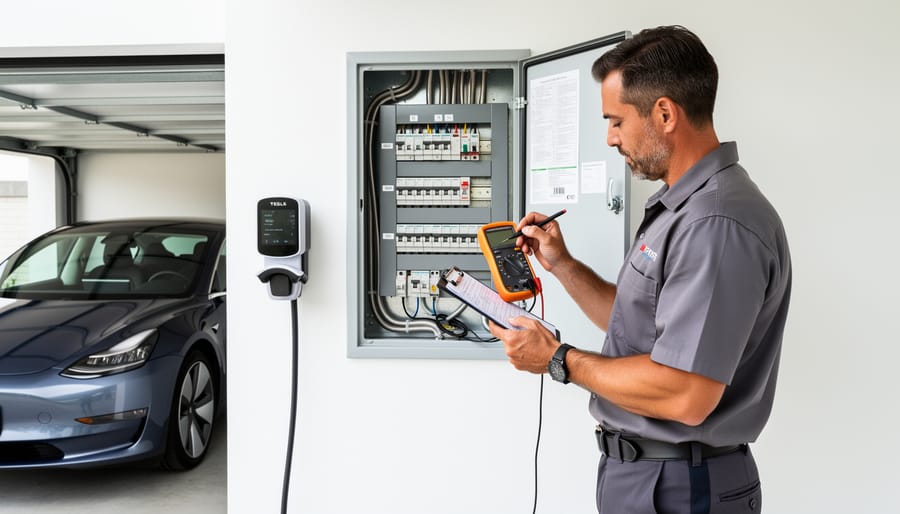
Before installing a residential EV charging station, a comprehensive evaluation of your existing electrical panel is essential to ensure safe, reliable operation. Most homes operate on 100-200 amp electrical service, and Level 2 EV chargers typically require a dedicated 40-50 amp circuit. This substantial demand necessitates careful assessment of available capacity.
Begin by examining your main electrical panel’s total amperage rating and current load distribution. A qualified electrician should perform a load calculation to determine if your system can accommodate the additional charging demand alongside existing appliances, HVAC systems, and other electrical needs. Properties with panels below 200 amps or those already operating near capacity will likely require service upgrades.
Service panel upgrades typically range from $1,500 to $4,000, depending on your home’s configuration and local utility requirements. While this represents an additional investment, upgrading provides long-term benefits including enhanced safety margins, accommodation for future electrical needs, and increased property value.
For facilities considering multiple charging stations or concurrent charging capabilities, larger service upgrades become increasingly necessary. In these scenarios, integrating solar power generation can offset increased electrical demand while providing substantial operational cost savings. Load management systems offer an alternative solution, intelligently distributing available power across circuits to maximize existing capacity without immediate upgrades.
Permitting, Codes, and Safety Standards
Installing a residential EV charging station requires compliance with multiple regulatory frameworks to ensure safety and proper functionality. The National Electrical Code (NEC), specifically Article 625, establishes the foundation for Electric Vehicle Supply Equipment installation standards. These requirements mandate proper circuit sizing, ground-fault protection, and adequate ventilation for charging equipment.
Local building codes and permits are essential considerations before installation. Most jurisdictions require electrical permits for charging station installations, particularly for Level 2 chargers operating at 240 volts. The permitting process typically involves submitting electrical plans, equipment specifications, and sometimes site assessments. Processing times vary by municipality, ranging from a few days to several weeks, making early engagement with local building departments advisable.
Safety certifications provide quality assurance for charging equipment. Look for products certified by Underwriters Laboratories (UL 2594 for residential charging stations) or similar recognized testing organizations. These certifications verify that equipment meets rigorous safety standards for electrical components, weather resistance, and operational reliability.
Utility notification requirements also apply in many regions. Some utilities require advance notice before installing high-power charging equipment to assess grid capacity and potentially upgrade service connections. Additionally, certain areas offer expedited permitting for installations paired with renewable energy systems, creating opportunities for streamlined approval processes when integrating solar power with EV charging infrastructure.
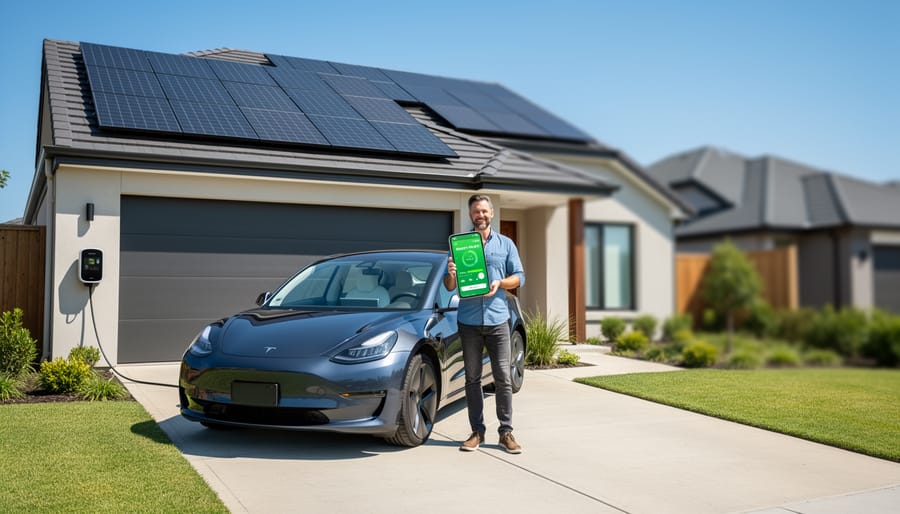
Real-World Application: Residential Solar-EV Integration Case Study
A residential installation in suburban Portland, Oregon demonstrates the measurable benefits of integrating solar energy with electric vehicle charging infrastructure. The homeowner, operating a small consulting business from home, implemented a comprehensive system in March 2022 to support two electric vehicles while reducing overall energy costs.
The system specifications include a 10.2 kW solar array consisting of 28 photovoltaic panels, paired with a Level 2 EV charging station rated at 40 amps. The installation also incorporated a 13.5 kWh battery storage unit to optimize energy utilization during peak demand periods. Total system cost reached $32,400 before incentives, with federal tax credits and state rebates reducing the net investment to $21,800.
Over the 18-month monitoring period, the system generated an average of 1,150 kWh monthly, exceeding initial projections by 12 percent. The solar array provided sufficient energy to cover approximately 85 percent of the household’s vehicle charging requirements, translating to 950 miles of electric driving per month powered primarily by solar energy. During summer months, excess generation offset grid consumption entirely, with surplus energy earning net metering credits.
Financial analysis reveals compelling returns on investment. The combined solar-EV charging system delivered monthly savings averaging $187 on electricity costs and eliminated $240 in previous gasoline expenditures. Annual savings totaled $5,124, projecting a payback period of 4.2 years. Carbon emissions reduction measured 6.8 metric tons annually compared to conventional gasoline vehicles.
The homeowner reported additional operational benefits including increased property value, estimated at $18,000 based on comparable market analysis, and enhanced energy independence during grid disruptions. The battery storage component proved particularly valuable during two extended outages, maintaining essential vehicle charging capability.
This case study demonstrates that properly designed residential solar-EV charging systems deliver both environmental benefits and substantial economic returns, making them increasingly viable investments for property owners committed to sustainable energy solutions.
Financial Incentives and Support Programs
Implementing residential EV charging infrastructure represents a significant investment, but numerous financial incentive programs substantially reduce upfront costs. Understanding and leveraging these opportunities enables property owners to achieve faster return on investment while advancing clean transportation goals.
Federal programs provide the foundation for financial support. The Alternative Fuel Vehicle Refueling Property Credit offers homeowners up to 30% of installation costs, capped at $1,000 for residential charging equipment. When combining EV charging installation with solar power systems, property owners can access comprehensive tax credits and rebates that significantly enhance project economics.
State-level programs vary considerably but often provide substantial additional benefits. California’s Clean Vehicle Rebate Project, for instance, offers direct rebates for charging equipment installation. New York’s Charge Ready NY program provides incentives covering up to 50% of infrastructure costs. Colorado, Massachusetts, and Maryland maintain similar initiatives, with eligibility criteria based on equipment specifications and installation standards.
Utility companies increasingly recognize the grid management benefits of managed EV charging and offer targeted programs. These include discounted electricity rates during off-peak hours, upfront rebates for smart charging equipment, and managed charging programs that compensate customers for scheduling vehicle charging during periods of lower grid demand. Some utilities provide enhanced incentives when charging equipment integrates with residential solar installations, recognizing the value of distributed energy resources.
Financing options have evolved beyond traditional loans. Property Assessed Clean Energy programs allow property owners to finance charging infrastructure through property tax assessments, spreading costs over extended periods. Several manufacturers and installation companies offer zero-interest financing arrangements, making immediate implementation more accessible while preserving capital for other operational priorities. These combined incentives typically reduce net project costs by 30-50%, dramatically improving investment feasibility.
The integration of residential electric vehicle charging stations with solar energy systems represents a strategic investment that delivers substantial returns across multiple dimensions. Property owners who embrace this integrated approach position themselves advantageously as electric vehicle adoption accelerates globally, with projections indicating EVs will constitute a significant majority of new vehicle sales within the next decade.
The financial case for solar-powered EV charging continues to strengthen as electricity rates rise and solar technology costs decline. Property owners implementing these solutions typically achieve payback periods of five to eight years, followed by decades of reduced energy costs. Beyond immediate savings, properties equipped with modern EV charging infrastructure demonstrate enhanced market value and increased appeal to environmentally conscious tenants and buyers.
From a sustainability perspective, the combination of residential charging stations and renewable energy generation creates a comprehensive approach to reducing carbon emissions. This integration allows property owners to power their transportation needs entirely from clean energy sources, dramatically decreasing their overall environmental footprint while supporting broader climate objectives.
The competitive landscape increasingly favors properties offering EV charging capabilities. Forward-thinking property managers recognize that charging infrastructure is transitioning from amenity to necessity, particularly in residential developments targeting professional demographics. Early adopters benefit from available incentives, avoid retrofit costs, and establish themselves as leaders in sustainable property management.
As renewable energy integration becomes standard practice rather than innovation, property owners who implement these solutions today secure lasting advantages in operational efficiency, tenant satisfaction, and environmental stewardship while contributing meaningfully to the clean energy transition.