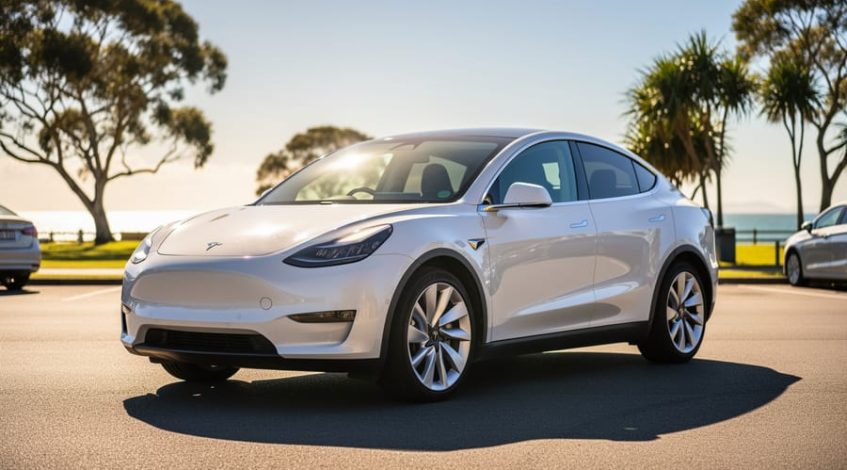
Queensland’s intense ultraviolet radiation and extreme heat exposure create a compound environmental threat that accelerates paint degradation on electric vehicles at rates up to 40% faster than conventional climates. This phenomenon, intensified by EV paint formulations prioritising low-VOC environmental compliance over traditional UV stabilisers, demands strategic protection planning from fleet managers and facility operators across the state.
Electric vehicle paint systems face unique vulnerability in Queensland’s subtropical environment. The combination of year-round intense UV radiation, ambient temperatures regularly exceeding 35°C, and extended direct sun exposure breaks down clear coat resins, oxidises pigments, and creates microfractures in paint surfaces. For EVs parked outdoors in Brisbane, the Gold Coast, or Townsville, this translates to visible chalking within 18 months and clear coat failure within three to four years, a timeline significantly compressed compared to temperate regions.
The financial implications extend beyond aesthetics. Paint deterioration reduces resale values by 15-22% according to 2026 automotive valuation data, while premature repainting costs between $4,500 and $12,000 per vehicle depending on size and finish quality. For commercial fleets operating 20 or more EVs, unprotected paint exposure represents a six-figure liability over standard ownership cycles.
This analysis examines the specific mechanisms driving UV and heat damage to EV paint, quantifies degradation timelines under Queensland conditions, and evaluates protection strategies from advanced coatings like ceramic coating Brisbane specialists provide through to structural shading solutions that address the root cause while delivering energy co-benefits.
What Makes Queensland’s Sun Uniquely Damaging to Vehicle Paint
Queensland’s combination of geographic location and climate creates a perfect storm for vehicle paint degradation. The state sits beneath a thinning ozone layer while experiencing some of the world’s highest UV radiation levels, the same environmental factors that give Australia the world’s highest skin cancer rates also relentlessly attack automotive finishes.
The UV index in Brisbane regularly exceeds 11 during summer months, reaching “extreme” classification. Cairns and other northern regions see these levels for eight to nine months annually. For context, anything above 8 is considered very high risk for exposed surfaces, including vehicle paint.
Temperature compounds the UV assault. Queensland’s coastal cities routinely hit 35-40°C in summer, while western regions exceed 45°C. Dark-colored vehicles parked in direct sun can see surface temperatures reach 70-80°C. This heat doesn’t just feel uncomfortable, it accelerates every chemical reaction breaking down your paint.
The real damage comes from the one-two punch: UV radiation weakens paint’s molecular structure while heat speeds up the degradation process. Add thermal cycling, the expansion and contraction as vehicles heat up during the day and cool at night, and you create microscopic stress fractures that compound over time.
- UV-A vs UV-B radiation
- UV-B burns skin and surface layers, while UV-A penetrates deeper into paint’s clear coat, breaking down polymer chains that give it structural integrity and gloss.
- Photo-oxidation
- The chemical process where UV light causes oxygen to bond with paint molecules, breaking them down and creating the chalky, faded appearance seen on neglected vehicles.
- Thermal expansion
- Paint layers expand when heated and contract when cooled, creating internal stress that leads to cracking and delamination over repeated cycles.
- Clear coat degradation
- The protective outer layer becomes brittle and loses flexibility under UV exposure, eventually failing to protect the colored base coat beneath.
- Chalking
- The powdery residue that forms on paint surfaces as UV radiation breaks down binders, leaving loose pigment particles that rub off when touched.
Unlike southern states with milder climates, Queensland vehicle owners can’t rely on occasional sunny days as the exception. Here, intense UV and heat are the default conditions eight months of the year. Commercial operators and fleet managers looking to beat the heat while protecting assets face this reality daily, making preventive protection strategies essential rather than optional.
How UV Radiation and Heat Break Down EV Paint
The Clear Coat Breakdown Process
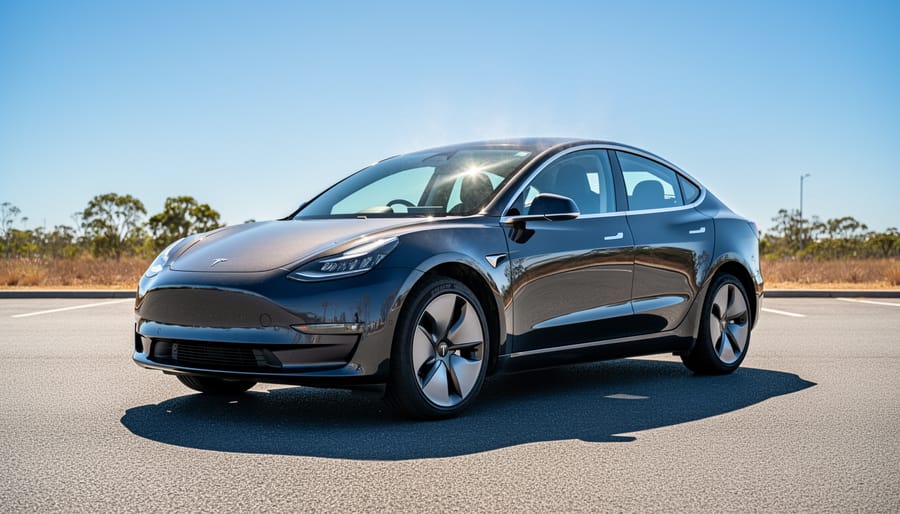
UV radiation penetrates your EV’s clear coat through a progressive chemical breakdown that compounds over time. The clear coat, typically a two-pack polyurethane layer, contains polymer chains that absorb UV photons. This absorption triggers photo-oxidation reactions that cleave the molecular bonds holding those chains together.
In Queensland’s intense sunlight (UV index regularly exceeding 11), this degradation accelerates dramatically. The polymer network begins fragmenting within months rather than years. As bonds break, the clear coat loses its structural integrity and flexibility. What starts as microscopic surface changes becomes visible as a dull, chalky appearance.
The damage follows a predictable sequence. First, the outermost layer loses its gloss as broken polymer fragments scatter light instead of reflecting it cleanly. Then micro-porosity develops, allowing moisture and oxygen deeper access. This creates a cascading effect where each layer of degraded material exposes fresh polymer beneath to the same UV assault.
Dark-colored EVs experience faster breakdown because their paint absorbs more heat, raising the clear coat’s surface temperature. At 60-70°C on a Queensland summer day, chemical reactions proceed several times faster than at ambient temperature, creating a compounding degradation cycle.
Heat’s Role in Accelerating Paint Damage
Queensland’s temperature extremes create a thermal assault on vehicle paint that operates independently from UV damage, and when combined, the two mechanisms multiply each other’s destructive effects.
When an EV’s dark-colored surface absorbs solar radiation, the paint can reach 70-80°C on summer days, then drop to 15-20°C overnight. This daily expansion and contraction cycle stresses the molecular bonds within paint layers. The clear coat expands at a different rate than the base coat and primer beneath it, creating microscopic shear forces at the layer boundaries.
Over months of cycling, these forces accumulate into visible damage. The clear coat develops hairline cracks that allow moisture penetration, accelerating oxidation of the color layer below. In coastal Queensland regions, salt particles combine with heat-weakened paint to intensify corrosion at chip points and panel edges.
Heat also accelerates every chemical reaction in paint degradation. The oxidation process that might take two years in Melbourne occurs in twelve months in Townsville. Paint polymers break down faster, plasticizers evaporate more quickly, and protective additives deplete sooner.
Black and dark blue EVs face the worst thermal stress, surface temperatures can exceed lighter colors by 15-20°C. This temperature differential explains why fleet operators often observe faster paint deterioration on darker vehicles parked in identical conditions. The damage compounds with each Queensland summer season.
Types of Paint Damage From Queensland Sun Exposure
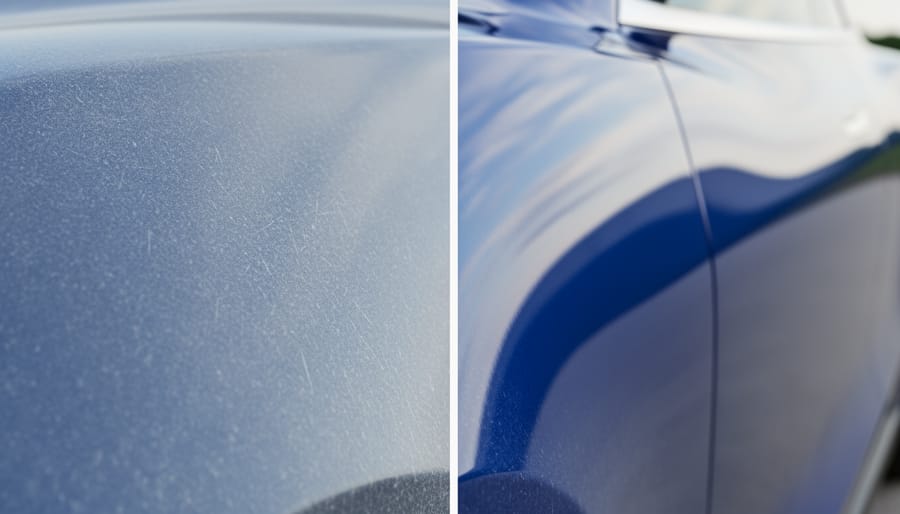
Queensland’s intense solar environment creates distinct patterns of paint degradation, each with different visibility thresholds and progression rates. Understanding these damage types helps vehicle owners and fleet managers identify problems early and implement targeted protection strategies.
Oxidation represents the first wave of assault on EV paint surfaces. Within six months of regular outdoor exposure, clear coat polymers begin breaking down at the molecular level. The paint surface loses its reflective quality, developing a chalky appearance that dulls the original finish. Dark colors show this fastest, black and navy EVs often display noticeable oxidation within four to five months. Light colors mask the damage longer, but the degradation occurs at the same rate beneath what the eye perceives.
Clear coat failure escalates from oxidation when UV damage penetrates deeper into the protective layers. Between 12 and 18 months of Queensland sun exposure, properly maintained vehicles may show early signs: subtle haziness that doesn’t respond to polishing, slight surface texture changes, or reduced water beading during rain. Neglected vehicles reach this stage faster. By the two-year mark, clear coat delamination becomes visible as peeling edges along panel creases, around trim pieces, and on horizontal surfaces like bonnets and roofs where sun exposure concentrates most intensely.
Micro-cracking develops as thermal cycling stresses paint layers through repeated expansion and contraction. These hairline fractures appear first on large, flat panels, particularly bonnets and roofs, where temperature differentials hit extremes. In direct Queensland sun, a dark-colored bonnet surface can reach 80°C while the metal beneath stays cooler, creating tension at the paint-to-metal interface. After one year of exposure, micro-cracks become visible under close inspection. By 18 months, they’re apparent from normal viewing distance, creating a spider-web pattern that traps dirt and accelerates further deterioration.
Metallic and pearl finishes suffer color shift damage unique to multi-layer paint systems. The metallic flakes or pearl particles sit between the base coat and clear coat, relying on the clear coat’s optical clarity to create depth and shimmer. As UV radiation clouds the clear coat, these finishes lose their characteristic sparkle and appear flatter, duller. Colors shift noticeably, silver turns grayish, pearl white loses its iridescence. This degradation becomes apparent around the 10 to 12 month mark and progresses steadily.
Ceramic-infused paints, marketed as more durable on newer EV models, aren’t immune to Queensland conditions. While they resist oxidation better than conventional finishes, they still experience clear coat breakdown and micro-cracking. Their failure pattern differs: instead of gradual dulling, ceramic paints often maintain appearance longer before experiencing more sudden delamination events, typically after 18 to 24 months of intense exposure.
Why Electric Vehicles Face Specific Paint Challenges
Electric vehicles spend far more time parked outdoors than their petrol counterparts, and that exposure carries a price. While conventional cars typically park in residential garages and refuel at service stations in minutes, EV owners charge where they work, shop and visit, often in unshaded parking lots for hours at a stretch. This extended outdoor dwell time accelerates paint degradation in Queensland’s climate.
Workplace charging creates the most concentrated exposure. An EV parked at an office from 8am to 5pm faces the sun’s peak UV intensity during the most damaging hours. Public charging stations rarely offer shade, and DC fast-charging sessions, though shorter than Level 2 charging, still mean 30 to 45 minutes of direct sunlight multiple times per week. The cumulative effect compounds quickly.
Fleet applications intensify the challenge. Delivery vehicles, municipal EVs and corporate fleets operate outdoors throughout the day, then park in open depots overnight. A commercial EV can accumulate 10 to 12 hours of sun exposure daily, compared to 2 to 3 hours for a privately owned vehicle garaged at home. Over a three-year fleet cycle, that difference translates to thousands of additional UV exposure hours.
- Charging infrastructure located outdoors without shade coverage
- Higher purchase prices making paint damage costlier relative to vehicle value
- Fleet operations with continuous outdoor exposure during work hours
- Darker paint colors prevalent in EV market absorbing more thermal energy
- Newer paint formulations lacking long-term Queensland climate validation
Paint technology adds another variable. Many EVs use advanced finishes, ceramic-infused clear coats, multi-stage metallics, colour-shifting pearls, that haven’t endured decades of Queensland sun like the paint systems on conventional models. Manufacturers design these finishes in European and North American labs where UV indices rarely exceed 8; Queensland regularly hits 14. The long-term durability remains unproven in this harsher environment.
Vehicle values sharpen the financial stakes. A $65,000 Tesla Model 3 represents a larger capital investment than most petrol sedans, and paint deterioration directly impacts resale value. For commercial buyers calculating total cost of ownership, protecting a $90,000 fleet vehicle becomes a clear ROI consideration. Even a 5% depreciation difference from paint condition affects the business case for electrification.
Commercial and Fleet Applications: The Business Case for Paint Protection
For fleet managers and facility operators in Queensland, paint degradation isn’t just an aesthetic concern, it’s a financial liability that affects multiple dimensions of business operations.
The resale value impact hits hardest. A corporate EV fleet with two years of unprotected sun exposure can lose 15-20% of residual value compared to garaged equivalents, purely from paint condition. When you’re managing 20, 50, or 100 vehicles, that differential translates to tens of thousands of dollars at disposal. Lease return penalties compound this: most commercial lease agreements now include specific paint condition clauses, and UV damage frequently triggers additional charges that weren’t budgeted in the original TCO calculations.
Corporate branding standards create another pressure point. Your fleet represents your organization on public roads every day. Faded, oxidized EVs with peeling clear coat don’t project the professional image companies invest heavily to maintain. Government agencies face particular scrutiny here, ratepayers notice when council vehicles look neglected, regardless of the underlying cause. For customer-facing operations like utilities or logistics providers, vehicle appearance directly influences public perception of service quality and organizational competence.
The total cost equation extends beyond paint itself. Premature respraying runs $3,000-$8,000 per vehicle depending on extent, but the real cost includes downtime during repairs, temporary replacement vehicles, and administrative overhead. Compare this against preventive protection: ceramic coating costs $800-$1,500 upfront with 2-3 year effectiveness, while solar carport infrastructure provides permanent shade protection alongside energy generation, eliminating both paint damage and charging electricity costs simultaneously.
Employee satisfaction factors in too. Drivers assigned vehicles with deteriorating paint feel they’re operating second-tier equipment. When outdoor parking means returning to a 65°C interior because there’s no shade, recruitment and retention suffer. Providing covered charging under solar carports addresses both issues while demonstrating organizational commitment to asset quality.
The business case strengthens when you factor maintenance costs into infrastructure planning. Solar carports require minimal upkeep while protecting high-value EV assets, creating a compound ROI that traditional parking structures can’t match.
Protection Strategies for Queensland EV Owners
Solar Carports: Dual-Purpose Asset Protection
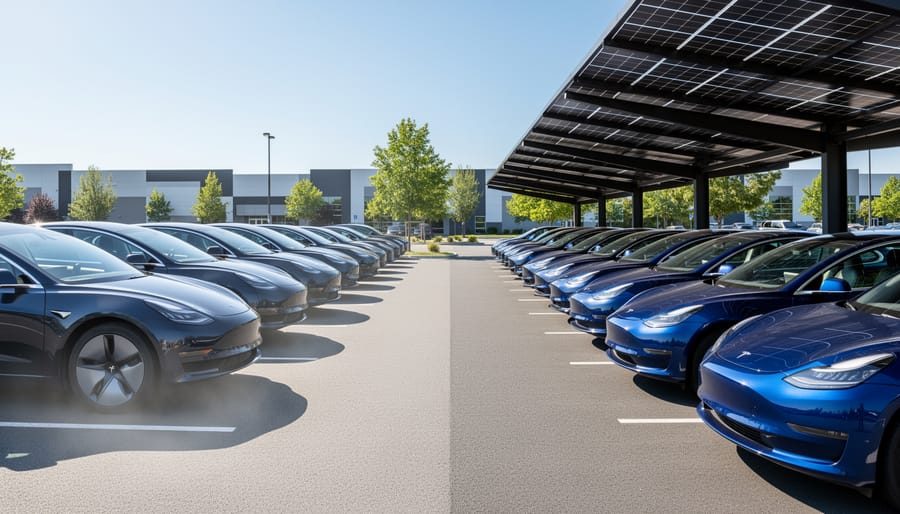
Solar carport installations solve two problems simultaneously: they shield EV paint from Queensland’s damaging UV radiation and heat while generating renewable energy for vehicle charging. The shade structure blocks up to 95% of direct UV exposure, preventing the clear coat degradation and oxidation that typically begins within six months of unprotected outdoor parking.
For commercial properties and fleet operators, the ROI calculation becomes compelling when you factor in both energy generation and asset protection. A typical commercial solar carport system pays for itself through electricity savings in 4-6 years, but when you add the avoided costs of paint restoration (often $3,000-$8,000 per vehicle) and maintained resale values, the payback period shortens considerably. Fleet vehicles that retain their appearance command 15-20% higher resale prices than sun-damaged equivalents.
The dual functionality extends beyond economics. Solar carports allow businesses to expand EV charging infrastructure without the roof space constraints of traditional solar installations. They create covered parking that employees and customers value, particularly in Queensland’s climate where interior temperatures in unshaded vehicles can exceed 70°C within 30 minutes.
Installation costs range from $150-$250 per square meter for commercial-grade systems, depending on site conditions and energy capacity. The structures typically feature aluminum frames powder-coated for UV resistance and monocrystalline panels optimized for Queensland’s high solar irradiance. When integrated with battery storage, they provide energy resilience alongside paint protection, a strategic advantage for businesses planning long-term EV fleet transitions.
Surface Treatments and Maintenance Protocols
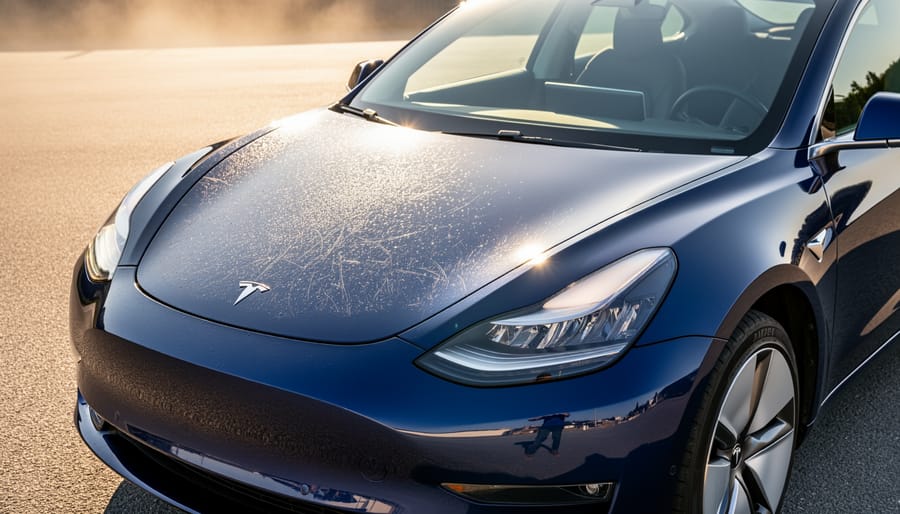
Ceramic coatings form a sacrificial layer that absorbs UV damage instead of your paint, but not all formulations perform equally under Queensland conditions. Look for products with UV inhibitors rated to 15+ UV index and heat resistance above 70°C. Professional-grade coatings (9H hardness ratings) typically last 2-3 years in Brisbane’s climate versus 5 years in cooler regions. Application timing matters: never apply ceramic coatings to paint already showing oxidation, as you’ll seal in the damage.
Paint protection film offers superior defense for high-value EVs. Modern PPF includes self-healing topcoats that repair minor scratches when exposed to heat, though Queensland’s temperatures can trigger this healing process unintentionally, creating a slightly orange-peel texture over time. Focus PPF on high-impact areas: bonnets, front guards, door edges. Full-vehicle wraps run $3,000-$8,000 but preserve resale value on premium models like Tesla Model S or Polestar 2.
Maintenance protocols need adjusting for Queensland’s intensity. Wash fortnightly using pH-neutral products, alkaline cleaners accelerate clear coat breakdown in heat. Apply a spray sealant monthly to maintain the ceramic coating’s hydrophobic properties, which degrade faster under UV exposure. Inspect quarterly for early oxidation signs: dullness appearing first on horizontal surfaces (bonnet, roof) where UV strikes most directly.
For fleet operators, establish inspection schedules tied to parking location. Vehicles in uncovered charging bays need treatment renewal every 18 months versus 24 months for those under solar carports. Document paint condition at delivery and 6-month intervals, measurable degradation often justifies infrastructure investment in covered parking solutions.
Integration With Solar Infrastructure Planning
When facility managers evaluate solar carport installations for their EV fleet, paint protection becomes a quantifiable infrastructure benefit, not just an aesthetic bonus. A well-designed solar canopy system shields vehicles from UV degradation while generating the energy needed to charge them, creating a dual-return asset that addresses both operational costs and vehicle longevity.
Commercial solar carport projects typically start with parking layout analysis and energy demand calculations. However, Queensland-specific planning should incorporate vehicle protection metrics: what percentage of your fleet parks outdoors during peak UV hours (10am, 3pm)? How many vehicles exceed two years of unprotected sun exposure? These questions inform both the footprint of shade coverage and the financial case for installation. For a 50-vehicle fleet where paint restoration costs $2,000, $5,000 per vehicle, avoiding degradation on even 40% of the fleet delivers $40,000, $100,000 in retained asset value over five years.
Carport orientation affects both energy yield and protection effectiveness. While smart positioning maximizes electricity generation through optimal tilt and azimuth angles, the same design creates consistent overhead shade that eliminates direct UV exposure and reduces surface temperatures by 15-20°C. North-facing arrays in Queensland capture maximum solar radiation while providing all-day shade to parked EVs underneath, a rare case where energy optimization and asset protection align perfectly.
Government agencies and corporate fleets investing in both solar infrastructure and electric vehicles should calculate the combined ROI. A 100kW solar carport installation that protects 30 EVs delivers energy savings, paint preservation, reduced cooling loads (vehicles aren’t heat-soaked), and extended battery life from temperature management. The operation & maintenance protocols for the solar system naturally integrate with vehicle care schedules, creating operational efficiency.
Long-term facility planning should treat solar carports as integrated EV asset management, not separate capital expenditures. The infrastructure investment protects vehicle resale value while generating the clean energy that makes EV operations carbon-neutral, a complete solution for organizations committed to both sustainability and fiscal responsibility.
Frequently Asked Questions
How quickly does Queensland sun damage EV paint?
Visible oxidation and fading can begin within six months of regular outdoor exposure in Queensland’s intense UV environment. After 12 months, clear coat degradation becomes noticeable, particularly on darker colors, and by two years, uncovered vehicles typically show significant damage including micro-cracking and color shift that affects resale value.
Do certain EV brands use more UV-resistant paint?
Most manufacturers apply similar automotive-grade paint systems across their ranges, though some premium brands use ceramic-infused clear coats with marginally better UV resistance. No factory paint system is specifically engineered for Queensland’s extreme conditions, making protective measures necessary regardless of brand.
Is paint protection worth it for leased EVs?
Absolutely, particularly for three-year leases where end-of-term condition assessments directly affect your costs. Paint damage triggers excess wear charges that typically exceed the cost of preventive ceramic coating or covered parking, and maintaining appearance standards protects against penalties at lease return.
Can damaged paint be restored once degradation starts?
Minor oxidation responds to professional paint correction and polishing, but once clear coat failure and micro-cracking occur, only expensive respray work can restore the finish. Prevention costs a fraction of restoration, making proactive protection the economically rational choice for fleet managers.
How do solar carports compare to indoor parking for paint protection?
Solar carports provide nearly equivalent UV and heat protection to indoor parking while generating revenue through energy production. They block 95-98% of direct UV radiation and significantly reduce heat buildup, offering a dual-return investment for commercial properties deploying solar-powered transport infrastructure.
Should I avoid dark colors when buying an EV in Queensland?
Dark colors absorb more heat and show damage faster, but color choice should not dictate your decision if you implement proper protection strategies. White and silver vehicles fare better in sun exposure, yet a black EV with ceramic coating and covered parking will outlast a white one left unprotected outdoors.
What is the return on investment for paint protection in fleet applications?
Fleet operators typically see ROI within 18-24 months through preserved resale values and reduced remarketing penalties. A vehicle with protected paint commands 8-12% higher resale value compared to sun-damaged equivalents, directly offsetting protection costs while maintaining corporate appearance standards across the fleet lifecycle.
These practical considerations matter most for Queensland operators managing EV assets as long-term investments. The questions reflect real decisions facing facility managers evaluating infrastructure options, individual owners weighing protection costs against vehicle value, and fleet administrators calculating total ownership expenses. Paint protection is not optional maintenance in this climate, it is asset management that directly affects your bottom line whether you operate a single vehicle or manage hundreds across commercial sites.
Queensland’s intense UV radiation and heat create a genuine asset management challenge for EV owners and fleet operators. Paint degradation isn’t just cosmetic, it directly impacts resale values, corporate image, and the total cost of ownership calculations that justify your electric vehicle investment.
The evidence is clear: unprotected EVs parked outdoors in Queensland conditions show measurable paint damage within months, progressing to significant clear coat failure and oxidation within two years. For commercial operators managing multiple vehicles, this translates to tens of thousands of dollars in diminished asset value across a fleet.
The solution lies in integrated planning rather than reactive repairs. Solar carport installations address both challenges simultaneously, protecting your vehicles from UV and thermal damage while generating the clean energy needed to charge them. This dual-purpose approach transforms a necessary protective measure into a revenue-generating asset that pays for itself through energy savings and preserved vehicle values.
For facility managers and business owners evaluating EV infrastructure investments, paint protection deserves equal consideration alongside charging capacity and energy costs. The question isn’t whether to protect your assets, but how to design protection systems that deliver multiple returns.
As Queensland continues its transition to electric transport and renewable energy, the smartest operators will be those who recognize that vehicle protection and solar infrastructure aren’t separate line items, they’re components of a single, integrated asset strategy designed for our climate reality.