
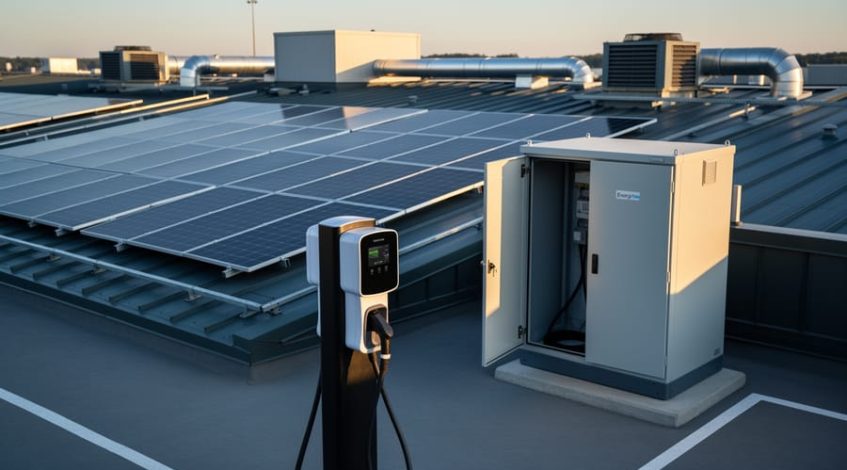
Zone-energy is a method of dividing a building, campus, or transportation corridor into distinct areas, each with its own energy demand profile, controls, and often its own generation or storage, so power is supplied and managed where and when it’s actually needed. Instead of treating a facility as one large load, zone-energy treats it as a set of smaller, measurable units that can be optimized independently and coordinated as a whole.
That distinction matters for the bottom line. Energy waste usually hides in the mismatch between what a space needs and what the system delivers: a warehouse conditioned at office-level comfort, a parking structure lit at full output overnight, a transit depot charging vehicles at peak tariff rates. Zone-based planning exposes those gaps and gives operators a practical way to close them, often through a mix of on-site solar, battery storage, smart metering, and scheduled controls.
It also fits naturally within the broader idea of holistic energy ecosystems, where buildings, distributed generation, and transportation networks share data and capacity rather than operating as isolated systems. A zone with surplus solar output, for example, can support electric vehicle charging in the zone next to it.
This article defines the core concepts, explains how zone-energy works, outlines its main components, and examines where it applies. Illustrative case studies show how facility managers and public-sector leaders can approach the business case with realistic expectations for cost and return.
What Zone-Energy Means in a Holistic Energy Ecosystem
How a Zone Differs From Traditional Grid-Only Supply
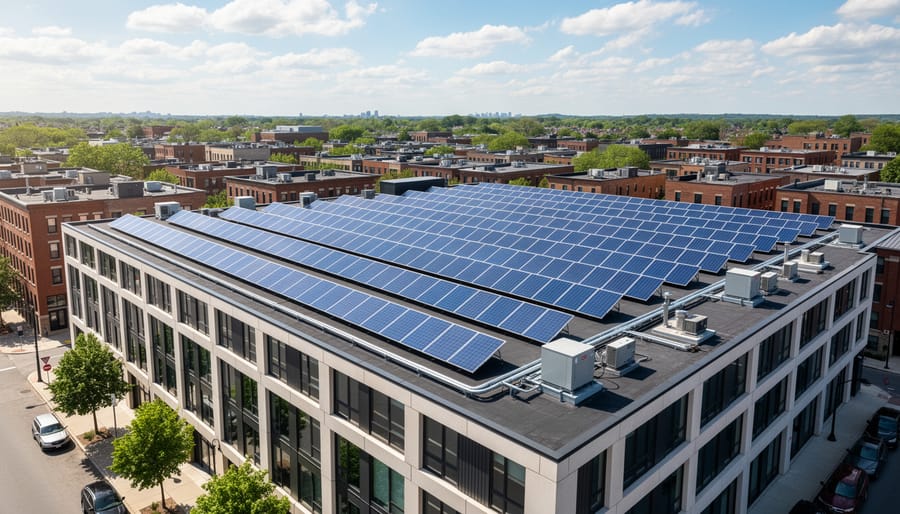
In a traditional grid-only setup, power is generated far away, sent through long transmission lines, and delivered one way to the meter. The site is a passive customer with little say over when or how its energy arrives. A zone model flips that relationship. Generation, storage, and demand sit close together, so supply is matched to local needs first, and the utility grid steps in as a backup and partner rather than the only source. That’s why solar for commercial sites often serves as the anchor technology for a zone.
A few core terms help make the distinction clear:
- Energy zone
- A defined site or district, such as a campus or industrial estate, where generation, storage, and consumption are planned together.
- Distributed generation
- Power produced near where it’s used, such as rooftop solar, instead of at a distant central plant.
- Behind-the-meter
- Energy assets on the customer’s side of the utility meter, giving the site direct control over how that power is used.
- Load balancing
- Shifting or scheduling demand so it aligns with available supply and avoids costly peaks.
Together, these ideas turn a passive connection into an actively managed local system.
How Zone-Energy Works: From Rooftop Generation to Electrified Transport
The Role of Transportation Networks in the Zone
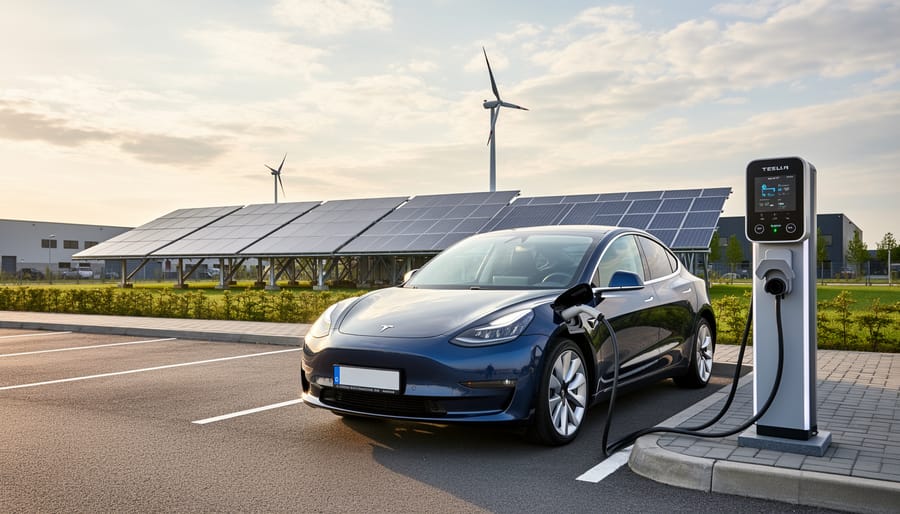
Electrified transport turns a zone from a passive consumer into an active participant. EV fleets, public charging hubs and transit depots are large, predictable loads, and that predictability is what makes them useful. Unlike a cooling system that has to run when it’s hot, a vehicle that sits at a depot overnight or parks for a full workday can usually charge whenever the system tells it to.
That flexibility is the point. When charging is scheduled around solar output, a zone absorbs midday generation that would otherwise be exported at a low rate, and it avoids drawing grid power during expensive peak windows. Pairing this with battery storage extends the benefit further, letting surplus daytime energy serve evening or early-morning charging needs. Some vehicles may even feed energy back to the site, though that depends on the equipment and the arrangement in place.
This is where green energy transport becomes a practical part of the zone rather than a separate fleet decision. A logistics depot, a bus yard or a business park with staff charging can all be managed as flexible loads, with charging curtailed or shifted to keep demand charges in check.
A typical zone-energy setup brings several elements together:
- Solar PV arrays supply the zone’s primary on-site generation.
- Battery storage holds surplus energy for later use.
- An energy management system coordinates loads, storage and generation.
- EV charging points connect vehicles as controllable demand.
- Smart metering tracks consumption and generation in detail.
- Grid interconnection provides backup supply and export capacity.
The energy management system does the real work here, deciding when each vehicle charges based on solar availability, tariffs and operational needs.
Where Zone-Energy Is Used: Real-World Applications and Case Studies
Commercial Properties and Multi-Tenant Developments
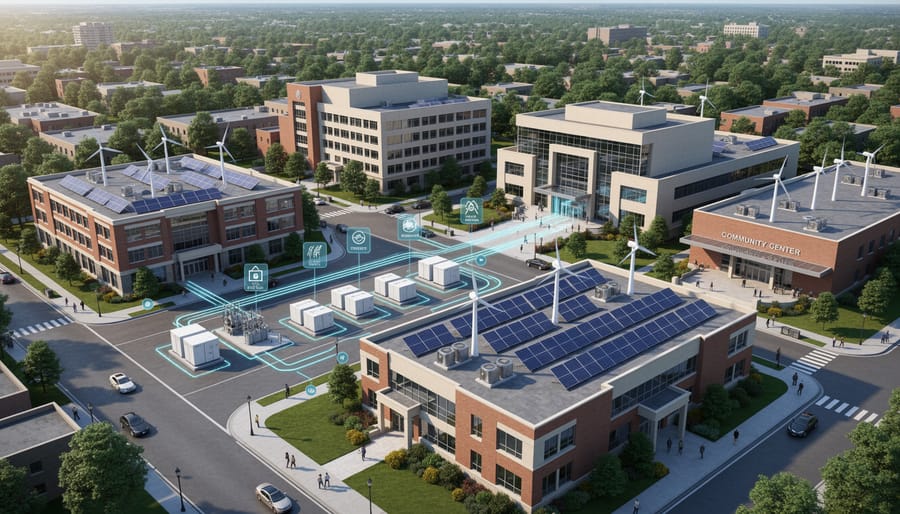
Consider a hypothetical multi-tenant business park with six buildings, a shared parking structure, and a landlord who pays for common-area power. The owner installs solar PV on the rooftops and over the parking bays, adds a battery system, and ties everything together with a single energy management platform. Tenants keep their own leases, but the landlord now treats the whole site as one zone.
Daytime solar output covers common-area lighting, HVAC for shared spaces, and a bank of EV chargers. The battery holds midday surplus and discharges during the evening peak, which trims demand charges on the site’s main meter. The landlord recovers part of the cost through metered charging fees, and tenants gain a visible amenity that helps them attract employees and clients.
For the property, the result is lower operating expenses, more predictable utility budgets, and a stronger position when competing for tenants who prioritize sustainability. This example is illustrative, and actual outcomes depend on the site’s load profile and local tariffs.
Government and Public-Sector Districts
Consider a mid-sized city that groups its town hall, library, fire station, and bus depot into a single energy zone. This is an illustrative scenario, not a documented project. Solar carports over the depot’s parking area and rooftop arrays on the civic buildings supply most of the zone’s daytime demand. A shared battery system covers the fire station’s critical loads, and an energy management platform schedules electric bus charging around peak solar output.
For finance teams, the appeal is predictability. Long-term generation costs are largely fixed once the system is built, which makes budgeting less exposed to tariff swings. Resilience improves as well, since essential services can keep running during a grid outage.
The community benefits in visible ways. Emissions fall, public charging becomes available, and the city shows progress on its sustainability goals. Elected officials can point to measurable results, such as lower utility spending and fewer outage-related disruptions, when reporting to residents.
The Business Case: Savings, Resilience, and ROI
The financial case for zone-energy rests on one idea: electricity generated and used inside the zone is electricity you don’t buy at retail rates. Over time, that lowers long-term energy costs and gives you a more predictable line item, since solar output isn’t tied to wholesale price swings. If your tariff includes demand charges, coordinating storage, building loads, and EV charging can flatten the spikes that drive them. That is often where the most meaningful operational savings appear.
Resilience is the second pillar. A zone that pairs on-site generation with storage can keep critical loads running through an outage, which matters for cold storage, healthcare-adjacent facilities, transit depots, and any site where downtime carries a real cost. Add the ability to document renewable generation and avoided grid consumption, and you also gain solid data for sustainability reporting.
Several factors determine how quickly a project pays back. Your load profile matters most: sites that use a lot of power during daylight hours capture more value from solar. Available roof or land area sets the ceiling on generation, while your tariff structure decides which savings are actually on the table. Government incentives and tax treatment can shorten payback, and financing options, from outright purchase to leases or power purchase agreements, shape your upfront capital needs and cash flow. Because these variables differ at every site, a proper energy audit is the only reliable way to put a credible figure on your return.
Planning a Zone-Energy Project: What to Assess First
Start with the load profile. An energy audit that maps when and where each site uses power tells you how much solar the zone can absorb directly, and how much storage or load shifting you’ll need. Pair that with a site assessment covering roof condition, available land, shading, and the capacity of the existing grid connection, since upgrades there can shape both cost and timeline.
Next, check the regulatory side early. Permitting, network connection approvals, and any local incentive requirements can change a design before it reaches the drawing board. Bring tenants, fleet operators, and finance teams in at the same stage so everyone agrees on goals and cost-sharing.
Choose accredited installers with commercial experience, and plan for monitoring from day one. Good solar data insights let you spot underperformance quickly and refine charging schedules and load control over time. Long-term support, including maintenance and performance reviews, protects the return on a system designed to run for decades.
Zone-Energy FAQs
Readers new to zone-energy tend to ask the same handful of practical questions. These are the ones that come up most often, answered briefly.
Does zone-energy require a microgrid?
No. A microgrid is one way to deliver a zone-energy approach, especially where islanding during outages matters. Many zones simply coordinate solar generation, building loads, and charging behind a shared metering and control strategy while staying fully grid-connected.
Can it work without battery storage?
Yes. Solar-plus-load management alone can cut grid purchases by shifting flexible loads, such as EV charging or cooling, into daylight hours. Batteries add value when you need to reduce evening peaks, ride through outages, or capture surplus generation.
How does EV charging fit in?
Chargers act as controllable loads. Scheduling fleet or visitor charging around solar output lowers peak demand and energy costs, and depots with predictable dwell times are especially well suited.
Which sites suit it best?
Sites with steady daytime demand, usable roof, carport, or land area, and some flexible load tend to perform best. Typical examples include business parks, multi-tenant properties, logistics depots, campuses, and municipal facility clusters.
On the question of how a zone interacts with the utility grid, the grid remains a partner rather than a competitor. It supplies power when on-site generation falls short, accepts exports where permitted, and provides resilience. Interconnection rules and export tariffs vary by region, so confirm local requirements early.
As for ongoing monitoring, expect software that tracks generation, consumption, charging sessions, and system health in one place. Facility teams typically review performance against expected output, watch for faults or underperforming equipment, and adjust control settings as tenant loads or tariffs change. Regular review keeps the zone delivering the savings it was designed for and gives you the data needed for sustainability reporting.
Zone-energy gives organizations a practical way to treat generation, buildings, and transportation as one coordinated system instead of three separate cost centers. By matching on-site solar output to local demand, storing surplus energy, and scheduling EV charging around daytime production, a zone can reduce peak demand, steady long-term energy costs, and keep critical operations running when the wider grid is under strain.
For business owners and facility managers, that translates into lower operating expenses and a stronger property proposition. For public-sector leaders, it means more predictable budgets, greater resilience, and visible progress toward community sustainability goals. The right design always depends on the site’s load profile, available space, tariff structure, and local incentives.
A sensible first step is modest: gather your recent energy bills and work with a qualified solar provider to assess your site’s energy needs. That assessment will show whether a zone-energy approach makes sense for you and what a realistic path could look like.