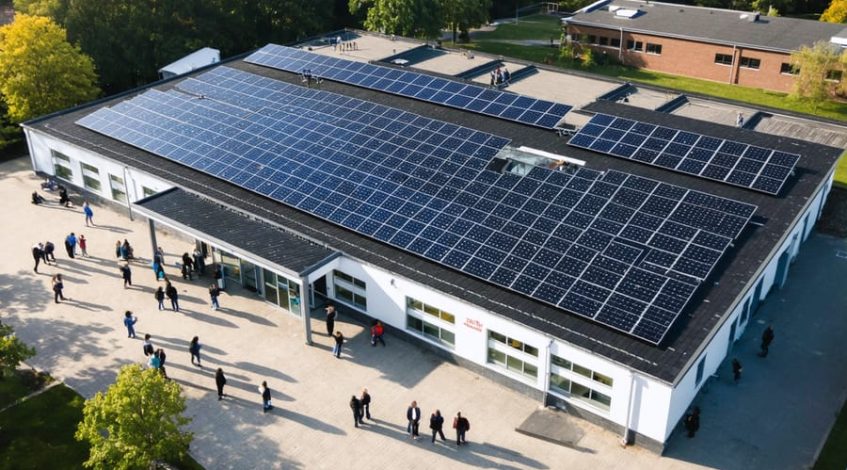
Educational solar panels revolutionize modern learning environments while delivering substantial financial returns for academic institutions. Forward-thinking schools and universities can transform education through solar power by reducing operational costs up to 75% while creating hands-on STEM learning opportunities. This dual-purpose infrastructure investment serves as both a sustainable energy solution and an interactive educational tool, enabling students to engage directly with renewable energy technology. Leading institutions implementing solar initiatives report average annual savings of $40,000-85,000 while providing students with real-world experience in environmental science, data analysis, and energy management. As government incentives for educational solar installations reach historic highs, facilities managers and administrators are uniquely positioned to leverage these systems for both immediate cost reduction and long-term educational advancement. This comprehensive approach to sustainable infrastructure demonstrates institutional commitment to environmental stewardship while delivering measurable financial and educational returns on investment.
Why Educational Institutions Are Perfect for Solar Energy
Peak Energy Usage Alignment
The operational hours of educational institutions create an ideal scenario for solar panel implementation, as peak energy production aligns perfectly with peak usage periods. Schools typically operate between 8 AM and 4 PM, precisely when solar panels generate their maximum output. This synchronization results in optimal energy utilization and maximum cost savings.
During the academic day, schools experience their highest energy demands from HVAC systems, classroom lighting, computer labs, and cafeteria operations. Solar panels produce their peak power during these same midday hours when the sun’s intensity is strongest, providing a direct match between supply and demand. This natural alignment reduces dependency on grid power during the most expensive rate periods.
The summer months, when solar production is highest, coincide with increased cooling demands in school buildings. While student attendance may be reduced during summer, many schools maintain operations for administrative functions, summer programs, and facility maintenance, ensuring continued utilization of solar-generated power. This seasonal correlation further enhances the economic benefits of educational solar installations, providing substantial energy cost reductions during periods of peak utility rates.
Available Roof Space and Infrastructure
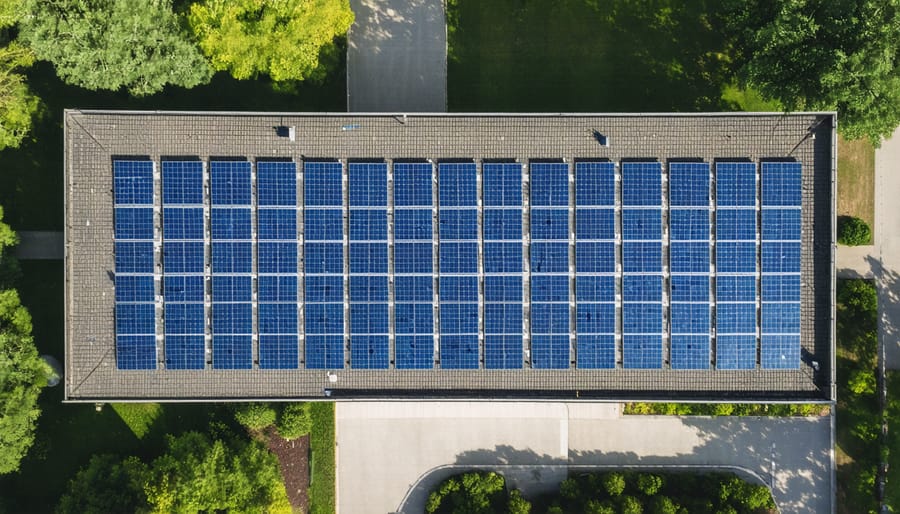
Educational facilities typically offer ideal conditions for solar panel installation, with their extensive flat rooftops and open spaces providing optimal positioning for maximum sun exposure. Most school buildings feature robust structural designs capable of supporting solar array installations without requiring significant modifications. The typical single or two-story construction of educational buildings also minimizes shading issues, allowing for efficient solar energy capture throughout the day.
Many schools already possess the necessary electrical infrastructure to integrate solar systems, including suitable electrical rooms and distribution panels. Their existing maintenance schedules and facility management systems can easily incorporate solar panel maintenance routines. Additionally, most educational facilities have convenient access points for installation equipment and maintenance personnel, making both initial setup and ongoing upkeep more cost-effective.
The sprawling nature of campus layouts often provides multiple installation options, from rooftop arrays to parking lot canopies and ground-mounted systems. This flexibility allows institutions to maximize their solar potential while maintaining essential outdoor spaces for educational and recreational activities.
Financial Benefits for Educational Institutions
Long-term Energy Cost Reduction
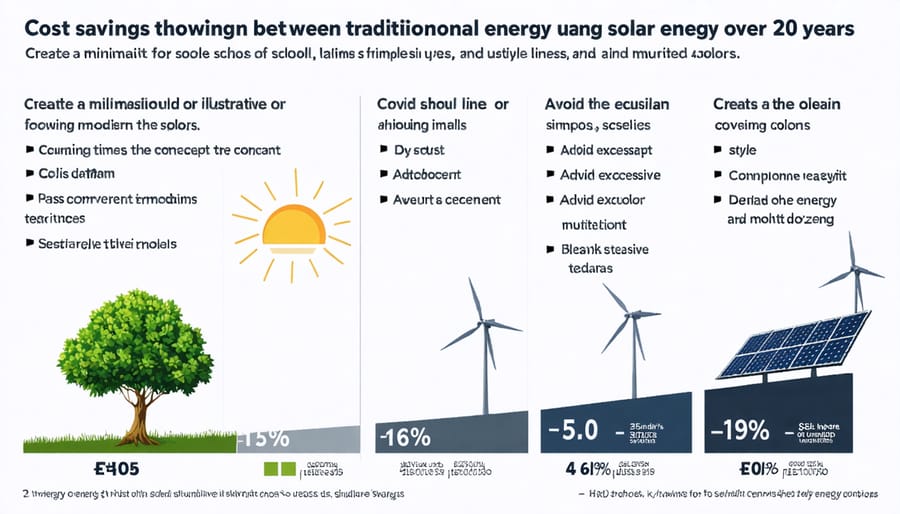
Installing educational solar panels represents a strategic investment that delivers a significant return on investment through sustained energy cost reduction. Analysis of multiple educational installations demonstrates that institutions typically recover their initial investment within 5-7 years, followed by 20-25 years of substantially reduced energy costs.
The financial benefits compound over time, with many institutions reporting 60-80% reductions in their annual electricity expenses. For example, Melbourne Grammar School’s 100kW system installation resulted in annual savings of $45,000, while maintaining consistent performance over its operational lifetime. These savings can be redirected to educational programs, facility improvements, or other institutional priorities.
When factoring in rising utility rates, which historically increase by 2-3% annually, the long-term value proposition becomes even more compelling. Modern solar panels maintain 80-90% of their efficiency even after 25 years of operation, ensuring sustained cost benefits throughout their lifetime. Additionally, many institutions qualify for government incentives and renewable energy certificates, further enhancing the financial returns.
Maintenance costs remain minimal, typically requiring only annual inspections and occasional cleaning, which represents less than 1% of the total system cost per year. This predictable cost structure allows for more accurate long-term budget planning and resource allocation.
Available Grants and Tax Incentives
Educational institutions looking to implement solar panel systems can access numerous financial support programs at federal, state, and local levels. The Federal Investment Tax Credit (ITC) allows schools to recover up to 30% of their solar installation costs through tax incentives. For public schools that cannot directly benefit from tax credits, Power Purchase Agreements (PPAs) offer an alternative financing solution.
Many states offer specific grant programs designed for educational facilities. For example, the Solar for Schools Program, available in multiple states, provides matching funds for solar installations while supporting curriculum development. The Rural Energy for America Program (REAP) offers grants covering up to 25% of project costs for eligible rural educational institutions.
Local utility companies frequently provide rebates and incentives for solar adoption in educational settings. These can include performance-based incentives, which provide payments based on the actual energy generated by the system, and capacity-based rebates that offer upfront cost reduction.
Environmental protection agencies and sustainable energy organizations also maintain grant databases specifically for educational institutions. These resources often include technical assistance and project planning support alongside financial aid. Schools can typically combine multiple incentives to maximize their financial benefits, though careful planning is required to ensure compliance with all program requirements.
Educational Integration Opportunities
STEM Learning Applications
Educational solar panel installations provide valuable opportunities for hands-on STEM learning across multiple disciplines. By incorporating engaging solar activities for students, institutions can transform their renewable energy infrastructure into a dynamic learning laboratory.
In physics classes, students can analyze real-time data from the panels to understand concepts like energy conversion, electrical circuits, and wavelength absorption. Mathematics courses benefit from practical applications in calculating energy production, efficiency rates, and cost savings. Engineering students gain exposure to system design, monitoring equipment, and optimization techniques.
Environmental science programs utilize solar installations to demonstrate renewable energy principles, carbon footprint reduction, and sustainable technology applications. Data collected from the panels supports lessons in computer science and analytics, while business students can study the economic aspects of renewable energy investments.
Many schools implement project-based learning programs where students monitor panel performance, conduct efficiency studies, and propose system improvements. This hands-on experience with industry-standard technology prepares students for careers in renewable energy and sustainable development while reinforcing STEM curriculum objectives through practical application.
Real-time Data Analysis
Modern solar monitoring systems transform educational solar installations into powerful learning tools, offering students and faculty real-time access to performance data and energy generation metrics. These systems typically feature user-friendly dashboards that display key information such as current power output, daily energy production, and environmental impact calculations.
Through interactive displays positioned in common areas, students can observe how weather conditions, time of day, and seasonal changes affect solar energy generation. This real-world data becomes invaluable for various educational applications, from basic mathematics and physics lessons to advanced environmental science projects.
Many monitoring platforms also offer historical data analysis capabilities, enabling students to track long-term trends and conduct comparative studies. This feature proves particularly useful for research projects and helps demonstrate the concrete benefits of renewable energy investments to stakeholders.
Educational institutions often integrate these monitoring systems with classroom curriculum through specialized software that allows students to download and analyze data sets. Some advanced systems even provide API access, enabling computer science students to develop custom applications and visualization tools.
The monitoring systems also serve a practical purpose by alerting maintenance staff to potential issues, ensuring optimal system performance while providing teachable moments about solar technology maintenance and troubleshooting.
Implementation Success Story
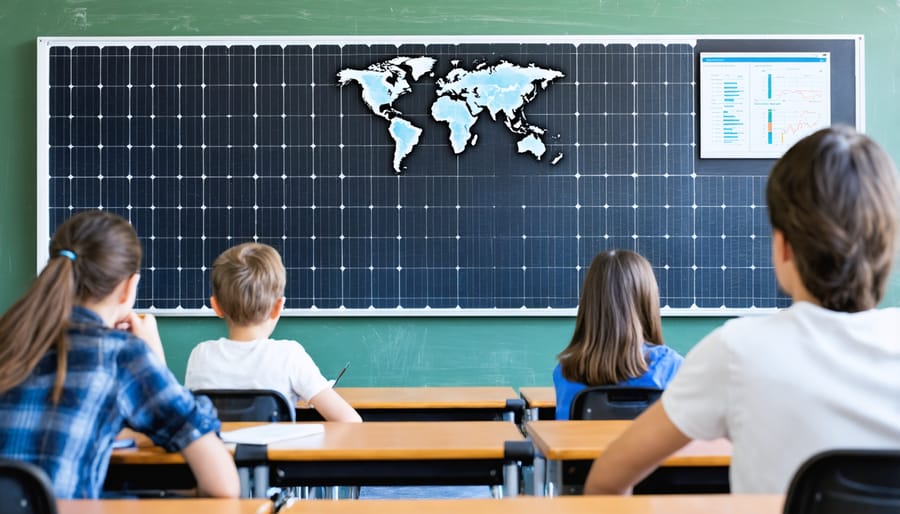
The Solar Academy at Brighton High School in California stands as a shining example of successful solar panel implementation in an educational setting. In 2019, the school embarked on an ambitious project to install a 250kW solar array system across their main building and parking structures, combining energy efficiency with hands-on learning opportunities.
The project, completed in partnership with local utility companies and solar contractors, required an initial investment of $875,000. Through various grants, tax incentives, and creative financing options, the school secured funding with minimal impact on their operating budget. The installation process took approximately three months and was strategically scheduled during summer break to minimize disruption to academic activities.
The results have exceeded expectations on multiple fronts. From an economic perspective, Brighton High School has reduced its annual electricity costs by 65%, generating savings of approximately $98,000 in the first year alone. These savings have been redirected to fund STEM programs and facility improvements.
Beyond financial benefits, the installation has transformed the school’s science curriculum. Students now have access to real-time monitoring systems that display energy production data, weather impacts, and carbon offset calculations. Science teachers have integrated this data into physics, environmental science, and mathematics lessons, creating practical applications for theoretical concepts.
The project has also sparked community engagement. Brighton High School hosts monthly “Solar Saturday” workshops, where students present their solar energy projects to community members. Local businesses have taken notice, leading to internship opportunities for students interested in renewable energy careers.
Maintenance has proved minimal, with quarterly professional inspections and routine cleaning being the only regular requirements. The system’s performance has remained consistent, achieving 98% of projected energy production targets in its first two years of operation.
The success at Brighton High School has inspired neighboring districts to pursue similar initiatives. Five other schools in the county have since launched their own solar projects, using Brighton’s implementation model as a blueprint. The school administration regularly shares their experience and documentation with other institutions, helping to create a network of solar-powered educational facilities.
This case study demonstrates how educational solar installations can successfully balance infrastructure improvements with educational opportunities while delivering substantial cost savings and environmental benefits.
Getting Started with Educational Solar
Beginning your educational solar journey requires careful planning and strategic implementation. The first step is conducting a thorough site assessment to evaluate your facility’s solar potential, including roof condition, available space, and sun exposure patterns. This assessment should be performed by qualified solar professionals who can provide detailed recommendations.
Next, establish clear objectives for your solar installation, considering both educational and energy production goals. Many institutions successfully combine power generation with hands-on learning opportunities, creating a dual-purpose investment. When implementing solar projects, it’s crucial to involve key stakeholders early in the process, including administrators, facility managers, and educators.
Secure funding through various available channels, such as government grants, educational endowments, or sustainable energy initiatives. Many institutions find success with hybrid funding models that combine multiple sources. Consider partnering with local utilities or energy companies that offer special programs for educational institutions.
Develop a comprehensive implementation timeline that accounts for installation during minimal disruption periods, typically during summer breaks or extended holidays. Create a maintenance plan that includes regular system checks and cleaning schedules to ensure optimal performance.
Finally, integrate the solar installation into your curriculum by developing educational programs that utilize real-time data monitoring systems. This approach allows students to engage with renewable energy concepts through practical, hands-on experience while demonstrating your institution’s commitment to sustainability and innovation.
Remember to document each step of your solar journey, as this information can be valuable for future reference and can help secure additional funding or support for expanded renewable energy initiatives.
Educational solar panels represent a significant investment in both sustainability and learning. By implementing solar technology, institutions can reduce energy costs by 40-80% while creating hands-on learning opportunities for students across multiple disciplines. The environmental impact is equally compelling, with a typical school installation offsetting hundreds of tons of CO2 emissions annually. Educational institutions looking to embrace solar energy should begin by conducting a site assessment, exploring available incentives, and developing a comprehensive implementation plan. The time to act is now – with current federal and state incentives, decreasing installation costs, and proven ROI metrics, solar panels offer an unprecedented opportunity to transform educational facilities into sustainable, future-ready learning environments while demonstrating environmental leadership to the next generation.