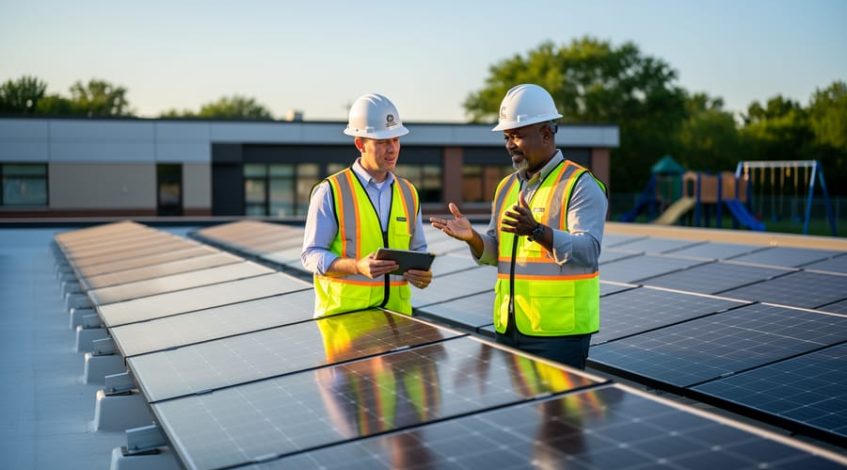
Educational institutions face mounting pressure to reduce operational costs while demonstrating environmental leadership, yet many lack the specialized knowledge to navigate complex solar installations. Solar educators bridge this critical gap by delivering technical expertise, regulatory guidance, and financial modeling specifically tailored to school environments. These professionals transform abstract sustainability goals into operational solar-powered schools that generate measurable returns.
The role extends beyond traditional consulting. Solar educators assess facility-specific energy consumption patterns, design systems that accommodate educational calendars and peak usage times, and secure available incentives from government programs. They guide administrators through procurement processes, evaluate installer qualifications, and establish monitoring protocols that verify long-term performance. Most importantly, they quantify return on investment using data-driven projections that align with institutional budget cycles and capital planning requirements.
Schools that engage specialized solar educators typically achieve 15-25% better system performance compared to generic installations, primarily through optimized sizing and strategic component selection. This expertise proves particularly valuable when navigating building codes, utility interconnection agreements, and safety requirements unique to facilities serving minors. The following analysis examines how qualified solar educators deliver tangible value across project phases, supported by case studies demonstrating real-world cost reductions and implementation best practices for facility managers evaluating solar partnerships.
What Is a Solar Educator and Why Educational Institutions Need Them

The Technical and Educational Expertise Combination
Solar educators possess a distinctive combination of technical knowledge and educational sector expertise that sets them apart from standard solar installers. Their understanding extends beyond photovoltaic system specifications to encompass the unique operational requirements of educational facilities, including class schedules, seasonal occupancy variations, and peak energy consumption periods during instructional hours.
These specialists recognize that schools typically consume 30-40% of their energy during morning and midday hours, aligning well with peak solar production times. This knowledge enables them to design systems that maximize self-consumption and reduce grid dependency during operational periods. Solar educators also understand the structural considerations specific to educational buildings, from aging roof infrastructure to safety requirements in high-traffic areas.
Their dual expertise proves particularly valuable when navigating complex funding mechanisms available to educational institutions, such as ESIF grants, local authority incentives, and energy performance contracts. They can translate technical system performance into language that resonates with school boards and administrators, focusing on long-term operational savings and educational opportunities.
This comprehensive skill set ensures solar installations serve both as energy solutions and teaching tools, creating systems that deliver measurable financial returns while supporting sustainability education initiatives within the curriculum.
Beyond Installation: The Advisory Role
Solar installations in educational settings represent more than infrastructure upgrades—they become powerful teaching assets when supported by knowledgeable advisors. Solar educators extend their value well beyond commissioning, serving as strategic partners who help institutions maximize their investment’s educational impact over years of operation.
These professionals work alongside administrators to develop age-appropriate solar education programs that align with existing STEM curricula. They provide ongoing support for teachers incorporating real-time energy data into classroom lessons, from elementary science units to advanced physics coursework. This guidance ensures students engage meaningfully with the system rather than viewing it as background infrastructure.
The advisory role proves particularly valuable for community outreach initiatives. Solar educators assist in planning open houses, developing public displays, and creating communication strategies that showcase the institution’s sustainability leadership. For example, one regional university utilized their solar educator to coordinate quarterly workshops for local businesses, establishing the campus as a renewable energy hub while strengthening community partnerships.
This sustained engagement transforms solar installations from capital expenditures into dynamic educational resources, delivering measurable returns through enhanced learning outcomes, improved community relations, and demonstrated commitment to environmental stewardship.
Key Responsibilities of Solar Educators in Educational Settings
Feasibility Assessment and Strategic Planning
Comprehensive feasibility assessment forms the foundation of successful solar implementation at educational institutions. Solar educators begin with detailed site evaluations, analyzing roof conditions, structural integrity, shading patterns, and available surface area to determine optimal panel placement. This technical analysis extends beyond physical infrastructure to include electrical system capacity and grid connection requirements.
Energy audit analysis provides critical data for system sizing and financial projections. By examining historical utility bills and consumption patterns, solar educators identify peak demand periods and opportunities for maximum offset. This granular understanding enables accurate calculations of potential energy production and cost savings over the system’s 25-30 year lifespan.
Strategic planning aligns solar investments with institutional objectives and budget constraints. Solar educators develop phased implementation roadmaps that accommodate capital availability while maximizing available incentives and tax benefits. For example, a California school district successfully implemented a three-phase solar program, reducing annual energy costs by 62% while maintaining operational continuity. This strategic approach included power purchase agreements that eliminated upfront costs and provided immediate savings, demonstrating how proper planning transforms solar adoption from a capital expenditure into a strategic investment in long-term financial stability and environmental stewardship.
Stakeholder Education and Community Buy-In
Successful solar implementation requires comprehensive stakeholder engagement across all levels of the educational institution. Solar educators facilitate this process by presenting tailored information to school boards and administrators, focusing on long-term cost savings, energy independence, and alignment with sustainability goals. These professionals translate technical specifications into accessible financial projections and operational benefits that resonate with decision-makers concerned about budgetary constraints and facility management responsibilities.
For teachers and students, solar educators develop curriculum-integrated learning opportunities that transform installations into living laboratories. This approach demonstrates immediate educational value while building grassroots support for the initiative. When Riverside High School in California implemented their solar array, the educator-led program resulted in a 40% increase in STEM enrollment within two years, directly connecting infrastructure investment to academic outcomes.
Parent and community engagement proves equally critical for project success. Solar educators organize information sessions that address common concerns about installation logistics, safety protocols, and maintenance requirements. They provide transparent data on energy production and cost savings, creating measurable accountability that strengthens community confidence. This multi-tiered communication strategy ensures that all stakeholders understand both immediate and long-term benefits, transforming potential resistance into active advocacy for sustainable energy solutions.
Curriculum Development and Student Engagement
Solar educators serve as catalysts for integrating renewable energy concepts into educational frameworks, transforming abstract sustainability principles into tangible learning experiences. These specialists work directly with curriculum developers to embed solar technology and renewable energy topics across mathematics, physics, engineering, and environmental science programs, ensuring alignment with educational standards while maintaining technical accuracy.
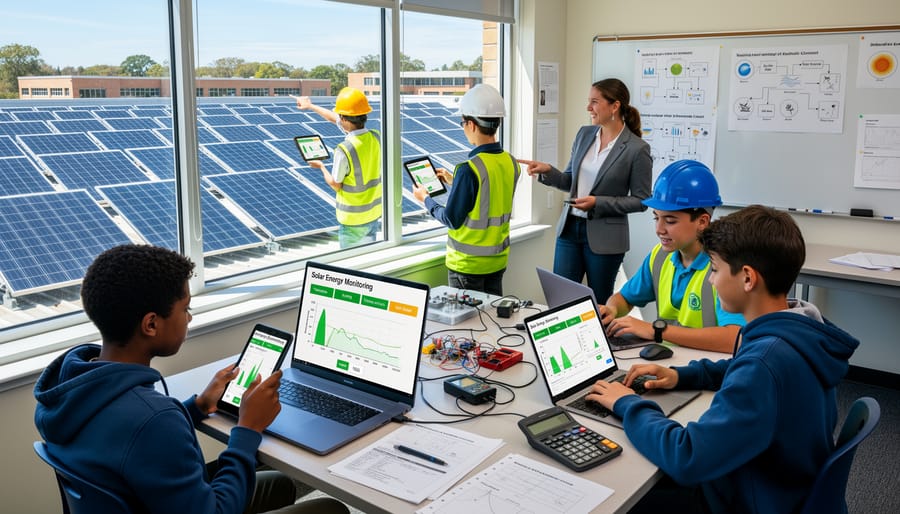
By developing comprehensive solar energy activities tailored to different grade levels, solar educators create experiential learning opportunities that extend beyond traditional classroom instruction. Students engage with monitoring systems installed at their schools, analyzing real-time energy production data to understand variables affecting solar performance. This practical approach demonstrates measurable outcomes: schools implementing hands-on solar programs report increased student interest in STEM fields and improved comprehension of energy efficiency concepts.
The educational value extends to demonstrating return on investment principles, as students learn to calculate energy savings and environmental impact metrics using their institution’s solar installation as a living laboratory. This integration prepares the next generation of facility managers and decision-makers with foundational knowledge of renewable energy systems while simultaneously maximizing the educational utility of existing solar infrastructure investments.
Financial Benefits and ROI: Making the Case for Solar in Schools
Long-Term Cost Savings and Budget Reallocation
Educational institutions implementing solar energy systems typically achieve electricity cost reductions between 50-80% within the first year of operation. For a medium-sized school with annual energy expenditures of $50,000, this translates to savings of $25,000-$40,000 annually. These substantial reductions create immediate opportunities for budget reallocation toward core educational priorities.
Schools working with qualified solar educators can accurately forecast these savings during the planning phase, ensuring realistic budget projections. A case study from a Queensland secondary school demonstrated that educational solar panels reduced their annual electricity costs by $38,000. The institution redirected these funds to enhance STEM programs, purchase new laboratory equipment, and expand after-school tutoring services.
Over a typical 25-year system lifespan, cumulative savings can exceed $1 million for larger facilities, even accounting for minimal maintenance costs and periodic inverter replacements. This financial transformation enables institutions to reallocate resources previously consumed by utility bills toward teacher professional development, infrastructure improvements, technology upgrades, and student support services.
Solar educators help administrators develop comprehensive financial models that quantify both immediate and long-term savings. These projections assist in securing board approval and community support by clearly demonstrating how renewable energy investments directly benefit educational outcomes. The predictable nature of solar savings also provides budget stability, protecting institutions from volatile electricity price fluctuations and allowing for more strategic long-term planning.
Navigating Funding, Incentives, and Grant Opportunities
Securing financial support for institutional solar projects requires specialized knowledge of evolving incentive landscapes. Solar educators serve as essential guides through complex funding mechanisms, ensuring educational institutions maximize available resources while minimizing upfront investment barriers.
These professionals maintain comprehensive databases of federal programs, including Investment Tax Credits (ITC) that can offset up to 30% of solar installation costs. They identify state-specific incentives such as rebate programs, performance-based incentives, and renewable energy credits that directly impact project economics. For educational institutions, solar educators navigate specialized opportunities like the Clean Energy for America’s Schools program and state-level educational facility grants that traditional energy consultants might overlook.
The application process demands technical precision and documentation expertise. Solar educators prepare detailed proposals demonstrating energy savings projections, environmental impact assessments, and educational curriculum integration opportunities that strengthen grant applications. They understand evaluation criteria used by funding agencies and position projects to align with policy priorities.
A practical example involves a California school district that leveraged multiple funding streams identified by their solar educator. The institution secured a combination of state Clean Energy Financing, federal ITC benefits, and utility company rebates, reducing net project costs by 62%. This strategic approach transformed what appeared as a prohibitive capital expense into a financially viable investment with a four-year payback period.
Solar educators also monitor emerging opportunities, ensuring institutions benefit from newly enacted legislation and regional initiatives. They provide ongoing financial analysis, helping administrators understand how incentive changes affect long-term project returns and maintenance budgets. This forward-looking approach enables educational institutions to make confident decisions backed by comprehensive financial intelligence.
Real-World Impact: Case Studies of Solar Educators in Action
Primary and Secondary School Transformation
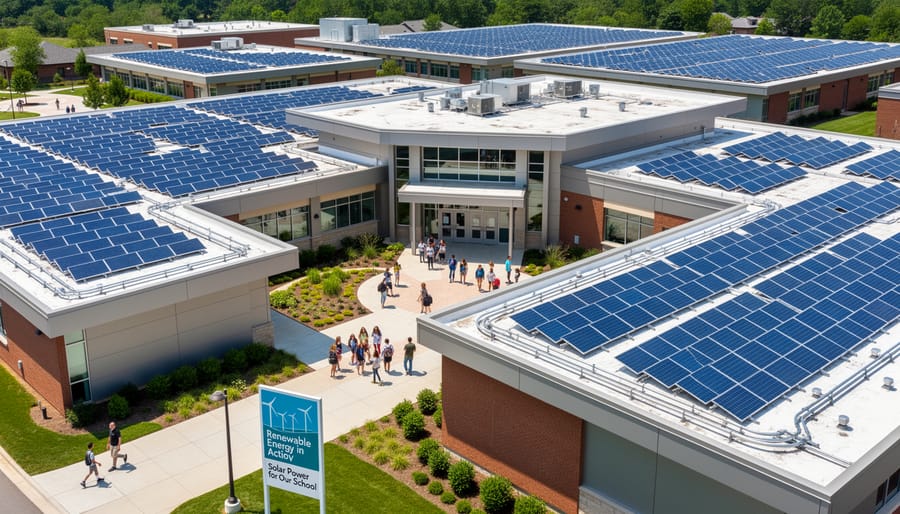
Brookfield Secondary College in Victoria demonstrates the tangible impact of partnering with experienced solar educators. The institution engaged qualified solar consultants to conduct a comprehensive energy assessment of their 12-building campus, which revealed annual electricity costs exceeding $180,000. The assessment identified optimal roof spaces, evaluated structural capacity, and analyzed consumption patterns across classrooms, administrative buildings, and sports facilities.
The solar education team designed a phased 250kW installation strategy that aligned with the school’s budget constraints and operational requirements. Phase one prioritized high-consumption buildings, delivering immediate cost reductions of 35% within the first year. The system incorporated a real-time monitoring dashboard accessible to students and staff, transforming the infrastructure into a living laboratory for STEM education.
Beyond technical implementation, the solar educators developed curriculum-aligned learning modules covering energy generation, environmental science, and financial literacy. These resources complemented existing elementary school solar programs by providing age-appropriate content for secondary students. Teachers integrated the monitoring data into mathematics, physics, and economics classes, enabling students to analyze real performance metrics and calculate return on investment.
The project achieved full operational status within eight months, with projected savings of $1.2 million over the system’s 25-year lifespan. The installation now generates approximately 320,000 kWh annually, reducing the college’s carbon footprint by 280 tonnes while providing ongoing educational value across multiple subject areas.
Higher Education Campus-Wide Solar Implementation
The University of California, San Diego demonstrates the transformative impact of solar educator expertise in higher education settings. In 2017, the institution partnered with specialized solar consultants to develop a comprehensive renewable energy strategy, resulting in one of the largest campus solar installations in the United States. The project encompasses over 5 megawatts of distributed solar generation across multiple campus buildings and parking structures.
Solar educators played a critical role throughout the implementation process, beginning with a detailed energy audit and site assessment. Their analysis identified optimal locations for panel placement, accounting for structural considerations, aesthetic requirements, and educational visibility. The team developed a phased installation approach that minimized disruption to campus operations while maximizing energy production capacity.
The financial outcomes validate the strategic investment in specialized expertise. The university achieved a 25-year power purchase agreement at rates significantly below local utility costs, generating annual savings exceeding $1.2 million. The installation offsets approximately 12,000 metric tons of carbon dioxide emissions annually, equivalent to removing 2,500 vehicles from the road.
Beyond energy production, solar educators integrated the installation into the university’s academic mission. They designed monitoring systems accessible to students and faculty, transforming the infrastructure into a living laboratory for engineering, environmental science, and business programs. This educational component enhances return on investment by supporting research initiatives and workforce development.
The project demonstrates how solar educator involvement extends beyond technical installation. Their comprehensive approach addressed regulatory compliance, utility interconnection negotiations, available incentive programs, and long-term maintenance planning. For facility managers and administrators considering campus-wide solar implementation, this case study illustrates the measurable value of engaging qualified solar education professionals from project inception through operational phases.

Selecting the Right Solar Partner with Educational Expertise
Essential Qualifications and Experience to Look For
When evaluating solar educators for your institution, prioritize candidates with recognized industry certifications such as NABCEP (North American Board of Certified Energy Practitioners) accreditation or equivalent credentials demonstrating technical competency in photovoltaic systems design and installation. Look for professionals with documented experience managing educational facility solar projects, as these environments present unique challenges including peak usage patterns during daytime hours and the need for minimal operational disruption.
Qualified solar educators should demonstrate comprehensive understanding of institutional procurement processes, including familiarity with government incentive programs, tax credits, and power purchase agreements specifically tailored to educational settings. Request case studies from similar-sized institutions where they’ve successfully implemented projects, paying particular attention to achieved energy cost reductions and payback periods.
Verify their ability to provide ongoing training for your facilities team, ensuring knowledge transfer that enables long-term system monitoring and basic maintenance. The most effective solar educators possess strong communication skills to engage diverse stakeholders, from financial officers focused on ROI to sustainability committees interested in environmental impact. Additionally, seek professionals who maintain relationships with reputable equipment manufacturers and can provide transparent warranty information and performance guarantees. Their track record should include projects that remained operational and met projected energy production targets years after installation.
Questions to Ask Before Committing to a Solar Provider
Before selecting a solar provider for your institution, ask targeted questions to ensure they possess genuine educational expertise. Inquire about their experience with similar facilities: “How many educational institutions have you worked with, and can you provide specific case studies?” Request details about their post-installation support structure, including response times for technical issues and availability of dedicated account management.
Understanding monitoring capabilities is essential for maximizing your investment. Ask: “What real-time monitoring systems do you provide, and can multiple stakeholders access performance data?” This transparency enables facility managers to track energy production, identify potential issues early, and demonstrate ROI to decision-makers.
Evaluate their maintenance programs thoroughly. Request information about preventive maintenance schedules, warranty coverage, and long-term service agreements. Questions should include: “What does your maintenance program include, and how do you handle equipment degradation over time?” A comprehensive maintenance plan protects your investment and ensures consistent energy production.
Finally, assess their commitment to education itself. Ask whether they provide staff training, student engagement opportunities, or curriculum integration support. Providers who view solar installations as learning platforms deliver value beyond energy savings, creating opportunities for STEM education and sustainability awareness that align with institutional missions.
The transformative impact of solar educators on educational institutions extends far beyond simple technology installation. These specialized professionals serve as catalysts for sustainable change, bridging the gap between complex renewable energy systems and the practical needs of schools, colleges, and universities. By partnering with experienced solar educators who understand both photovoltaic technology and the operational challenges facing educational facilities, institutions position themselves for decades of reliable, cost-effective energy production.
The long-term value proposition becomes increasingly clear when examining real-world outcomes. Schools that engage knowledgeable solar educators during the planning phase typically achieve 15-25% better system performance compared to those relying solely on general contractors. This performance advantage translates directly to enhanced return on investment, with institutions recouping their initial expenses several years earlier than projected. Beyond financial metrics, solar educators ensure that educational communities maximize the learning opportunities inherent in renewable energy installations, creating living laboratories that inspire future generations.
Looking ahead, the role of solar educators will only grow in importance as educational institutions face mounting pressure to reduce operational costs while demonstrating environmental leadership. The convergence of declining technology costs, improved energy storage solutions, and increasing grid independence capabilities creates unprecedented opportunities for schools to achieve energy resilience. Institutions that invest in partnerships with qualified solar educators today establish foundations for sustainable operations that will serve their communities for 25 years or more, while contributing meaningfully to broader climate objectives and educational excellence.