
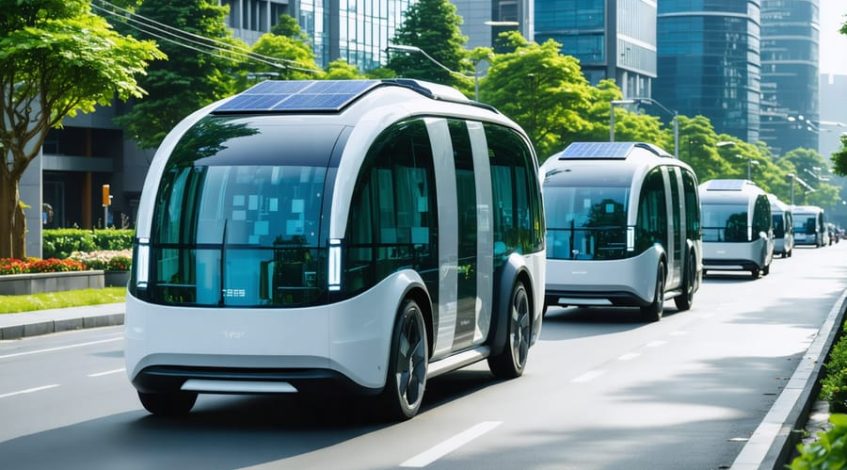
The electric Transit passenger van represents a transformative leap in sustainable commercial transportation, combining Ford’s proven Transit platform with cutting-edge electric vehicle technology. With a range of up to 126 miles on a single charge and seating configurations for up to 14 passengers, these zero-emission vehicles are revolutionizing fleet operations across urban centers and corporate campuses. Organizations implementing e-Transit vans report up to 40% reduction in operating costs compared to traditional fuel-powered alternatives, while simultaneously meeting stringent environmental regulations and corporate sustainability goals.
This new generation of passenger vans delivers impressive performance metrics with 266 horsepower and 317 lb-ft of instant torque, ensuring reliable operation even under full passenger loads. Advanced features like regenerative braking, intelligent range management, and rapid DC fast-charging capabilities make these vehicles particularly suited for scheduled routes and predictable daily operations. For facility managers and transit authorities seeking to modernize their fleets, the e-Transit passenger van presents a compelling combination of operational efficiency, environmental responsibility, and financial sustainability.
The Evolution of Solar-Enhanced Transit Vans
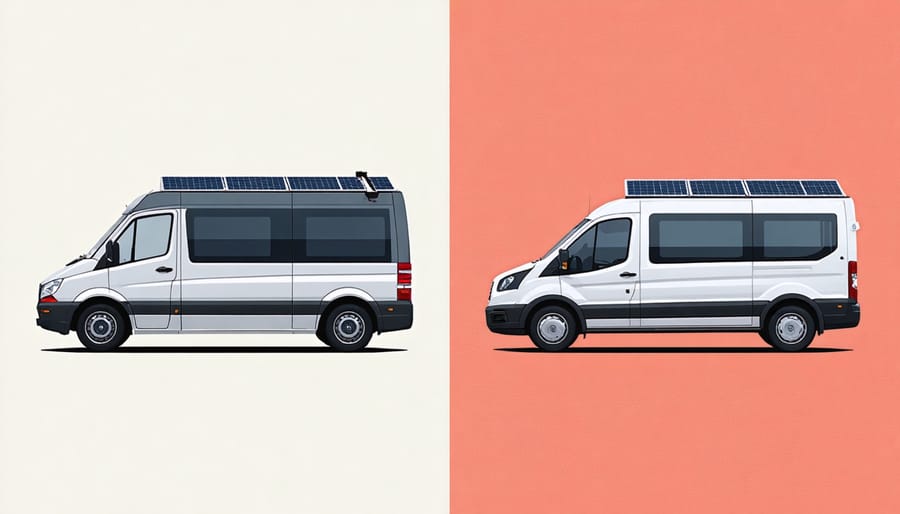
Traditional vs. Solar-Enhanced E-Vans
The distinction between traditional electric vans and their solar-enhanced counterparts lies primarily in their energy sourcing and operational efficiency. Conventional e-vans rely solely on grid charging, while solar-enhanced models incorporate photovoltaic panels on their roofs and sometimes sides, creating a hybrid power system that extends range and reduces charging dependency.
Solar-enhanced e-vans typically achieve 15-25% greater range compared to traditional models, depending on weather conditions and geographic location. This translates to approximately 30-50 additional miles per day through solar generation alone. The integrated solar systems also provide auxiliary power for climate control and other onboard systems, reducing the drain on the main battery.
While traditional e-vans have lower initial costs, solar-enhanced versions demonstrate superior total cost of ownership over their lifecycle. Fleet operators report up to 30% reduction in charging costs and decreased dependency on charging infrastructure. The solar enhancement also maintains battery health by providing consistent trickle charging during daylight hours, potentially extending battery life by up to 20%.
These advantages make solar-enhanced e-vans particularly suitable for routes with predictable daily schedules and significant sunlight exposure, especially in regions with well-developed solar resources.
Key Solar Integration Technologies
Modern e-transit passenger vans incorporate advanced solar integration systems that maximize energy efficiency and operational sustainability. High-efficiency photovoltaic panels, typically mounted on the vehicle’s roof, can generate up to 2-3 kWh of additional power daily, extending the van’s range by 10-15%. These systems utilize similar principles to maritime solar integration technologies, adapted for land-based transportation.
The energy storage system combines lithium-ion batteries with smart power management technology, enabling seamless switching between solar and grid power. Advanced battery management systems (BMS) optimize charging cycles and protect against overcharging, while intelligent power distribution ensures critical systems receive priority during peak demand periods.
Smart power management systems incorporate real-time monitoring and predictive analytics to maximize solar energy utilization. These systems automatically adjust power consumption based on route conditions, passenger load, and available sunlight, while maintaining optimal temperature control and passenger comfort. Integration with fleet management software provides operators with detailed energy consumption data and performance metrics, enabling data-driven decisions for route optimization and maintenance scheduling.

Operational Benefits and ROI
Reduced Operating Costs
E-transit passenger vans deliver significant cost savings through reduced operational expenses, making them an attractive investment for fleet operators. The integration of solar energy storage systems further enhances these savings by optimizing energy consumption and reducing dependency on grid electricity.
Compared to traditional diesel-powered vans, e-transit vehicles can reduce fuel costs by up to 75%, with electricity costs averaging $0.04 per mile versus $0.16 per mile for diesel. Annual maintenance costs are typically 40% lower due to fewer moving parts and the elimination of oil changes, transmission services, and exhaust system repairs.
The regenerative braking system extends brake life by up to three times, while the simplified powertrain reduces routine maintenance requirements. Fleet operators report average maintenance savings of $2,800 per vehicle annually, with some achieving even greater reductions through preventive maintenance programs and real-time vehicle monitoring.
Battery longevity has improved significantly, with modern e-transit vans maintaining 80% capacity after 100,000 miles. This extended lifespan, combined with manufacturer warranties typically covering 8 years or 100,000 miles, provides operators with reliable long-term cost projections and reduced total cost of ownership.
Additionally, government incentives and tax credits can offset initial purchase costs, while reduced carbon emissions may qualify organizations for environmental certifications and associated financial benefits.
Extended Range and Reliability
The e-transit passenger van’s extended range capabilities represent a significant advancement in electric vehicle technology, offering operators reliable service coverage across diverse routes and conditions. With a typical range of 126 miles on a single charge, these vehicles effectively serve most urban and suburban routes while maintaining operational efficiency throughout the day.
Advanced battery management systems and regenerative braking technology contribute to consistent performance across varying weather conditions and terrain types. Fleet operators report minimal range degradation even during peak summer and winter months, ensuring dependable service delivery year-round. This reliability is further enhanced by strategic charging infrastructure placement, allowing for opportunity charging during natural service breaks.
The integration of smart route planning software optimizes vehicle deployment based on range capabilities and charging schedules. Real-time monitoring systems provide accurate range predictions, accounting for factors such as passenger load, climate control usage, and traffic conditions. This predictive capability enables operators to maximize vehicle utilization while maintaining service reliability.
Field data from major transit authorities demonstrates impressive uptime rates exceeding 98%, with minimal service disruptions due to range-related issues. The combination of extended range and sophisticated energy management systems allows operators to confidently schedule routes, reduce range anxiety, and maintain consistent service levels while achieving significant reductions in operational costs and environmental impact.
Implementation Success Stories
European Transit Authority Case Study
The Metropolitan Transit Authority (MTA) of Hamburg, Germany, successfully implemented a fleet of 50 e-transit passenger vans in 2021, demonstrating the viability of electric vehicles in public transportation. The initiative, which aimed to reduce carbon emissions and operating costs, has yielded impressive results within its first 18 months of operation.
The fleet primarily serves as a flexible transit solution for low-density routes and on-demand services, complementing the city’s existing public transportation network. Each van accommodates up to 12 passengers and operates for approximately 200 kilometers per charge, meeting the daily operational requirements of urban transit routes.
Key performance metrics from the implementation include a 73% reduction in operational costs compared to traditional diesel vans, with maintenance expenses decreased by 45%. The fleet has collectively prevented the emission of 450 metric tons of CO2, while achieving a 98% reliability rate.
Passenger satisfaction surveys indicate a 92% approval rating, with users particularly appreciating the quiet operation and improved air quality. The success of this program has prompted the MTA to approve the acquisition of an additional 75 e-transit vans for deployment in 2024, making it one of Europe’s largest electric van transit initiatives.
Municipal Fleet Transformation
The city of Portland, Oregon, provides a compelling example of successful municipal fleet transformation through its comprehensive adoption of solar-enhanced e-transit vans. In 2021, the city initiated a pilot program to replace 75% of its passenger transit fleet with electric vehicles, incorporating innovative renewable energy transport solutions that combine solar charging infrastructure with electric mobility.
The program’s first phase included deploying 50 e-transit passenger vans equipped with roof-mounted solar panels, strategically positioned across various city departments. These vehicles serve multiple functions, from shuttle services for municipal employees to community outreach programs. The solar enhancement allows each van to generate approximately 15-20% of its daily energy requirements, significantly reducing grid dependency and operating costs.
Key achievements include a 60% reduction in fleet operating costs, 85% decrease in maintenance requirements, and elimination of over 1,200 metric tons of CO2 emissions annually. The success of Portland’s initiative has inspired similar programs in Seattle, Minneapolis, and Austin, demonstrating the scalability and practical benefits of solar-enhanced e-transit solutions in municipal operations. The city’s experience provides valuable insights for other municipalities considering similar transformations, particularly in terms of infrastructure planning and implementation strategies.
Integration Guidelines
Infrastructure Requirements
The successful implementation of e-transit passenger van fleets requires robust charging infrastructure and dedicated maintenance facilities. Primary charging stations should include Level 2 AC chargers for overnight charging and DC fast chargers for rapid top-ups during operational hours. A typical depot should install one charger per vehicle plus 20% redundancy to ensure uninterrupted service.
Maintenance facilities need specialized equipment for high-voltage systems and diagnostic tools specific to electric powertrains. These facilities must include isolated bays with proper electrical safety equipment, specialized lifts rated for electric vehicles, and dedicated areas for battery maintenance. Integration with solar integration infrastructure can significantly reduce operational costs and enhance sustainability.
Smart charging management systems are essential for optimizing power distribution and managing peak loads. These systems should interface with facility energy management software to balance charging schedules with grid capacity and energy costs. Facilities should also maintain backup power systems to ensure charging capability during grid outages.
Training areas for maintenance staff and drivers are crucial components of the infrastructure. These spaces should be equipped with simulation tools and hands-on training equipment to ensure proper handling of electric vehicles and charging systems. Regular updating of safety protocols and emergency response procedures is essential for maintaining operational efficiency and safety standards.

Fleet Management Strategies
Effective fleet management of e-transit passenger vans requires a strategic approach that balances operational efficiency with sustainability goals. Organizations should implement a comprehensive monitoring system that tracks vehicle performance, charging patterns, and energy consumption in real-time. This data-driven approach enables operators to optimize routes, charging schedules, and maintenance intervals.
Key to successful fleet management is the establishment of a smart charging infrastructure. Facilities should develop charging schedules that align with off-peak electricity rates and solar generation peaks. Installing smart charging systems allows for automated load balancing and helps prevent grid strain during high-demand periods.
Preventive maintenance protocols specific to electric vehicles are essential for fleet longevity. Regular battery health checks, software updates, and component inspections should be scheduled during off-peak hours to minimize service disruptions. Training programs for drivers and maintenance staff must emphasize energy-efficient driving techniques and proper charging procedures.
Fleet managers should also implement a rotation system that considers battery degradation patterns and usage intensity. High-mileage routes should be distributed evenly across the fleet to prevent premature wear on specific vehicles. Additionally, establishing clear protocols for emergency situations and backup power solutions ensures service continuity during unexpected events.
Organizations should regularly review and update their fleet management strategies based on performance metrics and emerging technologies. This includes evaluating the integration of new charging technologies and exploring opportunities for vehicle-to-grid applications when viable.
Financial Planning and Incentives
Transitioning to e-transit passenger vans becomes more financially viable through various government incentives and funding programs. The Federal Transit Administration (FTA) offers grants covering up to 80% of electric vehicle purchases through the Low or No Emission Vehicle Program. State-level incentives can provide additional funding, with some jurisdictions offering rebates ranging from $5,000 to $100,000 per vehicle.
Organizations can leverage multiple financing options, including lease-to-own arrangements and power purchase agreements (PPAs), which help minimize upfront costs. Many utility companies offer special rate structures and charging infrastructure incentives specifically designed for commercial electric vehicle fleets.
The Infrastructure Investment and Jobs Act has allocated $5.5 billion specifically for clean transit buses and vans, creating unprecedented opportunities for fleet electrification. Fleet operators can also benefit from carbon credit programs and local clean air initiatives, which provide additional revenue streams through environmental credits.
To maximize financial benefits, organizations should develop comprehensive funding strategies that combine multiple incentive programs. Working with experienced financial advisors who specialize in clean transportation can help identify optimal funding combinations and ensure compliance with program requirements. Early adopters often secure the most attractive incentives, making timely action crucial for maximizing return on investment.
For long-term planning, consider total cost of ownership (TCO) calculations, which typically show e-transit vans achieving break-even within 3-5 years when accounting for reduced maintenance and fuel costs.
E-transit passenger vans represent a significant step forward in sustainable transportation, offering a compelling combination of environmental benefits and operational efficiency. As cities and organizations increasingly prioritize carbon reduction targets, these vehicles demonstrate how innovative technology can address both ecological and economic concerns. The integration of solar enhancement further amplifies these advantages, reducing operational costs while extending range capabilities.
Looking ahead, the future of e-transit passenger vans appears particularly promising. Market projections indicate substantial growth in adoption rates over the next decade, driven by improving battery technology, decreasing costs, and strengthening government incentives. Organizations implementing these vehicles today are positioning themselves at the forefront of sustainable transportation solutions, while building resilient and future-proof fleets.
The success stories from early adopters have proven that e-transit passenger vans can effectively meet diverse transportation needs while delivering tangible financial returns. As charging infrastructure continues to expand and solar technology advances, these vehicles will become increasingly attractive for businesses and public agencies seeking sustainable, cost-effective transportation solutions. Their role in shaping the future of clean mobility is not just aspirational but increasingly essential for meeting global sustainability goals.