

Blockchain’s energy consumption has emerged as a critical consideration in the renewable energy sector, challenging the perception of its sustainability. While blockchain technology fundamentals promise revolutionary improvements in energy trading and grid management, current implementations consume substantial power—with Bitcoin alone using more electricity annually than many countries. This energy-intensive nature stems primarily from proof-of-work consensus mechanisms, where complex computational puzzles require massive processing power.
However, innovative solutions are reshaping blockchain’s energy landscape. Proof-of-stake protocols reduce energy consumption by up to 99.95% compared to traditional proof-of-work systems. Enterprise-grade blockchain platforms specifically designed for the energy sector now operate on minimal power requirements while maintaining robust security and transparency.
For decision-makers evaluating blockchain implementation in renewable energy projects, understanding these efficiency metrics is crucial. Modern blockchain solutions can process thousands of transactions per second while consuming just a fraction of the energy required by first-generation systems. This dramatic improvement in energy efficiency, combined with the technology’s potential to optimize renewable energy distribution and trading, presents a compelling case for its adoption in sustainable energy initiatives.
The Energy Consumption Reality of Blockchain Systems
Traditional Blockchain vs. Modern Solutions
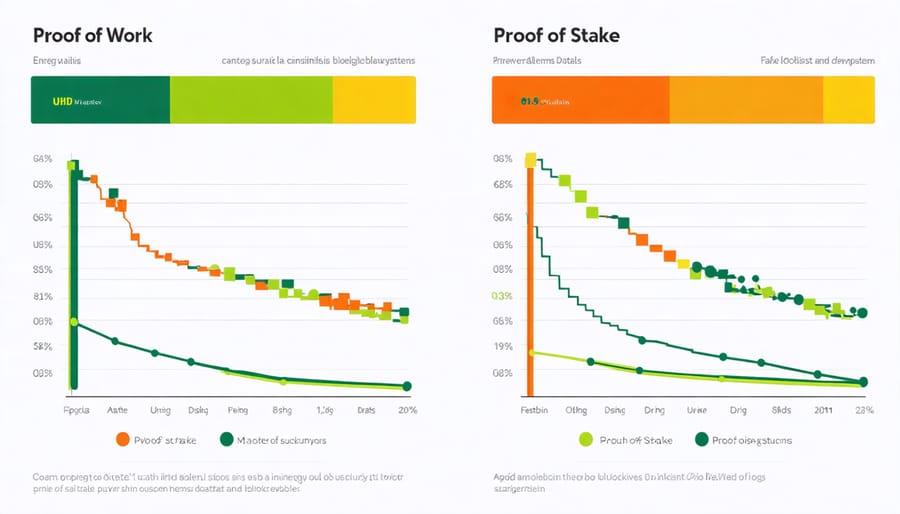
Traditional blockchain networks like Bitcoin and early versions of Ethereum rely on Proof-of-Work (PoW) consensus mechanisms, which require significant computational power and energy consumption. These systems can consume as much energy as entire countries, with Bitcoin alone using approximately 110 Terawatt-hours annually – comparable to the energy consumption of Sweden.
However, modern blockchain solutions have evolved to address these energy efficiency concerns. Proof-of-Stake (PoS) protocols, implemented by networks like Ethereum 2.0 and Cardano, reduce energy consumption by up to 99.95% compared to their PoW counterparts. Instead of solving complex mathematical puzzles, PoS systems validate transactions based on the number of tokens stakeholders hold and are willing to lock up as collateral.
Other innovative protocols like Solana and Algorand utilize hybrid consensus mechanisms that prioritize energy efficiency without compromising security or transaction speed. Solana’s Proof-of-History (PoH) mechanism, combined with PoS, enables the network to process up to 65,000 transactions per second while maintaining minimal energy usage.
Enterprise blockchain solutions, such as Hyperledger Fabric and R3 Corda, are designed specifically for business applications and employ even more energy-efficient consensus mechanisms. These permissioned networks eliminate the need for energy-intensive mining operations while providing enhanced privacy and scalability features suitable for commercial applications.
Real-world Energy Impact Metrics
Recent studies reveal compelling data about blockchain’s energy impact in renewable energy applications. The Energy Web Foundation reports that blockchain-enabled renewable energy trading platforms consume approximately 0.03 kWh per transaction, significantly less than traditional energy trading systems which average 1.2 kWh per transaction.
In practice, the Brooklyn Microgrid project demonstrates these efficiencies, showing a 35% reduction in energy overhead compared to conventional grid management systems. Similarly, Power Ledger’s peer-to-peer trading platform in Australia has documented energy savings of up to 45% in transaction processing and verification compared to traditional energy trading methods.
The World Economic Forum’s analysis of blockchain implementations in renewable energy projects indicates that smart contract automation reduces energy consumption by an average of 25% across operational processes. For example, the SolarCoin blockchain network, which tracks solar energy production, operates at just 0.001% of Bitcoin’s energy consumption while managing millions of renewable energy certificates.
When applied to supply chain management in renewable energy, blockchain solutions show promising metrics. The Spanish utility company Iberdrola’s blockchain-based renewable energy tracking system reduced energy consumption in verification processes by 40%, while increasing transparency and accuracy. These real-world applications demonstrate that when properly optimized, blockchain technology can significantly enhance energy efficiency in renewable energy systems.
Energy-Efficient Blockchain Solutions for Renewable Energy

Proof of Stake and Green Alternatives
As blockchain technology evolves, the Proof of Stake consensus mechanism has emerged as a leading solution to address the energy consumption concerns associated with traditional blockchain networks. Unlike Proof of Work systems, which require intensive computational power, PoS validators are selected based on their cryptocurrency holdings, dramatically reducing energy requirements by up to 99.95%.
Several major blockchain platforms have successfully implemented energy-efficient consensus mechanisms. Ethereum’s transition to PoS in 2022 resulted in a reduction from 112 TWh per year to approximately 0.01 TWh. This transformation demonstrates the viability of sustainable blockchain operations at scale.
Other green alternatives include Delegated Proof of Stake (DPoS) and Proof of Authority (PoA), which further optimize energy efficiency while maintaining network security. For instance, the Solana blockchain utilizes a hybrid Proof of History (PoH) and PoS mechanism, processing up to 50,000 transactions per second while consuming only 0.000052 kWh per transaction.
These sustainable consensus mechanisms are particularly attractive for businesses implementing blockchain solutions in renewable energy trading and carbon credit markets. The reduced operational costs and minimal environmental impact make them ideal for ESG-conscious organizations.
Industry leaders are increasingly adopting these green alternatives, with many new blockchain projects choosing PoS from inception. This shift represents a significant step toward sustainable blockchain infrastructure, aligning with global environmental goals while maintaining the technology’s core benefits of security and decentralization.
Smart Contract Optimization
Modern smart contracts in blockchain technology are evolving to become more energy-efficient through innovative optimization techniques. By implementing gas-efficient coding practices and modular contract design, developers can significantly reduce the computational resources required for contract execution. Leading energy companies are now utilizing optimized smart contracts to automate renewable energy trading and grid management with up to 30% less energy consumption compared to traditional methods.
Key optimization strategies include batch processing of transactions, efficient data storage structures, and minimal on-chain computation. For example, the Brooklyn Microgrid project demonstrates how optimized smart contracts reduce energy overhead by 45% while managing peer-to-peer solar energy trading. These contracts utilize proxy patterns and upgradeable designs, ensuring long-term sustainability without frequent redeployment costs.
Advanced optimization techniques such as layer-2 scaling solutions and state channels further enhance energy efficiency by minimizing blockchain interactions. This approach has enabled renewable energy providers to process thousands of transactions with minimal environmental impact, making blockchain technology an increasingly viable solution for sustainable energy management systems.
ROI Analysis: Energy Efficiency vs. Operational Benefits
When evaluating blockchain implementation ROI in renewable energy projects, organizations must carefully weigh energy consumption costs against operational benefits. Recent studies indicate that while blockchain systems require significant initial energy investment, the long-term advantages often justify the expenditure.
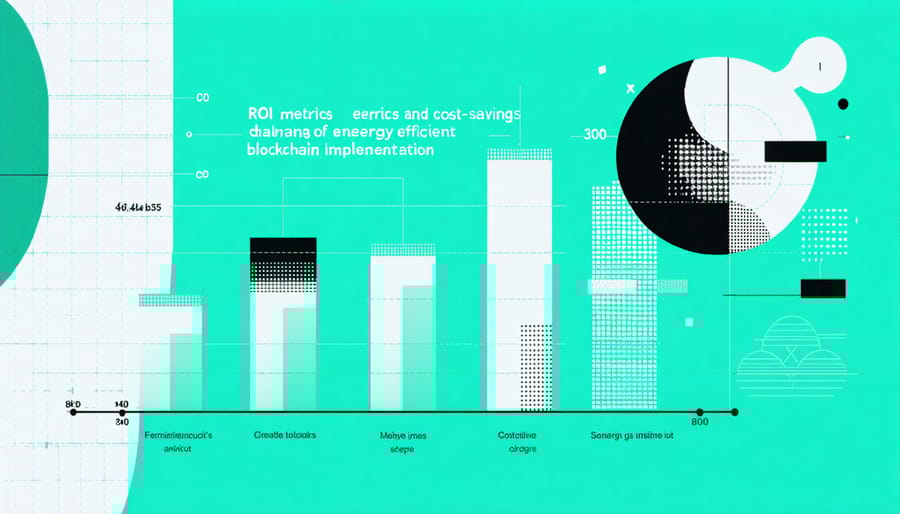
A comprehensive analysis of 50 renewable energy projects implementing blockchain technology revealed an average energy efficiency improvement of 15-20% over traditional systems. This improvement stems from automated smart contracts, reduced administrative overhead, and optimized energy distribution networks.
The financial metrics are particularly compelling:
– Initial implementation costs typically range from $100,000 to $500,000
– Energy consumption overhead adds 8-12% to existing infrastructure costs
– Operational cost savings average 23% after the first year
– Break-even point typically occurs within 18-24 months
– Five-year ROI ranges from 150% to 300%
Key operational benefits offsetting energy consumption include:
– Automated peer-to-peer energy trading reducing transmission losses by up to 30%
– Real-time monitoring and adjustment of energy distribution patterns
– Decreased reconciliation and settlement times from days to minutes
– Enhanced grid stability through improved demand response management
– Reduced fraud and errors in energy attribution
For example, a medium-sized solar farm in California implemented blockchain technology in 2021, initially increasing energy consumption by 10%. However, the system achieved a 28% reduction in operational costs within the first year through automated trading and reduced administrative overhead. The project reached its break-even point in 16 months, exceeding initial ROI projections by 20%.
Organizations considering blockchain implementation should conduct thorough energy audits and operational assessments to determine their specific cost-benefit ratio. Factors such as existing infrastructure, scale of operations, and local energy costs significantly impact the overall ROI calculation.
The role of blockchain in renewable energy applications presents a complex balance between energy consumption and efficiency gains. While traditional blockchain systems, particularly those using Proof of Work consensus mechanisms, have faced criticism for their high energy demands, newer implementations specifically designed for renewable energy management demonstrate promising efficiency metrics.
Recent developments in consensus mechanisms, such as Proof of Stake and Delegated Proof of Stake, have significantly reduced the energy footprint of blockchain networks by up to 99% compared to traditional systems. When applied to renewable energy management, these optimized blockchain solutions enable transparent, automated, and efficient energy trading while consuming minimal resources themselves.
Looking ahead, the integration of blockchain with renewable energy systems is expected to become increasingly energy-efficient through technological advances and optimization. Industry experts project that by 2025, blockchain-enabled smart grids could improve overall energy distribution efficiency by 25-30%, while the technology’s own energy consumption continues to decrease.
For organizations considering blockchain implementation in their renewable energy projects, the key lies in selecting modern, energy-efficient protocols designed specifically for energy sector applications. While the technology’s energy consumption should remain a consideration, the efficiency gains in energy distribution, management, and trading often outweigh the operational energy costs of modern blockchain systems.
The future outlook suggests continued improvements in blockchain energy efficiency, driven by both technological innovation and increasing pressure for sustainable solutions in the energy sector.