

Energy venture capital stands at the forefront of the global transition to sustainable energy, driving over $40 billion in investments across renewable technologies in 2023 alone. As traditional energy markets evolve and climate imperatives reshape investment priorities, venture capital firms are strategically positioning themselves to capitalize on breakthrough technologies in solar, storage, and smart grid solutions.
The convergence of declining renewable energy costs, supportive policy frameworks, and increasing corporate commitments to sustainability has created an unprecedented opportunity landscape for energy-focused venture investors. From early-stage startups developing next-generation battery chemistry to growth-stage companies scaling grid optimization platforms, the sector offers diverse entry points for strategic capital deployment.
This rapidly expanding market represents more than just financial returns; it’s accelerating the commercialization of critical climate solutions while reshaping the global energy infrastructure. For investors and entrepreneurs alike, understanding the nuances of energy venture capital has become essential in navigating the complex intersection of technology innovation, market dynamics, and regulatory frameworks that define today’s energy transition.
The transformative potential of well-directed venture capital in the energy sector extends beyond individual investments, catalyzing entire industries and accelerating the path to a sustainable energy future.
The Surge in Clean Energy Investment
Key Investment Areas
Venture capital investments in renewable energy are primarily concentrated in several high-growth sectors. Solar energy continues to dominate, attracting substantial funding due to technological advancements and innovative community solar financing models. Energy storage solutions, particularly advanced battery technologies, represent the second-largest investment category as grid stability becomes increasingly critical.
Wind energy technology, especially offshore developments and improved turbine efficiency, maintains strong investor interest. Green hydrogen and fuel cell technologies are emerging as promising investment areas, with significant funding directed toward scaling production and reducing costs. Smart grid technologies and energy management systems are also attracting substantial VC attention, driven by the need for grid modernization and improved energy distribution efficiency.
Notable growth is seen in building energy management solutions, electric vehicle charging infrastructure, and carbon capture technologies. These sectors are particularly appealing to investors due to their scalability potential and alignment with global decarbonization goals.
Investment Growth Metrics
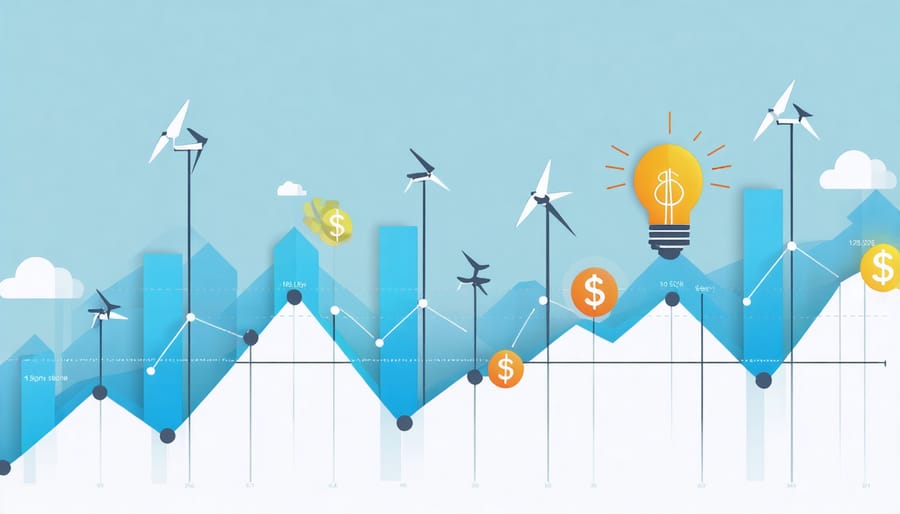
Investment in renewable energy venture capital has shown remarkable growth over the past decade, with particularly accelerated momentum since 2020. In 2022, global clean energy VC funding reached $70.1 billion, marking a 63% increase from 2021 levels. Early-stage investments in emerging technologies like advanced battery storage and green hydrogen technologies have seen the most substantial gains, with annual growth rates exceeding 85%.
Climate tech startups attracted $37.4 billion in venture funding during 2023, with energy sector innovations claiming the largest share at 42%. The average deal size has also increased significantly, rising from $15 million in 2019 to $28.3 million in 2023, reflecting growing investor confidence in the sector’s potential.
Notably, corporate venture capital participation has doubled since 2020, with major energy companies and utilities establishing dedicated clean energy investment arms. Series B and C funding rounds have shown particular strength, suggesting maturing market opportunities and reduced technology risk. Follow-on investment rates remain strong at 76%, indicating successful progression through funding stages and positive return potential for early investors.
Emerging Technologies Driving VC Interest
Energy Storage Solutions
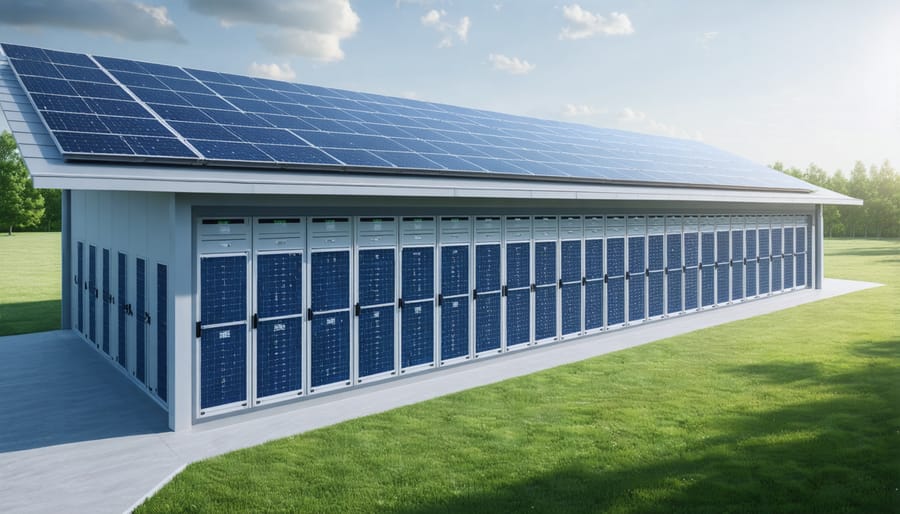
Energy storage solutions represent one of the fastest-growing segments in energy venture capital, with investments reaching record levels in recent years. Battery technology innovations are particularly attracting substantial funding, as investors recognize their crucial role in enabling widespread renewable energy adoption.
Leading venture capital firms are heavily investing in next-generation battery technologies, including solid-state batteries, which promise higher energy density and improved safety compared to traditional lithium-ion cells. Companies developing advanced materials and manufacturing processes for these batteries are securing significant funding rounds, often exceeding $100 million.
Grid-scale storage solutions are emerging as another prime investment target. Venture capitalists are backing companies developing flow batteries, compressed air storage systems, and innovative thermal storage technologies. These solutions address the critical challenge of grid stability and enable better integration of intermittent renewable energy sources.
Notable investments include long-duration energy storage startups, which are developing technologies capable of storing power for days or weeks. These innovations are particularly valuable for utilities and large-scale industrial operations seeking to enhance grid reliability and reduce dependency on fossil fuel backup systems.
The energy storage market is expected to reach $620 billion by 2040, with venture capital playing a crucial role in accelerating technological advancement. Investors are increasingly focusing on solutions that combine high performance with cost-effectiveness, recognizing that commercial viability is essential for widespread adoption.
Smart Grid Technologies
Smart grid technologies represent one of the fastest-growing segments in energy venture capital, with investors recognizing the critical role of digital innovation in modernizing power infrastructure. These technologies leverage advanced sensors, artificial intelligence, and machine learning to optimize energy distribution, reduce waste, and enhance grid reliability.
Venture capital firms are particularly interested in startups developing predictive maintenance solutions and real-time grid management platforms. These innovations enable utilities to anticipate equipment failures, balance load distribution, and integrate renewable energy sources more efficiently. For example, Grid4C, which secured $15M in Series B funding, demonstrates how AI-driven analytics can improve grid stability while reducing operational costs by up to 30%.
The implementation of blockchain-based investment tracking systems has further enhanced transparency and security in grid management operations. This technology enables real-time monitoring of energy transactions and automated smart contracts, creating new opportunities for peer-to-peer energy trading.
Investment in smart meter infrastructure and advanced distribution management systems (ADMS) continues to grow, with venture capital firms focusing on solutions that enable bi-directional power flow and enhanced consumer engagement. These technologies not only improve grid reliability but also facilitate the integration of distributed energy resources, making them particularly attractive to forward-thinking investors seeking long-term returns in the energy sector.

Investment Strategies and Returns
Risk Assessment Models
Venture capital firms employ sophisticated risk assessment models when evaluating renewable energy investments, particularly focusing on both technological and market-related factors. These models typically incorporate multiple layers of analysis, including technology readiness levels (TRLs), market penetration potential, and regulatory landscape assessment. A crucial component is the evaluation of ESG investment criteria, which has become increasingly important in determining long-term viability.
Key risk metrics often include project development timelines, scalability potential, and competitive positioning within the market. VCs typically assess technical risk through detailed due diligence processes, examining factors such as technology validation, intellectual property protection, and manufacturing feasibility. Market risk evaluation encompasses demand forecasting, pricing models, and potential disruption factors.
Financial modeling for renewable energy ventures usually incorporates sensitivity analyses for variables such as installation costs, energy prices, and government incentives. Many VCs are now using advanced analytics and machine learning algorithms to enhance their risk assessment capabilities, particularly in predicting market adoption rates and identifying potential regulatory changes that could impact investment returns. This data-driven approach helps create more accurate risk profiles and enables better-informed investment decisions in the rapidly evolving renewable energy sector.
Exit Strategies
Successful exits in energy venture capital typically follow three main pathways: initial public offerings (IPOs), strategic acquisitions, and secondary sales. Recent trends show that strategic acquisitions by established energy companies and utilities represent the most common exit route, accounting for approximately 65% of successful exits. These acquisitions often occur when startups demonstrate proven technology and sustainable renewable energy investment returns.
Notable examples include the acquisition of smart grid technology providers and energy storage companies by major utilities, with valuations frequently exceeding $500 million. IPOs, while less common, have provided spectacular returns for early investors, particularly in sectors like solar manufacturing and energy efficiency solutions. Companies that successfully navigate the public markets typically demonstrate strong revenue growth and established market presence.
Secondary sales to larger private equity firms or infrastructure funds have emerged as an increasingly viable exit option, especially for companies with stable cash flows from operational renewable energy assets. The average holding period for successful exits ranges from 5-7 years, with top-performing investments generating internal rates of return (IRR) between 25-35%. These exits often coincide with technology maturation and market expansion phases, maximizing value for early-stage investors.
Market Challenges and Opportunities
The energy venture capital landscape presents both significant challenges and promising opportunities as the renewable energy sector continues to evolve. Current market obstacles include high capital requirements for infrastructure development, regulatory uncertainties across different jurisdictions, and grid integration complexities. Supply chain disruptions and raw material cost fluctuations have also emerged as pressing concerns, particularly affecting solar and battery storage technologies.
However, these challenges are balanced by substantial growth opportunities. The declining costs of renewable technologies, particularly in solar and wind power, have created attractive investment prospects. Energy storage solutions are experiencing unprecedented demand, driven by the need for grid stability and the growth of electric vehicle markets. Innovative business models, such as energy-as-a-service platforms and virtual power plants, are opening new avenues for venture capital deployment.
Emerging technologies present particularly compelling opportunities. Green hydrogen production, advanced battery chemistry, and smart grid solutions are attracting significant investor attention. Corporate commitments to sustainability and net-zero targets have created a robust demand pipeline for clean energy solutions, while government initiatives and climate policies worldwide are providing supportive frameworks for investment.
Market consolidation trends are creating opportunities for strategic investments and acquisitions. Early-stage companies with breakthrough technologies in energy efficiency, grid management, and renewable integration are becoming attractive targets for venture capital firms. The intersection of artificial intelligence and energy management systems represents another high-potential area, as does the development of sustainable building technologies and industrial decarbonization solutions.
Looking ahead, the sector’s growth trajectory suggests continued expansion of investment opportunities, particularly in emerging markets and technologies that address grid resilience and energy security. While market volatility and technological risks remain important considerations, the fundamental drivers of clean energy adoption continue to strengthen, creating a favorable environment for strategic venture capital deployment.
Future Outlook
The energy venture capital landscape is poised for significant transformation over the next decade, driven by technological advancements and evolving market demands. Industry analysts project that investment in renewable energy startups will reach unprecedented levels, with estimates suggesting a potential market value of $3.4 trillion by 2030.
Artificial intelligence and machine learning are expected to play pivotal roles in optimizing energy generation and storage solutions, attracting substantial venture capital interest. Smart grid technologies and advanced energy management systems will likely emerge as primary investment targets, particularly as grid modernization becomes increasingly critical.
Energy storage innovations are anticipated to receive heightened attention from venture capitalists, with breakthrough technologies in battery chemistry and alternative storage methods driving investment decisions. The commercialization of solid-state batteries and advanced thermal storage solutions could reshape the energy landscape significantly.
Emerging markets, particularly in Southeast Asia and Africa, are projected to become major destinations for energy venture capital, as these regions seek to leapfrog traditional infrastructure and adopt renewable solutions directly. This geographical diversification will create new opportunities for investors and entrepreneurs alike.
Corporate venture capital is expected to expand its presence in the renewable energy sector, with traditional energy companies increasingly investing in clean technology startups. This trend will likely accelerate the commercialization of innovative energy solutions and foster greater collaboration between established players and emerging companies.
ESG (Environmental, Social, and Governance) considerations will continue to influence investment strategies, with venture capitalists increasingly prioritizing startups that demonstrate strong sustainability metrics alongside financial potential. This shift will drive innovation in areas such as carbon capture, green hydrogen, and circular economy solutions.
Energy venture capital continues to play a pivotal role in shaping the future of sustainable energy solutions. As we’ve explored throughout this article, the sector presents compelling opportunities for investors, entrepreneurs, and industry stakeholders alike. The growing momentum behind renewable energy technologies, coupled with favorable policy environments and increasing market demand, creates an ideal environment for strategic investments.
Key takeaways for stakeholders include the importance of thorough due diligence, focusing on scalable technologies, and maintaining a balanced portfolio approach. Successful energy venture capital investments typically combine innovative technology with strong management teams and clear paths to commercialization. Investors should pay particular attention to market timing, regulatory landscapes, and potential exit strategies while considering their investments.
For entrepreneurs and companies seeking venture capital, the emphasis should be on demonstrating clear competitive advantages, robust business models, and significant market potential. Building strong partnerships, maintaining operational efficiency, and showing adaptability to market changes are crucial success factors.
Looking ahead, the energy venture capital landscape will likely continue evolving with emerging technologies and shifting market dynamics. Stakeholders should stay informed about policy changes, technological advancements, and market trends while maintaining flexibility in their investment strategies. The convergence of digitalization, decarbonization, and democratization of energy systems presents numerous opportunities for those ready to capitalize on the transformation of the global energy sector.