
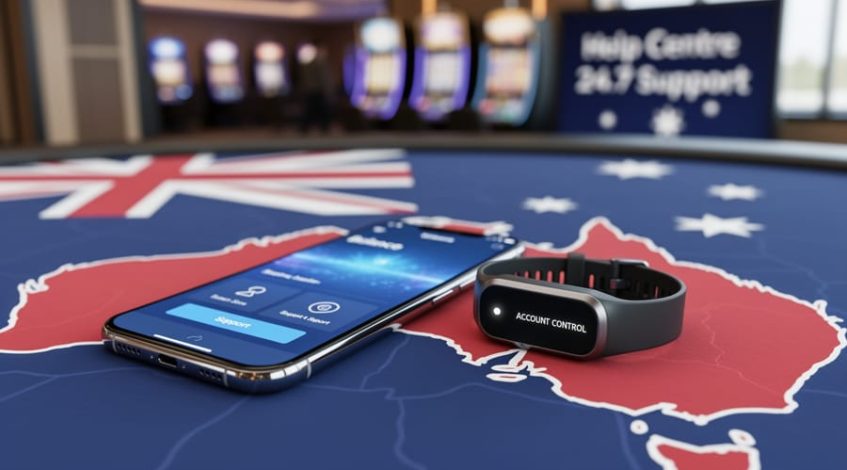
Australia’s responsible online-casino landscape operates under one of the world’s most stringent regulatory frameworks, requiring licensed operators to implement mandatory player protections including deposit limits, self-exclusion tools, and reality checks before accepting any wagers. The National Consumer Protection Framework, enforced across all states and territories, mandates that every crypto online casino and traditional online casino serving Australian players must provide access to pre-commitment features and real-time activity monitoring, while operators must comply with additional AML/CTF requirements.
The regulatory architecture balances player autonomy with structured safeguards. Since 2024, all licensed operators have been required to integrate third-party verification systems that cross-reference national self-exclusion databases before account creation, closing a critical gap that previously allowed excluded players to register with new platforms. This framework extends to government programs that fund gambling harm reduction initiatives, channeling industry levies into treatment services and public education campaigns.
The practical effect is comprehensive: players can set binding spending limits, implement cooling-off periods ranging from 24 hours to permanent exclusion, and access mandatory pop-up warnings after extended play sessions. Australian regulators require operators to display responsible gambling messaging on every page and provide direct links to support services including Gambling Help Online and state-based counseling networks.
Understanding these protections and how to activate them represents the first line of defense in maintaining control over online gambling activities, transforming regulatory compliance from bureaucratic requirement into practical harm prevention.
Australia’s Regulatory Framework for Online Casino Play

Australia’s online casino regulatory landscape operates under a unique dual-layer system where federal law establishes the baseline framework while state and territory authorities handle licensing and enforcement. The Interactive Gambling Act 2001 (IGA) forms the federal cornerstone, prohibiting Australian-based operators from offering online casino games (including slots, roulette, blackjack, and poker) to Australian residents. This creates a critical distinction: while domestically licensed operators can legally offer sports betting and lottery products, traditional casino-style games can only be provided by offshore operators.
The IGA doesn’t make it illegal for Australians to play at offshore casinos. Instead, it targets the supply side by making it an offense for operators to advertise or provide these services from within Australia. This regulatory gap means many Australians access online casinos licensed in jurisdictions like Malta, Curaçao, or the United Kingdom, which operate outside Australian legal authority but often accept Australian players.
State and territory regulators oversee land-based casinos and domestic online wagering operators within their jurisdictions. For example, the Victorian Commission for Gambling and Liquor Regulation and Liquor & Gaming NSW enforce responsible gambling standards for licensed entities in their states. These bodies work alongside the Australian Communications and Media Authority (ACMA), which enforces the IGA by investigating complaints about illegal offshore operators and can direct internet service providers to block sites that breach federal law.
Offshore operators accepting Australian players aren’t subject to Australian responsible gambling laws, creating significant protection gaps. They might hold legitimate licenses from their home jurisdictions, but these often impose less rigorous player protection requirements than Australian standards would demand. Consequently, Australian players using offshore casinos lack the safeguards mandated for domestically licensed products, including integration with the National Self-Exclusion Register and oversight by Australian consumer protection authorities.
Recent regulatory discussions have focused on whether to formally license and regulate offshore operators already serving Australians, which would bring them under local responsible gambling frameworks. Until such reforms occur, the distinction between legal domestic sports betting (heavily regulated with comprehensive player protections) and offshore casino play (operating beyond Australian regulatory reach) remains a defining feature of Australia’s online gambling landscape.
Core Responsible Gambling Measures Required in Australia

The National Self-Exclusion Register (BetStop)
BetStop launched in August 2023 as Australia’s first BetStop national self-exclusion register, creating a single point of entry for players wanting to block access across all licensed online gambling operators simultaneously. Unlike fragmented operator-specific exclusions, BetStop works nationally, once registered, you’re barred from every regulated online casino, betting, and gaming platform operating in Australia within eight business hours.
The register operates as a critical harm prevention measure, particularly for players who’ve exhausted voluntary responsible limits at individual operators. Registration is free, permanent in the system (even after your chosen exclusion period ends), and managed by the Australian Communications and Media Authority rather than gambling companies themselves.
Players can register through a straightforward process:
- Visit the BetStop website and verify your identity using government-issued ID (driver’s license, passport, or Medicare card)
- Provide your contact details and confirm any known gambling accounts to expedite operator notifications
- Select your exclusion period, minimum three months, with options for one year, three years, five years, or permanently
- Complete verification via email or SMS code to activate the exclusion
- Receive confirmation once all operators have processed your registration (typically within one business day)
After registration, licensed operators must close your accounts and prevent new registrations using your verified details. You’ll retain access to withdraw remaining balances, but all promotional contact ceases immediately. Attempting to circumvent BetStop by using false information constitutes a criminal offense, while operators who fail to block registered individuals face substantial penalties.
The exclusion period you choose is binding, BetStop doesn’t allow early revocation, even if circumstances change. At the end of your selected timeframe, accounts don’t automatically reopen; you must actively contact operators to reinstate access, creating a deliberate barrier against impulsive returns to gambling.
Age Verification and Identity Checks
Licensed Australian online casino operators implement multi-stage identity verification before any gambling activity can occur. New users must provide government-issued identification, typically a driver’s license or passport, along with proof of address documents dated within the past three months. This documentation undergoes both automated and manual review processes.
The verification system cross-references submitted details against government databases and credit reference agencies to confirm authenticity. Operators employ document verification technology that detects altered or fraudulent identification through analysis of security features, fonts, and document structure. Facial recognition software may compare submitted photos against identity documents to prevent account takeovers.
These checks serve dual purposes: confirming users are above the legal gambling age of eighteen and preventing identity fraud. Operators must complete verification before processing any deposits or allowing real-money play. Accounts flagged during verification remain suspended pending resolution.
Privacy protections require operators to encrypt and securely store all verification data, limiting access to authorized compliance personnel. Australian privacy legislation mandates that personal information collected during verification cannot be used for marketing without explicit consent and must be deleted within specified retention periods after account closure.
Player Support Resources and Intervention Programs

Australia provides multiple layers of professional support to help players maintain control over their gambling activities. These resources range from national helplines to state-specific counseling programs, with operators legally required to facilitate access and intervene when they detect concerning patterns.
Gambling Help Online serves as Australia’s primary national support service, offering 24/7 assistance through multiple channels. The service provides free, confidential counseling via phone (1800 858 858), live chat, and email, connecting players with trained counselors who understand the complexities of problem gambling. State governments supplement this national framework with their own localized programs, ensuring support reflects regional needs and cultural contexts.
| Organization | Services Provided | Contact Method | Availability |
|---|---|---|---|
| Gambling Help Online | Counseling, self-help resources, referrals | Phone: 1800 858 858, live chat, email | 24/7 |
| State counseling services | Face-to-face therapy, financial counseling, family support | Regional offices, by appointment | Business hours (varies by state) |
| Lifeline Australia | Crisis support, mental health assistance | Phone: 13 11 14, text, online chat | 24/7 |
| Operator support teams | Account restrictions, self-exclusion assistance, resource referrals | In-platform messaging, email, phone | Varies by operator |
Licensed operators must implement early intervention protocols that combine behavioral analytics with human oversight. Algorithms monitor patterns such as rapidly escalating deposits, extended session times, chase betting after losses, and reversed withdrawal requests. When systems flag these indicators, operators initiate contact offering cooling-off periods, limit-setting assistance, and direct links to support services.
This data-driven approach requires strict adherence to player data privacy regulations, ensuring behavioral analytics protect rather than exploit vulnerable players. Operators must demonstrate their monitoring systems serve harm minimization exclusively, with regular audits verifying data handling practices meet Australian privacy standards.
Beyond automated detection, staff training requirements ensure customer service teams recognize verbal and behavioral warning signs during interactions. Representatives must offer proactive support rather than waiting for players to self-report problems, creating multiple intervention touchpoints throughout the player journey.
Financial Protections and Transaction Safeguards
Licensed Australian operators implement robust financial protections that separate player funds from company assets. Segregated accounts ensure that your deposits remain protected even if an operator faces financial difficulties, with funds held in trust arrangements overseen by regulatory authorities. These safeguards mirror the operational accountability found in other regulated industries where consumer financial protection takes priority.
Withdrawal limits form another layer of protection, with operators restricting how much players can withdraw within specific timeframes. While these limits may seem inconvenient, they prevent situations where substantial winnings are immediately reinvested during impulsive decision-making. Most licensed platforms enforce daily or weekly caps, typically ranging from $5,000 to $50,000 depending on account verification levels.
Affordability checks represent a proactive intervention tool. When operators detect transaction patterns suggesting financial strain, such as frequent deposits following losses or amounts disproportionate to known income sources, they must initiate contact with the player. This process may involve requesting financial documentation or implementing mandatory deposit restrictions until the player demonstrates sustainable gambling behavior.
Australia has restricted credit card usage for online gambling transactions since 2020, preventing players from gambling with borrowed money. This policy addresses a significant harm vector, as credit-funded gambling creates compound financial damage through both losses and accumulating interest charges. Licensed operators must reject credit card deposits and implement transaction security measures that verify payment method compliance.
Operators also maintain detailed transaction records accessible to players through account histories, promoting transparency and enabling better self-monitoring of gambling expenditure patterns.
Industry Standards and Compliance Monitoring
Australian regulators employ multi-layered oversight to enforce responsible gambling standards. State and territory licensing authorities conduct regular audits of operators’ systems, reviewing transaction logs, player interaction records, and responsible gambling tool implementation. These audits examine whether operators are genuinely detecting at-risk behavior or merely ticking compliance boxes.
The Australian Communications and Media Authority (ACMA) monitors online gambling services for breaches of the Interactive Gambling Act. When violations occur, ACMA can issue formal warnings, accept enforceable undertakings, or initiate civil penalty proceedings. Maximum penalties reach $2.75 million per day for serious breaches, creating significant financial incentive for compliance.
Independent testing laboratories assess random number generators, responsible gambling features, and data protection measures before operators receive licensing approval. These auditors return periodically for spot checks, ensuring systems remain compliant post-launch. Operators must also submit annual compliance certificates signed by senior executives, attaching personal accountability to organizational responsibilities.
Recent enforcement actions demonstrate regulators’ willingness to act. In 2024, a major operator faced penalties exceeding $15 million after failing to respond adequately to customers showing clear problem gambling indicators. Another licensee received a formal warning for inadequate identity verification processes that allowed minors to create accounts. Several offshore operators have been blocked from Australian markets entirely after refusing to implement required player protection measures.
State regulators publish compliance reports detailing investigation outcomes, penalty amounts, and systemic issues identified across the industry. This transparency creates peer pressure among operators and informs players about which platforms maintain genuine commitment to responsible gambling. Operators with repeated violations face license suspension or revocation, effectively ending their ability to serve Australian customers.
Practical Steps for Australian Players to Gamble Responsibly
Responsible gambling begins with treating your casino play as you would any financial decision in business, with clear budgets, defined parameters, and regular performance reviews. Before registering with any operator, establish a monthly entertainment budget that reflects genuinely discretionary income, not funds earmarked for essentials. Set deposit limits at the account level immediately, making them binding rather than aspirational, and complement these with session time limits to prevent extended play sessions that erode judgment.
Monitor your engagement patterns as vigilantly as a facility manager tracks energy consumption. Warning signs include chasing losses, gambling with money you cannot afford to lose, borrowing to fund play, neglecting work or family responsibilities, or feeling anxious when not gambling. If you notice yourself rationalizing increased deposits, hiding gambling activity, or gambling to escape stress, these behavioral shifts warrant immediate intervention through cooling-off periods or voluntary exclusion.
Use BetStop proactively rather than reactively. Many players wait until they have experienced significant harm before self-excluding, but the register functions most effectively as a preventive tool. A three-month exclusion provides breathing space to reassess your relationship with gambling without the finality of permanent closure. Remember that exclusions cannot be reversed once activated, making them a firm commitment to behavioral change.
Can I reverse my BetStop self-exclusion if I change my mind?
No. Self-exclusion periods cannot be shortened or cancelled once registered. If you select a three-month exclusion, you remain excluded for the full period regardless of changed circumstances.
What is the most effective deposit limit to set?
Set limits based on your entertainment budget after all essential expenses are covered, typically no more than 1-2% of monthly discretionary income. Many experts recommend starting conservatively and adjusting upward only after several months of controlled play.
Where can I get confidential help for gambling concerns?
Gambling Help Online offers 24/7 phone counseling at 1800 858 858, webchat services, and referrals to face-to-face support across all Australian states and territories. All services are free and confidential.
Access support services early. Gambling Help Online provides 24/7 telephone and webchat counseling without requiring you to identify as having a gambling problem, the service assists anyone seeking guidance about their gambling behavior. State-based services offer face-to-face counseling, financial counseling, and family support programs that address gambling harm holistically rather than in isolation.
Australia’s comprehensive regulatory framework for responsible online casino play demonstrates how effective governance can protect consumers while preserving informed choice. The multi-layered approach, combining federal oversight, mandatory operator requirements, national self-exclusion tools like BetStop, and accessible support services, creates a robust safety net that addresses gambling harm at multiple intervention points.
This framework continues to evolve as regulators respond to emerging risks and technological changes. Recent enhancements to age verification, real-time monitoring of player behavior, and strengthened financial safeguards reflect an adaptive regulatory philosophy that prioritizes evidence-based interventions over blanket restrictions.
The principles underlying Australia’s responsible gambling model mirror successful approaches in other sectors. Just as sustainable energy adoption requires balancing immediate needs with long-term community welfare, responsible gambling regulation seeks to minimize harm while recognizing individual autonomy. Both frameworks succeed when they combine clear standards, accessible tools, transparent enforcement, and ongoing stakeholder engagement.
For Australian players, these protections work best when actively utilized. Setting limits before they’re needed, understanding self-exclusion options, and knowing where to access support transforms regulatory infrastructure into practical safeguards. The system’s effectiveness ultimately depends on informed participation from players, operators, and regulators working toward shared responsibility.