
# DOE Connected Communities: Integrating Solar Intelligence for Modern Energy Management
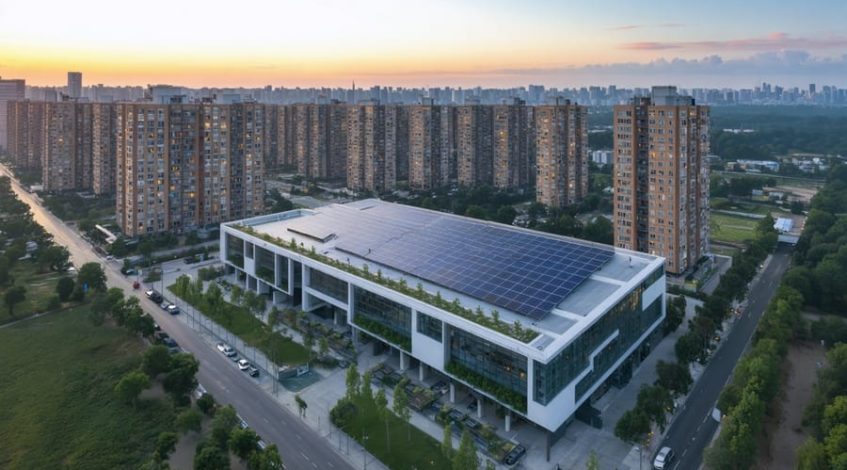
The energy landscape is undergoing a fundamental transformation. Connected communities—integrated networks of solar generation, smart storage, and intelligent building systems—represent the Department of Energy’s vision for achieving grid resilience, cost optimization, and sustainability at scale. These aren’t theoretical models; they’re operational frameworks delivering measurable ROI across industrial campuses, municipal districts, and commercial portfolios.
**Connected communities work through three core components:** distributed solar arrays that generate power locally, advanced battery storage systems that balance supply and demand in real-time, and smart grid technologies that orchestrate energy flow across multiple buildings and facilities. This integration creates a self-sustaining ecosystem where energy is produced, stored, and consumed with unprecedented efficiency.
**The business case is compelling.** Organizations implementing connected community frameworks report 30-50% reductions in utility costs, enhanced power reliability during grid disruptions, and significant progress toward corporate sustainability mandates. Federal incentives, including Investment Tax Credits and accelerated depreciation schedules, further strengthen financial returns.
**Decision-makers face critical questions:** What infrastructure investments are required? How do interconnection agreements work? What operational changes must facility teams manage? Understanding these implementation factors—from technical specifications to regulatory compliance—determines success.
This comprehensive guide examines the architecture, economics, and practical deployment strategies that transform DOE connected community concepts into operational reality for your organization.
What Are DOE Connected Communities?
The Framework Behind Energy Connectivity
DOE-supported connected communities operate on a sophisticated framework that integrates three core technological components working in concert. At the foundation are **microgrids**—localized energy networks that can disconnect from the traditional grid and operate autonomously. These systems incorporate distributed energy resources, battery storage, and intelligent control systems that optimize energy flow in real-time, ensuring reliability even during grid disruptions.
**Energy sharing platforms** form the second pillar, enabling peer-to-peer energy transactions between community members. These digital platforms use advanced metering infrastructure and blockchain-based systems to track energy production, consumption, and distribution. Facilities with excess solar generation can automatically supply neighboring buildings, creating a dynamic marketplace that maximizes renewable energy utilization while reducing costs.
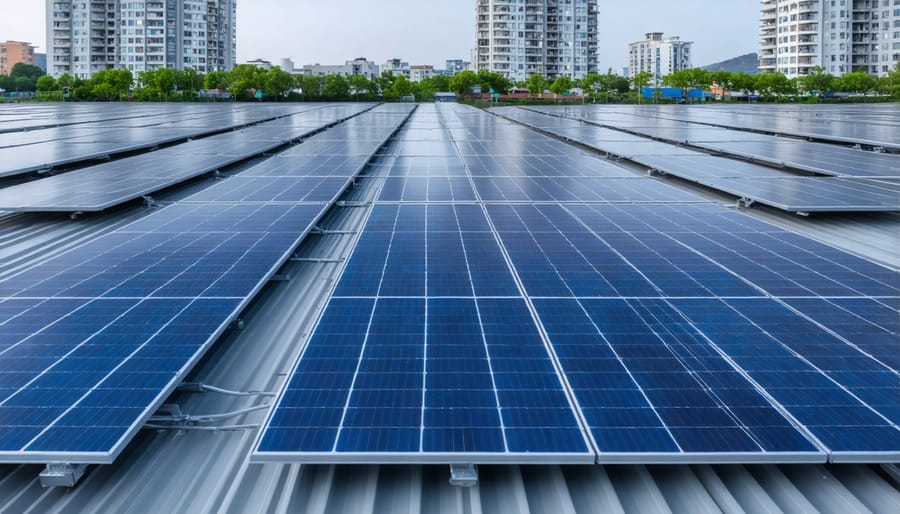
The third component involves **distributed solar arrays** strategically deployed across multiple buildings, parking structures, and land parcels within the community. Unlike isolated installations, these interconnected systems function as a unified power generation network, with centralized monitoring and optimization capabilities.
The organizational structure supporting these technologies requires coordination between utility providers, local government, property owners, and technology vendors. This collaborative framework establishes standardized protocols for energy trading, maintenance responsibilities, and data sharing agreements. The Department of Energy provides technical assistance and funding opportunities to help communities navigate regulatory challenges and implement these integrated systems effectively, reducing implementation risks while accelerating deployment timelines.
Smart Cities and Solar Integration
Smart cities leverage advanced technology frameworks to create highly efficient connected solar communities that optimize energy production, distribution, and consumption at scale. The integration of smart city infrastructure with solar installations enables unprecedented levels of coordination and performance across distributed energy networks.
IoT sensors deployed throughout connected solar communities continuously monitor array performance, weather conditions, energy consumption patterns, and grid conditions. These sensors collect real-time data on solar generation capacity, battery storage levels, and power demand across residential, commercial, and municipal facilities. This granular visibility enables system operators to identify performance issues immediately, predict maintenance needs, and optimize energy flows based on actual conditions rather than historical assumptions.
Automated energy management systems process data streams from thousands of connected points to make intelligent decisions about energy distribution. When solar production exceeds local demand, the system automatically routes excess power to charging stations, battery storage facilities, or neighboring microgrids. During peak demand periods, the platform draws from storage reserves or adjusts non-critical loads to maintain grid stability without human intervention.
Advanced analytics platforms transform raw data into actionable insights for facility managers and municipal operators. Predictive algorithms forecast solar generation based on weather patterns, optimize maintenance schedules to minimize downtime, and identify opportunities for system expansion. These capabilities reduce operational costs by 15-25% while improving system reliability and extending equipment lifespan, delivering measurable returns on infrastructure investments.
Key Components of Solar-Powered Connected Communities
Community Solar Arrays and Shared Infrastructure
Community solar installations represent a transformative approach to renewable energy deployment within DOE Connected Communities frameworks, enabling multiple stakeholders to access solar power benefits without requiring on-site installations. This shared infrastructure model addresses key barriers such as unsuitable rooftops, high upfront costs, and property ownership constraints.
The subscription model allows businesses, government facilities, and residents to purchase or lease portions of a centralized solar array’s output, typically ranging from 25% to 100% of their energy needs. Subscribers receive credits on their electricity bills proportional to their share of the array’s production, often realizing 10-15% savings on energy costs without capital investment.
Virtual net metering (VNM) serves as the technical mechanism enabling these arrangements. VNM allocates solar generation credits across multiple utility accounts, even when subscribers are located off-site from the array itself. This flexibility proves particularly valuable for organizations managing multiple facilities or seeking to demonstrate sustainability commitments across distributed operations.
From a financial perspective, community solar projects deliver economies of scale that individual installations cannot match. Centralized arrays benefit from optimized site selection, reduced per-watt installation costs, and professional maintenance programs that maximize system performance and longevity. For facility managers and business owners, this translates to predictable energy costs, simplified renewable energy procurement, and measurable progress toward sustainability goals—all without the complexity of managing on-site infrastructure.
Energy Storage and Grid Integration
Energy reliability stands as a cornerstone of DOE connected communities, with battery storage systems and vehicle-to-grid (V2G) technology providing critical stabilization for renewable energy supplies. These solutions address the intermittent nature of solar generation while creating financial opportunities through demand response programs.
Modern battery storage systems serve multiple functions within connected communities. They store excess solar energy during peak production hours, discharge power during high-demand periods, and provide frequency regulation to maintain grid stability. This capability reduces reliance on traditional peaking power plants and lowers operational costs for facility managers by optimizing time-of-use rates.
Vehicle-to-grid technology transforms electric vehicles from simple transportation assets into distributed energy resources. When connected to smart charging infrastructure, EVs can discharge stored energy back to the grid during peak demand or emergency situations. A notable example is the University of California San Diego’s microgrid, which integrates V2G technology with solar arrays and stationary storage, achieving 92% renewable energy usage while reducing annual energy costs by $8 million.
For business owners and government officials, these technologies deliver measurable returns through demand charge reduction, participation in ancillary services markets, and enhanced energy resilience. The Department of Energy reports that communities implementing integrated storage solutions typically achieve 15-30% reductions in peak demand charges within the first operational year.

Smart Metering and Data Analytics
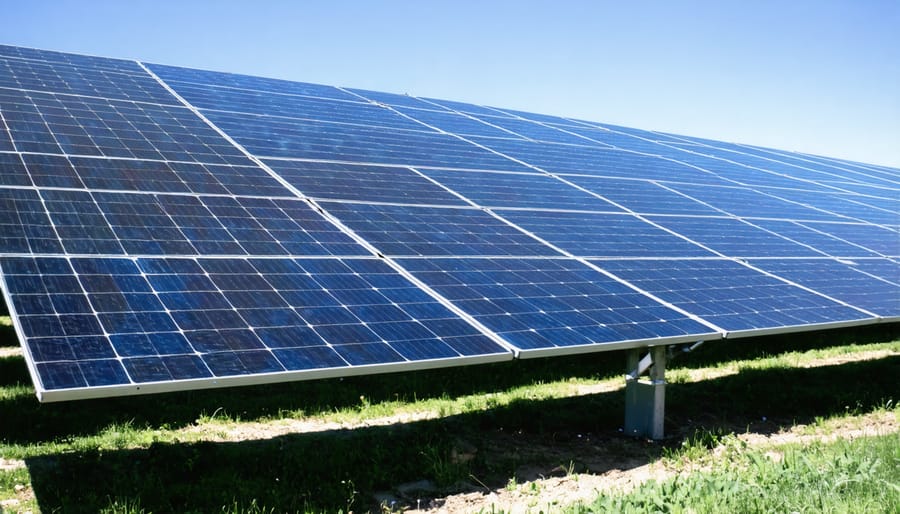
Advanced metering infrastructure (AMI) serves as the nervous system of DOE-connected communities, enabling real-time monitoring and optimization of energy flows across distributed solar installations. Smart meters deployed throughout these communities collect granular data on energy production, consumption, and storage at 15-minute or shorter intervals, providing unprecedented visibility into grid operations.
Analytics platforms process this data stream to identify patterns, forecast demand, and optimize solar energy utilization. Machine learning algorithms analyze historical weather data, consumption trends, and seasonal variations to predict energy generation and usage up to seven days in advance. This predictive capability allows facility managers to make informed decisions about energy storage deployment, grid purchases, and load balancing.
In practice, these systems have demonstrated measurable results. The Department of Energy’s Smart Grid Investment Grant projects reported average peak demand reductions of 15% through optimized load management. Communities using advanced analytics have achieved solar self-consumption rates exceeding 70%, significantly reducing reliance on grid electricity during peak pricing periods.
The data collected also identifies inefficiencies and opportunities for improvement. Analytics platforms can detect underperforming solar panels, pinpoint buildings with excessive consumption, and recommend targeted upgrades. For business owners and facility managers, this translates to actionable insights that drive operational improvements and maximize return on solar investments. Government officials benefit from aggregated community-level data that supports evidence-based energy policy decisions and infrastructure planning.
Business and Economic Benefits for Commercial Entities
Cost Reduction Through Shared Infrastructure
Community solar projects deliver substantial cost reductions through shared infrastructure models, making renewable energy more accessible and economically viable. When multiple participants pool resources, installation costs decrease by 15-25% compared to individual installations, as equipment procurement, permitting processes, and labor expenses are distributed across the collective.
Maintenance expenditures represent another significant savings opportunity. Shared operations and maintenance contracts typically reduce per-participant costs by 30-40%, while professional system monitoring ensures optimal performance across the entire array. Economies of scale extend to component pricing, where bulk purchasing of inverters, mounting systems, and monitoring equipment generates 10-20% cost advantages.
A recent analysis of DOE-supported connected community projects in Colorado demonstrated annual savings of $180,000 across 50 participating businesses through shared infrastructure. The collective approach eliminated redundant administrative overhead and enabled access to institutional financing rates that individual entities couldn’t secure independently.
Additionally, shared infrastructure minimizes land acquisition costs per participant and streamlines interconnection processes with utilities. These combined efficiencies typically improve project ROI by 20-35%, with payback periods shortened from 8-10 years to 5-7 years, making connected community solar an increasingly attractive investment for forward-thinking organizations.
Enhanced Energy Resilience and Reliability
Connected communities deliver superior energy resilience through distributed energy resources that function independently during grid disruptions. When utility power fails, integrated battery storage systems automatically provide seamless backup power to critical operations, eliminating costly downtime and protecting revenue streams. This architectural approach reduces single-point failure risks inherent in traditional grid-dependent infrastructure.
The Department of Energy’s connected community framework enables facilities to maintain operations during peak demand periods or emergency situations through microgrid capabilities. Solar arrays combined with intelligent energy management systems create localized power networks that can island from the main grid while continuing to serve essential loads. Manufacturing facilities, data centers, and municipal buildings benefit from uninterrupted power supply that protects sensitive equipment and maintains productivity.
Business continuity planning increasingly incorporates connected community infrastructure as organizations recognize the financial impact of power outages. Real-world implementations demonstrate that facilities with integrated solar and storage systems experience 95% fewer disruptions compared to grid-only operations. This reliability translates directly to preserved revenue, protected inventory, and sustained customer service—critical factors for competitive advantage in today’s marketplace. Advanced monitoring systems provide real-time visibility into energy flows, enabling proactive management and optimized resilience strategies.
ROI and Long-Term Value Creation
DOE connected communities deliver compelling financial returns through multiple value streams. Initial capital investments typically achieve positive return on investment within 5-8 years, though this timeframe varies based on system size, location, and available incentives.
Federal Investment Tax Credits (ITC) can reduce upfront costs by up to 30%, while accelerated depreciation schedules further improve cash flow. State and local incentives, including renewable energy certificates and net metering programs, provide additional revenue opportunities. Many jurisdictions offer expedited permitting and reduced utility connection fees for connected community projects.
The true value extends across the system’s 25-30 year operational lifespan. Fixed energy costs protect against utility rate escalation, which historically averages 3-5% annually. Communities implementing these systems report 40-60% reductions in energy expenses, creating predictable operating budgets and freeing capital for core business objectives.
Beyond direct savings, connected communities generate measurable increases in property values, enhanced tenant satisfaction, and improved corporate sustainability metrics—factors increasingly important to investors, customers, and regulatory compliance. Energy resilience during grid outages provides additional insurance value that’s difficult to quantify but critical during extreme weather events.
Real-World Applications: Connected Communities in Action
Industrial Parks and Business Districts
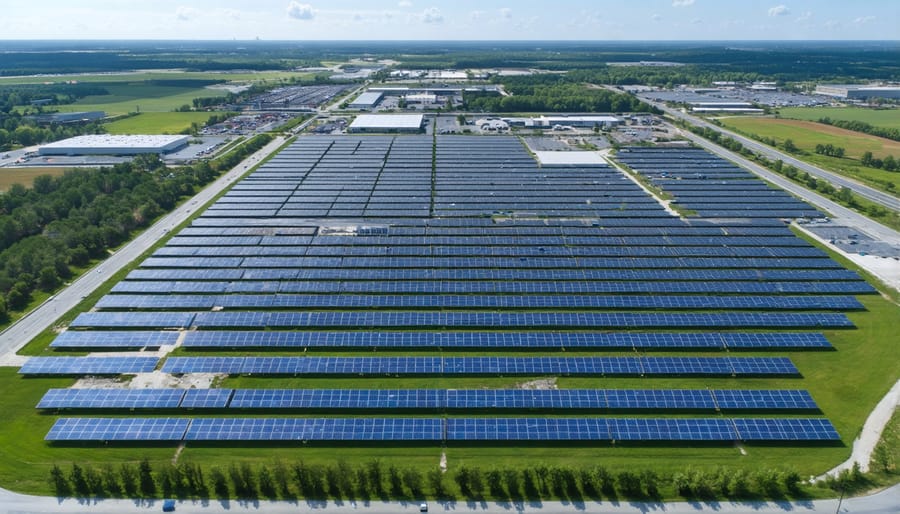
Industrial parks and business districts represent prime opportunities for connected solar infrastructure deployment, where multiple facilities can benefit from shared renewable energy systems. By implementing interconnected photovoltaic networks across commercial zones, businesses achieve economies of scale that individual installations cannot match. These integrated systems enable facility managers to reduce operational costs by 30-50% while meeting corporate sustainability mandates.
Connected solar infrastructure in commercial districts functions through microgrid architectures that balance energy generation and consumption across multiple tenants. Advanced energy management systems optimize distribution based on real-time demand, storing excess capacity in battery arrays for peak-hour utilization. This approach minimizes grid dependency and protects businesses from utility rate fluctuations.
Case studies from Arizona’s Desert Ridge Marketplace demonstrate tangible results—a 23-building commercial complex reduced annual energy expenses by $2.1 million through shared solar infrastructure. Similarly, California’s Irvine Business Complex achieved carbon neutrality while generating revenue through surplus energy sales back to the grid.
For business districts, the return on investment typically materializes within 5-7 years, accelerated by federal tax incentives and renewable energy credits. Connected systems also enhance property values and tenant retention, as organizations increasingly prioritize locations with demonstrated environmental stewardship and predictable energy costs.
Government Campuses and Public Facilities
Municipal and educational institutions are leading the adoption of DOE Connected Communities principles through coordinated solar deployments that maximize public infrastructure efficiency. School districts across the nation have emerged as particularly effective implementers, creating solar microgrids that power multiple campuses while serving as community resilience hubs during emergencies.
The San Diego Unified School District exemplifies this approach, having installed interconnected solar systems across 180 sites generating over 44 megawatts of clean energy. Their networked architecture enables real-time energy monitoring and load balancing between facilities, reducing annual energy costs by $16 million while providing educational opportunities for students in renewable energy technologies.
Government office complexes are similarly demonstrating the viability of connected solar networks. Montgomery County, Maryland deployed a 15-megawatt solar portfolio across county facilities with centralized energy management systems that optimize performance and maintenance schedules. The integrated approach reduced implementation costs by 23% compared to standalone installations and improved system reliability through coordinated battery storage.
Public libraries, community centers, and transit facilities are increasingly incorporated into these networks, creating comprehensive energy ecosystems that serve broader community needs. These installations typically achieve payback periods of 7-12 years while establishing critical infrastructure that supports grid stability and emergency preparedness objectives.
Mixed-Use Developments
Mixed-use developments represent a compelling application of DOE connected communities principles, where integrated solar installations serve diverse stakeholder needs simultaneously. In these environments, rooftop solar arrays on residential towers can feed excess generation to ground-level commercial spaces during business hours, while retail operations contribute power back to residential units during evening peak demand periods.
This interconnected approach delivers measurable benefits across stakeholder groups. Residential tenants typically see 15-25% reductions in energy costs through shared generation capacity, while commercial tenants gain access to renewable energy credits and enhanced sustainability credentials. Property owners benefit from increased asset values—studies indicate mixed-use properties with integrated solar systems command premium lease rates of 8-12% compared to conventional buildings.
The technical infrastructure enables real-time load balancing through smart inverters and microgrid controllers that optimize energy flow based on demand patterns. Battery storage systems further enhance reliability by capturing surplus generation for use during grid constraints. Implementation requires careful coordination between property management, utility providers, and tenants, but the resulting efficiency gains and cost savings demonstrate clear return on investment, typically achieving payback within 6-8 years while positioning developments as forward-thinking sustainable communities.
Implementation Considerations for Decision Makers
Assessing Your Facility’s Readiness
Before embarking on a DOE Connected Communities initiative, conducting a comprehensive readiness assessment ensures successful implementation and maximum return on investment. Begin by analyzing your facility’s baseline energy consumption patterns through utility data from the past 12-24 months. This establishes clear metrics for measuring future performance improvements and identifies peak demand periods that connected solar systems can address.
Evaluate your physical infrastructure, including available roof space, ground area, and structural capacity to support solar installations. Consider solar exposure, shading obstacles, and roof condition—factors that directly impact system efficiency and installation costs.
Assess your facility’s grid connectivity and existing electrical infrastructure. Understanding your current utility rate structure, interconnection requirements, and net metering policies is essential for optimizing system design and financial projections.
Finally, gauge organizational commitment at all levels. Successful connected community projects require dedicated stakeholder buy-in, allocated budget resources, and designated personnel for project management. Organizations demonstrating strong commitment typically achieve implementation 30-40% faster and realize ROI sooner than those with fragmented support structures.
Partnership and Governance Models
Connected communities can be structured through various organizational frameworks, each offering distinct advantages for different stakeholders. Public-private partnerships (PPPs) represent the most common model, where municipalities collaborate with energy service companies or utilities to deploy integrated solar and storage infrastructure. These arrangements typically involve long-term power purchase agreements that transfer technical and financial risk to private partners while securing predictable energy costs for communities.
Cooperative models empower residents and businesses to collectively own and govern their energy infrastructure. Member-owned cooperatives enable direct participation in decision-making and equitable benefit sharing, particularly appealing for rural communities seeking energy independence. This structure builds local capacity and keeps energy dollars circulating within the community.
Third-party ownership arrangements, including special purpose vehicles, allow external investors to finance connected community infrastructure while communities benefit from improved energy resilience without upfront capital expenditure. These models often incorporate performance-based contracts that guarantee specific energy savings or reliability metrics.
Hybrid governance structures are emerging, combining elements of each model to optimize financing flexibility, technical expertise, and community control. Successful implementations demonstrate that selecting the appropriate partnership model directly impacts project viability, stakeholder engagement, and long-term sustainability outcomes.
Regulatory and Policy Landscape
The regulatory framework governing connected communities centers on IEEE 1547 interconnection standards, which define technical requirements for distributed energy resources connecting to the electrical grid. These standards ensure safety, reliability, and grid stability while enabling bidirectional power flow essential for community solar integration.
Federal policy incentives significantly impact project economics. The Investment Tax Credit (ITC) provides substantial tax benefits for solar installations, while programs like the DOE’s Grid Modernization Initiative fund research and deployment of advanced energy management systems. Many states have enacted favorable net metering policies and virtual power plant frameworks that allow connected communities to aggregate distributed resources.
Local utility regulations vary considerably by jurisdiction, affecting project timelines and interconnection costs. Progressive utilities have established streamlined approval processes and time-of-use rate structures that reward demand response participation. Successful projects typically involve early engagement with utility partners and regulators to navigate permitting requirements, establish fair compensation mechanisms, and align with evolving grid modernization mandates. Understanding these regulatory pathways proves critical for securing project approvals and maximizing financial returns.
Technology Trends Shaping the Future
AI and Predictive Energy Management
Artificial intelligence serves as the operational backbone of DOE connected communities, transforming how energy systems respond to real-time demand and environmental conditions. Machine learning algorithms analyze vast datasets from solar installations, battery storage systems, and grid infrastructure to optimize energy distribution across entire communities. These AI-driven platforms can predict peak usage periods with 95% accuracy, automatically adjusting energy flows to prevent waste and reduce operational costs by 20-30%.
Predictive maintenance capabilities represent another significant advantage. AI systems continuously monitor equipment performance indicators, identifying potential failures before they occur. This proactive approach reduces unplanned downtime by up to 40% and extends asset lifespan, directly impacting your facility’s bottom line. One municipal solar project in California leveraged AI-powered analytics to reduce maintenance costs by $180,000 annually while improving system uptime.
The integration of AI with Internet of Things sensors enables dynamic load balancing, ensuring energy resources are allocated where they’re most needed. For business owners and facility managers, this translates to enhanced grid stability, lower energy bills, and improved resilience during peak demand periods. Government officials implementing these solutions report measurable improvements in community-wide energy efficiency within the first operational year.
Blockchain and Peer-to-Peer Energy Trading
Blockchain technology is revolutionizing energy trading within connected communities by enabling direct, transparent transactions between prosumers—community members who both produce and consume energy. These platforms eliminate traditional intermediary costs while creating verifiable, immutable records of energy generation, consumption, and trading activities.
Several pioneering platforms are demonstrating the practical benefits of blockchain-enabled peer-to-peer energy trading. Brooklyn Microgrid in New York allows residents with rooftop solar installations to sell excess energy directly to neighbors through smart contracts, reducing transaction costs by up to 40% compared to traditional utility arrangements. Similarly, Power Ledger’s platform has facilitated over 50 million energy transactions across multiple countries, demonstrating scalability and reliability.
These systems employ transparent energy credit mechanisms that automatically track and settle transactions in near real-time. Smart meters integrated with blockchain networks record energy flows at 15-minute intervals, enabling precise accounting and dynamic pricing based on supply and demand. This granular visibility provides facility managers with unprecedented control over energy procurement strategies while creating new revenue streams for organizations with excess solar generation capacity.
The financial implications are substantial. Commercial participants in peer-to-peer energy markets typically achieve 15-25% lower energy costs compared to traditional procurement methods, while energy producers realize 20-30% higher returns than standard net metering arrangements. Additionally, blockchain’s inherent transparency satisfies regulatory compliance requirements and supports renewable energy certificate tracking, streamlining sustainability reporting for organizations pursuing ESG objectives.
DOE connected communities represent a fundamental shift in how we approach urban energy infrastructure, transforming isolated solar installations into intelligent, networked systems that deliver measurable economic and environmental benefits. Organizations that move early to adopt this integrated framework position themselves to capture significant competitive advantages—from reduced operational costs and enhanced energy resilience to improved regulatory compliance and sustainability credentials that increasingly influence stakeholder decisions.
The transition to connected solar infrastructure is more accessible than many decision-makers realize. Organizations should begin by conducting a comprehensive energy audit to establish baseline consumption patterns and identify optimization opportunities. Next, engage with qualified solar integrators who have demonstrated experience implementing DOE-connected community frameworks and can assess your facility’s technical readiness. Evaluate your existing building management systems for compatibility with smart grid technologies, as legacy infrastructure may require upgrades to support real-time monitoring and automated controls.
For government officials exploring community-wide implementations, pilot programs offer valuable proof-of-concept opportunities that demonstrate tangible benefits while minimizing initial investment risk. Business owners and facility managers should prioritize solutions that offer clear ROI metrics and scalability to accommodate future expansion.
The connected communities model is not merely an incremental improvement—it represents the foundational architecture for sustainable urban development. Organizations that act decisively today will establish themselves as energy leaders in their sectors, capturing both immediate cost savings and long-term strategic value in an increasingly grid-interactive energy landscape.