
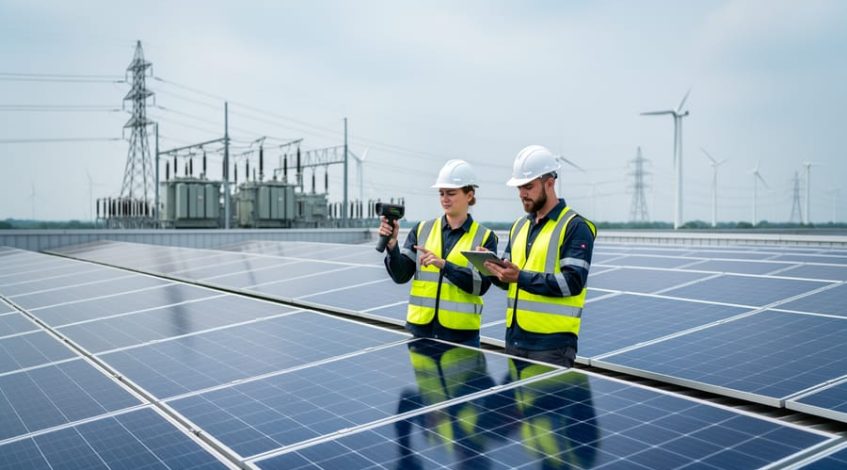
Evaluate engineering capabilities by examining previous industrial-scale projects that demonstrate measurable energy output, grid integration complexity, and structural load calculations—not just residential installation portfolios. Industrial renewable projects demand engineers who can conduct comprehensive energy audits, analyze three-phase power systems, perform structural assessments for rooftop or ground-mount arrays, and navigate utility interconnection requirements that far exceed simple plug-and-play solutions.
Prioritize engineering partners with documented experience in your specific sector, whether manufacturing, warehousing, agriculture, or processing facilities. The right renewable engineering team conducts detailed site assessments that account for peak demand profiles, seasonal variations, power quality requirements, and existing electrical infrastructure limitations. They should provide load flow analysis, harmonic distortion studies, and transformer capacity evaluations—technical competencies that separate qualified engineers from basic installers.
Assess how renewable engineering firms approach renewable energy integration with existing operations. Industrial facilities cannot afford downtime, making phased implementation planning, redundancy systems, and failover protocols essential engineering considerations. Qualified teams deliver comprehensive feasibility studies that include soil analysis for ground-mounted systems, wind load calculations, shading studies using specialized software, and thermal imaging to identify optimal panel placement.
Demand clear ROI projections based on engineering data, not sales estimates. Professional renewable engineering includes detailed financial modeling that accounts for demand charges, time-of-use rates, available incentives, degradation curves, and maintenance schedules. This level of technical rigor transforms renewable projects from capital expenses into strategic infrastructure investments that deliver predictable, long-term value for industrial operations.
Understanding KW Renewable Engineering in Industrial Contexts
The Engineering Difference: Why Industrial Solar Requires Specialized Expertise
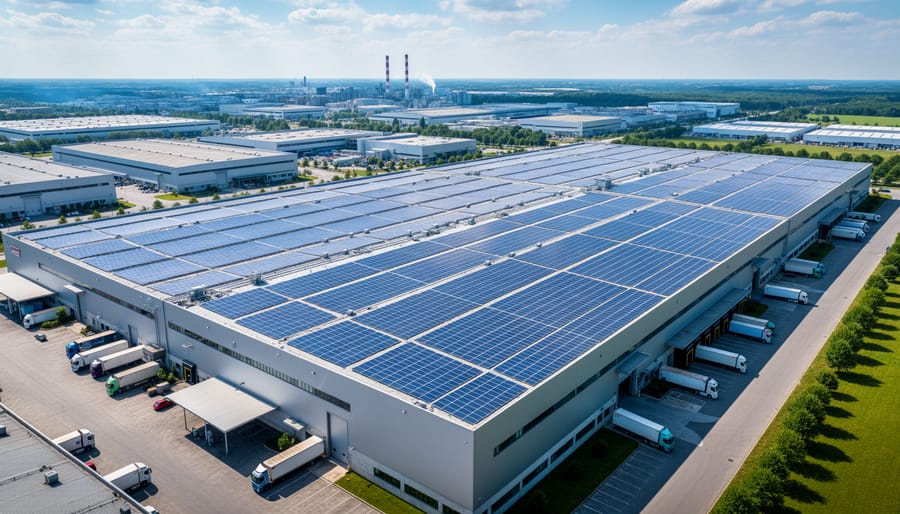
Industrial solar projects demand a fundamentally different engineering approach than residential installations. While a home solar system typically involves straightforward calculations based on historical electricity bills, industrial applications require comprehensive load analysis that accounts for complex operational patterns, seasonal variations, and equipment-specific power requirements.
The engineering difference begins with peak demand management. Industrial facilities often face substantial demand charges—fees based on the highest power consumption during specific intervals. A properly engineered commercial solar system strategically addresses these peaks through careful system sizing, energy storage integration, and load-shifting strategies. This analysis can reduce overall electricity costs by 30-50 percent beyond simple energy offset.
Industrial renewable engineers must also navigate three-phase power systems, voltage regulation requirements, and complex electrical infrastructure that residential installers rarely encounter. Manufacturing facilities, for example, may operate heavy machinery with specific power quality needs, requiring harmonic analysis and custom inverter configurations to prevent equipment disruption.
Integration complexity extends to building management systems, SCADA platforms, and existing emergency power infrastructure. Industrial engineers coordinate solar installations with backup generators, uninterruptible power supplies, and automated control systems to maintain operational continuity.
Furthermore, industrial projects involve utility interconnection agreements that require detailed engineering documentation, power flow studies, and compliance with grid codes. These technical submissions directly impact project approval timelines and long-term system performance. Engaging qualified renewable engineering expertise from project inception ensures optimal system design, regulatory compliance, and maximum return on investment for industrial-scale installations.
Key Performance Metrics: Measuring KW Output Against Industrial Consumption
Renewable engineers employ sophisticated calculations to match system capacity with industrial energy demands. The process begins with comprehensive load analysis, examining historical consumption patterns measured in kilowatt-hours (kWh) to determine peak and baseline requirements. Engineers then calculate the capacity factor, which represents the ratio between actual energy production and theoretical maximum output, typically ranging from 15-30% for solar installations depending on geographic location and system orientation.
System sizing involves balancing nameplate capacity (measured in kW) against facility consumption profiles. For example, a manufacturing plant consuming 500,000 kWh monthly might require a 750 kW solar array to offset 40% of demand, accounting for seasonal variations and efficiency losses. Engineers utilize performance ratio metrics to evaluate system effectiveness, comparing actual generation against expected output under standard test conditions.
Critical efficiency ratios include specific yield (kWh produced per installed kW) and degradation rates, which inform long-term capacity planning. Real-world applications demonstrate this approach: a food processing facility in California achieved 23% energy offset through precise load matching, resulting in $180,000 annual savings. These calculations ensure optimal return on investment while maintaining operational reliability and meeting sustainability targets.
Critical Applications of Renewable Engineering Across Industrial Sectors
Manufacturing and Production Facilities
Manufacturing facilities present unique opportunities for renewable energy integration due to their substantial power consumption and predictable operational patterns. A comprehensive engineering approach is essential to maximize energy offset and operational efficiency.
A metal fabrication facility in Victoria provides an instructive example. This 24/7 operation consumed 2.8 million kWh annually, with peak demand occurring during day shifts when welding, cutting, and forming equipment operated simultaneously. Engineering analysis identified that a 750 kW rooftop solar array combined with strategic load management could offset 38% of total consumption. The system design incorporated reinforced mounting structures to accommodate machinery vibration and thermal expansion from adjacent furnaces. Within 18 months of implementation, the facility reduced grid dependence during premium daylight hours, achieving $285,000 in annual savings.
Food processing operations demonstrate different engineering requirements. A dairy processing plant required consistent refrigeration and pasteurization throughout production cycles. Engineers designed a 600 kW system with battery storage to maintain critical cooling during production transitions and weekend operations. The solar integration in manufacturing accounted for steam generation schedules, ensuring maximum solar contribution during energy-intensive pasteurization periods.
Automotive component manufacturers face additional complexity with spray painting booths and curing ovens creating variable load profiles. Engineering solutions incorporate real-time monitoring systems that synchronize high-energy processes with peak solar production windows, optimizing self-consumption rates above 82%. These case studies demonstrate that proper engineering transforms solar from supplementary power to strategic operational advantage for manufacturing operations.
Food Processing and Cold Storage Operations
Food processing and cold storage facilities face unique energy challenges with continuous refrigeration demands often accounting for 60-70% of total operational costs. Renewable engineering addresses these requirements through integrated solar photovoltaic systems paired with battery storage solutions that maintain consistent power delivery during peak demand periods. Engineers design these systems to accommodate the substantial electrical loads of industrial refrigeration units, blast freezers, and climate-controlled environments while ensuring uninterrupted operations critical to food safety compliance.
Advanced monitoring systems enable facility managers to optimize energy consumption patterns, automatically shifting non-essential loads to periods of peak solar generation. Many facilities combine renewable installations with existing backup generators, creating hybrid systems that reduce diesel dependency by up to 80%. These smart factory energy solutions typically achieve ROI within 4-6 years through direct energy savings and reduced maintenance costs. Thermal energy storage integration further enhances system efficiency by pre-cooling facilities during optimal solar production hours, effectively using renewable energy to bank cooling capacity for later use.
Warehousing and Distribution Centers
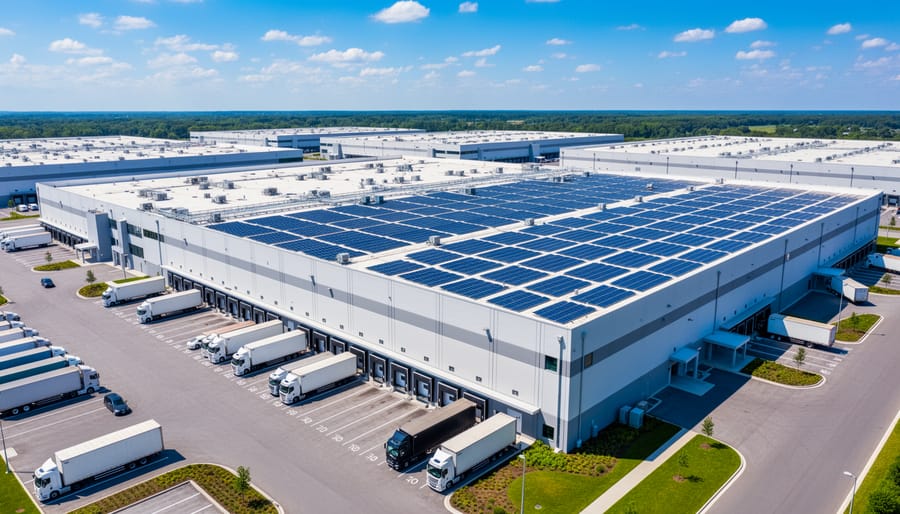
Warehousing and distribution centers represent exceptional opportunities for renewable engineering implementation due to their inherent structural and operational characteristics. These facilities typically feature expansive roof footprints, often exceeding 100,000 square feet, providing substantial surface area for solar array installations. The engineering advantage lies in matching energy generation patterns with facility operations—most warehouses operate primarily during daylight hours when solar production peaks, creating natural alignment between supply and demand.
From an engineering perspective, the structural loads of modern warehouse roofs are designed to accommodate HVAC systems and other equipment, making them well-suited for solar panel mounting systems with minimal reinforcement. Renewable engineers assess roof composition, age, and load-bearing capacity to design optimized solar configurations that maximize energy capture while maintaining structural integrity. The predictable energy consumption profiles of distribution centers enable precise system sizing, ensuring installations deliver measurable returns on investment typically within 5-7 years.
Additional benefits include reduced utility demand charges during peak operating hours and enhanced corporate sustainability credentials. Many logistics companies have achieved 40-60% energy cost reductions through properly engineered solar systems, demonstrating the financial viability of renewable engineering solutions in the warehousing sector.
The Engineering Process: From Assessment to Implementation
Phase 1: Comprehensive Energy Profiling and Load Analysis
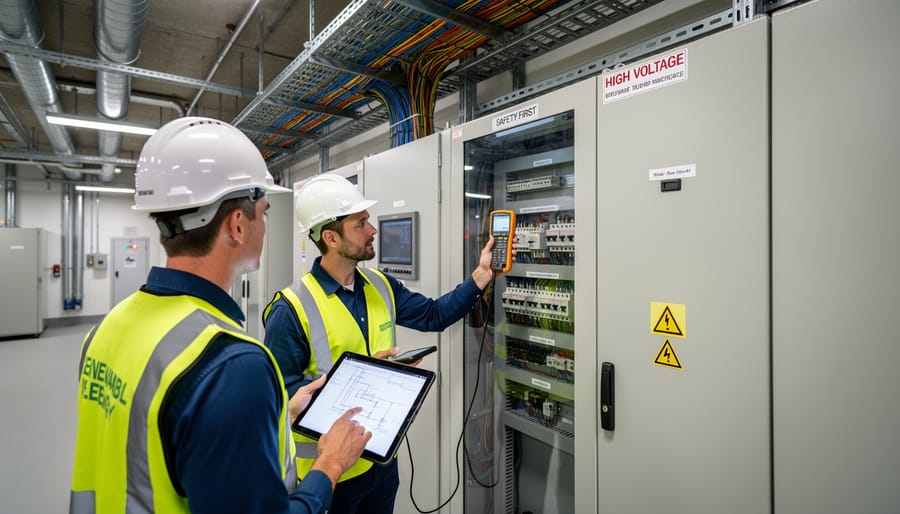
The foundation of any successful renewable energy implementation begins with a thorough engineering assessment of your facility’s current energy landscape. During this critical phase, renewable engineering teams deploy advanced metering infrastructure and data acquisition systems to capture granular consumption data across all operational hours. This process typically spans 30 to 90 days, allowing engineers to identify seasonal variations, operational cycles, and demand fluctuations that significantly impact system design.
Engineers analyze time-of-use patterns to pinpoint when your facility consumes the most power, correlating these peaks with production schedules, HVAC loads, and equipment operation. This analysis reveals opportunities for demand charge reduction and optimal system sizing. For instance, a manufacturing facility in Texas reduced annual energy costs by 34% after engineers discovered that 60% of their peak demand occurred during afternoon hours—perfectly aligned with solar production capacity.
The assessment establishes a precise energy baseline, measuring current kilowatt-hour consumption, power factor, and utility rate structures. Engineers examine utility bills, transformer loads, and distribution system capacity to ensure renewable integration won’t compromise electrical infrastructure. This comprehensive profiling enables accurate ROI projections and identifies the most cost-effective renewable solutions for your specific operational requirements.
Phase 2: System Design and KW Capacity Optimization
Effective system design begins with comprehensive load analysis to determine precise kilowatt capacity requirements. Engineers conduct detailed assessments of your facility’s energy consumption patterns, identifying peak demand periods, baseline loads, and seasonal variations. This data-driven approach ensures the renewable system delivers adequate power without oversizing, which unnecessarily increases capital costs, or undersizing, which compromises operational reliability.
Industrial renewable systems must account for variability in energy generation. Solar output fluctuates based on weather conditions and time of day, requiring strategic integration of energy storage solutions or grid connectivity to maintain consistent power delivery. Engineers calculate optimal battery capacity, inverter specifications, and backup generation needs to ensure uninterrupted operations during critical production periods.
Redundancy planning protects your investment and operations. Professional engineers incorporate fail-safe mechanisms, parallel systems, and smart switching capabilities that automatically redirect power flow when components require maintenance or experience temporary failures. This level of sophistication prevents costly downtime and protects sensitive equipment.
Future expansion considerations are equally important. A manufacturing facility processing 500 kilowatts today may require 750 kilowatts within five years as operations scale. Forward-thinking design includes scalable infrastructure, additional roof or ground space allocation, and electrical systems sized to accommodate expansion without requiring complete redesigns. This strategic approach minimizes future retrofit costs and positions your facility for sustainable growth.
Phase 3: Integration with Existing Infrastructure
Successfully integrating renewable energy systems with existing industrial infrastructure represents one of the most complex aspects of renewable engineering. The technical challenges extend beyond simple installation to encompass comprehensive grid interaction analysis, power quality management, and seamless coordination with legacy electrical systems.
Industrial facilities typically operate with sophisticated electrical infrastructure designed for conventional power sources. Engineers must conduct detailed load analysis to determine optimal integration points, ensuring that renewable systems complement rather than disrupt existing operations. This includes evaluating voltage compatibility, frequency stability, and power factor correction requirements that vary significantly across different industrial applications.
Grid interaction presents particular considerations for facilities seeking to maintain grid connectivity while incorporating on-site generation. Net metering arrangements, interconnection agreements, and utility coordination require careful engineering oversight to maximize financial returns while meeting regulatory requirements. Engineers must design systems that can seamlessly transition between grid power, renewable generation, and backup sources without compromising operational continuity.
Backup power integration demands strategic planning to ensure business continuity during outages or peak demand periods. Modern renewable engineering incorporates energy storage solutions and hybrid approaches that coordinate solar generation with existing generators or uninterruptible power supplies. Real-world applications demonstrate that properly engineered systems can reduce backup power costs by 40-60% while improving overall reliability and providing measurable protection against utility rate fluctuations.
Financial Engineering: ROI and Payback Models for Industrial Solar
Calculating True Cost Savings: Beyond Simple KWH Reduction
Effective renewable engineering reveals cost savings that extend far beyond simple kilowatt-hour reduction. While energy production metrics matter, sophisticated financial analysis uncovers additional revenue streams and savings opportunities that can significantly impact your project’s return on investment.
Demand charge management represents one of the most substantial yet frequently overlooked savings areas. Many commercial and industrial facilities pay demand charges based on their peak power consumption within billing periods. Strategic energy storage integration, combined with intelligent load management systems, can reduce these peak demand events by 30-50%, translating to thousands of dollars in monthly savings for medium-sized facilities. A manufacturing plant in Ohio reduced annual demand charges by $127,000 through engineered battery storage deployment that shaved peak consumption during high-cost periods.
Time-of-use optimization provides another critical advantage. Renewable engineering specialists analyze utility rate structures to maximize production during premium pricing periods. By configuring systems to store energy during low-cost hours and discharge during peak rate windows, facilities achieve dramatically improved economics. One food processing facility increased project ROI by 23% through time-of-use arbitrage strategies identified during the engineering phase.
Additional financial benefits include power factor correction, voltage optimization, and participation in grid services programs. Professional engineers identify rebate opportunities, tax incentives, and renewable energy credit programs that many organizations miss. This comprehensive approach to financial modeling ensures decision-makers understand the complete economic picture, not just surface-level energy production estimates.
Incentives, Tax Benefits, and Accelerated Depreciation
Financial mechanisms significantly enhance the return on investment for industrial renewable energy projects, and experienced renewable engineers incorporate these benefits into comprehensive project proposals from the outset. Understanding available incentives helps decision-makers accurately evaluate true project economics and payback periods.
The federal Investment Tax Credit (ITC) currently provides substantial tax credits for solar installations, allowing businesses to deduct a significant percentage of system costs from federal taxes. Modified Accelerated Cost Recovery System (MACRS) depreciation enables companies to recover investments through accelerated depreciation over five years, creating immediate cash flow advantages. Many states offer additional production-based incentives, renewable energy credits (RECs), and property tax exemptions that further improve financial performance.
Renewable engineers play a crucial role in maximizing these benefits by designing systems that qualify for available programs while meeting technical requirements. They analyze applicable local, state, and federal incentives during feasibility studies, incorporating accurate financial projections into proposals. This includes calculating tax equity structures, modeling depreciation schedules, and identifying utility rebate programs specific to each jurisdiction.
For example, a manufacturing facility investing in a 500 kW solar array might reduce effective project costs by 40-50 percent when combining federal tax benefits with state incentives and utility rebates. Engineers document compliance requirements and coordinate with financial advisors to ensure proper benefit capture.
By presenting complete financial pictures that include all available incentives, renewable engineering firms enable clients to make informed decisions based on realistic payback periods, typically ranging from three to seven years for industrial installations, rather than preliminary cost estimates alone.
Advanced Engineering Solutions: Storage, Monitoring, and Optimization
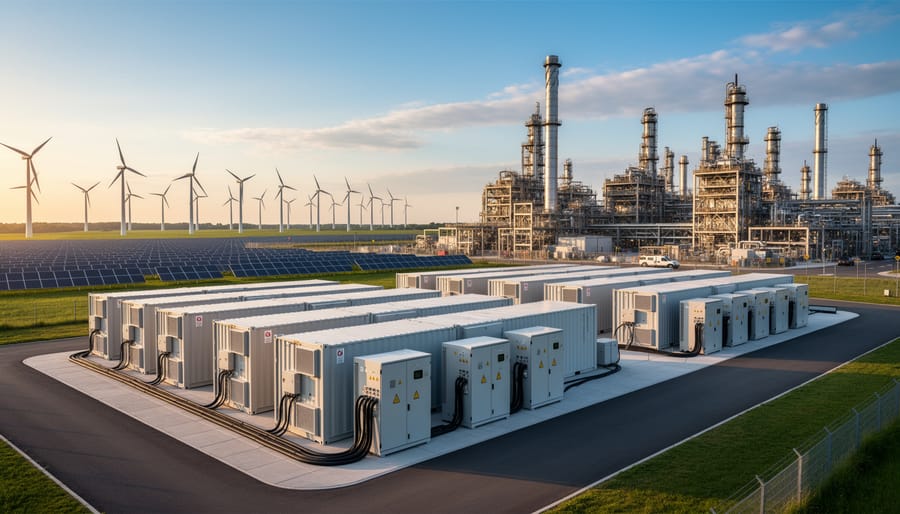
Energy Storage Integration for Continuous Operations
Industrial facilities requiring uninterrupted power face unique challenges when transitioning to renewable energy. Modern energy storage integration addresses this critical gap through sophisticated battery systems engineered for continuous operations.
Commercial-grade lithium-ion battery installations typically range from 500kWh to 5MWh capacity, sized to match facility load profiles and provide 4-8 hours of backup power. Engineering specifications must account for depth of discharge cycles, thermal management systems, and integration with existing electrical infrastructure. For manufacturing plants operating three shifts, hybrid systems combining solar generation with 2-3MWh battery banks deliver reliable power while reducing grid dependence by 60-70 percent.
A food processing facility in Queensland implemented a 1.2MWh battery system paired with 850kW solar arrays, maintaining refrigeration during peak demand periods and grid outages. The engineered solution included redundant inverters, automated load shedding protocols, and real-time monitoring systems.
Key engineering considerations include battery chemistry selection, ambient temperature control, fire suppression systems, and compliance with AS/NZS 5139 standards. Advanced battery management systems optimize charge cycles and extend operational lifespan beyond 15 years. When properly engineered, these installations provide measurable ROI through demand charge reduction, energy arbitrage opportunities, and operational continuity that protects revenue streams during power interruptions.
Real-Time Monitoring and Performance Management
Modern renewable engineering extends beyond installation to encompass sophisticated monitoring infrastructure that tracks system performance in real time. Engineers deploy advanced sensors, data analytics platforms, and automated alert systems to continuously assess energy production, equipment health, and operational efficiency across industrial facilities.
These monitoring systems collect granular data on panel output, inverter performance, battery storage capacity, and grid interaction. Engineers establish baseline performance metrics and configure algorithms that identify deviations indicating potential issues—from gradual efficiency degradation to immediate equipment failures. This proactive approach enables rapid response before minor problems escalate into costly downtime.
Performance dashboards provide facility managers with accessible visualizations of energy generation, consumption patterns, and cost savings. Advanced analytics compare actual output against predicted performance based on weather conditions and system specifications, revealing optimization opportunities.
When integrated with artificial intelligence, these platforms enable predictive maintenance scheduling and dynamic system adjustments. Engineers program automated responses to changing conditions, such as load balancing during peak demand or storage optimization during variable production periods. This capability proves essential for optimizing solar systems across industrial applications.
Remote monitoring capabilities allow engineering teams to diagnose issues without immediate site visits, reducing maintenance costs and minimizing operational disruption. This combination of real-time oversight and analytical insight ensures renewable installations consistently deliver expected returns on investment.
Selecting the Right Renewable Engineering Partner
Choosing the right renewable engineering partner can determine whether your industrial energy project delivers projected returns or becomes a costly liability. Facility managers and business owners should evaluate potential partners using specific criteria that go beyond basic installation capabilities.
Start by examining technical credentials and industry-specific certifications. Look for Professional Engineer (PE) licenses in relevant disciplines, NABCEP certifications for solar expertise, and memberships in organizations like the American Society of Mechanical Engineers. These credentials verify that the engineering team possesses the technical foundation necessary for complex industrial applications.
Track record matters significantly in renewable engineering. Request detailed case studies from projects similar in scale and industry to your facility. A partner with experience in your sector—whether manufacturing, food processing, or warehousing—will better understand your operational constraints, energy usage patterns, and integration challenges. Ask for references from facilities that have operated their systems for at least two years to verify long-term performance matches initial projections.
Evaluate the engineering firm’s approach to load analysis and system design. A qualified partner will conduct comprehensive energy audits, analyze your demand profiles across different operational periods, and design systems that align with your specific consumption patterns rather than offering one-size-fits-all solutions. They should demonstrate expertise in grid interconnection, utility coordination, and local permitting processes.
Financial transparency provides another critical evaluation metric. The right partner will provide detailed financial modeling showing payback periods, ROI calculations, and lifecycle cost analyses. They should clearly explain available incentives, financing options, and performance guarantees. Be cautious of partners who avoid discussing warranties, ongoing maintenance requirements, or potential performance variables.
Finally, assess their project management capabilities and post-installation support. Industrial projects require coordination with existing operations to minimize downtime. Your engineering partner should demonstrate proven project management methodologies, clear communication protocols, and comprehensive maintenance programs that protect your investment beyond the initial installation phase.
The integration of professional renewable engineering expertise represents a fundamental shift in how industrial facilities approach energy strategy. As demonstrated through diverse applications across manufacturing, agriculture, and commercial sectors, specialized engineering capabilities transform renewable energy from a simple infrastructure addition into a comprehensive competitive advantage.
Organizations that invest in qualified renewable engineering partners consistently achieve superior outcomes compared to standard installations. This advantage manifests through optimized system performance, reduced operational costs, enhanced reliability, and measurable returns on investment. The technical precision that engineers bring to load analysis, equipment selection, system design, and ongoing optimization directly translates to bottom-line financial benefits and operational resilience.
Looking forward, the complexity of industrial energy systems will continue to increase as facilities integrate multiple renewable sources, energy storage solutions, and smart grid technologies. This evolution makes engineering expertise not just valuable but essential for organizations seeking to maintain competitiveness while advancing sustainability objectives. The facilities that recognize renewable engineering as a strategic investment rather than a commodity purchase will be best positioned to capitalize on emerging technologies and evolving energy markets.
For business leaders evaluating renewable energy initiatives, the path forward is clear: partner with qualified engineering professionals who understand both the technical requirements and business implications of industrial-scale renewable systems. This approach ensures that renewable energy investments deliver maximum value across financial, operational, and environmental dimensions while positioning your organization for long-term success in an increasingly sustainability-focused marketplace.