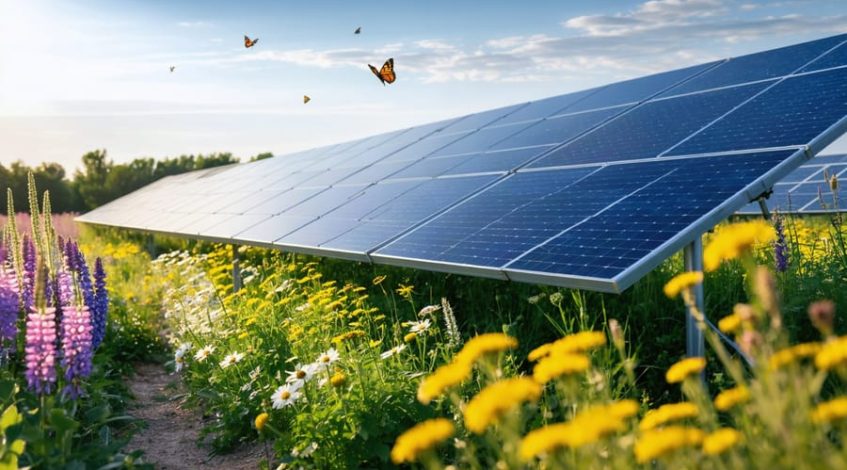
Biodiversity conservation within solar energy projects represents the strategic integration of habitat protection, species management, and ecosystem enhancement alongside renewable energy generation. For commercial solar developers and facility managers, this practice has evolved from regulatory compliance into a competitive advantage that reduces project delays, lowers mitigation costs, and strengthens community acceptance.
The intersection of solar infrastructure and biodiversity conservation addresses a fundamental challenge: meeting aggressive renewable energy targets while protecting the natural systems that sustain agricultural productivity, water resources, and climate resilience. When executed effectively, conservation measures transform solar installations from potential environmental conflicts into ecological assets. Projects incorporating pollinator-friendly vegetation beneath panels, wildlife corridors around perimeters, and native grassland restoration demonstrate measurable biodiversity improvements while maintaining or enhancing energy output.
Understanding biodiversity conservation principles enables decision-makers to anticipate environmental assessments, design projects that minimize ecological disruption, and capitalize on emerging incentives for dual-use solar developments. This approach proves particularly valuable as permitting agencies, investors, and corporate sustainability commitments increasingly demand quantifiable environmental benefits beyond carbon reduction.
The following framework clarifies what biodiversity conservation means in practical terms for solar projects, identifies regulatory requirements that impact timelines and budgets, and outlines implementation strategies that protect both natural capital and financial returns. Real-world case studies demonstrate how leading organizations have successfully balanced energy production with ecosystem stewardship, creating replicable models for sustainable infrastructure development.
What Biodiversity Conservation Really Means for Commercial Solar Projects
The Three Pillars of Biodiversity in Solar Development
Biodiversity conservation in solar development rests on three fundamental pillars, each requiring specific consideration during project planning and implementation.
Species diversity refers to the variety of organisms within a given area. At solar installation sites, this includes native pollinators, bird populations, and ground-dwelling fauna. For example, a 50-megawatt solar facility in Minnesota incorporated native prairie grasses beneath panels, resulting in a 300% increase in butterfly species and establishing critical habitat for declining rusty patched bumblebees. Facility managers should conduct pre-construction species surveys to identify protected or declining populations that require accommodation in site design.
Ecosystem diversity encompasses the variety of habitats within a landscape. Commercial solar projects often span multiple ecosystem types, from grasslands to wetland edges. A utility-scale installation in North Carolina preserved existing forest buffers while converting agricultural land to solar arrays interspersed with native meadow plantings. This approach maintained three distinct ecosystem types on one property, enhancing regional ecological resilience while meeting energy production targets.
Genetic diversity represents the variation within species populations, ensuring long-term adaptability. Solar developers support genetic diversity by sourcing native plant materials from local seed suppliers rather than generic commercial blends. A California solar project utilized regionally-appropriate native seeds, creating habitat corridors that connected fragmented wildlife populations and strengthened genetic exchange between previously isolated groups. This approach required minimal additional investment while delivering measurable conservation outcomes that satisfied regulatory requirements and enhanced stakeholder relations.
Why This Matters to Your Bottom Line
Biodiversity conservation directly impacts your organization’s financial performance and operational viability. Companies that integrate conservation measures into solar projects demonstrate strong corporate social responsibility, which enhances brand reputation and stakeholder confidence. This positioning becomes increasingly valuable as investors and customers prioritize environmental performance in their decision-making.
From a regulatory perspective, proactive biodiversity management reduces compliance costs and accelerates project approvals. Environmental assessments that incorporate conservation strategies typically face fewer delays and permit challenges. Properties with documented conservation efforts also maintain higher valuations and attract premium lease rates from environmentally conscious tenants.
Community relations improve significantly when solar installations include habitat restoration or species protection initiatives. This goodwill translates into smoother project implementation and reduced opposition. The long-term business benefits extend to operational resilience, as healthy ecosystems provide natural services like erosion control and water management that protect infrastructure investments. Organizations that view conservation as an operational asset rather than a compliance burden position themselves for sustained competitive advantage in the evolving energy marketplace.
The Intersection: Where Solar Energy Meets Wildlife Protection
Dual Land Use Benefits
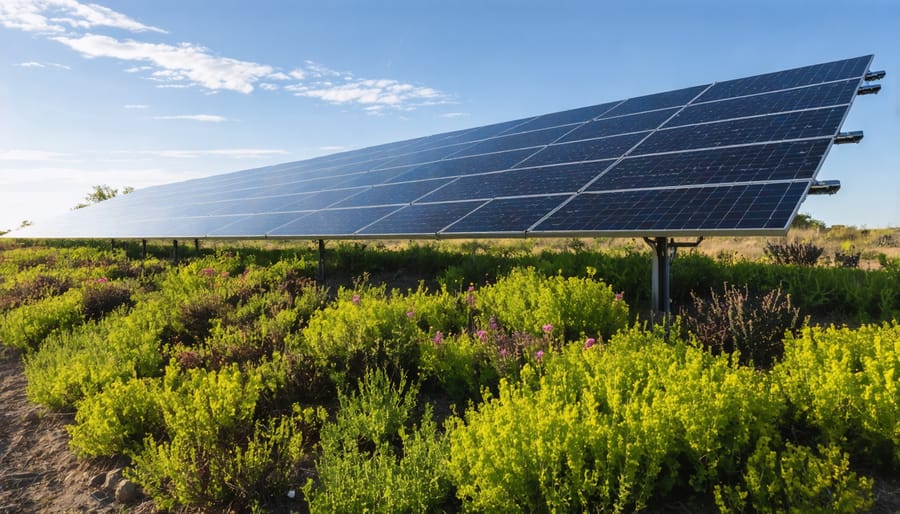
Solar installations designed with biodiversity conservation in mind create productive dual-use landscapes that generate renewable energy while supporting local ecosystems. Modern solar arrays can accommodate native vegetation, pollinator habitats, and wildlife corridors without compromising energy production efficiency. This approach, increasingly adopted across commercial and utility-scale projects, transforms what might be monoculture grass or bare ground beneath panels into thriving ecological zones.
The key to successful coexistence lies in strategic site design. Solar panels are typically elevated 3-5 feet above ground, creating shade patterns that allow diverse plant species to flourish underneath and between rows. Native grasses, wildflowers, and low-growing vegetation require minimal maintenance compared to traditional turf grass, reducing operational costs while providing food and shelter for pollinators and small wildlife. These plantings also improve soil health, reduce erosion, and manage stormwater runoff more effectively than conventional landscaping.
Several commercial solar facilities have documented measurable ecological benefits alongside energy production. A 50-megawatt solar farm in Minnesota reported a 40% increase in pollinator populations after establishing native prairie vegetation, while simultaneously reducing site maintenance costs by 30%. Similarly, solar installations in agricultural regions have created valuable habitat corridors connecting fragmented ecosystems, supporting bird populations and beneficial insects that aid nearby farming operations.
For decision-makers, this dual-use approach offers tangible advantages: enhanced community relations, potential regulatory incentives, reduced long-term maintenance expenses, and improved corporate sustainability metrics. The integration of biodiversity measures positions solar projects as comprehensive environmental solutions rather than simple energy infrastructure.
Real-World Conservation Outcomes
Leading organizations across multiple sectors have demonstrated that commercial solar installations can deliver measurable conservation outcomes while maintaining strong financial performance. These real-world examples illustrate practical approaches that align renewable energy production with ecological stewardship.
A 50-megawatt solar facility in Queensland implemented native vegetation corridors between panel arrays, creating 12 hectares of restored habitat for local wildlife. Within three years, biodiversity surveys documented a 40% increase in native bird species and the return of several locally threatened reptile populations. The project maintained 98% of projected energy output while reducing site maintenance costs by 15% through natural pest management from the restored ecosystem.
In Victoria, a manufacturing facility’s 2-megawatt rooftop and ground-mounted solar installation incorporated green roof sections and pollinator-friendly plantings around perimeter arrays. This approach supported 23 native bee species and reduced urban heat island effects by 3 degrees Celsius in surrounding areas. The integration complemented broader corporate responsibility initiatives and enhanced the company’s environmental certification ratings.
A Western Australian mining operation partnered with conservation groups to design solar arrays that preserved critical habitat corridors for endangered marsupials. Monitoring data showed sustained population levels of target species while the 15-megawatt installation offset 85% of daytime electricity consumption. The project achieved regulatory approval 40% faster than standard applications due to comprehensive environmental planning.
These case studies demonstrate that biodiversity conservation measures need not compromise solar performance or financial returns. Strategic site design, native plantings, and wildlife corridors consistently deliver dual outcomes: renewable energy generation and measurable ecological improvements that strengthen project viability and stakeholder support.
Practical Biodiversity Strategies for Solar Installations
Site Assessment and Planning
Comprehensive site assessment forms the foundation of successful biodiversity conservation in commercial solar installations. Before commencing solar project planning, facility managers should engage qualified ecologists to conduct baseline surveys identifying existing flora, fauna, and habitat types on the proposed site.
The assessment process typically includes desktop studies reviewing historical land use data, seasonal field surveys documenting species presence, and evaluation of ecological corridors or migration pathways. These surveys determine whether protected species inhabit the area and identify any regulatory compliance requirements under environmental protection legislation.
Once baseline conditions are established, impact mitigation strategies can be developed. Common approaches include phased construction schedules to avoid breeding seasons, retention of existing vegetation where feasible, and strategic panel placement that minimizes habitat disruption. For ground-mounted systems, maintaining vegetation beneath panels often supports pollinator populations and prevents soil erosion.
Business owners should request detailed impact assessments that quantify potential ecological effects and propose specific mitigation measures. This documentation proves valuable for regulatory approvals and demonstrates environmental stewardship to stakeholders. Investment in thorough pre-installation assessment reduces project delays, ensures compliance, and can identify opportunities to enhance site biodiversity while maintaining optimal energy production. Professional ecological consultants typically complete comprehensive assessments within four to eight weeks, depending on site complexity and seasonal requirements.
Native Vegetation and Pollinator-Friendly Landscaping
Integrating native vegetation around solar installations creates valuable pollinator habitats while delivering measurable operational benefits. Native plant species require minimal irrigation, fertilization, and maintenance once established, reducing long-term site management costs by 30-50% compared to traditional turfgrass. These plants have adapted to local climate conditions and soil types, ensuring survival without intensive resource inputs.
Solar facilities with native landscaping support declining pollinator populations by providing crucial foraging habitat and nesting sites. A 2022 study at a Minnesota solar array documented a 650% increase in native bee populations within two years of establishing prairie vegetation. This approach aligns with emerging state-level pollinator-friendly solar legislation in states like Maryland, Minnesota, and Illinois, potentially qualifying facilities for expedited permitting or environmental credits.
The vegetation strategy should account for plant height and placement to avoid shading solar panels. Low-growing native wildflowers and grasses work well beneath and between panel rows, while taller species can occupy perimeter areas. Recommended species include black-eyed Susan, purple coneflower, wild bergamot, and native grasses like little bluestem.
Real-world application demonstrates viability: a 50-megawatt solar facility in North Carolina partnered with local conservation organizations to establish 300 acres of pollinator habitat, reducing maintenance costs by $45,000 annually while enhancing community relations. The project required minimal initial investment beyond seed costs and generated positive media coverage, strengthening the facility’s environmental credentials. Facility managers should consult with regional native plant societies or agricultural extension offices to identify appropriate species for their specific climate zones and soil conditions.

Wildlife Corridors and Habitat Design
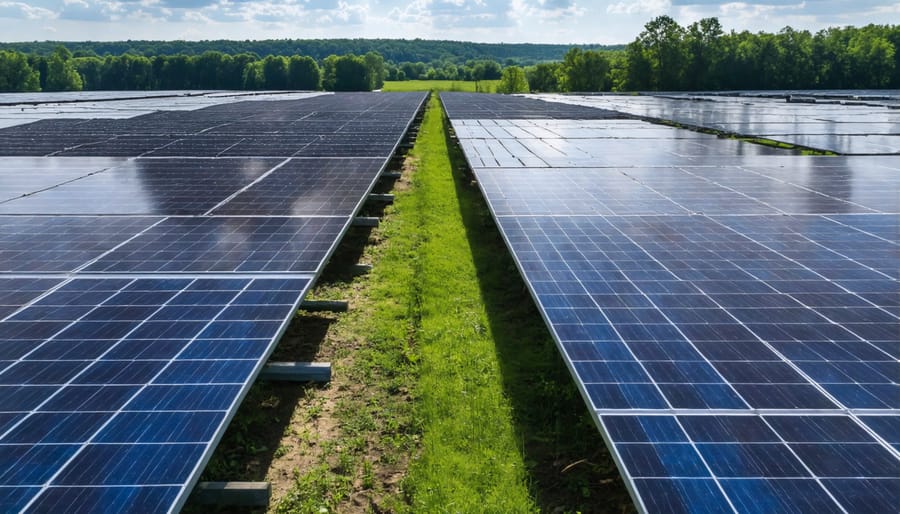
Strategic design of solar installations can maintain essential wildlife movement patterns while maximizing energy production. Wildlife corridors are landscape features that connect isolated habitat patches, allowing animals to safely move between feeding, breeding, and shelter areas. When planning commercial solar facilities, incorporating these corridors prevents habitat fragmentation that threatens species survival.
Effective corridor design begins with site assessment. Conduct environmental surveys to identify existing animal migration routes, nesting sites, and water sources. Position solar arrays to preserve these natural pathways, leaving adequate buffer zones around sensitive areas. The optimal corridor width varies by species, ranging from 50 feet for small mammals to several hundred feet for larger wildlife.
Perimeter fencing requires careful consideration. Install barriers that permit small animal passage while protecting infrastructure. Elevate fencing 6-8 inches above ground to allow rabbits and other small species to pass underneath. Alternatively, incorporate wildlife-friendly fence designs with larger mesh sizes at ground level.
A notable implementation at the Westmill Solar Cooperative in the United Kingdom demonstrates this approach. The facility integrated hedgerows and vegetation corridors throughout its 30-acre site, creating connected habitats that support diverse species populations. Post-installation monitoring showed increased biodiversity compared to pre-construction levels, proving that thoughtful design delivers both renewable energy and conservation outcomes without compromising system performance or financial returns.
Regulatory Requirements and Incentive Programs
Compliance Standards You Need to Know
Commercial solar projects intersect with several critical environmental regulations that facility managers and project developers must understand. The National Environmental Policy Act (NEPA) requires federal agencies to assess environmental impacts, including biodiversity effects, for projects on federal lands or using federal funding. State-level regulations often impose additional requirements through environmental quality acts and endangered species protections.
The Endangered Species Act (ESA) mandates protection of threatened and endangered species and their habitats, directly impacting site selection and design. Projects must conduct habitat assessments and may require consultations with the U.S. Fish and Wildlife Service or state wildlife agencies. Compliance failure can result in significant delays and financial penalties.
Many jurisdictions now require biodiversity impact assessments as part of permitting processes. These evaluations document existing species, habitat types, and migration corridors, establishing baseline conditions and mitigation requirements. Best practices include pre-construction surveys, monitoring protocols, and adaptive management plans that demonstrate ongoing compliance.
Forward-thinking organizations recognize that proactive compliance reduces project risks and timelines. Real-world applications show that early engagement with regulatory agencies and incorporating conservation measures during initial design phases prevents costly retrofits and maintains project schedules while protecting local ecosystems.
Financial Benefits of Conservation Integration
Solar developers who integrate biodiversity conservation measures can access substantial financial incentives that improve project economics. Federal and state governments offer targeted grants for renewable energy projects that demonstrate measurable environmental benefits, including habitat preservation and species protection programs integrated with solar installations.
Tax credit programs increasingly recognize biodiversity conservation as a qualifying criterion. The Investment Tax Credit may provide enhanced benefits when projects incorporate documented conservation practices, while property tax abatements are available in jurisdictions that prioritize sustainable land use. These incentives can reduce initial capital costs by 15-30 percent.
Green building certifications such as LEED and SITES directly reward biodiversity integration with points toward certification levels. Projects achieving these certifications command premium pricing in power purchase agreements and attract ESG-focused investors.
Pollinator-friendly solar certification programs offer marketing advantages and potential utility incentives. Real-world applications demonstrate that certified biodiversity-conscious projects secure faster permitting approval, reducing development timelines by an average of six months. Corporate buyers increasingly specify biodiversity requirements in renewable energy procurement, creating competitive advantages for certified projects and opening access to premium contract opportunities worth millions in long-term revenue.
Measuring and Monitoring Biodiversity Impact
Effective biodiversity conservation at solar installations requires systematic measurement and monitoring protocols that demonstrate tangible environmental outcomes. Modern solar monitoring systems can be enhanced to track ecological metrics alongside energy production data, providing facility managers with comprehensive performance insights.
Establishing baseline biodiversity assessments before construction enables meaningful comparison over time. Key performance indicators include species population counts, vegetation coverage percentages, pollinator activity levels, and habitat quality indices. These metrics should align with regional conservation goals and regulatory requirements, ensuring your facility meets compliance standards while contributing to broader environmental objectives.
Practical monitoring approaches include quarterly wildlife surveys conducted by certified environmental consultants, automated camera systems that document species activity without disrupting operations, and vegetation health assessments using drone imagery or satellite data. Many facilities integrate these ecological metrics into their existing energy management systems, creating unified dashboards that display both kilowatt-hour production and conservation outcomes.
Consider implementing tiered monitoring protocols based on site sensitivity and project scale. High-priority habitats require monthly assessments during critical breeding seasons, while standard installations may conduct semi-annual evaluations. Digital platforms now enable remote monitoring, reducing site visit requirements and associated costs.
Real-world applications demonstrate the value of consistent tracking. A 50-megawatt facility in Minnesota implemented automated pollinator monitoring, documenting a 340 percent increase in native bee populations over three years. This data strengthened their corporate sustainability reporting and satisfied local environmental permit conditions.
Documentation should include photographic evidence, population trend analysis, and annual reports comparing results against established targets. This comprehensive approach not only validates your conservation investment but also provides valuable data for stakeholder communications, regulatory submissions, and future project planning. Regular monitoring ensures biodiversity initiatives deliver measurable returns alongside energy production goals.
Overcoming Common Implementation Challenges
Integrating biodiversity conservation into solar projects presents distinct challenges, yet proven strategies exist to address each concern effectively. Cost considerations typically rank highest among decision-makers evaluating conservation measures. However, data from commercial installations demonstrates that native vegetation management reduces long-term maintenance expenses by 30-40% compared to traditional landscaping, while also decreasing irrigation costs substantially. The initial investment in conservation planning generally represents 2-5% of total project costs, with payback periods averaging 3-5 years through reduced operational expenses.
Maintenance concerns often center on vegetation management and wildlife monitoring requirements. Establishing clear protocols with ecological consultants during the design phase prevents complications. Most facilities find that quarterly monitoring suffices, with annual comprehensive assessments ensuring compliance and identifying optimization opportunities. Automated monitoring systems and remote sensing technology have reduced labor requirements significantly.
Liability questions regarding wildlife presence on solar sites warrant attention but rarely materialize into actual issues. Standard commercial liability policies typically cover wildlife-related incidents, and establishing proper fencing and signage minimizes risks. Projects incorporating conservation measures have not shown increased liability claims compared to conventional installations.
Balancing energy production with environmental goals requires strategic site design but need not compromise output. Ground-mounted arrays designed with appropriate elevation allow native vegetation growth beneath panels, while pollinator-friendly plantings between rows maintain 95-100% of energy generation capacity. Case studies from utility-scale projects demonstrate that thoughtful integration of conservation measures can enhance site performance through improved soil stability and reduced dust accumulation on panels, ultimately supporting both environmental and production objectives.
Biodiversity conservation represents a strategic advantage rather than an obstacle for commercial solar installations. The evidence from successful projects demonstrates that integrating ecological stewardship into solar development creates measurable value through enhanced regulatory compliance, reduced project delays, strengthened community relationships, and improved long-term site stability. Organizations that proactively address conservation considerations position themselves ahead of evolving environmental standards while securing competitive advantages in stakeholder perception and operational resilience.
As you evaluate your next solar investment, consider partnering with developers who demonstrate expertise in conservation-integrated approaches. Request biodiversity impact assessments during the planning phase, explore dual-use site designs that preserve or restore habitat, and engage with ecological consultants early in the development process. These measures represent prudent risk management that protects your investment while delivering environmental benefits.
The commercial solar sector continues to expand, and the most successful projects will be those that recognize biodiversity conservation not as a compliance burden but as an opportunity to create lasting value for shareholders, communities, and ecosystems. By adopting conservation principles today, your organization contributes to sustainable energy infrastructure that serves both immediate business objectives and long-term environmental stewardship goals.