
# Solar Power for Remote Locations: Transforming Off-Grid Energy Infrastructure
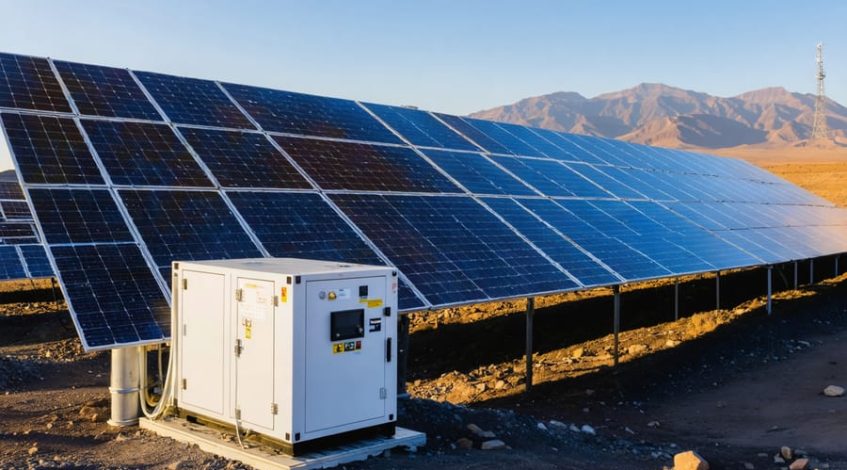
Remote operations face a fundamental challenge: reliable power delivery where traditional grid infrastructure proves economically unfeasible or physically impossible. Solar energy systems now provide a proven solution, with installations across mining sites, telecommunications towers, research stations, and agricultural operations demonstrating 99%+ uptime while eliminating fuel logistics and reducing operational costs by 40-70% over ten-year periods.
Modern photovoltaic technology has evolved beyond simple panel arrays. Today’s remote solar installations integrate lithium-ion battery storage, intelligent energy management systems, and hybrid backup generators to ensure continuous operation through seasonal variations and extreme weather events. Systems ranging from 5kW microgrids powering weather stations to 500kW installations supporting industrial operations now operate successfully in environments from Arctic research facilities to equatorial mining operations.
The financial case strengthens considerably when factoring total cost of ownership. While diesel generators present lower initial capital requirements, fuel transportation to remote locations—often by helicopter or specialized vehicles—creates operational expenses exceeding $5-15 per liter. Solar installations eliminate these recurring costs while providing 25-year equipment warranties and minimal maintenance requirements.
Implementation success depends on accurate load analysis, proper system sizing, and professional installation accounting for local environmental conditions. Organizations evaluating solar solutions for remote locations must consider solar irradiance data, temperature extremes, accessibility for maintenance, and integration with existing infrastructure. The following analysis provides decision-makers with technical frameworks, financial models, and implementation strategies proven across diverse remote applications.
The Remote Power Challenge: Why Traditional Energy Falls Short
The True Cost of Grid Extension
Extending traditional power grids to remote locations involves substantial financial commitments that many organizations underestimate. Infrastructure costs typically range from $20,000 to $100,000 per kilometer, depending on terrain complexity and environmental regulations. For sites located 10-15 kilometers from existing grid infrastructure, expenses can quickly exceed $500,000 before factoring in ongoing maintenance requirements.
Beyond initial capital expenditure, grid extensions demand continuous investment. Utility companies face mounting costs for line maintenance, vegetation management, and equipment upgrades, expenses frequently passed to end-users through connection fees and elevated tariffs. Remote installations prove particularly vulnerable to weather-related outages, requiring costly emergency repairs that disrupt operations.
Timeline considerations present additional challenges. Grid extension projects typically require 18-36 months from initial planning to energization, encompassing environmental assessments, permit acquisition, right-of-way negotiations, and construction phases. Regulatory approvals alone can extend timelines by 6-12 months, delaying critical operational milestones and revenue generation.
For many remote operations, these combined factors—capital requirements exceeding half a million dollars, perpetual maintenance obligations, and multi-year implementation schedules—make grid connection economically impractical compared to autonomous solar installations that can be deployed within weeks at substantially lower investment levels.
Diesel Generators: The Expensive Stopgap
Diesel generators remain the default power source for many remote operations, yet they represent a significant ongoing expense that impacts operational budgets. Fuel costs alone typically range from $0.40 to $1.20 per kilowatt-hour—substantially higher than grid electricity—before factoring in transportation expenses to isolated sites. Remote mining operations, telecommunications facilities, and agricultural installations often face fuel delivery costs that double or triple the base price, particularly in areas with limited road access or during adverse weather conditions.
Beyond financial considerations, diesel generation presents logistical complexities. Regular fuel deliveries require careful planning, secure storage infrastructure, and contingency reserves. Maintenance demands are considerable, with engine servicing, oil changes, and component replacements necessary every 500-1,000 operating hours. Equipment failures can halt operations entirely until repairs are completed.
Environmental factors increasingly influence energy decisions. Diesel generators produce approximately 2.7 kilograms of CO2 per liter of fuel consumed, alongside particulate emissions and noise pollution. For organizations pursuing sustainability targets or operating in environmentally sensitive areas, these emissions present reputational and regulatory challenges. Modern solar solutions for rural areas address these limitations while delivering predictable energy costs and minimal maintenance requirements over 25-year operational lifespans.
Solar Technology Advantages for Off-Grid and Remote Operations
System Reliability and Low Maintenance Requirements
Modern solar installations offer exceptional reliability for remote operations, primarily due to their remarkably simple design. Unlike diesel generators or traditional power systems, solar panels contain no moving parts, eliminating the mechanical wear that typically necessitates frequent maintenance and costly repairs. Quality photovoltaic modules are engineered to withstand harsh environmental conditions, from extreme temperatures to high winds and heavy snow loads, with manufacturers routinely offering 25-year performance warranties.
This durability translates directly into operational advantages for remote facilities. Solar systems typically require only periodic cleaning and annual inspections to maintain optimal performance—a stark contrast to conventional generators demanding regular fuel deliveries, oil changes, and component replacements. For mining operations in Western Australia, this has meant reducing on-site maintenance visits from weekly to quarterly intervals, significantly lowering operational costs and minimizing service disruptions.
The absence of combustion processes also eliminates concerns about fuel contamination, engine failure, or emissions system complications. Battery storage components, while requiring eventual replacement after 10-15 years, operate with minimal intervention through sophisticated monitoring systems that alert facility managers to potential issues before they impact operations. This predictability enables better resource planning and budget allocation for remote installations.
Modular Scalability for Diverse Applications
Solar power systems deliver exceptional flexibility through modular design, enabling precise configuration for applications ranging from minimal to substantial power requirements. Small-scale deployments, such as environmental monitoring stations or telecommunications repeaters, typically operate effectively with 1-5 kW systems comprising a few panels and battery storage. These compact installations provide reliable power for sensors, data transmission equipment, and basic lighting needs.
Mid-range applications, including research facilities, agricultural operations, and mobile solar installations, generally require 10-50 kW systems. These configurations support multiple buildings, equipment operation, and moderate climate control demands while maintaining cost-effectiveness through appropriately sized components.
Large-scale industrial operations, mining sites, or remote communities benefit from scalable systems exceeding 100 kW. These installations can incorporate microgrid architecture, allowing phased expansion as energy demands grow. This scalability eliminates the risk of over-investment in initial infrastructure while ensuring future capacity remains achievable.
Professional system sizing considers peak demand, duty cycles, seasonal variations, and backup requirements. Accurate assessment prevents costly oversizing or performance shortfalls, ensuring optimal return on investment across diverse remote applications.
Energy Independence and Predictable Operating Costs
Solar installations fundamentally transform energy economics for remote operations by eliminating dependence on complex fuel supply chains. Traditional diesel generators require continuous fuel deliveries—often expensive and unreliable in isolated areas—while solar systems generate power independently once installed. This autonomy removes vulnerability to fuel price volatility, supply disruptions, and transportation challenges that plague conventional energy sources.
The financial predictability of solar power represents a significant strategic advantage. After the initial capital investment, operating costs remain remarkably stable for 25+ years, with only minimal maintenance requirements. Organizations can accurately forecast energy expenses throughout the system lifetime, simplifying budget planning and improving financial forecasting. Mining operations in Australia have reported fuel cost reductions exceeding 40% after transitioning to hybrid solar-diesel systems, while telecommunications companies operating remote towers have achieved complete energy cost stability. This predictability enables better resource allocation and protects against market fluctuations that traditionally impact operational budgets.
Key Components of Remote Solar Power Systems
Battery Storage and Energy Management
Reliable energy storage represents the cornerstone of successful off-grid solar installations. Modern lithium-ion battery systems have become the preferred solution for remote locations, offering superior energy density, longer lifecycle (typically 10-15 years), and minimal maintenance compared to traditional lead-acid alternatives. When planning battery capacity, facility managers must account for several critical factors: daily energy consumption patterns, seasonal variations in solar production, and the desired autonomy period during extended periods of reduced sunlight.
Advanced energy management systems (EMS) optimize power availability through intelligent load balancing and predictive algorithms. These systems continuously monitor battery state-of-charge, solar generation rates, and consumption patterns to maximize efficiency and extend battery lifespan. For industrial operations, EMS platforms can prioritize critical loads during low-charge conditions and automatically shed non-essential systems.
A telecommunications company in rural Australia recently implemented a solar-battery system with smart energy management, achieving 99.8% uptime while reducing generator runtime by 85%. This configuration included 200 kWh of lithium storage paired with predictive weather integration, demonstrating how proper capacity planning and intelligent management deliver exceptional reliability for mission-critical remote operations.
Backup Systems and Hybrid Configurations
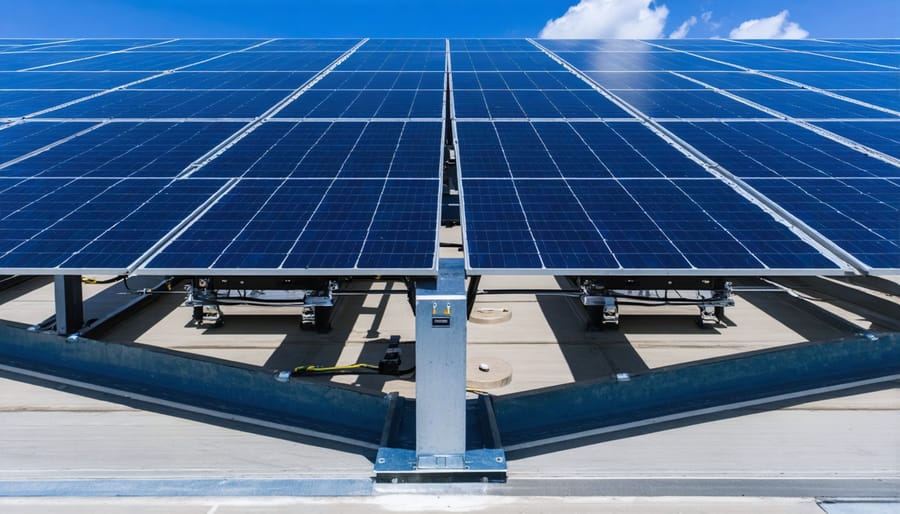
For mission-critical operations in remote locations, hybrid solar-diesel configurations provide optimal reliability while reducing fuel costs by 50-70%. These systems automatically switch between solar power during optimal conditions and diesel generators during extended cloudy periods or peak demand, ensuring uninterrupted operations for telecommunications towers, mining facilities, and emergency services stations.
Modern hybrid systems incorporate intelligent load management that prioritizes solar energy, activates backup generators only when necessary, and can be monitored remotely through cloud-based platforms. Battery storage serves as the primary buffer, with diesel generators functioning as the secondary backup rather than the primary power source. This configuration has proven particularly effective for Australian mining operations, where combining solar arrays with existing diesel infrastructure reduced operational costs by $200,000 annually per site while maintaining 99.9% uptime. The modular nature of hybrid systems allows gradual solar capacity expansion as energy demands increase or budgets permit.
Remote Monitoring and Maintenance Solutions
Modern IoT-enabled monitoring systems have transformed solar asset management for remote installations, enabling operators to track performance metrics in real-time from centralized dashboards. Advanced platforms monitor energy production, battery health, inverter efficiency, and environmental conditions, transmitting data via satellite or cellular networks. Predictive analytics identify potential issues before failures occur, reducing costly emergency service calls and minimizing downtime. For example, a telecommunications company managing solar-powered cell towers across rural Australia reduced maintenance costs by 40% using remote diagnostics that flagged underperforming panels and battery degradation patterns. These systems provide automated alerts, performance reports, and historical data analysis, allowing facility managers to optimize energy usage and schedule preventive maintenance efficiently. Cloud-based solutions offer scalability and accessibility, ensuring decision-makers maintain complete visibility over distributed solar assets regardless of geographic barriers.
Real-World Applications Across Industries
Mining and Resource Extraction
Remote mining operations face exceptional energy challenges, with diesel fuel costs often exceeding $2-3 per liter when transported to isolated sites. A gold mining operation in Western Australia successfully transitioned to a hybrid solar-diesel system, installing 6 MW of solar capacity with battery storage. The implementation reduced diesel consumption by 65%, delivering annual savings exceeding $4.5 million while eliminating 12,000 metric tons of carbon emissions.
The system’s operational improvements proved equally significant. Reduced diesel generator runtime decreased maintenance requirements by 40%, while the solar array’s 25-year lifespan provided long-term cost predictability. Battery storage ensured continuous power during peak operational hours, maintaining production consistency. The project achieved full ROI within 4.2 years, demonstrating compelling economics for energy-intensive remote operations. Mining companies increasingly view solar integration not as an environmental initiative, but as a strategic operational advantage that enhances competitiveness while reducing exposure to volatile fuel markets.
Agriculture and Water Management
Solar energy is revolutionizing agricultural operations in remote locations where traditional grid connectivity proves economically unfeasible. Modern solar-powered irrigation systems now deliver reliable water management for crops across thousands of isolated hectares, with installations utilizing submersible pumps and drip irrigation networks that operate entirely off-grid. These systems typically achieve ROI within 3-5 years through eliminated fuel costs and reduced maintenance requirements.
Livestock operations benefit significantly from solar installations powering water pumps, electric fencing, and automated feeding systems. Remote cattle stations across Australia’s outback have successfully implemented solar arrays ranging from 5kW to 50kW, ensuring consistent water supply while reducing operational expenses by up to 70%.
Dairy facilities, grain storage operations, and processing centers are increasingly adopting solar-powered agricultural operations with battery storage capabilities. These systems support refrigeration, ventilation, and equipment operation while transforming rural communities through enhanced productivity and sustainability.
Telecommunications and Infrastructure
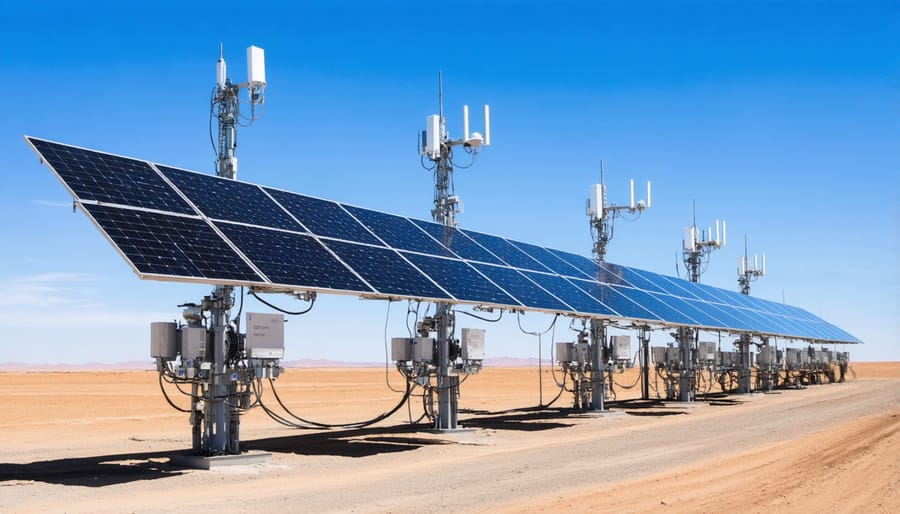
Solar-powered telecommunications infrastructure has become essential for maintaining connectivity in remote regions where grid extension remains economically impractical. Cell towers, repeater stations, and communication networks increasingly rely on photovoltaic systems combined with battery storage to ensure uninterrupted 24/7 operation.
Modern solar installations for telecommunications typically incorporate 5-15kW arrays with lithium-ion battery banks, providing 48-72 hours of autonomy during adverse weather conditions. This configuration eliminates diesel generator dependency, reducing operational costs by 60-80% over a ten-year period while significantly decreasing maintenance requirements and fuel logistics challenges.
Major telecommunications providers have successfully deployed solar-powered infrastructure across rural Africa, remote Pacific islands, and underserved mountain regions. These installations demonstrate remarkable reliability, with uptime exceeding 99.5% when properly designed and maintained. The modularity of solar systems allows scalable expansion as network demand grows, while remote monitoring capabilities enable proactive maintenance scheduling. For organizations managing distributed communication networks, solar power delivers predictable operating expenses and enhanced service continuity compared to conventional power sources.
Government and Emergency Services
Solar power delivers critical reliability for government operations where grid connectivity is impractical or nonexistent. Border patrol stations, particularly those monitoring vast stretches of international boundaries, depend on solar installations to maintain 24/7 surveillance systems, communications equipment, and personnel facilities. These systems operate autonomously for extended periods, reducing the logistical burden of fuel delivery to remote outposts.
Meteorological agencies worldwide deploy solar-powered weather stations in mountainous terrain, coastal areas, and wilderness regions where conventional power infrastructure would be prohibitively expensive. These installations provide uninterrupted data collection essential for accurate forecasting and climate monitoring.
Emergency response facilities, including remote fire lookout towers and disaster response command centers, benefit from solar energy’s independence from vulnerable grid infrastructure. During natural disasters when traditional power systems fail, solar installations with battery backup continue supporting critical communications and coordination activities. Public safety agencies report significant operational cost savings while improving response capabilities in geographically challenging locations where reliable power was previously unavailable or extremely costly to maintain.
Financial Analysis: ROI and Cost Considerations
Capital Investment vs. Long-Term Savings
While solar installations require substantial capital investment—typically ranging from $15,000 to $50,000 for small-scale remote systems—the long-term financial advantages are compelling. Remote diesel generators consume fuel costing $2-$5 per liter, with annual expenditures frequently exceeding $30,000 for continuous operations. Solar systems eliminate these recurring fuel costs entirely, delivering payback periods of 3-7 years depending on energy requirements.
Maintenance costs favor solar significantly. Diesel generators require regular servicing, oil changes, and component replacements totaling $3,000-$8,000 annually, while solar installations need minimal upkeep beyond occasional panel cleaning and inverter replacement every 10-15 years. For solar farming operations and remote industrial facilities, these savings compound substantially over system lifespans of 25+ years.
Grid connection alternatives often prove prohibitively expensive in remote locations. Extending electrical infrastructure costs $30,000-$100,000 per kilometer, making solar economically superior for sites beyond 5-10 kilometers from existing networks. When evaluating total cost of ownership, solar power consistently delivers superior ROI, particularly when factoring environmental compliance costs and diesel price volatility.
Available Incentives and Financing Options
Remote solar installations for commercial and government operations benefit from several financial incentives that significantly improve project economics. The federal Investment Tax Credit (ITC) allows businesses to deduct a substantial percentage of solar installation costs from federal taxes, while accelerated depreciation through the Modified Accelerated Cost Recovery System (MACS) enables faster capital recovery. Many states offer additional rebates, grants, and property tax exemptions specifically designed for renewable energy projects in underserved areas.
Government entities can access specialized programs through the USDA Rural Energy for America Program (REAP), which provides grants and loan guarantees for rural solar installations. Federal agencies may utilize Energy Savings Performance Contracts (ESPCs) that allow solar implementation with no upfront capital investment, funded instead through verified energy savings.
Commercial financing options include power purchase agreements (PPAs), where third-party investors own and maintain the system while customers pay only for electricity generated, and solar leases that eliminate upfront costs. Green bonds and specialized renewable energy loans offer favorable terms for qualified projects. These diverse financing mechanisms make remote solar installations financially accessible while delivering measurable returns on investment through reduced operational costs and energy independence.
Site Assessment and System Design Considerations
Solar Resource and Environmental Factors
Assessing solar potential in remote locations requires thorough evaluation of site-specific environmental factors. Solar irradiance levels—measured in kilowatt-hours per square meter—vary significantly by geographic location, season, and local weather patterns. Remote sites often benefit from reduced air pollution and minimal shading obstacles, potentially increasing energy generation compared to urban installations.
Critical environmental considerations include temperature extremes, humidity, dust accumulation, and wind loads, which directly impact system performance and equipment longevity. For instance, mining operations in Australia’s outback successfully generate power despite harsh conditions by selecting components rated for extreme temperatures and implementing automated cleaning systems.
Conducting a comprehensive solar resource assessment involves analyzing historical meteorological data, performing on-site measurements, and utilizing satellite-derived irradiance databases. This data enables accurate energy production forecasting and system sizing, ensuring installations meet operational requirements year-round. Professional site assessments identify potential challenges such as seasonal shading, snow loads, or corrosive coastal environments, allowing for appropriate design modifications and component selection that maximize return on investment.
Load Profiling and System Sizing
Accurate load profiling forms the foundation of effective solar system design for remote operations. Begin by conducting a comprehensive energy audit that catalogs all electrical equipment, operating hours, and power consumption patterns. Document both continuous loads (refrigeration, communications, security systems) and intermittent loads (lighting, machinery, office equipment) to establish daily energy requirements in kilowatt-hours.
Peak demand analysis identifies the maximum simultaneous power draw, which determines inverter capacity and ensures system reliability during high-usage periods. For example, a remote telecommunications facility might experience peak demand during equipment startup sequences or extreme weather conditions requiring additional climate control.
Consider seasonal variations and future expansion plans when sizing battery storage and solar array capacity. Industry best practice recommends incorporating a 20-30% capacity buffer to account for efficiency losses, weather variability, and aging components. Professional energy consultants utilize specialized software to model consumption patterns and optimize system specifications, ensuring your investment delivers consistent performance while minimizing oversizing costs that don’t provide proportional value.
Implementation Best Practices for Remote Solar Projects
Working with Qualified Installation Partners
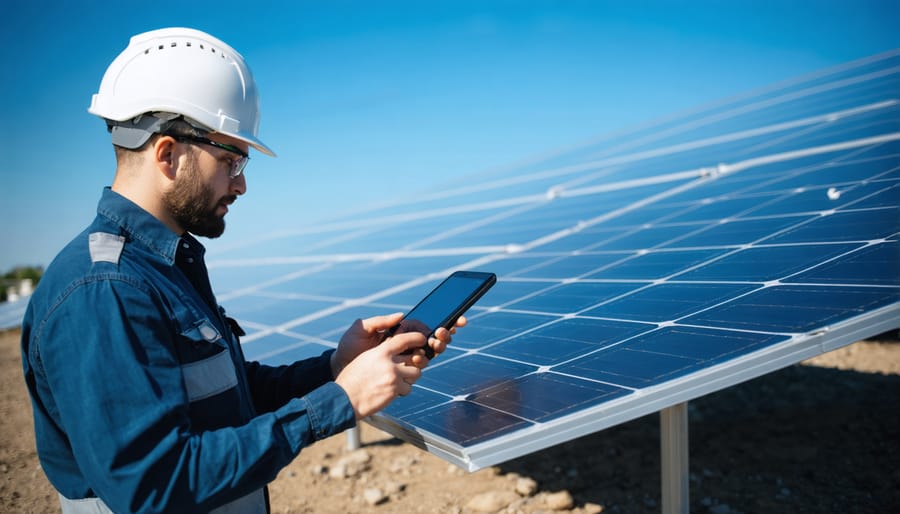
Selecting the right installation partner is critical to the success of remote solar projects. Qualified installers should hold recognized industry certifications and demonstrate proven experience in off-grid applications where logistics, environmental conditions, and technical complexity differ significantly from conventional installations.
Experienced partners assess site-specific challenges including extreme weather exposure, terrain accessibility, and local regulatory requirements. They design systems with appropriate component redundancy and oversee quality control throughout installation—factors that directly impact long-term system reliability.
Beyond initial deployment, ongoing support capabilities distinguish exceptional installation partners. Remote locations require responsive maintenance protocols, spare parts availability, and remote monitoring expertise to minimize downtime. A real-world example: a mining operation in Northern Canada partnered with an accredited installer who provided quarterly maintenance visits and 24/7 remote diagnostics, achieving 99.2% uptime over three years.
When evaluating partners, request references from similar remote projects, verify insurance coverage for isolated work environments, and confirm their capacity for long-term service commitments that match your operational timeline.
Logistics and Project Planning
Successful remote solar installations require meticulous planning that addresses accessibility constraints and environmental variables. Transportation logistics should account for equipment weight, fragility, and the limitations of available access routes—whether by helicopter, barge, or specialized off-road vehicles. Developing detailed site surveys beforehand helps identify potential obstacles and seasonal access windows.
Installation timelines for remote projects typically extend 30-50% longer than conventional sites due to weather dependencies and material staging requirements. Establishing on-site storage facilities and backup contingency plans mitigates delays. Coordinating multiple contractors—electrical, civil, and specialized solar technicians—demands clear communication protocols and phased scheduling.
Pre-assembled components and modular system designs significantly reduce on-site labor hours and complexity. Many successful projects utilize local labor for civil work while bringing specialized solar expertise for technical installations. A case study from a telecommunications site in Alaska demonstrated 40% cost savings by scheduling installations during optimal weather windows and utilizing pre-fabricated mounting systems that minimized field construction time.
Solar technology has fundamentally transformed energy accessibility for remote operations, delivering measurable advantages that extend far beyond basic power provision. Organizations implementing solar solutions consistently report reduced operational costs, enhanced energy independence, and improved environmental stewardship—outcomes that strengthen both bottom lines and corporate responsibility profiles.
The strategic value becomes particularly evident when considering long-term operational planning. Remote facilities powered by solar systems demonstrate remarkable resilience against energy price volatility, supply chain disruptions, and infrastructure limitations that traditionally constrain isolated operations. Real-world deployments across telecommunications, mining, agriculture, and research sectors validate solar’s capacity to deliver reliable, cost-effective power in even the most challenging environments.
For decision-makers evaluating energy solutions, the path forward is clear: solar technology represents not merely an alternative power source, but a strategic investment in operational continuity and financial predictability. The decreasing costs of solar components, coupled with advancing storage technologies and proven installation methodologies, have eliminated many traditional barriers to adoption.
Organizations serious about securing their energy future should conduct comprehensive site assessments and engage qualified solar professionals to develop tailored implementation strategies that align with their specific operational requirements and financial objectives.