

As blockchain technology in solar tracking and cryptocurrency mining continue to expand globally, their environmental impact has become a critical concern for business leaders and policymakers. The technology’s energy consumption presents a complex paradox: while blockchain can enhance renewable energy adoption and improve supply chain transparency, its proof-of-work consensus mechanisms demand substantial computational power and electricity. Current estimates suggest Bitcoin mining alone consumes more annual energy than many small countries, raising serious questions about sustainability. However, emerging solutions like proof-of-stake protocols and renewable-powered mining operations are reshaping the narrative. This analysis examines blockchain’s environmental footprint, exploring both its energy-intensive challenges and its potential to accelerate sustainable practices across industries. Understanding these trade-offs is essential for organizations considering blockchain implementation in their sustainability strategies.
The Environmental Impact of Blockchain in Solar Panel Tracking
Energy Consumption Reality Check
When comparing blockchain protocols used in solar tracking, energy consumption varies significantly across different consensus mechanisms. Proof of Work (PoW) systems, while secure, consume substantial energy – with Bitcoin’s network using as much electricity annually as medium-sized countries. However, newer protocols specifically designed for solar tracking utilize more efficient mechanisms.
Proof of Stake (PoS) and Proof of Authority (PoA) systems consume just 0.001% of the energy used by traditional PoW networks. For example, the Energy Web Chain, specifically designed for energy sector applications, operates on a PoA consensus mechanism that requires minimal computational power while maintaining security and transparency.
Solar tracking implementations using private or consortium blockchains demonstrate even lower energy footprints. These systems typically process fewer transactions and operate on a smaller network of verified nodes. Recent case studies from utility-scale solar installations show that blockchain-based tracking systems account for less than 0.1% of the facility’s total energy consumption, while providing significant improvements in operational efficiency and data accuracy.
The energy investment in blockchain-based solar tracking systems delivers a net positive environmental impact through improved panel efficiency and reduced administrative overhead.

Carbon Footprint Considerations
When evaluating blockchain’s environmental impact, the integration of renewable energy sources presents a significant opportunity to mitigate carbon emissions. Recent studies indicate that blockchain networks powered by renewable energy can reduce their carbon footprint by up to 90% compared to traditional fossil fuel-powered operations.
Leading blockchain projects are increasingly transitioning to renewable energy sources, with some networks achieving carbon neutrality through strategic partnerships with solar and wind energy providers. For example, several major cryptocurrency mining operations in Nordic countries now operate entirely on hydroelectric power, while others in Texas utilize surplus wind energy during off-peak hours.
The net environmental impact varies significantly based on the consensus mechanism employed. Proof of Stake (PoS) networks consume approximately 99.95% less energy than traditional Proof of Work (PoW) systems. When combined with renewable energy sources, PoS blockchain networks can operate with a minimal carbon footprint comparable to traditional database systems.
However, it’s essential to consider the full lifecycle emissions, including the manufacturing and disposal of renewable energy infrastructure. The key to sustainable blockchain operations lies in implementing comprehensive energy management strategies that prioritize renewable sources while optimizing network efficiency.
Benefits of Blockchain Transparency in Solar Panel Lifecycle
Supply Chain Verification
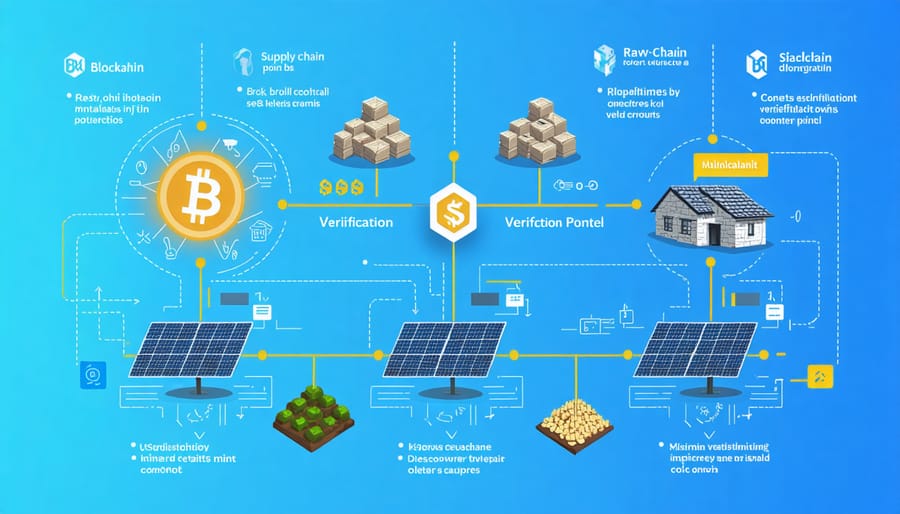
Blockchain technology plays a crucial role in ensuring the ethical sourcing and manufacturing of solar components, offering unprecedented transparency throughout the supply chain. By creating an immutable record of each component’s journey, blockchain enables manufacturers, installers, and end-users to verify the authenticity and origin of solar materials.
Major solar manufacturers are implementing blockchain solutions to track raw materials from mines to finished products. This system allows stakeholders to confirm that minerals like silicon and rare earth elements are sourced responsibly, without contributing to environmental degradation or labor exploitation. For example, leading solar companies now use smart contracts to automatically verify supplier compliance with environmental and ethical standards.
The technology also helps combat counterfeit solar components by providing a verifiable chain of custody. Each panel receives a unique digital identifier, allowing buyers to trace its complete manufacturing history. This verification process ensures that all components meet quality standards and environmental certifications, ultimately contributing to the overall sustainability of solar installations.
Real-world applications demonstrate the effectiveness of blockchain in supply chain verification. Several European solar manufacturers have reduced their carbon footprint by 15% through optimized supply chain management enabled by blockchain technology. Additionally, this transparency has helped companies maintain compliance with increasingly stringent environmental regulations while building consumer trust in their sustainable practices.
End-of-Life Management
Blockchain technology is revolutionizing end-of-life management in the renewable energy sector by creating transparent and efficient systems for tracking and managing waste. Through distributed ledger technology, organizations can now monitor the complete lifecycle of components, from manufacture to disposal, ensuring proper handling and maximum resource recovery.
The technology enables precise tracking of materials through solar panel recycling processes, creating an immutable record of each component’s journey. This transparency helps prevent illegal dumping and ensures compliance with environmental regulations while optimizing recycling efficiency.
Smart contracts automated through blockchain platforms can facilitate seamless transfer of materials between recycling facilities, reducing administrative overhead and improving resource allocation. The technology also enables better tracking of valuable materials like silver and silicon, ensuring these resources are properly recovered and reintegrated into the supply chain.
While blockchain’s energy consumption remains a concern, its application in waste management actually contributes to environmental sustainability by minimizing waste, improving recycling rates, and supporting circular economy initiatives. Organizations implementing blockchain-based tracking systems report up to 30% improvement in resource recovery rates and significant reductions in processing time.
For facility managers and sustainability officers, this means better compliance, reduced costs, and improved environmental outcomes through more efficient end-of-life management practices.
Balancing Environmental Impact with Industry Benefits
Green Blockchain Solutions
As concerns about blockchain’s environmental impact grow, innovative solutions are emerging to make this technology more sustainable. Proof-of-Stake (PoS) protocols have emerged as a leading alternative to energy-intensive Proof-of-Work systems, reducing energy consumption by up to 99%. These protocols validate transactions through cryptocurrency staking rather than computational problem-solving, dramatically lowering their carbon footprint.
Major blockchain platforms are increasingly integrating renewable energy sources into their operations. For example, the Ethereum network’s transition to PoS (known as “The Merge”) has significantly reduced its energy consumption, setting a precedent for other blockchain networks. This shift aligns with sustainable solar panel production practices and demonstrates the industry’s commitment to environmental responsibility.
Green mining initiatives are also gaining traction, with cryptocurrency mining operations powered by solar, wind, and hydroelectric energy. These operations often utilize excess renewable energy during off-peak hours, helping to stabilize power grids and reduce waste. Additionally, blockchain networks are implementing carbon offset programs and partnering with environmental organizations to achieve carbon neutrality.
Layer-2 scaling solutions and sidechains further enhance efficiency by processing multiple transactions off the main chain, reducing energy consumption while maintaining security and decentralization. These technological advances, combined with renewable energy integration, are creating a pathway for environmentally responsible blockchain adoption across industries.
Future Developments
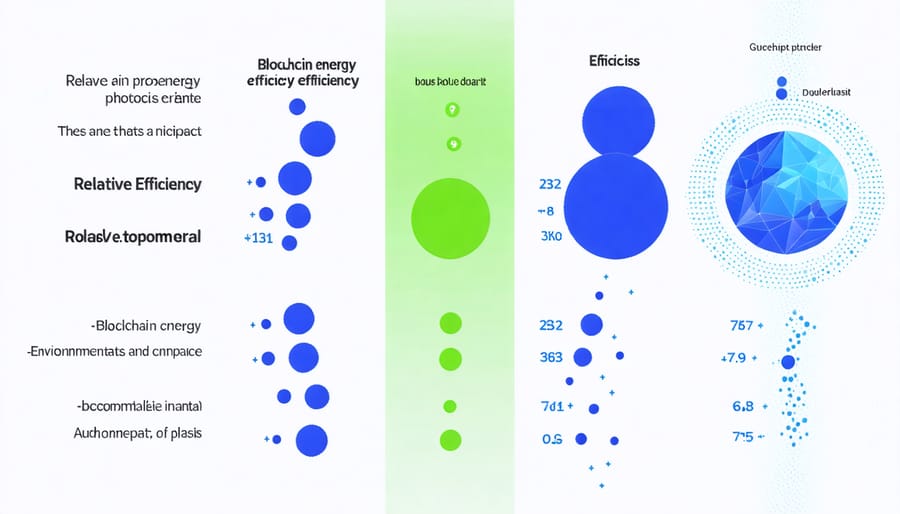
The blockchain industry is actively developing solutions to address its environmental impact through several promising innovations. Proof-of-Stake (PoS) protocols are increasingly replacing energy-intensive Proof-of-Work systems, with Ethereum’s transition reducing energy consumption by approximately 99.95%. This shift represents a significant milestone in sustainable blockchain development.
Green mining initiatives are gaining traction, with major cryptocurrency operations transitioning to renewable energy sources. Mining facilities are being strategically located near hydroelectric plants, solar farms, and wind installations to maximize clean energy usage. Some operators are implementing heat recovery systems to repurpose mining-generated heat for building climate control and industrial processes.
Layer-2 scaling solutions are emerging as another environmental breakthrough, processing thousands of transactions while using minimal blockchain resources. These solutions significantly reduce the energy required per transaction while maintaining security and decentralization benefits.
Advanced chip designs specifically for cryptocurrency mining are becoming more energy-efficient. New semiconductor technologies promise to deliver higher hash rates while consuming less power, potentially reducing the carbon footprint of mining operations by 30-50% in the coming years.
Carbon offset programs are being integrated directly into blockchain protocols, automatically allocating a portion of mining rewards to environmental initiatives. This systematic approach ensures continuous investment in sustainability while maintaining network operations.
The environmental impact of blockchain technology presents a complex balance of challenges and opportunities. While current proof-of-work consensus mechanisms consume significant energy, particularly in cryptocurrency mining, the technology’s potential to enable greater efficiency in renewable energy systems and carbon tracking cannot be ignored.
To minimize environmental impact while maximizing blockchain’s benefits, organizations should consider several practical recommendations. First, implement proof-of-stake or other energy-efficient consensus mechanisms instead of proof-of-work systems. These alternatives can reduce energy consumption by up to 99% while maintaining security and functionality.
Organizations should also prioritize renewable energy sources for blockchain operations. Many successful implementations already run on solar, wind, or hydroelectric power, significantly reducing their carbon footprint. Additionally, selecting appropriate blockchain platforms and optimizing network architecture can minimize computational requirements and energy consumption.
The future of blockchain technology lies in its ability to support environmental initiatives rather than hinder them. When properly implemented, blockchain can enhance renewable energy distribution, improve carbon credit tracking, and enable more efficient resource management. However, this requires careful consideration of environmental impacts during the planning and implementation phases.
For businesses and organizations considering blockchain adoption, conducting thorough environmental impact assessments and establishing clear sustainability metrics is essential. This approach ensures that blockchain implementation aligns with broader environmental goals while delivering intended benefits.
As the technology continues to evolve, newer, more energy-efficient solutions are emerging. By following best practices and choosing environmentally conscious implementations, organizations can harness blockchain’s potential while minimizing its environmental impact, creating a more sustainable future for this transformative technology.