
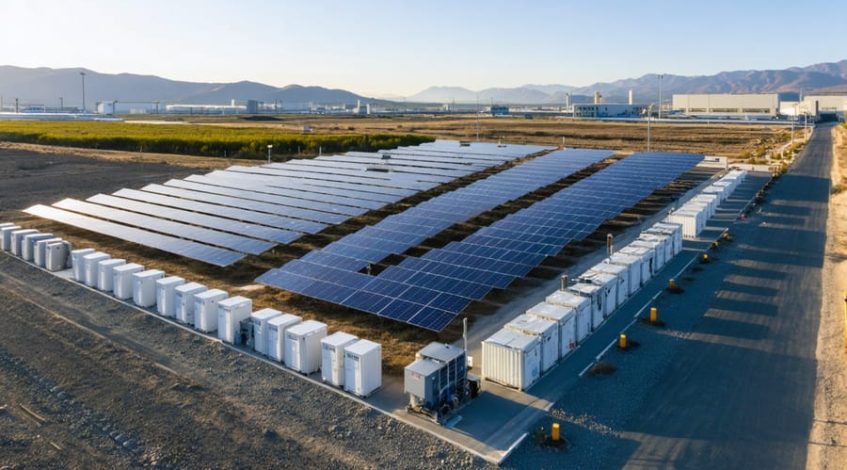
Energy independence is no longer a remote aspiration for forward-thinking organizations—it represents a proven pathway to operational resilience and predictable cost structures. As grid reliability challenges intensify and energy expenses consume growing portions of operational budgets, business leaders across industries are evaluating off-grid solar technology as a strategic infrastructure investment rather than an alternative energy experiment.
The business case for off-grid energy systems has fundamentally shifted in the past five years. Advanced battery storage technologies now deliver consistent power through multi-day weather events, while system costs have declined by 60 percent since 2018. Mining operations, agricultural facilities, telecommunications towers, and commercial complexes are already demonstrating five-to-seven-year payback periods while eliminating diesel fuel volatility and grid connection fees that often exceed six figures.
This transition addresses three critical pain points for facility managers and procurement officials: escalating utility rates that erode budget predictability, infrastructure vulnerabilities exposed during grid outages, and mounting pressure to achieve measurable sustainability targets. Organizations implementing off-grid solutions report operational continuity improvements of 99.9 percent while reducing energy costs by 40 to 70 percent compared to diesel generation or remote grid connections.
The evidence base supporting these systems extends beyond theoretical projections. Documented installations across diverse sectors—from remote healthcare facilities maintaining refrigerated medical supplies to manufacturing plants requiring uninterrupted production schedules—provide quantifiable performance data that withstands rigorous financial scrutiny. The question facing decision-makers today is not whether off-grid energy works, but how to structure deployments that maximize return on investment while ensuring technical compatibility with existing operations.
The Economic Reality of Off-Grid Commercial Operations
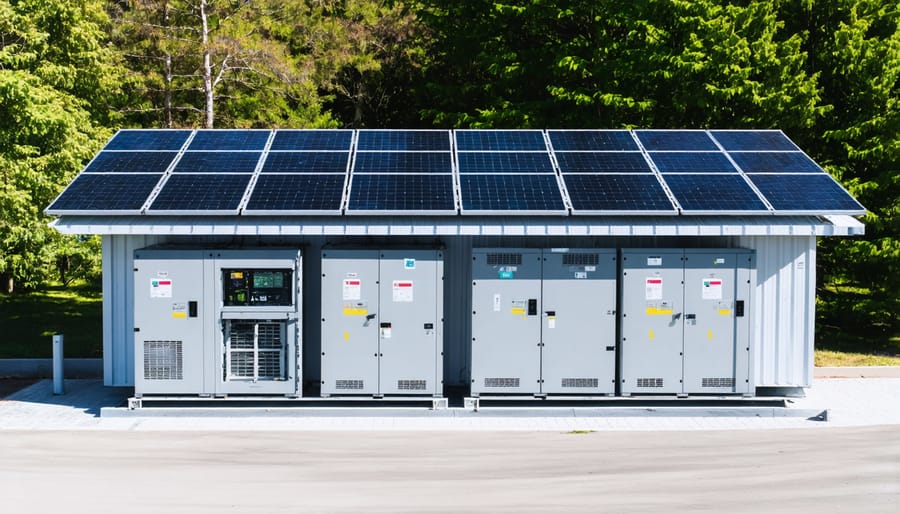
Why Traditional Generator-Based Systems Fail Business Cases
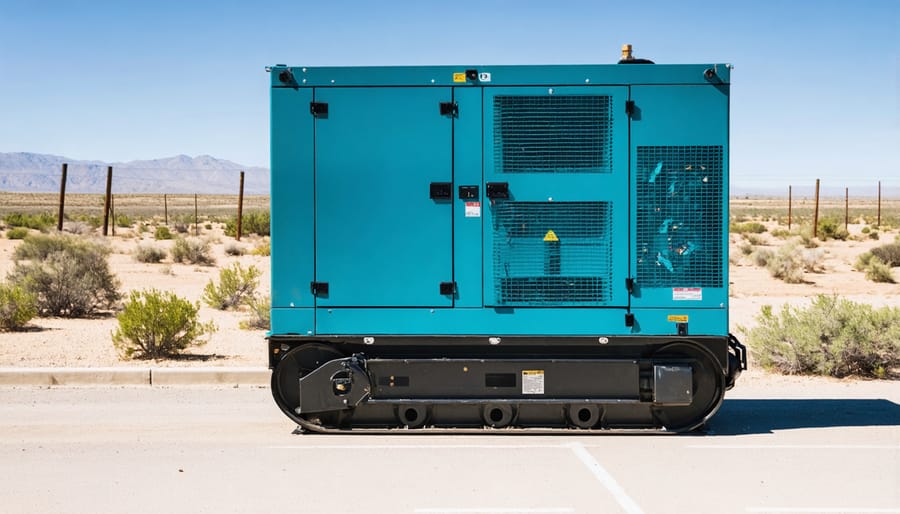
Traditional diesel generator systems present a compelling business case on paper, but operational realities reveal a different financial picture. The true cost of generator dependency extends far beyond initial capital expenditure, creating ongoing financial burdens that undermine profitability and operational stability.
Fuel costs constitute the primary expense driver, typically accounting for 70-85% of total operational expenditure over a system’s lifetime. Current diesel prices, subject to global market volatility, range from $3-7 per gallon in most markets, with remote locations experiencing premiums of 30-50% due to transportation logistics. A typical 100kW generator consuming 7 gallons per hour during operation translates to $21-49 hourly fuel costs alone, excluding delivery and storage infrastructure.
Maintenance requirements add substantial hidden costs. Generator engines require oil changes every 250-500 operating hours, filter replacements, and comprehensive overhauls at 10,000-hour intervals. Annual maintenance contracts typically cost 15-25% of the initial equipment investment. Unplanned failures introduce additional costs: downtime averaging 48-72 hours per incident impacts productivity and revenue generation.
Operational unpredictability compounds these challenges. Fuel supply chain disruptions, particularly in remote locations, can halt operations entirely. Temperature extremes affect generator performance and reliability, while noise pollution and emissions increasingly face regulatory restrictions. Studies demonstrate that total cost of ownership for diesel generator systems over 20 years exceeds comparable solar-plus-storage solutions by 40-60%, even before factoring in escalating fuel costs and carbon pricing mechanisms. These economic realities drive businesses toward more sustainable, predictable alternatives.
The Grid Extension Equation That Doesn’t Add Up
The financial threshold for grid extension typically becomes prohibitive beyond 500 meters from existing infrastructure, with costs ranging from $30,000 to $80,000 per kilometer depending on terrain and capacity requirements. When evaluating remote site electrification, decision-makers must calculate the complete grid connection investment including transformer upgrades, ongoing demand charges, and potential capacity expansion fees that accumulate over the system’s lifespan.
A comparative ROI analysis frequently reveals that off-grid solar with battery storage delivers superior returns when grid connection exceeds $50,000. For example, a telecommunications company in rural Nevada avoided $120,000 in grid extension costs by implementing a 25 kW solar array with lithium-ion storage, achieving full payback within six years while eliminating monthly utility expenses exceeding $2,400.
The economic advantage extends beyond initial capital avoidance. Off-grid systems eliminate ongoing utility rate escalations, which historically average 3-5 percent annually, and provide predictable energy costs throughout the 25-year solar panel warranty period. For operations requiring reliability in remote locations, the grid extension equation simply fails to demonstrate viable financial justification when compared against modern off-grid alternatives.
Battery Storage Technologies Reshaping Off-Grid Solar
Lithium-Ion Systems: Proven Performance at Scale
Lithium-ion battery systems have established themselves as the benchmark for commercial-scale off-grid energy storage, delivering measurable performance advantages across multiple operational parameters. Modern lithium-ion installations routinely achieve round-trip efficiencies of 90-95%, substantially reducing energy waste compared to alternative technologies. Their high energy density allows for compact installations, with typical commercial systems storing 50-500 kWh in footprints 70% smaller than equivalent lead-acid arrays.
Lifecycle economics strongly favor lithium-ion for serious off-grid applications. While initial capital costs run approximately $400-700 per kWh installed, the technology delivers 3,000-7,000 charge cycles at 80% depth of discharge. This translates to levelized costs of storage between $0.12-0.18 per kWh over system lifetime—competitive with diesel generation in most markets and superior when factoring in fuel price volatility and maintenance requirements.
A beverage distribution facility in rural Queensland transitioned from diesel-solar hybrid to lithium-ion storage in 2021, achieving 18-month payback through eliminated generator runtime and maintenance. The installation provides 250 kWh capacity supporting refrigeration loads during evening peak demand.
Deployment considerations include thermal management requirements, with systems performing optimally between 15-25°C, and sophisticated battery management systems that monitor individual cell performance. Integration with existing solar arrays typically requires inverter upgrades to accommodate bidirectional power flow. Warranty structures commonly guarantee 70-80% capacity retention over 10 years, providing financial predictability essential for business planning. Site assessment should evaluate ambient temperature ranges, ventilation requirements, and electrical infrastructure compatibility before procurement decisions.
Flow Batteries and Long-Duration Storage Solutions
Flow batteries represent a significant advancement in long-duration energy storage, addressing limitations inherent in conventional lithium-ion systems. Unlike traditional batteries that store energy in solid electrodes, flow batteries utilize liquid electrolytes stored in external tanks, enabling independent scaling of power and energy capacity. This architecture makes them particularly suitable for industrial facilities requiring multi-day energy autonomy or load-leveling across extended periods.
The technology offers distinct advantages for off-grid operations. Vanadium redox flow batteries, the most commercially mature variant, can discharge completely without degradation and maintain consistent performance through tens of thousands of cycles. With operational lifespans exceeding 20 years, they present compelling economics for facilities with substantial energy requirements beyond the 4-6 hour discharge window of lithium-ion systems.
Industrial applications demonstrate practical viability. A food processing facility in rural Australia deployed a 2 MW/8 MWh vanadium flow battery system to bridge solar generation gaps during extended processing runs, eliminating diesel generator reliance and reducing operating costs by 42 percent annually. Similarly, a telecommunications provider in Southeast Asia utilizes flow battery technology across remote tower sites, achieving 99.9 percent uptime while cutting fuel expenses by 65 percent.
For decision-makers evaluating storage options, flow batteries merit consideration when energy storage durations exceed eight hours, particularly for applications involving frequent deep cycling or where space constraints are less restrictive. While capital costs currently exceed lithium-ion alternatives, total cost of ownership advantages emerge in long-duration scenarios, supported by minimal degradation and lower maintenance requirements over extended operational periods.
Hybrid Storage Approaches for Enhanced Reliability
Integrating multiple storage technologies with solar photovoltaic systems delivers operational flexibility that single-technology solutions cannot match. Hybrid renewable energy systems combine lithium-ion batteries for rapid response with flow batteries or hydrogen storage for extended duration backup, creating installations that handle both peak demands and multi-day autonomy requirements.
A mining operation in Western Australia demonstrates this approach effectively. The facility pairs 2 MWh of lithium-ion batteries with a 500 kW vanadium flow battery system. The lithium-ion component manages frequency regulation and short-duration peaks, while the flow battery provides overnight baseload power during extended cloudy periods. This configuration reduced diesel consumption by 78% compared to their previous single-battery design.
Financial analysis shows hybrid configurations often achieve 15-20% lower lifecycle costs than oversized single-technology systems. The architecture allows operators to optimize each technology for its strength rather than compromising on one solution that inadequately addresses all requirements. Performance monitoring across installations confirms reliability metrics exceeding 99.5% uptime for critical loads when properly configured.
Smart Energy Management Systems: The Intelligence Behind Storage

Load Forecasting and Demand Response Capabilities
Advanced load forecasting systems have transformed off-grid energy management by utilizing artificial intelligence and machine learning algorithms to predict consumption patterns with remarkable accuracy. These systems analyze historical usage data, weather forecasts, operational schedules, and even seasonal variations to anticipate energy demands hours or days in advance. By processing this information, modern battery management systems can optimize charging and discharging cycles to ensure sufficient power availability during peak periods while maximizing solar capture during optimal generation windows.
Integration with smart energy distribution platforms enables automated demand response capabilities that adjust system behavior in real-time. When forecasts indicate lower-than-expected solar generation or higher demand, the system can preemptively charge batteries, reduce non-critical loads, or shift energy-intensive operations to periods of surplus generation. This dynamic approach prevents power shortages while extending battery lifespan through optimized cycling.
A manufacturing facility in regional Queensland demonstrated these benefits by implementing predictive load management, achieving 23 percent reduction in diesel generator runtime and extending battery life expectancy by 18 months. The system automatically adjusted production schedules for energy-intensive equipment to coincide with peak solar production hours, while maintaining critical operations during low-generation periods. For facility managers and business owners, these capabilities translate directly to reduced operational costs, improved reliability, and enhanced return on investment without requiring constant manual oversight or energy expertise.
Remote Monitoring and Preventative Maintenance
Modern off-grid energy systems increasingly incorporate IoT-enabled monitoring platforms that transform system management from reactive troubleshooting to proactive maintenance strategies. These cloud-connected solutions provide real-time visibility into system performance across distributed remote installations, enabling operators to identify potential issues before they result in costly downtime.
Advanced monitoring systems track critical performance indicators including battery state of charge, solar panel output efficiency, inverter temperature, and power consumption patterns. Data analytics algorithms process this information to detect anomalies that signal degrading components or suboptimal operating conditions. For facility managers overseeing multiple remote sites, centralized dashboards consolidate performance data, allowing rapid assessment of system health across entire portfolios.
The financial benefits of predictive maintenance prove substantial in remote locations where service calls involve significant travel costs and extended downtime. One telecommunications provider operating 150 off-grid tower sites reduced maintenance expenses by 40 percent after implementing IoT monitoring, scheduling component replacements during planned visits rather than emergency callouts. The system’s predictive algorithms identified battery capacity degradation weeks in advance, preventing unexpected failures during critical operating periods.
Machine learning capabilities continue advancing, with newer platforms correlating weather data, historical performance trends, and equipment specifications to optimize charging profiles and load management automatically. This intelligence extends system lifespan while maximizing available energy during peak demand periods. For organizations managing off-grid installations, the return on investment in monitoring technology typically materializes within 18 to 24 months through reduced service costs and improved system availability, making it an essential component of modern energy independence strategies.
Real-World Performance: Case Studies in Commercial Off-Grid Storage
Remote Manufacturing Facility: Eliminating Diesel Dependency
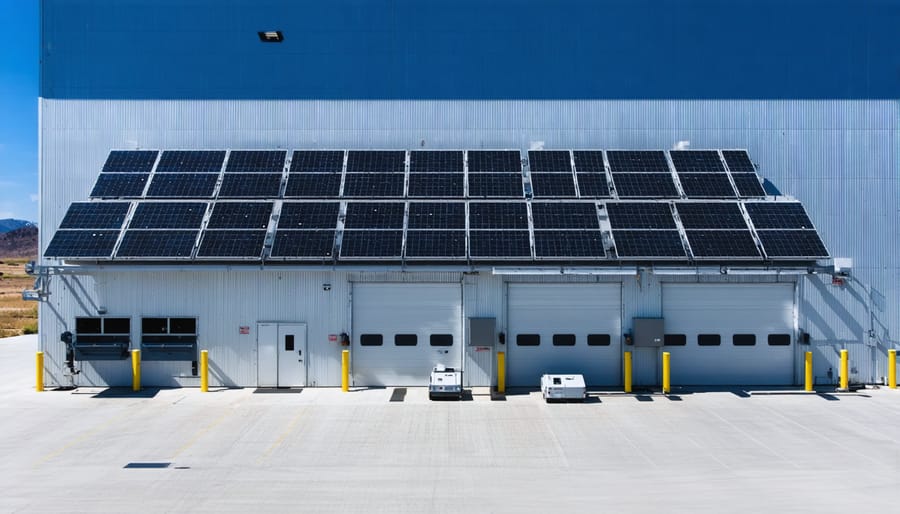
A metal fabrication facility in rural Nevada successfully eliminated its diesel generator dependency by implementing a comprehensive off-grid solar system, demonstrating the financial and operational viability of renewable energy for industrial applications.
The facility, which operates metal cutting and welding equipment requiring 150 kW of continuous power, previously consumed approximately 12,000 gallons of diesel fuel annually at an operating cost exceeding $48,000. The company invested $485,000 in a turnkey solar solution comprising 400 kW of photovoltaic panels, 600 kWh of lithium-ion battery storage, and intelligent power management systems.
System performance data from the first 18 months of operation reveals compelling results. The installation generates an average of 1,850 kWh daily, exceeding the facility’s typical 1,600 kWh consumption. Battery storage provides eight hours of full-capacity backup power, ensuring uninterrupted operations during low-sun periods. The system maintains 97.3% uptime, surpassing the previous diesel generator’s 94.8% reliability rating.
Financial analysis indicates a payback period of 7.2 years based on eliminated fuel costs, reduced maintenance expenses, and applicable federal tax incentives. Additional benefits include elimination of fuel delivery logistics, reduced insurance premiums due to removed fuel storage risks, and protection against diesel price volatility.
The facility reports 15% lower maintenance costs compared to diesel operations, attributing savings to fewer moving parts and reduced mechanical wear. Environmental benefits include elimination of 127 metric tons of annual carbon emissions and compliance with increasingly stringent regional air quality regulations.
Government Infrastructure in Underserved Regions
Public institutions in underserved regions face a critical challenge: maintaining continuous operations when grid infrastructure is either absent or severely unreliable. Government facilities including rural healthcare clinics, administrative offices, and emergency services centers cannot afford power interruptions that compromise essential services. Solar-plus-storage systems have emerged as the preferred solution, delivering reliable electricity while eliminating recurring fuel costs and logistical complications associated with diesel generators.
Healthcare facilities demonstrate particularly compelling applications. Rural clinics in sub-Saharan Africa and remote regions of Southeast Asia have deployed solar systems with battery storage to maintain vaccine refrigeration, power diagnostic equipment, and ensure lighting for after-hours emergencies. These installations typically combine 10-20 kW of solar capacity with 40-80 kWh of battery storage, providing 24-hour operation with three days of autonomy during periods of limited sunlight. The predictable operating costs enable health ministries to allocate budgets more effectively than when managing diesel fuel procurement and generator maintenance.
Administrative offices in island nations and remote territories have similarly transitioned to solar-plus-storage infrastructure. Government operations in Pacific island communities, for instance, report significant improvements in service delivery reliability after implementing systems sized for their complete electrical load. The elimination of generator noise pollution and diesel spill risks provides additional environmental benefits that align with broader sustainability mandates.
The financial case proves especially strong for government applications. While initial capital investment ranges from $800 to $1,500 per kW of installed capacity, operational savings typically achieve full payback within five to seven years. More importantly, these systems provide price certainty over 20-25 year operational lifespans, insulating public budgets from volatile fuel markets and enabling long-term fiscal planning that supports expanded service delivery in underserved populations.
Financial Considerations and Investment Planning
Total Cost of Ownership Analysis Framework
Evaluating off-grid energy systems requires a comprehensive Total Cost of Ownership (TCO) analysis that extends beyond initial capital expenditure. This framework examines all costs throughout the system’s operational lifespan, typically 20-25 years for modern solar installations.
The methodology begins by calculating upfront costs including equipment, installation, permits, and infrastructure modifications. Next, quantify recurring operational expenses such as fuel consumption for diesel generators, maintenance schedules, component replacements, and labor requirements. For diesel systems, factor in fuel price volatility and transportation costs to remote locations.
Solar-plus-storage systems demonstrate compelling advantages when analyzed through this lens. While initial investment may appear higher, operational costs remain minimal with no fuel requirements and reduced maintenance compared to generator-dependent systems. Include degradation rates—quality solar panels typically retain 85-90% efficiency after 25 years—and warranty coverage in your calculations.
Financial modeling should incorporate avoided costs: eliminated fuel purchases, reduced maintenance downtime, extended equipment lifespan, and decreased environmental compliance expenses. Real-world data from mining operations in Australia shows diesel replacement with solar-battery systems achieving payback periods of 4-6 years despite higher upfront costs.
Consider financing options including power purchase agreements and energy-as-a-service models that convert capital expenditure to predictable operational expenses, improving cash flow management while accelerating renewable adoption.
Available Incentives and Financing Mechanisms
Commercial off-grid energy projects can leverage substantial financial support through various government and private sector programs. Understanding these opportunities significantly reduces initial capital barriers and accelerates return on investment.
Federal and state governments offer available grants and incentives specifically designed for renewable energy infrastructure in remote locations. These programs typically provide 30-50% capital cost reductions through direct grants, accelerated depreciation schedules, and investment tax credits. Regional development authorities also maintain specialized funds for projects that enhance energy independence in rural and industrial areas.
Power purchase agreements (PPAs) enable businesses to install off-grid systems with minimal upfront investment. Under these arrangements, third-party developers own and maintain the equipment while clients purchase power at predetermined rates, eliminating capital expenditure concerns and transferring technical risk.
Specialized financing mechanisms include green bonds, clean energy finance corporations, and equipment leasing programs tailored to renewable energy projects. These options feature extended repayment terms, competitive interest rates, and flexible structures aligned with project cash flows. Many mining, agricultural, and telecommunications operators have successfully utilized these instruments to deploy sophisticated off-grid systems while preserving working capital for core operations.
System Design Principles for Commercial Off-Grid Applications
Load Analysis and Capacity Planning
Accurate load analysis forms the foundation of effective off-grid system design. Begin by conducting a comprehensive energy audit that documents all electrical loads, operating schedules, and power requirements across your facility. This assessment should capture both continuous baseload demands and peak usage periods to ensure adequate capacity during critical operations.
Seasonal variations significantly impact off-grid performance, particularly for solar-based systems. Facilities in northern climates may experience 60-70% reduction in solar production during winter months, requiring either oversized generation capacity or substantial energy storage reserves. Manufacturing operations have successfully addressed this challenge by implementing demand-side management strategies, shifting energy-intensive processes to high-production periods when possible.
System capacity planning requires balancing capital investment against operational requirements. A commercial cold storage facility in Alaska demonstrated this approach by sizing their battery system to cover three days of autonomy during winter, supported by a generator for extended low-production periods. This configuration reduced their capacity investment by 40% compared to a purely battery-based solution while maintaining 99.7% uptime.
Industry best practice recommends including a 20-25% capacity buffer to accommodate future growth and equipment degradation over time. This planning margin ensures long-term system reliability without requiring premature capacity expansion investments.
Redundancy and Backup Power Strategies
Mission-critical off-grid installations require robust redundancy protocols to ensure uninterrupted operations. Leading organizations implement multi-layered backup strategies that combine battery storage with secondary generation sources, creating fail-safe systems with availability rates exceeding 99.9%.
The most reliable configurations incorporate N+1 redundancy, where system capacity exceeds peak demand by at least one full generation unit. A telecommunications provider in rural Alaska demonstrated this approach by pairing a 500 kWh battery bank with dual inverter systems and a backup generator, achieving zero unplanned outages over three years of operation. This design protected against component failures while maintaining continuous service during extended low-solar periods.
Battery management systems play a central role in operational continuity, automatically load-shedding non-essential services and prioritizing critical functions when power reserves decline. Advanced systems incorporate predictive analytics that forecast weather patterns and adjust charging cycles accordingly.
For facilities where downtime carries significant financial or safety consequences, hybrid configurations offer superior risk mitigation. A remote medical clinic in Australia reduced operational risk by 87% after implementing a solar-battery system with propane backup generation, demonstrating how strategic redundancy transforms off-grid power from a potential vulnerability into a competitive advantage that enhances business resilience while maintaining cost efficiency.
The convergence of advanced lithium battery technology, sophisticated power management systems, and proven solar generation capabilities has fundamentally redefined off-grid energy for commercial applications. What once represented a compromise for remote locations has evolved into a strategic advantage, delivering superior reliability, predictable costs, and operational independence that grid-tied facilities cannot match.
Recent installations across diverse sectors demonstrate this transformation convincingly. Commercial operations report energy independence levels exceeding 95%, with total cost of ownership often 30-40% lower than grid alternatives over system lifespans. The telecommunications sector has documented uptime improvements from 96% to 99.8% after transitioning from diesel-solar hybrids to lithium-based systems. Agricultural operations in California reduced energy costs by $180,000 annually while eliminating diesel dependency entirely. These outcomes reflect not experimental technology but mature, field-proven solutions deployed at scale.
Looking ahead, the trajectory points toward continued advancement. Solid-state batteries promise even greater energy density and safety margins. Artificial intelligence integration will optimize energy management with unprecedented precision. Manufacturing scale continues driving costs downward while performance metrics improve. The application range expands beyond traditionally remote operations to include suburban facilities seeking energy security and urban installations pursuing sustainability mandates.
For business leaders evaluating their energy infrastructure, the strategic question has shifted from whether off-grid solar can work to whether your operation can afford to overlook its advantages. The technology has matured beyond early adoption risk. Financial models demonstrate clear returns. Performance data provides confidence in reliability.
The essential next step involves professional assessment of your specific situation. Energy consumption patterns, site characteristics, operational requirements, and financial objectives all influence optimal system design. Engaging qualified energy consultants to conduct detailed feasibility studies ensures decisions rest on accurate projections rather than assumptions. The off-grid opportunity awaits organizations ready to move from evaluation to implementation.