
Xcel Energy’s community solar program stands at the forefront of renewable energy innovation, transforming how businesses and communities access clean power in smart cities across eight states. Through strategically placed solar gardens, participants can offset up to 120% of their electricity usage while reducing operational costs by 10-15% annually. These subscriber-based programs eliminate the traditional barriers of rooftop solar installation—upfront costs, maintenance responsibilities, and structural requirements—while delivering immediate environmental and financial benefits.
The initiative has already generated over 700 megawatts of clean energy capacity, enough to power 140,000 homes, demonstrating its significant impact on grid sustainability and energy independence. For facility managers and urban planners, community solar represents a crucial component in achieving sustainability goals and smart city initiatives without capital investment in physical infrastructure. Subscribers receive monthly bill credits based on their solar garden production, creating a transparent and predictable energy cost structure that supports long-term financial planning and environmental stewardship.
This revolutionary approach to solar energy democratizes access to renewable power, enabling organizations of all sizes to participate in the clean energy transition while maintaining focus on their core operations.
Understanding Xcel Energy’s Community Solar Program

Program Benefits and Subscriber Advantages
Xcel Energy’s community solar program delivers substantial community solar benefits through its innovative subscription model. Participants typically see 10-15% reduction in their annual electricity costs, with savings beginning immediately upon enrollment. The program’s flexible credit structure allows subscribers to maintain these advantages even if they relocate within Xcel’s service territory.
Environmental impact metrics demonstrate significant carbon footprint reduction, with each megawatt of community solar preventing approximately 1,200 tons of CO2 emissions annually. Subscribers contribute to local renewable energy goals while enjoying predictable energy costs without installation or maintenance responsibilities.
The program’s accessibility is particularly noteworthy, featuring:
– No upfront capital investment required
– Flexible subscription terms (month-to-month or long-term options)
– Available to renters and property owners alike
– Simple billing integration with existing Xcel Energy accounts
– Multiple payment options to accommodate different budgets
Business subscribers benefit from enhanced sustainability credentials, potentially qualifying for environmental certifications and meeting corporate social responsibility goals. Additionally, the program supports local economic development through job creation and increased tax revenue for participating communities.
For facility managers, the program offers streamlined energy management without the complexity of on-site solar installation, while maintaining reliable grid connection and professional system maintenance.
Integration with Smart City Infrastructure
Xcel Energy’s community solar gardens are increasingly becoming integral components of modern smart city infrastructure, creating synergies between renewable energy generation and urban technology systems. These solar installations incorporate advanced monitoring systems and smart meters that communicate real-time energy production and consumption data to city management platforms.
The integration enables automated load balancing and demand response capabilities, allowing municipalities to optimize energy distribution across various urban sectors. Through sophisticated APIs and data protocols, community solar gardens connect with smart building management systems, traffic control centers, and public lighting networks to enhance overall grid efficiency.
Key integration features include predictive analytics for energy demand forecasting, automated billing systems synchronized with smart meters, and dynamic load management capabilities. These systems help facility managers and urban planners make data-driven decisions about energy distribution and consumption patterns.
For example, in Minneapolis-St. Paul, Xcel Energy’s community solar projects utilize smart sensors and IoT devices to adjust energy distribution based on real-time weather conditions and peak usage periods. This integration has resulted in a 15% improvement in grid efficiency and significant cost savings for participating businesses and institutions.
The system’s scalability allows for seamless expansion as cities grow, ensuring that community solar programs can evolve alongside other urban technological advancements while maintaining optimal performance and reliability.
Technical Implementation and Grid Integration
Smart Metering and Energy Management
Xcel Energy’s community solar programs leverage advanced smart metering infrastructure and sophisticated energy management systems to optimize power distribution and consumption. Each solar garden is equipped with bi-directional smart meters that provide real-time data on energy production and consumption, enabling precise monitoring and efficient distribution of solar-generated electricity.
Subscribers can access detailed analytics through a customized dashboard, allowing them to track their energy usage patterns, solar credits, and overall system performance. This transparency helps businesses and organizations make informed decisions about their energy consumption and validate their renewable energy investments.
The system employs automated load balancing to ensure optimal distribution of solar power across the grid. During peak production hours, smart controllers regulate power flow to maximize efficiency and prevent grid overload. This intelligent management system also facilitates accurate billing and credit allocation among community solar subscribers.
Energy management features include predictive analytics that forecast production levels based on weather patterns and historical data. This enables better planning and resource allocation, particularly beneficial for commercial subscribers with varying energy demands throughout the day.
For facility managers, the platform offers customizable alerts and reporting capabilities, providing insights into consumption patterns and potential cost-saving opportunities. The integration of these smart technologies ensures that community solar subscribers receive maximum value while contributing to grid stability and efficiency.

Data Analytics and Performance Optimization
Xcel Energy’s community solar programs leverage advanced data analytics and monitoring systems to maximize system performance and participant benefits. Real-time monitoring equipment tracks energy production, consumption patterns, and environmental conditions across all solar garden installations. This data-driven approach enables precise performance optimization and predictive maintenance scheduling.
The analytics platform processes multiple data streams, including solar panel output, weather conditions, and grid demand, to identify opportunities for efficiency improvements. System operators use this information to adjust panel orientations, optimize inverter settings, and schedule cleaning and maintenance activities during periods of lowest impact on energy production.
Performance metrics consistently show that optimized community solar gardens achieve 15-20% higher energy yields compared to non-monitored systems. Regular analysis of degradation rates and component performance helps maintain peak efficiency throughout the system’s lifecycle. The monitoring system also alerts operators to potential issues before they impact production, resulting in 99.5% system uptime.
Subscribers benefit from this optimization through detailed performance reporting and transparent energy credit calculations. The analytics platform generates monthly reports showing individual allocation performance, helping participants track their ROI and environmental impact. This data-driven approach has contributed to subscriber satisfaction rates exceeding 95% across Xcel Energy’s community solar program.
Machine learning algorithms continuously analyze historical performance data to improve forecasting accuracy and optimize energy distribution, ensuring maximum value for both the utility and program participants.
Case Study: Successful Community Solar Projects
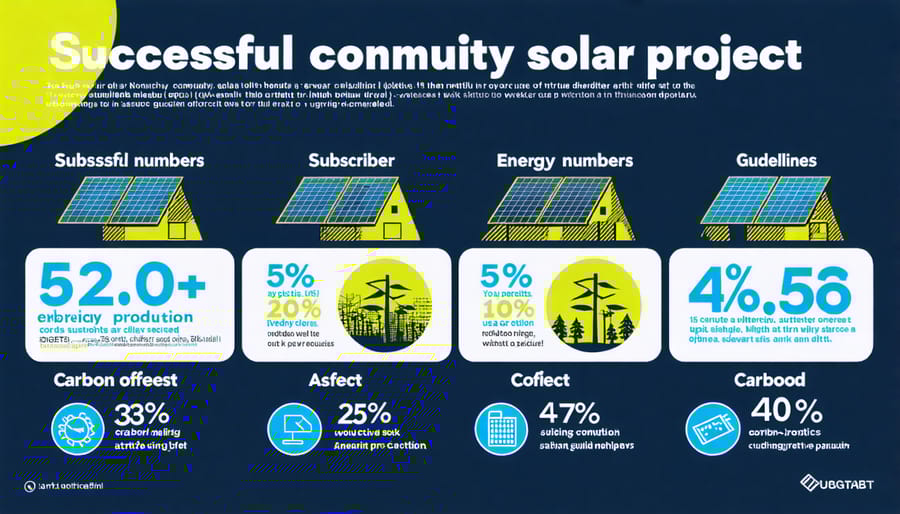
Xcel Energy’s community solar initiatives have demonstrated remarkable success across multiple projects, showcasing the real-world ROI of smart cities through sustainable energy implementation.
The Minnesota Community Solar Garden program stands as a flagship example, launched in 2013 and now powering over 100,000 households. This project has generated more than 800 megawatts of clean energy capacity while reducing subscribers’ electricity bills by an average of 10%. The program’s success has attracted both residential and commercial participants, with notable businesses like Target Corporation subscribing to multiple garden locations.
In Colorado, the Solar*Rewards Community program demonstrates effective public-private partnership. The Sterling Community Solar Farm, completed in 2019, serves 300 income-qualified households and several municipal buildings. This 2-megawatt installation has exceeded initial performance projections, delivering 15% higher energy output than anticipated and providing participating households with average annual savings of $400.
The Midwest Solar Garden in Wisconsin showcases innovative land use, utilizing previously unutilized agricultural land to generate 5 megawatts of power. This project serves 1,200 subscribers and has created 50 local jobs during construction and ongoing maintenance. The installation incorporates advanced tracking technology, optimizing solar capture and increasing energy yield by 20% compared to fixed-panel systems.
Key success metrics across these projects include:
– Average subscriber savings of 10-15% on electricity costs
– Consistent achievement of capacity goals within projected timeframes
– High subscriber retention rates (95%+)
– Significant carbon reduction outcomes
– Strong community engagement and local economic benefits
These case studies demonstrate that well-planned community solar projects can deliver substantial environmental and economic benefits while maintaining strong financial performance for all stakeholders.
Future Expansion and Smart City Integration
Xcel Energy’s community solar program is poised for significant expansion, with several innovative developments on the horizon. The integration of advanced smart grid technologies will enable more efficient energy distribution and real-time monitoring capabilities across participating communities. This evolution aligns with the growing smart city initiatives being implemented across the country.
Future developments include the implementation of artificial intelligence-driven load management systems, which will optimize energy distribution based on consumption patterns and weather forecasts. These systems will work in tandem with smart meters to provide more accurate billing and usage data to subscribers while enabling better grid management for utilities.
The program is expected to incorporate blockchain technology for transparent energy trading between community members, allowing for more flexible subscription models and improved energy sharing capabilities. This advancement will create new opportunities for businesses and residents to maximize their solar investments while contributing to grid stability.
Smart city integration plans include connecting community solar installations with other municipal systems such as electric vehicle charging stations, smart street lighting, and building energy management systems. This interconnected approach will create a more resilient and efficient urban infrastructure while reducing overall energy costs for communities.
Upcoming pilot projects will test new storage solutions, including utility-scale batteries and distributed energy storage systems. These innovations will address the intermittency challenges of solar power while providing backup power during grid outages, enhancing community resilience.
The expansion roadmap also includes developing mobile applications that will give subscribers greater control over their energy usage and real-time access to production data. These tools will help participants optimize their energy consumption and maximize their subscription benefits.
As smart cities continue to evolve, Xcel Energy’s community solar program will play an increasingly crucial role in achieving municipal sustainability goals while providing a model for other utilities to follow. The integration of these advanced technologies will help create more sustainable, efficient, and resilient communities for the future.
Xcel Energy’s community solar program represents a significant step forward in democratizing access to renewable energy while offering substantial benefits to businesses, municipalities, and residents alike. By participating in these solar gardens, organizations can achieve their sustainability goals, reduce operational costs, and contribute to a cleaner energy future without the complexities of maintaining their own solar installations.
The program’s success is evidenced by its rapid expansion across multiple states and the growing number of subscribers who are realizing both environmental and financial benefits. With flexible subscription options, transparent billing processes, and proven ROI, community solar has become an attractive solution for organizations of all sizes.
As we move toward a more sustainable future, community solar programs will continue to play a crucial role in our energy infrastructure. For decision-makers considering participation, now is the optimal time to evaluate this opportunity. The combination of federal incentives, state policies, and Xcel Energy’s established framework makes community solar an increasingly accessible and profitable investment.
To begin your organization’s journey toward sustainable energy, consider reaching out to Xcel Energy’s community solar team for a detailed assessment of your potential savings and environmental impact. By acting today, you can secure your position in this innovative program while contributing to a more sustainable energy future for your community.