
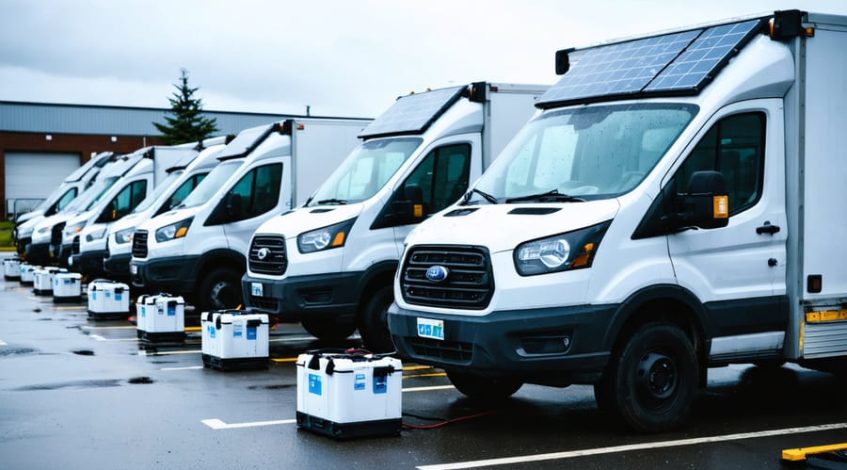
**Assess your fleet’s critical power requirements first.** Calculate the minimum wattage needed to maintain vehicle charging stations, communication systems, and essential lighting during grid outages. Emergency management teams should audit their evacuation vehicle fleet—typically requiring 2-5kW portable solar arrays with integrated battery storage to maintain operational readiness for standard transport vehicles during 72-hour grid failures.
**Deploy modular solar solutions with rapid installation capabilities.** Modern emergency solar kits designed for commercial applications feature quick-connect panels, pre-wired inverters, and plug-and-play battery banks that facility managers can position and activate within 2-4 hours. These systems prove invaluable when the grid goes down during natural disasters or infrastructure failures, ensuring evacuation vehicles remain charged and ready for deployment.
**Prioritize systems with military-grade durability specifications.** Emergency solar kits must withstand severe weather conditions, featuring impact-resistant panels rated IP67 or higher, corrosion-proof mounting hardware, and temperature ranges from -20°C to 60°C. Government officials implementing these solutions should verify equipment meets ISO 9001 standards and includes integrated charge controllers that prevent battery damage during extended deployment periods.
**Establish maintenance protocols and staff training programs immediately.** Successful implementation requires designated personnel trained in rapid deployment procedures, battery management, and troubleshooting protocols. Organizations that document quarterly testing schedules and maintain pre-positioned equipment report 94% operational success rates during actual emergencies, compared to 67% for facilities without structured preparedness programs. This proactive approach transforms emergency solar kits from backup equipment into strategic assets that ensure continuous operational capability during critical evacuation scenarios.
The Critical Gap in Emergency Evacuation Planning
Infrastructure Failures During Mass Evacuations
Power outages during mass evacuations create cascading infrastructure failures that severely compromise emergency response capabilities. Recent natural disasters have demonstrated the critical vulnerability of systems dependent on grid electricity, particularly electric vehicle charging networks, fuel distribution systems, and communication infrastructure.
During the 2019-2020 Australian bushfire crisis, power outages affected over 200,000 properties, rendering electric vehicle charging stations inoperable across evacuation routes. This highlighted a significant gap in evacuation planning as EV adoption increases across commercial and government fleets. Similarly, fuel pumps at service stations failed without backup power, creating dangerous bottlenecks along evacuation corridors.
Hurricane Ian in 2022 provided another stark example. Florida experienced widespread power outages affecting 2.6 million customers, with fuel stations unable to pump gasoline for up to two weeks in some areas. Emergency communication systems, including cellular towers and traffic management systems, also failed when backup generator fuel supplies were depleted or inaccessible.
The 2021 Texas winter storm demonstrated how infrastructure interdependence amplifies crisis impacts. Power failures disabled natural gas pumping stations, which in turn affected backup generators, creating a systemic collapse. Emergency services reported communication breakdowns as battery reserves in cell towers depleted within 24-48 hours.
These case studies underscore the importance of energy resilience during crises and the need for distributed power solutions. Emergency solar kits with battery storage offer facility managers and emergency planners a viable solution for maintaining critical infrastructure during grid failures, ensuring evacuation routes remain functional when communities need them most.
The Cost of Transportation Breakdowns
Transportation breakdowns during emergency evacuations create cascading failures with substantial economic and human costs. When evacuation vehicles become inoperable due to power grid failures, the financial impact extends far beyond immediate repair expenses. Studies from recent hurricane evacuations demonstrate that each disabled evacuation bus can strand 50-75 individuals, requiring deployment of backup resources costing $15,000-$25,000 per incident in emergency response alone.
The broader economic impact compounds rapidly: delayed evacuations increase exposure risks for vulnerable populations, potentially resulting in injury costs averaging $47,000 per incident according to FEMA data. Compromised emergency response capabilities create liability exposures for municipalities and facility managers, with litigation costs from transportation failures during declared emergencies reaching seven figures in documented cases.
Transportation infrastructure failures also disrupt supply chain logistics during critical response periods. When fleet vehicles cannot operate, essential personnel face deployment delays averaging 4-8 hours, significantly reducing operational effectiveness during time-sensitive emergencies. For facility managers overseeing large campuses or industrial operations, each hour of delayed evacuation capability represents increased risk exposure and potential regulatory penalties. These quantifiable costs make backup power solutions for critical transportation assets a sound investment in operational continuity and risk management.
What Makes an Effective Emergency Solar Kit for Transportation
Core Components and Power Requirements
Emergency solar kits for evacuation transportation comprise four critical components that determine operational effectiveness during power disruptions. Understanding these elements enables facilities to maintain essential vehicle charging capabilities when conventional power infrastructure fails.
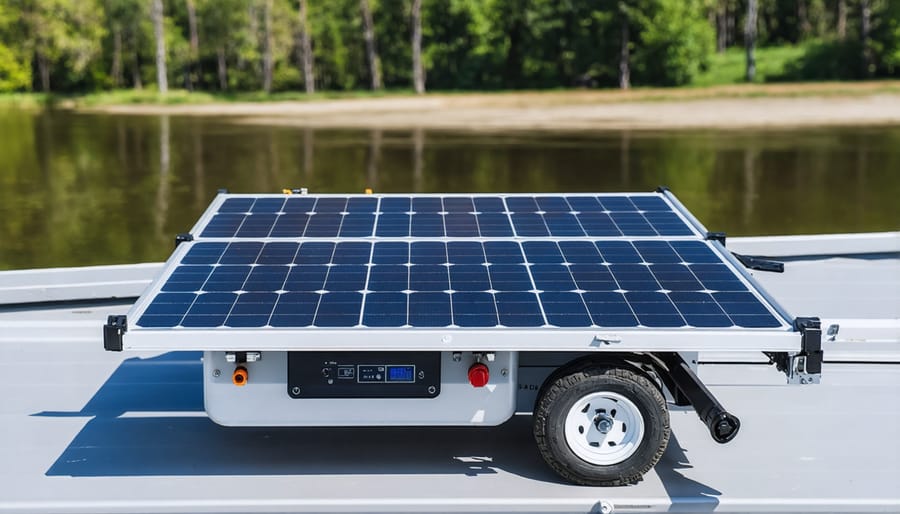
**Portable Solar Panels** form the foundation of any emergency system, with commercial-grade panels typically delivering 100-400 watts per unit. For fleet operations, modular configurations of 1,000-5,000 watts provide sufficient capacity to maintain multiple vehicle charging stations. Modern monocrystalline panels offer 18-22% efficiency ratings, maximizing power generation in limited deployment spaces.
**Battery storage capacity** directly impacts operational continuity. Emergency applications require lithium-ion systems ranging from 5kWh for individual vehicle support to 50kWh+ for fleet-scale operations. A 20kWh system can typically support 3-4 electric vehicle charges or power critical equipment for 24-48 hours during grid outages.
**Inverters** convert stored DC power to AC output, with pure sine wave models essential for sensitive vehicle charging equipment. Commercial applications typically require 3,000-10,000 watt inverters, depending on simultaneous charging requirements and equipment specifications.
**Charging Infrastructure** must include multiple port configurations: Level 2 EV charging (7.2kW), standard 240V outlets for equipment, and USB ports for communications devices. A municipal fleet case study in regional Victoria demonstrated that a 15kWh emergency solar system maintained operations for five electric utility vehicles during a 72-hour grid failure, validating the approach for critical transportation needs.
Durability and Rapid Deployment Features
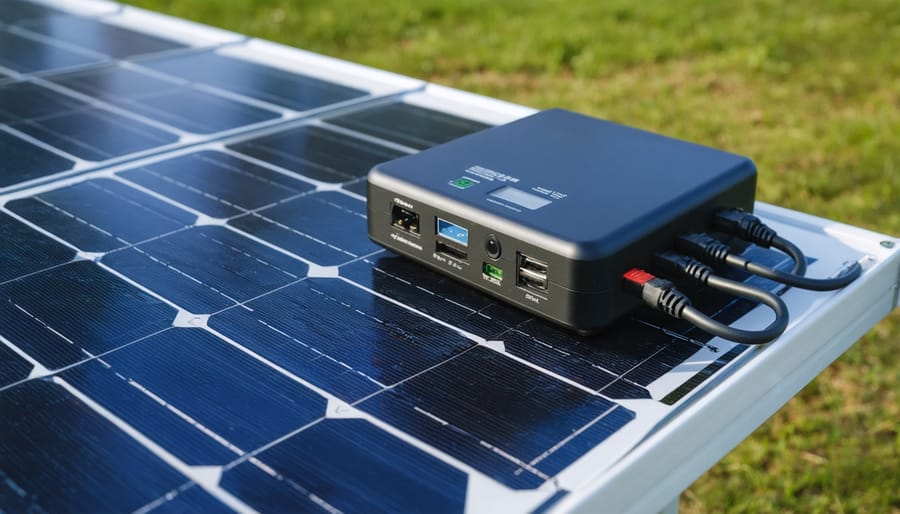
Emergency solar kits designed for critical evacuation operations must withstand harsh conditions while enabling immediate deployment. Modern commercial-grade systems incorporate IP67-rated weatherproofing standards, protecting against dust ingress and water immersion—essential capabilities during floods, storms, or field operations. Shock-resistant housing with military-specification drop ratings ensures panels and power stations survive transportation and rapid handling during crisis response.
Quick-setup mechanisms are paramount for emergency scenarios. Leading systems feature plug-and-play connectors, color-coded wiring, and integrated mounting solutions that enable non-technical personnel to achieve full operational capacity within 15-30 minutes. Foldable panel designs with built-in kickstands eliminate the need for separate mounting hardware, while pre-configured battery management systems require no programming.
Portability factors directly impact deployment effectiveness. Commercial emergency kits typically range from 15-45 kg for systems generating 500-2000W, balancing power capacity with manageable transport weight. Case studies from Australian emergency services demonstrate that systems with reinforced handles and compact form factors achieve 40% faster deployment times compared to conventional configurations.
Storage requirements involve climate-controlled environments maintaining 15-25°C temperatures and 20-60% humidity levels. Quarterly maintenance protocols include voltage testing, connection inspection, and battery cycling to ensure extreme weather resilience when activation is required.
Scalability for Fleet and Community Applications
Emergency solar kits demonstrate remarkable scalability, adapting from single-vehicle deployments to comprehensive fleet operations. Municipal transportation departments can implement standardized systems across emergency vehicle fleets, ensuring consistent backup power for ambulances, fire trucks, and evacuation buses during prolonged grid outages.
For community applications, these systems scale effectively to support evacuation centers and emergency operations facilities. A 3kW portable solar array sufficient for one vehicle can be expanded to 30kW installations powering multiple vehicles and auxiliary equipment simultaneously. Government agencies in hurricane-prone regions have successfully deployed modular solar infrastructure that supports both routine fleet operations and emergency response scenarios.
Fleet managers report 40-60% reduction in generator fuel costs during extended emergency operations, with solar systems providing reliable power for communications equipment, medical refrigeration, and vehicle charging stations. The modular design allows procurement flexibility—organizations can start with pilot programs covering critical vehicles before expanding to full fleet integration, minimizing upfront capital requirements while building operational experience and stakeholder confidence.
Real-World Applications in Emergency Management
Government Fleet Integration
The Sacramento County Office of Emergency Services implemented a comprehensive solar integration program across their emergency vehicle fleet in 2022, providing clear insights into practical applications and measurable outcomes. Their initiative equipped 24 evacuation buses, 12 mobile command centers, and 8 rapid response vehicles with emergency solar kits capable of maintaining critical operations during extended grid outages.
Each evacuation bus received a 600-watt portable solar array with integrated battery storage providing 2,400 watt-hours of capacity. This configuration powers essential systems including climate control, medical refrigeration units, communications equipment, and accessibility lifts for up to 72 hours without engine operation. During the 2023 wildfire evacuations, these systems enabled buses to serve as temporary shelters while maintaining passenger comfort and safety, reducing fuel consumption by 78% compared to idling engines.
Mobile command centers received more robust 1,200-watt systems supporting satellite communications, computer networks, and environmental controls. The Harris County Emergency Management Division in Texas reported similar success, noting their solar-equipped command vehicles operated continuously for five days during Hurricane preparation activities without requiring generator refueling—a critical advantage when fuel supply chains face disruption.
Technical implementation focused on modular, quick-deploy systems with integrated charge controllers and automatic load management. Installation cost averaged $8,500 per vehicle with documented fuel savings of $3,200 annually per unit, achieving ROI within three years while significantly improving operational resilience. Both agencies reported enhanced community confidence in emergency preparedness capabilities, demonstrating tangible value beyond financial metrics.
Commercial Facilities and Industrial Complexes
Large-scale facilities face unique challenges during emergency evacuations, requiring robust power infrastructure to maintain critical transportation assets. Hospitals, universities, and manufacturing complexes increasingly deploy solar-powered charging stations to ensure evacuation vehicle readiness during grid disruptions.
A prominent example includes a 250-bed regional hospital in California that installed a 75kW solar array with battery storage specifically designated for emergency vehicle charging. The system maintains power for twelve electric patient transport vehicles and administrative fleet cars during evacuations, proving invaluable during recent wildfire events when grid power failed for 48 hours.
Major university campuses implement similar strategies, combining rooftop solar installations with ground-mounted arrays near transportation facilities. A Midwest university’s 120kW system powers their entire campus shuttle fleet during emergencies, supporting 8,000 student evacuations while maintaining operations for 72 hours without grid connection.
Manufacturing facilities with large employee populations benefit significantly from dedicated solar-powered evacuation infrastructure. A Texas industrial complex serving 2,500 employees deployed a 200kW solar system with 400kWh battery capacity, enabling simultaneous charging of twenty employee shuttle buses and security vehicles. This investment provided complete energy independence during a week-long grid failure, eliminating evacuation delays and maintaining operational continuity. Return on investment projections indicate full payback within seven years through combined emergency readiness value and daily operational savings.
Community Evacuation Center Power Solutions
During large-scale evacuations, temporary transportation hubs require reliable power infrastructure to maintain critical operations. Emergency solar kits provide scalable solutions for these facilities, delivering continuous electricity when conventional grid systems fail or are unavailable at newly established sites.
Modern solar installations at evacuation centers power essential communication equipment, enabling real-time coordination between emergency services and displaced populations. These systems support charging stations for mobile devices, two-way radios, and laptops—maintaining vital connections during crisis situations. Additionally, solar arrays can operate auxiliary vehicle systems including electric bus chargers, traffic control signals, and fuel pump backup power at temporary refueling stations.
Case studies from recent natural disasters demonstrate effectiveness. During the 2020 California wildfires, portable solar installations maintained operations at three evacuation bus terminals, processing over 15,000 evacuees while grid power remained offline for 72 hours. Similar deployments supported hurricane evacuation routes in Queensland, integrating seamlessly with broader emergency shelter power solutions to create comprehensive energy-resilient evacuation corridors.
Technical Considerations for Commercial Implementation
System Sizing and Capacity Planning
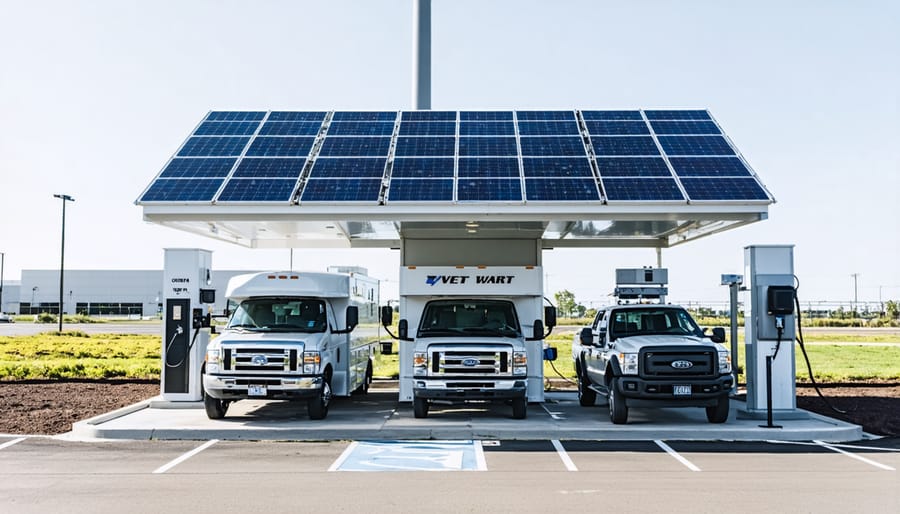
Determining the appropriate solar capacity for your emergency evacuation fleet requires careful analysis of several critical factors. Start by assessing your vehicle inventory—each electric bus typically requires 150-300 kWh of battery capacity, while smaller shuttle vehicles need 40-80 kWh. Multiply these values by your fleet size to establish total energy requirements.
Geographic location significantly impacts system design. Facilities in southern regions receive 25-35% more solar irradiance annually compared to northern locations, allowing for more compact solar arrays. Consider seasonal variations; winter months may produce 40-60% less solar energy than summer peaks, necessitating larger capacity installations or battery storage buffers.
Usage duration planning is essential. A 48-hour emergency scenario requires different infrastructure than week-long evacuation support. Include a 20-30% capacity buffer to account for cloudy conditions and unexpected demand surges.
For a mid-sized transit facility operating 15 electric buses in a moderate climate zone, a typical emergency solar kit would include 500-750 kW of solar panels paired with 1-2 MWh of battery storage. This configuration ensures continuous charging capability during grid outages while maintaining operational flexibility. Real-world deployments demonstrate that proper sizing prevents both costly over-investment and dangerous capacity shortfalls during critical evacuation operations.
Integration with Existing Emergency Infrastructure
Emergency solar kits integrate seamlessly with established emergency management frameworks through standardized power outputs and communication interfaces. Modern systems feature compatibility with National Incident Management System (NIMS) protocols and Emergency Operations Center (EOC) configurations, ensuring rapid deployment during crisis situations.
These kits typically provide AC power output matching facility requirements—120V/240V—allowing direct connection to existing backup power distribution panels. Advanced models include automatic transfer switches that coordinate with traditional generator systems, creating redundant power sources without infrastructure modifications.
Communication compatibility extends to emergency notification systems, with integrated monitoring capabilities that relay real-time power status to command centers via cellular, satellite, or radio frequencies. This transparency enables facility managers to track available resources across multiple locations simultaneously.
A practical example demonstrates effectiveness: during California’s 2020 wildfires, municipal evacuation centers equipped with solar backup systems maintained continuous operations for vehicle charging stations while conventional grid power remained unavailable for five days. The systems required minimal training for emergency personnel and integrated directly with existing electrical infrastructure, validating their readiness for immediate deployment in critical situations.
Compliance and Safety Standards
Emergency solar kits for transportation applications must comply with multiple regulatory frameworks to ensure safe operation during critical evacuations. In the United States, these systems should meet National Fire Protection Association (NFPA) standards and Occupational Safety and Health Administration (OSHA) requirements for electrical installations. The Federal Emergency Management Agency (FEMA) provides guidelines for emergency power systems that inform proper deployment protocols.
Key certifications include Underwriters Laboratories (UL) 1741 for inverters and UL 1703 for photovoltaic modules, which verify equipment safety and performance standards. Transportation-specific applications require compliance with Department of Transportation (DOT) regulations regarding secure mounting and electrical system integration in vehicles.
Real-world implementation demonstrates the importance of these standards. A regional transit authority in California successfully deployed certified emergency solar kits across their evacuation fleet, passing rigorous safety audits while maintaining full operational readiness. Their compliance-first approach enabled rapid regulatory approval and seamless integration with existing emergency management protocols, providing reliable backup power that met both federal and state requirements during wildfire evacuation operations.
Financial Analysis and Return on Investment
Total Cost of Ownership
Emergency solar kits present a compelling financial case when evaluated against traditional generator-based backup systems. While the initial investment for a commercial-grade solar solution typically ranges from $3,000 to $15,000 depending on capacity, this cost must be weighed against ongoing operational expenses.
Traditional diesel or propane generators require continuous fuel expenditures, with facilities spending an average of $500 to $2,000 annually on fuel reserves and testing protocols. Additionally, generators demand regular maintenance schedules, oil changes, and component replacements, adding approximately $300 to $800 per year to operational budgets. Generator lifespan typically ranges from 10,000 to 30,000 hours, often requiring replacement within 10-15 years.
In contrast, emergency solar kits eliminate fuel costs entirely and require minimal maintenance—primarily limited to occasional panel cleaning and battery monitoring. Modern lithium battery systems in solar kits offer 10-15 year lifespans with significantly reduced degradation compared to lead-acid alternatives. Solar panels themselves often carry 25-year warranties with minimal performance decline.
A five-year analysis reveals that solar kits typically achieve cost parity with generators by year three, delivering substantial savings thereafter. For organizations managing multiple evacuation locations or requiring extended deployment readiness, these savings multiply significantly while providing superior reliability during prolonged emergencies.
Grants and Emergency Preparedness Funding
Multiple funding mechanisms exist to support emergency solar kit implementation for transportation infrastructure. The Federal Emergency Management Agency (FEMA) offers Hazard Mitigation Grant Programs that qualify solar-powered emergency systems as eligible projects, particularly when integrated into comprehensive emergency response plans. State energy offices frequently provide renewable energy incentives specifically targeting critical infrastructure resilience, with funding percentages ranging from 25% to 50% of total project costs.
The Department of Energy’s State Energy Program allocates resources for emergency preparedness initiatives that incorporate renewable energy systems. Facility managers should investigate local emergency management grants through their regional planning councils, which often prioritize projects demonstrating multi-hazard mitigation benefits. The Investment Tax Credit (ITC) remains available for commercial solar installations, currently offering a 30% federal tax credit through 2032, significantly reducing upfront capital requirements.
Transportation authorities have successfully secured combined funding from multiple sources, creating financing packages that minimize direct organizational expenditure. Documentation requirements typically include technical specifications, vulnerability assessments, and projected operational continuity improvements during grid-down scenarios.
Risk Mitigation Value
Emergency solar kits deliver measurable financial protection by preventing costly evacuation failures. A single unsuccessful evacuation due to fuel shortages or grid dependency can result in liability claims exceeding $500,000, not including regulatory penalties and reputational damage. Organizations implementing solar-powered charging infrastructure reduce operational disruption costs by an average of 40% during emergency events. The investment in backup power systems—typically $15,000-$50,000 for commercial-scale emergency solar kits—pays for itself through avoided downtime, eliminated generator fuel expenses, and reduced insurance premiums. Facility managers report average annual savings of $8,000-$12,000 in emergency preparedness costs while simultaneously improving compliance with continuity-of-operations requirements and reducing exposure to negligence claims.
The integration of emergency solar kits into transportation evacuation planning represents a strategic imperative that extends beyond crisis preparedness. For commercial entities and government organizations, these systems deliver measurable value through enhanced operational resilience while simultaneously advancing sustainability objectives that stakeholders increasingly demand.
Recent implementation examples demonstrate that organizations investing in emergency solar infrastructure achieve dual benefits: immediate readiness for grid disruptions and meaningful progress toward renewable energy transition goals. Transportation fleets equipped with solar charging capabilities maintain operational capacity during extended power outages, directly translating to protected revenue streams and enhanced service reliability.
The financial case proves compelling when analyzing total cost of ownership. Solar emergency systems eliminate fuel storage complexities, reduce long-term energy expenses, and position organizations favorably for regulatory compliance as energy efficiency mandates expand. Government agencies particularly benefit from demonstrable commitment to sustainable practices while fulfilling critical public safety responsibilities.
Implementation success requires partnering with experienced solar energy professionals who understand the unique demands of emergency transportation applications. Technical specifications must align with vehicle requirements, charging infrastructure needs proper integration with existing systems, and installation must meet durability standards for reliable crisis-response performance.
Now is the time for evaluation and action. Conduct a comprehensive assessment of your organization’s evacuation transportation needs, analyze power requirements for critical vehicle operations, and engage qualified solar energy partners to develop customized emergency preparedness solutions. The convergence of reliability, sustainability, and fiscal responsibility makes emergency solar integration a forward-thinking investment in organizational resilience.