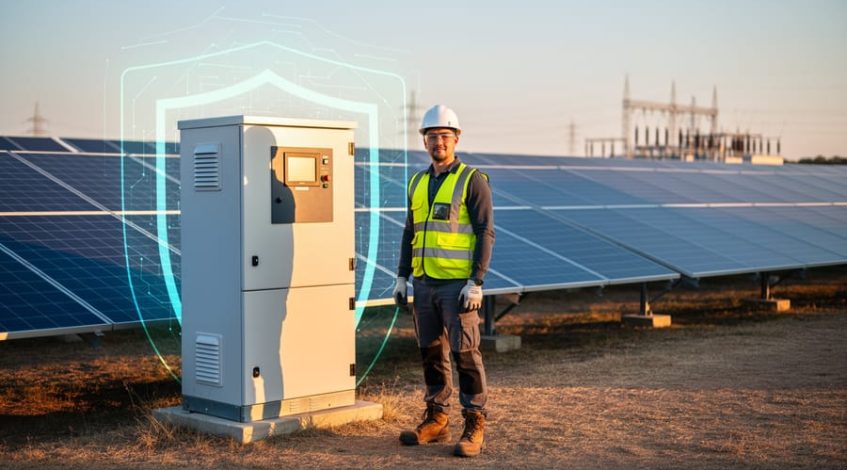
The energy sector faces a critical vulnerability paradox: as solar installations become smarter and more connected, they simultaneously become prime targets for cyberattacks that can compromise national infrastructure, disrupt operations, and threaten millions in energy investments. Recent incidents demonstrate attackers specifically targeting solar inverters, energy management systems, and SCADA networks to gain access to broader grid infrastructure.
Implement network segmentation to isolate solar control systems from corporate IT infrastructure, preventing lateral movement if perimeter defenses are breached. Deploy industrial firewalls between operational technology layers and configure them to allow only essential communication protocols, blocking unauthorized access attempts before they reach critical systems.
Establish continuous monitoring protocols that track anomalous behavior in solar array performance metrics, inverter communications, and energy output patterns. Deviations from baseline operations often signal compromised systems long before traditional security tools detect intrusions, enabling rapid incident response.
Mandate multi-factor authentication and role-based access controls for all personnel interfacing with solar management platforms. Restrict remote access capabilities to encrypted VPN connections with time-limited credentials, eliminating the single-password vulnerabilities that account for 81% of data breaches.
Conduct quarterly vulnerability assessments specifically designed for solar installations, examining firmware versions, communication protocols, and third-party integrations. Standard IT security audits overlook operational technology weaknesses unique to distributed energy resources, leaving dangerous gaps in protection.
The financial implications extend beyond breach response costs—unprotected systems risk operational downtime, regulatory penalties, and compromised return on investment that decision-makers cannot afford to ignore.
The Digital Transformation of Commercial Solar Systems
Smart Components That Create Vulnerability Points
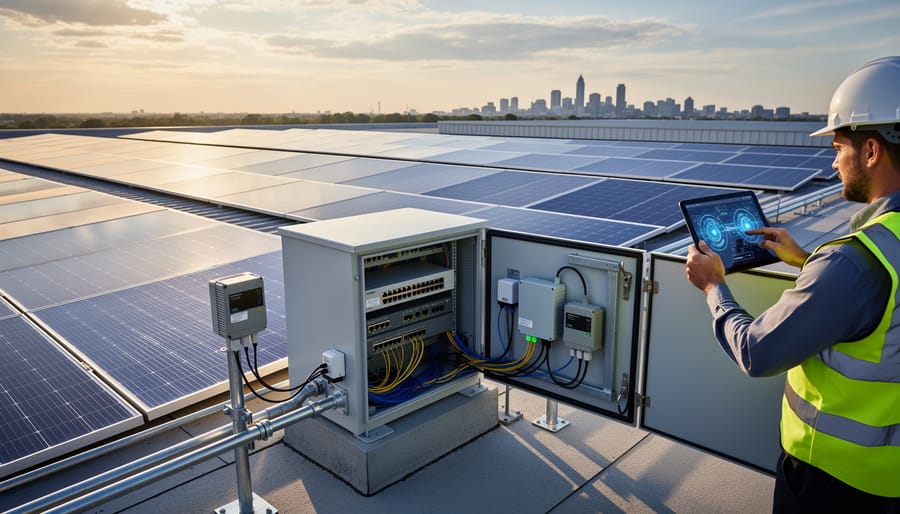
Today’s commercial solar installations operate as sophisticated digital ecosystems, with multiple interconnected components that, while enhancing performance and management capabilities, simultaneously introduce potential security vulnerabilities. Understanding these elements is essential for protecting your solar investment and maintaining operational integrity.
Modern solar inverters have evolved far beyond simple DC-to-AC conversion devices. Contemporary models feature internet connectivity, enabling remote monitoring, firmware updates, and performance optimization. However, this connectivity creates entry points for unauthorized access if not properly secured. Many inverters communicate through standard protocols that, without adequate protection, can be exploited by malicious actors seeking to disrupt energy generation or access broader facility networks.
IoT sensors and monitoring systems collect real-time data on panel performance, environmental conditions, and system health. These sensors typically transmit information wirelessly, creating potential interception points. While this technology delivers substantial operational benefits and improved return on investment through predictive maintenance, each connected sensor represents a potential vulnerability requiring appropriate security measures.
SCADA (Supervisory Control and Data Acquisition) systems manage larger commercial installations, coordinating operations across multiple sites. These platforms handle critical control functions and integrate with facility management systems, making them high-value targets for cyber threats. A compromised SCADA system could result in operational disruption, data breaches, or equipment damage.
Energy management platforms and cloud-based monitoring tools provide comprehensive oversight and analytics capabilities. These solutions process sensitive operational data and often integrate with billing systems and corporate networks. While cloud infrastructure typically offers robust security features, the connection points between on-site equipment and cloud platforms require careful attention to authentication protocols and data encryption standards to maintain system integrity.
Why Commercial Solar Installations Are Attractive Targets
Commercial solar installations present increasingly attractive targets for cybercriminals due to their strategic value and expanding connectivity. Understanding these motivations helps organizations implement appropriate protective measures.
Energy supply disruption represents a primary concern for attackers seeking to destabilize operations or demonstrate capabilities. A successful breach of a commercial solar facility can compromise power generation for entire business campuses, manufacturing operations, or critical infrastructure. In 2019, a coordinated attack on renewable energy systems in the western United States demonstrated how vulnerabilities in solar monitoring platforms could potentially affect power distribution across multiple facilities.
Financial extortion through ransomware attacks has become particularly lucrative for cybercriminals targeting energy systems. Commercial solar installations often manage sophisticated control systems worth protecting at any cost. Organizations face pressure to pay ransoms quickly to restore operations, with average demands exceeding $200,000 in recent energy sector incidents. The financial impact extends beyond ransom payments to include lost production, emergency response costs, and potential penalties for failing to meet energy supply commitments.
Competitive espionage poses another significant threat as companies seek proprietary information about system configurations, efficiency metrics, and operational strategies. Solar installations generate valuable performance data that competitors or foreign entities may target to gain market advantages.
Perhaps most concerning, commercial solar systems increasingly serve as access points to broader electrical grid infrastructure. Attackers can exploit vulnerabilities in solar inverters, monitoring platforms, or control systems to penetrate deeper into connected networks, potentially compromising entire energy management systems or gaining unauthorized access to sensitive corporate data beyond the solar installation itself.
Real-World Cyber Threats Facing Solar Energy Systems
Ransomware and Operational Disruption
Ransomware attacks represent one of the most immediate and disruptive threats to solar energy operations. These malicious programs encrypt critical systems and data, effectively holding facilities hostage until operators pay substantial ransoms. In solar installations, ransomware can paralyze monitoring platforms that track energy production, environmental conditions, and equipment performance. Without access to real-time data, facility managers lose visibility into system efficiency and cannot identify underperforming panels or failing inverters.
The operational impact extends beyond monitoring. Ransomware frequently locks operators out of control systems, preventing routine adjustments to optimize energy capture based on weather patterns or grid demand. This paralysis can result in significant revenue losses, particularly for commercial installations operating under performance contracts. In 2021, a European energy provider experienced a ransomware attack that disrupted operations for 72 hours, resulting in estimated losses exceeding €500,000 in lost production and remediation costs.
The threat is particularly concerning for facilities with integrated battery storage systems, where unauthorized access could compromise discharge schedules and grid stability commitments. Implementing robust backup protocols, network segmentation, and incident response plans becomes essential for maintaining operational continuity and protecting your energy infrastructure investment.
Data Breaches and Intellectual Property Theft
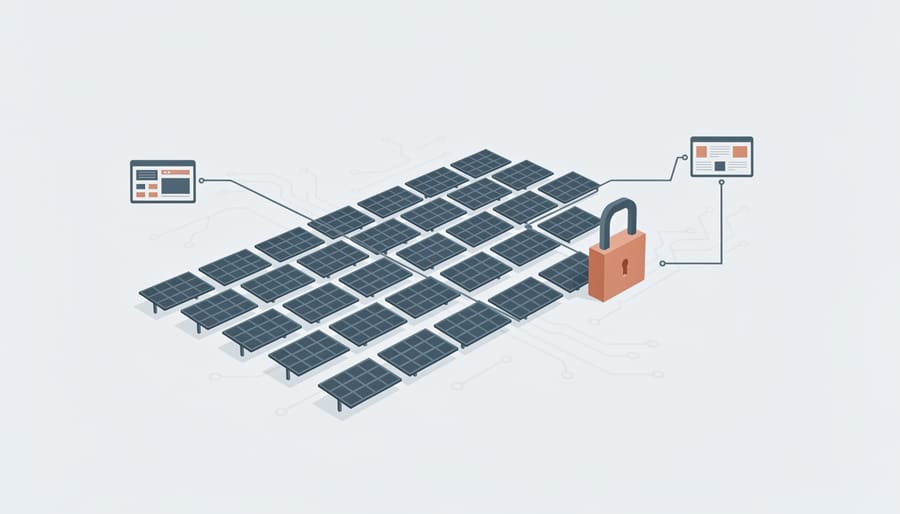
Energy sector organizations face significant exposure to data breaches that can compromise critical operational intelligence and proprietary technologies. In solar installations, attackers target system configurations, performance analytics, and grid integration protocols that represent substantial competitive advantages and years of research investment. A 2023 incident involving a European renewable energy provider demonstrated these risks when unauthorized access exposed detailed specifications of their optimization algorithms, resulting in estimated losses exceeding €2.4 million in competitive positioning.
Sensitive operational data encompasses real-time generation metrics, maintenance schedules, and equipment performance baselines that adversaries can exploit to understand system vulnerabilities or replicate proprietary approaches. For facility managers overseeing commercial solar arrays, protecting this intellectual property requires implementing comprehensive data classification protocols and access controls that segment operational technology networks from general corporate systems. The financial implications extend beyond immediate breach costs to include long-term competitive disadvantages and potential regulatory penalties under data protection frameworks. Organizations must establish robust monitoring systems to detect unauthorized access attempts while maintaining encrypted storage for all proprietary configurations and technical documentation that defines their market differentiation.
System Manipulation and Performance Sabotage
When attackers gain access to compromised control systems in solar installations, the consequences extend far beyond data theft. Malicious actors can manipulate operational parameters to deliberately reduce energy production, causing immediate financial losses and undermining return on investment calculations that justified the initial capital expenditure.
Through altered system settings, cybercriminals can force inverters to operate outside optimal ranges, accelerating component degradation and shortening equipment lifespan. In commercial installations, this premature wear translates directly to unexpected replacement costs and increased maintenance expenses. More critically, attackers might disable safety protocols designed to protect against electrical faults, creating hazardous conditions for maintenance personnel and potentially violating regulatory compliance standards.
Real-world incidents demonstrate these risks are not theoretical. A European facility experienced systematic performance degradation when attackers modified voltage regulation settings, resulting in a 23% output reduction over three months before detection. The financial impact included both lost revenue and remediation costs exceeding €180,000.
System manipulation can also target monitoring systems themselves, masking evidence of damage until physical failures occur. For facility managers overseeing multiple installations, this presents particular challenges in maintaining operational visibility and ensuring contractual performance guarantees remain achievable. Implementing robust authentication protocols and real-time anomaly detection becomes essential to protecting both asset value and operational continuity.
Essential Cybersecurity Measures for Smart Solar Installations
Network Segmentation and Access Controls
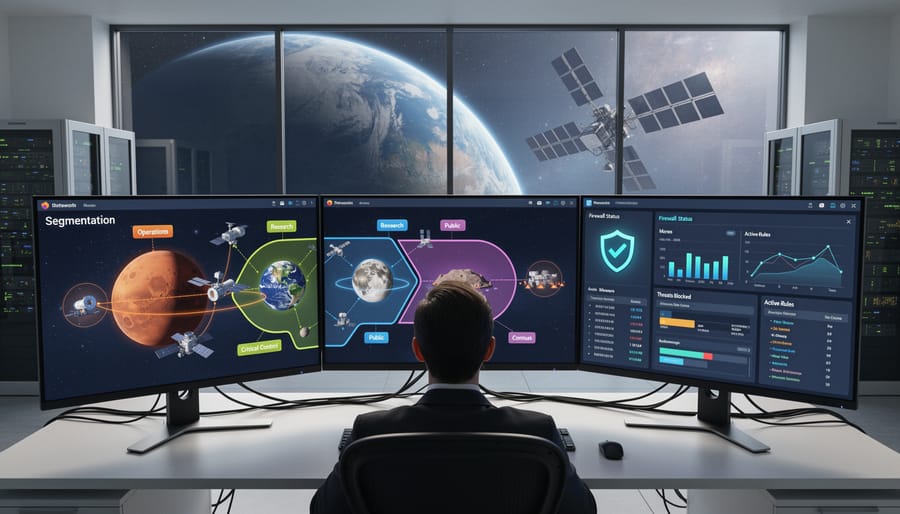
Implementing robust network segmentation is fundamental to protecting solar energy systems from cyber threats. Organizations should establish clear network boundaries by isolating solar system networks—including inverters, monitoring platforms, and control systems—from general business IT infrastructure. This isolation prevents potential attackers from using compromised business systems as entry points to critical energy assets.
Deploy industrial-grade firewalls at network boundaries to monitor and filter traffic between segments. Configure these firewalls to permit only essential communications, blocking unauthorized access attempts while maintaining operational visibility. For organizations managing multiple solar installations across different locations, consider implementing virtual private networks (VPNs) with strict access policies.
Remote access capabilities, while necessary for system monitoring and maintenance, present significant security risks. Require multi-factor authentication (MFA) for all remote connections, combining passwords with biometric verification or time-based authentication codes. Limit remote access privileges to authorized personnel only, maintaining detailed access logs for audit purposes.
Real-world implementation demonstrates measurable benefits: a manufacturing facility that implemented comprehensive network segmentation and MFA protocols reduced unauthorized access attempts by 87% within the first year. These measures protect your solar investment while ensuring continuous, reliable energy production that directly impacts operational costs and sustainability goals.
Vendor and Supply Chain Security
Establishing robust vendor and supply chain security protocols is critical for protecting commercial solar installations from compromised equipment and unauthorized access. Begin by implementing a comprehensive vendor assessment process that evaluates manufacturers’ cybersecurity practices, including their development standards, security certifications, and incident response capabilities. Request detailed documentation on security features embedded in inverters, monitoring systems, and battery storage units before procurement.
Secure firmware update procedures require verification mechanisms to prevent malicious code injection. Establish protocols requiring cryptographic signatures on all firmware updates, with verification through trusted channels before installation. Schedule updates during controlled maintenance windows and maintain rollback capabilities in case of issues. Consider implementing blockchain security solutions to create immutable audit trails of firmware versions and supply chain transactions.
For monitoring service providers, mandate encrypted communication protocols and multi-factor authentication for all remote access. Define clear data ownership terms, establish incident notification requirements, and regularly audit third-party security practices. A leading Australian manufacturing facility reduced supply chain vulnerabilities by 60 percent after implementing vendor security scorecards and contractual cybersecurity requirements. These proactive measures protect your solar investment while maintaining operational efficiency and system reliability.
Continuous Monitoring and Incident Response
Implementing robust continuous monitoring requires deploying advanced anomaly detection systems that establish baseline performance metrics for your solar infrastructure. These systems utilize machine learning algorithms to identify unusual patterns in energy production, network traffic, or system behavior that may indicate security breaches or equipment compromise. Real-time monitoring dashboards should provide visibility into both operational and cybersecurity metrics, enabling facility managers to respond swiftly to potential threats.
Regular security audits form the backbone of proactive defense strategies. Schedule quarterly vulnerability assessments conducted by qualified third-party specialists who understand energy sector compliance requirements. These audits should examine network architecture, access controls, firmware versions, and physical security measures. Organizations that implement biannual penetration testing alongside routine audits report 60% faster threat detection compared to those relying solely on reactive measures.
Developing a comprehensive incident response plan tailored to solar operations ensures business continuity during security events. Your plan should define clear escalation procedures, designate response team roles, and include specific protocols for isolating compromised systems without disrupting power generation. Document communication chains for notifying stakeholders, regulatory bodies, and customers. Case studies from European solar installations demonstrate that facilities with rehearsed response protocols recover from incidents three times faster and experience significantly reduced financial impact compared to those without formal plans.
Employee Training and Security Awareness
Human error remains one of the most significant vulnerabilities in energy infrastructure security. Comprehensive training programs are essential for facility managers and technicians who interact with solar systems daily. These programs should cover fundamental security practices including password hygiene, multi-factor authentication, and secure access protocols specific to energy management systems.
Phishing awareness training is particularly critical, as cybercriminals increasingly target energy sector employees with sophisticated social engineering attacks designed to steal credentials or deploy malware. Regular simulated phishing exercises help staff identify suspicious emails, links, and requests for sensitive information before they compromise system integrity.
Proper credential management extends beyond individual passwords to include secure handling of administrative access, physical security tokens, and temporary contractor credentials. Establishing clear protocols for credential creation, rotation, and revocation reduces unauthorized access risks. Organizations implementing quarterly security refresher training report 60-70% fewer security incidents compared to those with annual or no formal training programs, demonstrating measurable return on investment through reduced breach risks and operational downtime.
Regulatory Compliance and Industry Standards
Government and Industry Frameworks
Several established frameworks provide structured approaches to cybersecurity in the energy sector. The National Institute of Standards and Technology (NIST) Cybersecurity Framework offers a comprehensive, risk-based methodology widely adopted across critical infrastructure sectors. For commercial solar operations, this framework helps identify assets, protect systems through access controls and encryption, detect anomalies in inverter communications or monitoring platforms, respond to incidents, and recover operations swiftly.
The International Electrotechnical Commission (IEC) 62351 standard specifically addresses security for power system control operations, directly applicable to solar installations integrated with grid systems. European operators should also consider the Network and Information Systems (NIS) Directive requirements, which mandate security measures and incident reporting for energy infrastructure.
From a liability perspective, facility managers must understand their responsibilities under these frameworks. Inadequate cybersecurity measures could result in regulatory penalties, invalidate insurance coverage, or expose organizations to litigation following data breaches or operational disruptions. A manufacturing facility that experienced a ransomware attack on its solar monitoring system faced both production downtime and scrutiny over inadequate protective measures. Proactive compliance with recognized frameworks demonstrates due diligence, reduces legal exposure, and protects the return on investment that solar installations represent for commercial operations.
Insurance and Risk Management Implications
A robust cybersecurity posture directly influences insurance premiums, coverage availability, and overall risk management strategies for solar installations. Insurers increasingly evaluate cybersecurity measures when underwriting policies for commercial solar facilities, with organizations demonstrating strong security protocols often qualifying for favorable premium rates and comprehensive coverage options.
Risk assessment frameworks must now incorporate cyber vulnerabilities alongside traditional physical risks. Facilities lacking proper network segmentation, encryption protocols, or incident response plans may face higher premiums or coverage exclusions for cyber-related incidents. In one documented case, a European manufacturing facility with integrated solar systems reduced insurance costs by 18% after implementing ISO 27001-compliant cybersecurity controls.
Business continuity planning requires addressing both physical and digital disruption scenarios. Organizations should establish recovery time objectives specifically for energy management systems and maintain offline backups of critical configuration data. Insurance providers typically require evidence of regular security audits, employee training programs, and documented incident response procedures. Forward-thinking facility managers integrate cybersecurity assessments into their renewable energy investment analyses, recognizing that security infrastructure protects both operational continuity and financial returns on solar installations.
Building Security Into Your Solar Investment From Day One
Security Requirements in RFPs and Contracts
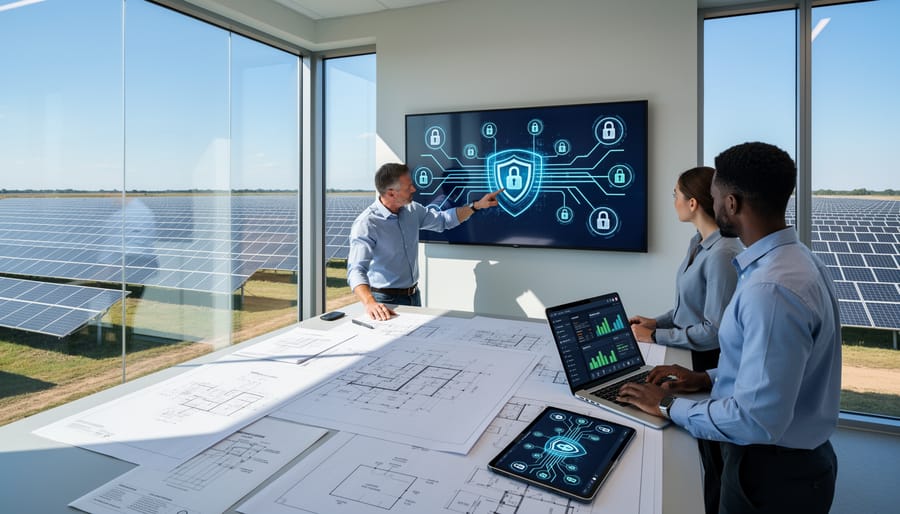
When choosing solar providers, business owners must prioritize cybersecurity in their RFPs and contracts. Essential requirements include documented evidence of security certifications such as ISO 27001, NIST Cybersecurity Framework compliance, or IEC 62443 standards for industrial control systems. Providers should demonstrate their incident response protocols, including guaranteed response times and escalation procedures.
Contracts must specify minimum security requirements: encryption standards for data transmission, multi-factor authentication for system access, regular security patch schedules, and network segmentation capabilities. Request detailed documentation of the provider’s vulnerability management program and penetration testing frequency. Commercial installations require clear service level agreements covering security monitoring, with defined metrics for system availability and breach notification timelines.
Ongoing support provisions should include quarterly security assessments, annual third-party audits, and immediate notification of any security incidents affecting similar installations. Ensure contracts address data ownership, requiring providers to maintain detailed logs of system access and changes. Consider including provisions for security training for your facility management team. Real-world case studies demonstrate that organizations with comprehensive security requirements in their contracts experience 60% fewer cybersecurity incidents and significantly reduced recovery costs when issues arise.
ROI Considerations for Cybersecurity Investment
Cybersecurity represents a critical operational investment rather than an optional expense for commercial solar operations. Industry analysis indicates that successful cyberattacks on energy infrastructure can result in losses ranging from $500,000 to several million dollars, including operational downtime, equipment damage, regulatory penalties, and reputational harm.
When evaluated against prevention costs, cybersecurity measures demonstrate compelling financial logic. A comprehensive security framework typically requires 2-4% of total solar installation investment, encompassing network protection, monitoring systems, and regular security assessments. In contrast, a single ransomware incident can halt energy production for days or weeks, directly impacting revenue streams and contractual obligations.
Consider a 2-megawatt commercial installation generating $300,000 annually: a three-day outage from a cyberattack represents immediate revenue loss plus potential contract penalties. Recovery costs, forensic analysis, and system restoration typically add $150,000-$400,000 in unplanned expenses.
Real-world cases demonstrate this disparity. A European utility facility experienced $2.1 million in combined losses following a 2022 breach, while their deferred cybersecurity upgrades would have cost approximately $85,000. Similarly, Australian facilities implementing proactive security protocols report 94% fewer incidents and significantly lower insurance premiums.
The calculation is straightforward: investing in robust cybersecurity protections delivers measurable returns through uninterrupted operations, protected revenue streams, regulatory compliance, and enhanced asset value over the system’s 25-year lifespan.
The intersection of renewable energy and cybersecurity has evolved from a peripheral concern to a central pillar of successful solar deployment. As solar installations become increasingly interconnected and data-driven, protecting these systems against cyber threats is no longer optional—it is fundamental to preserving both the financial returns and operational integrity that make solar energy an attractive investment.
Organizations that treat cybersecurity as an afterthought risk compromising the substantial benefits that motivated their solar adoption in the first place. A single security incident can erase years of energy savings, damage critical infrastructure, and undermine stakeholder confidence. Conversely, installations designed with security at their core deliver consistent performance, maintain optimal energy generation, and provide the predictable ROI that financial planning requires.
The case studies examined throughout this analysis demonstrate a clear pattern: organizations that implement comprehensive security frameworks from the outset avoid costly remediation efforts while maintaining uninterrupted operations. Whether through network segmentation, regular security audits, or employee training programs, proactive measures consistently outperform reactive responses in both cost-effectiveness and operational outcomes.
For business leaders and facility managers evaluating solar investments, the message is unequivocal: demand security transparency from your technology providers. Request detailed documentation of security protocols, inquire about incident response capabilities, and ensure compliance with relevant regulatory frameworks. Partner with providers who demonstrate not just technical expertise in energy generation, but equal commitment to protecting your digital infrastructure.
The time to address cybersecurity in your solar installation is during the planning phase, not after deployment. Conduct thorough security assessments, engage qualified cybersecurity professionals, and establish clear governance protocols. Your solar investment represents a decades-long commitment—ensure it remains secure, productive, and valuable throughout its entire operational lifecycle.