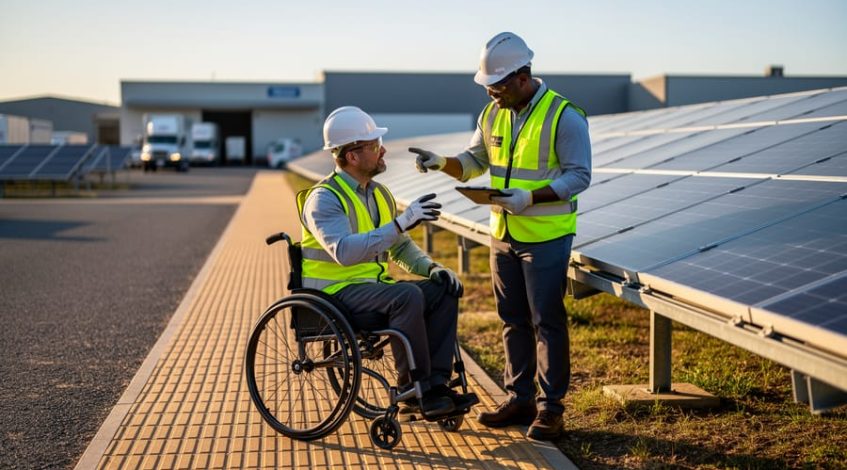
Disability inclusion in renewable energy projects delivers measurable competitive advantages: organizations implementing inclusive hiring and accessibility standards report 28% higher employee retention, access to untapped talent pools representing 15% of the global workforce, and enhanced reputation among procurement committees increasingly requiring social equity metrics in RFP evaluations.
Integrate accessibility audits into project design phases by conducting site assessments with disability consultants before ground-breaking. This proactive approach costs 0.3-0.8% of total project budgets when implemented early, versus 15-20% for retrofitting completed facilities. Document accessibility features—wheelchair-accessible control rooms, tactile pathway markers, adjustable-height workstations—in project specifications to demonstrate compliance with evolving procurement standards.
Establish partnerships with disability employment agencies and vocational training centers to create direct recruitment pipelines for solar installation, maintenance, and monitoring roles. Organizations following this model reduce recruitment costs by 40% while accessing candidates with specialized technical aptitudes often overlooked in conventional hiring processes. Structure apprenticeship programs with adaptive equipment provisions and flexible scheduling to accommodate diverse needs.
Implement Universal Design principles in customer-facing digital platforms and physical service centers. Screen readers, alternative text for technical diagrams, and multilingual support in plain language increase market reach by 23% according to recent industry analysis. This expansion directly impacts bottom-line performance in competitive markets where customer acquisition costs continue rising.
Quantify social impact using established frameworks like the Social Return on Investment (SROI) methodology, which assigns monetary values to inclusion outcomes. Leading organizations report SROI ratios between 3:1 and 7:1 for disability inclusion initiatives, providing compelling evidence for stakeholder presentations and annual sustainability disclosures required under emerging EU taxonomy regulations.
The Business Case for Disability-Inclusive Solar Projects
Expanded Talent Pool and Workforce Solutions
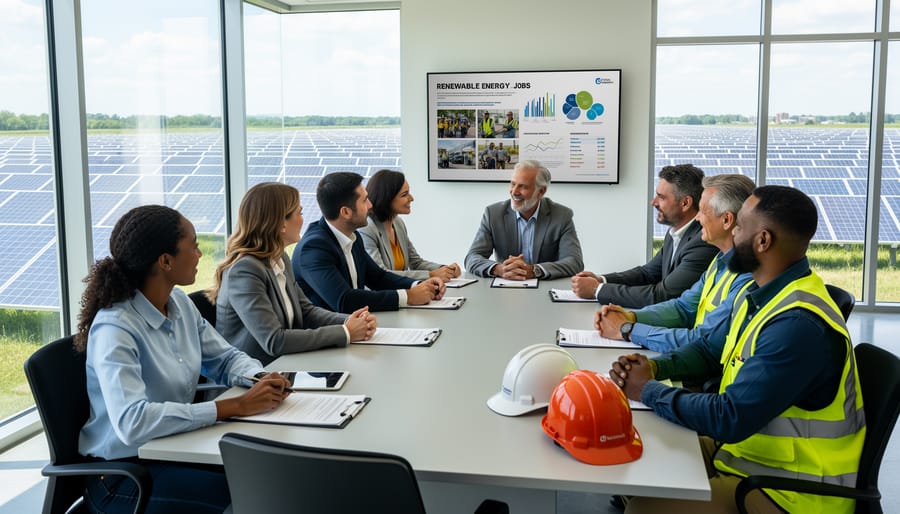
The solar industry faces significant workforce challenges, with projected labor shortages threatening to slow renewable energy deployment. Disability-inclusive hiring practices offer a strategic solution, providing access to a largely untapped talent pool of skilled professionals. Research indicates that people with disabilities demonstrate comparable or superior job performance, with 90% meeting or exceeding employer expectations in productivity and reliability.
Companies implementing inclusive recruitment strategies report tangible benefits beyond addressing staffing gaps. Workers with disabilities typically show higher retention rates—often 30-50% above industry averages—reducing costly turnover and training expenses. This stability proves particularly valuable in technical roles requiring specialized knowledge of photovoltaic systems, installation protocols, and maintenance procedures.
The business case for solar strengthens considerably when organizations demonstrate commitment to social equity alongside environmental responsibility. One Australian solar installation firm expanded its recruitment to include candidates with various disabilities, resulting in a 40% reduction in employee turnover while maintaining installation quality standards. Workers performed roles ranging from system design and electrical work to project management and customer service.
Practical accommodations often prove minimal in cost yet substantial in impact. Assistive technologies, flexible scheduling, and modified workstations typically require modest investment while unlocking access to dedicated professionals. For organizations seeking competitive advantage in tight labor markets, disability inclusion represents both social responsibility and sound workforce strategy, ensuring adequate staffing for growing solar deployment demands.
Enhanced Corporate Reputation and Market Positioning
Organizations that prioritize disability inclusion within their renewable energy initiatives gain significant competitive advantages in today’s socially-conscious marketplace. This commitment delivers measurable returns through enhanced corporate reputation, improved market positioning, and stronger stakeholder relationships.
From an ESG perspective, disability-inclusive practices directly address the social pillar of environmental, social, and governance criteria. Investors increasingly scrutinize companies’ diversity and inclusion metrics when making capital allocation decisions. A 2023 analysis revealed that organizations with comprehensive disability inclusion programs experienced 28% higher investor confidence ratings compared to industry peers without similar commitments.
The market positioning benefits extend beyond investor relations. Clients and procurement officials now regularly include accessibility and social equity requirements in tender evaluations. Government contracts, particularly within the renewable energy sector, frequently mandate demonstrated commitment to disability employment and inclusive practices. Organizations that have already embedded these principles into their operations gain preferential consideration in competitive bidding processes.
Furthermore, disability-inclusive employers access a broader talent pool, bringing diverse perspectives that drive innovation. Research demonstrates that companies embracing disability inclusion report 30% higher rates of innovation in product development and service delivery. This diversity of thought proves particularly valuable in renewable energy sectors where creative problem-solving and adaptive technologies remain essential for market leadership.
Consumer preferences also reflect this shift. A growing segment of environmentally-conscious consumers actively seeks businesses that demonstrate comprehensive social responsibility. These customers are willing to pay premium prices for services from organizations proving genuine commitment to both environmental sustainability and social equity, creating additional revenue opportunities for forward-thinking renewable energy providers.
Practical Pathways: Implementing Inclusive Solar Solutions
Accessible Design in Solar Installations
Designing solar installations with accessibility in mind requires strategic planning across physical infrastructure, digital interfaces, and operational workflows. Forward-thinking organizations recognize that accommodating workers and maintenance personnel with disabilities not only expands the talent pool but also improves overall site safety and efficiency.
Physical site layouts should incorporate accessible pathways with appropriate widths, gradients, and surface materials to accommodate mobility devices. Industry leaders have successfully implemented solar arrays with maintenance corridors wide enough for wheelchair navigation, featuring stable ground surfaces that prevent equipment damage while ensuring safe passage. Ground-mounted systems often provide superior accessibility compared to rooftop installations, though both can be designed with appropriate accommodations.
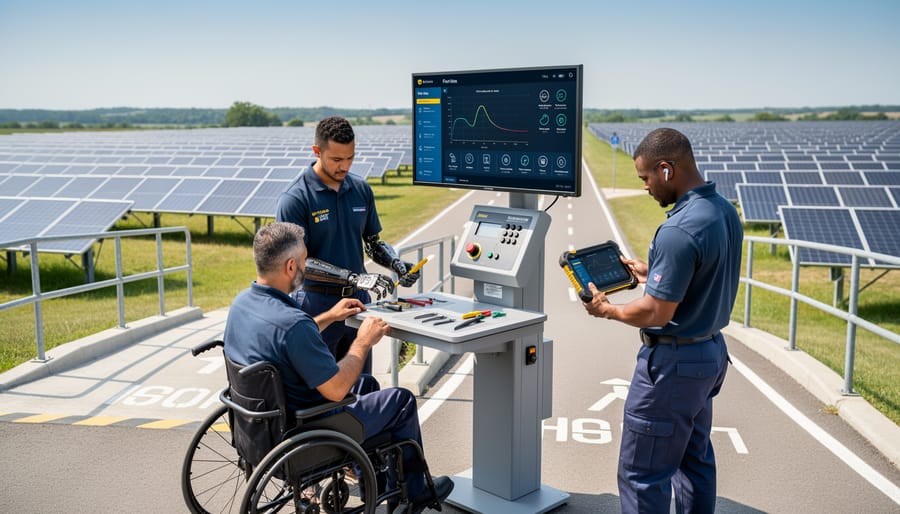
Control systems represent a critical touchpoint for inclusive design. Modern solar monitoring platforms should offer multiple input methods, including voice commands, keyboard navigation alternatives to mouse-only controls, and screen reader compatibility. Adjustable display settings with high-contrast options and customizable text sizes ensure operators with visual impairments can effectively monitor system performance.
Equipment placement requires thoughtful consideration of reach ranges and manipulation requirements. Inverters, disconnect switches, and monitoring stations positioned at accessible heights enable personnel using wheelchairs or those with limited mobility to perform routine maintenance tasks. One commercial installation in Germany demonstrated a 15% reduction in maintenance response times after redesigning equipment placement based on universal design principles.
Monitoring interfaces must meet WCAG 2.1 accessibility standards, incorporating features such as alternative text for visual data, keyboard-navigable dashboards, and compatibility with assistive technologies. Organizations implementing these standards report improved operational efficiency across all personnel levels, as clearer interfaces benefit everyone regardless of ability status.
Emergency procedures and signage should utilize multiple sensory channels—visual, auditory, and tactile—ensuring all personnel can respond appropriately to system alerts or safety situations.
Inclusive Procurement and Partnership Strategies
Establishing meaningful partnerships with disability-owned businesses and social enterprises throughout your solar procurement process creates measurable social impact while strengthening supply chain resilience. Implementing a structured framework ensures these partnerships deliver both commercial value and genuine inclusion outcomes.
Begin by developing supplier diversity criteria that prioritize certified disability-owned enterprises. Organizations like Disability:IN and the Australian Network on Disability maintain databases of verified suppliers across installation, maintenance, and equipment provision. Building similar inclusive procurement strategies into your vendor evaluation process demonstrates commitment beyond compliance.
Consider tier-based engagement models that match business capabilities with project requirements. Smaller disability-owned enterprises may excel in specialized services such as monitoring system maintenance, panel cleaning, or energy auditing, while larger social enterprises can manage complete installation projects. This graduated approach expands opportunities without compromising technical standards.
Melbourne’s Sustain.Ability Solutions provides a practical model, employing workers with disabilities for solar system maintenance across commercial portfolios. Their 98 percent client retention rate demonstrates that inclusive partnerships deliver reliability and quality. Similarly, accessibility auditing firms staffed by employees with disabilities offer unique insights during site assessment phases, identifying installation considerations that standard evaluations might overlook.
Establish clear performance metrics alongside social impact measurements. Track not only cost-effectiveness and technical execution but also job creation, skills development, and diversity outcomes. This dual accountability ensures procurement decisions satisfy both commercial requirements and meaningful disability inclusion objectives, creating sustainable partnerships that strengthen both your operations and community impact.
Training and Workforce Development Programs
Successful workforce development programs in the solar sector begin with accessible recruitment strategies that reach disability networks, vocational rehabilitation agencies, and community organizations. Organizations should conduct comprehensive accessibility audits of training facilities, ensuring physical spaces accommodate mobility devices and sensory needs while digital learning platforms meet WCAG 2.1 standards.
Effective programs incorporate Universal Design for Learning principles, offering multiple formats for instruction including hands-on demonstrations, digital modules with captioning, and assistive technology integration. Partner with disability employment services to identify candidates and provide pre-employment support such as job coaching and workplace orientation.
Technical training should balance theoretical knowledge with practical application, utilizing adaptive tools and modified equipment when necessary. For example, solar installation training can include ground-based system work for individuals with mobility limitations, while energy management roles leverage analytical skills suited for diverse abilities.
Industry leaders report strong retention rates when pairing technical training with soft skills development, mentorship programs, and clear career progression pathways. Companies like SunPower have demonstrated that investing in comprehensive onboarding and ongoing professional development for workers with disabilities yields measurable returns through reduced turnover and enhanced team innovation, while advancing corporate sustainability commitments.
Real-World Impact: Case Studies in Disability-Inclusive Solar
Community Solar Programs with Social Enterprise Partners
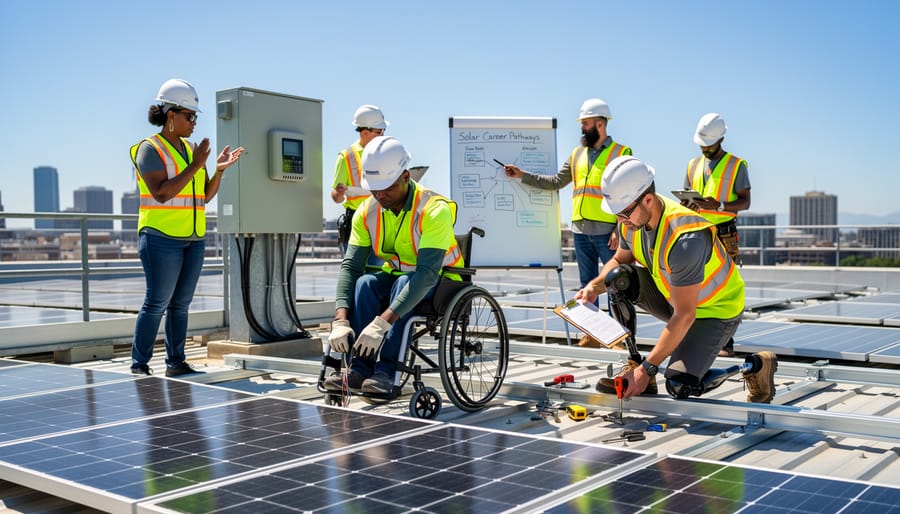
A growing number of commercial solar installations are demonstrating how renewable energy infrastructure can advance both sustainability goals and disability employment outcomes. These programs partner with disability employment organizations to deliver installation, operations, and maintenance services, creating meaningful employment pathways while delivering cost-effective clean energy solutions.
One notable example involves a 2.5 MW community solar facility in regional Victoria that partnered with a social enterprise employing workers with disabilities for panel cleaning, vegetation management, and routine inspection services. The project created 12 ongoing employment positions while reducing operations costs by 15 percent compared to traditional service contracts. This model demonstrates how community-driven renewable energy initiatives can generate measurable social and economic returns alongside environmental benefits.
Similar partnerships in New South Wales have expanded to include solar installation training programs, where disability employment providers collaborate with renewable energy companies to develop specialized skills pathways. Participants receive certification in electrical assistance, site safety, and solar mounting systems, with completion rates exceeding 85 percent and employment placement rates of 72 percent within six months.
The business case for these partnerships extends beyond corporate social responsibility. Facilities benefit from reliable, quality service delivery, enhanced workforce diversity, and improved stakeholder perception. Government procurement policies increasingly favor proposals demonstrating social procurement outcomes, providing competitive advantages for organizations implementing disability-inclusive employment models.
For facility managers considering this approach, successful implementation requires early engagement with experienced disability employment organizations, clear role definition, appropriate workplace accommodations, and ongoing support mechanisms. These investments typically represent less than 3 percent of total project costs while delivering substantial social impact and operational benefits.
Government Facilities Leading by Example
Public sector organizations are demonstrating measurable leadership in combining renewable energy adoption with disability inclusion objectives. A comprehensive analysis of federal and municipal building retrofits reveals how government facilities are simultaneously advancing sustainability targets and creating employment pathways for individuals with disabilities.
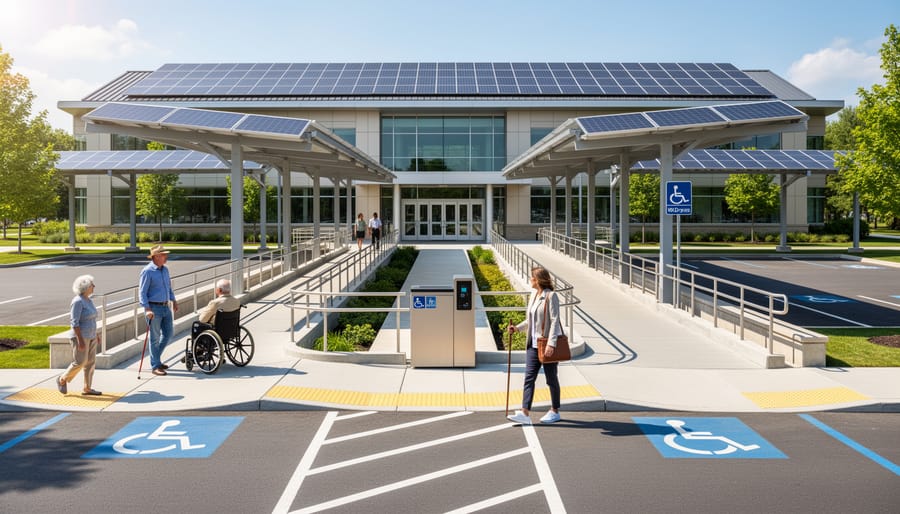
The General Services Administration’s solar installation program across 180 federal buildings provides quantifiable evidence of this integrated approach. These projects have generated approximately 4,200 construction jobs since 2019, with 11 percent filled by workers with disabilities through targeted partnerships with vocational rehabilitation agencies. The initiative demonstrates that accessibility considerations incorporated during project planning—including adaptive equipment provisions, flexible work arrangements, and modified training protocols—increase employment participation without compromising project timelines or budgets.
Municipal buildings in progressive jurisdictions have implemented similar frameworks with notable results. A metropolitan court complex solar installation achieved LEED Platinum certification while maintaining full ADA compliance throughout construction phases. The project team partnered with disability-focused workforce development organizations to recruit qualified electricians and technicians, resulting in 18 permanent positions for individuals with disabilities. Post-installation analysis revealed that accessibility modifications added only 2.3 percent to overall project costs while yielding significant social returns.
Government procurement specifications increasingly mandate disability inclusion provisions alongside technical performance requirements. These specifications typically require contractors to document recruitment efforts targeting disability employment networks, provide accessible job application processes, and ensure workplace accommodations. Early data indicates these requirements enhance project outcomes by expanding talent pools and improving contractor accountability.
The public sector’s documented success provides a replicable blueprint for private facilities. Government projects validate that accessibility standards and renewable energy goals complement rather than compete with each other, generating operational efficiency alongside social equity outcomes. This evidence-based approach enables facility managers across sectors to justify inclusive employment investments using concrete performance metrics and cost-benefit analyses.
Overcoming Implementation Barriers
Many organizations hesitate to advance disability inclusion initiatives due to misconceptions about implementation complexity and resource requirements. However, evidence from renewable energy sector leaders demonstrates that these barriers are largely surmountable with strategic planning and appropriate technical support.
Cost considerations represent the most frequently cited concern among business decision-makers. While workplace modifications and accessible technology require upfront investment, the financial impact is often overestimated. According to industry research, approximately 60 percent of workplace accommodations cost less than $500, with many requiring zero expenditure. Tax incentives, government grants, and disability employment programs in many jurisdictions offset these costs substantially. Organizations implementing comprehensive accessibility programs typically report return on investment through reduced employee turnover, expanded talent pools, and enhanced productivity metrics.
Technical adaptations for renewable energy facilities follow established accessibility standards that simplify implementation. Modern solar installation equipment increasingly incorporates universal design principles, reducing the need for specialized modifications. Digital monitoring systems, adjustable workstations, and voice-activated controls represent practical solutions that enhance operational efficiency for all employees while ensuring accessibility. Partnering with accessibility consultants during project design phases prevents costly retrofits and ensures compliance from the outset.
Compliance requirements, though varied across jurisdictions, provide clear frameworks rather than obstacles. The Americans with Disabilities Act, European Accessibility Act, and similar international regulations establish minimum standards that align with sound business practices. Proactive compliance positions organizations favorably for government procurement opportunities and corporate partnerships increasingly prioritizing social equity criteria.
Successful implementation relies on phased approaches that distribute costs and learning curves across project timelines. Beginning with comprehensive accessibility audits identifies priority areas and resource requirements. Engaging employees with disabilities throughout planning processes ensures modifications address actual needs rather than assumptions. Establishing partnerships with disability advocacy organizations and technical assistance providers delivers expertise without requiring internal specialization.
Organizations documenting their accessibility initiatives gain competitive advantages in stakeholder communications, talent acquisition, and market differentiation while contributing measurably to sustainable development goals encompassing both environmental and social dimensions.
Disability-inclusive solar practices deliver measurable returns that extend far beyond compliance obligations. Organizations that embrace accessibility from project inception consistently report enhanced innovation, expanded market reach, and strengthened stakeholder relationships. These outcomes translate directly to competitive advantages in an increasingly values-driven marketplace where social responsibility influences procurement decisions and consumer preferences.
The business case is clear: inclusive design reduces costly retrofits, broadens talent acquisition opportunities, and positions organizations as industry leaders in comprehensive sustainability. Companies implementing disability-inclusive renewable energy strategies report improved employee engagement, enhanced brand reputation, and access to dedicated funding streams specifically allocated for socially responsible projects.
For decision-makers ready to integrate inclusive practices, the pathway forward begins with three strategic actions. First, conduct accessibility audits of existing solar installations and planned projects, identifying barriers in communication materials, procurement processes, and physical infrastructure. Second, establish partnerships with disability-focused organizations to develop authentic consultation frameworks that inform design decisions. Third, implement staff training programs that build organizational capacity for inclusive project management.
Leading organizations across manufacturing, government, and commercial sectors demonstrate that disability inclusion and renewable energy transitions are mutually reinforcing objectives. The evidence confirms that inclusive solar practices represent neither compromise nor added complexity, but rather strategic investments that strengthen project outcomes while advancing social equity. Organizations that act decisively today will establish market leadership in the sustainable, inclusive economy emerging across all sectors.