
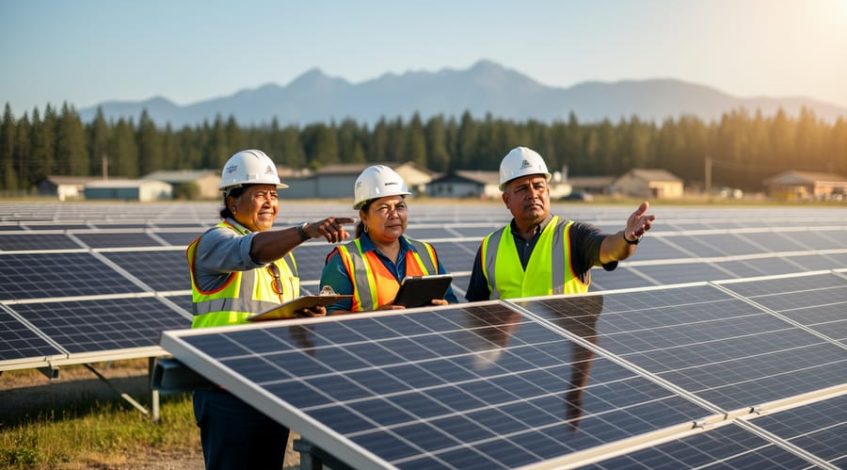
Indigenized energy represents a fundamental shift in how renewable energy projects are developed, owned, and operated—placing Indigenous communities at the center of decision-making rather than treating them as stakeholders to be consulted. This approach transforms Indigenous peoples from passive recipients of energy infrastructure to active partners and owners who control project development, share in revenue generation, and ensure cultural values guide implementation.
The business case for indigenized energy extends beyond ethical considerations. Indigenous-led renewable projects demonstrate higher community acceptance rates, reduced regulatory delays, and improved long-term operational stability. In regions across North America, Australia, and Scandinavia, Indigenous communities have successfully developed solar installations ranging from 500 kW to 50 MW, proving that economic viability and cultural sovereignty can coexist. These projects generate local employment, reduce energy costs in remote communities, and create sustainable revenue streams through power purchase agreements.
For business owners and facility managers, understanding indigenized energy opens pathways to partnership opportunities that align with corporate sustainability goals while supporting reconciliation efforts. Government officials increasingly recognize that energy sovereignty strengthens Indigenous self-determination and reduces reliance on diesel generation in remote areas—cutting both costs and emissions. The model encompasses various structures: wholly Indigenous-owned projects, joint ventures with majority Indigenous control, or capacity-building partnerships that transfer knowledge and ownership over time.
This framework challenges conventional renewable energy development by prioritizing community benefit, environmental stewardship aligned with traditional knowledge, and long-term intergenerational thinking. As renewable energy markets mature, indigenized approaches offer a blueprint for equitable development that delivers measurable returns while advancing social justice objectives.
What Indigenized Energy Means for Commercial Solar Development
The Core Principles of Indigenized Energy Systems
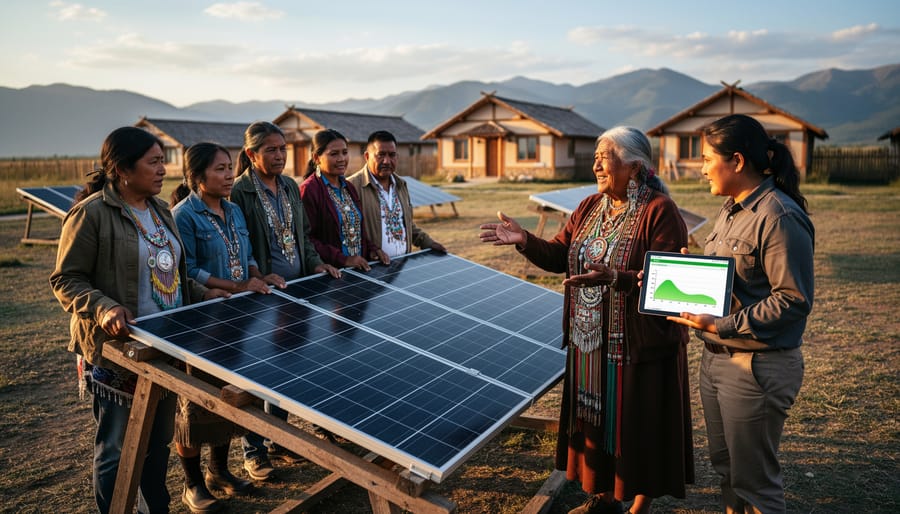
Indigenized energy systems are built upon three foundational principles that distinguish them from conventional renewable energy approaches. At the forefront is self-determination, which positions Indigenous communities as decision-makers rather than stakeholders in energy projects developed on their traditional lands. This principle ensures that communities maintain sovereignty over project development, implementation timelines, and benefit distribution structures.
The integration of traditional ecological knowledge represents a critical component that enhances project outcomes. Indigenous communities possess generations of environmental understanding, including seasonal patterns, land characteristics, and sustainable resource management practices. When combined with modern solar technology, this knowledge creates more resilient and environmentally responsive energy systems. For instance, traditional knowledge about local weather patterns can optimize solar panel placement and predict maintenance requirements more accurately than standard meteorological data alone.
Community ownership models form the economic foundation of indigenized energy, moving beyond consultation to genuine partnership. These models ensure that financial returns, employment opportunities, and operational control remain within Indigenous communities. Similar to community-led energy projects in other contexts, Indigenous-owned solar installations generate local economic development while reducing energy costs. This approach creates measurable return on investment through job creation, skills development, and revenue generation that strengthens community infrastructure. For business owners and facility managers, understanding these principles is essential for developing partnerships that respect Indigenous rights while achieving sustainable energy goals.
Why Commercial Solar Companies Need to Understand This Shift
Commercial solar companies that understand and embrace indigenized energy approaches position themselves for significant competitive advantages in an evolving market landscape. As governments and corporations strengthen their commitments to reconciliation and Indigenous partnerships, businesses demonstrating genuine engagement with Indigenous communities gain preferential access to major projects and procurement opportunities.
The business case extends beyond compliance. Companies working collaboratively with Indigenous communities unlock new market segments, particularly in regional and remote areas where Indigenous nations hold substantial land rights and decision-making authority. These partnerships facilitate smoother project approvals, reduce operational risks, and build long-term relationships that generate sustained revenue streams.
From an Environmental, Social, and Governance perspective, indigenized energy initiatives deliver measurable outcomes that resonate with investors and stakeholders. Organizations can demonstrate tangible progress on reconciliation commitments while advancing clean energy targets, creating powerful narratives for corporate reporting and stakeholder engagement.
Partnership opportunities with Indigenous communities also provide access to traditional ecological knowledge that enhances project planning and site selection. This expertise proves invaluable when balancing cultural heritage considerations with technical requirements, ultimately leading to more resilient and community-supported infrastructure.
Companies that develop cultural competency and establish genuine relationships early gain first-mover advantages in emerging markets. As Indigenous economic development accelerates, these partnerships become essential for maintaining market relevance and accessing growth opportunities across the renewable energy sector.
The Business Opportunity: Indigenous-Led Solar Projects
Market Size and Growth Potential
The Indigenous-led renewable energy sector represents a rapidly expanding market segment with substantial growth trajectories. Recent data indicates there are currently over 200 Indigenous community energy projects operational across Australia, representing approximately 52 megawatts of installed capacity. This figure is projected to increase by 300 percent over the next five years as communities gain greater access to development resources and technical expertise.
Funding mechanisms supporting this growth have expanded significantly. The Australian Renewable Energy Agency has allocated over $180 million specifically toward Indigenous clean energy initiatives since 2020, while the Clean Energy Finance Corporation maintains a dedicated Indigenous Communities Program with $250 million in available capital. State-level programs contribute an additional $95 million annually in grants and concessional financing.
The commercial opportunity extends beyond direct project investment. Indigenous energy enterprises create substantial economic development opportunities through local employment, supply chain participation, and long-term power purchase agreements. Market analysis suggests Indigenous-led projects will account for 8-12 percent of Australia’s distributed renewable energy capacity by 2030, representing a market value exceeding $4.5 billion.
For businesses and government entities, this growth trajectory presents partnership opportunities that align commercial objectives with social responsibility outcomes. The proven track record of community-owned renewable installations demonstrates both financial viability and sustainable operational models, making this sector increasingly attractive to institutional investors and corporate partners seeking reliable renewable energy solutions.
Real-World Applications: Indigenous Commercial Solar Success Stories
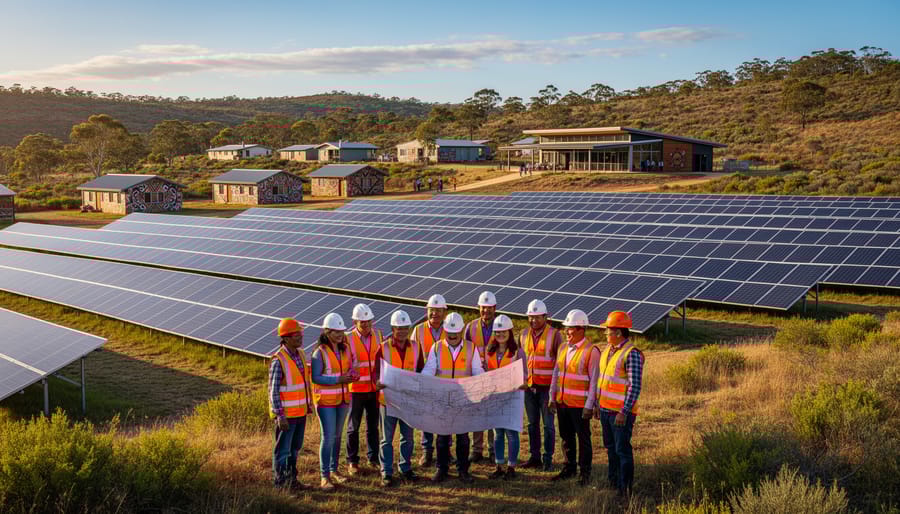
Indigenous communities across North America have demonstrated that commercial solar installations can deliver substantial economic returns while advancing energy sovereignty. These real-world examples provide valuable benchmarks for organizations considering similar partnerships.
The T’Sou-ke Nation in British Columbia implemented a 75 kW ground-mounted solar array in 2009, representing one of Canada’s pioneering Indigenous community solar projects. The installation generates approximately 90,000 kWh annually, reducing the community’s electricity costs by $12,000 per year while providing surplus power to the grid. Beyond financial returns, the project created local employment opportunities and established an educational foundation for ongoing renewable energy initiatives. The community has since expanded its solar capacity and developed comprehensive energy efficiency programs.
In the United States, the Moapa Band of Paiutes developed a 250 MW utility-scale solar facility in Nevada through a partnership model that ensures long-term economic benefits. The project generates lease revenues exceeding $1 million annually while maintaining tribal land ownership. The development process incorporated traditional ecological knowledge in site selection and environmental impact assessments, demonstrating how Indigenous governance principles can enhance project outcomes.
The Navajo Tribal Utility Authority has deployed multiple commercial solar installations totaling over 55 MW across its service territory. These distributed projects combine community-scale arrays with rooftop installations on tribal buildings, creating resilient energy infrastructure while reducing dependence on external power sources. The installations achieve payback periods of 8-12 years while providing stable energy costs for decades.
These case studies illustrate that indigenized energy projects deliver measurable financial performance alongside community empowerment outcomes. Success factors include appropriate technical design, meaningful Indigenous leadership in project development, and partnership structures that respect tribal sovereignty while ensuring economic viability.
Building Effective Partnerships with Indigenous Communities
Essential Steps for Meaningful Engagement
Successful engagement with Indigenous communities requires a fundamentally different approach than conventional business development. The foundation begins with recognizing Indigenous sovereignty and understanding that communities operate through established governance structures with distinct protocols for external engagement.
Initial contact should never bypass official channels. Begin by identifying the appropriate Indigenous authority, whether that’s a traditional council, elected body, or designated economic development office. Written correspondence introducing your organization and requesting formal consultation demonstrates respect for proper procedure. Allow adequate time for response, as decision-making processes often involve community consultation that follows cultural timelines rather than business schedules.
The consultation phase demands genuine listening rather than presenting predetermined solutions. Effective energy access solutions emerge from understanding community priorities, existing infrastructure challenges, and long-term development goals. Bring technical expertise but avoid prescriptive approaches. Instead, facilitate discussions that explore how energy projects align with community values, employment objectives, and cultural preservation.
Relationship-building requires sustained commitment beyond project timelines. Regular in-person visits, when appropriate and welcomed, demonstrate authentic interest. Acknowledge and participate in cultural protocols such as opening ceremonies or traditional welcomes. Engage knowledge keepers and elders who provide cultural guidance and historical context for energy development on traditional lands.
Transparency remains paramount throughout engagement. Share technical information, financial models, and project risks clearly. Indigenous communities have experienced broken promises across sectors, making honesty and accountability essential for trust-building. Document agreements formally while respecting Indigenous laws and governance systems alongside conventional contracts.
Consider capacity-building investments that enable meaningful participation. Technical training programs, mentorship opportunities, and knowledge transfer initiatives strengthen community capability to manage and benefit from energy infrastructure long-term. This approach transforms partnerships from transactional relationships into collaborative ventures that respect Indigenous self-determination while advancing renewable energy objectives.
Partnership Models That Work
Successful indigenized energy initiatives rely on carefully structured partnership frameworks that balance Indigenous sovereignty with commercial viability. These collaborative approaches have proven effective across multiple jurisdictions, delivering sustainable outcomes for all stakeholders.
Joint venture arrangements represent one of the most prevalent models, where Indigenous communities hold equity stakes in renewable energy projects developed on their traditional lands. These structures typically involve shared decision-making authority, with Indigenous partners participating in project governance through board representation. Financial returns flow directly to community-controlled entities, supporting economic self-determination while ensuring projects benefit from commercial expertise and capital access.
Community ownership structures provide Indigenous groups with majority or full ownership of energy assets. These models range from 100% Indigenous-owned installations to majority Indigenous partnerships with experienced energy developers. Revenue generated funds essential community services, infrastructure improvements, and training programs that build local capacity in renewable energy sectors. Several communities have leveraged this approach to achieve energy independence while creating sustainable employment opportunities.
Benefit-sharing agreements establish frameworks for communities to receive tangible value from projects developed on or near their territories, even without direct ownership. These arrangements may include revenue-sharing provisions, preferential hiring commitments, contract opportunities for Indigenous businesses, and dedicated funding for community priorities. Successful agreements incorporate cultural protocols, environmental stewardship requirements, and mechanisms for ongoing consultation.
The most effective partnerships share common characteristics: transparent communication, respect for Indigenous governance structures, long-term commitment beyond project construction, and flexibility to accommodate community priorities. These frameworks recognize that Indigenous communities bring invaluable knowledge, land access, and social license while partners contribute technical expertise, financing capability, and market connections. When properly structured, these collaborations deliver reliable clean energy while advancing reconciliation and economic equity objectives.
Technical Considerations for Indigenous Community Solar Projects
Designing for Remote and Off-Grid Applications
Remote and off-grid Indigenous communities require specialized energy solutions that account for geographic isolation, variable weather conditions, and limited infrastructure. Successful system design begins with comprehensive load assessment, considering both current energy needs and future community development plans. This analysis informs appropriate system sizing to ensure reliable power without overbuilding, which can strain project budgets.
Battery storage represents a critical component for off-grid applications, providing power during periods of low solar generation and enabling 24-hour electricity access. Lithium-ion batteries offer advantages in energy density and lifespan, though lifecycle costs must be evaluated against upfront investment. Storage capacity should account for seasonal variations in solar production, with northern communities requiring larger reserves for winter months when daylight hours decrease significantly.
Microgrid configurations allow communities to integrate solar generation with existing diesel generators, creating hybrid systems that reduce fuel consumption while maintaining reliability. Advanced control systems optimize the balance between renewable and conventional generation, extending equipment lifespan and minimizing operational costs. Properly configured microgrids can achieve 50-80% diesel displacement in many applications.
System resilience requires consideration of harsh environmental conditions, including extreme temperatures, high winds, and snow loading. Equipment selection should prioritize proven performance in similar climates, with appropriate cold-weather batteries and mounting systems engineered for local conditions. Remote monitoring capabilities enable proactive maintenance, reducing downtime and service costs for communities with limited technical support. Modular system designs facilitate future expansion as community energy needs evolve, ensuring long-term infrastructure adaptability.
Capacity Building and Local Employment
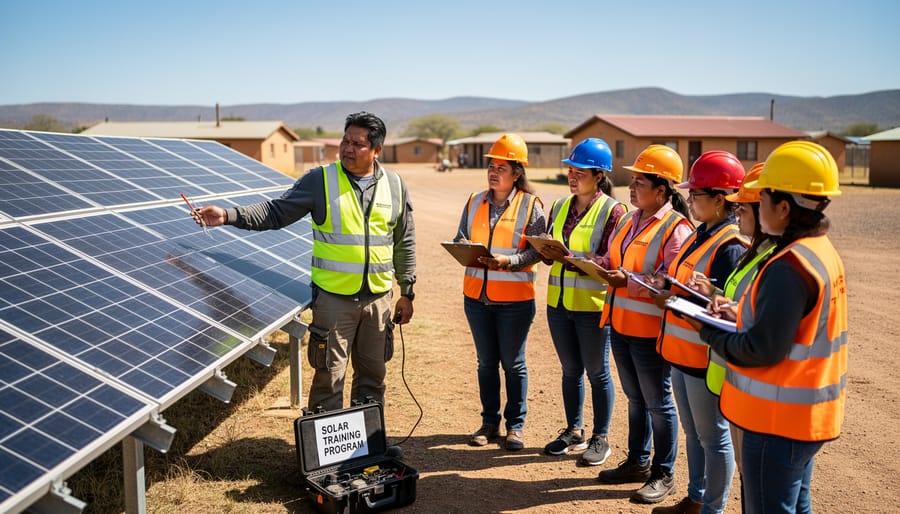
Successful indigenized energy projects require sustained investment in human capital development to ensure communities can independently operate and maintain their renewable energy infrastructure. Comprehensive training programs should encompass technical skills for system installation, routine maintenance procedures, troubleshooting protocols, and safety standards specific to solar installations. These initiatives transform community members into qualified technicians and project managers, reducing long-term dependency on external contractors.
Local hiring practices strengthen project sustainability while delivering measurable economic benefits to Indigenous communities. Organizations should establish recruitment pipelines that prioritize community members for positions ranging from construction labor to technical management roles. This approach not only creates immediate employment opportunities but also builds institutional knowledge within the community.
Knowledge transfer mechanisms must extend beyond basic operational training to include business management, procurement processes, and strategic planning capabilities. Partnering organizations should implement mentorship programs where experienced professionals work alongside community trainees over extended periods, ensuring genuine skill development rather than superficial instruction. Documentation of systems, processes, and maintenance schedules in accessible formats further supports long-term self-sufficiency. When communities possess both technical expertise and management capabilities, indigenized energy projects achieve true autonomy, transforming from external interventions into community-owned assets that generate lasting economic and environmental returns.
Government and Institutional Support for Indigenized Energy
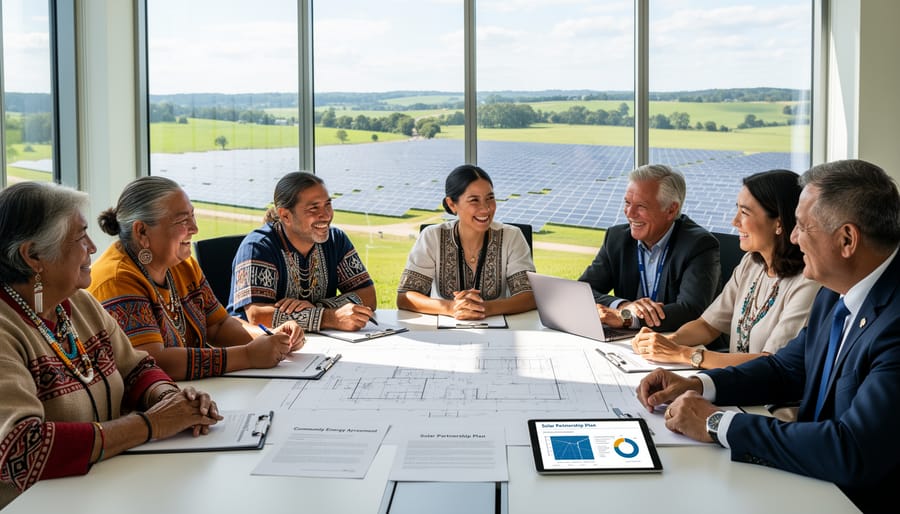
Funding Programs and Incentives
Indigenous energy projects benefit from a diverse array of financial support mechanisms designed to accelerate clean energy deployment while advancing reconciliation objectives. Federal programs such as Indigenous Community-Based Climate Monitoring and the Clean Energy for Rural and Remote Communities Program provide direct grant funding for renewable energy infrastructure, with allocations ranging from $50,000 to $20 million depending on project scope and community capacity.
Tax incentives play a crucial role in project feasibility. Indigenous-led renewable energy developments often qualify for accelerated capital cost allowances and provincial renewable energy credits, improving return on investment timelines. Several provinces offer enhanced feed-in tariffs specifically for Indigenous-owned generation facilities, providing long-term revenue certainty that strengthens financing applications.
Development finance institutions including the Business Development Bank of Canada and Indigenous Services Canada offer specialized loan products with favorable terms for Indigenous energy entrepreneurs. These programs typically feature reduced interest rates, flexible repayment schedules, and capacity-building support to ensure project success.
Partnership structures with private sector entities can unlock additional capital while maintaining Indigenous ownership. Joint ventures often leverage commercial financing while accessing Indigenous-specific incentives, creating hybrid funding models that maximize available resources and distribute risk appropriately among stakeholders.
How Commercial Clients Can Support Indigenous Energy Transition
Commercial clients and government institutions can drive meaningful Indigenous energy transition by integrating partnership requirements directly into their procurement frameworks. Begin by establishing Indigenous participation criteria in requests for proposals, including requirements for joint ventures, revenue-sharing arrangements, or direct Indigenous ownership stakes in solar installations. Set measurable targets such as allocating a specific percentage of energy procurement contracts to Indigenous-led or partnered projects within defined timeframes.
Incorporate Indigenous partnership considerations into corporate sustainability reporting and ESG metrics. This demonstrates commitment beyond compliance and attracts investors increasingly focused on social governance. Government agencies should mandate consultation with local Indigenous communities during the planning phase of any renewable energy project on or near traditional territories, ensuring free, prior, and informed consent protocols are followed.
Financial institutions and corporate clients can establish dedicated funding mechanisms or favorable financing terms for Indigenous energy ventures, recognizing that access to capital remains a significant barrier. Consider long-term power purchase agreements that provide revenue certainty for Indigenous-led solar projects, enabling better project financing and sustainable economic development.
Practical implementation includes developing internal policies that prioritize Indigenous suppliers, creating capacity-building programs that transfer technical knowledge, and establishing ongoing dialogue channels with Indigenous energy organizations. These strategies transform Indigenous energy transition from an aspirational goal into a measurable business practice with documented social and environmental returns.
The convergence of economic opportunity, social responsibility, and technical innovation makes indigenized energy a compelling priority for commercial solar providers and institutional clients. Organizations that proactively engage with Indigenous communities as genuine partners position themselves at the forefront of the clean energy transition while contributing to meaningful reconciliation efforts. The business case is clear: projects developed through authentic Indigenous partnerships demonstrate higher success rates, stronger community support, and improved long-term operational stability.
Moving forward requires commitment beyond compliance. Commercial entities must approach Indigenous communities with respect for sovereignty, recognition of traditional knowledge systems, and willingness to structure agreements that ensure equitable benefit-sharing. This means investing time in relationship-building, adapting procurement processes to accommodate Indigenous enterprises, and creating opportunities for capacity development that extend beyond individual projects.
For facility managers and government officials evaluating renewable energy investments, incorporating Indigenous partnership criteria into RFP requirements and vendor selection processes represents a practical first step. Industry leaders can accelerate progress by establishing clear protocols for Indigenous engagement, supporting workforce development initiatives, and advocating for policy frameworks that facilitate Indigenous participation in energy markets. The transition to clean energy presents a unique opportunity to build a more inclusive and sustainable energy system—one that reflects both environmental imperatives and the principles of reconciliation.