
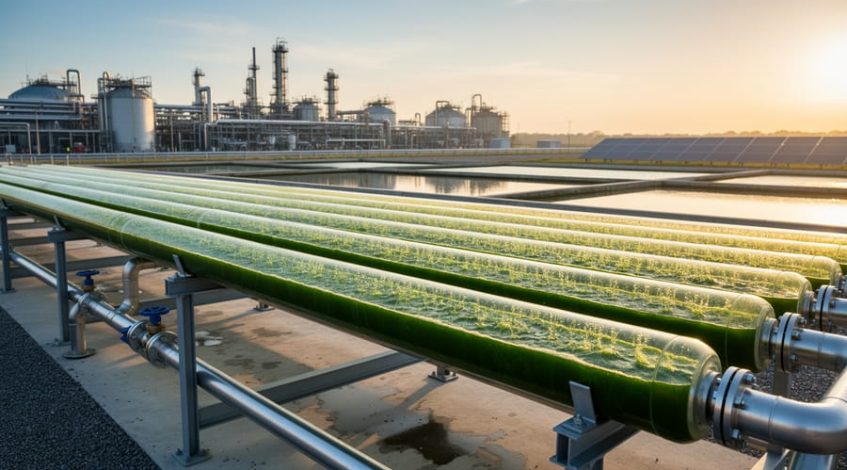
Algae biofuel production converts microscopic photosynthetic organisms into renewable diesel, jet fuel, and ethanol through a multi-stage process that begins with strain selection and cultivation in open ponds or closed photobioreactors. The transformation involves harvesting algae biomass at optimal lipid content (typically 20-50% dry weight), extracting oils through mechanical pressing or solvent-based methods, and refining these oils into drop-in fuels compatible with existing infrastructure. This technology addresses a critical gap in the renewable energy portfolio: while solar technology advancements excel at electricity generation, transportation sectors require energy-dense liquid fuels that algae uniquely provides without competing for arable land or freshwater resources.
Current commercial operations achieve yields of 5,000-10,000 gallons per acre annually, surpassing traditional biodiesel crops by factors of ten or more. The process efficiency depends on four key variables: algae species selection (high-lipid strains like Nannochloropsis or Chlorella), carbon dioxide input (often sourced from industrial emissions), nutrient management (nitrogen and phosphorus optimization), and harvesting timing (balancing growth rates against lipid accumulation). Leading facilities integrate wastewater treatment and carbon capture, creating multiple revenue streams that improve economic viability.
For decision-makers evaluating long-term energy strategies, understanding algae biofuel production clarifies its role as a complementary technology rather than a replacement for established renewables. The current production cost of $7-15 per gallon positions it for specific applications where energy density and liquid fuel requirements justify premium pricing, particularly in aviation and marine transport sectors where electrification faces technical limitations.
The Algae Biofuel Process: From Pond to Power
Cultivation and Growth Optimization
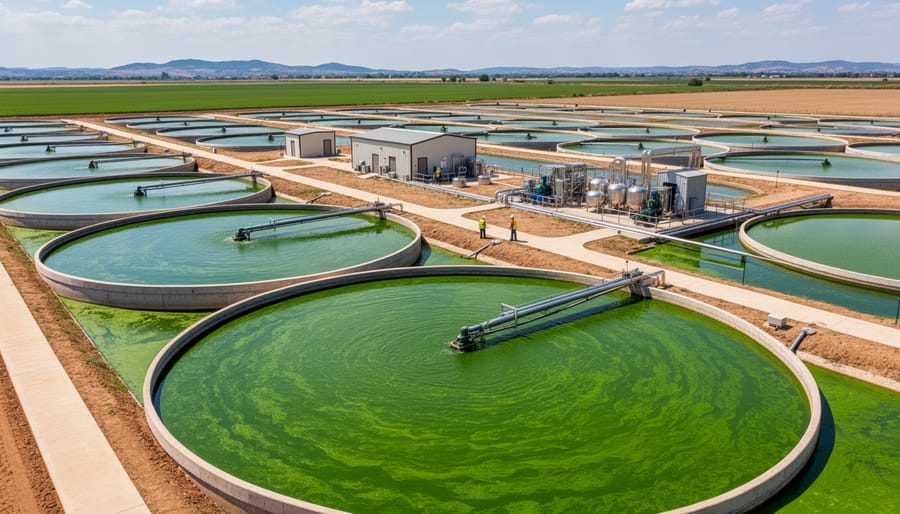
Algae cultivation for biofuel production employs two primary systems, each with distinct advantages for commercial-scale operations. Photobioreactors are closed systems that offer precise environmental control, optimizing light exposure, temperature, and nutrient delivery while minimizing contamination risks. These systems typically achieve higher biomass productivity—often 50-100 grams per square meter daily—but require significant capital investment and operational expertise. Open pond systems, conversely, represent a more cost-effective approach suitable for large-scale deployment, though they provide less environmental control and lower yields averaging 20-30 grams per square meter daily.
Growth optimization depends on carefully balancing several critical parameters. Algae require adequate carbon dioxide supply, appropriate pH levels between 7-9, temperatures ranging from 20-30°C, and sufficient nutrient availability, particularly nitrogen and phosphorus. Light intensity directly influences photosynthetic efficiency, making facility location a strategic consideration for commercial viability.
Scalability remains the decisive factor for industrial applications. Successful implementations, such as Sapphire Energy’s demonstration facility in New Mexico, have validated multi-acre production systems. However, achieving commercial profitability requires optimizing the biomass-to-fuel conversion ratio while managing water consumption and maintaining consistent algae strain performance across seasonal variations.
Harvesting and Extraction Methods
After cultivation, algae must be separated from water and processed to extract usable lipids—two operations that significantly impact project economics. The harvesting phase typically employs flocculation, where chemical additives cause algae cells to clump together for easier removal, or centrifugation, which uses mechanical force to separate biomass from water. Industrial facilities often combine methods to achieve 15-25% solid concentration, balancing effectiveness with energy consumption.
Lipid extraction follows harvesting, with mechanical pressing, solvent extraction, or supercritical CO2 methods representing the primary approaches. Mechanical pressing offers lower operating costs but reduced yields, while solvent-based systems achieve 95% lipid recovery at higher expense. A 100-acre commercial operation processing 50 tons of dry algae daily might invest $8-12 million in harvesting and extraction infrastructure, with energy costs representing 30-40% of operational expenses.
For business decision-makers, these capital-intensive processes present the current bottleneck in algae biofuel commercialization. Companies like Cellana and Sapphire Energy have demonstrated viable extraction at pilot scale, yet achieving cost parity with petroleum-based fuels requires continued technological advancement. Facilities co-locating with existing energy infrastructure—particularly solar installations with excess capacity—can offset processing costs by 20-35%, improving overall project feasibility.
Conversion to Usable Biofuel
Once harvested, algae biomass undergoes conversion processes to create market-ready biofuels. Transesterification remains the most widely adopted method for biodiesel production, where algal lipids react with an alcohol catalyst to produce fatty acid methyl esters. This process typically achieves conversion rates of 90-98%, delivering fuel compatible with existing diesel infrastructure.
Alternative pathways include hydrothermal liquefaction, which converts wet algae biomass directly into biocrude oil under high pressure and temperature conditions, eliminating costly drying steps. This method proves particularly valuable for large-scale operations seeking to minimize preprocessing expenses. Anaerobic digestion offers another avenue, converting algae into biogas for combined heat and power applications.
For business decision-makers, understanding conversion efficiency directly impacts return on investment. Current commercial facilities report production costs between $7-15 per gallon, with economies of scale driving these figures downward. Real-world applications at facilities like Sapphire Energy’s demonstration plant in New Mexico have validated these technologies at industrial scale. Organizations evaluating algae biofuel integration should assess which conversion pathway aligns with their energy infrastructure, existing equipment compatibility, and long-term sustainability objectives. The flexibility to produce multiple fuel types positions algae as a versatile component in diversified renewable energy portfolios.

Commercial Viability: Where Algae Biofuel Stands Today
Cost Analysis and ROI Projections
Current algae biofuel production costs range from $7 to $15 per gallon, significantly higher than conventional petroleum-based fuels at $3 to $4 per gallon and comparable established biodiesel alternatives at $4 to $6 per gallon. This cost differential reflects the technology’s emerging status and the infrastructure investments required for commercial-scale production.
When compared to solar energy investments, the economic landscape becomes more nuanced. A commercial solar installation typically achieves ROI within 5 to 7 years with predictable energy cost reductions, while algae biofuel facilities currently project ROI timelines of 10 to 15 years under optimal conditions. The higher capital expenditure for algae production systems, ranging from $3 to $8 per annual gallon of capacity, requires substantial upfront investment.
However, several factors suggest improving economics. Production costs have decreased by approximately 30 percent over the past decade through advances in cultivation efficiency and extraction methods. Facilities achieving yields above 5,000 gallons per acre annually demonstrate path to cost parity with conventional biodiesel by 2030.
For organizations evaluating energy portfolios, algae biofuel represents a complementary long-term option rather than an immediate alternative to proven technologies. While solar installations deliver immediate operational savings and proven returns, algae biofuel projects currently serve better as strategic pilot programs or partnership opportunities. Forward-thinking facility managers may consider small-scale demonstration projects to gain expertise while production economics continue maturing, positioning their organizations to capitalize on future cost reductions and potential carbon credit revenue streams.
Infrastructure Requirements
Commercial-scale algae biofuel production requires substantial physical infrastructure and strategic resource allocation. Production facilities typically span 100-1,000 acres, depending on output targets, with open raceway ponds or closed photobioreactor systems as the primary cultivation method. Open ponds offer lower capital costs—approximately $50,000-100,000 per acre—while photobioreactors require higher initial investment but deliver greater productivity and contamination control.
Essential infrastructure components include water management systems with filtration and recycling capabilities to minimize freshwater consumption, which can reach 300-500 gallons per gallon of fuel produced without proper recirculation. Carbon dioxide delivery systems are critical, as algae require continuous CO2 supply—often sourced cost-effectively from nearby industrial facilities or power plants through pipeline infrastructure.
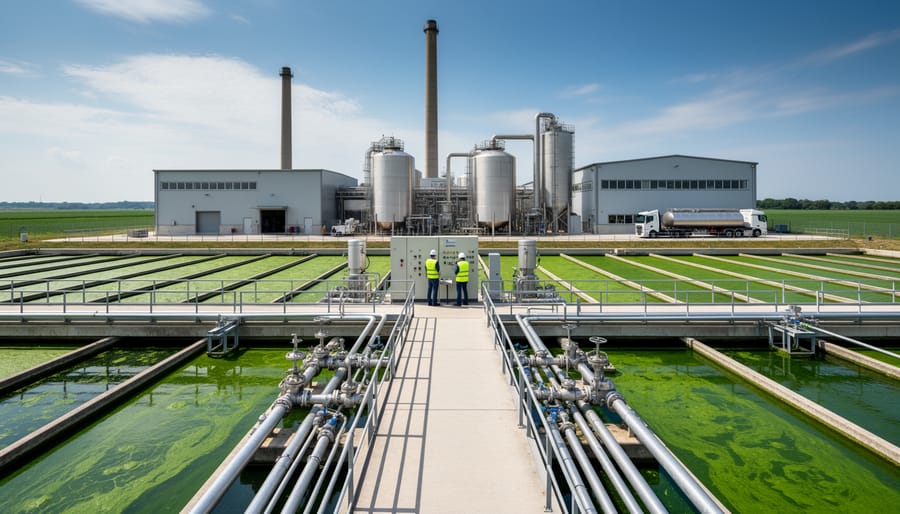
Processing facilities must house harvesting equipment, dewatering systems, and extraction technology for converting algal biomass into fuel. A 10-million-gallon-per-year facility requires approximately $20-50 million in processing equipment alone. Power requirements are substantial, creating opportunities for integrated renewable energy solutions where solar installations offset operational electricity costs—a consideration that can improve overall project economics by 15-25%.
Location selection proves paramount, with ideal sites offering consistent sunlight, moderate temperatures, access to CO2 sources, proximity to end-use markets, and available land unsuitable for conventional agriculture. Real-world examples include Sapphire Energy’s Green Crude Farm in New Mexico, which demonstrated that integrated renewable power substantially reduces operating expenses while improving sustainability metrics that appeal to environmentally conscious stakeholders and investors.
Real-World Applications: Who’s Making It Work
Industrial-Scale Production Facilities
Several facilities worldwide have transitioned algae biofuel production from laboratory-scale operations to commercial reality, providing valuable insights into technical feasibility and economic viability. Sapphire Energy’s Green Crude Farm in New Mexico operated a 100-acre facility demonstrating that large-scale cultivation and processing could achieve consistent production, though the project ultimately highlighted cost challenges that required further innovation in harvesting and extraction methods.
Algenol’s integrated biorefinery in Florida showcased a different approach, producing approximately 8,000 gallons of ethanol per acre annually through direct ethanol production rather than lipid extraction. This facility demonstrated that process efficiency improvements could significantly impact production economics, with their photobioreactor system achieving higher productivity per square foot compared to open pond systems.
Current commercial operations have revealed that successful facilities typically integrate multiple revenue streams beyond fuel production. Cellana’s demonstration facility in Hawaii produces both biofuel feedstock and high-value nutritional products, improving overall return on investment. Production costs at operational facilities generally range from $5 to $15 per gallon, depending on cultivation method, climate conditions, and scale.
Key lessons learned include the importance of strain selection for local conditions, the necessity of co-product development to enhance economic returns, and the value of hybrid systems combining photobioreactors with open ponds. Performance metrics indicate that achieving commercial profitability requires continued advancement in biomass productivity, harvesting efficiency, and processing technology while maintaining consistent quality standards across production cycles.
Hybrid Energy Systems in Practice
Leading facilities worldwide are demonstrating the viability of hybrid energy systems that integrate algae biofuel production with solar photovoltaic arrays and conventional grid connections. These multi-source configurations provide unprecedented energy resilience while reducing operational costs and carbon footprints.
The Sundrop Farms facility in Port Augusta, Australia, exemplifies this approach. Their 20-hectare operation combines concentrated solar thermal technology with backup grid power to cultivate high-density algae strains for both biofuel feedstock and commercial applications. The system achieves 92% renewable energy utilization, with algae cultivation occurring in photobioreactors powered primarily by solar arrays during peak production hours. Grid power provides stability during low-solar periods, ensuring continuous operation without production interruptions.
Similarly, the Algenol facility in Florida operates a hybrid system that leverages rooftop solar panels to power algae cultivation infrastructure while maintaining grid connectivity for processing equipment. Their configuration reduced electricity costs by 64% compared to grid-only operations, with algae biofuel production offsetting an additional 18% of energy expenses through on-site fuel generation.
These hybrid systems also complement emerging technologies like hydrogen fuel cells, which can utilize biogas byproducts from algae processing. The integration creates circular energy economies where waste streams become valuable inputs.
For decision-makers evaluating energy infrastructure investments, hybrid systems offer risk mitigation through diversification. Initial capital requirements typically run 40-60% higher than single-source installations, but facilities report payback periods of 7-12 years depending on location and energy costs. The operational flexibility proves particularly valuable during grid disruptions or energy price volatility, with facilities maintaining 85-95% operational capacity during regional power issues that would otherwise halt production entirely.
Algae Biofuel vs. Solar: Strategic Energy Planning
Energy Density and Storage Advantages
One of algae biofuel’s most significant advantages lies in its energy density compared to electricity storage solutions. While solar energy generation continues to advance rapidly, liquid biofuels offer approximately 30-40 times the energy density of lithium-ion batteries by volume, making them particularly valuable for applications where space and weight are critical constraints.
This characteristic directly addresses the energy storage challenges facing renewable energy adoption, especially in transportation and backup power applications. For facility managers operating vehicle fleets or requiring extended-duration backup systems, liquid biofuels can be stored in standard tanks indefinitely without degradation, eliminating the capacity fade issues associated with battery storage.
The transportation sector demonstrates this advantage clearly. A commercial truck requires approximately 500-800 liters of fuel capacity for long-haul operations, whereas equivalent battery systems would demand significantly larger space and payload allocation. Aviation applications present even more pronounced benefits, as current battery technology cannot match the energy-to-weight requirements of commercial flight.
For business continuity planning, algae-derived fuels integrate seamlessly with existing diesel generator infrastructure, providing reliable backup power without requiring substantial capital investment in new systems. This compatibility allows organizations to maintain energy security while gradually transitioning to renewable sources, positioning algae biofuels as a practical bridge technology that complements solar installations rather than competing with them.
Complementary Integration Opportunities
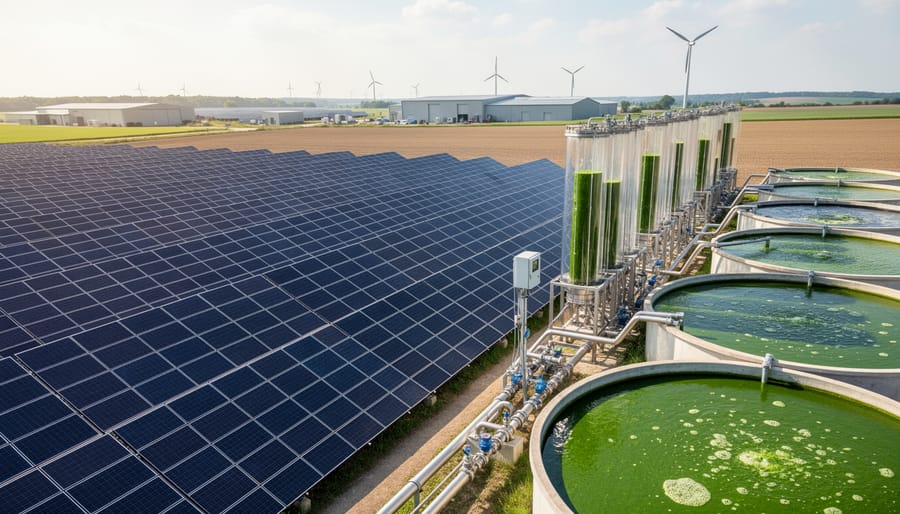
Forward-thinking organizations are discovering that algae biofuel facilities and solar installations create powerful synergies when strategically integrated. Manufacturing plants and industrial complexes with both rooftop solar arrays and algae cultivation systems can channel excess daytime solar generation directly into energy-intensive cultivation processes, optimizing equipment utilization while maintaining operational flexibility through biofuel backup generation during evening peak demand.
Wastewater treatment facilities represent an ideal integration scenario. These operations can deploy solar panels to power treatment processes while simultaneously cultivating algae that consume CO2 and nutrients from wastewater streams. The resulting biomass becomes feedstock for on-site biofuel production, creating a closed-loop system that addresses multiple operational challenges. Several municipal facilities in Australia have begun piloting this approach, demonstrating impressive reductions in both energy costs and discharge treatment requirements.
Agricultural operations offer another compelling opportunity. Farms with solar installations can leverage algae cultivation to diversify revenue streams while utilizing existing infrastructure. Solar arrays power irrigation and processing equipment during daylight hours, while algae bioreactors produce supplemental fuel for machinery and backup generators. When paired with grid-scale energy storage, these integrated systems provide comprehensive energy independence.
The key consideration for business decision-makers involves timing and scalability. While solar technology delivers immediate returns, algae biofuel integration should be viewed as a medium-term enhancement strategy for organizations with specific operational profiles requiring liquid fuel alternatives alongside electrical generation.
Implementation Considerations for Your Organization
Assessment Criteria
Before implementing algae biofuel production, decision-makers should evaluate several critical factors to ensure viability and return on investment. Facility size requirements vary significantly based on production goals, with commercial operations typically requiring multiple hectares for photobioreactor arrays or open pond systems. Energy consumption during cultivation, harvesting, and processing stages directly impacts operational costs, making integration with existing renewable infrastructure particularly advantageous. Geographic location influences productivity, as algae strains thrive in specific climate conditions with consistent sunlight exposure and appropriate temperatures. Regions with access to non-potable water sources and waste CO2 from industrial facilities offer additional economic benefits. Budget considerations extend beyond initial capital expenditure to include ongoing operational costs, maintenance schedules, and technological upgrades. Successful implementations often leverage smart energy management systems to optimize energy use across production phases. Regulatory compliance, available subsidies, and local environmental policies also factor into feasibility assessments. Organizations should conduct thorough due diligence, including pilot testing and scalability studies, before committing to full-scale deployment.
Timeline and Next Steps
For transportation sectors, algae biofuel remains 5-10 years from widespread commercial viability, with aviation fuel applications likely arriving first due to regulatory incentives and higher price tolerance. Maritime shipping may follow within 8-12 years as decarbonization mandates intensify. However, stationary power generation using algae-derived fuels could see limited deployment in 3-5 years for facilities requiring backup power or operating in remote locations.
To prepare strategically, energy managers should focus immediate investments on proven technologies like solar installations while monitoring algae biofuel developments through industry associations and pilot programs. Consider participating in regional biofuel consortiums to secure early access to supply chains as they mature. Facilities with available land or wastewater infrastructure might explore partnership opportunities with algae producers, creating dual revenue streams while positioning for future fuel access.
The most practical near-term approach combines robust solar capacity for primary energy needs with contingency planning for algae biofuel integration as a complementary solution. This positions organizations to meet current sustainability targets through solar while maintaining flexibility to adopt biofuels when economic conditions align, ensuring both immediate emissions reductions and long-term energy resilience.
The algae biofuel process represents a promising component of tomorrow’s energy portfolio, though its path to commercial viability requires patience and continued innovation. For energy decision-makers today, understanding this technology’s trajectory provides valuable context for long-term strategic planning while recognizing that proven renewable solutions deliver measurable results immediately.
Current research demonstrates that algae biofuels can theoretically achieve energy density comparable to petroleum-based fuels, offering potential applications where electrification proves challenging—particularly in aviation, maritime shipping, and heavy industrial sectors. However, production costs ranging from $7-15 per gallon and energy-intensive cultivation requirements mean this technology remains years from economic competitiveness. Several pilot programs, including recent partnerships between energy companies and research institutions, have validated the technical process while highlighting the substantial infrastructure investments still needed.
Forward-thinking organizations should monitor algae biofuel developments as part of a diversified energy strategy, recognizing that renewable energy encompasses multiple technologies serving different needs. While algae research progresses through its development phases, established solar installations generate immediate operational savings and carbon reduction benefits today. The most effective approach combines deploying mature technologies that provide immediate returns with maintaining awareness of emerging alternatives that may serve specific applications in the future.
Strategic energy planning acknowledges that innovation timelines vary considerably across technologies. Organizations positioning themselves for long-term sustainability success implement proven solutions today while remaining informed about complementary technologies that may enhance their energy portfolios tomorrow. This balanced perspective ensures both immediate operational benefits and future adaptability.