
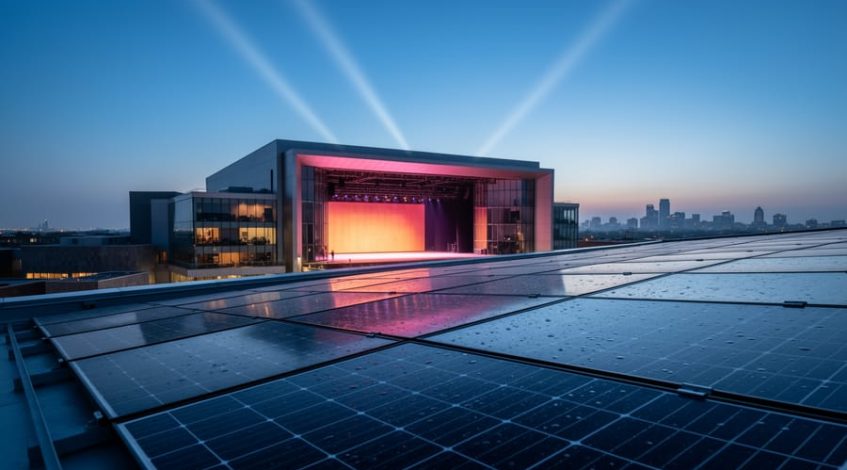
Entertainment venues with stages face a unique energy challenge: massive power demands from lighting systems, sound equipment, climate control, and production infrastructure that can consume 30-50% more electricity than comparable commercial buildings. A typical 500-seat theater operates stage lighting that draws 50-100 kilowatts during performances, while convention centers with multiple stage areas can see monthly energy bills exceeding $50,000. These facilities operate in an industry where margins are tight, yet shutting down for renovations isn’t feasible without significant revenue loss.
Solar energy offers venue operators a strategic solution that addresses both financial pressures and growing sustainability expectations from patrons and performers. Commercial solar installations designed for stage venues now deliver 15-25 year payback periods while reducing operational costs by 40-70%. Modern photovoltaic systems integrate seamlessly with existing electrical infrastructure, providing reliable power generation during peak daytime preparation hours and offsetting evening performance consumption through net metering agreements.
The business case extends beyond energy savings. Venues implementing solar solutions report enhanced brand positioning, eligibility for renewable energy incentives averaging $100,000-$500,000 depending on system size, and increased booking appeal from environmentally conscious artists and event organizers. Forward-thinking facility managers recognize that solar adoption represents not merely an operational upgrade but a competitive differentiator in an evolving entertainment landscape where sustainability credentials influence venue selection decisions. The question is no longer whether stage venues should adopt solar, but how quickly they can implement systems that transform their largest operational expense into a strategic asset.
The Energy Appetite of Stage Venues
Peak Demand During Events
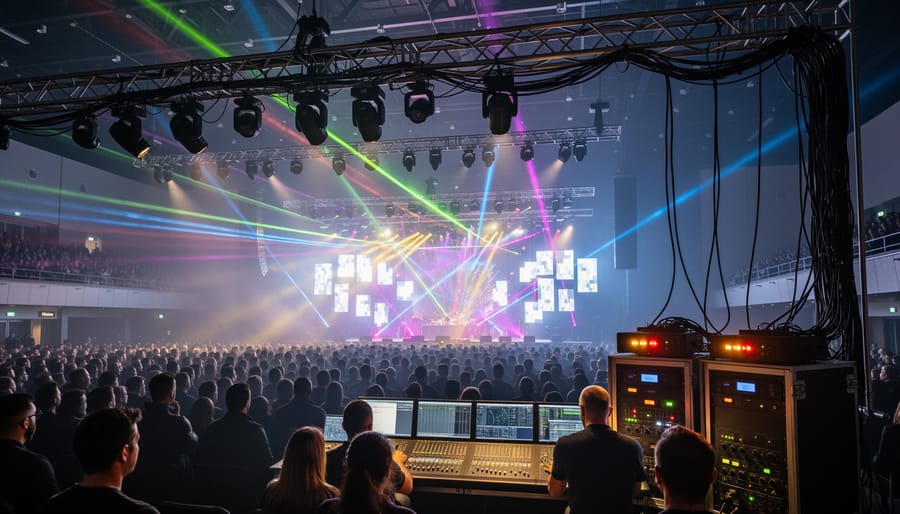
Stage venues experience dramatic energy consumption spikes during performances and events, often seeing electricity usage increase by 300-500% compared to non-event periods. This surge stems from multiple simultaneous demands: high-intensity stage lighting systems, professional sound equipment, climate control for large crowds, and auxiliary systems including broadcast equipment and food service operations. The concentrated nature of these energy demands creates significant financial challenges for facility managers.
Peak demand charges represent a substantial portion of utility costs for venues, as electricity providers assess fees based on the highest consumption levels recorded during billing periods. A single sold-out concert or theatrical production can establish peak demand thresholds that affect utility rates for an entire month, even though the facility may operate at much lower capacity during off-peak hours. These demand charges can account for 30-50% of total electricity expenses, creating unpredictable operating costs that complicate budget planning.
Furthermore, many events occur during evening hours when grid electricity rates reach their highest levels, compounding the financial impact. The combination of high instantaneous demand, elevated time-of-use rates, and persistent demand charges creates a perfect storm of energy expenses that significantly impacts the bottom line of entertainment venues and event facilities.
Year-Round Operational Costs
Venues with stages maintain substantial operational costs throughout the year, extending far beyond performance dates. Climate control systems operate continuously to protect valuable acoustic equipment, musical instruments, and stage infrastructure from temperature fluctuations and humidity damage. These systems typically account for 40-60% of baseline energy consumption during non-performance periods.
Maintenance activities demand consistent power for lighting, HVAC systems, and specialized equipment testing. Technical crews require adequate working conditions for set construction, repairs, and equipment calibration, necessitating full environmental control even during dark periods. Rehearsal schedules add another layer of energy demand, with some venues hosting weekly practices that require theatrical lighting, sound systems, and comfortable ambient conditions.
Administrative operations represent an often-overlooked cost component. Back-office functions, including ticketing systems, security surveillance, communications infrastructure, and staff workspaces, draw power year-round regardless of performance schedules. For venues with multiple spaces, this baseline load multiplies across rehearsal rooms, storage areas, and ancillary facilities.
The cumulative effect creates an energy baseline that persists twelve months annually. Solar installations address this consistent demand profile effectively, generating returns even during off-peak seasons when traditional revenue streams diminish. By offsetting baseline operational costs, solar systems improve cash flow predictability and reduce vulnerability to utility rate fluctuations during financially lean periods.
Why Solar Makes Business Sense for Stage Venues
Predictable Energy Costs and Long-Term Savings
Venue operators implementing solar energy solutions gain immediate control over their largest operational expense while securing financial predictability for decades. With traditional utility rates increasing an average of 3-5% annually, solar installations effectively lock in energy costs, eliminating exposure to market volatility and regulatory price adjustments. This stability proves particularly valuable for venues operating on multi-year budget cycles and fixed-price event contracts.
The return on investment for stage venues typically materializes within 5-7 years, with systems designed to operate efficiently for 25-30 years. High-capacity venues consuming 200-500 MWh monthly can expect annual savings ranging from $40,000 to $150,000, depending on system size and local electricity rates. These facilities experience similar institutional savings to other large-scale commercial installations. Beyond direct utility cost reductions, venues benefit from federal tax incentives, accelerated depreciation schedules, and potential state-level renewable energy credits.
Performance monitoring systems provide real-time generation data, enabling facility managers to optimize energy consumption during peak production hours. This operational intelligence supports strategic scheduling of energy-intensive activities like HVAC pre-cooling and equipment testing, maximizing solar utilization and further reducing grid dependency. The combination of immediate savings, long-term cost certainty, and enhanced operational control creates a compelling financial case for solar adoption.
Offsetting Peak Demand Charges
For entertainment venues with stages, demand charges often represent 30-50% of total electricity costs, making them a primary target for cost reduction strategies. Solar energy systems provide exceptional value by generating power during the periods when venues typically experience their highest demand peaks.
Stage venues consume significant electricity during daytime hours for technical rehearsals, lighting setup, sound checks, and matinee performances. These activities create substantial demand spikes that utility companies charge at premium rates. Solar panels generate maximum output during these same midday hours, directly offsetting grid consumption when it matters most financially.
The demand charge savings are particularly impressive for venues hosting afternoon events or conducting extensive technical preparations. A 500-seat theater implementing a properly sized solar array can reduce demand charges by 40-60% during peak production periods. This reduction compounds over time, as demand charges are calculated based on the highest 15-minute consumption interval during each billing period.
Real-world data demonstrates that venues with consistent daytime operations achieve payback periods 2-3 years faster than facilities with evening-only schedules. The key is sizing the solar system to match your venue’s specific demand profile, ensuring maximum offset during your highest consumption periods while avoiding excessive generation during low-demand hours.
Enhanced Brand Reputation and Marketing Value
Implementing solar energy solutions positions venues with stages as environmental leaders within their communities and industry sectors. This commitment to sustainability resonates strongly with today’s environmentally conscious audiences, artists, and corporate sponsors who increasingly prioritize partnerships with green-certified facilities. Venues that invest in renewable energy can leverage this distinction across marketing channels, highlighting reduced carbon footprints and energy independence as competitive advantages.
Forward-thinking artists and touring productions actively seek performance spaces that align with their sustainability values, creating preferential booking opportunities for solar-powered venues. Corporate event planners similarly favor facilities demonstrating measurable environmental commitments when selecting locations for conferences, product launches, and entertainment functions. This preference translates directly into increased bookings and higher venue utilization rates.
The marketing value extends beyond attracting clientele. Solar installations provide compelling content for public relations campaigns, social media engagement, and community outreach initiatives. Many venues featured in commercial solar success stories report enhanced brand perception and positive media coverage following their renewable energy investments. Additionally, sustainability certifications and awards associated with solar adoption further differentiate venues in competitive markets, supporting premium pricing strategies and long-term business growth.
Designing Solar Systems for Stage Venues
Roof and Ground-Mount Options
Performance venues face distinct structural considerations when selecting solar installation approaches. Roof-mounted systems offer advantages for traditional theaters with substantial roof space, utilizing existing infrastructure without consuming valuable ground area. These installations require comprehensive structural assessments to verify load-bearing capacity, particularly for historic buildings where roof integrity may limit panel density.
Ground-mount configurations present compelling alternatives for amphitheaters and outdoor venues with available land. This approach provides installation flexibility, simplified maintenance access, and opportunities for optimal panel orientation independent of building design. Ground systems can also integrate with parking structures, creating dual-purpose shaded areas while generating electricity. Facilities like the Red Rocks Amphitheatre have successfully implemented ground-mounted arrays that complement rather than compromise venue aesthetics.
Hybrid approaches combining roof and ground installations maximize energy generation for venues with mixed architecture. The Kennedy Center’s phased implementation demonstrates how combining both methods can achieve substantial capacity while respecting architectural significance. Installation decisions should factor in shading patterns from stage rigging, lighting towers, and surrounding structures. Professional site assessments determine optimal configurations, balancing structural requirements, energy production goals, and budget parameters. Many venues benefit from modular installations that allow capacity expansion as energy demands grow or additional funding becomes available.
Carport and Parking Area Solar Canopies
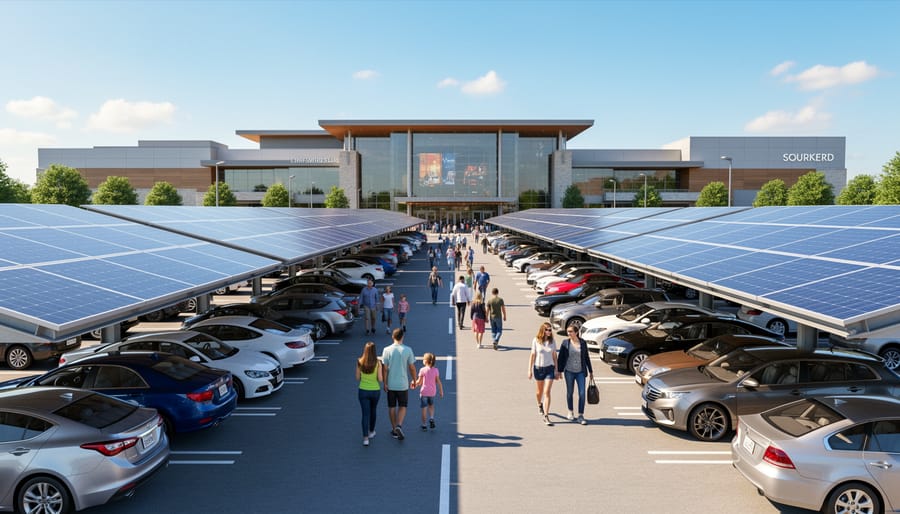
Carport and parking area solar canopies represent one of the most cost-effective solar installations for entertainment venues, delivering immediate operational benefits alongside long-term energy generation. These elevated photovoltaic structures transform underutilized parking spaces into dual-purpose assets that generate clean electricity while protecting patron vehicles and tour buses from weather exposure.
The financial advantages are compelling. Solar canopies typically offset 30-50% of a venue’s baseline energy consumption while eliminating the need for separate shade structure investments. Production crews and touring artists particularly value covered loading areas that protect sensitive equipment during load-in and load-out operations. This amenity enhances venue competitiveness when bidding for major touring acts and events.
Modern canopy designs accommodate various parking configurations, from standard stall arrangements to dedicated tour bus zones requiring higher clearance specifications. The elevated installation allows for optimal panel angle adjustment, often achieving superior energy production compared to rooftop systems constrained by existing roof pitch. Additionally, canopy structures avoid the roof penetration concerns that delay many commercial solar projects.
Several amphitheaters and festival grounds have documented 20-25 year payback acceleration through strategic canopy deployment, with some facilities achieving positive cash flow within seven years when combining federal tax incentives, state rebates, and utility demand charge reductions.
Battery Storage for Reliability
Power reliability remains paramount for venues with stages, where unexpected outages can disrupt performances, damage equipment, and compromise audience safety. Modern battery backup systems paired with solar installations provide seamless power continuity during grid failures. These energy storage solutions automatically activate within milliseconds, maintaining critical lighting, sound systems, and emergency exits without interruption. For performance venues, lithium-ion battery systems typically store 50-200 kWh, sufficient to support essential operations for several hours. This capability proves particularly valuable during peak evening performances when grid demand is highest. Beyond emergency backup, battery storage enables venues to optimize energy costs by storing solar power generated during off-peak hours and deploying it during expensive peak-demand periods, significantly reducing operational expenses while ensuring consistent, reliable power delivery for uninterrupted entertainment experiences.
Real-World Success Stories
Community Theater Transformation
The Riverside Community Theater in suburban Melbourne exemplifies how mid-sized performance venues can achieve significant operational improvements through strategic solar implementation. Facing annual electricity costs exceeding $48,000 and aging HVAC systems straining their budget, theater management partnered with EU Solar to design a comprehensive 85kW solar solution in 2021.
The installation addressed the venue’s specific energy demands, including high-output stage lighting, climate control for a 380-seat auditorium, and backstage technical equipment. Within the first year of operation, the theater reduced grid electricity consumption by 67 percent, generating savings of approximately $32,000 annually. These results mirror success patterns observed across other commercial facilities that have transitioned to solar power.
Theater director Patricia Chen reports that the financial relief enabled immediate reinvestment into programming expansion. The venue increased its annual production schedule from eight to twelve shows and upgraded aging theatrical equipment. Additionally, $15,000 in first-year savings funded essential facility improvements, including LED stage lighting retrofits that further reduced energy consumption.
The system’s monitoring capabilities provide real-time visibility into energy usage patterns, enabling staff to optimize scheduling for rehearsals and performances during peak solar generation hours. This operational adjustment maximized self-consumption rates to 78 percent, substantially improving return on investment. The theater achieved payback on the initial investment within 4.2 years, establishing a sustainable financial model that supports long-term artistic programming goals while maintaining fiscal responsibility.
Outdoor Amphitheater Achievement
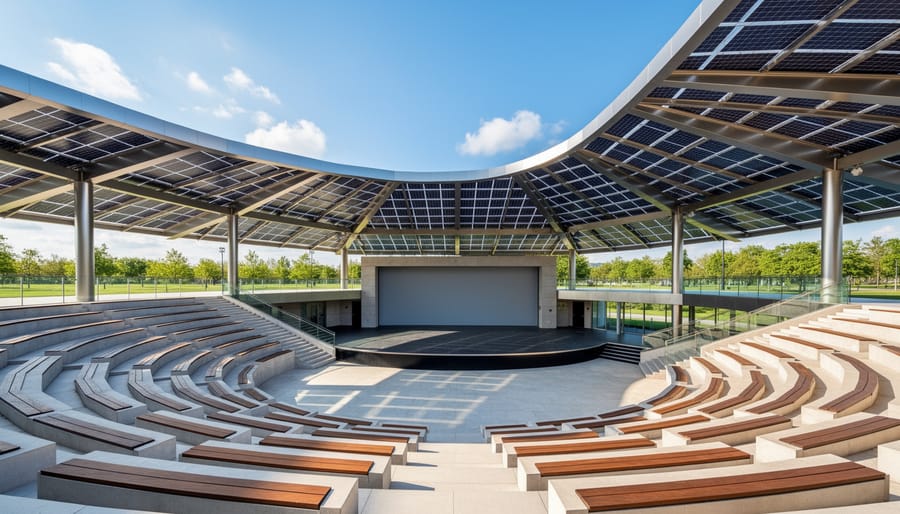
The Mountain View Amphitheater in Northern California demonstrates how outdoor performance venues can transform solar energy from an operational necessity into a year-round revenue generator. This 5,000-capacity facility operates a demanding seasonal schedule from May through September, hosting concerts, festivals, and community events that require substantial power for stage lighting, sound systems, and visitor amenities.
Recognizing that their peak entertainment season aligned perfectly with maximum solar production months, facility managers installed a 250-kilowatt solar array across existing parking structures and administrative buildings. The system was strategically sized to exceed summer operational demands by approximately 30 percent, creating surplus generation during performance months while completely offsetting off-season maintenance and security loads.
The implementation of net metering agreements with their local utility proved transformative for financial performance. During the active season, the venue consumes roughly 85 percent of solar production directly, avoiding peak demand charges that previously represented their largest operational expense. The remaining 15 percent feeds back to the grid, generating credits that accumulate throughout summer months.
From October through April, when the amphitheater hosts only occasional private events, those banked credits offset electricity costs for minimal operations, effectively reducing their annual utility expenses to near zero. This approach delivered a return on investment within six years, significantly faster than initially projected, while positioning the venue as an environmental leader within their community. The success has prompted expansion plans to add battery storage, enabling complete energy independence during their busiest performance weekends.
Navigating Incentives and Financing
Federal and State Incentives
Venue owners considering solar installations can significantly improve project economics through federal and state financial programs. The Investment Tax Credit (ITC) currently allows businesses to deduct up to 30% of solar installation costs from federal taxes, providing substantial upfront savings. Additionally, the Modified Accelerated Cost Recovery System (MACRS) enables depreciation of solar assets over five years, creating valuable tax benefits that improve cash flow during the critical early years of ownership.
State-level programs vary by location but often include rebates, performance-based incentives, and expedited permitting processes for commercial solar projects. Some jurisdictions offer additional tax credits and incentives specifically designed for large energy consumers, which many performance venues qualify for due to their substantial power requirements. Energy-intensive facilities with stages and extensive lighting systems typically see accelerated payback periods when combining multiple incentive programs. Working with experienced solar providers ensures proper documentation and maximizes available benefits, helping venue operators capture the full financial value of their solar investment while advancing sustainability objectives.
Creative Financing Models
Venues with stages can access solar energy through multiple financing pathways designed to minimize upfront capital requirements. Power Purchase Agreements (PPAs) enable facilities to host solar installations with zero initial investment, paying only for the electricity generated at predetermined rates typically below current utility costs. This model transfers ownership, maintenance, and performance risk to the solar provider while delivering immediate operational savings.
Solar leases offer similar benefits with fixed monthly payments regardless of system production, providing predictable budget planning over 15-25 year terms. Both arrangements qualify venues for renewable energy credits and sustainability recognition without affecting capital budgets or balance sheets.
Traditional financing through energy-efficient loans or green bonds remains viable for organizations seeking asset ownership and maximum long-term returns. These options often feature favorable interest rates and extended repayment periods aligned with solar system lifespans. Many jurisdictions offer grants, tax incentives, or accelerated depreciation schedules that significantly reduce effective costs. Facility managers should evaluate each model against operational goals, accounting preferences, and cash flow requirements to determine optimal fit for their venue’s financial strategy.
Implementation Roadmap for Venue Managers
Conducting an Energy Audit
A comprehensive energy audit provides the foundation for optimizing solar investment returns at stage venues. Begin by collecting 12-24 months of utility bills to establish baseline consumption patterns, paying particular attention to peak demand periods during events versus off-peak hours. Facility managers should document all major energy-consuming systems, including stage lighting rigs, sound equipment, HVAC systems, and backstage facilities.
Professional energy auditors can identify specific optimization opportunities through thermal imaging, power quality analysis, and equipment efficiency assessments. For stage venues, this analysis reveals critical insights such as phantom loads from continuously powered equipment, inefficient legacy lighting systems, and suboptimal climate control schedules. The audit should quantify current energy costs per event and annual consumption to establish measurable improvement targets.
This data-driven approach enables accurate sizing of solar installations and identifies complementary efficiency measures that maximize return on investment. Many venues discover that addressing inefficiencies before solar installation reduces required system capacity by 15-30 percent, significantly lowering upfront costs while improving overall performance metrics.
Selecting the Right Solar Partner
Selecting a qualified commercial solar partner requires careful evaluation of several critical factors specific to entertainment venues. Prioritize installers with documented experience in high-demand facilities, particularly those with stage lighting, HVAC systems, and variable energy loads. Request case studies demonstrating successful installations at comparable venues, including performance data and client references.
Verify that prospective partners possess relevant certifications and licenses for commercial-scale projects. The ideal installer should conduct comprehensive energy audits, analyzing your facility’s unique consumption patterns during both performance and non-performance periods. They should provide detailed financial modeling that accounts for utility rate structures, available incentives, and realistic production estimates based on your roof configuration and local climate conditions.
Assess their technical capabilities in system design, including experience with battery storage integration and smart energy management systems. A competent solar partner will offer ongoing monitoring services and maintenance agreements to ensure optimal long-term performance. Finally, evaluate warranty terms, project timelines, and their track record for completing installations on schedule without disrupting venue operations.
Planning Around Venue Operations
Successful solar installation at performance venues requires strategic coordination with operational schedules to protect revenue streams and maintain customer commitments. Facility managers should prioritize phased installation approaches that concentrate work during off-peak seasons or designated dark periods when venues typically schedule maintenance activities. For outdoor amphitheaters, winter months often provide ideal installation windows, while indoor theaters can leverage production changeovers or annual closure periods.
Advanced project planning should include contingency buffers of 15-20 percent to accommodate weather delays or technical complications without impacting scheduled performances. Coordination with production teams ensures that temporary power disruptions, if necessary, occur during load-in periods rather than during rehearsals or performances. Many venues successfully implement zone-based installation strategies, completing roof sections or parking canopies while maintaining full operational capacity in performance areas.
Communication protocols between solar contractors and venue operations teams prevent scheduling conflicts and safety concerns. Establishing dedicated site liaisons and weekly coordination meetings ensures that installation activities align with event calendars, deliveries, and public access requirements. This proactive approach minimizes operational disruption while maintaining the venue’s reputation for reliability among performers and patrons.
Solar energy represents a strategic opportunity for entertainment venues to transform their operational model while advancing environmental responsibility. The financial benefits extend beyond immediate utility cost reductions, creating a compelling return on investment that improves year after year. Venues that implement solar solutions typically recapture their initial investment within 5-7 years, after which they benefit from decades of reduced energy expenses. These savings directly translate into increased budgets for production quality, talent acquisition, facility upgrades, and enhanced audience experiences.
Beyond financial performance, solar installations strengthen a venue’s market position. Today’s audiences, artists, and corporate sponsors increasingly prioritize sustainability when selecting partnerships and event locations. Venues demonstrating genuine commitment to renewable energy gain competitive advantages in securing premium bookings and attracting environmentally conscious patrons. This enhanced reputation delivers measurable value that compounds over time.
The technical maturity of solar technology, combined with available incentives and financing options, has eliminated traditional barriers to adoption. Battery storage systems now provide the energy security that performance venues require, ensuring uninterrupted operations during peak demand periods.
For venue operators considering this transition, the path forward begins with a comprehensive energy assessment. Engaging qualified solar consultants to evaluate your facility’s specific energy profile, structural capacity, and financial objectives provides the foundation for informed decision-making. The combination of proven technology, favorable economics, and strategic advantages makes solar energy an investment worthy of serious consideration for any forward-thinking entertainment venue.