
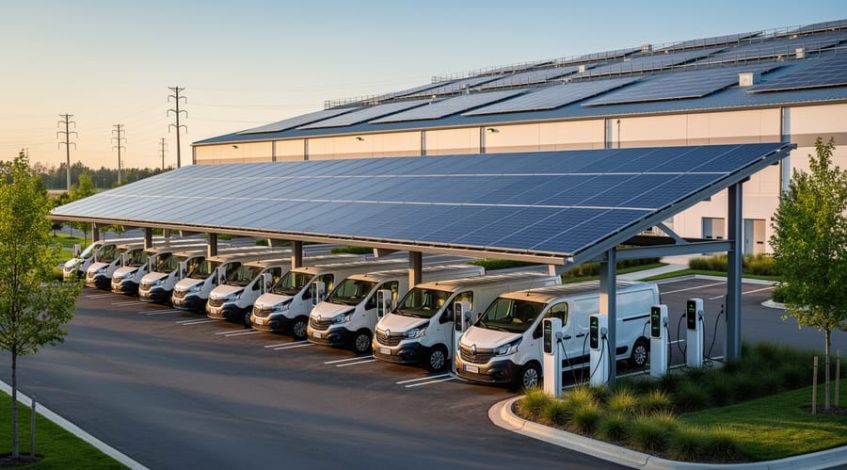
Electric vehicles are no longer just transportation assets—they’re becoming distributed energy resources that fundamentally reshape commercial energy management. The cultural shift in energy toward Vehicle-to-Grid (V2G) technology transforms how businesses approach power consumption, peak demand management, and grid resilience.
Integrate V2G infrastructure with existing commercial solar installations to create bidirectional energy flow. This allows your EV fleet to draw power during off-peak hours and discharge stored energy back to your facility during peak demand periods, reducing demand charges by up to 40 percent while generating additional revenue streams through grid services.
Calculate your fleet’s potential energy storage capacity by multiplying vehicle battery capacity by available vehicles during operational hours. A modest fleet of ten 75kWh EVs provides 750kWh of dispatchable storage—equivalent to a substantial battery installation without the capital expenditure.
Establish smart charging protocols that align vehicle charging schedules with solar generation peaks. This maximizes self-consumption of renewable energy, minimizes grid dependence, and positions your organization to participate in demand response programs that compensate businesses for load flexibility.
The transition from passive energy consumers to active grid participants requires rethinking traditional energy procurement strategies, but the operational and financial benefits make V2G adoption a competitive necessity rather than an experimental technology.
The New Reality: EVs as Mobile Power Plants
What Vehicle-to-Grid Technology Actually Does
Vehicle-to-grid technology transforms electric vehicles from passive energy consumers into dynamic energy assets within the electrical grid. At its core, V2G enables bidirectional power flow between EVs and the grid infrastructure, allowing vehicles to both draw electricity for charging and discharge stored energy back to the grid when needed.
The technical implementation requires three essential components: compatible electric vehicles equipped with bidirectional charging capabilities, specialized charging stations that can manage two-way power flow, and sophisticated grid management software that coordinates energy transactions. The charging infrastructure communicates with both the vehicle’s battery management system and the broader electrical grid to optimize charging schedules and discharge periods based on real-time energy demands and pricing signals.
For commercial implementations, the infrastructure requirements extend beyond individual charging points. Facilities need adequate electrical capacity, often requiring upgraded electrical panels and distribution equipment. The integration with existing power systems, particularly on-site renewable energy installations, creates opportunities for enhanced energy management strategies.
The power flow management operates through intelligent algorithms that monitor grid conditions, electricity prices, and vehicle availability. When energy demand peaks, connected vehicles can supply power back to the grid, effectively serving as distributed energy storage systems. During off-peak periods or when renewable energy generation exceeds demand, vehicles recharge at optimal rates.
This bidirectional capability fundamentally changes how commercial facilities approach energy management, transforming parking lots into flexible energy storage networks that can reduce demand charges, participate in grid services markets, and maximize the value of renewable energy investments.
The Business Case: Why Commercial Properties Need to Pay Attention
The integration of Vehicle-to-Grid technology with commercial properties presents compelling financial opportunities that forward-thinking businesses cannot afford to overlook. As EV adoption accelerates and charging infrastructure becomes standard, properties equipped with V2G capabilities position themselves at the forefront of reshaping commercial energy management.
Demand charge reduction represents one of the most immediate returns on investment. Commercial properties typically face substantial demand charges based on their peak electricity usage within billing periods. V2G-enabled systems can discharge stored energy from fleet vehicles during high-demand periods, effectively shaving peak loads and reducing monthly utility costs by 20-40 percent in documented implementations. For a medium-sized commercial facility spending $50,000 annually on demand charges, this translates to potential savings of $10,000-$20,000 per year.
Grid service revenue generation offers an additional income stream that enhances project economics. Energy markets increasingly compensate businesses for providing frequency regulation, reserve capacity, and other ancillary services. Australian commercial properties with V2G infrastructure can currently earn between $200-$800 per vehicle annually through grid services programs, with revenue potential expanding as market structures evolve.
The return on investment timeline for V2G infrastructure, when combined with solar installations, typically ranges from five to eight years. However, early adopters gain competitive advantages beyond direct financial returns, including enhanced sustainability credentials, increased property values, and positioning for future regulatory incentives. Properties demonstrating grid-interactive capabilities also attract environmentally conscious tenants willing to pay premium rates, with recent market analysis showing a 7-12 percent rental premium for buildings with advanced energy management systems.
Changing Behaviors: From Charging to Energy Management
Smart Charging Strategies for Commercial Operations
Forward-thinking businesses are discovering that strategic charging schedules represent a fundamental shift in how they approach fleet electrification and energy costs. By aligning EV charging with solar generation patterns and grid pricing structures, organizations are achieving substantial operational savings while supporting grid stability.
Time-of-use optimization has emerged as a cornerstone of effective commercial energy management. Companies are programming their charging infrastructure to automatically initiate during off-peak periods when electricity rates drop by 40-60 percent compared to peak hours. A Melbourne-based logistics company reduced their annual charging costs by $127,000 simply by shifting 85 percent of their fleet charging to overnight periods between 11 PM and 6 AM, when both grid prices and demand are lowest.
Load balancing technology takes this strategy further by distributing charging across multiple vehicles to prevent demand spikes that trigger costly penalties. Modern charging management systems monitor real-time power consumption and adjust individual vehicle charging rates accordingly. This approach prevents circuit overloads while ensuring all vehicles reach required charge levels by operational start times.
The integration of solar generation creates additional optimization opportunities. Businesses with rooftop solar installations are scheduling midday charging sessions to capture excess solar production that would otherwise be exported at minimal feed-in tariff rates. A Sydney warehouse operator now charges their delivery fleet during the 10 AM to 3 PM solar peak, achieving an 89 percent solar-powered charging rate and reducing grid dependence.
These strategies require minimal capital investment beyond the charging management software, typically delivering payback periods under 18 months while establishing the technical foundation for future vehicle-to-grid participation.
Real-World Application: Fleet Operators Leading the Change
FedEx Express has emerged as a pioneer in implementing bidirectional charging technology across its European operations, providing valuable insights into the practical realities of this cultural shift. The company’s Amsterdam hub now operates 43 electric delivery vehicles equipped with V2G capabilities, integrated with a 500kW rooftop solar installation that manages both vehicle charging and facility power requirements.
The implementation revealed immediate challenges that required innovative solutions. Initially, drivers expressed concern about battery degradation from frequent charge-discharge cycles. FedEx addressed this by establishing clear protocols limiting V2G discharge to 20-80 percent battery capacity and implementing a rotating schedule that ensures vehicles never discharge below the range needed for next-day routes. This approach reduced driver anxiety while maintaining grid support capabilities.
Technical integration proved more complex than anticipated. The facility’s existing energy management system required significant upgrades to communicate effectively with vehicle charging infrastructure and solar inverters. FedEx partnered with their energy provider to develop a custom software platform that predicts daily route requirements, weather patterns affecting solar generation, and grid demand signals. This system automatically optimizes when vehicles charge, discharge, or remain idle.
The financial results validated the investment. Within 18 months, the operation reduced peak demand charges by 34 percent and generated approximately 47,000 euros annually through grid services payments. More significantly, the project demonstrated that successful V2G implementation requires more than technology—it demands comprehensive staff training, transparent communication about vehicle availability, and adaptive protocols that prioritize operational needs while capturing energy market opportunities. This balanced approach has become the blueprint for FedEx’s expansion to six additional European facilities.
Solar + EV Charging: The Perfect Partnership
Maximizing Solar ROI Through EV Integration
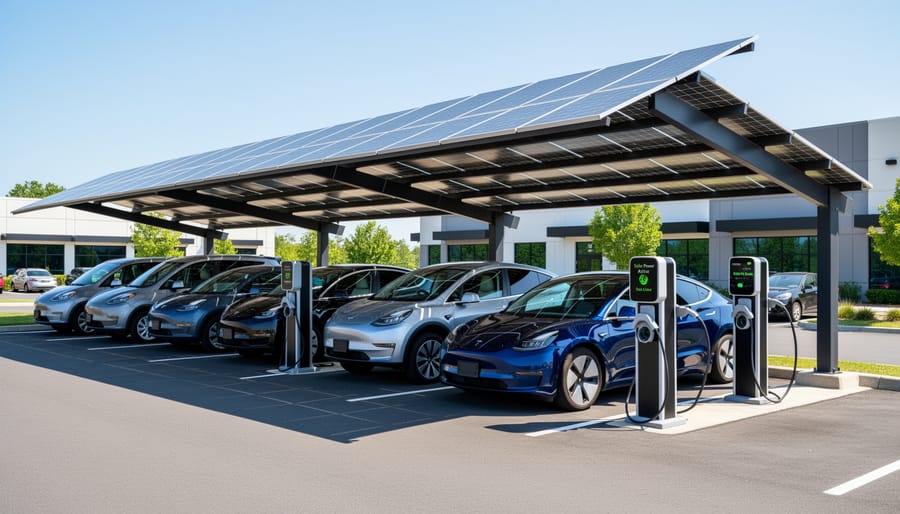
The convergence of electric vehicle infrastructure and commercial solar installations creates a powerful financial proposition for businesses seeking energy independence. When properly integrated, EVs function as mobile energy storage units that capture excess solar generation during peak production hours, effectively transforming your vehicle fleet into a distributed battery system that reduces reliance on grid power during expensive peak demand periods.
This integration delivers immediate operational cost reductions. Commercial facilities with robust solar arrays often generate surplus electricity during midday hours when production exceeds consumption. Rather than selling this excess back to the grid at minimal rates, businesses can direct it into EV batteries, capturing the full value of their solar investment. The stored energy becomes available for facility operations during evening hours or serves as emergency backup power during grid disruptions, adding resilience to business continuity plans.
The financial advantages extend beyond simple energy arbitrage. Vehicle-to-grid capabilities allow businesses to participate in demand response programs, where utilities compensate organizations for providing grid stabilization services. During periods of high grid stress, your EV fleet can discharge stored solar energy back to the facility, avoiding expensive demand charges that can constitute 30-50% of commercial electricity bills.
Energy independence represents perhaps the most significant long-term benefit. Organizations with integrated solar-EV systems reduce exposure to utility rate escalations while maintaining operational control over their energy supply. This autonomy proves particularly valuable for facilities in regions with unreliable grid infrastructure or those pursuing aggressive sustainability targets. Real-world implementations demonstrate payback periods of 5-7 years for combined solar-EV systems, with some operations achieving energy cost reductions exceeding 60% within the first three years of deployment.
System Design Considerations for Commercial Properties
Integrating bidirectional EV charging infrastructure with commercial solar PV systems requires careful planning to ensure optimal performance and reliability. The primary consideration is capacity planning—determining adequate system sizing based on your fleet’s charging requirements, building energy consumption, and available roof or ground space for solar panels. A typical commercial installation supporting vehicle-to-grid functionality should account for peak demand periods when EVs discharge power back to the facility.
Inverter selection proves critical in these systems. Bidirectional inverters must handle power flow in both directions seamlessly, converting DC power from solar panels and EV batteries to AC power for facility use. Modern hybrid inverters can manage multiple energy sources simultaneously, prioritizing solar generation, battery storage, and grid power based on programmable parameters. Ensure inverters meet utility interconnection standards and possess adequate capacity for both solar generation and V2G discharge rates.
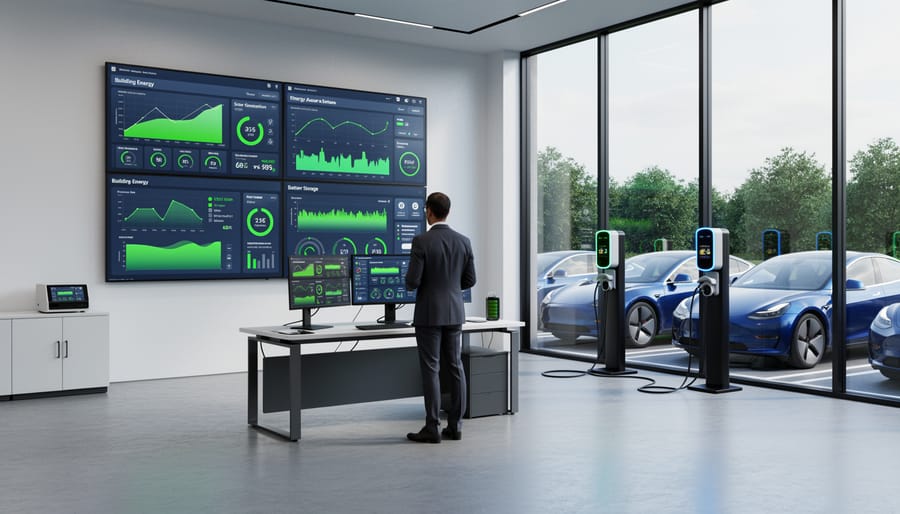
Advanced monitoring systems provide real-time visibility into energy flows across your solar array, EV charging stations, and facility loads. These platforms enable facility managers to optimize charge-discharge cycles, track cost savings, and identify system inefficiencies. Integration with building management systems allows automated responses to demand charges and time-of-use rates, maximizing return on investment.
Safety equipment including rapid shutdown devices, ground fault protection, and proper islanding prevention mechanisms must comply with local electrical codes. Professional installation by certified technicians ensures system reliability and validates warranty coverage. Regular commissioning and performance testing verify that all components operate harmoniously, delivering the expected economic and environmental benefits that justify the investment in this transformative technology.
Overcoming Adoption Barriers in Commercial Settings
Infrastructure Investment and Payback Timelines
Commercial V2G infrastructure requires strategic financial planning, with typical upfront costs ranging from $50,000 to $500,000 depending on fleet size and system complexity. These investments encompass bidirectional chargers ($3,000-$8,000 per unit), software integration platforms, electrical system upgrades, and grid connection infrastructure. However, the financial landscape has improved significantly with expanding incentive programs across Europe.
Government incentives substantially reduce initial capital requirements. Many EU member states offer grants covering 30-50% of V2G equipment costs, while accelerated depreciation schedules provide additional tax advantages. Energy suppliers frequently contribute installation subsidies in exchange for grid service agreements, and some regions provide feed-in tariffs for energy returned to the grid during peak demand periods.
Payback timelines vary based on operational models but typically range from 3-7 years. Fleet operators implementing V2G alongside solar installations often achieve faster returns, with some case studies demonstrating payback within 4 years through combined energy cost savings and grid service revenues. A logistics company in the Netherlands reported annual savings of $85,000 after deploying 50 bidirectional chargers, primarily through demand charge reduction and frequency regulation payments.
Financing options have evolved to support adoption. Energy-as-a-service models eliminate upfront costs entirely, while green loans offer favorable interest rates. Performance-based financing structures align payments with actual grid service revenues, reducing financial risk for businesses entering the V2G market. These mechanisms make implementation accessible even for organizations with limited capital budgets.
Employee and Stakeholder Education
Successful V2G integration requires comprehensive education programs that address both technical understanding and behavioral change. Organizations must develop structured training initiatives that help employees and stakeholders recognize EVs as valuable energy assets rather than simple transportation tools.
Begin with leadership alignment to secure commitment for organizational energy decisions. Executive buy-in enables resource allocation for training programs and demonstrates organizational commitment to energy transformation. Follow with targeted workshops for facility managers, fleet operators, and finance teams, focusing on practical applications and ROI metrics.
Address stakeholder education challenges through clear communication strategies. Develop materials that translate technical concepts into business benefits, highlighting cost savings, grid resilience, and sustainability outcomes. Real-world case studies demonstrating successful V2G implementations help overcome resistance to change.
Implement ongoing communication channels including newsletters, dashboards showing real-time energy flows, and regular feedback sessions. Visual tools displaying the financial impact of V2G participation reinforce positive behaviors and maintain engagement. Consider incentive programs that reward employees for optimal charging behaviors, creating personal investment in the organization’s energy management success.
Preparing Your Business for the V2G Future
Positioning your business for V2G integration requires strategic planning that begins well before the technology becomes mainstream. The most successful early adopters are those who lay the groundwork today, creating infrastructure and organizational readiness that accelerates implementation when the opportunity arises.
Start with a comprehensive energy audit of your facility to establish baseline consumption patterns and identify peak demand periods. This data becomes invaluable when designing V2G systems that maximize bidirectional energy flow. Simultaneously, assess your current electrical infrastructure’s capacity to handle two-way power transfer. Many commercial buildings require upgrades to panels, transformers, and metering systems to support V2G capabilities.
Develop relationships with your local utility providers now. Understanding their rate structures, demand response programs, and future grid modernization plans helps you anticipate integration opportunities. Several utilities in the EU are piloting V2G programs, and early participants often receive preferential terms or incentive packages.
Consider a phased implementation approach that minimizes risk while building organizational competence. Begin with a small pilot program involving a portion of your fleet or a single facility. This allows you to test technologies, refine procedures, and demonstrate value before scaling operations. Document performance metrics meticulously, as this data proves essential for securing stakeholder buy-in and optimizing expansion.
Monitor policy developments at both national and EU levels. Regulatory frameworks governing V2G are evolving rapidly, with new incentive programs, grid connection standards, and energy trading mechanisms emerging regularly. Assign responsibility for tracking these changes to ensure your business capitalizes on new opportunities.
Finally, invest in staff education. The cultural shift toward V2G requires employees who understand both the technology and its business implications. Training programs that build this competency create competitive advantage as the market matures.
The transformation from passive charging infrastructure to active energy management represents more than a technological upgrade—it signals a fundamental restructuring of how businesses approach energy costs and resilience. Organizations that recognize electric vehicles as mobile energy assets rather than simple transportation tools position themselves at the forefront of this cultural shift, gaining competitive advantages that extend far beyond reduced fuel expenses.
Early adopters of integrated solar-EV systems are already demonstrating measurable benefits: reduced demand charges, enhanced grid independence, and new revenue streams through energy services. These pioneers are establishing operational frameworks and employee engagement strategies that will become industry standards within the next decade. The facilities implementing vehicle-to-grid capabilities today are building institutional knowledge that translates directly into cost savings and operational efficiency.
The convergence of solar generation, battery storage, and bidirectional charging creates opportunities for unprecedented control over energy expenditures. Businesses no longer need to accept utility rate structures passively; they can actively manage when, how, and at what price they consume and store electricity. This shift requires cultural adaptation within organizations, but the long-term financial benefits justify the transitional effort.
Now is the time to assess your facility’s readiness for this transformation. Evaluate your current energy consumption patterns, charging infrastructure capabilities, and fleet composition. Engage with stakeholders across operations, finance, and facilities management to develop a comprehensive roadmap. The businesses that act decisively today will shape tomorrow’s energy landscape while capturing significant competitive and financial advantages.