
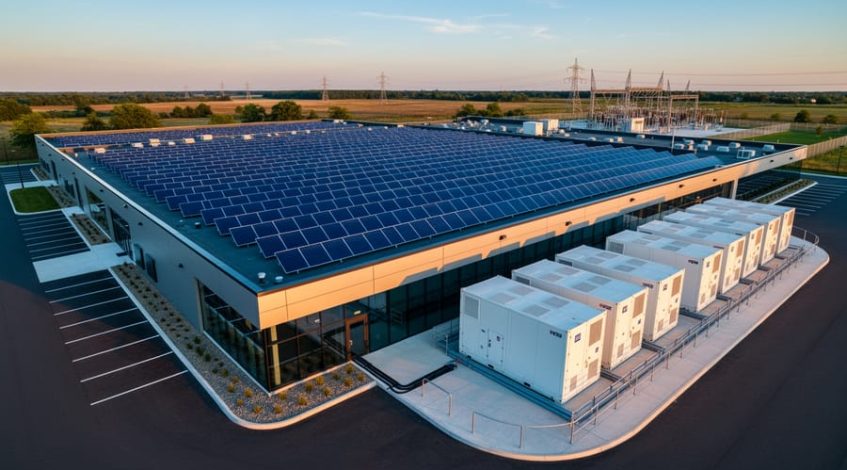
Solar-plus-storage systems transform conventional renewable energy installations into sophisticated revenue-generating assets through strategic dispatch optimization and multiple income stream coordination. Commercial facilities deploying these systems currently capture between three and seven distinct revenue opportunities simultaneously—from demand charge reduction and energy arbitrage to ancillary services and capacity payments—creating financial returns that far exceed standalone solar installations.
The fundamental economic advantage lies in intelligent dispatch: batteries capture excess solar production during low-value periods and discharge when electricity commands premium prices or when grid services pay for rapid response capabilities. A manufacturing facility in California recently achieved 31% better project economics by stacking frequency regulation revenues with time-of-use optimization, reducing simple payback from 8.2 to 5.6 years.
Understanding dispatch economics requires analyzing how battery management systems make split-second decisions balancing competing revenue opportunities against operational constraints. State-of-charge limitations, cycle life preservation, contractual obligations, and real-time price signals create a complex optimization challenge where proper strategy implementation can mean the difference between marginal and exceptional returns.
This analysis examines the specific mechanisms driving solar-plus-storage profitability, including quantitative frameworks for evaluating revenue stacking potential, dispatch strategy comparisons across different market structures, and real-world performance data from commercial installations. Decision-makers will gain practical knowledge to assess system economics, identify optimal revenue combinations, and structure deployments that maximize risk-adjusted returns in their specific operating environments.
What Makes Solar-Plus-Storage Different From Traditional Solar
The Basic Components
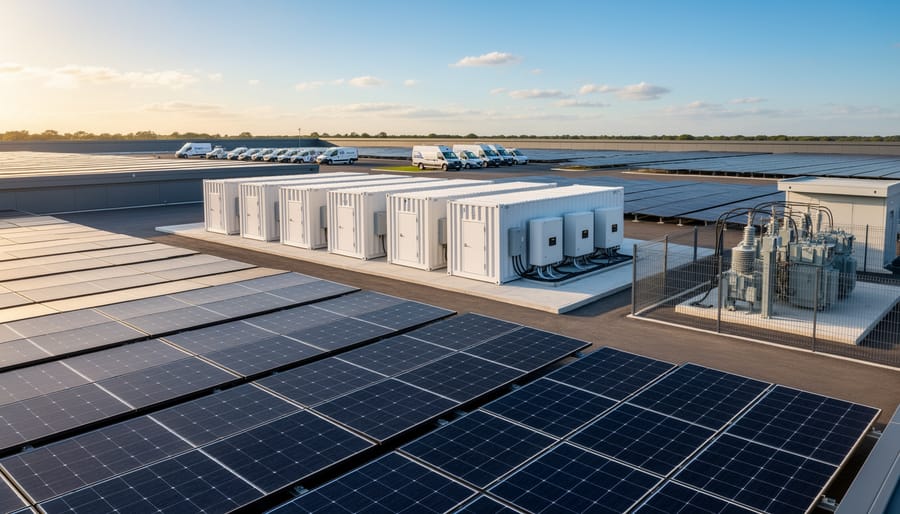
Solar-plus-storage systems integrate four essential components to create a sophisticated energy management solution. Solar photovoltaic panels generate electricity from sunlight, converting it into usable power for immediate consumption. Battery energy storage systems (BESS) capture and store excess generation, typically using lithium-ion technology that offers reliable performance and extended operational lifespans of 10-15 years.
Inverters serve as the critical interface, converting direct current from solar panels into alternating current suitable for facility operations and grid interaction. Modern bidirectional inverters enable seamless charging and discharging of battery systems based on real-time conditions.
The intelligent control system functions as the operational brain, continuously analyzing energy production, facility demand, electricity pricing signals, and grid service opportunities. This sophisticated software layer executes automated dispatch decisions that optimize economic returns across multiple revenue streams. For example, a commercial facility might charge batteries during low-cost midday solar production, then discharge during peak pricing periods to minimize utility expenses while simultaneously providing grid services. The integration of these components transforms static solar installations into dynamic assets capable of responding to market conditions and maximizing financial performance through strategic energy management.
Why Storage Changes Everything
Solar energy’s traditional limitation has been its dependence on sunlight, creating a mismatch between peak generation and peak demand periods. Advanced battery storage technology eliminates this constraint, transforming solar installations from intermittent daytime generators into reliable, dispatchable energy assets available around the clock.
Battery integration fundamentally changes the economic equation by enabling time-shifting capabilities. Excess solar generation during off-peak hours can be stored and discharged during high-demand periods when electricity prices spike, capturing significant arbitrage opportunities. This flexibility allows facility managers to reduce demand charges, participate in grid services programs, and maintain operations during outages without relying solely on traditional backup systems.
For commercial operations, this means converting solar from a simple offset mechanism into a strategic energy management tool. A California distribution center, for example, now uses stored solar energy to power evening loading operations while simultaneously providing frequency regulation services to the grid, generating dual revenue streams from a single investment. The ability to dispatch stored energy based on real-time market conditions creates financial optimization opportunities that standalone solar cannot achieve.
Revenue Stacking: Turning One Asset Into Multiple Income Sources
Energy Arbitrage and Time-of-Use Optimization
Energy arbitrage represents one of the most financially compelling applications of solar-plus-storage systems for commercial operations. This strategy leverages the significant price differences between electricity rates throughout the day, allowing businesses to store excess solar generation or grid power during low-cost periods and discharge the battery during peak pricing hours when utility rates can be three to five times higher.
The operational mechanics are straightforward yet financially impactful. During midday hours when solar production peaks and electricity prices typically drop, battery systems charge using surplus generation. As evening demand surges and utility rates increase, the stored energy discharges to meet facility loads, effectively avoiding expensive grid purchases. Advanced energy management systems continuously monitor utility rate structures and optimize charge-discharge cycles automatically, ensuring maximum savings without manual intervention.
Demand charge reduction provides an additional layer of value. Many commercial rate structures impose substantial charges based on peak power consumption within 15-minute intervals. Strategic battery discharge during these critical periods can flatten consumption peaks, reducing monthly demand charges by 30-50 percent in many applications.
A California warehouse operation implemented time-of-use optimization with a 500 kW solar array and 750 kWh battery system, achieving annual savings of $127,000. The facility reduced demand charges by $68,000 and captured $59,000 in energy arbitrage value. With utility rate escalations averaging 4 percent annually, these savings compound over the system’s 20-year lifespan, substantially improving project economics and shortening payback periods to under six years.
Demand Charge Reduction
For many commercial and industrial facilities, demand charges represent the single largest component of their electricity bills, often accounting for 30-70% of total costs. These charges are calculated based on the highest 15-minute interval of power consumption during a billing period, penalizing facilities for peak usage spikes even if they occur only briefly.
Solar-plus-storage systems offer a powerful solution through strategic battery discharge. By monitoring real-time facility load and deploying stored energy during high-demand periods, batteries effectively “shave” peak consumption levels visible to the utility meter. This peak shaving capability directly reduces the demand charge calculation basis.
Consider a manufacturing facility with a monthly peak demand of 2,000 kW and a demand charge rate of $15 per kW. Without mitigation, this results in $30,000 in monthly demand charges. A properly sized battery system discharging 400 kW during peak periods reduces the billable demand to 1,600 kW, saving $6,000 monthly or $72,000 annually.
The economics become particularly compelling when solar generation and battery storage work in concert. Solar production reduces daytime peaks, while batteries address evening demand spikes when solar output diminishes. Advanced energy management systems utilize predictive algorithms and historical load data to optimize discharge timing, ensuring batteries deploy precisely when demand charges would otherwise trigger, maximizing financial returns while maintaining operational reliability.
Grid Services and Ancillary Markets
Solar-plus-storage systems can generate substantial revenue by providing essential services to the electrical grid beyond basic energy delivery. These ancillary services help maintain grid stability and reliability, creating lucrative opportunities for system owners.
Frequency regulation represents one of the most valuable grid services. Battery storage systems can respond within milliseconds to balance supply and demand fluctuations, helping maintain the grid’s 60 Hz standard. Independent system operators compensate participants based on both availability and performance, with some markets offering premium rates for fast-responding resources.
Capacity markets provide another revenue stream by ensuring adequate generation resources during peak demand periods. System owners receive payments for committing their storage capacity to be available when the grid needs it most, typically during summer afternoons or extreme weather events. These markets value reliability, rewarding participants who consistently deliver when called upon.
Demand response programs offer additional income by reducing facility load during grid stress events. Solar-plus-storage systems can seamlessly shift to battery power during these periods, helping utilities avoid blackouts while earning incentive payments. A California manufacturing facility recently generated $47,000 annually through demand response participation alone, supplementing energy arbitrage revenues.
Successful participation requires sophisticated monitoring systems and automated dispatch capabilities. Many system owners partner with aggregators who handle market interactions and optimization, simplifying participation while maximizing returns across multiple programs simultaneously.
Renewable Energy Incentives and Credits
Solar-plus-storage systems unlock substantial financial benefits through layered incentive programs. Under the Investment Tax Credit (ITC), commercial installations can claim up to 30% of total system costs as federal tax credits, with energy storage now fully eligible when charged primarily by solar arrays. Adder bonuses increase this baseline: domestic content requirements add 10%, while projects in energy communities qualify for additional credits.
State-level programs further enhance returns. California’s Self-Generation Incentive Program provides rebates up to $200 per kilowatt-hour for storage capacity, while Massachusetts offers the SMART program with storage adders. Businesses in restructured electricity markets can also earn revenue through Renewable Energy Certificates, selling environmental attributes separately from electricity.
The strategic advantage lies in stacking these benefits simultaneously. A manufacturing facility in New Jersey, for example, combined federal credits with state solar incentives and PJM capacity payments, reducing payback periods from 12 years to under 7. This multi-layered approach transforms solar-plus-storage from a long-term investment into a near-term financial asset while advancing sustainability objectives.
Dispatch Economics: Optimizing When to Store and When to Release
Real-Time Decision Making
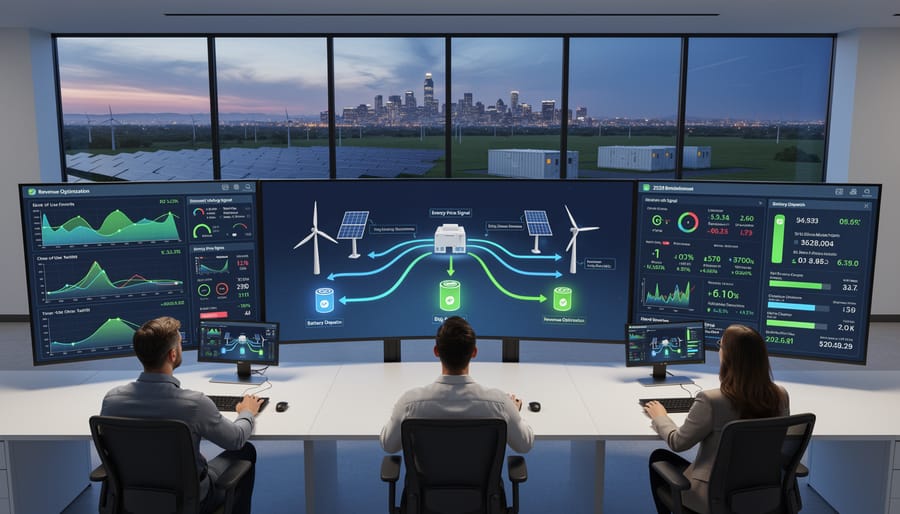
Modern solar-plus-storage systems rely on sophisticated optimization software that processes vast amounts of data to execute profitable dispatch decisions in real time. These platforms continuously monitor multiple data streams simultaneously, including wholesale electricity prices that fluctuate throughout the day, weather forecasts predicting solar generation capacity, historical consumption patterns specific to your facility, and current grid demand conditions.
The software employs machine learning algorithms that improve decision-making accuracy over time. When electricity prices spike during peak demand periods, the system automatically determines whether to discharge stored energy to the grid for maximum revenue, supply your facility to avoid expensive purchases, or hold reserves for anticipated higher-value opportunities. Conversely, during off-peak hours when prices drop, the system may choose to charge batteries from the grid rather than solar panels if the economics prove favorable.
Weather forecast integration adds another optimization layer. If cloud coverage is predicted for the next day, the system might prioritize battery charging today to ensure adequate reserves. Grid condition monitoring enables participation in frequency regulation markets, where batteries can earn revenue by responding to grid stabilization requests within milliseconds.
A commercial facility in South Australia reported that intelligent dispatch optimization increased their battery system returns by 24 percent compared to basic time-of-use programming, demonstrating how advanced analytics translate directly into enhanced financial performance and accelerated payback periods.
Balancing Multiple Objectives Simultaneously
Modern solar-plus-storage systems employ sophisticated control algorithms that continuously evaluate and prioritize multiple objectives based on real-time conditions and organizational priorities. These intelligent systems balance competing goals including electricity cost reduction, backup power availability, demand charge minimization, and participation in grid services programs.
The optimization process assigns weighted values to each objective according to business priorities. For instance, a hospital might prioritize resilience and backup capacity during peak hours, while a manufacturing facility may emphasize demand charge reduction. The system’s software evaluates current battery state of charge, weather forecasts, electricity pricing signals, and facility load patterns to determine optimal dispatch strategies moment by moment.
Advanced platforms utilize machine learning to improve decision-making over time, learning from historical performance data to predict future conditions more accurately. This enables the system to pre-charge batteries before anticipated demand peaks or reserve capacity for expected grid events.
In practice, a distribution center in California achieved 23% energy cost savings while maintaining 95% backup power availability by implementing a prioritization scheme that shifted between cost optimization during normal operations and resilience mode during Public Safety Power Shutoff warnings. This dynamic balancing ensures organizations capture maximum value across multiple revenue streams without sacrificing critical operational requirements.
Real-World Financial Performance: What Businesses Are Achieving
Manufacturing Facility Case Study
A mid-sized automotive parts manufacturer in Michigan implemented a 2.5 MW solar array paired with a 1.8 MWh battery storage system, demonstrating the substantial financial benefits of strategic revenue stacking. Within the first 18 months of operation, the facility reduced demand charges by 45%, translating to $186,000 in annual savings.
The facility’s energy management team programmed the battery system to perform peak shaving during the facility’s highest consumption periods, typically occurring between 2 PM and 6 PM when production lines operated at maximum capacity. By discharging stored solar energy during these critical windows, the manufacturer consistently maintained peak demand below 3.2 MW, compared to previous peaks exceeding 5.8 MW.
Beyond demand charge reduction, the system generated additional revenue through participation in the regional grid operator’s frequency regulation market. The battery’s rapid response capabilities allowed it to provide balancing services during off-peak manufacturing hours, earning approximately $42,000 annually. The facility also enrolled in a demand response program, providing grid support during summer peak events and generating an additional $18,500 per year.
The combined revenue streams delivered a project payback period of 6.2 years, significantly shorter than the initial 9-year projection based solely on energy savings. This integrated approach to system dispatch optimization demonstrates how manufacturing operations can transform energy infrastructure from a cost center into a strategic revenue-generating asset while advancing sustainability objectives.
Commercial Real Estate Performance
Leading commercial real estate portfolios across Australia demonstrate the substantial value proposition of solar-plus-storage installations. At Sydney’s Barangaroo commercial precinct, a 500kW solar array paired with 1MWh battery storage reduced energy costs by 38% while providing reliable backup power during grid disruptions. The system generates revenue through peak demand charge reduction, frequency control ancillary services participation, and corporate renewable energy certificate creation.
A Melbourne retail center case illustrates tenant value creation through energy resilience. The shopping complex deployed 350kW solar with 750kWh storage, ensuring uninterrupted operations during the February 2023 grid events. Tenants reported zero downtime, preserving approximately $180,000 in potential lost sales. The facility manager utilizes predictive dispatch algorithms to charge batteries during off-peak periods and discharge during afternoon peak windows when grid electricity costs exceed $250/MWh.
Brisbane’s commercial office tower partnership with their energy retailer created additional economic benefits through wholesale market arbitrage. The 800kWh system captures morning solar generation, stores excess capacity, and strategically dispatches during high-price evening periods. This approach delivered $94,000 annual savings beyond direct consumption offset.
These implementations advance corporate sustainability objectives while generating measurable financial returns. The operational data reveals payback periods between 5.8 and 7.2 years, with battery replacement costs factored into lifecycle analysis. Building management systems integrate with storage controllers to optimize dispatch timing based on occupancy patterns, weather forecasts, and real-time electricity pricing signals.
Key Factors That Determine Your Revenue Stacking Potential
Utility Rate Structure Analysis
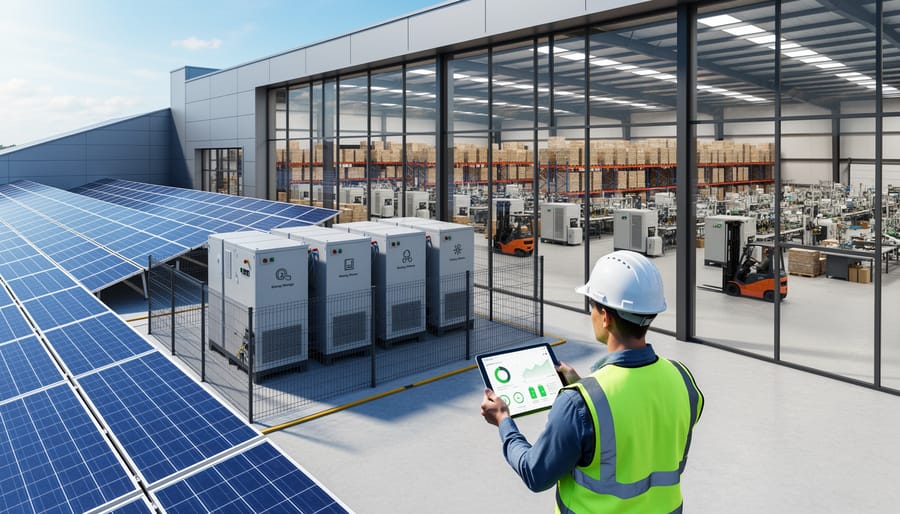
Understanding your facility’s utility rate structure is fundamental to maximizing solar-plus-storage economics. Time-of-use (TOU) rates create distinct pricing periods throughout the day, with peak hours commanding substantially higher electricity costs. Battery storage enables load shifting by dispatching stored energy during these premium rate periods while charging during off-peak hours, directly reducing electricity expenses.
Demand charge structures present another significant revenue opportunity. These charges, based on the highest level of power consumption during a billing cycle, can represent 30-50% of commercial electricity bills. Strategic battery deployment during demand spikes can reduce these charges substantially, with some facilities achieving annual savings exceeding $100,000.
Net metering policies determine compensation for excess solar generation exported to the grid. While beneficial for solar-only systems, pairing storage allows facilities to retain generated energy for self-consumption rather than selling at potentially unfavorable rates. This approach proves particularly valuable in jurisdictions where net metering credits have declined or face time-of-export restrictions.
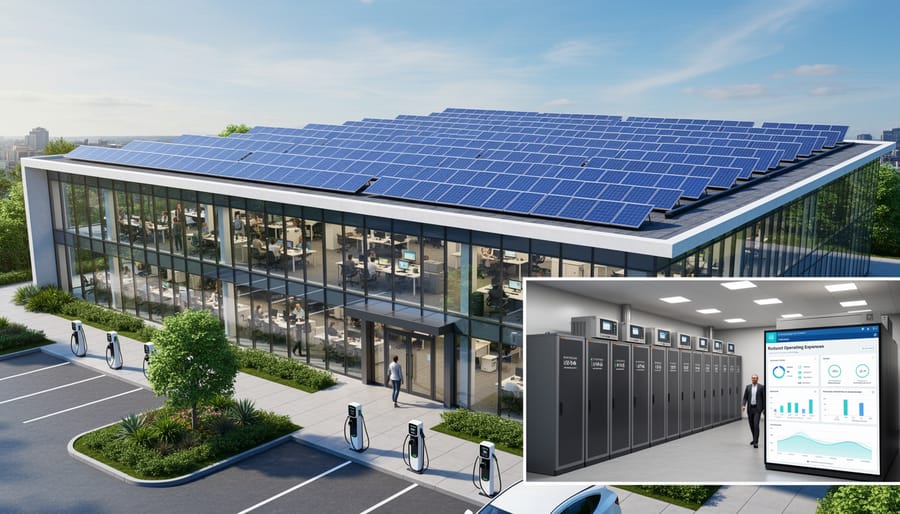
A California manufacturing facility exemplifies these principles, utilizing storage to reduce demand charges by 40% while capturing TOU arbitrage opportunities, achieving a combined annual savings of $180,000 and accelerating payback timelines by three years.
Market Access and Regulatory Environment
Market access opportunities for solar-plus-storage systems vary significantly by region and grid operator. In areas served by Regional Transmission Organizations (RTOs) and Independent System Operators (ISOs), facilities can typically participate in frequency regulation, demand response, capacity markets, and energy arbitrage programs. For example, PJM Interconnection offers robust frequency regulation markets where fast-responding battery systems command premium prices, while CAISO provides multiple pathways including the Resource Adequacy program.
Regulatory requirements for market participation generally include interconnection agreements, metering and telemetry capabilities, and compliance with grid codes. Facilities must obtain proper certifications and demonstrate technical capabilities to respond to dispatch signals within specified timeframes. Some jurisdictions require aggregation through qualified scheduling coordinators, while others permit direct participation for larger systems.
Understanding your local utility’s rate structures and state-level policies is essential. Many regions offer incentive programs specifically designed for energy storage, such as California’s Self-Generation Incentive Program or Massachusetts’ SMART program, which can significantly enhance project economics when combined with revenue stacking strategies.
Facility Energy Profile Considerations
Understanding your facility’s unique energy profile is fundamental to optimizing solar-plus-storage dispatch strategies and maximizing revenue potential. Facilities with significant demand during peak pricing periods—such as manufacturing plants operating afternoon shifts—benefit substantially from time-of-use arbitrage, storing solar energy for discharge when rates escalate. Conversely, operations with consistent baseload consumption require different optimization approaches focused on demand charge reduction and capacity value.
Load variability directly influences battery sizing and dispatch algorithms. A distribution center with predictable energy patterns allows for aggressive discharge scheduling, while facilities with unpredictable loads benefit from maintaining battery reserves for demand response participation. Operational flexibility matters significantly: facilities capable of shifting non-critical loads create additional optimization opportunities, enabling batteries to capture multiple revenue streams simultaneously. Consider a food processing plant that reduced annual energy costs by 34 percent by coordinating refrigeration loads with solar production and strategic battery discharge during peak periods. Analyzing your consumption data across seasonal variations, production schedules, and pricing structures enables precision-tuned dispatch strategies that align energy flows with financial opportunities.
Implementation Considerations for Commercial Operations
Right-Sizing Your Storage Capacity
Determining the right battery capacity requires analyzing your facility’s specific revenue objectives and consumption patterns. Start by examining your utility rate structure and identifying which revenue streams offer the greatest financial potential. A facility facing high demand charges may prioritize a 2-4 hour duration system, while operations targeting energy arbitrage opportunities might benefit from longer duration storage.
Conduct a detailed load profile analysis spanning at least one year to capture seasonal variations. This reveals peak demand periods, consumption valleys, and opportunities for strategic dispatch. For example, a California distribution center discovered that a 500 kWh battery system optimally addressed their peak demand events while maintaining sufficient capacity for frequency regulation participation during off-peak hours.
Consider future growth projections and emerging revenue opportunities in your market. Installing modular systems allows for capacity expansion as your energy needs evolve or new programs become available. The optimal configuration balances upfront capital investment against projected revenue streams, typically targeting a 5-7 year payback period for commercial installations.
Engage experienced energy consultants who can model various scenarios using actual utility data and market conditions. Their analysis should account for battery degradation, round-trip efficiency losses, and realistic revenue projections to ensure your investment delivers sustainable returns.
Technology and Software Requirements
Effective solar-plus-storage systems rely on sophisticated control platforms that coordinate energy generation, storage, and discharge decisions in real-time. When evaluating technology solutions, prioritize systems with advanced dispatch optimization algorithms that continuously analyze grid signals, time-of-use rates, demand charges, and wholesale market prices to determine the most profitable operational strategy for your specific use case.
Modern monitoring platforms should provide granular visibility into system performance metrics, including round-trip efficiency, state of charge, and revenue attribution by stream. Look for solutions offering API integrations with utility rate databases and market price feeds to enable automated decision-making without manual intervention. Cloud-based systems with predictive analytics capabilities can forecast energy demand patterns and weather conditions to optimize charge-discharge cycles days in advance.
The control system must support multiple operational modes—peak shaving, load shifting, frequency regulation, and demand response—while seamlessly transitioning between revenue opportunities as market conditions change. Consider platforms that have demonstrated performance in comparable commercial applications and provide transparent reporting for regulatory compliance and financing solar-plus-storage systems. Vendor support for firmware updates and ongoing optimization ensures your system adapts to evolving market structures and maintains competitive performance throughout its operational lifetime.
Solar-plus-storage systems represent a fundamental transformation in how organizations should evaluate renewable energy investments. Rather than viewing solar installations solely as a mechanism to reduce utility costs, forward-thinking decision-makers now recognize these systems as dynamic revenue-generating assets capable of delivering multiple income streams simultaneously. The strategic integration of battery storage unlocks opportunities that standalone solar arrays simply cannot access, from demand charge management and time-of-use arbitrage to participation in wholesale energy markets and ancillary service programs.
However, capturing the full financial potential of these systems requires more than just installing equipment. Success depends on sophisticated dispatch optimization strategies that respond to real-time market signals, weather patterns, and facility-specific energy profiles. The complexity of coordinating multiple revenue streams while maintaining operational resilience demands specialized expertise that many organizations lack internally.
Partnering with experienced energy advisors who understand the nuances of revenue stacking and dispatch economics becomes critical to maximizing return on investment. These specialists bring knowledge of regional market structures, regulatory requirements, and proven optimization algorithms that can significantly enhance system performance. They help navigate interconnection agreements, qualification processes for various programs, and ongoing performance monitoring.
As energy markets continue evolving toward greater flexibility and decentralization, solar-plus-storage systems position organizations not just as energy consumers but as active grid participants. The organizations that recognize this paradigm shift earliest and implement comprehensive optimization strategies will capture the greatest financial benefits while contributing to a more resilient and sustainable energy infrastructure.