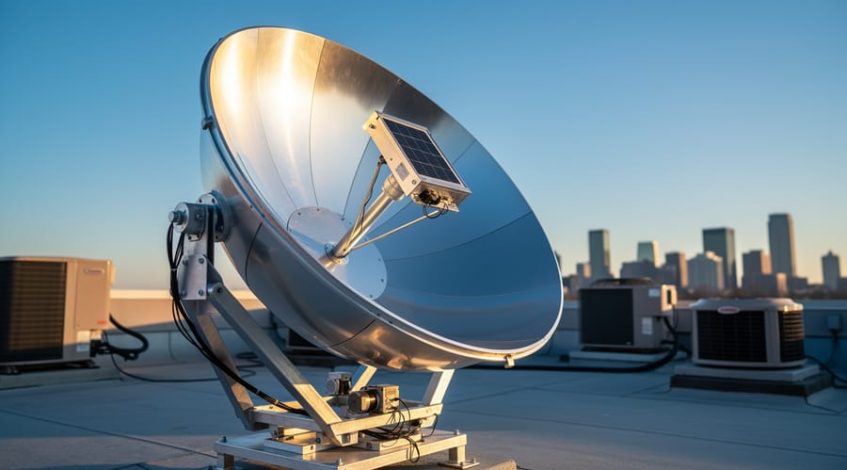
Build a parabolic reflector using aluminum-backed foam board or salvaged satellite dishes, positioning photovoltaic cells at the focal point to amplify solar energy collection by 5-10 times standard output. Calculate your focal length precisely by dividing the dish diameter squared by sixteen times the depth, ensuring optimal concentration ratios for your specific application.
Select heat-resistant materials rated for sustained temperatures exceeding 200°C, particularly for mounting brackets and cell housings, as concentrated solar systems generate substantial thermal loads that standard components cannot withstand. Commercial facility managers implementing concentrator systems report 30-40% reductions in panel requirements compared to traditional flat-plate installations when properly engineered.
Design dual-axis tracking mechanisms using affordable stepper motors and Arduino controllers, programmed to follow the sun’s path within 0.5-degree accuracy throughout the day. This active tracking maximizes energy capture during peak demand hours, delivering immediate ROI improvements for businesses operating during standard daylight schedules.
The recent breakthroughs in solar concentrator design have transformed what was once exclusively industrial technology into accessible solutions for property owners and facility managers. Modern DIY concentrators leverage commercially-proven principles—Fresnel lenses, parabolic troughs, and point-focus dishes—scaled appropriately for distributed energy applications.
However, understand system limitations before committing resources. DIY concentrators excel in direct sunlight conditions but perform poorly in cloudy environments, making them ideal for Australia’s climate zones but requiring careful site assessment. Professional thermal management becomes non-negotiable above 20x concentration ratios, where cell degradation accelerates without proper cooling systems. Most successful commercial implementations combine DIY prototyping for proof-of-concept with professional engineering for final deployment, balancing cost control against performance reliability and warranty protection.
Why Solar Concentrators Outperform Traditional Panels for Commercial Applications
The Economics of Concentrated Solar Power
For commercial and industrial facilities considering concentrated solar power systems, understanding the financial implications proves essential for informed decision-making. While DIY approaches may reduce initial capital expenditure by 30-50% compared to turnkey installations, several economic factors warrant careful evaluation.
Initial investment costs for concentrated solar systems typically range from $3,000 to $15,000 per kilowatt of installed capacity for commercial-scale projects. DIY implementations can significantly lower these figures, particularly for facilities with existing technical capabilities and personnel. However, ROI considerations extend beyond installation costs to include maintenance requirements, operational efficiency, and system longevity.
Payback periods generally span 5-12 years depending on energy prices, system efficiency, and available incentives. Commercial facilities with high daytime energy consumption—such as manufacturing plants, cold storage warehouses, and processing facilities—typically experience shorter payback periods due to optimal load profiles matching peak solar generation.
Long-term savings potential becomes substantial when systems operate efficiently over their 20-25 year lifespan. Industrial facilities can realize cumulative savings exceeding 200% of initial investment when factoring energy cost escalation. Critical success factors include proper system sizing, quality components, and regular maintenance protocols. Government incentives, accelerated depreciation schedules, and renewable energy certificates further enhance financial returns. For facilities lacking in-house expertise, hybrid approaches combining DIY components with professional consultation often optimize both cost savings and system performance.
When DIY Makes Business Sense
Building a DIY solar concentrator makes compelling business sense under specific circumstances that warrant careful evaluation. Small to medium-sized operations with annual energy costs between $15,000 and $75,000 often find the greatest return on investment, as the reduced upfront costs can accelerate payback periods from 8-10 years to 4-6 years when compared to professionally installed systems.
Facilities with existing technical staff represent ideal candidates for DIY implementation. Manufacturing plants with maintenance teams, agricultural operations with engineering capabilities, or educational institutions with research departments possess the in-house expertise to design, construct, and maintain concentrator systems effectively. A Michigan manufacturing facility documented 40% cost savings by leveraging their mechanical engineering team to build a 50-kilowatt thermal concentrator system for process heating.
The DIY approach proves particularly advantageous when space constraints favor concentrated solar over traditional photovoltaic arrays. Warehouses requiring roof space for other equipment, or properties with limited suitable area for ground-mounted installations, benefit from concentrators’ higher energy density per square meter.
Budget flexibility also factors significantly into the decision. Organizations able to phase construction over multiple fiscal quarters can manage cash flow more effectively with DIY projects. However, professional installation remains advisable for operations requiring immediate full capacity, complex grid integration, or lacking technical personnel. Facilities handling hazardous materials or operating under strict regulatory oversight should prioritize professionally certified installations to ensure compliance and minimize liability exposure.
Recent Breakthroughs Changing the DIY Solar Concentrator Landscape
Advanced Reflective Materials Now Available to Non-Specialists
Recent technological advances have made professional-grade reflective materials accessible to DIY solar concentrator builders at reasonable price points. Aluminized polymer films now offer 85-90% reflectivity ratings comparable to commercial installations, available through industrial supply distributors at approximately $3-5 per square meter. These materials feature UV-resistant coatings that maintain performance for 10-15 years under outdoor conditions.
Enhanced mirror films with protective backing layers have emerged as particularly cost-effective solutions, combining durability with optical precision previously reserved for commercial projects. Facility managers can now source materials meeting ASTM E903 reflectance standards without premium pricing.
Protective clear coatings have also improved significantly, with acrylic-based sealants extending material lifespan by preventing oxidation and weathering. These coatings typically add $50-100 to project costs while doubling operational longevity.
The availability of precision-cut reflective panels through online retailers further simplifies construction, eliminating specialized cutting equipment requirements. This democratization of materials enables businesses to prototype small-scale concentrator systems for feasibility testing before committing to full commercial installations, reducing investment risk while maintaining performance standards suitable for preliminary energy assessments.
Modular Design Approaches for Scalability
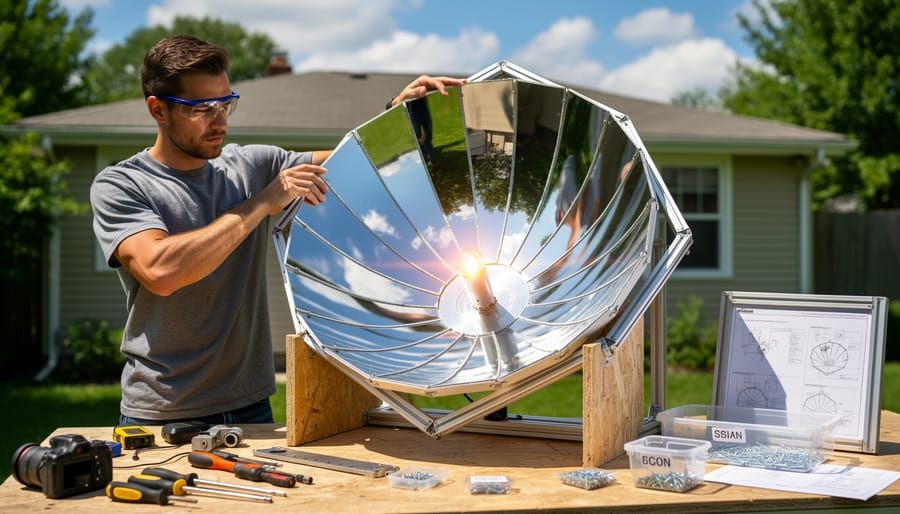
Modular design represents a strategic advantage for organizations implementing DIY solar concentrator systems. This approach enables facilities to deploy initial units as pilot projects, testing performance and operational integration before committing to full-scale installations. By constructing concentrator arrays in standardized modules, businesses can begin with a manageable investment that addresses immediate energy demands while maintaining flexibility for future expansion.
Each modular unit operates independently, allowing organizations to add capacity incrementally as capital budgets allow or energy requirements increase. This staged deployment significantly reduces financial risk compared to large upfront capital expenditures. Manufacturing facilities, for instance, can install concentrators over specific high-consumption areas first, then expand coverage systematically across their operations.
Standardized modular components also simplify maintenance and replacement procedures. When individual modules share identical specifications, organizations can maintain smaller parts inventories and cross-train maintenance personnel more efficiently. A commercial warehouse in Portugal successfully implemented this approach, starting with three concentrator modules for process heating, then expanding to twelve units over eighteen months as operational savings became evident.
The modular framework supports both horizontal scaling across additional installation sites and vertical integration with existing energy infrastructure, providing decision-makers with adaptable pathways toward comprehensive renewable energy adoption without disrupting ongoing operations.
Essential Components and Design Considerations
Reflector Systems: Parabolic vs. Fresnel Designs
When evaluating DIY solar concentrator options, understanding the fundamental differences between parabolic and Fresnel designs is essential for making informed investment decisions.
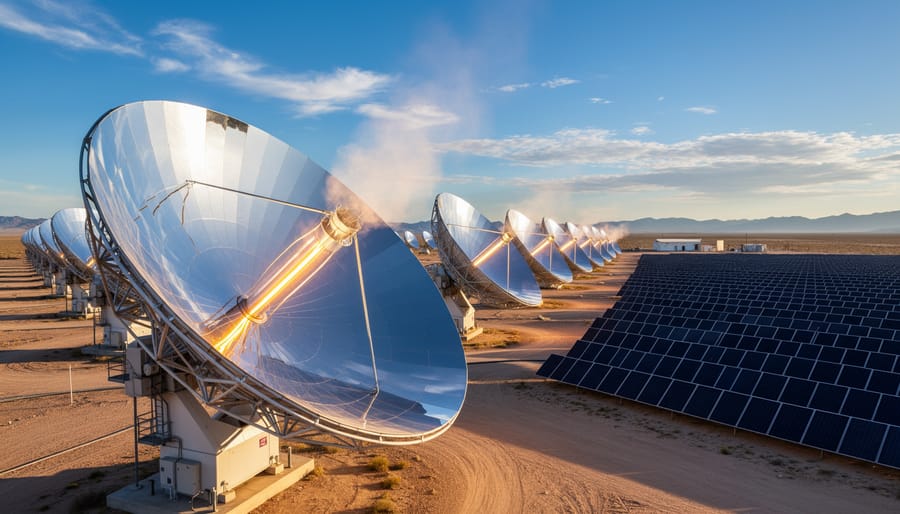
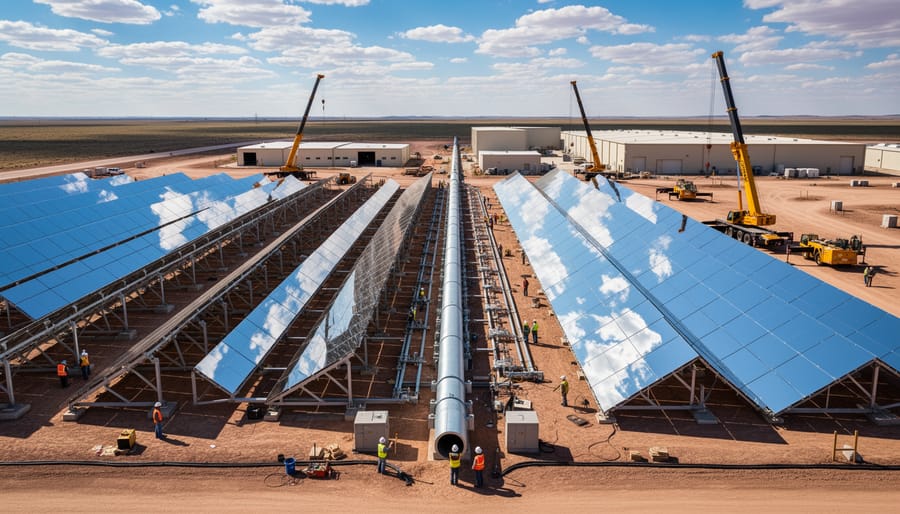
Parabolic concentrators utilize curved reflective surfaces that focus sunlight onto a single point or receiver tube. These systems deliver concentration ratios between 30:1 and 100:1, making them highly efficient for thermal applications and concentrated photovoltaic systems. Construction requires precision shaping of reflective materials, typically using aluminum sheets, mirrored acrylic, or polished metal formed around parabolic templates. While they demand more complex fabrication, parabolic designs excel in industrial applications requiring high-temperature heat generation, such as process heating or steam production. Their three-dimensional geometry also provides better performance across varying sun angles.
Fresnel concentrators employ flat or slightly curved mirror strips arranged in concentric rings to approximate parabolic focusing. This design significantly simplifies construction, as flat mirrors are easier to source and mount compared to complex curved surfaces. Concentration ratios typically range from 10:1 to 50:1, making them suitable for medium-temperature applications and direct water heating systems. The modular nature of Fresnel designs allows for scalable implementation, where facilities can start with smaller arrays and expand capacity incrementally.
For commercial applications, parabolic systems generally justify their higher construction complexity when maximum thermal efficiency is required. Fresnel designs offer superior cost-effectiveness for medium-scale projects where construction simplicity and maintenance accessibility are priorities. Facility managers should consider available fabrication resources, required operating temperatures, and long-term maintenance capabilities when selecting between these concentrator architectures.
Receiver Technology and Heat Conversion
The receiver component serves as the critical interface where concentrated sunlight converts to usable thermal energy. Effective receiver design incorporates high-temperature resistant materials such as copper tubing with selective coating or ceramic heat exchangers that maximize absorption while minimizing radiative losses. The thermal transfer mechanism typically employs a working fluid—water, thermal oil, or molten salt depending on target operating temperatures—that circulates through the receiver to capture heat energy.
For commercial applications, integration with existing infrastructure requires careful analysis of temperature requirements and flow rates. Direct steam generation systems can supplement industrial process heating, reducing natural gas consumption by 30-50% in suitable applications. Alternatively, thermal storage tanks enable time-shifted energy use, addressing the intermittency challenge inherent to solar systems.
Facility managers implementing DIY concentrators should prioritize heat exchanger sizing to match their facility’s thermal load profile. Proper insulation of transfer piping prevents efficiency losses, while temperature monitoring systems ensure safe operation within material limits. Professional thermal modeling helps optimize receiver placement and plumbing configuration, particularly when retrofitting concentrators to existing HVAC or industrial heating systems. The investment in quality receiver components directly impacts long-term system performance and return on investment.
Tracking Systems for Maximum Energy Capture
Maximizing energy capture requires strategic positioning of your solar concentrator throughout the day. Single-axis tracking systems follow the sun’s east-to-west movement and offer a practical entry point for DIY implementations, typically increasing energy collection by 25-30% compared to fixed installations. These systems require one motorized mount and simplified control mechanisms, making them feasible for facilities with basic automation capabilities.
Dual-axis tracking adds vertical adjustment to account for seasonal solar angles, potentially capturing 35-40% more energy annually. However, the mechanical complexity and cost often exceed practical DIY limits for commercial applications. Most facility managers find better return on investment through single-axis systems or strategic fixed positioning.
For simplified DIY tracking, consider time-based controllers using affordable programmable logic controllers or microcontrollers. These systems adjust collector angles based on predictable solar paths rather than expensive sensor arrays. Manual seasonal adjustments combined with automated daily tracking provide an effective compromise between performance and implementation complexity. Real-world installations at manufacturing facilities demonstrate that even basic tracking significantly improves thermal collection efficiency, particularly for process heat applications where consistent performance justifies the additional engineering effort.
Building Your Commercial-Scale Solar Concentrator: A Practical Framework
Site Assessment and Energy Needs Analysis
Before initiating a DIY solar concentrator project, conducting a comprehensive site assessment is essential for optimal system performance and return on investment. Begin by evaluating your facility’s solar resource potential through an analysis of average daily sun hours, seasonal variations, and potential shading from nearby structures or vegetation. Historical weather data and solar radiation maps provide baseline metrics for your geographic location.
Space constraints significantly influence system design. Measure available roof or ground area, considering weight-bearing capacity for roof installations and ground stability for larger concentrator arrays. Solar concentrators require unobstructed southern exposure in the Northern Hemisphere, with mounting surfaces capable of supporting tracking mechanisms if applicable.
Analyze your facility’s energy consumption patterns by reviewing utility bills from the past 12 to 24 months. Identify peak demand periods, baseline loads, and seasonal fluctuations. This data enables accurate system sizing to match production with consumption, avoiding undersized installations that fail to deliver adequate savings or oversized systems with diminished economic returns.
Document technical specifications including voltage requirements, available connection points, and electrical panel capacity. For commercial applications, engage a professional energy auditor to validate calculations and ensure compliance with local regulations, maximizing both efficiency and long-term financial benefits.
Permits, Codes, and Safety Requirements
While DIY solar concentrators may seem appealing for cost reduction, commercial and industrial installations face stringent regulatory requirements that significantly impact feasibility. Building permits are mandatory in most jurisdictions for solar installations exceeding specific power thresholds or structural modifications. These permits typically require detailed engineering plans, structural calculations, and professional certification.
Electrical codes compliance is non-negotiable, particularly for grid-connected systems. National Electrical Code (NEC) Article 690 governs photovoltaic system installations in the United States, with similar standards existing across European Union member states. Licensed electricians must handle all grid interconnections, and utility companies require inspection and approval before activation.
Safety standards for concentrated solar systems are particularly rigorous due to thermal and fire hazards. Installations must meet OSHA workplace safety requirements, include appropriate fire suppression systems, and implement proper emergency shutdown procedures. Insurance providers often require third-party engineering certifications and may deny coverage for non-compliant DIY installations.
For facility managers considering DIY approaches, engaging qualified solar contractors for permitting, electrical work, and final inspections remains essential. The liability risks and potential code violations associated with non-compliant installations far outweigh initial cost savings, making professional oversight a prudent investment in long-term project success.
Construction and Installation Best Practices
Successful DIY solar concentrator projects require meticulous attention to construction quality and systematic installation procedures. Begin with precise alignment of reflective surfaces, as even minor angular deviations can reduce efficiency by 15-20%. Use corrosion-resistant fasteners and structural supports rated for local wind loads, typically requiring engineering specifications for installations exceeding 2 square meters.
Quality control checkpoints should occur at each construction phase. Verify reflector surface uniformity using laser alignment tools, ensuring focal points maintain consistency within 2-3 centimeters. Test receiver positioning under actual sunlight conditions before permanent mounting, as theoretical calculations may require field adjustments. Thermal monitoring during initial operation identifies hotspots that could compromise system longevity.
Installation protocols must address structural integration and thermal management. Mount concentrators on foundations capable of supporting dynamic loads, accounting for wind uplift forces that can exceed static weight by 300%. Implement proper clearances around focal points, maintaining minimum distances of 50 centimeters from combustible materials. Install temperature sensors at receiver assemblies, with automatic defocusing mechanisms triggered at predetermined thresholds.
Documentation proves essential for ongoing performance optimization. Photograph alignment procedures, record baseline efficiency measurements, and maintain maintenance schedules addressing cleaning frequency and component inspections. A commercial bakery in Portugal reduced energy costs by 32% through systematic quality control during their DIY concentrator installation, demonstrating how proper construction practices directly impact return on investment. Professional consultation during planning phases often prevents costly modifications while preserving the cost advantages of self-installation.
Real-World Performance: Case Studies from Commercial Facilities
Several commercial facilities have successfully deployed DIY solar concentrator systems, demonstrating measurable results and providing valuable insights for organizations considering similar implementations.
A grain storage facility in rural Ohio installed a series of parabolic trough concentrators across 2,400 square feet of available roof space. The system, constructed using reflective aluminum sheeting and standard steel framing, generates thermal energy for grain drying operations. Performance monitoring over 18 months revealed a 42% reduction in propane consumption, translating to annual savings of approximately $18,000. The facility manager reported total project costs of $31,000, achieving payback in under two years. Key lessons included the importance of regular cleaning schedules in dusty environments and positioning collectors to minimize shade from existing infrastructure.
In Northern California, a mid-sized manufacturing operation integrated Fresnel lens concentrators to supplement their industrial process heating requirements. The 15-kilowatt thermal system supports metal parts cleaning and surface treatment operations. Temperature monitoring confirmed consistent output between 180-220 degrees Celsius during peak sunlight hours. The facility documented a 28% reduction in natural gas usage during the first year, with performance improving to 33% in year two following optimization adjustments. The project team emphasized the value of installing proper thermal storage capacity to extend usable heating hours beyond direct sunlight availability.
An agricultural cooperative in Arizona deployed linear concentrator arrays for greenhouse climate control across three facilities totaling 45,000 square feet. The cooperative’s maintenance team constructed the systems using locally sourced materials and standardized mounting hardware. Performance data indicates the concentrators provide 60-70% of heating requirements during winter months and power absorption cooling systems in summer. The cooperative reported project costs averaging $12 per square foot of collector area, significantly below commercial system quotes. Critical success factors included training existing staff on maintenance procedures and establishing component replacement schedules for reflective surfaces.
These implementations demonstrate that properly designed DIY concentrator systems can deliver reliable performance in demanding commercial environments. Common themes across successful projects include realistic performance expectations, commitment to ongoing maintenance, and careful integration with existing energy systems to maximize return on investment.
When to Partner with Professional Solar Installers
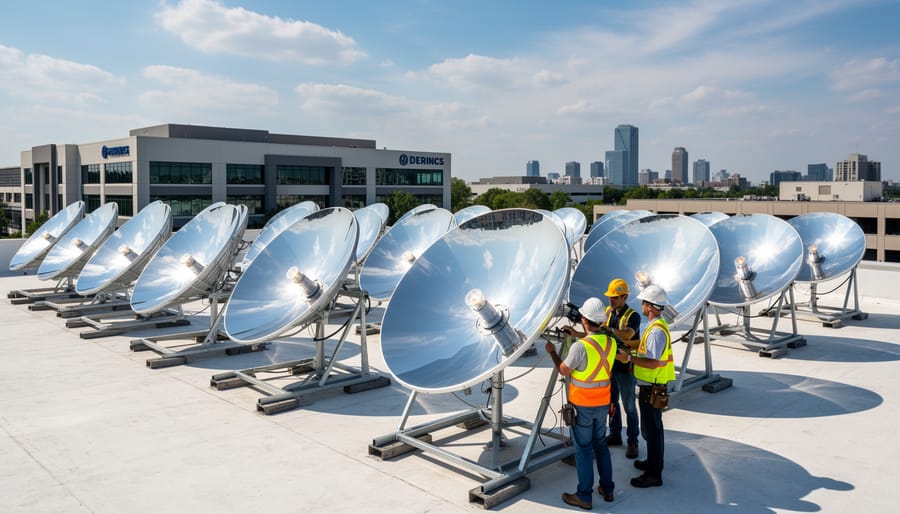
While DIY solar concentrators offer significant cost savings for certain applications, facility managers must recognize situations where engaging professional solar installers becomes essential for both safety and optimal performance.
Grid-connected systems present the most compelling case for professional involvement. Integrating solar concentrators with existing electrical infrastructure requires compliance with regional electrical codes, utility interconnection agreements, and safety standards. In Australia, grid-tied installations must meet specific AS/NZS standards and receive approval from distribution network service providers. Professional installers navigate these regulatory requirements efficiently, avoiding costly delays or rejections.
Large-scale commercial deployments exceeding 30 kW typically benefit from professional project management. Consider a Queensland manufacturing facility that attempted a DIY 50 kW concentrator array: despite technical success with individual units, the project encountered significant setbacks during system integration, resulting in three months of delays and 40 percent budget overruns. Professional teams bring coordinated expertise in structural engineering, electrical design, and commissioning protocols that DIY approaches struggle to replicate at scale.
Facilities with specific compliance requirements, such as healthcare centers, food processing plants, or government buildings, must prioritize certified installations. These environments demand comprehensive documentation, warranty provisions, and liability coverage that DIY projects cannot provide. Additionally, insurance policies and building certifications often explicitly require professionally installed systems.
The optimal approach often combines DIY principles with professional support. Many organizations successfully prototype small-scale concentrator systems internally before partnering with installers for commercial deployment. This hybrid model leverages hands-on learning while ensuring critical installations meet professional standards. Professional consultation during the design phase can identify potential issues before construction begins, preserving DIY cost advantages while minimizing technical risks.
Recent advancements in solar concentrator technology have fundamentally transformed what was once considered exclusively industrial equipment into accessible, buildable systems for commercial facilities. The democratization of Fresnel lens manufacturing, availability of precision tracking components, and open-source design resources now enable qualified facility teams to implement concentrator systems that deliver measurable energy cost reductions.
For business owners and facility managers, the viability of DIY solar concentrators depends on three critical factors: available technical expertise within your organization, the scale of energy demands you’re addressing, and your facility’s specific operational requirements. Small-scale concentrator installations for process heat or supplemental power generation represent practical entry points, while larger implementations benefit significantly from professional engineering oversight.
The documented case studies throughout commercial agriculture, manufacturing, and institutional facilities demonstrate that hybrid approaches often yield optimal results. Organizations successfully combine DIY assembly of standardized components with professional consultation for system design, electrical integration, and performance validation. This balanced methodology reduces capital expenditure while ensuring safety compliance and operational reliability.
Moving forward, facility decision-makers should begin with a comprehensive energy audit to identify suitable applications for concentrator technology. Engage qualified solar professionals early in your evaluation process to validate design assumptions, assess structural requirements, and ensure regulatory compliance. The investment in professional consultation during planning phases typically prevents costly modifications later and accelerates return on investment timelines. Solar concentrator technology now offers legitimate pathways for organizations committed to energy independence and operational cost optimization.