
Evaluate your current energy expenditure against 12-month and 24-month fixed rate contracts to determine if price stability outweighs potential savings from variable rates. Most commercial facilities consuming over 50,000 kWh annually achieve 8-15% cost predictability improvements through fixed pricing, though they sacrifice opportunities to capitalize on market downturns.
Calculate your break-even point by comparing your existing rate structure against fixed alternatives using actual consumption data from the previous 36 months. Request detailed proposals from at least three energy suppliers, ensuring each includes transmission charges, capacity tags, and ancillary service fees—not just the basic commodity rate. This comprehensive analysis reveals the true cost differential between fixed and variable structures.
Assess your facility’s risk tolerance and budgeting requirements before committing to fixed rates. Organizations with tight operating margins or those requiring precise financial forecasting typically benefit most from rate certainty, even at a modest premium. Conversely, businesses with flexible budgets and higher risk appetites may prefer variable or indexed rates that track wholesale market prices.
Examine how fixed rate plans integrate with on-site generation strategies, particularly solar installations. Fixed rates provide a stable baseline for calculating return on investment when deploying renewable energy systems, since your avoided cost per kWh remains constant throughout the contract term. This predictability enhances financial modeling accuracy and improves bankability for third-party financing arrangements.
Consider hybrid approaches that combine fixed pricing for baseload consumption with variable rates for peak demand periods. This strategy captures the stability benefits of fixed rates while maintaining flexibility during high-usage intervals. The decision framework ultimately depends on your organization’s operational profile, financial objectives, and capacity to manage energy price volatility.
What Is a Fixed Rate Energy Plan?
The Mechanics Behind Rate Locking
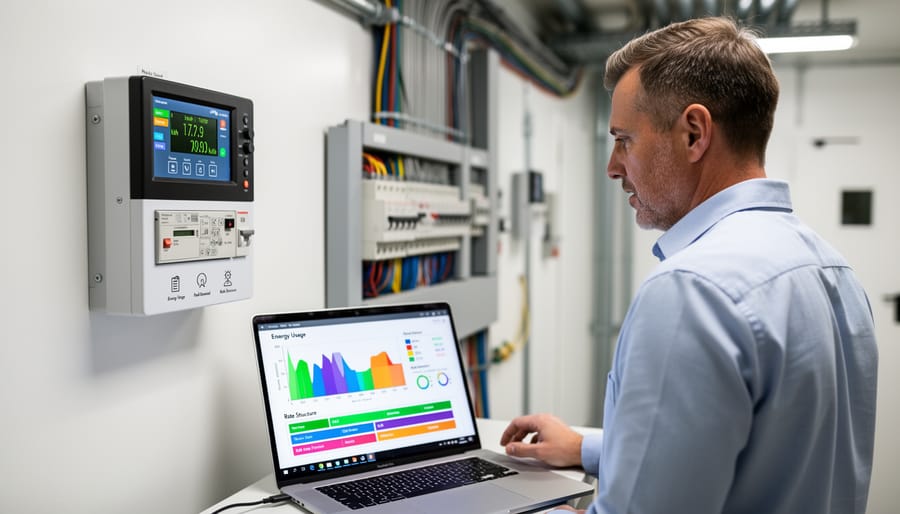
Energy suppliers establish fixed rates by analyzing wholesale energy market forecasts, operational costs, and anticipated price volatility over the contract term. The pricing structure incorporates multiple components: the base commodity cost, transmission and distribution charges, regulatory compliance expenses, and a risk premium that protects the supplier from market fluctuations.
The risk premium represents a critical element in fixed rate pricing. Suppliers essentially purchase energy futures or hedge their exposure through derivative instruments to lock in supply costs. This hedging activity carries inherent costs, which are passed to customers as part of the fixed rate. The premium typically ranges from 5-15% above projected wholesale rates, varying based on contract duration and market conditions.
Several factors influence final pricing structures. Contract length plays a significant role—longer terms generally carry higher premiums due to increased forecasting uncertainty. Market volatility at the time of contract signing affects hedging costs. Seasonal demand patterns, regional transmission constraints, and the customer’s consumption profile also impact pricing. Large-volume consumers with consistent usage patterns often secure more favorable rates due to reduced supplier risk and administrative efficiency.
For facility managers evaluating fixed rate plans, understanding this pricing mechanism provides leverage during contract negotiations. Suppliers with robust hedging strategies and efficient operations can offer competitive rates while maintaining adequate margins. Business owners should request transparency on rate composition, particularly the risk premium component, to assess whether the premium adequately reflects actual market conditions or includes excessive markup.
Standard Contract Terms and Conditions
Understanding the contractual framework of fixed rate plans is essential for making informed energy procurement decisions. Most fixed rate agreements span 12 to 36 months, with some providers offering longer terms up to 60 months. The contract duration directly correlates with pricing stability—longer commitments typically secure lower per-kilowatt-hour rates but reduce flexibility to respond to market changes.
Early termination fees represent a significant consideration, often ranging from $150 to $500 or calculated as a percentage of remaining contract value. These penalties protect suppliers from market volatility but can lock businesses into unfavorable terms if operational needs change or better opportunities emerge. Before signing, carefully review termination clauses and negotiate reasonable exit provisions, particularly if your organization anticipates expansion, relocation, or solar installation during the contract period.
Renewal clauses warrant close attention, as many contracts automatically renew at variable rates unless notice is provided 30 to 90 days before expiration. This auto-renewal mechanism can inadvertently transition your organization from predictable fixed pricing to fluctuating market rates, potentially increasing costs substantially. Establish internal protocols to track contract expiration dates and initiate renegotiation discussions well in advance.
Hidden costs frequently appear in transmission charges, capacity fees, and regulatory adjustments that sit outside the fixed rate structure. These additional charges can constitute 20 to 40 percent of total energy expenses. Request comprehensive cost breakdowns during contract negotiations and verify whether your fixed rate encompasses all charges or only the energy supply component. This transparency becomes particularly valuable when evaluating solar integration strategies that may reduce grid dependence and eliminate certain fees.
When Fixed Rate Plans Make Financial Sense
Budget Predictability for Operational Planning
Fixed rate electricity plans provide businesses with a stable foundation for operational budgeting by eliminating the uncertainty of fluctuating energy costs. For organizations operating on tight margins, this predictability proves invaluable when developing quarterly and annual financial projections. Finance teams can accurately forecast energy expenditures months or even years in advance, allowing for more confident allocation of resources to other strategic priorities.
Manufacturing facilities, cold storage operations, and data centers particularly benefit from this consistency, as energy often represents 15-30% of total operating costs. When combined with solar energy systems, fixed rate plans create an even more robust budgeting framework. Businesses can calculate the exact portion of electricity generated by their solar installation and lock in predictable rates for any additional grid power required, effectively creating a hybrid cost structure that maximizes both savings and stability.
Government agencies and non-profit organizations with multi-year budget cycles find fixed rates especially advantageous, as they align perfectly with long-term planning horizons. A municipal water treatment facility, for instance, can commit to infrastructure improvements knowing their energy costs won’t undermine project funding. This financial certainty enables leadership to make strategic decisions based on operational needs rather than market volatility.
Protection During Price Volatility
Fixed rate energy plans have demonstrated their value during periods of significant market volatility, providing businesses with financial predictability when wholesale energy prices surge unexpectedly. During the February 2021 Texas energy crisis, businesses locked into fixed rate contracts maintained their contracted pricing while spot market rates exceeded $9,000 per megawatt-hour. A manufacturing facility in Houston reported avoiding approximately $470,000 in additional energy costs during that week alone by maintaining their fixed rate agreement at $0.068 per kilowatt-hour.
Similarly, European businesses with fixed rate contracts during the 2022 energy crisis avoided dramatic cost increases when natural gas prices quadrupled. A logistics company operating warehouses across Germany preserved operational margins by securing a three-year fixed rate plan in 2020, while competitors on variable rates faced 300 percent increases in their energy expenses. This protection allowed them to maintain pricing stability for customers and avoid difficult decisions about workforce reductions or facility closures.
These scenarios illustrate how fixed rate plans function as risk management tools, particularly valuable for businesses with tight profit margins or those unable to pass sudden cost increases to customers. The protection becomes even more compelling when combined with on-site solar generation, which reduces overall grid dependency while the fixed rate covers remaining consumption needs.
The Hidden Costs of Fixed Rate Commitments
The Price Premium You’re Actually Paying
Industry data reveals that businesses on fixed rate energy plans typically pay a premium ranging from 8% to 15% above variable market rates over a multi-year contract period. This price difference stems from suppliers building risk mitigation costs into their pricing structure to protect against wholesale market volatility.
A comprehensive analysis of commercial energy contracts across multiple sectors shows that fixed rate plans averaged $0.092 per kWh compared to $0.081 per kWh for optimized variable or indexed plans during the same timeframe. For a mid-sized facility consuming 500,000 kWh annually, this translates to an additional $5,500 in energy costs per year—or $16,500 over a typical three-year contract.
The premium becomes more pronounced during periods of stable or declining energy prices. Historical market data demonstrates that businesses locked into fixed rates during price downturns paid up to 22% more than those with flexible purchasing strategies. Conversely, during volatile market periods, the same fixed rate contracts provided savings of 6% to 12%, though these protective benefits often fail to offset the cumulative overpayment across the contract lifecycle.
For businesses integrating on-site solar generation, the fixed rate premium compounds inefficiency. Facilities producing 30% to 40% of their energy through solar installations continue paying the full fixed rate premium on grid purchases, despite their reduced overall consumption risk profile. This represents a significant opportunity cost that optimized procurement strategies can address through hybrid approaches matching procurement flexibility with actual energy requirements.
Opportunity Costs and Flexibility Limitations
While fixed rate plans provide cost certainty, they inherently limit organizational flexibility in several critical areas that can impact long-term financial performance and sustainability goals.
The most significant limitation involves missed opportunities when wholesale electricity prices decline substantially. During periods of oversupply or increased renewable generation, spot market rates can drop well below fixed contract prices, yet locked-in agreements prevent businesses from accessing these savings. For organizations with substantial energy consumption, this opportunity cost can accumulate to tens of thousands of dollars annually.
Fixed rate contracts also create barriers to implementing grid-interactive strategies and demand response programs. These initiatives reward businesses for adjusting consumption patterns during peak demand periods or when renewable energy is abundant. However, traditional fixed rate agreements typically exclude participation in such programs, eliminating potential revenue streams and incentive payments that can offset energy costs by 10-30 percent.
The integration of on-site renewable energy systems presents another challenge. Organizations installing solar arrays or battery storage may find their fixed contracts don’t accommodate net metering benefits or time-of-use optimization. This misalignment can delay return on investment for clean energy infrastructure by several years.
Additionally, fixed contracts with extended terms may not reflect evolving grid dynamics as renewable penetration increases. As wholesale prices become more variable with higher solar and wind generation, flexible arrangements increasingly offer competitive advantages that rigid contracts cannot match.
Fixed Rates and Solar Energy Integration

Rate Plan Optimization Before Solar Installation
Before committing to solar installation, organizations should conduct a comprehensive evaluation of their existing fixed rate plan to maximize return on investment. Fixed rate contracts typically lock in pricing for extended periods, which can create obstacles when integrating renewable energy systems that reduce grid consumption.
The timing of solar implementation relative to contract expiration is critical. Installing solar panels while under a long-term fixed rate agreement may prevent you from capturing the full value of your generation, particularly if the contract includes minimum usage requirements or demand charges that don’t align with your new consumption patterns. Many businesses find that exiting fixed rate plans 6-12 months before solar installation allows for a smoother transition to rate structures better suited for on-site generation.
Consider engaging with your current energy provider to negotiate contract modifications or early termination options. Some suppliers offer solar-friendly amendments that reduce penalties or adjust terms to accommodate renewable installations. Simultaneously, evaluate variable rate or time-of-use plans that may complement your solar production profile more effectively.
Financial modeling should compare the total cost of remaining in your fixed rate plan through completion versus early exit penalties plus projected savings from optimized solar integration. This analysis often reveals that strategic contract termination, despite associated fees, delivers superior long-term value by enabling immediate optimization of your energy procurement strategy alongside solar deployment.
Post-Solar Rate Strategies
Once your solar installation becomes operational, your energy purchasing strategy should evolve to reflect your new power generation capabilities. A traditional fixed rate plan may no longer provide optimal value, as it doesn’t account for the reduced volume of grid electricity you’ll consume or the timing of your energy needs.
Organizations with solar systems typically benefit from hybrid approaches that combine grid purchases with self-generated power. Time-of-use rate structures often deliver better economics than fixed rates in this scenario, allowing you to draw grid power during off-peak hours when solar production is unavailable while maximizing self-consumption during peak generation periods. This strategy requires careful load management but can significantly reduce energy costs.
Net metering agreements represent another critical consideration. These programs credit your account for excess solar generation fed back to the grid, effectively using the utility infrastructure as virtual storage. Fixed rate plans may limit or exclude net metering benefits, making them less suitable for solar-equipped facilities.
Consider demand charge management as well. Solar installations can help reduce peak demand from the grid, but fixed rate plans don’t always reflect these savings. Alternative rate structures that separately bill for capacity and consumption may better capture the value your solar system provides, particularly for facilities with consistent baseload requirements supplemented by renewable generation.
Optimizing Beyond Fixed Rates: Alternative Approaches
Time-of-Use and Demand Charge Management
Time-of-Use (TOU) tariffs introduce variable pricing throughout the day, typically with peak rates during high-demand periods and lower rates during off-peak hours. Unlike fixed rate plans that offer predictable pricing regardless of consumption timing, TOU structures create opportunities for substantial cost savings through strategic operational adjustments.
Businesses can leverage TOU rates by shifting energy-intensive processes to off-peak periods when electricity costs are lowest. Manufacturing facilities, for example, can schedule production runs during night hours, while commercial buildings can optimize HVAC pre-cooling strategies to minimize peak-period consumption.
The integration of solar storage solutions dramatically enhances TOU economics. Battery systems store solar energy generated during the day and discharge during peak-rate periods, effectively arbitraging the price differential. This approach reduces demand charges—fees based on maximum power consumption during specific intervals—which can represent 30-70% of commercial electricity bills.
Implementing smart energy management systems enables automated load shifting and battery optimization, maximizing returns without requiring constant manual intervention. The combination of solar generation, storage, and intelligent controls transforms TOU rates from a potential liability into a competitive advantage for forward-thinking organizations.
Hybrid Rate Strategies
Hybrid rate strategies offer businesses a balanced approach that mitigates risk while capturing opportunities from market fluctuations. These arrangements typically allocate a percentage of energy consumption to fixed rates while exposing the remainder to variable market pricing, allowing organizations to hedge against volatility without sacrificing all potential savings during favorable market conditions.
Indexed rate structures provide another middle-ground solution, where pricing adjusts according to predetermined formulas linked to wholesale market indices or commodity benchmarks. This transparency enables better forecasting than pure variable rates while maintaining some flexibility compared to completely fixed contracts. Organizations can negotiate caps and floors within indexed agreements to establish acceptable price boundaries.
Portfolio approaches have gained traction among larger energy consumers managing multiple facilities. By diversifying contract types across locations or time periods, businesses reduce overall exposure to any single pricing mechanism. This strategy works particularly well when combined with AI-powered energy optimization that dynamically shifts consumption patterns based on real-time pricing signals.
For organizations with solar installations, hybrid strategies can optimize self-consumption during peak rate periods while purchasing grid power at the most advantageous rates. This integrated approach maximizes return on renewable energy investments while maintaining operational flexibility across varying demand cycles.
Real-World Application: Manufacturing Facility Case Study
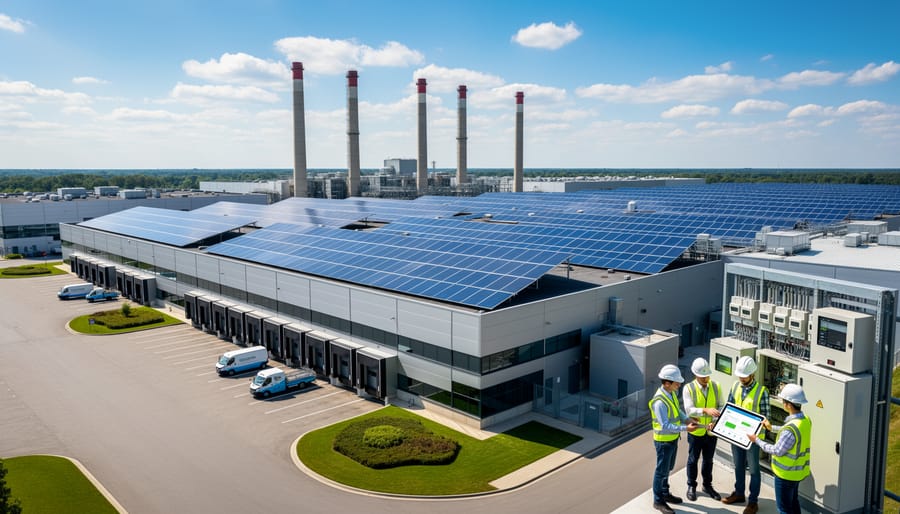
Midwest Industrial Components, a 150,000-square-foot manufacturing facility in Ohio, serves as an exemplary case for strategic energy planning. Prior to 2021, the company operated under a conventional fixed rate electricity plan at $0.115 per kWh, with annual energy costs exceeding $420,000. Management recognized that while the fixed rate provided budgetary predictability, it offered no mechanism for cost reduction or sustainability advancement.
The company’s energy consultant conducted a comprehensive analysis revealing that their load profile—characterized by consistent daytime operations Monday through Friday—aligned perfectly with solar generation patterns. Based on this assessment, Midwest Industrial Components implemented a hybrid approach: installing a 500 kW rooftop solar array while transitioning to a time-of-use rate structure that offered lower rates during peak solar production hours.
The transition presented several challenges. Initial capital investment for the solar installation totaled $625,000, requiring careful financial modeling and board approval. Additionally, operations managers needed training to understand how time-of-use pricing would impact production scheduling. The company addressed these concerns through a comprehensive implementation plan that included employee education sessions and phased operational adjustments.
Results exceeded projections within the first 18 months. The solar installation generated approximately 650,000 kWh annually, offsetting 42 percent of facility electricity consumption. Combined with optimized time-of-use rates averaging $0.089 per kWh during solar production hours, the company reduced annual energy costs by $156,000—a 37 percent decrease from the fixed rate baseline. Federal investment tax credits and accelerated depreciation benefits shortened the payback period to 4.2 years.
Critical lessons emerged from this transition. First, detailed load profiling proved essential for determining optimal rate structure alignment. Second, stakeholder engagement across all organizational levels facilitated smoother implementation. Third, maintaining grid connectivity through the time-of-use plan provided operational flexibility that a complete off-grid approach could not match.
The facility’s success demonstrates that fixed rate plans, while offering stability, may limit opportunities for strategic cost reduction. For businesses with predictable operations and suitable solar potential, hybrid approaches combining renewable generation with optimized rate structures can deliver substantial financial and environmental returns without sacrificing operational reliability.
Making the Right Decision for Your Organization
Selecting the appropriate energy rate structure requires careful analysis of your organization’s consumption patterns, risk tolerance, and financial objectives. Begin by conducting a comprehensive energy audit spanning at least 12 months to identify usage patterns, peak demand periods, and seasonal variations. This data forms the foundation for any rate plan evaluation.
When considering a fixed rate plan, assess your organization’s budget predictability needs. Companies with tight margins or fixed-price customer contracts often benefit from rate certainty. Conversely, organizations with flexible budgets and risk appetite may prefer variable rates during favorable market conditions. Calculate your breakeven point by comparing historical costs under your current plan against proposed fixed rates across multiple scenarios.
Key questions to ask energy suppliers include: What is the contract duration and early termination penalties? Are there minimum usage requirements? How does the rate compare to current wholesale market prices? Request detailed proposals from at least three suppliers, ensuring transparency about all fees and charges beyond the base rate.
Leverage energy optimization tools to model different scenarios and visualize potential cost outcomes. These platforms can integrate your consumption data with market forecasts to provide objective comparisons.
For organizations exploring renewable integration, evaluate how fixed rates interact with on-site generation. Some suppliers offer hybrid plans that provide fixed rates for grid consumption while crediting solar production at variable rates. This approach balances predictability with renewable energy benefits.
Document your decision criteria, weighting factors such as budget stability, projected market trends, contract flexibility, and sustainability goals. Establish review periods to reassess your choice as market conditions and organizational priorities evolve. The optimal rate plan serves both immediate financial needs and long-term strategic objectives.
Selecting a fixed rate plan represents one component of a comprehensive energy strategy, not the entirety of your organization’s approach to cost optimization and sustainability. While fixed rate plans offer valuable price stability and budgeting certainty, the most successful energy strategies embrace a holistic perspective that evaluates all available tariff structures, integrates renewable generation opportunities, and aligns rate selections with operational patterns and long-term organizational objectives.
The decision between fixed rates, variable pricing, time-of-use structures, or demand-based tariffs should stem from rigorous analysis of your facility’s consumption characteristics, risk tolerance, and strategic priorities rather than defaulting to conventional choices. Organizations that treat tariff selection as an ongoing strategic process rather than a set-it-and-forget-it decision consistently achieve superior financial and environmental outcomes. This approach becomes particularly valuable when combined with solar energy systems, battery storage, or other distributed generation resources that fundamentally alter your relationship with grid-supplied power.
The energy landscape continues evolving rapidly, with emerging technologies, regulatory changes, and market dynamics creating new opportunities for cost reduction and sustainability advancement. A fixed rate plan that made sense two years ago may no longer serve your organization’s best interests today. Regular evaluation of your energy purchasing strategy ensures you capture value from market innovations while maintaining alignment with your broader operational and environmental commitments.
Consider scheduling a comprehensive energy audit and tariff analysis to determine whether your current rate structure optimizes both immediate costs and long-term strategic positioning in an increasingly dynamic energy marketplace.