
Evaluate your facility’s current energy portfolio by conducting a comprehensive audit of renewable sources (solar, wind, hydro) versus nonrenewable resources (coal, natural gas, petroleum) to identify cost inefficiencies and carbon footprint gaps. This assessment reveals immediate opportunities for strategic energy transitions that align with both operational budgets and sustainability mandates.
Analyze the lifecycle economics of each resource type by calculating total cost of ownership over 25-year periods, including acquisition, maintenance, regulatory compliance, and potential carbon pricing impacts. Solar installations, for instance, demonstrate predictable energy costs with minimal maintenance requirements, while fossil fuel dependencies expose organizations to volatile commodity markets and increasingly stringent environmental regulations.
Map resource availability against your operational footprint by examining geographic constraints, infrastructure requirements, and supply chain vulnerabilities. Renewable resources offer distributed generation capabilities that enhance energy security, particularly valuable for facilities in urban centers where urban renewal initiatives increasingly prioritize clean energy infrastructure and grid resilience.
The distinction between renewable and nonrenewable resources extends beyond environmental considerations into fundamental business strategy. Modern facility managers face mounting pressure to optimize energy expenditures while meeting corporate sustainability commitments and regulatory requirements. Understanding how solar, wind, and hydroelectric systems compare against coal, natural gas, and petroleum in terms of scalability, reliability, and return on investment enables informed infrastructure decisions.
This analysis examines three primary renewable resources and three conventional nonrenewable alternatives through the lens of commercial viability, examining real-world applications across diverse facility types. The objective: equip decision-makers with data-driven insights for energy infrastructure planning that balances immediate operational needs with long-term financial performance and environmental responsibility.
Three Renewable Resources Driving Urban Transformation
Solar Energy: The Commercial Real Estate Game-Changer
Solar photovoltaic systems have emerged as a transformative solution for commercial property owners seeking to reduce operational costs while meeting sustainability objectives. The technology’s maturity and declining installation costs make it increasingly viable for diverse urban applications, from office complexes to industrial facilities.
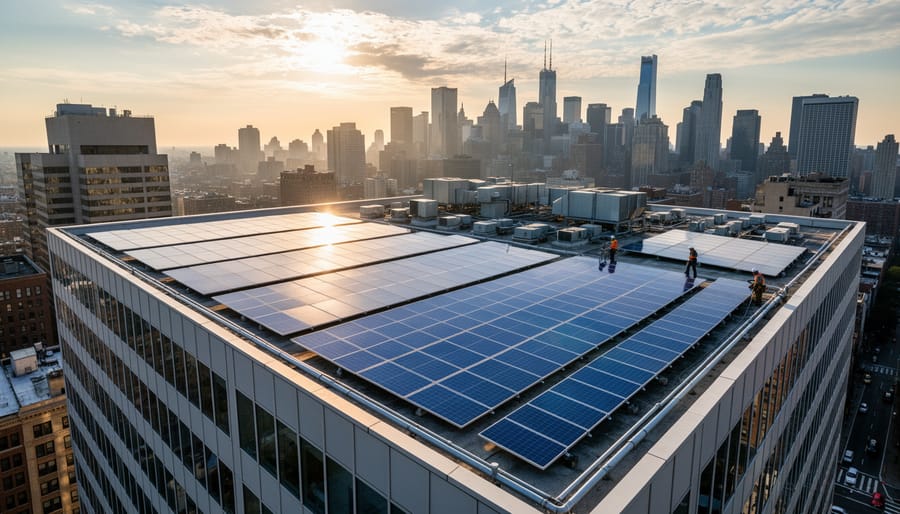
Commercial rooftop installations represent the most straightforward application, converting underutilized space into revenue-generating assets. Modern mounting systems accommodate various roof configurations while maintaining structural integrity and weatherproofing. Multi-story parking structures offer additional opportunities, with elevated solar canopies providing both energy generation and weather protection for vehicles. Properties involved in brownfield redevelopment benefit particularly from solar installations, as they transform contaminated or underutilized sites into productive energy assets without additional environmental disruption.
Advanced monitoring platforms enable facility managers to track system performance in real-time, identifying maintenance needs before they impact production. These systems integrate with building management software, providing comprehensive energy analytics that inform operational decisions. The data transparency supports accurate forecasting and budget planning, critical factors for ROI for facility managers evaluating long-term investments.
Current economics favor commercial solar installations, with typical payback periods ranging from four to seven years depending on energy consumption patterns and available incentives. Federal investment tax credits, accelerated depreciation schedules, and net metering arrangements significantly enhance project economics. Energy cost predictability represents an often-overlooked benefit, protecting businesses from utility rate volatility over the system’s 25-plus-year operational lifespan.
A Melbourne distribution center exemplifies successful implementation: a 500-kilowatt rooftop array now generates 63 percent of facility power requirements, reducing annual energy costs by $92,000. The installation required minimal operational disruption and achieved grid connection within six weeks. System monitoring revealed optimization opportunities in facility energy management, leading to additional efficiency improvements beyond the solar installation itself.
Wind Energy in Urban Environments
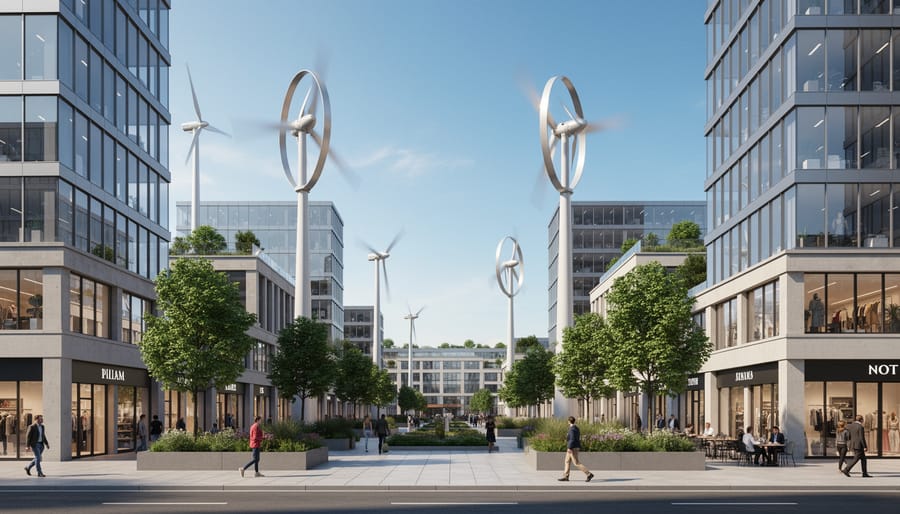
Urban wind energy presents viable supplementary power generation opportunities for commercial properties and mixed-use developments, though successful implementation requires careful site assessment and realistic performance expectations. Small-scale turbines, typically ranging from 1 to 10 kilowatts, can contribute to building energy portfolios when properly integrated into comprehensive renewable energy strategies.
Technical considerations for urban wind installations differ substantially from utility-scale projects. Building-mounted systems must account for turbulent wind patterns created by surrounding structures, which significantly impact energy output. Rooftop installations generally perform better than wall-mounted alternatives, though structural engineering assessments remain essential to verify load-bearing capacity and vibration tolerance. Ground-mounted turbines in parking areas or campus settings often deliver more consistent performance due to less interrupted airflow.
Site assessment begins with analyzing historical wind data for the specific location, ideally requiring minimum average wind speeds of 5 meters per second for economic viability. Professional wind resource assessments spanning 6-12 months provide accurate projections before capital investment. Urban environments typically experience 20-40 percent lower wind speeds than open terrain, directly affecting return on investment calculations.
Integration with building management systems enables optimized energy distribution and real-world performance monitoring. Modern installations connect to energy management platforms, allowing facility managers to track generation patterns, coordinate with grid-supplied power, and maximize consumption of locally generated electricity. Several European commercial developments have successfully incorporated small wind turbines alongside solar arrays, creating diversified renewable portfolios that balance seasonal generation variations. This hybrid approach demonstrates particular value in northern latitudes where winter wind resources compensate for reduced solar output.
Biomass and Waste-to-Energy Systems
Urban centers are increasingly recognizing organic waste as a valuable energy resource rather than a disposal challenge. Biomass and waste-to-energy systems convert municipal solid waste, agricultural residues, and industrial organic materials into electricity and heat through controlled combustion, gasification, or anaerobic digestion processes. These technologies align with sustainability goals while addressing waste management infrastructure needs.
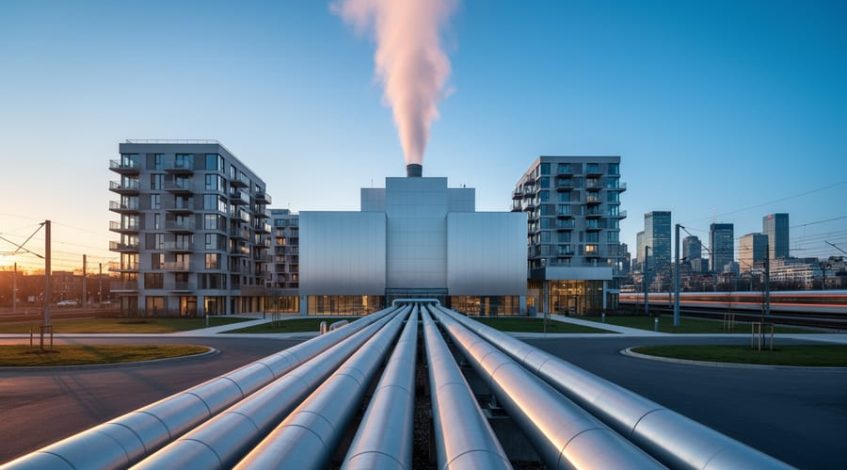
Municipal facilities are implementing anaerobic digestion systems that process food waste and sewage into biogas, generating electricity for water treatment plants and government buildings. Industrial parks benefit from combined heat and power systems that utilize manufacturing byproducts, achieving operational cost reductions of 20-30% while decreasing landfill dependency. Government institutions are investing in district heating networks powered by waste combustion facilities, serving multiple buildings from centralized energy production sites.
These systems deliver measurable returns through tipping fees from waste acceptance, energy sales, and reduced disposal costs. A typical municipal waste-to-energy plant processing 500 tons daily can generate 12-15 megawatts of continuous power, sufficient for approximately 15,000 homes while diverting substantial volumes from landfills and creating local employment opportunities in facility operations and maintenance.
Three Nonrenewable Resources in the Urban Energy Equation
Natural Gas: The Transition Fuel
Natural gas continues to serve as a pragmatic transition fuel for urban commercial facilities moving toward renewable energy portfolios. Its relatively lower carbon emissions compared to coal and oil make it a strategically sound intermediate solution while businesses scale renewable infrastructure.
In combined heat and power (CHP) systems, natural gas delivers efficiency rates exceeding 80 percent, simultaneously providing electricity and thermal energy for commercial buildings. A 2023 case study of a European manufacturing facility demonstrated how integrating natural gas CHP reduced overall energy costs by 24 percent while decreasing carbon emissions by 35 percent compared to grid-supplied electricity and separate heating systems. This dual functionality proves particularly valuable in urban settings where space constraints limit renewable installation options.
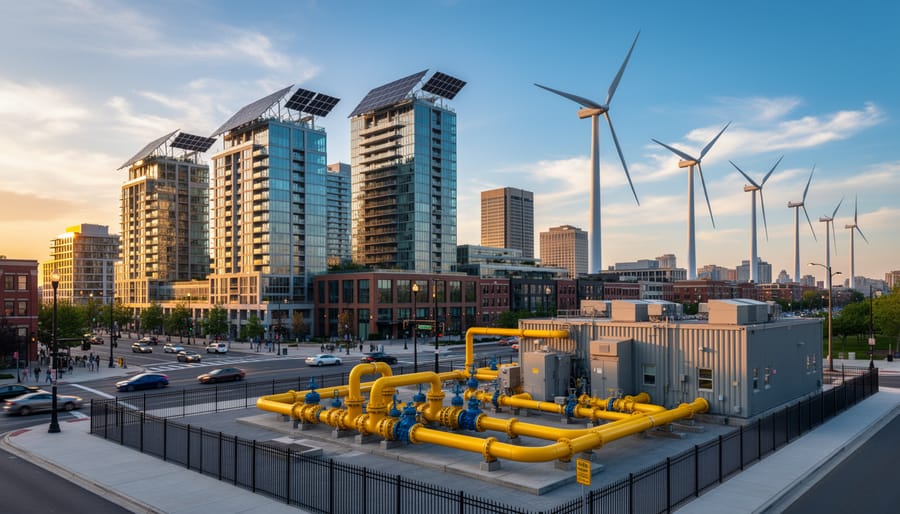
Natural gas generators serve essential backup functions for renewable installations, ensuring uninterrupted power supply during periods of low solar production or equipment maintenance. Modern facilities increasingly deploy hybrid systems where natural gas fills generation gaps, maintaining operational continuity without compromising sustainability goals. The fuel’s rapid response capability makes it ideal for balancing variable renewable output.
Forward-thinking phase-out strategies involve gradually reducing natural gas dependency as renewable capacity expands. Commercial property managers typically implement five to ten-year transition plans, incrementally replacing gas-powered systems with renewable alternatives while maintaining backup capacity. This measured approach minimizes capital risk and operational disruption.
The economic case for natural gas as a bridge fuel centers on immediate emissions reductions and operational reliability while businesses develop comprehensive renewable strategies. Strategic deployment positions facilities for successful long-term energy transitions without sacrificing current performance requirements or return on investment timelines.
Coal’s Declining Urban Footprint
Metropolitan areas worldwide are experiencing a significant shift away from coal-based energy infrastructure, creating opportunities for urban renewal and improved air quality. In the European Union, coal consumption in urban centers has declined by 40% since 2015, with several major cities completely phasing out coal-fired district heating systems. This transition has freed up valuable urban real estate previously occupied by coal storage facilities and power plants.
Former coal infrastructure sites are being repurposed into mixed-use developments, logistics centers, and renewable energy installations. In Germany’s Ruhr Valley, decommissioned coal plants now host solar arrays and battery storage facilities, demonstrating how legacy energy sites can support modern grid requirements. For facility managers and business owners, this trend signals important considerations for long-term energy planning and property development strategies.
The economic implications extend beyond environmental benefits. Cities reducing coal dependency have seen decreased particulate emissions and lower healthcare costs, while property values in formerly coal-impacted districts have increased by an average of 15-20%. Understanding these transformation patterns helps decision-makers anticipate regulatory changes, evaluate property investments, and align infrastructure plans with evolving urban energy landscapes. This shift particularly affects industrial facility operators and commercial property managers assessing energy procurement strategies for the next decade.
Petroleum Products in Urban Operations
Despite rapid advances in renewable energy, petroleum products maintain critical functions in urban infrastructure, particularly for reliability and emergency preparedness. Backup generators powered by diesel fuel remain the standard for hospitals, data centers, and essential facilities where power interruptions carry significant consequences. These systems provide instantaneous response during grid failures, a capability that current battery technology cannot fully replicate at enterprise scale.
Transportation fleets represent another area where petroleum dependence persists, though transformation is underway. Municipal vehicles, delivery fleets, and construction equipment continue relying on diesel and gasoline for their energy density and refueling convenience. However, forward-thinking facility managers are increasingly adopting hybrid approaches that balance operational requirements with sustainability goals.
The most promising development involves integrating petroleum-based backup systems with renewable energy storage solutions. Modern facilities are implementing tiered emergency power strategies: solar arrays with battery banks handle routine fluctuations and short-term outages, while diesel generators serve as secondary backup for extended emergencies. This approach reduces petroleum consumption by approximately 60-75% compared to traditional generator-only systems while maintaining reliability standards.
Case studies from commercial properties demonstrate measurable returns on hybrid infrastructure investments. A Chicago distribution center reduced annual fuel costs by $47,000 after installing solar panels with battery storage, relegating its diesel generators to true emergency-only status. Such implementations acknowledge petroleum’s ongoing role while strategically minimizing dependence through renewable integration, creating resilient, cost-effective energy systems that align with both operational requirements and environmental objectives.
Strategic Resource Planning for Urban Commercial Properties
Developing a comprehensive resource planning strategy for urban commercial properties requires systematic evaluation of both renewable and nonrenewable energy options. This framework enables facility managers and business owners to make evidence-based decisions that align with operational requirements and sustainability objectives.
Begin with a thorough energy audit of your property to establish baseline consumption patterns. Document current energy costs, peak demand periods, and usage variations across different operational zones. This data provides the foundation for comparing potential energy solutions objectively. Commercial properties in urban settings typically face unique constraints including limited roof space, shading from adjacent buildings, and strict aesthetic requirements imposed by local planning authorities.
When evaluating renewable energy systems, particularly solar installations, assess five critical dimensions. First, calculate upfront investment costs including equipment, installation, structural reinforcements, and grid connection fees. Second, project operational savings by modeling energy production against current utility rates and anticipated rate escalations. Third, evaluate system reliability through performance guarantees, inverter warranties, and degradation rates over the system’s lifecycle. Fourth, factor in maintenance requirements such as panel cleaning schedules, monitoring system costs, and component replacement timelines. Fifth, verify compliance with urban zoning regulations, heritage overlays, and building code requirements specific to your municipality.
For nonrenewable energy options, conduct parallel analysis examining contract flexibility, price volatility exposure, and infrastructure redundancy. Traditional grid connections offer predictable delivery but expose businesses to regulatory changes and market fluctuations. Hybrid approaches combining renewable generation with grid backup often provide optimal risk mitigation for urban commercial applications.
Implement a weighted scoring matrix incorporating these assessment criteria based on your organization’s priorities. A property prioritizing cost reduction might weight operational savings at 40 percent, while a business focused on brand positioning might assign greater value to sustainability metrics. This structured approach facilitates informed decision-making that balances financial, operational, and strategic considerations.
Real-world application demonstrates this framework’s effectiveness. A Melbourne distribution center implemented this methodology and selected a 250kW solar array with battery storage after determining that renewable infrastructure delivered superior 15-year returns compared to fixed-rate electricity contracts, despite higher initial capital requirements. The facility achieved 68 percent energy independence while maintaining grid connectivity for demand surges.
Document all assumptions, obtain multiple vendor proposals, and engage independent technical advisors to validate projections. This diligence ensures resource planning decisions withstand scrutiny and deliver projected outcomes across economic cycles.

Financial and Operational Benefits of the Renewable Transition
The financial case for transitioning to renewable energy resources, particularly commercial solar installations, demonstrates compelling returns across multiple operational metrics. Current market data indicates that commercial solar projects typically achieve full return on investment within 6-9 years, with systems engineered to perform optimally for 25-30 years. This extended operational lifespan creates substantial value accumulation, particularly for facility managers planning long-term infrastructure investments.
Electricity cost reduction represents the most immediate financial benefit. Commercial facilities implementing solar installations routinely report 40-70% reductions in utility expenses, with precise savings dependent on system capacity, geographic location, and consumption patterns. Advanced monitoring systems provide real-time performance analytics, enabling facility managers to track energy generation, identify efficiency opportunities, and verify projected savings against actual results. These monitoring platforms also facilitate predictive maintenance, reducing unplanned downtime and extending system longevity.
Government incentives significantly enhance project economics. The Investment Tax Credit currently allows businesses to deduct 30% of solar installation costs from federal taxes, while accelerated depreciation schedules enable additional write-offs through the Modified Accelerated Cost Recovery System. Many jurisdictions offer supplementary state-level incentives, renewable energy certificates, and net metering programs that credit excess generation back to facility accounts.
Financing structures have evolved to minimize capital barriers. Power Purchase Agreements allow organizations to procure solar electricity at predetermined rates without upfront equipment costs, while equipment leasing arrangements provide operational benefits with manageable monthly payments. For organizations with available capital, direct ownership maximizes long-term returns and provides complete asset control.
Risk mitigation through professional installation ensures optimal system performance and financial outcomes. Certified installers conduct comprehensive site assessments, engineer solutions for specific facility requirements, and guarantee workmanship quality. Ongoing support systems include performance warranties, maintenance agreements, and technical assistance that protect investment value throughout the system lifecycle.
Case analysis of a 250-kilowatt commercial installation illustrates practical outcomes. A manufacturing facility in the mid-Atlantic region invested 425,000 dollars after incentives, achieving annual savings of 62,000 dollars. The 6.8-year payback period preceded two decades of substantially reduced operating costs, improving competitive positioning while demonstrating environmental leadership. Such installations also increase property valuations and enhance corporate sustainability credentials, creating value beyond direct energy savings.
Understanding the distinct characteristics and limitations of renewable and nonrenewable resources forms the foundation for strategic energy planning in modern urban environments. For decision-makers overseeing commercial, industrial, and government facilities, this knowledge translates directly into competitive advantages through reduced operational costs, enhanced sustainability credentials, and improved long-term asset value.
The transition from fossil fuel dependence to renewable energy systems represents more than an environmental consideration—it constitutes a sound business strategy with quantifiable returns. Professional solar installations have demonstrated their capacity to deliver immediate cost reductions while positioning organizations to meet increasingly stringent regulatory requirements and stakeholder expectations. Facilities implementing properly engineered solar systems typically achieve 20-40% reductions in electricity expenses while simultaneously hedging against future utility rate increases.
Success in urban energy transitions requires partnering with experienced professionals who understand both the technical complexities of solar technology and the operational requirements of commercial-scale facilities. Comprehensive energy assessments, site-specific system design, and expert installation ensure that renewable energy investments deliver projected performance metrics and financial returns.
The evidence across diverse sectors confirms that integrating renewable energy resources, particularly solar, into facility operations provides measurable benefits that extend beyond sustainability goals. Organizations that prioritize professional solar solutions position themselves advantageously for the evolving energy landscape, achieving operational excellence while contributing to broader urban renewal objectives. The choice between continuing reliance on nonrenewable resources or transitioning to professionally implemented renewable systems ultimately determines both immediate fiscal performance and long-term organizational resilience.