Commercial farmland faces a critical challenge: rising operational costs coupled with increasing pressure to adopt sustainable practices. Agri-solar, the strategic integration of solar photovoltaic systems with active agricultural production, addresses both imperatives simultaneously. This dual-use approach transforms farmland into a revenue-generating asset that produces both crops and clean energy, typically increasing land productivity value by 35-60% while reducing water consumption by up to 30% in arid climates.
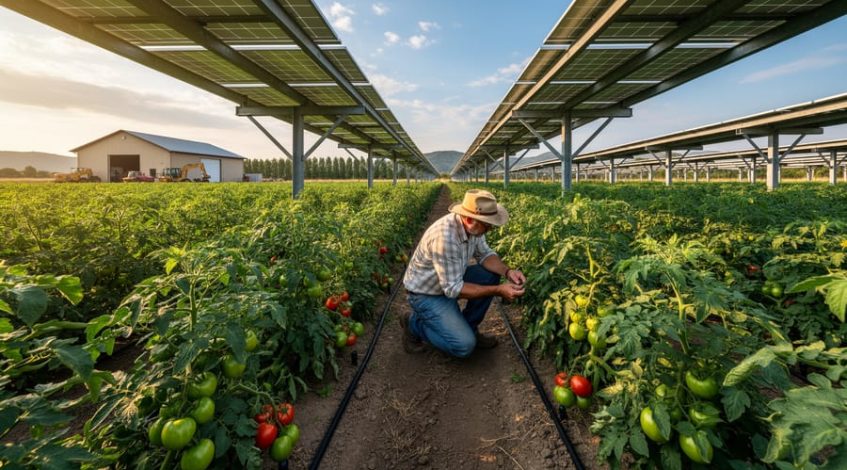
Forward-thinking farm operators are discovering that agri-solar installations generate average returns of 12-18% annually through combined crop yields and energy production. The technology allows continued farming operations beneath elevated solar arrays, with certain crops—including lettuce, tomatoes, and berry varieties—demonstrating enhanced yields in the partial shade conditions these systems create. Leading implementations in California, Arizona, and the Mediterranean region have documented consistent energy generation of 450-800 kWh per installed kilowatt annually while maintaining 80-90% of baseline crop production.
The business case extends beyond direct revenue. Federal tax incentives currently provide 30% investment tax credits for commercial solar installations, while many jurisdictions offer additional agricultural sustainability grants. Energy cost stabilization protects operations from utility rate volatility, and renewable energy certificates create additional income streams. For commercial farming operations with 50+ acres, agri-solar represents not just an energy solution but a comprehensive strategy for long-term operational resilience and profitability in an increasingly competitive agricultural marketplace.
What Is Agri-Solar and Why Commercial Farms Are Adopting It
Agri-solar, also known as agrivoltaics, represents an innovative approach to land use that integrates solar energy generation with active agricultural production. Unlike traditional ground-mounted solar installations that dedicate entire parcels exclusively to energy production, agrivoltaics systems position solar panels at strategic heights and spacing to allow simultaneous crop cultivation or livestock grazing beneath and between the arrays.
The core principle centers on creating a symbiotic relationship where both energy production and agricultural activities enhance each other. Solar panels provide partial shade that can reduce water evaporation by up to 30%, moderate soil temperatures, and protect sensitive crops from excessive heat and harsh weather conditions. Meanwhile, the vegetation beneath panels helps maintain cooler operating temperatures for the photovoltaic modules, increasing their efficiency by 2-10% compared to installations over bare ground.
This dual-use approach differs fundamentally from conventional solar farms by preserving agricultural productivity while generating clean energy. Commercial operations can maintain food production, sustain employment in farming operations, and generate additional revenue streams from power generation on the same land footprint. The elevated panel designs, typically mounted 2-5 meters above ground, accommodate standard farming equipment and livestock movement.
Adoption rates among commercial agricultural operations have accelerated significantly in recent years. Global installed agrivoltaic capacity exceeded 14 gigawatts by 2023, with projections estimating growth to 70 gigawatts by 2030. Leading agricultural nations including the United States, Japan, France, and Australia have documented hundreds of commercial installations across diverse farming operations, from vineyards and berry farms to cattle ranches and row crop operations. This adoption reflects growing recognition among farm operators that agri-solar installations can generate 30-40% returns on investment while maintaining 80-95% of traditional agricultural yields, effectively transforming underutilized airspace above farmland into productive energy-generating assets.
The Business Case: Revenue Streams and ROI for Commercial Operations
Dual Income Generation Model
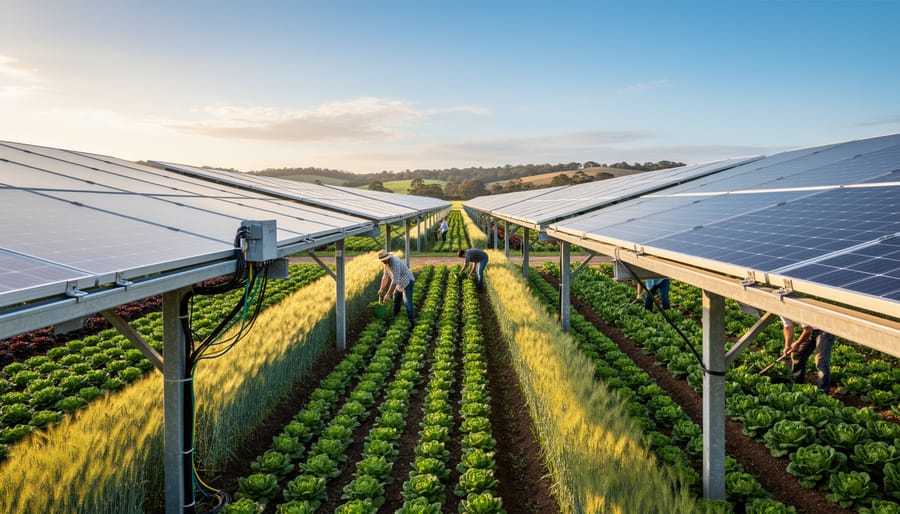
Agri-solar systems create a compelling financial proposition through their dual income generation model, where agricultural operations simultaneously benefit from crop or livestock revenue and energy-related income streams. This diversification strengthens farm financial stability while reducing exposure to market volatility in either sector.
Revenue from energy generation typically comes through three primary channels: direct electricity sales to the grid under power purchase agreements, energy cost savings from on-site consumption, and renewable energy credit sales. Agricultural production continues beneath and between solar arrays, with many operations reporting 80-90% of baseline crop yields for shade-tolerant species. The revenue split varies by implementation, but commercial operations commonly see 30-40% of income from energy generation and 60-70% from agricultural activities once systems reach full capacity.
Initial capital investment for agri-solar installations ranges from $800 to $1,500 per kilowatt installed, depending on system configuration and mounting requirements. However, federal Investment Tax Credits covering 30% of project costs, along with state-level incentives and accelerated depreciation benefits, significantly improve project economics. Commercial operations typically achieve payback periods of 6-10 years, with systems designed for 25-30 year operational lifespans.
Real-world applications demonstrate strong performance metrics. A 2.8-megawatt agri-solar installation at a Colorado vineyard generates $280,000 annually in electricity sales while maintaining 85% of grape production. Similarly, a Massachusetts farm combining solar arrays with shade-grown crops achieved full investment recovery in 8 years while reducing irrigation needs by 20% due to decreased evaporation rates.
Operational Cost Reductions
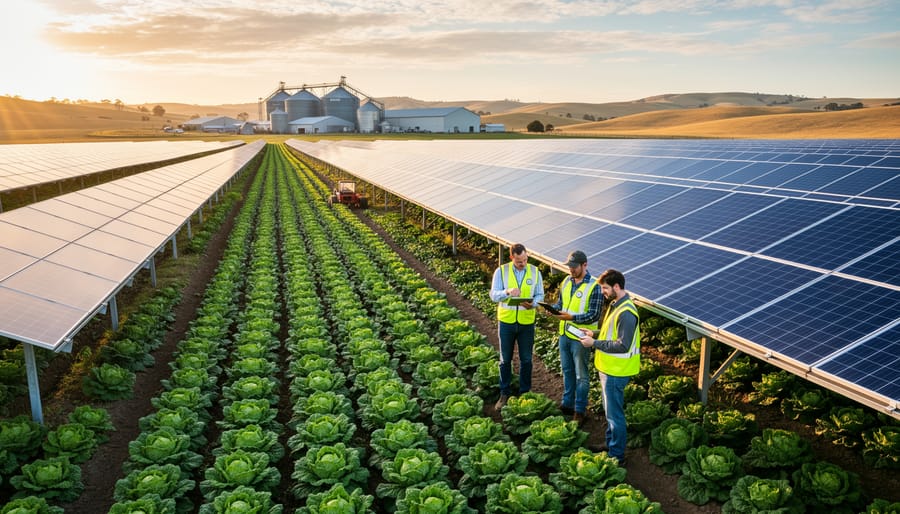
Agri-solar installations deliver measurable reductions in operational expenses through multiple mechanisms. The shade created by elevated solar panels significantly decreases evapotranspiration rates, reducing water consumption by 14-29% depending on crop type and climate conditions. Research from the University of Arizona demonstrates that lettuce crops grown under solar arrays required 40% less irrigation while maintaining comparable yields.
This shade effect directly translates to lower pumping and irrigation costs, particularly valuable in water-scarce regions where agricultural operations face escalating utility rates. On-site electricity generation further compounds savings by powering irrigation systems, processing facilities, and cold storage operations at zero marginal cost after initial system installation.
A 2022 analysis of commercial farms in California’s Central Valley revealed that agri-solar adopters reduced combined water and electricity expenses by $1,200-$2,800 per acre annually. These facilities eliminated demand charges during peak hours while gaining protection against future utility rate increases. Additionally, the consistent microclimate beneath panels can reduce crop stress and associated losses, improving overall operational efficiency.
For large-scale agricultural operations consuming substantial electricity for processing and refrigeration, these combined cost reductions typically contribute 25-35% of total project returns, strengthening the financial case for implementation alongside revenue generation from power sales.
Long-Term Financial Projections
Commercial-scale agri-solar installations demonstrate compelling financial performance over extended operational periods. Based on current market data and established case studies, a typical 500kW dual-use solar installation on commercial farmland shows strong economic returns when analyzed across 20-25 years.
Initial capital expenditure ranges from $750,000 to $1.2 million, with commercial solar financing options significantly reducing upfront costs. Year-one energy savings typically reach $80,000-$120,000, while crop production maintains 80-95% of conventional yields, adding $50,000-$70,000 in agricultural revenue.
Cumulative savings projections over 25 years indicate net returns of $2.8-$4.2 million when accounting for energy generation, reduced water usage (15-30% savings), and maintained crop yields. Feed-in tariff revenues contribute an additional $400,000-$600,000 over the system lifetime, depending on regional electricity rates and export agreements.
The payback period ranges from 6-9 years, with internal rates of return typically exceeding 12-15%. Systems require minimal maintenance costs, averaging 1-2% of initial investment annually. After year 10, operations generate predominantly positive cash flow, with cumulative savings accelerating substantially in the final operational decade as initial financing obligations conclude.
Optimal Crop and Livestock Applications
High-Value Shade-Tolerant Crops
Agricultural research demonstrates that certain high-value crops not only tolerate partial shade from solar panels but often thrive under these conditions. These shade-tolerant varieties present significant opportunities for commercial farming operations to maximize land productivity while generating renewable energy revenue.
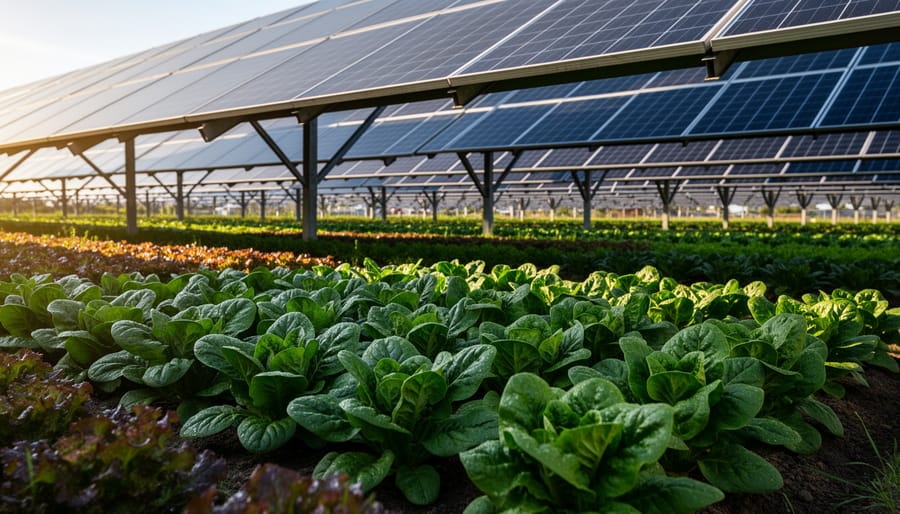
Leafy greens including lettuce, spinach, kale, and arugula consistently perform well in agrivoltaic systems. Studies from farms in Arizona and Massachusetts show that these crops experience reduced heat stress during peak summer months, resulting in extended growing seasons and improved product quality. The moderate shade provided by solar arrays typically reduces temperatures by 2-5 degrees Celsius, preventing premature bolting and bitter flavor development that commonly occurs in full-sun environments.
Berry crops represent another economically attractive option for agri-solar integration. Blueberries, raspberries, and strawberries have demonstrated yield maintenance or improvement in partial shade conditions. A commercial operation in Oregon reported a 12 percent increase in strawberry yields under solar panels compared to conventional open-field production, attributed to reduced water stress and more consistent soil moisture levels.
Specialty vegetables including broccoli, cauliflower, and certain root crops also adapt well to agrivoltaic systems. Research conducted at the University of Arizona found that tomatoes grown under solar panels required 65 percent less water while maintaining comparable yields to conventional cultivation.
These crop selections enable farming operations to diversify revenue streams through simultaneous energy generation and agricultural production, creating a more resilient business model. The reduced irrigation requirements and extended growing seasons further enhance the return on investment for commercial agri-solar implementations.
Livestock and Grazing Integration
Integrating livestock operations with solar installations creates compelling economic synergies while optimizing land productivity. Sheep grazing has emerged as the most widely adopted practice, with operations like the 16.5 MW Rabbit Hill Solar Farm in Minnesota demonstrating this dual-use model. Solar arrays provide shade that reduces heat stress on animals while protecting them from weather extremes, and sheep naturally control vegetation growth beneath and around panels, significantly reducing maintenance costs by $500 to $1,000 per acre annually compared to mechanical mowing.
Poultry operations, particularly free-range egg production, have shown equally promising results. Several commercial farms in California and Massachusetts have successfully incorporated chicken coops near solar installations, with birds utilizing panel shade during peak heat hours. This arrangement reduces irrigation demands for vegetation management while providing additional revenue streams from egg sales.
The key to success lies in proper panel height configuration—typically 4 to 5 feet minimum clearance—and selecting appropriate animal breeds. Smaller sheep breeds like Katahdin and Dorper work particularly well. Commercial operators report livestock revenue offsetting 15 to 25 percent of solar project operational costs while maintaining agricultural productivity, creating a robust business case for integrated agri-solar operations.
Pollinator-Friendly Ground Cover
Establishing pollinator-friendly vegetation beneath solar arrays delivers measurable agricultural and environmental returns for commercial operations. Native wildflowers, clover, and low-growing perennials create habitat corridors that support bee populations critical for crop pollination on surrounding farmland. Research from several agri-solar installations demonstrates that pollinator ground cover reduces site maintenance costs by 40-60% compared to traditional turf grass while eliminating herbicide expenses. These plantings also improve soil health through deeper root systems, enhance stormwater management, and provide additional revenue opportunities through honey production partnerships. Commercial operators at facilities across the Midwest report increased yields in adjacent fruit and vegetable crops, with some documenting productivity gains exceeding 15%. The dual-use approach addresses corporate sustainability goals while creating functional agricultural landscapes that support local food systems and strengthen rural economies.
System Design Considerations for Commercial Farms
Elevated Panel Configurations
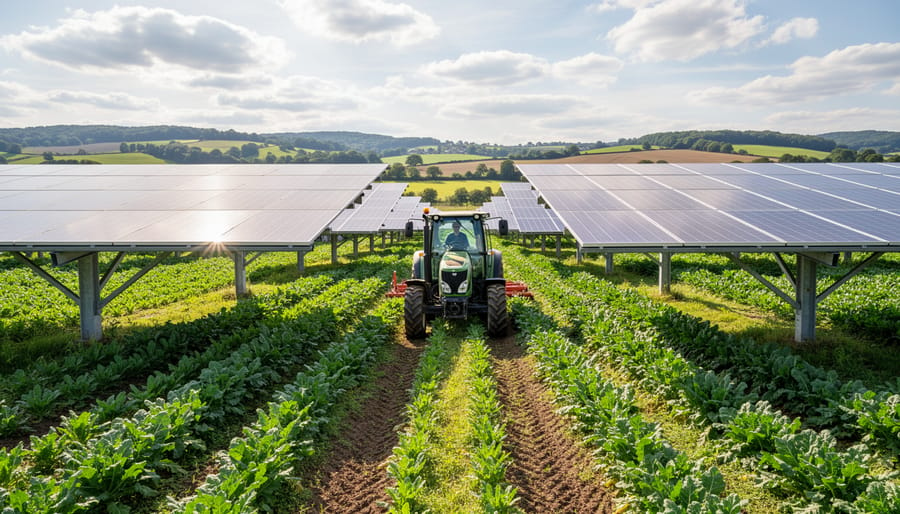
Successful agri-solar installations require careful engineering to accommodate both agricultural operations and energy generation. The minimum clearance height typically ranges from 3.5 to 5 meters, allowing standard tractors, combines, and solar-powered farm equipment to pass underneath without restriction. This elevation ensures operational continuity while protecting equipment from accidental contact with panel arrays.
Panel spacing follows a dual-purpose design philosophy. Row spacing of 8 to 12 meters enables adequate sunlight penetration for crop growth while providing sufficient turning radius for large machinery. This configuration supports the cultivation of shade-tolerant crops including leafy greens, berries, and certain root vegetables. The spacing also facilitates natural rainfall distribution and manual harvesting access.
Orientation optimization balances energy production with agricultural needs. North-south panel alignment generally delivers superior year-round energy output in most locations, while east-west configurations can reduce ground shading in specific applications. Single-axis tracking systems, though more expensive initially, increase energy generation by 20-30 percent and create dynamic shade patterns that benefit certain crop varieties.
Commercial installations at vineyards in California demonstrate how 4.2-meter clearances accommodate mechanical harvesters while generating 1.2 megawatts per hectare. Similarly, livestock operations utilize elevated panels at 4.5 meters, providing shelter for grazing animals while maintaining full property access. These real-world applications confirm that proper configuration delivers operational efficiency alongside renewable energy production, making agri-solar economically viable for diverse farming operations.
Tracking vs. Fixed Systems for Agricultural Use
When evaluating agri-solar systems for commercial operations, the choice between single-axis tracking and fixed-tilt mounting structures significantly impacts both agricultural compatibility and financial performance.
Fixed-tilt systems mount solar panels at a stationary angle, typically optimized for the site’s latitude. These installations offer several advantages for agricultural applications. The simpler structural design creates more uniform spacing patterns, facilitating equipment movement and crop management underneath. Fixed systems generally cost 15-25% less than tracking alternatives, with lower ongoing maintenance requirements due to fewer mechanical components. Installation is straightforward, and the absence of moving parts reduces operational complexity.
Single-axis tracking systems rotate panels to follow the sun’s east-to-west movement throughout the day, generating 15-25% more energy annually compared to fixed installations. This increased output can improve project economics despite higher upfront costs ranging from $0.10 to $0.15 per watt additional investment. However, tracking systems require careful consideration for agricultural integration. The mechanical components demand adequate clearance for rotation, potentially limiting underneath growing space. Row spacing must accommodate the panels’ movement arc, which can reduce ground-level light distribution uniformity.
For operations prioritizing intensive ground-level cultivation, fixed-tilt systems often prove more practical. The Colorado State University research facility demonstrates this approach effectively, using elevated fixed arrays that maintain consistent crop access patterns. Conversely, operations focused on shade-tolerant crops or grazing may benefit from tracking systems’ superior energy production, offsetting the agricultural trade-offs with enhanced revenue streams. The optimal choice depends on specific crop requirements, available land area, and long-term financial objectives.
Real-World Performance: Commercial Agri-Solar Case Studies
Commercial farming operations across diverse climates have documented substantial benefits from agri-solar implementation, providing valuable data for decision-makers evaluating this technology.
Jack’s Solar Garden in Colorado represents one of North America’s most comprehensively studied agri-solar installations. This 1.2-megawatt facility spanning 24 acres combines energy generation with active vegetable production. After three growing seasons, the operation reported remarkable results: tomato yields increased by 65% under partial shade conditions, while water usage decreased by 50% compared to traditional field operations. The solar array generates approximately 2.8 million kilowatt-hours annually, providing revenue streams from both electricity sales and agricultural production. Financial analysis indicates the system achieved positive cash flow within five years, with projected full payback in 12 years. The farm successfully grows lettuce, peppers, and specialty crops while maintaining 80% of pre-installation agricultural productivity per acre.
A French wine cooperative in the Pyrénées-Orientales region implemented agri-solar technology across 4.5 hectares of grape cultivation. The installation features elevated solar panels positioned to provide strategic shade during peak summer hours. Over four harvest cycles, the vineyard documented 15% higher grape yields attributed to reduced heat stress and improved moisture retention. Energy production reached 3.6 megawatts, supplying power for cooperative operations and generating 47,000 euros annually through grid sales. Grape quality metrics remained consistent with pre-installation standards, addressing initial concerns about phenolic development. The cooperative projects a 14-year return on investment based on combined agricultural and energy revenues.
Fruitful Orchards in Massachusetts deployed agri-solar systems across 5 acres of berry cultivation, specifically targeting cranberry and blueberry operations. The installation generates 1.8 megawatts while maintaining 90% of traditional crop productivity. Post-installation data from three growing seasons shows berry quality improvements in sugar content and fruit size, attributed to regulated temperature and moisture conditions. Energy production offsets 100% of farm operational costs, with excess capacity sold to the regional grid providing an additional 38,000 dollars annually. The farm documented a 40% reduction in irrigation requirements and decreased pesticide applications due to improved microclimate conditions. Total project costs of 2.4 million dollars are projected to achieve full payback within 11 years through combined agricultural and energy revenues.
These implementations demonstrate that agri-solar systems deliver measurable returns across different agricultural contexts, providing validated models for commercial farming operations considering this dual-use approach.
Regulatory Landscape and Incentive Programs
Government support for agri-solar projects has expanded significantly across multiple jurisdictions, creating favorable conditions for commercial agricultural operators to adopt dual-use systems. Understanding available incentive programs and regulatory frameworks is essential for maximizing project feasibility and return on investment.
The European Union leads global agri-solar policy development through its Common Agricultural Policy (CAP), which allocates substantial funding for renewable energy integration in farming operations. Recent CAP reforms have designated agri-solar installations as eligible for environmental scheme payments, with member states offering varied support mechanisms. France’s agri-solar framework provides up to 40% capital subsidies for qualifying projects, while Germany’s Federal Network Agency has created specific feed-in tariff categories for agricultural photovoltaic systems that maintain minimum crop production thresholds.
The United States offers multiple federal incentive pathways, including the Investment Tax Credit (ITC), which currently provides 30% tax credit for commercial solar installations. The USDA’s Rural Energy for America Program (REAP) grants cover up to 25% of project costs for eligible agricultural producers, with loan guarantees available for the remaining investment. Several states have implemented additional programs; California’s Self-Generation Incentive Program and Massachusetts’ SMART program include performance-based incentives specifically structured for agri-solar applications.
International examples demonstrate diverse policy approaches. Japan’s Feed-in Tariff system includes premium rates for farming-compatible solar installations, while Australia’s Renewable Energy Target scheme provides certification mechanisms that enhance project economics. India has launched the PM-KUSUM program, aiming to deploy 10 GW of agri-solar capacity through subsidized financing.
Successful project development requires thorough evaluation of applicable programs, as eligibility criteria often mandate specific land-use ratios, crop yield maintenance, and documentation requirements. Engaging with agricultural extension services and renewable energy consultants early in project planning ensures optimal capture of available financial support.
Implementation Roadmap for Commercial Farming Operations
Site Assessment and Feasibility Analysis
A comprehensive site assessment forms the foundation of any successful agri-solar implementation. Begin by evaluating land topography, soil quality, and sun exposure patterns throughout the year. Properties with consistent solar irradiance of 4-6 peak sun hours daily typically yield optimal energy generation. Assess existing infrastructure including electrical systems, water resources, and access roads that may impact installation logistics and costs.
Crop compatibility represents a critical consideration. Shade-tolerant crops such as lettuce, tomatoes, berries, and certain herbs often thrive under solar panels, while sun-intensive crops like corn may require modified panel configurations. Analyze your current crop rotation schedule and future agricultural plans to ensure alignment with panel placement strategies.
Calculate energy consumption patterns across seasons, including irrigation systems, climate control, and processing facilities. Grid connection feasibility involves examining distance to interconnection points, utility rate structures, and available net metering programs. Commercial operations often benefit from behind-the-meter installations that directly offset peak demand charges.
Financial feasibility extends beyond simple payback calculations. Consider available tax incentives, USDA grants, and state-level agricultural energy programs. Most commercial agri-solar projects demonstrate ROI within 7-12 years while simultaneously maintaining or increasing crop yields through microclimate benefits.
Working with Qualified Solar Providers
Selecting a qualified solar provider with agri-solar expertise requires evaluating several critical factors. Look for installers holding NABCEP (North American Board of Certified Energy Practitioners) certification, demonstrating technical competency in photovoltaic system design and installation. Providers should present a portfolio of completed agri-solar projects, including documented crop yield data and energy production metrics from similar operations.
Essential capabilities include site assessment expertise that accounts for agricultural activities, crop selection, and equipment access requirements. The installer should offer comprehensive project management services, from permitting and utility interconnection to ongoing monitoring systems. Request references from commercial farming clients and verify the provider’s experience with agricultural-specific mounting systems that accommodate tractors and harvesting equipment.
Financial transparency is paramount—qualified providers will deliver detailed cost-benefit analyses, including available tax incentives, USDA REAP grants, and accurate ROI projections. Ensure they offer performance guarantees and long-term maintenance agreements tailored to farming operations. A strong provider partners with agronomists to optimize the dual-use system for both energy generation and crop productivity.
Ongoing System Management and Monitoring
Successful agri-solar installations require strategic ongoing system maintenance and performance monitoring to optimize both agricultural and energy outcomes. Operators should implement quarterly panel inspections, addressing dust accumulation, vegetation management, and electrical component checks. Modern monitoring systems provide real-time data on energy generation, enabling operators to identify performance issues promptly while tracking crop yields beneath arrays. Establish clear key performance indicators for both agricultural productivity and energy output, typically aiming for 70-90% of conventional crop yields while generating substantial renewable energy revenue. Many successful operations conduct annual assessments comparing crop health, soil conditions, and energy production against baseline metrics. This data-driven approach allows farm managers to adjust array configurations, modify crop selection, or fine-tune irrigation schedules. Professional maintenance contracts typically cost 1-2% of system value annually but protect long-term investment returns and ensure consistent dual-revenue streams from agricultural and energy production.
Agri-solar represents a strategic imperative for commercial farming operations positioning themselves for long-term success in an evolving agricultural landscape. The dual land use model delivers measurable competitive advantages: enhanced revenue streams through energy generation, improved crop yields under optimized growing conditions, and strengthened climate resilience through microclimate modification. Forward-thinking farm operators who implement agri-solar systems today are securing energy independence while diversifying income sources, insulating their operations from volatile energy markets and uncertain commodity prices.
The evidence from operational installations demonstrates that agri-solar is not experimental technology but a proven solution delivering returns across diverse agricultural contexts. From livestock operations to specialty crop production, commercial farms are achieving both production and energy generation targets on the same acreage. This efficiency gain becomes increasingly valuable as agricultural land faces mounting pressure from development, climate variability, and resource constraints.
For farm operators and facility managers evaluating their next infrastructure investment, the strategic question is not whether agri-solar makes sense, but how quickly implementation can begin. Conducting a site-specific feasibility assessment represents the logical first step toward capturing the operational and financial benefits of this transformative approach to commercial agriculture.