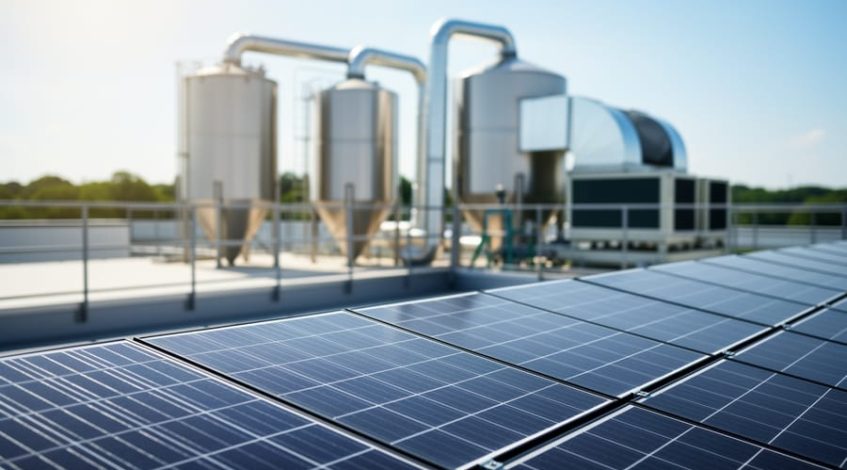
Hemp processing facilities producing best THC gummies and other edibles consume substantial electricity for extraction, decarboxylation, climate control, and packaging operations. Installing commercial solar systems can reduce operating costs by 40-60% while insulating manufacturers from volatile utility rates, and the commercial solar ROI for these facilities typically reaches breakeven within 4-6 years due to high baseline consumption and favorable depreciation schedules.
The convergence of renewable energy and hemp manufacturing addresses two critical operational challenges: rising energy costs and the need for sustainable production practices that appeal to environmentally conscious consumers. Hemp extraction requires maintaining precise temperatures during CO2 or ethanol-based processes, while subsequent decarboxylation converts THCA into active THC at sustained heat levels between 220-245°F. These processes, combined with HVAC requirements for climate-controlled production spaces and cold storage for finished goods, create continuous electrical loads that align well with solar generation profiles.
Facilities entering this space face a unique purchasing decision. The regulatory landscape governing hemp-derived products continues evolving, with federal law defining legal hemp as cannabis containing no more than 0.3% delta-9 tetrahydrocannabinol, and a new federal amendment effective November 12, 2026, setting a 0.4 mg total THC limit per finished product container. Building energy resilience through solar installation protects profit margins regardless of regulatory shifts, since processing costs remain tied to electricity rates that have increased 23% nationwide since 2021.
This guide examines solar system specifications for small-batch artisan producers through large-scale commercial operations, comparing ground-mount versus rooftop configurations, and identifying the financial metrics that determine whether solar makes strategic sense for your hemp manufacturing operation.
Energy Requirements for Hemp-Derived THC Edibles Production
Processing and Extraction Energy Loads
Hemp-derived THC edibles manufacturing demands substantial electrical capacity across three primary operational categories. CO2 supercritical extraction systems represent the largest energy draw, with industrial units consuming 15-30 kW during continuous operation. These extractors maintain precise pressure (1,000-5,000 psi) and temperature control while processing raw hemp biomass into concentrated cannabinoid oils. A mid-scale facility running two extraction units simultaneously can draw 40-60 kW during peak production hours, with extraction cycles lasting 4-8 hours per batch.
Distillation equipment adds another significant load to the facility’s energy profile. Short-path distillation systems and wiped-film evaporators, used to refine extracted cannabinoids to pharmaceutical-grade purity, typically require 8-15 kW per unit. These systems operate at controlled vacuum levels and temperatures between 180-220°C to separate delta-9 THC, CBD, and other cannabinoids while removing residual solvents and impurities. Facilities producing high-volume gummy products often run multiple distillation units concurrently, compounding energy demands.
Laboratory testing facilities constitute the third critical energy component, operating specialized equipment for potency verification and compliance documentation. High-performance liquid chromatography (HPLC) systems, which confirm products meet federal requirements including the 0.3% delta-9 THC threshold for hemp classification and the 0.4 mg total THC per container limit effective November 12, 2026, consume 2-4 kW per instrument. Gas chromatography equipment, mass spectrometers, and climate-controlled sample storage add another 10-20 kW to baseline laboratory loads. These analytical systems run continuously during production shifts to ensure batch compliance and product safety.
Climate Control and Storage Demands
Hemp processing facilities and THC edibles production require precise climate control throughout every stage of operation. Processing areas must maintain temperatures between 60-70°F with relative humidity below 60% to prevent mold growth and preserve cannabinoid stability during extraction and infusion. Storage zones for raw hemp material demand even tighter controls, typically 59-63°F with 55-62% humidity, to prevent degradation before processing.
Finished gummy products face strict post-production climate requirements. Storage facilities must maintain consistent temperatures between 59-77°F to prevent melting, texture changes, or cannabinoid degradation that could affect the 0.3% delta-9 THC threshold mandated by federal hemp definitions. Humidity control becomes critical here; excess moisture promotes microbial growth while insufficient humidity can cause gummies to harden or crack.
HVAC systems supporting these operations consume 30-40% of a typical facility’s total energy load. Continuous operation requirements mean climate control costs compound rapidly, particularly in regions with extreme seasonal variations. Dehumidification equipment alone can account for 15-20% of processing facility electricity consumption. Modern commercial solar installations directly offset these substantial climate control expenses, reducing operational costs while ensuring the stable environmental conditions essential for compliant hemp-derived THC product manufacturing. Facilities with integrated solar arrays gain predictable energy costs that support consistent production quality year-round.
Key Factors When Selecting Solar Solutions for Hemp Facilities
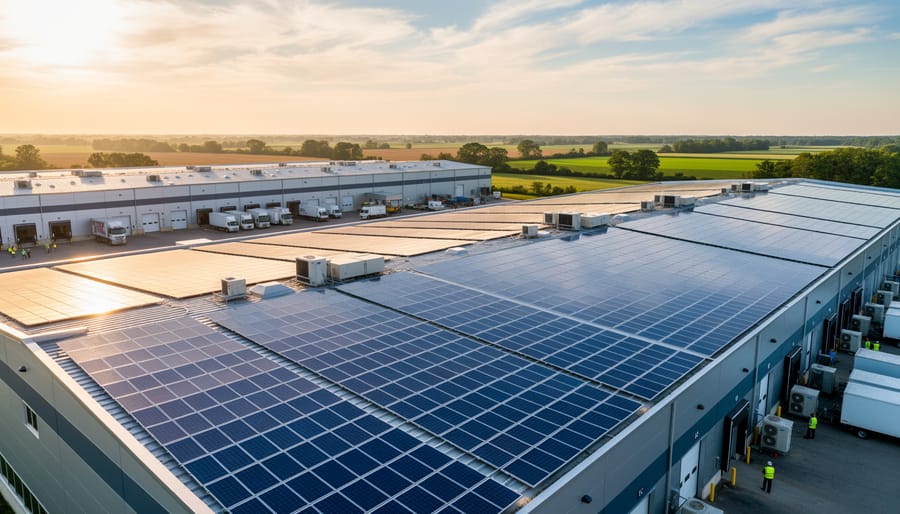
Hemp-derived edibles manufacturers face unique operational challenges that directly impact their solar investment decisions. Energy-intensive extraction processes, climate-controlled storage, and continuous compliance testing equipment create substantial baseline electricity demands that require careful solar system planning. Facility managers must evaluate several interconnected factors before committing to a commercial solar installation to ensure the system delivers both immediate cost savings and long-term operational flexibility.
Start with a comprehensive facility energy audit that documents current consumption patterns across all production phases. Extraction equipment typically operates during scheduled shifts, while HVAC systems and storage units run continuously, creating a mixed load profile. Use a solar size calculator to match system capacity to your actual consumption data rather than generic industry estimates, accounting for seasonal variations in hemp processing schedules and the additional load from compliance testing equipment mandated by the 2018 Farm Bill regulations.
Critical considerations for hemp facility solar planning include:
- Complete facility energy audit covering extraction, HVAC, lab testing, and packaging operations
- Available installation space with structural analysis for rooftop systems or land assessment for ground arrays
- Budget parameters including upfront capital, financing terms, and available incentive programs
- Utility rate structure analysis to optimize net metering benefits and time-of-use savings
- Backup power requirements for critical processing equipment and cold storage
- Local building codes, zoning restrictions, and utility interconnection timelines
The mounting decision significantly affects installation costs and long-term performance. Rooftop systems minimize land use but require structural assessments to verify load-bearing capacity for panel arrays and maintenance access. Newer processing facilities often accommodate solar loads, while older converted buildings may need reinforcement. Ground-mount installations offer easier maintenance and expansion options, making them preferable for rural operations with available acreage, though they consume land that could potentially support hemp cultivation.
Battery storage integration deserves serious evaluation for hemp facilities where production interruptions create substantial financial losses. Critical extraction equipment cannot tolerate power fluctuations without risking batch contamination, while temperature-controlled storage protects finished product inventory. Solar-plus-storage systems provide backup power during grid outages and enable demand charge reduction by discharging batteries during peak rate periods. However, battery costs add 40 to 60 percent to initial system investment, requiring careful ROI analysis against your facility’s vulnerability to power disruptions.
Scalability planning prevents costly future modifications. Many hemp edibles manufacturers underestimate growth trajectories, installing systems sized for current operations without considering expansion. Design electrical infrastructure and inverter capacity to accommodate additional panels, anticipate increased processing capacity, and evaluate whether existing roof space or land allocation can support future arrays without major reconfiguration.
Types of Solar Systems for Hemp Processing Operations
Rooftop Solar Arrays
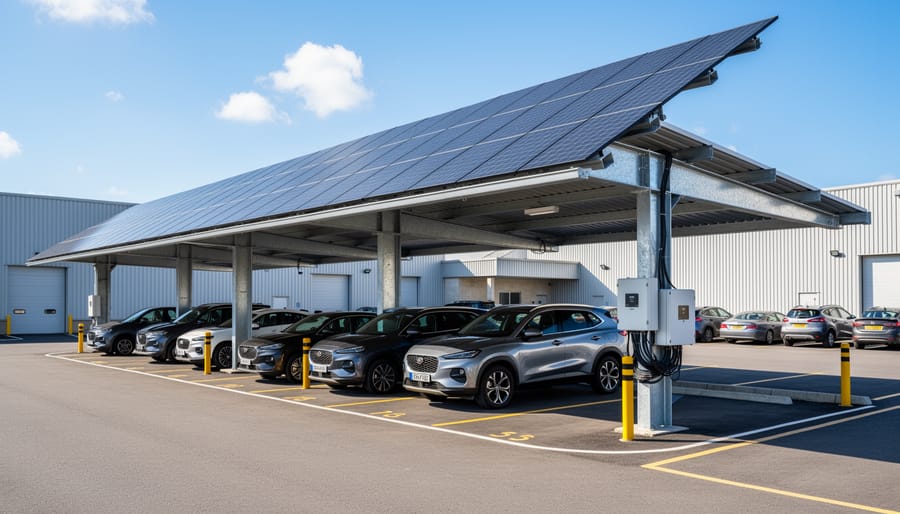
Rooftop photovoltaic installations offer hemp processing facilities a practical entry point into solar energy, particularly for operations in urban or suburban areas where ground space is limited. These systems typically range from 50 to 150 kilowatts for smaller production environments, generating enough electricity to offset a substantial portion of extraction and climate control loads without requiring additional land acquisition.
The viability of rooftop solar depends critically on structural capacity. Hemp facilities must conduct professional engineering assessments to verify that existing roof structures can support the additional weight of solar panels, racking systems, and snow loads where applicable. Flat commercial roofs are ideal candidates, though pitched metal roofs also accommodate photovoltaic arrays effectively. Facilities housed in older industrial buildings may require roof reinforcement or replacement before installation, adding upfront costs that must factor into ROI calculations.
Capacity limitations stem from available roof area and orientation. A 10,000-square-foot roof with optimal southern exposure and minimal shading can typically accommodate a 75 to 100 kW system. Urban hemp processors should account for surrounding buildings, HVAC equipment, and required maintenance walkways that reduce usable installation space. These constraints make rooftop arrays most suitable for facilities with moderate energy demands rather than large-scale operations running multiple extraction lines continuously.
Ground-Mount Solar Farms
Ground-mount solar farms represent the optimal choice for hemp-derived THC edibles manufacturers operating on rural properties with substantial available acreage. These installations typically range from 500 kW to several megawatts, generating sufficient power to support large-scale extraction equipment, multiple processing lines, climate-controlled storage facilities, and comprehensive compliance testing laboratories. Unlike rooftop arrays constrained by structural load limits, ground-mount systems can scale to match ambitious production targets while maintaining the precise 0.3% delta-9 THC threshold and upcoming 0.4 mg total THC per container requirements that demand continuous monitoring and testing infrastructure.
Rural hemp operations benefit from ground-mount farms through flexible orientation angles that maximize solar exposure throughout growing and processing seasons. These systems typically require one to two acres per 500 kW of capacity, positioning solar arrays on non-arable land or integrating them with hemp cultivation areas through agrivoltaic designs. The configuration allows facility managers to expand production capacity without compromising existing infrastructure, while generating excess power that can potentially qualify for net metering credits or power purchase agreements with local utilities. Installation costs generally run lower per watt than rooftop equivalents due to simplified mounting structures and accessible maintenance access.
Solar-Plus-Storage Solutions
Solar-plus-storage configurations combine photovoltaic arrays with utility battery storage systems, addressing the critical power continuity needs of hemp-derived THC edibles facilities. These integrated installations ensure uninterrupted operation of temperature-sensitive extraction equipment, laboratory testing instruments, and climate control systems during grid outages or voltage fluctuations. For hemp processors, even brief power interruptions can compromise batch integrity, disrupt decarboxylation processes, or damage work-in-progress products worth thousands of dollars.
Battery storage delivers time-of-use optimization by charging during off-peak solar generation periods and discharging when electricity rates peak during afternoon processing shifts. This load-shifting capability typically reduces demand charges by 20-30% for facilities in regions with time-of-use utility rates. Storage capacity sizing should match the runtime requirements of essential equipment: a 100 kWh system provides approximately four hours of backup power for a mid-scale facility’s critical loads, including extraction systems, HVAC controls, and testing equipment.
Modern lithium-ion battery systems integrate seamlessly with inverter technology, automatically switching to stored power within milliseconds of detecting grid irregularities. For hemp facilities subject to stringent compliance monitoring under the 2018 Farm Bill’s 0.3% delta-9 THC threshold, reliable power for testing equipment and environmental controls is non-negotiable. The upcoming 0.4 mg total THC per container limit effective November 12, 2026 further emphasizes the need for consistent processing conditions that storage systems help maintain.
Federal Compliance and Regulatory Considerations
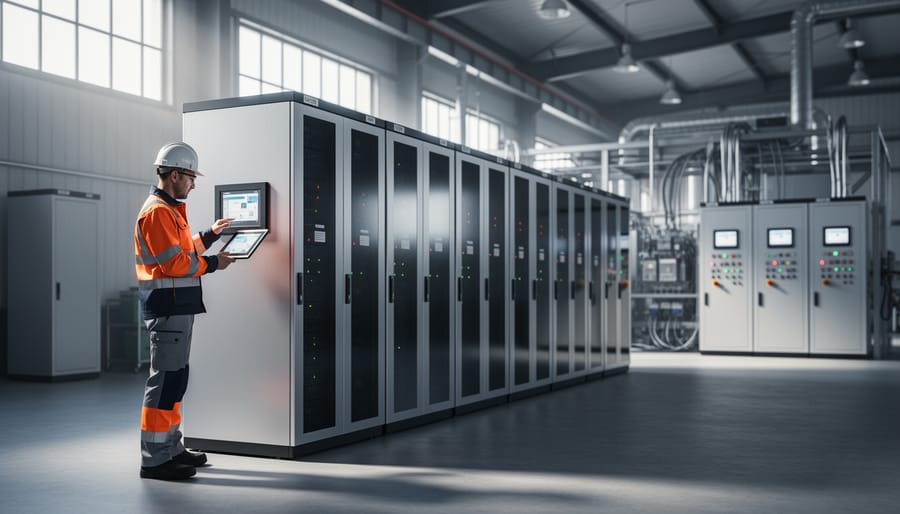
The 2018 Farm Bill fundamentally transformed hemp-derived THC edibles manufacturing by removing hemp from the federal controlled substances list, but strict compliance thresholds remain in place. Federal law establishes hemp as cannabis containing no more than 0.3% delta-9 tetrahydrocannabinol by dry weight, and manufacturers must maintain testing protocols that verify this 0.3% delta-9 THC hemp definition throughout production. Processing facilities require continuous power for chromatography equipment, spectrophotometers, and climate-controlled sample storage that form the backbone of compliance verification.
This additional restriction introduces a dual-compliance framework where hemp-derived gummy manufacturers must verify both the plant material’s delta-9 THC concentration during extraction and the finished product’s total THC content per container. The 0.4 mg per container limit applies to all tetrahydrocannabinols combined, including delta-8, delta-10, and other THC isomers that may form during processing. Laboratory testing equipment measuring these precise concentrations demands uninterrupted electricity, making power reliability a compliance necessity rather than an operational convenience.
Commercial solar installations with battery storage systems provide the electrical stability hemp facilities need for round-the-clock monitoring and testing. Power interruptions during critical decarboxylation or infusion steps can compromise batch consistency and force manufacturers to retest entire production runs, creating costly delays. Solar arrays paired with adequately sized inverters maintain steady voltage to sensitive analytical instruments, while integrated battery backup protects against grid fluctuations that could disrupt multi-hour testing sequences. For facilities producing hemp-derived edibles, compliance documentation extends beyond test results to include energy system performance logs demonstrating that testing equipment operated under optimal conditions, creating an unexpected connection between renewable energy infrastructure and regulatory documentation.
Recommendations for Hemp Facility Solar Installations
Small-Scale Processing Facilities (Under 50,000 sq ft)
Small-scale hemp processing facilities typically operate in spaces between 10,000 and 50,000 square feet, housing basic extraction equipment, a mixing and infusion line, climate-controlled storage, and compliance testing labs. These operations generally require 50-150 kilowatt solar installations to offset their primary energy loads. A 75 kW rooftop system represents the sweet spot for most facilities in this category, providing approximately 90,000-110,000 kWh annually depending on location, enough to cover extraction cycles, HVAC systems, and lighting without oversizing the investment.
Rooftop mounting works well for smaller operations because it preserves ground space for parking and material handling while leveraging existing infrastructure. Facilities should verify their roof can support 3-4 pounds per square foot of additional load and has at least 15 years of serviceable life remaining before reroofing. String inverter systems with optimizer technology offer the best value at this scale, balancing upfront cost with performance monitoring capabilities. Budget $2.25-$2.75 per watt installed, meaning a 100 kW system runs $225,000-$275,000 before incentives, typically achieving payback within 5-7 years given industrial electricity rates.
Mid-Scale Commercial Operations (50,000-150,000 sq ft)
Mid-scale hemp processing facilities between 50,000 and 150,000 square feet require solar installations in the 150-500 kilowatt range to support their growing operations. These facilities typically operate multiple extraction lines, maintain extensive climate-controlled storage areas, and run laboratory equipment around the clock to ensure compliance with the federal 0.3% delta-9 THC limit for hemp classification.
A 250-kilowatt system represents the sweet spot for most mid-scale operations, generating approximately 312,500 kilowatt-hours annually in favorable locations. This capacity covers baseline processing loads while leaving headroom for seasonal production increases during peak harvest periods. Facilities planning expansion should specify modular solar arrays with clearly defined interconnection points, allowing them to add 50-100 kilowatt increments as production scales without redesigning the entire electrical system.
Ground-mount configurations work best for these operations, particularly when facilities have adjacent land available. Unlike rooftop arrays constrained by structural limits, ground installations accommodate the higher capacities mid-scale operations demand and simplify future expansions. Integrating a 100-200 kilowatt-hour battery storage system provides backup power for critical extraction equipment and cold storage, protecting valuable inventory during grid interruptions while optimizing electricity costs through time-of-use load shifting.
Large Industrial Hemp Processing Plants
Large industrial hemp processing plants operating at scales exceeding 150,000 square feet require utility-scale solar installations in the 500 kW to multi-megawatt range to support their substantial energy demands. These facilities typically run multiple extraction lines simultaneously, maintain extensive climate-controlled storage warehouses, operate continuous laboratory testing equipment for compliance with federal regulations including the 0.3% delta-9 THC limit and the 0.4 mg total THC per container limit effective November 12, 2026, and process raw hemp material around the clock during peak production seasons.
For these operations, ground-mount solar farms often prove most practical, particularly for facilities with adjacent land holdings or rural locations where hemp cultivation occurs onsite. A 1 MW solar array can generate approximately 1,200 to 1,500 MWh annually depending on geographic location, potentially offsetting 60-80% of a large processing plant’s baseline energy consumption. Many industrial-scale operations combine solar with battery storage systems in the 500 kWh to 2 MWh range, ensuring uninterrupted power to temperature-sensitive extraction equipment and preventing costly production disruptions during grid fluctuations. These facilities should engage specialized commercial solar developers experienced with industrial projects, as interconnection agreements, utility coordination, and phased construction timelines become significantly more complex at this scale.
Common Mistakes Hemp Manufacturers Make When Going Solar
Hemp manufacturers entering the solar market frequently make avoidable mistakes that compromise their return on investment and operational efficiency. Understanding these pitfalls before purchasing equipment can save processing facilities tens of thousands of dollars and prevent disruptions to critical production timelines.
The most common error is undersizing solar installations based solely on historical energy bills rather than conducting comprehensive facility audits. Hemp processing operations have highly variable power demands depending on whether facilities are running extraction equipment, climate control systems, or testing labs. A system designed for average consumption will leave manufacturers paying peak demand charges during high-production periods when extraction and decarboxylation processes run simultaneously. Forward-thinking facilities analyze their maximum simultaneous equipment load and design systems to cover 80-90% of peak demand, not just average usage.
Neglecting future expansion capacity ranks as another critical mistake. Hemp edibles manufacturers experiencing growth often add processing lines, increase cold storage, or expand laboratory testing capabilities within two to three years of initial operations. Installing a solar array without accounting for this expansion means either accepting higher utility costs for additional consumption or facing expensive system upgrades that require new permits, additional structural engineering, and potential roof reinforcement. Designing systems with 25-30% excess capacity provides headroom for organic business growth while maximizing available roof space during the initial installation.
Several additional procurement errors undermine solar projects before they generate their first kilowatt-hour:
- Failing to conduct thorough energy audits that capture seasonal production variations and equipment upgrade plans
- Selecting installers without documented commercial or industrial experience, particularly with 24/7 manufacturing operations
- Overlooking federal Investment Tax Credit claims, state-level incentives, and accelerated depreciation schedules that significantly improve ROI
- Inadequate backup power planning for critical extraction and refrigeration systems during grid outages or maintenance periods
- Ignoring ongoing maintenance requirements, monitoring systems, and panel cleaning schedules that affect long-term performance
Many hemp facility managers also underestimate utility interconnection timelines, which can extend six to eighteen months depending on local utility policies and grid capacity. Starting this process concurrent with equipment procurement rather than waiting for installation completion prevents costly production delays. Manufacturers pursuing energy independence must coordinate solar deployment with facility construction schedules and equipment commissioning to avoid relying entirely on grid power during the critical ramp-up phase.
Working with solar consultants who understand industrial processing requirements and the regulatory environment for hemp-derived products helps manufacturers avoid these expensive missteps while building systems that support sustainable growth.
Financial Incentives and ROI Analysis
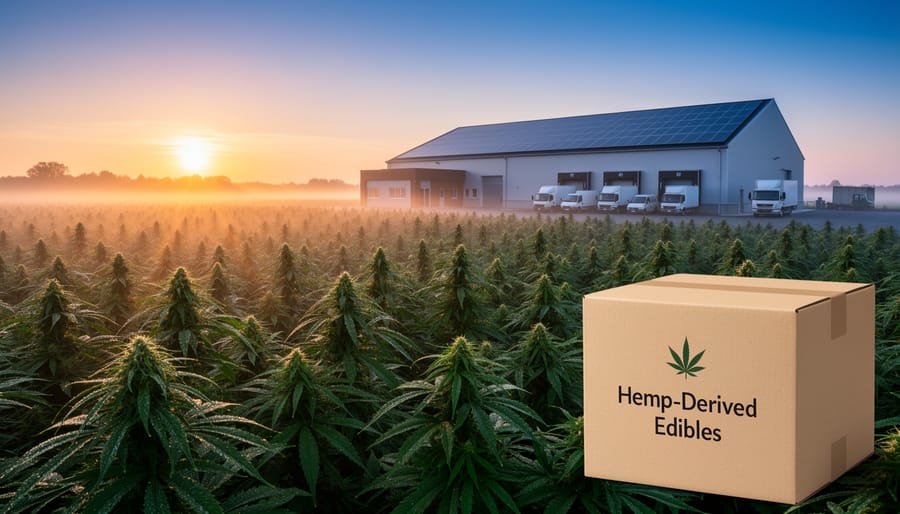
Hemp processing facilities investing in commercial solar installations can access multiple financial incentives that dramatically improve project economics. The federal Investment Tax Credit (ITC) currently allows businesses to deduct 30% of their solar system costs from federal taxes, applicable to equipment, labor, and permitting expenses. For a 250 kW installation costing $500,000, this translates to $150,000 in direct tax savings during the first year.
Beyond the ITC, hemp manufacturers benefit from Modified Accelerated Cost Recovery System (MACRS) depreciation, which enables businesses to recover 85% of their solar investment through accelerated depreciation over five years. This creates additional tax advantages that reduce the effective system cost by another 15-20%. State-level incentives vary considerably, some jurisdictions offer additional tax credits, grants, or property tax exemptions specifically for commercial renewable energy installations. Utility companies in certain regions provide rebate programs that pay between $0.10 and $0.50 per watt for grid-connected systems, further reducing upfront capital requirements.
For ROI calculations, hemp facility managers should analyze their current electricity costs per kilowatt-hour, projected annual consumption, and facility operating hours. A typical mid-scale processing operation consuming 200,000 kWh annually at $0.12 per kWh spends $24,000 yearly on electricity. A properly sized solar array generating 80% of that demand reduces annual costs by $19,200, and when combined with federal incentives reducing net system cost to approximately $250,000, creates a payback period of roughly 8-10 years. Over the system’s 25-30 year lifespan, cumulative savings typically exceed $400,000 before accounting for likely electricity rate increases that extend savings further. Avoiding common solar mistakes during procurement ensures these projections materialize as operational reality rather than optimistic forecasts.
Frequently Asked Questions
Commercial solar installations for hemp-derived THC edibles facilities raise specific questions about operational integration, compliance, and long-term viability. Hemp facility managers need clarity on how solar systems interact with their unique processing requirements and regulatory environment.
How much can solar reduce hemp processing costs?
Commercial solar installations typically reduce electricity costs by 50-70% for hemp processing facilities, depending on system size, local utility rates, and energy consumption patterns. Facilities with high daytime processing loads see the greatest immediate savings, while those integrating battery storage can optimize time-of-use rates to maximize reductions.
What happens during grid outages?
Standard grid-tied solar systems automatically shut down during outages for utility worker safety. Solar-plus-storage systems with battery backup can maintain power to critical equipment like climate control, extraction systems, and compliance monitoring during grid failures, though capacity depends on battery size and load requirements.
Do solar panels affect facility insurance?
Most commercial insurance policies cover solar installations as building improvements, though insurers may adjust premiums based on system value and installation quality. Some carriers offer reduced rates for facilities with backup power systems that protect inventory and equipment during outages.
How long does commercial installation take?
Commercial solar projects for hemp facilities typically require 3-6 months from contract signing to system activation, including permitting, utility interconnection approval, equipment procurement, and installation. Larger ground-mount systems or those requiring structural upgrades may extend timelines to 9-12 months.
System lifespan considerations matter for long-term planning. Quality commercial solar panels carry 25-year performance warranties and often produce electricity for 30-35 years with gradual efficiency decline. Inverters typically require replacement after 10-15 years, a planned expense that should factor into lifecycle cost projections. This longevity makes solar installations strategic capital improvements rather than short-term operational expenses.
Maintenance requirements for hemp facility solar systems remain minimal but critical. Panels need periodic cleaning to remove dust, pollen, or agricultural residue that can reduce output, with frequency depending on local conditions and proximity to hemp cultivation areas. Annual inspections verify electrical connections, mounting integrity, and inverter performance. Most commercial installers offer monitoring services that track production in real-time and alert managers to performance issues before they impact facility operations.
Main Options Compared
Hemp processing facilities choosing solar installations face three primary system configurations, each suited to different operational scales and facility characteristics.
Rooftop photovoltaic arrays represent the most compact option for urban or space-constrained facilities. These systems typically range from 50-200 kW capacity and require minimal land use, making them ideal for smaller production operations under 50,000 square feet. The main limitation involves structural load capacity and available roof area, which may restrict expansion potential as production volumes increase.
Ground-mount solar farms offer the highest power generation capacity for rural hemp operations with available acreage. These installations commonly exceed 500 kW and provide flexibility for phased expansion as processing demands grow. While requiring significant upfront land allocation, ground systems eliminate roof structural concerns and allow optimal panel orientation for maximum energy capture throughout growing seasons.
Solar-plus-storage configurations integrate battery systems with either rooftop or ground arrays, delivering backup power for critical extraction and climate control equipment. This option costs 30-40% more initially but protects against production disruptions during grid outages and enables time-of-use energy arbitrage. For facilities processing temperature-sensitive hemp-derived products, the operational continuity justifies the premium investment.
Solar energy represents far more than an operational upgrade for hemp-derived THC edibles manufacturers, it’s a fundamental strategic investment that addresses the industry’s most pressing challenges. The facilities producing these products face substantial ongoing electricity costs from extraction equipment, climate control systems, and compliance testing laboratories. By transitioning to commercial solar installations, manufacturers can lock in predictable energy expenses for 25-plus years, insulating operations from volatile utility rates while significantly reducing overhead.
The competitive advantages extend beyond the balance sheet. As regulatory scrutiny intensifies around hemp-derived products, particularly with the 0.4 mg total THC per container limit taking effect November 12, 2026, manufacturers must demonstrate operational excellence and compliance rigor. Solar-powered facilities signal commitment to sustainable practices and long-term viability, strengthening relationships with distributors, retailers, and increasingly environmentally conscious consumers. The reliability of modern solar systems, especially when paired with battery storage, ensures uninterrupted power for critical extraction and testing equipment, protecting product quality and regulatory compliance during grid disruptions.
Facility managers evaluating solar options should begin with a comprehensive energy audit that captures current consumption patterns, peak demand periods, and anticipated production growth. This assessment provides the foundation for right-sizing installations and identifying the most cost-effective system configuration, whether rooftop arrays for urban facilities or ground-mount installations for rural operations with available land. Partner with commercial solar installers who understand industrial applications and can navigate utility interconnection processes, permitting requirements, and available incentive programs.
The hemp-derived edibles sector is maturing rapidly. Forward-thinking manufacturers who invest in solar infrastructure now position themselves to capture market share through lower operating costs, enhanced operational resilience, and verifiable sustainability credentials that increasingly drive purchasing decisions across the supply chain.