

What Impacts Solar Payback More: System Size, Usage Patterns or Feed-In Tariffs?
When people ask how long solar will take to pay for itself, they’re usually expecting a simple number.
Three years. Four years. Maybe five.
But solar payback isn’t determined by any one single factor. It’s shaped by a mix of system design, energy usage, feed-in tariffs, price paid for the system, just to name a few.
Most homeowners assume that installing a bigger system automatically means a faster return. Others obsess over feed-in tariffs. In reality, the biggest driver of payback for most Australian households is something much more practical: how and when you use your electricity.
Let’s break down the three variables that really matter.
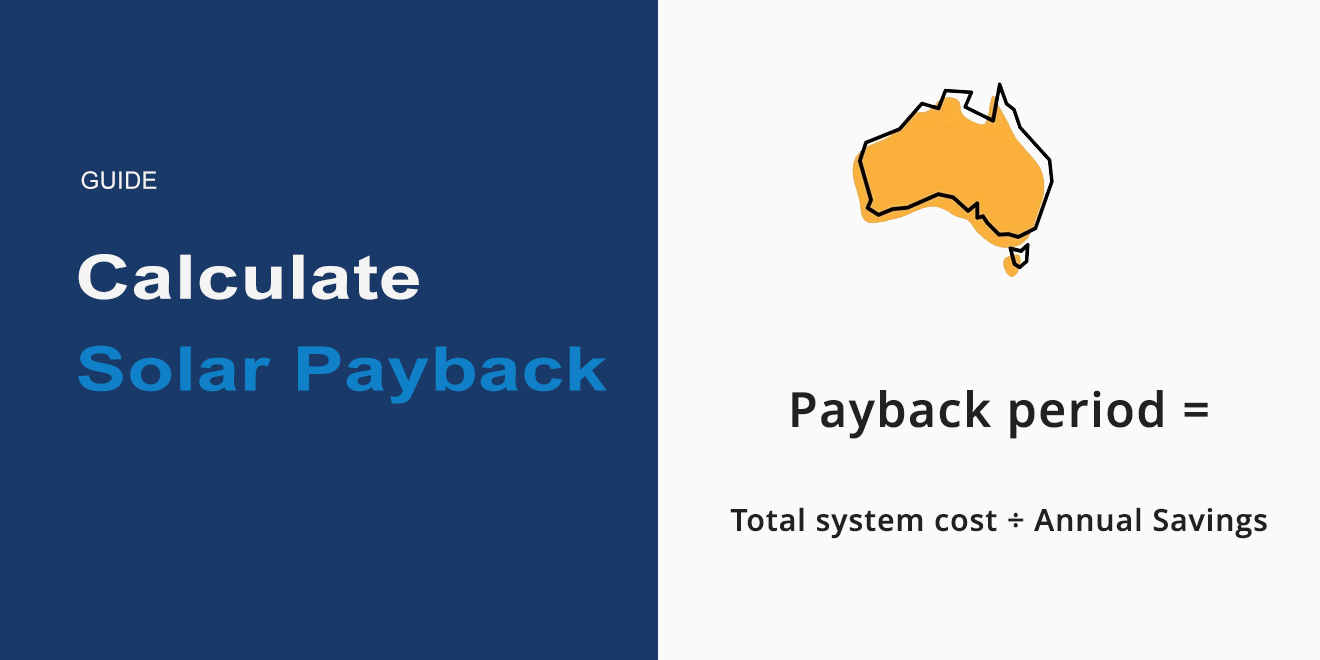
How Solar Payback Is Calculated
At its core, the payback period for a solar system is straightforward:
Payback period = total system cost ÷ annual savings.
The complexity lies in what makes up those annual savings. There are two components. The first is the electricity you no longer need to buy from the grid because your panels are generating it. The second is the income you receive for exporting excess energy back to the grid under a feed-in tariff.
The difference in value between those two is significant. Grid electricity might cost 30 to 40 cents per kilowatt-hour, depending on your plan. Exported solar, on the other hand, often earns somewhere between 5 and 12 cents per kilowatt-hour.
That gap is what makes usage patterns so influential.
System Size: Important, But Only in Context
System size does matter. A 6.6kW system will generate more electricity than a 5kW system, and a 10kW system will produce more again. More generations create more potential savings.
However, potential is not the same as realised return.
If your system regularly produces more electricity than your household can use during the day, the excess will be exported at a much lower rate. That means the marginal value of each additional panel declines once you’ve exceeded your daytime consumption needs.
There’s also a practical limit to how much extra generation translates into meaningful financial improvement. Oversizing slightly can improve early morning and late afternoon output, which can lift self-consumption. Oversizing significantly, however, often leads to diminishing returns unless your usage profile supports it.
In other words, system size only accelerates payback when it aligns with how you actually use electricity.
Usage Patterns: The Quiet Payback Multiplier
For most households, usage timing has a greater impact on payback than system size alone.
Solar electricity is most valuable when it’s consumed at the time it’s generated. Every kilowatt-hour you use directly offsets electricity you would otherwise purchase at retail rates. That’s often three to five times more valuable than exporting it.
Consider two households that install identical 6.6kW systems at the same cost. One household works from home, runs appliances during the day and has a pool pump scheduled for midday. The other household is empty between 8am and 6pm, with most energy use occurring in the evening.
The first household might self-consume 60–70% of its solar production. The second might only use 30–40% directly and export the rest.
Even though both systems generate the same energy, their financial outcomes look very different. Higher self-consumption shortens payback because more of the solar energy is displacing expensive grid electricity rather than earning a modest export credit.
This is why small behavioural adjustments — such as running dishwashers or washing machines during solar hours — can materially improve returns without increasing system cost.
Feed-In Tariffs: Relevant, But Rarely Decisive
Feed-in tariffs still influence total savings, but their role is often overstated.
A decade ago, generous government-backed schemes made export income a major part of the solar equation. Today, most feed-in rates sit in the single digits or low teens per kilowatt-hour. At the same time, many networks impose export limits that cap how much solar can be sent back to the grid at once.
Export income still contributes to payback. It’s simply no longer the primary driver for most new systems.
Modern solar economics are built around reducing grid consumption rather than generating profit from exports. The real value lies in offsetting high retail electricity prices. Feed-in tariffs add incremental benefit, but they rarely transform a marginal investment into a strong one on their own.
Putting It Together: Which Factor Matters Most?
When you compare the three variables side by side, a pattern emerges.
For the average Australian household, payback is typically influenced most by self-consumption rate, followed by how appropriately the system is sized, and finally by feed-in tariff levels.
That hierarchy exists because retail electricity offset is inherently more valuable than export revenue. A well-sized system paired with strong daytime usage will almost always outperform a larger system that exports most of its generation.
A Simple Illustration
To see how this plays out, imagine a 6.6kW system costing $6,500 and producing around 9,000 kilowatt-hours per year. Assume a retail electricity rate of 32 cents and a feed-in tariff of 8 cents.
If a household self-consumes 70% of its generation, the majority of its savings come from offsetting retail electricity, leading to a significantly shorter payback period. If another household with the same system only self-consumes 30%, more energy is exported at the lower tariff rate, stretching the time required to recover the upfront cost.
Same panels. Same sunshine. Very different financial outcomes.
The Bigger Picture
Solar payback isn’t just a question of how many panels you install or which retailer offers the highest export rate this quarter. It’s a function of system design and lifestyle alignment.
Choosing the right system size, understanding your daytime usage profile and setting realistic expectations around feed-in tariffs are far more important than chasing marginal hardware differences.
For homeowners looking for a broader overview of rebates, system sizing, installer selection and what to expect throughout the process, a complete buying solar guide can help frame those decisions within the wider Australian energy landscape.