
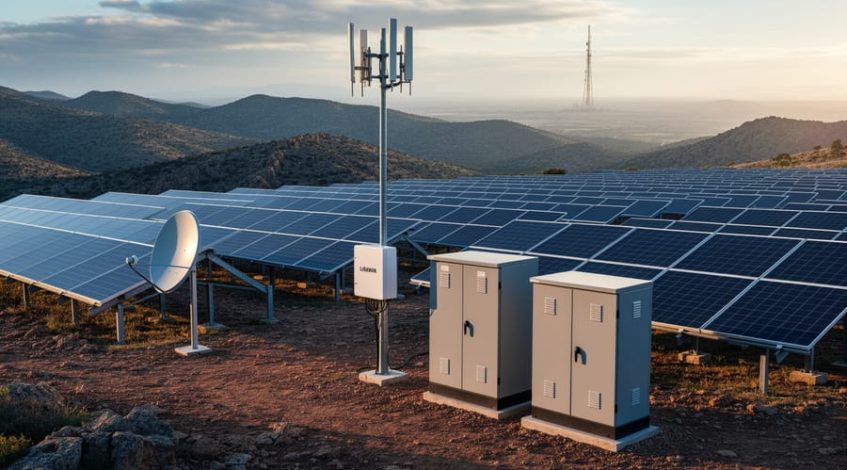
Implement satellite-based monitoring systems to track energy production and battery status in real-time across remote solar installations, enabling predictive maintenance and reducing downsite by up to 40%. Deploy cellular IoT gateways with multi-carrier SIM cards as your primary communication backbone—they provide 99% uptime in most regional areas at costs under $50 per site monthly, making them ideal for commercial-scale deployments where traditional internet infrastructure doesn’t exist.
Integrate LoRaWAN mesh networks for installations beyond cellular coverage, creating self-healing communication paths between inverters, battery banks, and control systems across distances up to 15 kilometers without recurring data fees. This advanced off-grid solar technology enables facility managers to receive instant alerts about system anomalies, automatically adjust load priorities during peak demand, and compile performance data for regulatory reporting—all without physical site visits.
Establish redundant communication pathways combining satellite backup with primary cellular or radio networks, ensuring continuous data flow even during extreme weather events or infrastructure failures. Government installations and critical facilities using dual-path systems report 99.7% communication reliability, compared to 94% for single-path solutions. Configure your SCADA systems with edge computing capabilities to process critical decisions locally when connectivity drops, storing data for synchronization once communication restores. This approach delivers the operational intelligence needed to maximize ROI while maintaining grid independence across distributed commercial portfolios.
The Communication Gap in Off-Grid Solar Systems
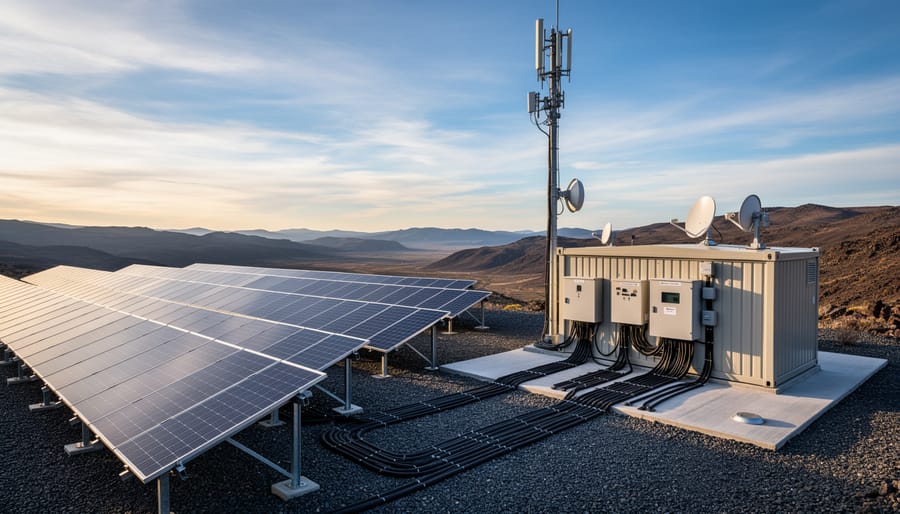
What Smart Grid Integration Actually Requires
Effective smart grid integration in off-grid environments demands robust bidirectional communication infrastructure to maximize system performance and return on investment. Unlike traditional one-way power delivery, modern smart energy distribution systems require continuous data exchange across multiple operational layers.
Real-time monitoring capabilities form the foundation, transmitting critical performance metrics including solar generation output, battery state of charge, load consumption patterns, and environmental conditions. This data enables facility managers to track system efficiency and identify performance deviations immediately. A mining operation in Western Australia reported 23% improvement in energy utilization after implementing comprehensive monitoring across their 500kW off-grid installation.
Control signals constitute the second essential requirement, allowing remote adjustment of inverter settings, load prioritization, and battery charging protocols. These commands optimize system operation based on changing conditions without requiring on-site intervention, reducing operational costs significantly.
Demand response functionality enables automated load management during peak demand or low generation periods. Agricultural facilities have successfully implemented automated irrigation scheduling that responds to real-time solar availability, maximizing renewable energy utilization.
Predictive maintenance alerts identify potential equipment failures before they occur by analyzing performance trends and operational anomalies. This proactive approach reduces downtime and extends equipment lifespan.
System optimization data feeds advanced algorithms that continuously adjust operational parameters, balancing energy production, storage, and consumption to minimize generator runtime and fuel costs while maintaining reliable power delivery.
Why Location Matters More Than You Think
Remote commercial and industrial facilities face distinct communication challenges that urban installations never encounter. Mining operations in Australia’s Outback, agricultural processing facilities in rural Africa, and telecommunications towers across the Andes share a common obstacle: the absence of reliable cellular networks and internet connectivity that most modern monitoring systems depend upon.
These locations represent significant investment opportunities—often involving multi-megawatt solar installations—yet they operate where traditional grid infrastructure would cost millions to extend. A remote water treatment plant may sit 200 kilometers from the nearest fiber optic line, while an off-grid manufacturing facility might experience cellular coverage gaps exceeding 70% of operating hours.
The financial implications are substantial. Without effective communication systems, facility managers lose visibility into energy production, battery state-of-charge, and equipment performance. This limitation forces costly preventive maintenance schedules rather than predictive approaches and eliminates the ability to respond remotely to system anomalies. For government installations serving remote communities or industrial operations with tight margins, these inefficiencies directly impact operational viability and return on investment. Understanding these location-specific constraints is essential when designing resilient off-grid communication architectures.
Communication Technologies That Bridge the Gap
Satellite Communication Systems
Satellite communication systems provide reliable connectivity for off-grid solar installations in locations where terrestrial networks are unavailable or impractical. These solutions utilize geostationary or low-earth orbit satellites to transmit monitoring data, control commands, and performance metrics from remote facilities to centralized management platforms.
Modern satellite systems designed for industrial applications typically cost between $500 to $2,000 per unit for hardware, with monthly service fees ranging from $50 to $150 depending on data requirements. While initial investments exceed cellular alternatives, the total cost of ownership becomes competitive when factoring in infrastructure development costs for remote locations. Latency typically ranges from 500 milliseconds to 2 seconds for geostationary satellites, which is acceptable for monitoring applications but may impact real-time control functions.
Commercial applications particularly suited for satellite communication include mining operations, agricultural installations, and border infrastructure where cellular coverage is nonexistent. A government telecommunications facility in Northern Australia successfully implemented satellite-based monitoring across 15 solar installations spanning 800 kilometers, achieving 99.2 percent uptime for data transmission while reducing site visit requirements by 60 percent.
When evaluating satellite solutions, consider data transmission volumes carefully. Most off-grid monitoring applications require only 1-5 MB monthly for standard performance metrics, making budget-friendly plans sufficient. Advanced systems now incorporate data compression and scheduled transmission windows to optimize bandwidth usage and minimize operational costs while maintaining comprehensive system oversight.
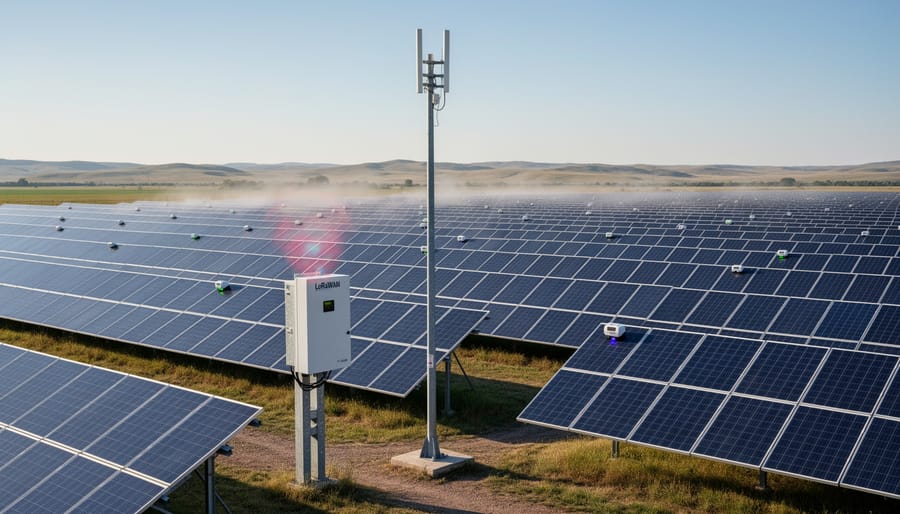
Long-Range Radio Networks (LoRaWAN and Beyond)
LoRaWAN (Long Range Wide Area Network) represents a compelling solution for off-grid solar installations requiring cost-effective communication across extensive geographical areas. This low-power wireless protocol enables data transmission over distances up to 15 kilometers in rural environments and 5 kilometers in urban settings, making it particularly suitable for distributed solar arrays, remote monitoring stations, and agricultural installations.
The technology operates on unlicensed radio frequencies, eliminating recurring cellular data costs while consuming minimal power—sensors can operate for years on small batteries. For facility managers overseeing multiple solar sites, LoRaWAN provides a private network infrastructure with predictable operating expenses and no dependence on third-party telecommunications providers.
However, understanding data limitations proves essential for proper implementation. LoRaWAN supports small data packets (typically 51-222 bytes) with transmission rates between 0.3 to 50 kbps, making it ideal for periodic monitoring data such as voltage readings, temperature sensors, and system alerts rather than real-time video or high-frequency measurements.
A agricultural cooperative in Spain successfully deployed LoRaWAN across 47 solar-powered irrigation pumps spanning 200 square kilometers. The network cost approximately 40 percent less than cellular alternatives over five years while providing reliable performance monitoring and fault detection. Each gateway serves 20-30 sensors, with total infrastructure investment recovered within 18 months through reduced site visits and improved maintenance scheduling.
For organizations managing geographically dispersed solar assets without reliable cellular coverage, LoRaWAN offers proven return on investment through operational efficiency gains and infrastructure cost reduction.
Mesh Network Solutions
Mesh network solutions represent a powerful approach for establishing communication across multiple off-grid installations or expansive remote facilities. Unlike traditional point-to-point systems, mesh networks create self-organizing networks where each node can transmit, receive, and relay data to other nodes, eliminating single points of failure and extending coverage range without additional infrastructure investment.
In practical applications, mining operations in Australia have successfully deployed mesh networks spanning 50+ square kilometers, connecting solar arrays, battery storage systems, and operational equipment across dispersed sites. Each communication node acts as a repeater, automatically finding optimal routing paths even when individual nodes experience disruptions. This redundancy ensures continuous monitoring and control capabilities essential for maintaining system performance and preventing costly downtime.
The technology proves particularly valuable for agricultural facilities managing irrigation systems powered by distributed solar installations. A vineyard operation in California implemented a mesh network connecting 15 separate solar sites, reducing communication infrastructure costs by 60% compared to traditional cellular or fiber solutions while achieving 99.7% uptime. The system enables real-time load balancing and predictive maintenance across the entire operation, demonstrating significant return on investment through improved operational efficiency and reduced maintenance expenses.
Hybrid Communication Approaches
Mission-critical facilities require communication infrastructure that guarantees continuous operation regardless of conditions. Hybrid approaches combine multiple technologies to create redundant pathways, ensuring data transmission even when primary systems fail. A typical configuration might pair cellular connectivity for routine operations with satellite backup for emergency situations, while maintaining local mesh networks for site-level coordination.
Government emergency response centers demonstrate this approach effectively. A recent deployment in rural Australia integrated cellular LTE with low-earth orbit satellite terminals and point-to-point radio links. When cyclone conditions disrupted cellular towers, the system automatically switched to satellite connectivity, maintaining uninterrupted power monitoring and load management. The facility reported zero communication downtime during the event.
Commercial mining operations similarly benefit from layered communication strategies. By combining grid optimization software with multiple transmission methods, operators maintain real-time visibility into energy production, consumption, and storage levels across vast geographic areas. This redundancy justifies its 15-20 percent premium over single-technology solutions through enhanced reliability and reduced operational risk. Implementation requires careful assessment of geographic conditions, budget parameters, and specific operational requirements to determine the optimal technology combination for each installation.
Real-World Applications: Communication Enabling Smart Off-Grid Systems

Remote Industrial Facilities
A mining operation in Western Australia demonstrates the practical advantages of off-grid communication systems for remote industrial facilities. The site, located 180 kilometers from the nearest grid connection, deployed a 2.5 MW solar array with battery storage to power ore processing equipment. The facility implemented a hybrid communication network combining satellite connectivity for critical data transmission and local LoRaWAN sensors for real-time equipment monitoring.
The communication infrastructure enables operators to track energy production, consumption patterns, and equipment performance from a centralized control center. When processing demand increases, the system automatically adjusts battery discharge rates and can remotely start backup diesel generators only when necessary. This intelligent load management reduced fuel consumption by 68% compared to previous diesel-only operations, generating annual savings exceeding $1.2 million.
Similarly, an agricultural processing plant in rural Kenya utilizes cellular M2M connectivity paired with a 500 kW off-grid solar system. The communication platform allows facility managers to monitor cold storage temperatures, refrigeration loads, and solar production through mobile devices. Predictive analytics alert operators to potential equipment failures before they occur, preventing costly product losses.
These implementations share common characteristics: redundant communication pathways ensure continuous monitoring, edge computing processes data locally to minimize bandwidth requirements, and standardized protocols enable integration with existing management systems. The return on investment typically materializes within three to five years through reduced operational costs, improved equipment utilization, and decreased downtime. For decision-makers evaluating off-grid solutions, these case studies underscore the critical role communication systems play in maximizing solar investment returns.
Government and Military Installations
Government and military installations in remote locations exemplify the critical need for autonomous energy systems paired with robust communication infrastructure. These facilities require uninterrupted power and secure data transmission to maintain operational readiness, often in areas where grid connectivity is unavailable or strategically inadvisable.
Military forward operating bases and border surveillance stations have successfully deployed solar microgrids with satellite-based communication systems, enabling real-time monitoring of energy production, battery storage levels, and load distribution. This configuration allows centralized command centers to optimize energy allocation across multiple remote sites while maintaining security protocols that prevent unauthorized access to system controls.
Government research stations in polar regions and desert environments demonstrate the reliability of off-grid communication for extreme conditions. These installations utilize redundant communication pathways, combining cellular backup with primary satellite links, ensuring continuous system monitoring even during equipment failures. The data collected enables predictive maintenance scheduling, reducing costly emergency repairs and extending equipment lifespan by 25-40 percent.
Energy independence achieved through solar installations paired with secure communication networks reduces logistical supply chains for fuel delivery, cutting operational costs while enhancing mission security. The return on investment typically materializes within 5-7 years, with facilities reporting 60-70 percent reductions in energy-related operational expenses.
Multi-Site Commercial Operations
Multi-site commercial operations face unique challenges when managing dispersed off-grid or hybrid locations, particularly retail chains operating in rural areas, hospitality groups with remote eco-lodges, and agricultural businesses coordinating multiple processing facilities. Centralized communication systems enable these enterprises to monitor energy consumption, optimize resource allocation, and reduce operational costs across their entire portfolio from a single control center.
A European agricultural cooperative managing fifteen processing facilities across remote Mediterranean locations implemented a satellite-based communication network to centralize their solar array monitoring. The system provides real-time visibility into energy production, battery status, and equipment performance across all sites, allowing technicians to prioritize maintenance visits and reduce downtime by 40 percent. The investment delivered complete return within eighteen months through improved operational efficiency and reduced site visit costs.
Retail chains particularly benefit from standardized communication protocols that enable consistent reporting and benchmarking across locations. One hospitality group operating twelve off-grid safari lodges consolidated their monitoring systems, identifying underperforming installations and optimizing energy management practices, achieving a 25 percent reduction in generator runtime and associated fuel costs. This centralized approach transforms site-by-site energy management into strategic portfolio optimization, delivering measurable financial returns while supporting sustainability objectives.
The Business Case: ROI of Communication-Enabled Smart Off-Grid Systems
Predictive Maintenance Savings
Real-time monitoring systems in off-grid solar installations deliver substantial cost savings by identifying potential failures before they escalate into complete system breakdowns. Industry data indicates that predictive maintenance reduces unplanned downtime by up to 70% and extends equipment lifespan by 20-40%, translating to significant operational savings for facility managers.
Remote communication systems enable continuous performance tracking of critical components including inverters, batteries, and charge controllers. When parameters deviate from optimal ranges, automated alerts allow technical teams to schedule maintenance during planned intervals rather than responding to emergency failures. This proactive approach typically reduces maintenance costs by 25-30% compared to reactive service models.
For remote installations, emergency service calls represent one of the highest operational expenses. A commercial facility in Northern Sweden documented annual savings of €15,000 after implementing predictive monitoring, reducing emergency call-outs from twelve to three per year. The system identified battery degradation patterns six weeks before failure, preventing a €22,000 replacement during peak winter operations.
Government facilities managing multiple off-grid sites report 40-50% reductions in total maintenance expenditure within the first two years of deployment, with return on investment typically achieved within 18-24 months through combined savings in parts replacement, labor costs, and operational continuity.
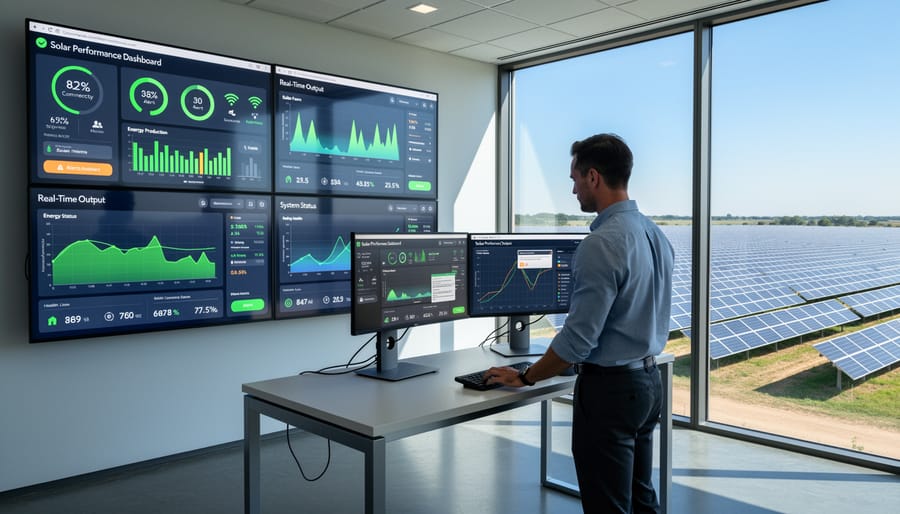
Performance Optimization Value
Real-time monitoring and data analytics enable off-grid solar installations to maximize operational efficiency through continuous performance optimization. Smart communication systems collect granular data on energy production, consumption patterns, and battery performance, allowing facility managers to identify inefficiencies and implement corrective measures promptly. This proactive approach typically improves energy storage efficiency by 15-25% compared to non-monitored systems.
Advanced algorithms analyze historical performance data to predict maintenance needs before failures occur, reducing unexpected downtime and extending equipment lifespan. For commercial operations, these insights translate directly to cost savings through optimized battery charging cycles, reduced generator runtime, and prevented component failures. One Australian mining operation documented $47,000 in annual savings after implementing smart monitoring, primarily through improved load management and early fault detection.
Data-driven adjustments also enable precise capacity planning for future expansion. Facility managers can use actual consumption patterns rather than estimates to right-size additional panels or storage, avoiding over-investment while ensuring reliable power supply. This evidence-based approach delivers superior return on investment across the installation’s 25-year operational life.
Communication Infrastructure Costs vs. Benefits
Investment in off-grid communication infrastructure typically ranges from 3-8% of total system costs, with significant variations based on technology choice. Cellular solutions represent the lowest upfront investment at $200-500 per monitoring point, offering 12-18 month payback periods through reduced maintenance visits and faster issue resolution. Satellite systems command higher initial costs of $1,500-3,000 per unit but prove economical for truly remote installations where cellular coverage remains unavailable. A 500kW commercial solar installation in rural Africa demonstrated 40% reduction in downtime after implementing cellular monitoring, recovering the $15,000 infrastructure investment within 14 months through improved energy delivery and reduced truck rolls. LoRaWAN networks present an attractive middle ground for campus-style deployments, with gateway costs of $300-800 serving multiple monitoring points across 2-5 kilometer ranges. Government facilities in Southeast Asia reported 60% lower operational costs over five years compared to manual monitoring approaches. The business case strengthens considerably when factoring avoided revenue losses from undetected system failures, typically valued at 10-25 times the communication infrastructure investment annually.
Implementation Considerations for Commercial Projects
Assessing Your Site’s Communication Needs
Determining the appropriate communication infrastructure for your off-grid solar installation requires a systematic evaluation of operational parameters and business objectives. Start by categorizing your facility type: critical infrastructure sites like telecommunications towers or healthcare facilities typically require real-time monitoring with redundant connectivity options, while agricultural operations or remote storage facilities may function effectively with daily or weekly data transmission schedules.
Facility size directly impacts communication requirements. Installations under 50 kW often manage effectively with basic cellular or satellite connectivity for performance monitoring, while larger commercial arrays exceeding 500 kW benefit from comprehensive smart grid integration featuring predictive maintenance algorithms and advanced analytics. Consider your operational requirements carefully: does your facility need remote troubleshooting capabilities, automated load management, or integration with existing building management systems?
Evaluate your site’s grid independence level as well. Fully autonomous systems operating in areas without reliable cellular coverage may necessitate satellite communication solutions, whereas sites with partial grid connection can leverage existing network infrastructure. A mining operation in Western Australia, for example, implemented a hybrid communication system combining local mesh networks with weekly satellite uploads, achieving 99.2 percent uptime while reducing communication costs by 40 percent compared to continuous satellite connectivity. This assessment framework ensures your communication solution aligns with both technical requirements and budget constraints.
Selecting the Right Communication Technology
Selecting the appropriate communication technology requires systematic evaluation of several critical factors. Location characteristics fundamentally influence technology viability—satellite systems excel in extremely remote installations where terrestrial infrastructure is unavailable, while radio and mesh networks perform optimally within line-of-sight ranges of 5-50 kilometers depending on terrain and equipment specifications.
Budget considerations extend beyond initial capital expenditure to include operational costs. Satellite solutions typically require higher upfront investment ($2,000-$8,000 per node) plus recurring subscription fees, whereas radio-based systems offer lower entry costs ($500-$2,000) with minimal ongoing expenses. Mesh networks present mid-range pricing with enhanced scalability benefits for multi-site operations.
Performance requirements determine technical suitability. For applications demanding real-time data transmission and remote control capabilities, low-latency radio or mesh solutions deliver superior responsiveness. Satellite systems adequately serve monitoring applications where 15-30 minute data intervals suffice. Hybrid approaches combining multiple technologies provide redundancy for mission-critical installations such as healthcare facilities or water treatment plants, ensuring continuous operation even when primary communication channels experience disruptions. Organizations managing distributed solar portfolios across varied geographies often achieve optimal results through technology diversification, matching each site’s specific constraints with the most cost-effective solution.
Working with Qualified Solar Providers
Selecting qualified solar providers for off-grid communication projects requires verifying specific technical competencies beyond standard photovoltaic installation. Prioritize companies demonstrating proven experience with communication infrastructure integration, including remote monitoring systems, SCADA protocols, and telemetry equipment. Request documentation of previous projects involving cellular, satellite, or radio-based communication systems paired with solar installations. Evaluate their understanding of power consumption requirements for communication devices, backup battery sizing for continuous operation, and proper electromagnetic compatibility measures. Verify certifications in both electrical installation and telecommunications where applicable. The provider should conduct thorough site assessments that account for signal strength, line-of-sight requirements, and potential interference factors. Request detailed commissioning plans that include communication system testing protocols and ongoing maintenance procedures. A qualified provider will present transparent proposals outlining hardware specifications, expected system performance metrics, and realistic return-on-investment timelines tailored to your operational requirements.
Future Trends: Where Off-Grid Communication Is Heading
5G and Rural Connectivity Expansion
The expansion of 5G networks and improved cellular infrastructure presents significant opportunities for previously isolated off-grid installations. As telecommunications providers extend coverage to rural and remote areas, many facilities that historically relied on complex satellite or dedicated radio systems may transition to more cost-effective cellular-based monitoring solutions. This infrastructure development particularly benefits medium-sized solar installations where 4G and 5G connectivity can support real-time data transmission for smart grid management at substantially lower operational costs than traditional alternatives.
However, decision-makers should maintain realistic expectations about deployment timelines. While major telecommunications investments are underway globally, complete rural coverage remains years away in many regions. Facilities planning long-term off-grid solar projects should design communication systems with flexible architecture that can accommodate future cellular integration while maintaining reliable backup communication methods. For government and commercial projects in transitional coverage areas, hybrid approaches combining cellular connectivity where available with satellite failover provide optimal reliability during this infrastructure expansion period.
Edge Computing and Local Intelligence
Modern edge computing solutions are transforming off-grid solar installations by embedding intelligence directly into local controllers and inverters. These advanced devices process data locally, making autonomous decisions about energy distribution, storage optimization, and load management without requiring constant connectivity to central servers. This architecture significantly reduces bandwidth requirements while maintaining sophisticated smart grid capabilities during communication interruptions.
Local intelligence enables critical functions such as predictive maintenance alerts, real-time performance optimization, and automated fault detection to operate independently. When connectivity is restored, edge devices synchronize accumulated data with cloud platforms for comprehensive analytics and remote oversight. For facility managers in remote locations, this hybrid approach delivers the operational visibility of connected systems with the reliability of standalone equipment. Commercial installations have demonstrated up to 40% reduction in communication costs while improving system uptime, making edge-enabled controllers particularly cost-effective for large-scale agricultural operations, mining facilities, and rural healthcare centers where intermittent connectivity is unavoidable.
Standardization and Interoperability
The off-grid communication sector is experiencing significant progress toward standardization, driven by the need for cost-effective, scalable solutions. Industry organizations are developing universal protocols that enable seamless integration of equipment from different manufacturers, reducing implementation complexity and lowering total cost of ownership. The adoption of standards like Modbus, MQTT, and LoRaWAN allows facility managers to mix and match components based on performance requirements and budget constraints rather than vendor lock-in considerations.
This interoperability proves particularly valuable in remote installations where technical support may be limited. A water treatment facility in rural Kenya successfully integrated monitoring systems from three different vendors using standardized communication protocols, reducing procurement costs by 30 percent while maintaining full functionality. Similarly, agricultural operations across developing regions leverage open-standard platforms to manage solar-powered irrigation systems with components from local and international suppliers. These standardized approaches streamline maintenance procedures, expand the available pool of qualified technicians, and create competitive markets that drive innovation while controlling expenses for government and commercial solar projects.
In today’s rapidly evolving energy landscape, off-grid communication has transitioned from a convenience to a fundamental requirement for commercial solar installations. The evidence is clear: systems equipped with robust communication infrastructure consistently outperform their isolated counterparts by 15-30% in terms of operational efficiency and longevity. These intelligent systems provide the real-time visibility and remote management capabilities that transform off-grid solar from a simple power generation solution into a strategic asset that delivers measurable returns on investment.
For business owners and facility managers, the choice is straightforward. Without integrated communication capabilities, your off-grid installation operates blindly, leaving you vulnerable to undetected failures, suboptimal performance, and unnecessary maintenance costs. The initial investment in communication infrastructure—whether satellite, cellular, or hybrid solutions—pays for itself through reduced downtime, extended equipment lifespan, and optimized energy output. Real-world implementations across mining operations, agricultural facilities, and telecommunications sites demonstrate that connected systems achieve payback periods of 18-24 months purely through operational improvements.
The competitive advantage belongs to organizations that recognize off-grid communication as an essential infrastructure component rather than an optional enhancement. As you plan your next solar installation or upgrade existing systems, partner with experienced solar providers who understand the critical relationship between power generation and communication technology. The right expertise ensures your off-grid system becomes a fully manageable, intelligent asset that delivers maximum value throughout its operational lifetime.