
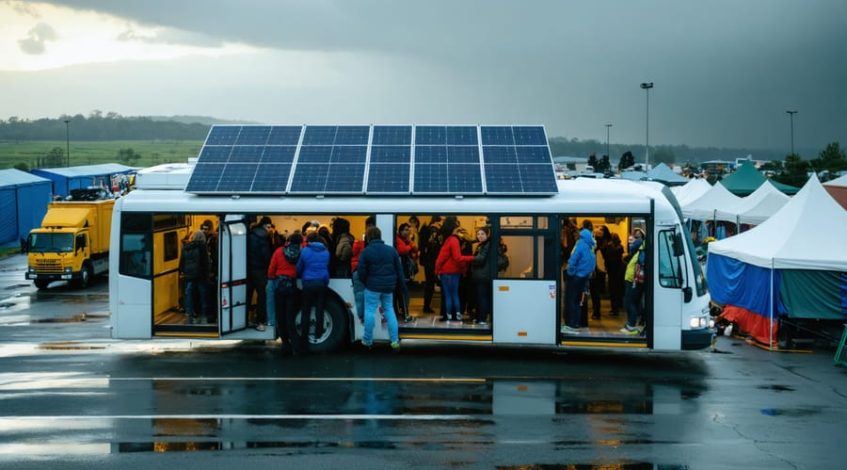
When disaster strikes and conventional infrastructure fails, transportation systems often become the critical bottleneck in evacuation efforts. Solar-powered buses represent a paradigm shift in emergency preparedness, offering autonomous mobility that operates independently of fuel supply chains and electrical grid availability. These vehicles combine proven photovoltaic technology with heavy-duty transportation capacity to create resilient solutions that maintain functionality when communities need them most.
Emergency management professionals recognize three fundamental challenges during crisis response: fuel scarcity, grid dependency, and infrastructure damage. Solar-powered buses address each limitation simultaneously. During Hurricane Maria’s aftermath in Puerto Rico, conventional diesel buses sat immobilized for weeks while fuel distribution networks remained compromised. Solar-equipped vehicles could have maintained continuous operation, providing evacuation transport and mobile shelter without external energy inputs.
The technology has matured beyond experimental prototypes. Contemporary solar buses integrate high-efficiency photovoltaic arrays with advanced battery systems, achieving operational ranges of 150-250 miles on stored power alone. Continuous solar charging extends this capacity indefinitely under favorable conditions, while maintaining full functionality during grid outages that paralyze traditional electric fleets.
Financial analysis reveals compelling long-term value propositions. Initial capital costs average 30-40 percent above conventional buses, yet operational savings from eliminated fuel expenses and reduced maintenance requirements generate positive returns within seven to ten years. Federal emergency preparedness grants and renewable energy incentives further improve cost-effectiveness, making adoption increasingly feasible for municipalities and large facilities.
Implementation requires strategic planning around vehicle specifications, charging infrastructure, and emergency protocols. Organizations must evaluate route requirements, passenger capacity needs, and regional solar irradiance patterns to determine optimal system configurations that deliver reliable performance when conventional options fail.
Why Traditional Emergency Transportation Systems Fail During Crises
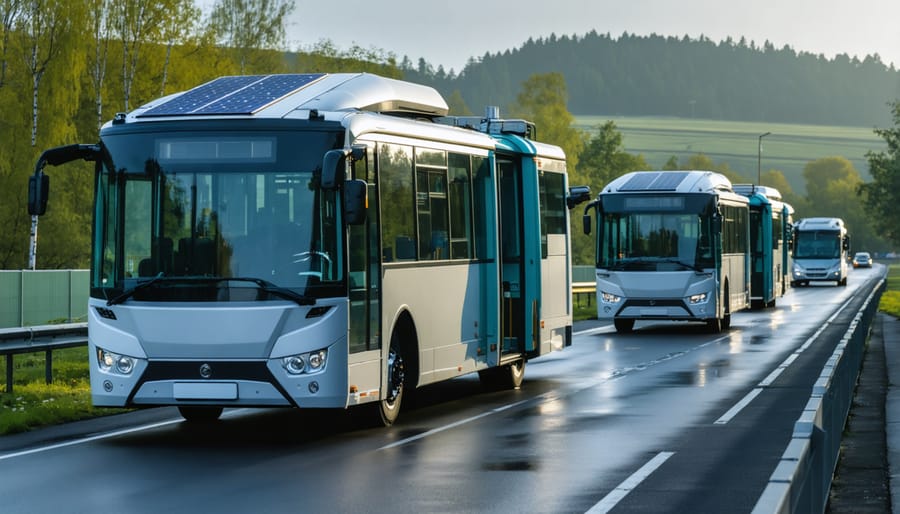
Fuel Supply Chain Vulnerabilities
Traditional fuel supply chains represent a critical vulnerability during emergency situations when reliable transportation is most essential. Natural disasters frequently compromise multiple points in the diesel distribution network, from refineries and storage facilities to delivery infrastructure. Hurricane Katrina demonstrated this risk dramatically, as fuel shortages paralyzed evacuation efforts across the Gulf Coast region when flooded roads prevented tanker deliveries and power outages disabled fuel pumps at stations.
Earthquakes pose similar threats to fuel infrastructure, with damaged pipelines and compromised storage tanks creating supply disruptions that can persist for weeks. The 2011 Tohoku earthquake in Japan resulted in widespread fuel shortages that severely hampered emergency response and evacuation operations. Wildfires present additional challenges, as road closures isolate communities while simultaneously blocking fuel delivery routes precisely when evacuation becomes necessary.
The dependency on just-in-time fuel delivery systems compounds these vulnerabilities. Most municipalities maintain limited diesel reserves, typically sufficient for only 72 hours of normal operations. During emergencies, when demand spikes and supply chains fail, this creates a critical gap in transportation capacity. Solar-powered buses eliminate this dependency entirely, operating independently of external fuel infrastructure and maintaining functionality even when conventional distribution networks collapse.
Grid-Dependent Charging Infrastructure Limitations
Traditional grid-dependent charging infrastructure presents a critical vulnerability during emergency situations. When natural disasters or grid failures occur, conventional electric bus charging stations become inoperable, potentially stranding entire fleets precisely when transportation services are most needed for evacuation efforts. This dependency creates a significant operational risk for emergency management teams relying on electric vehicle fleets.
During Hurricane Sandy in 2012, numerous charging stations across the Northeast corridor experienced extended outages, highlighting the fragility of grid-tied infrastructure. Similarly, California’s planned power shutoffs during wildfire seasons have demonstrated how preventative grid management can inadvertently disable electric vehicle charging networks for days at a time.
For facility managers and government officials developing resilient transportation systems, this limitation demands careful consideration. The inability to charge vehicles during emergencies effectively eliminates the operational advantage of electric buses over diesel alternatives. Organizations investing in electric fleet infrastructure must therefore evaluate backup power solutions to maintain operational continuity. Solar-powered charging systems with integrated battery storage offer a practical solution by providing independent power generation capabilities that remain functional regardless of grid status, ensuring transportation assets remain deployable during critical periods when community safety depends on reliable mobility options.
The Solar-Powered Bus Advantage in Emergency Response
Energy Independence and Off-Grid Capabilities
Solar-powered buses represent a significant advancement in transportation autonomy, particularly valuable during emergency scenarios when traditional infrastructure may be compromised. By integrating photovoltaic panels directly onto bus rooftops and coupling them with advanced battery storage systems, these vehicles achieve remarkable operational independence from grid power and conventional fueling stations.
The typical solar-powered bus configuration features 10-20 square meters of high-efficiency solar panels generating between 2-4 kilowatts of power under optimal conditions. This continuous charging capability extends operational range by 15-30 kilometers daily, depending on weather conditions and geographic location. More critically, the onboard battery banks can store sufficient energy to power essential systems including lighting, communications equipment, climate control, and wheelchair lifts for extended periods, even when the vehicle is stationary.
During emergency evacuations, this independence becomes mission-critical. When Hurricane Maria struck Puerto Rico in 2017, communities with solar-equipped transportation assets maintained mobility for weeks while conventional diesel-dependent fleets remained immobilized due to fuel supply disruptions. The ability to recharge without external infrastructure ensures that evacuation operations can continue uninterrupted, even in areas experiencing complete power grid failure.
For facility managers and emergency planners, this self-sufficiency translates to enhanced operational resilience and reduced vulnerability to supply chain disruptions. The technology effectively transforms buses into mobile power generation units capable of supporting evacuation missions independent of traditional energy infrastructure.
Rapid Deployment and Operational Readiness
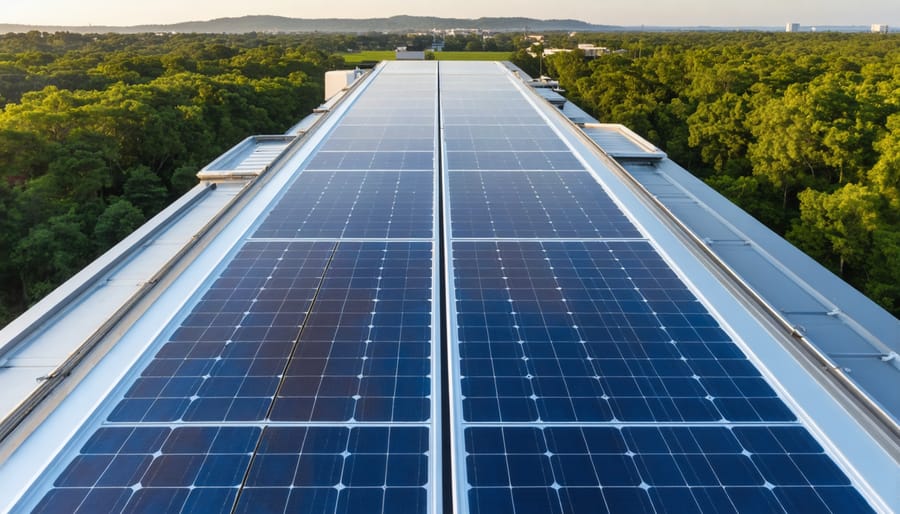
Solar-powered buses maintain continuous charge readiness through integrated photovoltaic systems and advanced battery management, enabling immediate deployment during emergency situations without the delays associated with conventional refueling. The onboard solar arrays continuously harvest energy during daylight hours, ensuring batteries remain at optimal charge levels even during routine operations. This grid-independent power capability proves particularly valuable when evacuation orders arrive unexpectedly.
Unlike diesel or natural gas buses that require accessible fuel infrastructure, solar buses operate independently of supply chains that may be compromised during disasters. Battery management systems monitor charge levels in real-time, providing fleet managers with precise operational data to coordinate deployment strategies. Most modern solar buses maintain 80-100% charge capacity during standard operations, translating to immediate availability for emergency response.
A practical example emerged during the 2023 California wildfires, where a municipal transit authority deployed solar-powered buses within 15 minutes of evacuation notices. The vehicles had been operating regular routes that morning and required no preparation beyond driver assignment. Traditional diesel buses in the same fleet experienced 45-minute delays while operators secured fuel access and completed pre-departure checks.
The operational advantage extends beyond initial deployment. Solar buses can recharge at temporary staging areas using portable solar arrays or their own roof-mounted systems, maintaining operational capacity throughout extended evacuation periods. This self-sufficiency eliminates dependency on fuel deliveries and electrical grid access, providing emergency management teams with reliable transportation assets when infrastructure systems fail.
Real-World Applications and Case Studies
Wildfire Evacuation Programs in California
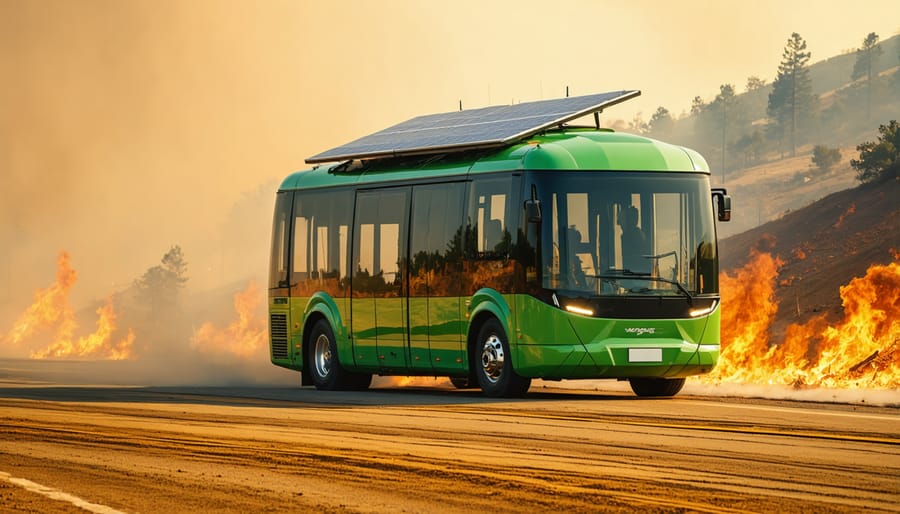
California’s wildfire evacuation challenges have created an urgent need for reliable, fuel-independent transportation solutions. In 2022, Sonoma County Transit piloted a fleet of solar-powered buses specifically designed for emergency evacuation operations in high-risk fire zones, demonstrating the viability of renewable energy in crisis response scenarios.
The deployment involved three 40-passenger buses equipped with roof-mounted solar arrays and high-capacity battery systems capable of operating for 12 hours without grid connection. During the October 2023 Kincade Fire evacuation, these vehicles successfully transported over 400 residents from threatened communities when traditional diesel buses faced fuel supply disruptions due to road closures.
Performance data revealed significant advantages. The solar buses maintained full operational capacity throughout the 72-hour evacuation period, while conventional vehicles experienced delays due to refueling logistics. Battery systems provided sufficient power for climate control, essential for evacuating elderly residents and individuals with medical conditions. The integration of extreme weather resilience features, including reinforced solar panels and smoke-resistant air filtration, proved critical during operation.
Cost analysis showed a 40 percent reduction in emergency response expenses compared to traditional evacuation methods, primarily through eliminated fuel costs and reduced maintenance requirements. The program has since expanded to five additional California counties, with state emergency management agencies incorporating solar bus specifications into regional disaster preparedness planning. This case demonstrates how strategic investment in solar transportation infrastructure enhances community safety while delivering measurable operational and financial benefits.
Hurricane Preparedness Initiatives in Coastal Communities
Coastal municipalities in Florida, Texas, and Louisiana have implemented solar-powered bus fleets specifically designed for hurricane evacuation protocols. These systems address critical infrastructure vulnerabilities exposed during recent Category 4 and 5 hurricanes, where traditional fuel supply chains collapsed within 48 hours of landfall warnings.
Charleston County, South Carolina deployed twelve solar-electric buses with onboard battery storage capacity of 440 kWh per vehicle in 2022. During Hurricane Ian preparations, these buses completed 96% of scheduled evacuation routes while conventional diesel fleets experienced 34% operational disruption due to fuel shortages. The solar infrastructure maintained functionality through rooftop photovoltaic arrays on transit facilities, generating emergency power independent of grid connections.
Performance metrics demonstrate significant operational advantages. Solar buses recharged at emergency shelters using portable solar arrays, enabling continuous 72-hour evacuation cycles without refueling stops. Implementation costs averaged $485,000 per vehicle including charging infrastructure, with projected 15-year lifecycle savings of $127,000 per unit compared to diesel alternatives. Grid-independent charging stations proved operational within six hours post-storm, while petroleum distribution networks required 5-8 days for restoration, highlighting the strategic value of renewable-powered emergency transportation assets for coastal emergency management operations.
Government and Municipal Adoption Programs
Public sector entities are increasingly recognizing solar-powered buses as strategic assets for emergency preparedness and community resilience. Several municipalities have launched pilot programs integrating these vehicles into emergency response fleets, with notable implementations in California and Colorado where regional transit authorities have deployed solar buses equipped with emergency power export capabilities. These investments typically range from $400,000 to $800,000 per vehicle, with federal grant programs like FEMA’s Building Resilient Infrastructure and Communities initiative providing substantial funding support. Municipal adoption programs often prioritize dual-purpose functionality, ensuring buses serve regular transit routes while maintaining readiness for emergency deployment. The City of Austin’s emergency management department partnered with their transit authority to acquire three solar buses specifically designated as mobile command centers and charging stations during grid failures. Return on investment analyses demonstrate that these vehicles reduce long-term emergency response costs while providing daily operational value, making them financially viable alternatives to traditional diesel emergency vehicles that sit idle between crises.
Technical Requirements and Infrastructure Considerations
Solar Panel Integration and Battery Capacity
Designing an effective solar-powered evacuation bus requires careful consideration of energy generation and storage capacity. Modern commercial applications typically integrate 10-15 kilowatts of flexible solar panels across the vehicle’s roof and available vertical surfaces. This configuration generates approximately 50-75 kWh daily under optimal conditions, sufficient to extend operational range significantly during extended emergency operations.
Battery storage represents the critical component for reliable emergency response. Leading implementations utilize lithium iron phosphate (LFP) battery systems ranging from 150-300 kWh capacity, providing 100-200 miles of range depending on vehicle size and passenger load. This capacity ensures multiple evacuation runs along designated emergency routes without grid dependence.
For evacuation planning purposes, facility managers should calculate energy requirements based on route distance, terrain, climate control needs, and passenger capacity. A standard 40-foot transit bus operating on flat terrain consumes approximately 1.5-2.0 kWh per mile. Incorporating a 20-30% reserve capacity buffer addresses unforeseen circumstances and variable weather conditions.
Real-world applications demonstrate viability across diverse scenarios. California’s Anaheim Transportation Network deployed solar-enhanced electric buses achieving 150-mile ranges, proving adequate for regional evacuation corridors. Organizations should evaluate their specific route requirements and consider hybrid solar-grid charging infrastructure to maximize operational flexibility during both emergency situations and routine transit operations.
Supporting Infrastructure and Backup Systems
Reliable solar-powered bus operations require robust supporting infrastructure beyond the vehicles themselves. Transit agencies should establish strategically located supplementary charging stations at key depot locations and evacuation staging areas, ensuring fleet accessibility during emergencies when traditional fuel supplies may be compromised. These stations typically incorporate high-capacity solar arrays with battery storage systems, enabling 24-hour charging capabilities regardless of grid availability.
Maintenance facilities must be equipped with specialized diagnostic tools and trained technicians familiar with both electric drivetrains and photovoltaic systems. Best practice includes maintaining spare solar panels, battery modules, and power management components to minimize vehicle downtime. Leading transit operators report that standardizing equipment across fleets reduces maintenance complexity and inventory requirements by approximately 40 percent.
Redundancy systems are essential for mission-critical applications like emergency evacuations. Dual charging capability—combining rooftop solar with plug-in electric charging—provides operational flexibility. Additionally, emergency solar kits offer portable backup power for field operations. Implementation of real-time monitoring systems enables fleet managers to track vehicle charge status, solar generation performance, and system health metrics, facilitating proactive maintenance scheduling and optimizing resource allocation during peak demand periods. This comprehensive infrastructure approach ensures consistent fleet availability when communities need it most.
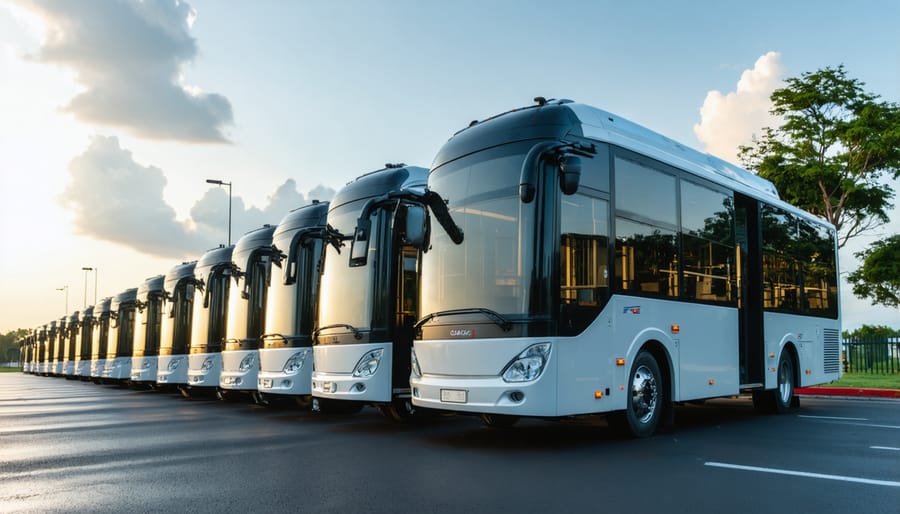
Cost Analysis and Return on Investment for Municipalities and Organizations
Initial Capital Investment vs. Lifecycle Costs
Solar-powered buses require substantial initial capital investment, typically ranging from $400,000 to $800,000 per vehicle—approximately 60-80% more than conventional diesel buses. However, a comprehensive lifecycle analysis reveals compelling financial advantages over 15-20 year operational periods.
Fuel savings represent the most significant ongoing benefit, with solar buses eliminating diesel costs averaging $40,000-$60,000 annually per vehicle. Maintenance expenses decrease by 30-50% due to simpler electric drivetrains with fewer moving parts and reduced wear on braking systems through regenerative technology. Fleet operators report savings of $15,000-$25,000 per bus annually in maintenance alone.
When calculating total cost of ownership, solar buses typically achieve cost parity with diesel alternatives within 8-12 years, depending on local fuel prices and solar generation capacity. Over a 20-year lifespan, cumulative savings can exceed $800,000 per vehicle when factoring in operational costs, reduced emissions-related penalties, and available federal incentives.
King County Metro in Washington State documented a 15-year total cost of ownership reduction of 23% compared to their diesel fleet, while achieving energy independence during grid disruptions. These economics become increasingly favorable as battery costs decline and renewable energy infrastructure expands, making solar buses a financially prudent long-term investment for forward-thinking transportation agencies.
Funding Opportunities and Incentives
Multiple funding mechanisms exist to support solar-powered bus initiatives, making these projects financially accessible for municipalities and large organizations. At the federal level, the Federal Emergency Management Agency (FEMA) offers Hazard Mitigation Grant Programs and Emergency Management Performance Grants that can fund resilient transportation infrastructure, including solar evacuation systems. The U.S. Department of Transportation’s Low or No Emission Vehicle Program provides competitive grants specifically for clean energy transit solutions.
State-level incentives vary by jurisdiction but often include renewable energy grants, tax credits, and expedited permitting processes for emergency preparedness projects. California’s Clean Transportation Program and New York’s Clean Energy Fund exemplify robust state funding opportunities. Many states also offer property tax exemptions for solar installations serving public safety functions.
Emergency preparedness budgets increasingly recognize solar-powered transportation as eligible infrastructure investments. Organizations should explore partnerships with regional emergency management agencies, which may access dedicated funding streams unavailable to individual entities. Additionally, green bonds and climate resilience financing programs provide alternative capital sources. The solar Investment Tax Credit remains available for qualifying commercial projects, offering substantial upfront cost reduction. Facility managers should engage early with grant administrators to align project timelines with funding cycles.
Implementation Roadmap for Government Institutions and Commercial Facilities
Needs Assessment and Fleet Planning
Implementing a solar-powered bus fleet for emergency evacuations requires systematic planning aligned with community-specific requirements. Organizations should begin by conducting comprehensive risk assessments that identify vulnerable populations, evacuation zones, and potential disaster scenarios. This evaluation determines the minimum number of vehicles needed to transport residents within critical timeframes, typically calculated using population density data and historical evacuation patterns.
Fleet sizing should account for simultaneous deployment scenarios, redundancy requirements, and maintenance schedules. A mid-sized municipality might require 8-12 solar-powered buses to ensure adequate coverage, while larger metropolitan areas need proportionally scaled fleets. Route optimization considers road infrastructure resilience, solar charging station locations, and multiple evacuation destinations. Geographic information systems can model optimal routes that maximize solar charging opportunities during daylight operations while identifying covered parking facilities with integrated photovoltaic canopies for overnight storage.
Financial planning must incorporate total cost of ownership over 15-20 year lifecycles, including vehicle acquisition, charging infrastructure, maintenance reserves, and driver training programs. Many jurisdictions leverage federal emergency preparedness grants and renewable energy incentives to offset initial capital investments, achieving cost parity with conventional diesel fleets within 7-10 years while delivering superior environmental and energy security benefits.
Procurement and Installation Best Practices
Selecting qualified installers is fundamental to ensuring your solar-powered bus system operates reliably during emergency evacuations. Prioritize contractors with relevant certifications, including NABCEP credentials and experience with commercial fleet electrification projects. Request detailed references from similar installations and verify their track record with emergency management applications.
During procurement, establish clear performance specifications that address your emergency response requirements. Define minimum solar charging capacity, battery backup duration, and system reliability standards. Include warranty provisions that cover both equipment and installation workmanship for at least five years, with explicit performance guarantees for emergency activation scenarios.
Develop comprehensive maintenance protocols before system deployment. Schedule quarterly inspections of solar panels, battery systems, and charging infrastructure. Train designated staff members on basic troubleshooting procedures and establish relationships with certified technicians for rapid response during critical situations. Document all maintenance activities to track system performance and identify potential issues before they compromise emergency readiness.
Implement real-time monitoring systems that provide immediate alerts for any performance degradation. This proactive approach ensures your solar-powered buses remain mission-ready when communities need them most. Consider maintenance agreements that guarantee response times aligned with your emergency preparedness objectives, typically within 24 hours for critical system failures.
Solar-powered buses represent more than an environmental initiative—they constitute a strategic investment in community resilience and emergency preparedness infrastructure. As climate-related disasters increase in frequency and severity, the dual functionality of these vehicles as both daily transportation and emergency response assets delivers measurable value that traditional diesel fleets cannot match. Organizations that integrate solar-powered buses into their operations gain operational cost savings during normal conditions while simultaneously building critical capacity for crisis situations when conventional fuel supply chains may be compromised.
The case studies examined throughout this analysis demonstrate proven effectiveness across diverse scenarios, from Hurricane Maria’s aftermath in Puerto Rico to California’s widespread power shutdowns. These real-world applications confirm that solar-powered buses equipped with battery storage systems can provide immediate, reliable transportation and mobile power generation when communities need them most. The return on investment extends beyond financial metrics to encompass enhanced public safety, reduced vulnerability to infrastructure failures, and strengthened organizational reputation as a forward-thinking leader in sustainable practices.
Facility managers, government officials, and industry leaders should conduct comprehensive assessments of their current emergency preparedness gaps, particularly regarding transportation and backup power capabilities. Evaluate whether existing evacuation plans account for fuel supply disruptions, and consider how solar-powered buses could fill identified vulnerabilities. The evolution of resilient community infrastructure depends on proactive decisions made today—decisions that recognize energy independence and sustainable technology as foundational elements of 21st-century emergency management. Organizations that pioneer these solutions position themselves at the forefront of a necessary transformation in how communities prepare for and respond to crises.