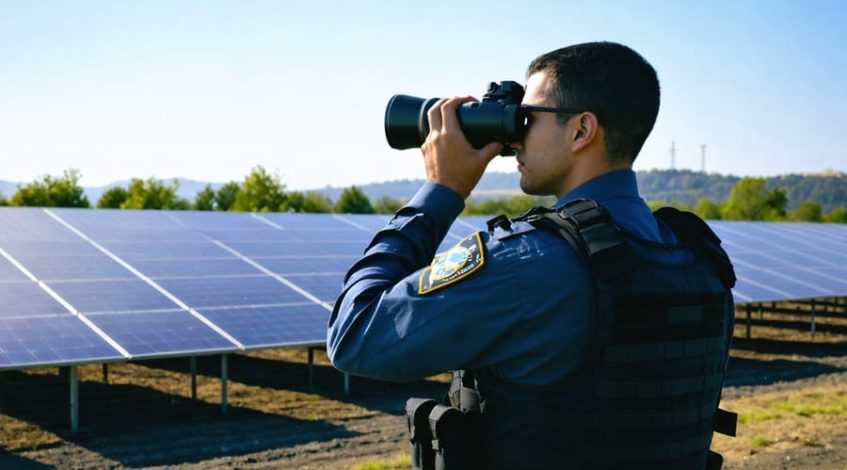
Solar energy infrastructure represents a critical component of America’s energy independence, yet these assets face evolving security threats ranging from physical sabotage to cyber intrusion. The Department of Energy Security Police—federal law enforcement officers tasked with protecting DOE facilities, nuclear materials, and energy infrastructure—establish the benchmark for comprehensive security protocols that commercial solar operators must understand and, in many cases, emulate.
Federal regulations require critical energy infrastructure to meet stringent security standards, and solar installations above certain capacity thresholds fall under these mandates. Understanding DOE security police procedures isn’t merely about compliance—it’s about protecting multi-million dollar investments from sophisticated threats. In 2022 alone, energy sector security incidents cost operators an estimated $2.4 billion in damages and lost productivity, with solar facilities increasingly targeted due to their remote locations and valuable equipment.
Commercial solar operators face a unique security challenge: balancing accessibility for maintenance with protection against vandalism, theft, and potential terrorist activity. The DOE security police framework provides proven methodologies for risk assessment, perimeter defense, surveillance integration, and emergency response that translate directly to private sector applications.
This comprehensive guide examines how DOE security standards apply to solar infrastructure, identifies critical vulnerabilities specific to photovoltaic installations, and delivers actionable security strategies that satisfy federal requirements while optimizing operational efficiency. Whether managing a utility-scale solar farm or a distributed generation network, implementing DOE-aligned security measures protects your assets and ensures uninterrupted renewable energy production.
Understanding the Department of Energy Security Police
Origins and Mission
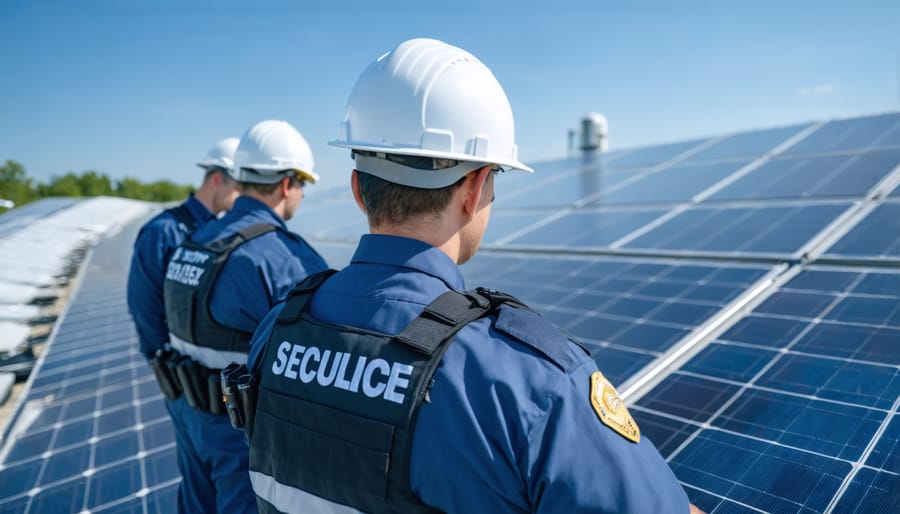
The Department of Energy Security Police traces its establishment to the Atomic Energy Act of 1954, evolving significantly through the formation of the Department of Energy in 1977. This specialized federal law enforcement agency operates with a clear mandate: protecting the nation’s nuclear facilities, energy infrastructure, and classified materials from security threats.
Today, DOE security police oversee protection of critical energy assets including nuclear power plants, research laboratories, and increasingly, large-scale renewable energy installations that qualify as critical infrastructure. Their jurisdiction extends beyond traditional nuclear facilities to encompass major solar farms, energy storage systems, and grid-connected renewable facilities meeting specific capacity thresholds.
The agency’s mission centers on preventing sabotage, theft, and unauthorized access to energy facilities while ensuring compliance with federal security standards. For solar facility operators and energy sector stakeholders, understanding DOE security police protocols is essential when projects reach critical infrastructure designation—typically facilities generating 75 megawatts or more. This threshold triggers enhanced security requirements, background check protocols, and coordination with federal protective services to maintain operational integrity and grid stability.
Jurisdiction Over Solar Energy Facilities
The Department of Energy Security Police primarily maintains jurisdiction over federal energy facilities, national laboratories, and critical infrastructure directly owned or operated by the DOE. For commercial solar installations, DOE security police involvement typically occurs under specific circumstances rather than as a standard operational requirement.
Commercial solar facilities generally fall under local and state law enforcement jurisdiction for routine security matters. However, DOE security protocols become relevant when solar installations connect to federally regulated grid infrastructure, receive DOE funding or grants, or are located on federal property. Additionally, large-scale solar farms designated as critical energy infrastructure may require coordination with DOE security standards.
Private solar installations serving commercial buildings, manufacturing facilities, or business campuses typically do not require direct DOE security police oversight. Instead, facility managers should focus on implementing security measures aligned with industry best practices and local regulations.
A notable case involved a utility-scale solar project in Nevada receiving federal loan guarantees, where operators coordinated with DOE security advisors to establish appropriate protocols. This collaboration ensured compliance without unnecessary regulatory burden while maintaining robust protection standards. Business owners should consult with legal counsel and security professionals to determine whether their specific solar project requires DOE coordination or falls under standard commercial security frameworks.
Physical Security Threats Facing Solar Infrastructure
Vandalism and Theft
Solar energy installations face persistent threats from vandalism and theft that can significantly impact operational efficiency and financial returns. Copper wire theft represents one of the most prevalent security challenges, with thieves targeting valuable copper cabling within inverters, transformers, and electrical conduits. A 2022 incident at a California utility-scale solar farm resulted in $250,000 in losses and two weeks of downtime when perpetrators removed approximately 1,500 feet of copper grounding wire.
Physical panel damage from intentional vandalism poses another considerable risk. Facility managers have documented cases of broken photovoltaic modules from gunfire, thrown objects, and deliberate destruction, requiring costly replacements and temporary generation capacity losses. Equipment vandalism extends to inverters, monitoring systems, and battery storage units, which contain valuable components and can be dismantled for resale on secondary markets.
Metal theft targeting aluminum frames, stainless steel mounting hardware, and even entire solar panels has increased in regions with inadequate security measures. These incidents underscore the critical need for comprehensive security protocols that include perimeter fencing, surveillance systems, and regular facility inspections to protect substantial infrastructure investments and maintain uninterrupted energy production.
Sabotage and Terrorism Concerns
Large-scale solar installations have evolved from simple renewable energy projects into strategic national assets requiring sophisticated protection protocols. The Department of Energy recognizes that concentrated solar facilities, particularly those exceeding 50 megawatts or serving critical infrastructure like military bases and emergency services, present attractive targets for malicious actors seeking to disrupt regional power grids.
Recent intelligence assessments highlight three primary threat vectors: physical sabotage of inverters and transformers, cyber attacks on monitoring systems, and coordinated assaults designed to destabilize energy distribution during peak demand periods. A compromised solar array serving 10,000 homes could cascade into broader grid instability, affecting hospitals, water treatment facilities, and telecommunications networks.
The vulnerability assessment process considers both intentional threats and insider risks. Facilities integrated with federal infrastructure or Department of Defense operations face elevated scrutiny, requiring enhanced perimeter security, continuous surveillance, and personnel vetting procedures. Business owners operating utility-scale installations should conduct annual threat assessments and maintain communication protocols with local law enforcement and DOE security coordinators to ensure rapid response capabilities during security incidents.
Cyber-Physical Attack Vectors
Cyber-physical attacks represent a sophisticated threat where adversaries exploit physical access points to compromise digital control systems managing solar infrastructure. These hybrid threats enable attackers to manipulate inverters, disconnect protection systems, or disrupt grid synchronization through compromised monitoring platforms. Recent assessments demonstrate that unauthorized physical access to equipment enclosures can facilitate USB-based malware injection or network tapping, bypassing conventional perimeter defenses.
Commercial solar facilities face particular vulnerability where monitoring systems connect directly to SCADA networks without adequate segmentation. A 2023 incident at a Midwest solar farm illustrated this risk when contractors inadvertently introduced ransomware through maintenance laptops, affecting 15 MW of generation capacity. Implementing robust cybersecurity strategies alongside physical access controls creates essential defense layers.
Effective protection requires coordinated measures: secured equipment enclosures with tamper detection, credential-based access logging, network segmentation separating operational technology from IT systems, and regular security audits. Facility managers should enforce strict vendor access protocols and maintain offline backup configurations for critical control parameters, ensuring rapid recovery from compromise events while protecting long-term asset value.
Security Standards and Compliance Requirements
Federal Energy Security Regulations
The Department of Energy has established comprehensive regulatory frameworks to safeguard critical energy infrastructure, including large-scale solar installations. These regulations primarily stem from the Critical Infrastructure Protection (CIP) standards developed under the Federal Energy Regulatory Commission (FERC) jurisdiction, which mandate specific physical and cyber security measures for facilities meeting designated capacity thresholds.
Solar facilities classified as Bulk Electric System (BES) assets—typically those generating 75 MW or more—must comply with NERC CIP standards, including physical security perimeters, access control systems, and continuous monitoring protocols. Facility managers should assess whether their installations fall under these requirements, as non-compliance can result in substantial penalties exceeding $1 million per violation per day.
Beyond NERC CIP, the Chemical Facility Anti-Terrorism Standards (CFATS) may apply to solar installations utilizing specific battery storage technologies. Additionally, Executive Order 13920 addresses supply chain security for bulk-power system equipment, requiring documentation of component origins and vendor vetting processes.
For commercial solar operators, understanding these regulatory layers is essential for budgeting security infrastructure investments. Many facilities implement security measures exceeding minimum requirements, recognizing that robust protection protocols reduce insurance premiums, minimize operational disruptions, and demonstrate due diligence to stakeholders. Industry leaders recommend engaging security consultants familiar with both DOE protocols and renewable energy operations to ensure cost-effective compliance strategies.
When Your Solar Facility Requires Enhanced Security
Not all solar facilities fall under Department of Energy security jurisdiction, but understanding the thresholds is essential for compliance planning. Enhanced security requirements typically apply when solar installations exceed specific capacity levels, connect to critical infrastructure, or are designated as vital to regional energy supply.
Commercial solar facilities generating over 75 megawatts often warrant heightened scrutiny, particularly those feeding directly into transmission networks serving military installations, government facilities, or emergency services. Geographic location matters significantly—installations near sensitive federal sites or within designated critical infrastructure zones face more stringent requirements regardless of capacity.
Facilities receiving federal funding, tax incentives, or operating on government-leased land may trigger additional oversight. The DOE evaluates vulnerability based on system interconnection points, potential cascading failure risks, and replacement difficulty. A 50-megawatt solar farm serving a remote community’s primary grid might require enhanced protection compared to a larger installation with redundant power sources.
Implementing comprehensive solar energy risk strategies positions your facility favorably during security assessments. Proactive engagement with DOE representatives during planning phases helps identify potential triggers early, allowing security integration into initial design rather than costly retrofitting. Consider conducting pre-emptive vulnerability assessments when your project approaches threshold capacities or serves critical loads.
Essential Physical Security Measures for Commercial Solar Sites
Perimeter Security and Access Control
Effective perimeter security forms the foundation of Department of Energy-compliant solar facility protection. Commercial and utility-scale installations require multi-layered approaches that balance security needs with operational efficiency and budget constraints.
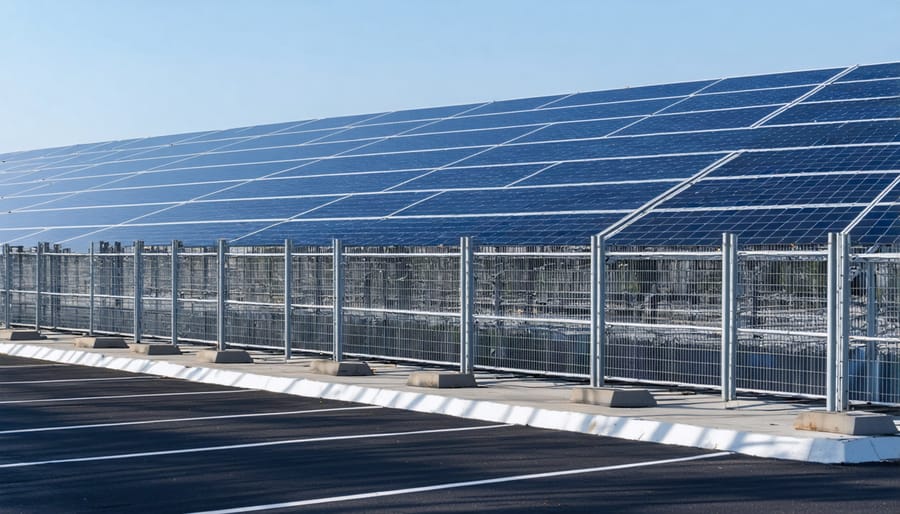
Physical barriers typically include eight-foot chain-link fencing with barbed wire extensions, though high-security sites may require anti-climb mesh systems. Strategic access points should feature automated gates with card readers, biometric scanners, or remote monitoring capabilities. Modern facilities integrate these elements during security infrastructure planning to ensure seamless operation.
Access management systems provide real-time monitoring and audit trails essential for compliance documentation. Cloud-based platforms enable facility managers to control entry permissions remotely, adjusting access levels for contractors, maintenance personnel, and emergency responders. These systems integrate with existing security networks, reducing implementation costs while enhancing oversight.
Intrusion detection technologies have evolved significantly for solar applications. Ground-mounted sensors, motion-activated cameras, and infrared systems detect unauthorized access while minimizing false alarms from wildlife or weather conditions. A California utility-scale installation reduced security incidents by 78% after implementing integrated perimeter sensors with automated alert protocols.
Return on investment for comprehensive perimeter security typically manifests within 18-24 months through reduced theft, vandalism prevention, and insurance premium reductions. Federal grants and accelerated depreciation schedules further improve project economics for qualifying facilities.
Surveillance and Monitoring Systems
Modern surveillance infrastructure forms the backbone of comprehensive security for solar installations and energy facilities. Advanced camera systems now offer high-resolution monitoring with thermal imaging capabilities, enabling security personnel to detect intrusions even in complete darkness or adverse weather conditions. These systems prove particularly valuable for large-scale solar farms spanning hundreds of acres where perimeter surveillance is critical.
Remote monitoring capabilities have transformed how facility managers oversee security operations. Cloud-based platforms allow authorized personnel to access live feeds from multiple locations simultaneously, reducing response times to potential security breaches. Motion-activated cameras with intelligent analytics can distinguish between wildlife, authorized personnel, and genuine threats, significantly reducing false alarms while maintaining vigilance.
Integration with operations management platforms represents the next evolution in facility security. By connecting surveillance systems with energy production monitoring, facility managers gain comprehensive situational awareness. For example, a solar facility in Nevada implemented an integrated platform that correlated unusual activity near inverter stations with production anomalies, preventing costly equipment theft and minimizing downtime.
These surveillance investments deliver measurable returns through reduced security staffing costs, lower insurance premiums, and prevention of theft or vandalism. When selecting systems, prioritize scalability and compatibility with existing infrastructure to ensure long-term value and adaptability to evolving security requirements.
Lighting and Environmental Design
Proper lighting design serves as a critical component of comprehensive security strategies for solar installations. Strategic illumination deters unauthorized access while enabling surveillance systems to capture clear footage during nighttime hours. Facilities should implement LED lighting solutions along perimeter fencing, access points, and between solar array rows, balancing security needs with energy efficiency goals.
Motion-activated lighting provides cost-effective coverage by illuminating specific zones only when activity is detected, reducing operational expenses while maintaining protective capabilities. Position fixtures to eliminate shadows and dark zones where intruders might conceal themselves, particularly near inverters, transformers, and electrical equipment housing valuable components.
Environmental design principles extend beyond lighting to encompass site layout considerations. Clear sight lines throughout the facility enable security personnel and camera systems to monitor all areas effectively. Vegetation management plays a dual role—maintaining adequate clearance around equipment prevents fire hazards while eliminating potential hiding spots for trespassers.
Facility managers should integrate lighting controls with existing security management systems, creating automated responses to detected intrusions. This integration enhances response times and provides documented evidence for investigations. Regular maintenance schedules ensure lighting systems remain operational, as even temporarily dark zones create exploitable vulnerabilities that compromise overall site security and potentially violate compliance requirements.
Coordinating with Law Enforcement and Security Agencies
Building Security Partnerships
Establishing robust security partnerships forms the foundation of comprehensive solar facility protection. Begin by coordinating with local law enforcement agencies to ensure they understand your site’s critical infrastructure status and emergency protocols. Many jurisdictions offer liaison programs specifically designed for energy facilities, enabling faster response times during security incidents.
Develop formal communication channels with the Department of Energy’s Office of Cybersecurity, Energy Security, and Emergency Response (CESER), which provides threat intelligence relevant to energy infrastructure. Commercial solar operators should also connect with regional Fusion Centers that disseminate security information affecting critical infrastructure.
Create a multi-agency coordination plan that includes:
– Designated security contacts at each partner agency
– Standardized incident reporting procedures
– Joint training exercises conducted quarterly
– Secure communication platforms for real-time threat sharing
A California solar facility reduced security incidents by 40% after implementing monthly coordination meetings with county sheriff departments and state energy officials. This proactive approach enabled early threat identification and coordinated response strategies that protected both physical assets and grid stability. Document all partnerships formally through memoranda of understanding to ensure continuity and accountability.
Incident Response Planning
Effective security planning requires comprehensive incident response protocols tailored to solar facility operations. Facility managers should develop detailed response procedures addressing intrusion detection, equipment tampering, cyberattacks, and natural disasters that could compromise system integrity.
A robust incident response plan establishes clear communication chains, defines roles and responsibilities, and outlines step-by-step procedures for various threat scenarios. Regular training exercises ensure security personnel and facility staff can execute protocols efficiently during actual incidents.
Documentation should include emergency contact information for law enforcement, utility providers, and technical support teams. Integration with DOE security standards ensures compliance while protecting critical infrastructure assets.
Leading solar operators conduct quarterly response drills, measuring response times and identifying procedural gaps. One California facility reduced incident response time by 40% after implementing structured protocols, minimizing downtime and preventing equipment damage. Regular plan reviews and updates maintain effectiveness as threats evolve and facility operations expand.
Case Study: Security Implementation at a Large-Scale Commercial Solar Facility
In 2022, a 75-megawatt commercial solar facility in Nevada partnered with security consultants to implement DOE-aligned protection measures following a series of copper wire thefts at regional renewable energy sites. The facility’s management recognized that inadequate security could compromise both operational continuity and their $120 million investment.
The security implementation included perimeter fencing with intrusion detection sensors, 24-hour video surveillance with thermal imaging capabilities, access control systems for critical equipment areas, and coordination protocols with local law enforcement. The facility also established a cybersecurity framework to protect SCADA systems and operational technology networks from digital threats.
Total implementation costs reached $850,000, including $400,000 for physical security infrastructure, $250,000 for cybersecurity measures, and $200,000 for ongoing monitoring services and personnel training. While substantial, these investments aligned with DOE recommendations for critical energy infrastructure protection.
The return on investment became evident within eighteen months. The facility avoided an estimated $2.3 million in potential theft-related losses and prevented three attempted security breaches. Insurance premiums decreased by 12 percent due to enhanced risk mitigation measures. Most significantly, operational uptime improved to 99.7 percent, exceeding industry benchmarks and increasing revenue generation.
Key lessons learned included the importance of integrating physical and cybersecurity measures rather than treating them as separate initiatives. The facility manager noted that regular security audits and employee training proved as valuable as hardware investments. Additionally, establishing relationships with federal security resources and local law enforcement created a force-multiplier effect, extending protection capabilities beyond on-site resources.
This case demonstrates that comprehensive security implementation, while requiring upfront investment, delivers measurable returns through loss prevention, operational reliability, and regulatory compliance. Commercial solar operators should view security measures as essential infrastructure rather than optional expenses, particularly as renewable energy facilities become increasingly critical to national grid stability.
Protecting solar infrastructure requires more than reactive measures—it demands proactive integration of security planning from project inception. The Department of Energy’s security frameworks provide commercial operators with proven methodologies to safeguard critical energy assets against evolving threats, from theft and vandalism to cyberattacks and physical intrusion. By adopting these established protocols, facility managers can protect substantial capital investments while ensuring operational continuity and regulatory compliance.
Commercial solar operators should begin by conducting thorough security assessments that align with DOE guidelines, identifying vulnerabilities specific to their site locations and operational profiles. Implementing layered security measures—including perimeter controls, surveillance systems, access management, and cybersecurity protocols—creates resilient defense strategies that adapt to emerging risks. Establishing partnerships with local law enforcement and security professionals further strengthens protective capabilities.
The financial implications are clear: security incidents can result in significant equipment losses, revenue disruption, and increased insurance premiums. Conversely, robust security measures demonstrate due diligence to stakeholders and insurers, potentially reducing operational costs. Integrating comprehensive risk management strategies into project planning protects both immediate investments and long-term returns. Commercial operators who prioritize security position themselves for sustainable success in an increasingly complex energy landscape.