
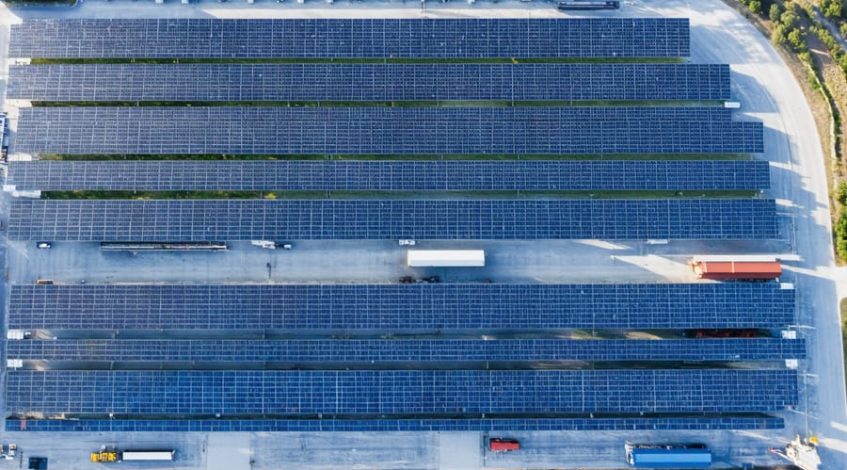
Community solar programs delivered an average 10-15% reduction in electricity costs for commercial participants across 23 states in 2023, yet determining whether this model fits your organization requires examining factors beyond simple savings calculations. The decision hinges on three critical elements: your facility’s current energy expenditure profile, available local program structures, and long-term operational goals.
Organizations currently spending over $50,000 annually on electricity typically achieve faster payback periods, while those with limited roof space or historic buildings find community solar eliminates traditional installation barriers. Unlike rooftop systems requiring capital investment and ongoing maintenance, community solar operates on a subscription model where participants purchase credits from off-site arrays, shifting financial risk to developers while securing predictable energy costs.
The evaluation process demands scrutiny of contract terms, utility interconnection policies, and state-specific incentive programs that can swing project economics by 20% or more. Manufacturing facilities in states with robust renewable energy credits report different outcomes than retail operations in markets with minimal policy support. Credit allocation methodologies, early termination provisions, and rate escalation clauses embedded in subscriber agreements directly impact total cost of ownership over typical 15-25 year contracts.
This analysis provides the framework, financial benchmarks, and implementation considerations necessary to determine whether community solar aligns with your organization’s energy strategy and delivers measurable return on investment.
What Community Solar Really Means for Commercial Operations

The Business Model Behind Community Solar
Community solar operates through subscription models that allow commercial participants to access renewable energy without on-site installations. Organizations typically purchase or lease a portion of a solar array’s capacity, measured in kilowatts, based on their average electricity consumption. This allocation generates credits that offset energy costs on existing utility bills.
The financial mechanism relies on virtual net metering, a billing arrangement where solar generation credits transfer from the community solar facility to subscribers’ accounts. When the solar array produces electricity, participants receive credits proportional to their subscription size, which appear as line items on monthly utility statements. These credits typically reduce the supply portion of electricity costs by 5-15%, depending on regional regulations and program structure.
Commercial subscribers pay either a fixed monthly subscription fee or purchase credits at a discounted rate compared to standard utility pricing. The most common models include immediate savings arrangements, where participants pay less for solar credits than their current electricity rate, or prepaid subscriptions offering locked-in rates that hedge against future utility price increases.
Subscription agreements generally span 15-25 years, with flexibility to adjust allocation sizes as business needs change. Most programs require no upfront capital investment, converting a traditional capital expenditure into a predictable operational expense. This structure enables organizations to demonstrate renewable energy adoption while maintaining budget predictability and balance sheet flexibility, making community solar particularly attractive for businesses with limited capital budgets or leased facilities where rooftop installation isn’t feasible.
Who Benefits Most from Community-Driven Solar Programs
Community-driven solar programs deliver the most substantial value to organizations facing specific structural or financial constraints. Multi-tenant facilities, including apartment complexes, condominiums, and commercial office buildings, represent prime candidates. These properties often struggle with allocating rooftop space fairly among tenants and managing individual solar installations. Community solar eliminates these complications by providing proportional access to off-site generation, allowing property managers to offer sustainable energy options without infrastructure modifications.
Government buildings and municipal facilities benefit significantly from these programs, particularly when pursuing sustainability mandates with limited capital budgets. Many public entities face procurement restrictions or lack funds for upfront solar investments. Community solar subscriptions enable them to achieve renewable energy targets through operational expenses rather than capital outlays, simplifying budget approval processes and accelerating implementation timelines.
Businesses operating from facilities with unsuitable roofs gain substantial advantages. Organizations housed in historic buildings, structures with insufficient load capacity, excessive shading, or aging roofs nearing replacement benefit from accessible solar programs that bypass these physical limitations. This approach proves especially valuable for companies leasing their premises, where installing permanent solar infrastructure presents contractual and ownership complications.
Non-profit organizations and institutions prioritizing sustainability without capital investment find community solar particularly attractive. These entities can demonstrate environmental commitment to stakeholders while redirecting limited capital resources toward core mission activities. The subscription model aligns operational costs with energy savings, creating immediate financial benefits without depleting reserves or complicating balance sheets.
The Financial Case: Breaking Down the ROI
Upfront Costs vs. Traditional Solar Installations
Traditional solar installations require substantial capital expenditure, typically ranging from $100,000 to several million dollars depending on system size and facility requirements. These projects demand comprehensive site assessments, structural engineering evaluations, permitting processes, and ongoing maintenance budgets. For many organizations, these upfront costs present significant barriers despite attractive long-term returns.
Community solar fundamentally alters this financial equation by eliminating initial investment requirements. Subscribers access solar-generated electricity through simple subscription agreements with no equipment purchases, installation expenses, or maintenance responsibilities. This model operates similarly to a power purchase agreement, where businesses pay only for the energy credits they receive at predetermined rates.
The financial advantages extend beyond capital preservation. Traditional installations require dedicated staff time for project management, vendor coordination, and system monitoring. Community solar transfers these operational burdens to the solar farm operator, allowing facility managers to redirect resources toward core business functions.
For organizations with limited roof space, structural constraints, or properties in urban environments, community solar provides access to renewable energy without the physical limitations that make traditional installations impractical or impossible. This accessibility makes solar energy viable for a broader range of commercial entities, from small businesses to large corporations managing multiple locations.
Long-Term Savings and Energy Cost Predictability
Community solar typically delivers savings ranging from 5% to 15% below standard utility rates, though actual percentages vary by program structure and regional electricity costs. Organizations subscribing to community solar projects benefit from predictable energy expenses through fixed-rate contracts, typically spanning 15 to 25 years. This pricing stability provides significant financial planning advantages compared to traditional utility service, where rates historically increase 2% to 4% annually.
The long-term value proposition strengthens considerably when factoring in protection against utility rate escalation. A facility manager locking in community solar rates today effectively insulates their organization from future price volatility. Over a 20-year contract period, cumulative savings can reach 20% to 30% compared to conventional utility pricing trajectories. Advanced energy cost analysis tools enable organizations to model projected savings across various scenarios, accounting for regional rate trends and subscription levels.
Contract structures vary, with some programs offering guaranteed discount percentages off utility rates while others provide fixed kilowatt-hour pricing. The latter option delivers greater certainty but requires careful evaluation of current versus projected utility rates. Organizations with stable or expanding operations particularly benefit from these locked-in rates, as energy costs become a quantifiable line item rather than a variable expense subject to market fluctuations and regulatory changes. Financial modeling should incorporate both direct savings and the strategic value of budget predictability when assessing overall return on investment.

Hidden Value: Sustainability Reporting and ESG Benefits
Community solar participation delivers measurable value beyond utility bill savings, particularly for organizations tracking sustainability metrics and Environmental, Social, and Governance performance. When businesses subscribe to community solar projects, they generate Renewable Energy Credits that contribute directly to carbon reduction targets and sustainability reporting frameworks such as CDP, GRI, and TCFD.
These credentials provide tangible evidence of renewable energy adoption without requiring on-site installations, making them especially valuable for organizations with leasing constraints or unsuitable roof conditions. Corporate subscribers can quantify their environmental impact through verifiable kilowatt-hour generation data, translating directly into Scope 2 emissions reductions that satisfy both regulatory requirements and stakeholder expectations.
The sustainability benefits complement financial returns from state-specific solar incentives, creating dual value streams. Organizations pursuing B Corporation certification, government contracts requiring sustainability commitments, or investor relations with ESG-focused stakeholders find community solar participation strengthens their competitive positioning. This alignment between cost savings and sustainability credentials often tips the ROI calculation favorably, particularly as environmental disclosure requirements continue expanding across industries and jurisdictions.
Real-World Application: Community Solar Success Stories
Case Study: Municipal Government Facilities
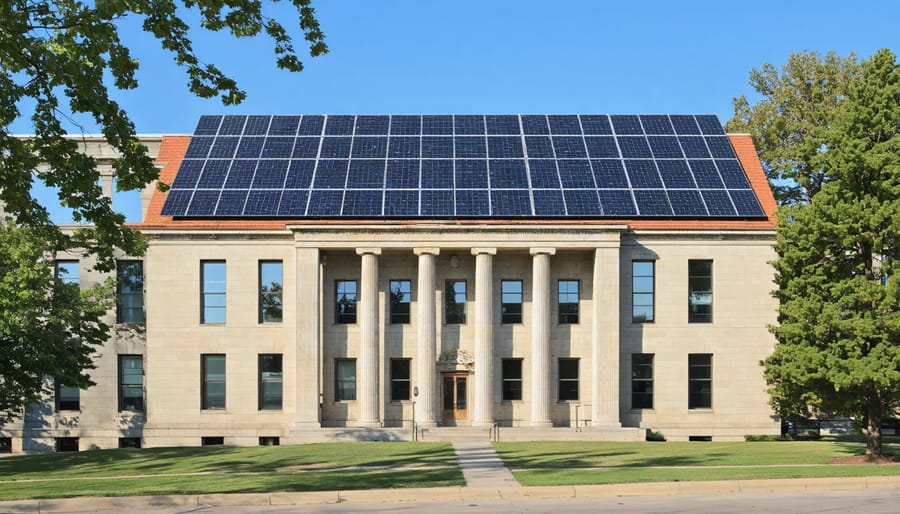
A mid-sized municipal government in the Midwest implemented community solar across 12 facilities in 2022, seeking to reduce operational costs without requiring capital investment or building modifications. The implementation process took just 45 days from initial evaluation to full enrollment, with no infrastructure upgrades needed at participating buildings.
The municipality enrolled facilities ranging from administrative offices to public works buildings, totaling 850,000 kWh of annual consumption. Through their community solar subscription, they secured a 12% discount on electricity costs compared to standard utility rates, generating approximately $127,000 in annual savings across all locations.
Key advantages included immediate cost reduction with zero upfront expenditure, simplified budget forecasting through predictable credit allocations, and the ability to scale participation as new facilities came online. The finance department particularly valued the straightforward billing process, where solar credits appeared directly on existing utility statements. Within the first 18 months, the program delivered $190,500 in total savings while advancing the municipality’s sustainability goals. The success prompted expansion to include an additional eight facilities in year two, demonstrating how community solar provides government entities with a practical pathway to both fiscal responsibility and environmental stewardship.
Case Study: Commercial Real Estate Portfolio
Meridian Property Group manages 12 commercial buildings across the Northeast, serving 340 small business tenants. Facing rising electricity costs and tenant demands for sustainability initiatives, the company enrolled 65% of its portfolio capacity in community solar projects beginning in 2021.
The financial results proved compelling. Participating tenants realized average electricity savings of 12% annually, translating to approximately $1,800 per unit yearly. For Meridian, the program required minimal administrative overhead—subscription management consumed roughly three hours monthly across all properties. The company positioned community solar access as a value-added amenity, contributing to 94% tenant retention rates in participating buildings compared to 87% in non-participating properties.
Operational considerations centered on tenant communication and lease integration. Meridian developed standardized disclosure language explaining subscription terms and incorporated opt-in provisions into new lease agreements. The property management team noted that subscription flexibility proved essential—when tenants relocated or downsized, they could adjust allocations without penalty, eliminating a potential friction point.
The initiative also strengthened Meridian’s ESG reporting, supporting corporate sustainability commitments while delivering measurable cost reductions. Management now considers community solar eligibility a standard evaluation criterion when acquiring new properties.
Case Study: Industrial Operations with High Energy Demand
A Midwest manufacturing facility with annual electricity costs exceeding $2.3 million demonstrates the substantial impact of community solar on high-demand operations. The 450,000-square-foot metals processing plant allocated 60% of its energy procurement to a nearby community solar array, effectively reducing operational costs by $187,000 annually through subscription credits.
The facility management team identified community solar as an optimal solution after determining that on-site installation was impractical due to limited roof capacity and operational constraints. By subscribing to 1.2 megawatts of community solar capacity, the operation secured a fixed energy credit rate 12% below retail electricity prices with a 15-year contract term.
Implementation required minimal operational disruption, with the subscription activation completed within 45 days. The arrangement provided immediate cost benefits without capital expenditure, preserving the company’s investment capacity for core production equipment upgrades.
Within 18 months, the facility expanded its community solar subscription to 75% of total consumption after validating consistent savings and seamless billing integration. The energy cost predictability enabled more accurate budget forecasting and strengthened the company’s position in competitive bidding scenarios where operational efficiency directly impacts pricing strategies.
Potential Drawbacks and Risk Factors to Consider
Contract Terms and Exit Provisions
Community solar contracts typically span 20-25 years, aligning with the operational lifespan of solar installations. However, many providers offer shorter commitment periods ranging from 1-10 years to accommodate businesses with uncertain facility needs or evolving energy strategies. Before signing, carefully review early termination clauses, as exit fees can range from several hundred to several thousand dollars depending on the provider and remaining contract duration.
Organizations anticipating relocation, expansion, or operational changes should prioritize contracts with transferability provisions. Several established community solar programs allow subscribers to transfer their subscription to new facilities within the same utility service territory or reassign their share to another qualified business entity. This flexibility proves particularly valuable for growing companies or facilities undergoing ownership transitions.
Contract portability represents a critical consideration for multi-location businesses. Some enterprises have successfully structured agreements allowing subscription reallocation across multiple facilities within their portfolio, maximizing utilization regardless of individual site changes. When evaluating providers, request documentation of their policy regarding early termination, subscription transfers, and capacity adjustments. Understanding these provisions upfront enables more accurate long-term cost projections and reduces financial risk associated with unforeseen operational changes.
Geographic and Utility-Specific Limitations
Community solar availability remains highly dependent on geographic location and utility participation, factors that significantly impact whether this option represents a viable investment for your organization. Currently, fewer than half of U.S. states have established community solar programs, with participation concentrated in markets like Massachusetts, Minnesota, New York, and Colorado. Many regions lack the regulatory framework or utility cooperation necessary to support these initiatives.
State-level regulations create substantial variation in program structure and economic benefits. Some jurisdictions mandate specific credit rates and consumer protections, while others leave terms largely to utility discretion. This regulatory patchwork directly affects your potential savings and contract terms. For instance, Massachusetts offers virtual net metering credits at full retail rates, whereas other states may only provide wholesale or partial credit values, reducing financial returns by 30-50%.
Utility participation presents another critical barrier. Even in states with enabling legislation, individual utilities may limit enrollment capacity, impose lengthy waitlists, or structure programs unfavorably. A commercial facility in one service territory might access substantial savings, while an identical operation across utility boundaries finds no available program.
Before committing resources to evaluate community solar, verify program availability in your service area and assess the specific terms your utility offers. Organizations operating multi-site portfolios face additional complexity, as each location requires separate evaluation based on local market conditions. Understanding these geographic and utility-specific constraints early in your assessment process prevents wasted effort pursuing unavailable or economically unfavorable opportunities.
Community Solar vs. On-Site Commercial Installations: Making the Right Choice
When On-Site Solar Makes More Sense
While community solar offers accessibility and flexibility, certain operational scenarios favor direct solar ownership. Understanding these conditions helps organizations make informed decisions when evaluating community versus on-site solar investment pathways.
Organizations with unshaded roof space or available land parcels achieve optimal returns through direct installation. A manufacturing facility in Queensland demonstrated this advantage by installing a 500kW rooftop system, capturing the full federal Investment Tax Credit and accelerated depreciation benefits while eliminating intermediary subscription fees. Over 25 years, their direct ownership model generated 40% higher returns compared to equivalent community solar participation.
Tax incentive eligibility represents another decisive factor. Organizations with substantial tax liability can monetize federal and state incentives immediately, reducing project costs by 30-50%. Additionally, entities expecting long-term facility control benefit from asset ownership and property value appreciation that community solar cannot provide.
Available capital further influences this decision. While on-site systems require upfront investment or financing arrangements, organizations with access to low-cost capital often find direct ownership more economical than ongoing subscription payments. A distribution center case study revealed that financing a 750kW system through commercial debt produced lower levelized energy costs than comparable community solar rates, while building equity in a productive asset.
Direct installation also provides complete control over system specifications, maintenance schedules, and energy production data, enabling precise integration with facility management systems and sustainability reporting requirements.
When Community Solar Offers Superior Value
Community solar presents compelling advantages for organizations facing specific operational or financial constraints. The model proves particularly valuable when on-site installation faces insurmountable barriers or when organizational priorities emphasize capital preservation and operational simplicity.
Organizations operating from leased facilities represent a primary candidate group. Property owners frequently prohibit permanent infrastructure modifications, making traditional solar installations impossible. Community solar subscriptions require no physical alterations to occupied spaces, enabling tenants to access renewable energy benefits without property ownership complications.
Capital allocation constraints similarly favor community participation. On-site installations demand substantial upfront investment, typically ranging from $100,000 to several million dollars depending on system size. Community solar eliminates this capital requirement, converting energy procurement to a predictable operational expense while preserving investment capacity for core business activities.
Multi-location enterprises find particular value in centralized subscription management. Rather than coordinating separate installations across numerous facilities—each with unique structural considerations and interconnection requirements—organizations can aggregate energy credits from a single community solar project to offset consumption across their entire portfolio.
Facility limitations further drive community solar adoption. Historic buildings, structures with insufficient roof capacity, properties with excessive shading, or locations with unfavorable orientations often cannot support economically viable on-site systems. A manufacturing facility case demonstrates this reality: despite 200,000 annual kWh consumption, structural engineers determined their aging roof could not support panel weight. Community solar provided renewable energy access without facility modifications, delivering 15% annual savings against grid rates while maintaining complete operational flexibility.
Implementation Considerations for Business Decision-Makers

Key Contract Terms to Negotiate
Before committing to a community solar subscription, scrutinize several critical contract elements that directly impact your financial returns. Start by examining the subscription rate structure and how it compares to your current utility costs. Most programs offer rates 5-15% below standard electricity prices, but verify whether these savings apply to all billing components or just energy charges.
Pay particular attention to annual escalators, which determine how your subscription rate increases over time. While utility rates typically rise 2-4% annually, ensure your contract’s escalator doesn’t exceed this threshold, as it could erode long-term savings. Some providers offer fixed-rate contracts that provide greater cost predictability for budget planning.
Review the credit allocation methodology carefully. Credits should appear on your utility bill within the same billing cycle as solar generation, and the calculation method should be transparent. Clarify whether credits are valued at retail rates or lower wholesale prices.
Performance guarantees protect your investment against underperforming solar arrays. Look for contracts that specify minimum annual production levels, typically 90-95% of projected output, with compensation mechanisms if generation falls short. Additionally, examine termination clauses, transfer rights if you relocate facilities, and any fees associated with early cancellation to maintain flexibility as your organization’s needs evolve.
Questions to Ask Community Solar Providers
Before committing to a community solar project, conduct thorough due diligence by asking targeted questions that address your organization’s specific requirements. Start by examining project viability: request detailed information about the system’s expected energy output, warranty coverage, and projected lifespan. Inquire about the developer’s financial stability and implementation timeline to assess completion risk.
Provider track record evaluation is essential—ask for references from similar commercial clients and case studies demonstrating successful long-term operations. Request transparent documentation of their experience managing projects of comparable size and complexity.
Understanding system monitoring capabilities helps ensure ongoing performance accountability. Ask what real-time data access you’ll receive, how frequently performance reports are generated, and what metrics are tracked. Clarify the escalation process for addressing underperformance issues.
Finally, examine the support infrastructure: What happens if the provider changes ownership? How are maintenance responsibilities handled? What recourse exists if projected savings don’t materialize? Request clarity on contract termination provisions and transferability options should your organization’s circumstances change. These questions establish a framework for evaluating whether a specific community solar opportunity aligns with your operational and financial objectives.
Community solar represents a strategically sound pathway for commercial and institutional entities seeking to balance cost reduction objectives with sustainability commitments. The evidence demonstrates that organizations across diverse sectors—from municipal facilities to manufacturing operations—are achieving measurable financial returns while advancing their environmental mandates. Average savings ranging from 5% to 15% on electricity costs, combined with predictable pricing structures that insulate organizations from rate volatility, establish a compelling financial foundation.
The value proposition extends beyond immediate cost savings. Community solar enables organizations to demonstrate environmental leadership without the capital expenditure, technical complexity, or facility constraints associated with on-site installations. This accessibility proves particularly valuable for entities operating in leased spaces, historic buildings, or facilities with unsuitable roof conditions. Furthermore, the expanding availability of programs across multiple states creates increasing opportunities for participation.
However, determining whether community solar aligns with your specific operational context requires thorough analysis. Examine your current electricity costs, evaluate available program terms in your service territory, and assess how community solar integrates with your broader energy strategy. Consider engaging energy consultants to model scenarios based on your consumption patterns and financial objectives.
The strategic advantage lies in timely action. As community solar programs expand and evolve, early participants often secure more favorable terms and subscription allocations. Organizations that conduct comprehensive analysis now position themselves to capitalize on this proven approach to achieving both fiscal responsibility and sustainability goals. The question is not whether community solar delivers value, but whether its specific benefits align with your organization’s priorities and circumstances.