
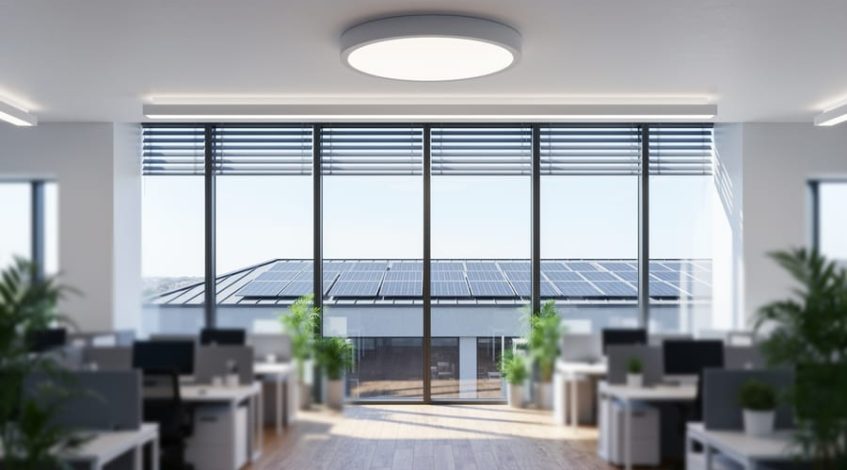
Natural light represents untapped potential in your facility’s comprehensive energy strategy, delivering measurable returns that extend beyond traditional photovoltaic installations. Strategic daylighting design reduces electrical lighting loads by 25-60% in commercial buildings while simultaneously decreasing HVAC costs through advanced glazing technologies that control heat gain. For facility managers and architects developing integrated solar strategies, daylighting systems function as the architectural complement to rooftop photovoltaic arrays, creating a dual approach that maximizes renewable energy capture while minimizing grid dependency.
Modern daylighting extends far beyond conventional skylights. Advanced systems incorporate automated louvers, light shelves, and tubular daylighting devices that distribute natural illumination deep into building cores where artificial lighting traditionally dominates operating expenses. These installations integrate seamlessly with building management systems, automatically dimming artificial lights as daylight levels increase, creating dynamic environments that respond to real-time conditions.
The financial case strengthens when daylighting design coordinates with photovoltaic planning during initial construction or major renovations. Reduced lighting loads mean smaller electrical infrastructure requirements and decreased solar array sizing needs, lowering overall capital expenditure while maintaining energy independence targets. Facilities implementing combined strategies report 15-20% faster ROI compared to standalone photovoltaic installations.
This article examines how daylighting design functions within commercial energy portfolios, quantifies measurable business benefits, and demonstrates integration pathways with existing solar investments through documented case studies across industrial, educational, and commercial sectors.
What Daylighting Design Really Means for Commercial Buildings
The Connection Between Daylighting and Solar Energy Strategy
Effective daylighting design creates a powerful synergy with solar photovoltaic systems by fundamentally reducing a building’s internal energy demands. When natural light replaces artificial lighting during daylight hours, facilities experience significant reductions in electrical consumption and heat generation from light fixtures. This decreased internal load has cascading benefits throughout the building’s energy profile, lowering cooling requirements and creating a more efficient baseline for energy management.
The relationship between daylighting and solar PV becomes particularly valuable when considering overall system sizing and return on investment. Buildings with optimized natural light strategies require less installed solar capacity to achieve energy neutrality or net-positive status. This reduction in required PV array size translates directly to lower capital expenditure while maintaining superior energy performance outcomes.
For facility managers evaluating comprehensive energy strategies, the integration of building-integrated solar systems with strategic daylighting represents an optimal approach. The reduced lighting and cooling loads mean that solar generation can address a greater proportion of remaining energy needs, improving payback periods and long-term financial performance.
Real-world applications demonstrate this principle effectively. A Melbourne commercial facility combining advanced daylighting with rooftop solar achieved 65% energy reduction compared to baseline consumption, with the daylighting component reducing loads by 30% before solar generation offset the remainder. This integrated approach delivered ROI improvements of 18 months compared to solar-only installations, illustrating the compounding value of coordinated natural and renewable energy strategies.
Core Light-Guiding Systems That Transform Interior Spaces
Light Shelves and Reflective Systems
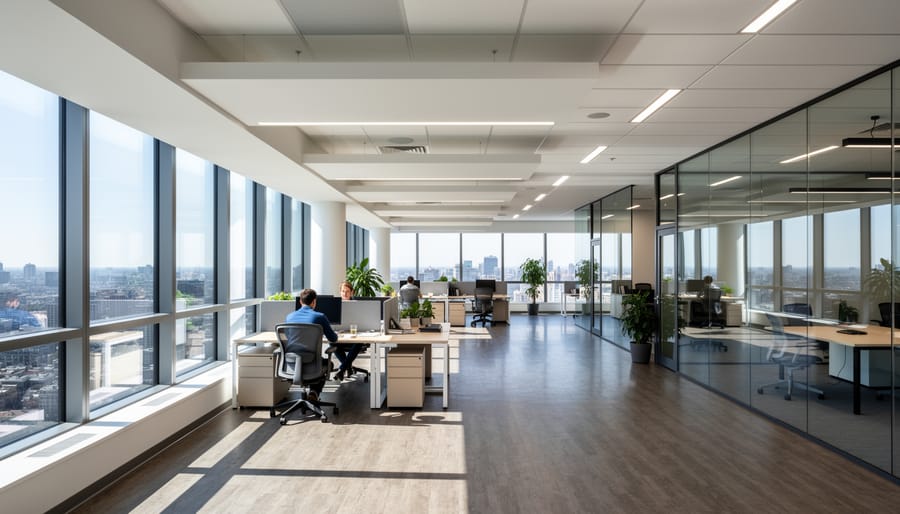
Light shelves represent one of the most effective passive daylighting strategies for commercial and industrial facilities, particularly in spaces requiring consistent illumination beyond the perimeter zones. These horizontal or angled surfaces, typically positioned at or above eye level on south-facing windows, redirect incoming sunlight toward ceiling planes where it diffuses throughout interior areas. The upper portion of the window above the light shelf channels daylight deep into the space, while the lower section provides views and localized task lighting.
The physics behind light shelves is straightforward: highly reflective surfaces with 80-90 percent reflectance values bounce direct sunlight upward at calculated angles, transforming harsh direct beam radiation into ambient illumination. This redirection reduces glare at workstations near windows while simultaneously improving light distribution in areas up to 2.5 times the floor-to-ceiling height from the facade.
For office environments, light shelves demonstrate measurable energy savings by reducing artificial lighting loads during peak daylight hours. A Chicago distribution center installation achieved 34 percent reduction in daytime lighting energy consumption by integrating exterior light shelves with automated dimming controls. Manufacturing facilities benefit similarly, with reflective systems maintaining consistent light levels across production floors without the heat gain associated with increased fenestration.
Implementation considerations include shelf depth, typically 1.5 to 6 feet depending on building latitude and window height, and surface maintenance to preserve reflectivity. When coordinated with building management systems, these passive elements complement rooftop solar installations by reducing overall facility energy demand, improving return on investment for comprehensive renewable energy strategies.
Atria, Clerestories, and Vertical Light Wells
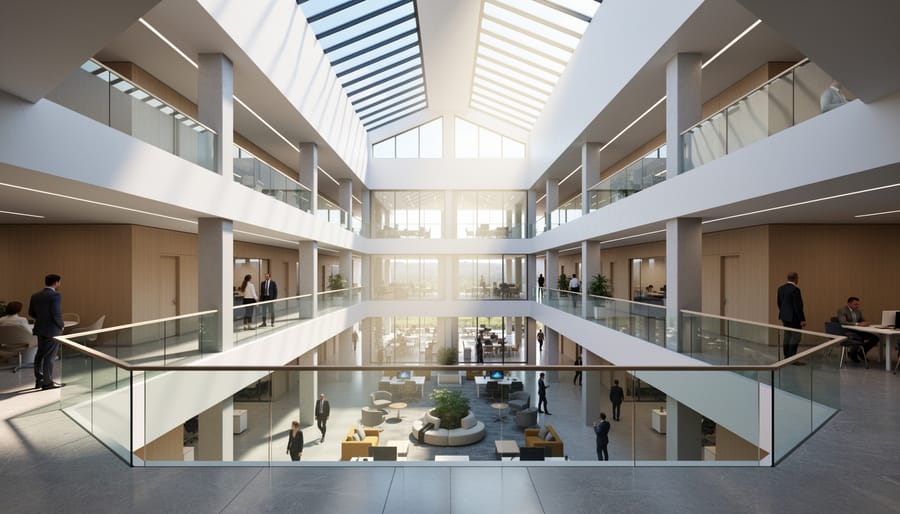
For multi-story commercial buildings and facilities with deep floor plans, atria, clerestories, and vertical light wells provide effective solutions for distributing natural light to interior spaces that would otherwise depend entirely on artificial illumination. These architectural features address a common challenge in large-scale construction: delivering daylight beyond the typical 15-20 foot penetration zone from exterior windows.
Atria serve as central light courts, creating vertical channels that allow daylight to reach multiple floors simultaneously. Modern commercial developments frequently incorporate multi-story atria to reduce lighting loads across entire building sections. Retail centers and corporate headquarters have documented energy savings of 25-40% in lighting costs through strategic atrium design, with the added benefit of creating attractive common spaces that enhance occupant experience.
Clerestories—high-level windows positioned near the roofline—introduce natural light from above while maintaining privacy and wall space for interior functions. Manufacturing facilities and warehouse operations particularly benefit from clerestory systems, which provide consistent, diffused illumination across large floor areas without glare issues that affect productivity.
Vertical light wells function as dedicated shafts that channel daylight from roof level to lower floors. Unlike traditional skylights that illuminate only the top floor, properly designed light wells with reflective interior surfaces can deliver measurable illumination three to four stories down. A distribution center in Rotterdam implemented vertical light wells and reduced daytime artificial lighting requirements by 60% on previously windowless lower levels, achieving payback within four years through energy savings alone. When integrated with rooftop photovoltaic arrays, these features create comprehensive energy strategies that maximize both generation and conservation.
Advanced Glazing and Smart Window Technologies
Modern glazing technologies have transformed daylighting from a passive design consideration into an actively managed system that optimizes both light transmission and thermal performance. Electrochromic glass, commonly known as smart glass, uses low-voltage electrical charges to dynamically tint window surfaces, reducing solar heat gain by up to 70 percent while maintaining natural light levels. This technology allows facilities to minimize cooling loads during peak hours without compromising the visual connection to outdoor environments, delivering measurable reductions in HVAC operating costs.
Prismatic panels and light-redirecting systems represent another advancement in daylighting control. These engineered surfaces use micro-structured patterns to redirect sunlight deeper into building interiors, improving illumination uniformity and reducing reliance on artificial lighting in areas traditionally dependent on electric sources. When integrated with biophilic design principles, these systems enhance occupant wellbeing while supporting energy reduction targets.
Spectrally selective coatings provide a cost-effective alternative for facilities seeking improved daylight performance without active control mechanisms. These coatings filter infrared wavelengths while transmitting visible light, reducing heat gain by 30-50 percent compared to standard glazing. For commercial facilities, this translates to lower cooling demands and extended equipment lifecycle.
The return on investment for advanced glazing technologies typically ranges from five to eight years, with energy savings of 15-25 percent documented in commercial installations. When combined with photovoltaic systems, these technologies create comprehensive energy strategies that address both generation and consumption efficiency.
Measurable Business Benefits: Beyond the Energy Savings
Quantifying Energy Cost Reductions
Well-designed daylighting systems deliver measurable reductions in operational costs, making them a cornerstone of comprehensive energy strategies. Industry data demonstrates that effective daylighting implementation typically reduces electrical lighting loads by 20-60%, with the exact percentage dependent on building orientation, glazing specifications, and control system sophistication.
In commercial facilities, lighting accounts for approximately 25-40% of total electricity consumption. A properly engineered daylighting system in a 10,000 square meter office building can therefore reduce annual electricity costs by $15,000-$35,000, based on standard commercial rates. These figures represent direct lighting savings alone.
The financial benefits extend beyond lighting reduction. Every watt of electrical lighting generates heat that air conditioning systems must remove. Daylighting reduces this cooling load, particularly during peak demand periods when electricity rates are highest. Studies show that for every watt of lighting load eliminated, cooling requirements decrease by approximately 0.25-0.40 watts. This translates to additional HVAC savings of 5-15% in climate-controlled environments.
A documented case from a Melbourne distribution center illustrates these principles. After implementing automated skylights and light shelves, the facility achieved 52% lighting load reduction and 11% decrease in cooling energy, producing combined annual savings of $87,000. The system achieved payback in 4.2 years while improving worker productivity metrics by 8%, demonstrating quantifiable returns across multiple performance indicators.
Productivity and Health ROI
The financial case for daylighting design extends well beyond energy cost reductions. Comprehensive research demonstrates that quality natural lighting directly impacts organizational performance through measurable improvements in employee productivity, health outcomes, and occupational satisfaction.
A landmark study by the Heschong Mahone Group revealed that workers in daylit environments experienced 15% higher productivity rates compared to those in exclusively artificially-lit spaces. This translates to substantial financial returns when calculated across an entire workforce. For a 100-employee facility with an average annual salary of $50,000, a 15% productivity increase represents approximately $750,000 in added value annually—far exceeding typical daylighting system installation costs.
Healthcare benefits further strengthen the return on investment. Research published in the Journal of Clinical Sleep Medicine found that employees with access to natural light received an average of 46 additional minutes of sleep per night, leading to reduced absenteeism and fewer workplace errors. Organizations implementing strategic daylighting report 6-12% reductions in sick leave utilization, directly lowering operational disruptions and healthcare expenses.
Educational facilities demonstrate particularly compelling outcomes. California’s Daylighting in Schools study analyzed 21,000 students across three districts, revealing that students in classrooms with optimal daylighting progressed 20% faster in mathematics and 26% faster in reading compared to those in poorly lit environments. These findings have informed institutional planning decisions worldwide, with forward-thinking administrators recognizing daylighting as infrastructure investment rather than aesthetic enhancement.
Retail environments also benefit measurably. Multiple studies confirm that natural lighting increases customer dwell time and purchasing behavior, with some analyses showing sales increases of 40% in daylit sections compared to artificially-lit areas. When integrated with comprehensive energy strategies, daylighting design delivers compound returns through reduced operational costs, enhanced human performance, and improved organizational outcomes across diverse commercial applications.
Real-World Implementation: Case Studies in Commercial and Government Facilities
Manufacturing Facility: Combining Skylights with Rooftop Solar
A 42,000-square-meter manufacturing facility in Melbourne’s western industrial corridor demonstrates the powerful synergy between natural daylighting and renewable energy generation. The warehouse operations required consistent illumination across production floors while managing substantial electricity costs that exceeded $180,000 annually.
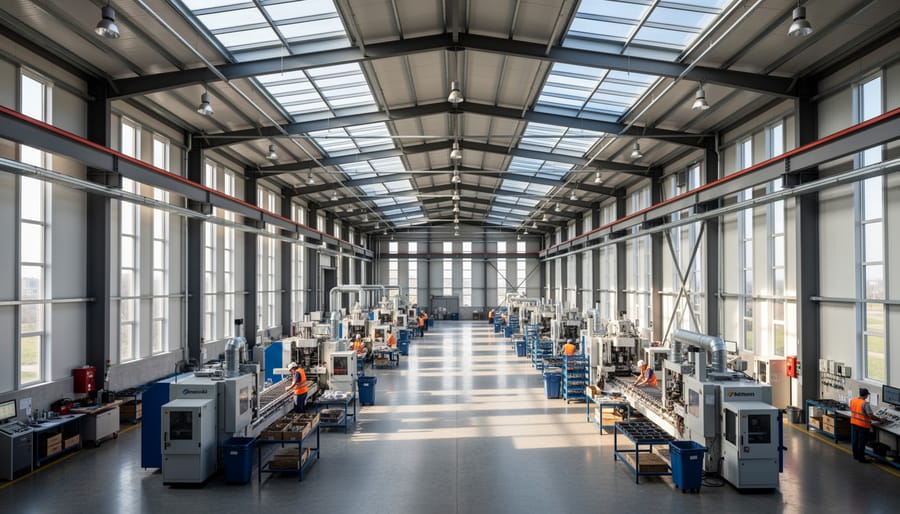
The facility management team implemented a dual-strategy approach combining energy-efficient daylighting with rooftop solar arrays. The design incorporated north-facing clerestory windows positioned strategically along the roofline, allowing diffused natural light to penetrate deep into the warehouse interior without creating heat gain issues. Advanced light-guiding systems featuring prismatic panels and reflective ducts redirected sunlight to previously dark zones, particularly in areas where equipment created shadows.
Simultaneously, the facility installed a 500kW solar photovoltaic system across available roof sections. The integration required careful planning to ensure solar panels didn’t obstruct clerestory windows while maximizing exposure to northern sun. Engineers positioned PV arrays on southern roof slopes and flat sections, maintaining optimal angles for both natural light entry and energy generation.
The combined implementation delivered measurable results within 18 months. Natural daylighting reduced artificial lighting requirements by 68 percent during operational hours, while solar PV system optimization provided 73 percent of remaining electricity needs. The facility achieved 89 percent energy independence during peak production periods.
Financial returns exceeded projections, with combined energy savings reaching $156,000 annually. The payback period for both systems calculated at 6.2 years, significantly shorter than standalone solar installations. Employee productivity metrics improved by 12 percent, attributed to better working conditions under natural illumination. This case study validates the strategic value of integrated daylighting and solar approaches for large-scale commercial operations.
Government Building Retrofit: Daylighting Meets Energy Goals
The Riverside Municipal Center in Ontario provides a compelling demonstration of how daylighting design achieves measurable sustainability goals during building renovations. When the 45,000-square-foot facility underwent renovation in 2021, project managers faced dual mandates: reduce energy consumption by 30 percent and meet provincial green building standards while working within a constrained municipal budget.
The design team implemented a comprehensive daylighting strategy centered on light shelves, clerestory windows, and strategically positioned skylights with advanced glazing. These elements were carefully calculated using photometric analysis to ensure optimal light distribution throughout workspaces, minimizing reliance on artificial lighting during daylight hours.
The results exceeded initial projections. Lighting energy consumption decreased by 42 percent in the first operational year, translating to annual savings of $28,000. Employee satisfaction surveys revealed a 35 percent improvement in workplace comfort ratings, with staff reporting reduced eye strain and increased alertness. The facility achieved LEED Gold certification, fulfilling sustainability requirements while demonstrating fiscal responsibility to taxpayers.
Critical to the project’s success was the integration of automated dimming controls that adjusted artificial lighting based on available natural light levels. This technology maximized energy savings during peak daylight hours while maintaining consistent illumination standards for task performance. The building management system tracks real-time energy data, providing transparent documentation of operational cost reductions.
The Riverside project illustrates how government facilities can leverage daylighting renovations to simultaneously address multiple objectives: regulatory compliance, operational efficiency, and occupant wellbeing. For municipal decision-makers evaluating building improvements, this case demonstrates that daylighting investments deliver quantifiable returns while advancing environmental stewardship goals. The approach offers a replicable model for public sector facilities seeking cost-effective pathways to energy reduction targets.
Design Considerations for Maximum Performance
Climate and Geographic Factors
Geographic location fundamentally shapes daylighting system design and performance expectations. Facilities at higher latitudes, such as those in Northern Europe, experience dramatic seasonal variations in daylight availability—from extended summer days to limited winter sun exposure. This necessitates dynamic daylighting strategies that maximize light capture during shorter winter months while managing potential glare and heat gain during summer.
Local weather patterns equally influence system selection. Regions with frequent cloud cover, like coastal areas in the United Kingdom, benefit from diffuse daylighting systems that effectively capture scattered light, whereas facilities in sunnier Mediterranean climates require robust glare control and solar heat management. Climate considerations extend to temperature extremes—systems in colder regions must minimize heat loss through glazing, while warmer locations prioritize thermal barriers and reflective technologies.
Seasonal variations demand flexible design approaches. A manufacturing facility in Sweden, for example, implemented adjustable louvered skylights and automated shading that respond to sun angle changes throughout the year, maintaining consistent interior illumination while reducing HVAC loads by 23 percent annually. Understanding these geographic and climatic factors enables facility managers to select appropriate technologies—from tubular daylighting devices to advanced electrochromic glazing—that deliver optimal performance and return on investment specific to their location.
Balancing Glare Control and Light Penetration
Effective daylighting design requires balancing two critical objectives: eliminating glare that disrupts productivity while ensuring adequate natural light reaches occupied spaces. This balance directly impacts employee comfort, operational efficiency, and energy consumption in commercial facilities.
Light shelves provide a practical solution by redirecting incoming daylight toward ceilings, distributing illumination deeper into buildings while blocking direct sun from eye level. In a recent office retrofit in Amsterdam, light shelves reduced glare complaints by 73 percent while extending daylight penetration 40 percent further into the workspace. Automated shading systems represent another proven approach, using sensors to adjust blinds or louvers throughout the day based on sun position and interior light levels. These systems maintain optimal illumination without manual intervention, reducing electric lighting demand by up to 35 percent in typical applications.
Glazing selection significantly impacts glare control. High-performance glass with low visible light transmission coefficients prevents excessive brightness while maintaining color rendering quality essential for retail environments where product appearance matters. Strategic window placement, particularly clerestory windows and north-facing glazing, delivers consistent illumination without the harsh direct sunlight common in south and west exposures. These technical strategies work synergistically with photovoltaic installations, creating comprehensive energy solutions that maximize both daylight utilization and renewable electricity generation.
Integration with Building Management Systems
Modern building management systems (BMS) transform daylighting from a passive design feature into a dynamic energy optimization tool. Advanced photosensors continuously monitor natural light levels throughout the facility, automatically dimming or switching off artificial lighting when sufficient daylight is available. This seamless integration can reduce lighting energy consumption by 30-60% while maintaining consistent illumination levels for occupant comfort and productivity.
These automated controls extend beyond lighting to coordinate with HVAC systems, adjusting heating and cooling outputs based on solar heat gain through glazed areas. By sharing real-time data across building systems, the BMS prevents energy waste from competing systems—for instance, preventing simultaneous heating and cooling in daylit zones. Sophisticated algorithms account for seasonal variations, occupancy patterns, and weather forecasts to optimize performance continuously.
For commercial facilities combining daylighting with photovoltaic installations, integrated BMS platforms provide comprehensive energy management dashboards. Facility managers gain visibility into both natural light utilization and solar power generation, enabling data-driven decisions that maximize return on investment. Implementation typically achieves payback periods of 2-4 years through utility cost reductions and operational efficiencies, making smart daylighting integration a financially prudent component of comprehensive energy strategies.
Planning Your Daylighting Investment: What Decision-Makers Need to Know
Assessment and Feasibility Analysis
Evaluating your building’s daylighting potential requires a systematic approach combining professional expertise and advanced analytical tools. Begin with a comprehensive site assessment conducted by qualified lighting designers or architects who specialize in natural light integration. These professionals will analyze your building’s orientation, surrounding obstructions, existing window configurations, and interior spatial layouts to determine optimization opportunities.
Modern simulation software provides accurate predictions of daylight distribution throughout different seasons and times of day. Tools such as Radiance, DIVA-for-Rhino, and AGi32 enable detailed modeling of light levels, glare potential, and energy savings projections. These platforms calculate metrics including daylight autonomy and spatial daylight autonomy, which quantify the percentage of occupied hours meeting illumination requirements through natural light alone.
Professional assessments should include thermal impact analysis to ensure daylighting strategies don’t create excessive heat gain that undermines HVAC efficiency. Request detailed ROI calculations that factor in reduced artificial lighting costs, productivity improvements from enhanced visual comfort, and potential LEED certification benefits. Many assessments reveal that strategic daylighting improvements deliver payback periods of three to seven years, particularly when coordinated with comprehensive energy management strategies including photovoltaic installations.
Coordinating with Solar PV Installation
When planning facility upgrades, coordinating daylighting improvements with solar photovoltaic installations creates significant operational and financial advantages. The optimal approach involves implementing daylighting enhancements before or concurrent with solar panel deployment, as reduced lighting loads directly impact system sizing requirements and initial investment costs.
Energy audits conducted prior to solar installation should account for planned daylighting improvements. A manufacturing facility in Queensland reduced its projected solar array size by 18% after implementing tubular daylighting devices and reflective interior surfaces, lowering capital expenditure while maintaining energy independence targets. This sequencing allowed for accurate load calculations and appropriate system specifications.
The coordination benefits extend beyond sizing considerations. Construction schedules that align both projects minimize disruption to business operations and reduce labor costs through shared mobilization. Roof access requirements, structural assessments, and electrical work can be consolidated, streamlining permitting processes and reducing timeline delays.
From a financial perspective, bundling these integrated solar solutions often improves return on investment metrics. Combined projects may qualify for enhanced incentive programs and demonstrate greater emissions reductions, strengthening sustainability credentials for stakeholder reporting.
Facility managers should engage solar consultants early in the daylighting design phase to identify synergies. This collaborative approach ensures roof penetrations, structural loads, and electrical infrastructure support both systems effectively. The result is a comprehensive energy strategy that maximizes natural resource utilization while optimizing photovoltaic performance and financial outcomes.
Daylighting design represents a powerful complement to solar photovoltaic systems, creating a comprehensive energy strategy that addresses both generation and consumption. While solar panels capture energy from the sun, strategic daylighting reduces the demand for that energy by minimizing artificial lighting requirements during daylight hours. This dual approach maximizes return on investment and accelerates payback periods for building owners committed to sustainability and operational efficiency.
The integration of daylighting and solar PV systems delivers measurable results across multiple performance metrics. Facilities implementing both technologies typically see 30-50% reductions in lighting costs while simultaneously generating renewable energy to offset remaining electrical demands. This combination creates resilience against energy price volatility and positions organizations as environmental leaders within their industries.
Real-world applications demonstrate the viability of this integrated approach across diverse building types. Manufacturing facilities, educational institutions, and commercial properties have successfully implemented coordinated solar and daylighting strategies, achieving LEED certification and significant operational savings. These case studies validate the business case for comprehensive solar energy strategies that extend beyond rooftop panels.
For facility managers and decision-makers, now is the time to evaluate your buildings’ potential for integrated solar solutions. Conduct a thorough assessment of your facility’s solar exposure, energy consumption patterns, and daylighting opportunities. Consider engaging experienced solar professionals who can analyze both photovoltaic potential and natural lighting optimization. The combination of these technologies represents not just an environmental commitment, but a strategic investment in long-term operational efficiency and financial performance.