
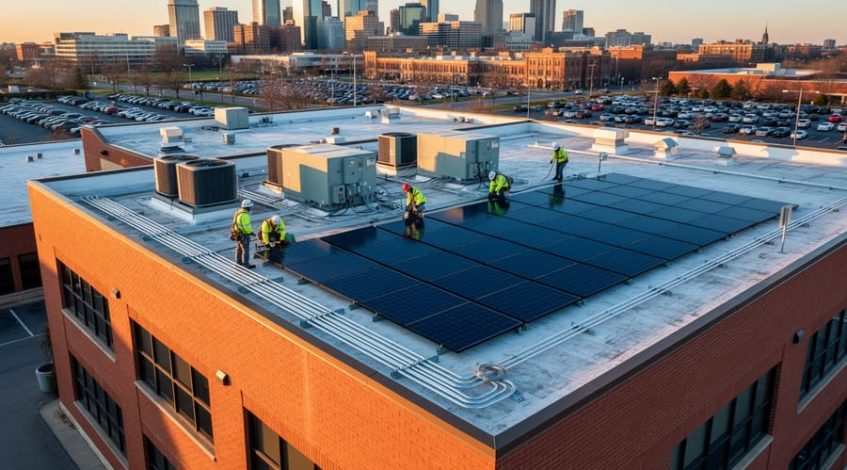
Building retrofit for solar integration delivers measurable returns while extending asset life and meeting sustainability mandates. The U.S. commercial building sector contains over 90 billion square feet of existing structures, representing a $1.3 trillion opportunity for energy efficiency improvements and renewable energy deployment. Unlike new construction where solar capabilities integrate seamlessly during design phases, retrofits demand strategic assessment of structural capacity, electrical infrastructure compatibility, and financial engineering to achieve positive ROI.
Commercial property owners face distinct challenges when adding solar systems to existing buildings. Roof age and load-bearing capacity determine whether structures can support photovoltaic arrays without costly reinforcement. Electrical service upgrades may require utility coordination and permitting that extends project timelines. Legacy HVAC systems might lack the controls infrastructure needed for optimal energy management. Yet despite these complexities, successful retrofits typically achieve 15-25% energy cost reductions within 3-7 year payback periods, with projects in high-incentive markets performing even better.
The financial case strengthens when combining solar installation with planned roof replacements, creating bundled capital improvements that qualify for accelerated depreciation, federal investment tax credits, and state-level incentives. Forward-thinking facility managers now view building retrofits not as reactive maintenance but as strategic investments that enhance property valuations, reduce operational expenses, and demonstrate corporate environmental commitments. The question is no longer whether to retrofit, but how to structure projects that maximize technical performance and financial returns.
What Building Retrofit Means in Solar Architecture
The Difference Between New-Build and Retrofit Solar Projects
New-build solar projects offer significant advantages, including integrated structural planning, optimized roof orientations, and pre-designed electrical systems that accommodate photovoltaic arrays from inception. Architects can specify reinforced roof structures, ideal panel angles, and seamless aesthetic integration during the design phase, often resulting in lower installation costs and enhanced system performance.
Retrofit solar projects, conversely, require comprehensive assessment of existing building conditions. Structural engineers must evaluate roof load capacity, which may necessitate reinforcement investments. Older electrical infrastructure often requires upgrades to handle increased capacity, and existing architectural features may limit optimal panel placement. However, retrofits present compelling opportunities that new construction cannot match: immediate application to the vast existing building stock, potential qualification for specialized tax incentives and rebates targeting energy efficiency upgrades, and demonstrated commitment to sustainability that enhances corporate reputation.
The financial case for retrofits remains strong despite additional complexity. While installation costs may increase 10-15% compared to new construction, existing buildings benefit from established cash flows that can immediately offset energy expenses, accelerating return on investment. Moreover, retrofit projects address real-time operational costs rather than projected savings, providing tangible financial relief from day one.
Key Components of a Solar Building Retrofit
A successful solar building retrofit requires careful attention to several interconnected components that work together to deliver optimal performance and long-term value.
The foundation begins with comprehensive structural analysis to determine load-bearing capacity and assess whether existing roofing systems can support additional solar arrays. This evaluation identifies any necessary reinforcements before installation commences, preventing costly modifications later. Professional engineers evaluate factors including roof age, material composition, and weight distribution to ensure structural integrity throughout the system’s 25-30 year lifespan.
Electrical system upgrades represent another critical element, as older buildings often require modernization to accommodate solar power generation. This includes evaluating existing electrical panels, upgrading inverters, and installing appropriate disconnect switches and monitoring equipment. The integration must comply with current electrical codes while ensuring seamless power flow between solar generation, grid connection, and building consumption.
Panel mounting systems vary based on roof type, building design, and aesthetic considerations. Building-integrated solar technology offers alternatives to traditional rack-mounted panels, particularly for facilities where visual impact matters.
Finally, integration with existing building management systems enables real-time monitoring and optimization of energy production and consumption. Modern systems provide detailed analytics on performance metrics, allowing facility managers to track return on investment and identify opportunities for further efficiency improvements. This integration ensures that solar retrofits become seamlessly incorporated into daily operations rather than standalone additions.
Why Commercial Buildings Are Ideal Candidates for Solar Retrofits
Building Types That Benefit Most
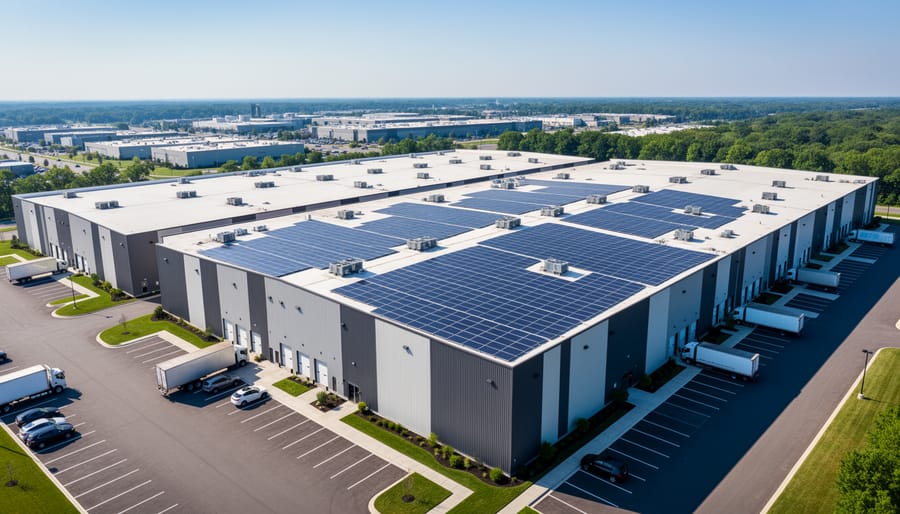
Certain building types demonstrate particularly strong returns on investment and operational benefits when retrofitted with solar systems. Warehouses and distribution centers rank among the most advantageous candidates, offering extensive, unobstructed roof surfaces ideal for large-scale solar arrays. These facilities typically operate during daylight hours when solar production peaks, creating optimal alignment between generation and consumption. A 250,000-square-foot warehouse can potentially accommodate systems generating 1-2 megawatts of power, significantly reducing utility expenses while maximizing available space.
Manufacturing facilities present compelling retrofit opportunities due to their substantial energy demands and predictable consumption patterns. Solar integration can directly offset production costs during operational hours, with excess capacity stored or sold back to the grid. The consistent energy profiles of manufacturing operations enable accurate ROI projections, typically ranging from 5-8 years depending on location and incentives.
Office buildings benefit from solar retrofits through reduced operating costs and enhanced corporate sustainability credentials. Modern mounting systems accommodate various roof configurations without compromising structural integrity, while visible installations strengthen brand reputation among environmentally conscious stakeholders.
Government institutions increasingly pursue solar retrofits to meet renewable energy mandates while demonstrating fiscal responsibility. Public buildings offer high visibility, extended operational lifespans, and stable funding mechanisms that support long-term infrastructure investments.
Retail centers capitalize on solar retrofits through immediate utility savings and customer appeal. Large parking structures provide additional mounting opportunities through canopy systems, creating dual-purpose installations that generate power while protecting vehicles and enhancing the shopping experience.
The ROI Advantage of Retrofitting Versus Rebuilding
Retrofitting existing buildings for solar energy delivers compelling financial advantages over new construction by leveraging existing structural investments. Rather than demolishing and rebuilding, retrofits preserve the substantial capital already invested in foundations, structural systems, and building envelopes while adding modern energy generation capabilities.
The financial case for retrofitting centers on substantially lower upfront costs. While new construction requires complete building expenses plus solar integration, retrofits typically cost 40-60% less by focusing exclusively on solar system installation and necessary structural reinforcements. This reduced capital requirement translates directly to faster payback periods, typically ranging from 5-8 years for commercial installations compared to 10-15 years when solar costs are bundled into new construction financing.
Long-term savings projections demonstrate the cumulative value of retrofitting. A typical 100,000 square foot commercial facility can expect annual energy savings between $75,000 and $150,000 after solar retrofit, depending on regional electricity rates and system capacity. Over a 25-year system lifespan, this represents $1.8 million to $3.75 million in avoided energy costs, far exceeding the initial retrofit investment of $500,000 to $1 million.
Additionally, retrofits maintain business continuity by allowing phased implementation. Facilities remain operational during installation, avoiding the revenue loss associated with relocation during new construction. Tax incentives further enhance returns, with the federal Investment Tax Credit covering 30% of installation costs and accelerated depreciation providing additional write-offs.
The preservation of embodied energy in existing structures also prevents the environmental and financial costs of demolition and material disposal, making retrofits both economically prudent and environmentally responsible. For organizations evaluating infrastructure investments, retrofitting represents the optimal balance of cost efficiency, sustainability, and operational practicality.
Pre-Retrofit Assessment: What Your Building Needs
Structural Integrity and Load-Bearing Capacity
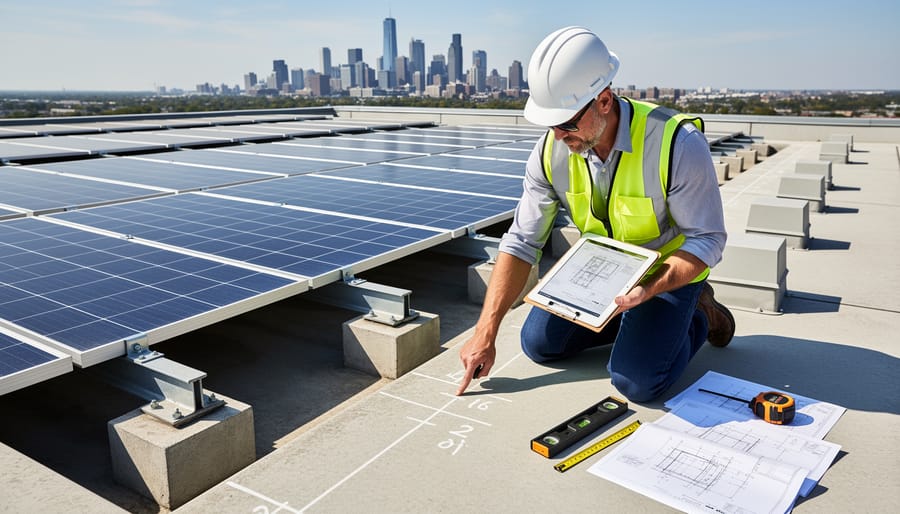
Before committing to a solar retrofit project, conducting a comprehensive structural assessment is essential to determine whether your building can safely support the additional weight of photovoltaic systems. The age of your structure plays a significant role in this evaluation, as older buildings may have experienced material degradation or were designed to different code standards than modern facilities.
A typical commercial solar array adds approximately 3-5 pounds per square foot to your roof’s load, though this varies based on mounting system type and panel specifications. Your structural engineer will evaluate existing load-bearing capacity against current building codes, accounting for static loads from the panels themselves and dynamic loads from wind, snow accumulation, and seismic activity in applicable regions. Buildings constructed before 1980 often require more extensive evaluation due to different engineering practices and potential material deterioration.
Roof condition directly impacts installation feasibility and project economics. If your roof membrane has fewer than 10 years of remaining lifespan, industry best practice recommends replacement before solar installation to avoid costly panel removal and reinstallation. The existing roof structure, including trusses, joists, and decking, must demonstrate sufficient capacity for the anticipated 25-30 year operational life of the solar system.
When structural reinforcement becomes necessary, solutions range from targeted beam strengthening to comprehensive frame upgrades. While reinforcement adds upfront costs, typically between $5-15 per square foot, it ensures system safety and can extend your building’s overall service life. Many facility managers find that combining roof replacement with solar installation creates operational efficiencies and attractive returns on investment through simultaneous project execution.
Electrical System Compatibility
Evaluating your building’s electrical infrastructure is a critical prerequisite for successful solar integration. Begin with a comprehensive assessment of your existing electrical panel’s capacity, measured in amperes. Most solar retrofits require panels rated at minimum 200 amps, though larger commercial installations often necessitate 400-amp or higher capacity. Buildings with older, undersized panels will require upgrades to accommodate solar generation safely.
The condition and adequacy of existing wiring demand close examination. Aging wiring may not meet current electrical codes or handle the bidirectional power flow inherent in grid-connected solar systems. Your electrical contractor should verify wire gauge appropriateness, conduit integrity, and connection quality throughout the distribution system. Buildings constructed before 1980 particularly warrant thorough inspection for aluminum wiring or outdated insulation materials.
Grid interconnection requirements vary by utility provider and installation size. Most jurisdictions mandate dedicated disconnect switches, net metering equipment, and utility-grade monitoring systems. Understanding your solar panel configurations early helps determine electrical specifications accurately.
A facility manager in Melbourne recently discovered their 1970s-era building required complete panel replacement and service upgrade, adding three weeks to their project timeline. Proactive electrical assessment prevents such delays and enables accurate budgeting for necessary infrastructure improvements before solar installation begins.
Energy Consumption Profiling
A comprehensive energy consumption profile serves as the foundation for successful solar retrofit design. This analysis examines 12-24 months of utility data to identify baseline consumption patterns, seasonal variations, and peak demand periods that directly influence system specifications. Understanding when your facility consumes the most energy—whether during peak production hours or throughout extended operational shifts—determines optimal solar array sizing and battery storage requirements.
Detailed consumption profiling reveals opportunities beyond simple kilowatt-hour replacement. For instance, a manufacturing facility experiencing demand charges from afternoon production peaks can strategically size their solar system to offset these expensive periods, potentially reducing utility costs by 40-60%. Similarly, commercial buildings with consistent daytime operations align perfectly with solar generation curves, maximizing self-consumption and return on investment.
Advanced metering infrastructure and submetering capabilities provide granular insights into departmental or equipment-level consumption, enabling precise load matching and identifying efficiency improvements that complement solar installation. This data-driven approach ensures systems are neither oversized—wasting capital—nor undersized—missing savings opportunities. Professional energy audits typically cost between $3,000-$10,000 but consistently deliver 15-25% improvements in system performance through informed design decisions that align solar generation with actual facility demand profiles.
Solar Retrofit Design Strategies for Different Building Types
Flat Commercial Roofs: Ballasted and Penetrating Systems
Flat commercial roofs present unique opportunities for solar installations through two primary mounting approaches: ballasted and penetrating systems. Ballasted systems use weighted trays or blocks to secure solar arrays without roof penetrations, making them ideal for buildings where warranty preservation is essential or structural modifications are restricted. These systems typically require adequate load-bearing capacity and offer simplified installation with reduced waterproofing concerns.
Penetrating systems mechanically attach mounting hardware directly to the roof structure, providing superior wind resistance and stability while minimizing weight requirements. Though they require professional waterproofing at attachment points, these systems often prove more cost-effective for long-term installations and perform better in high-wind zones.
Critical design considerations include tilt angle optimization, which balances energy production against wind loading and available roof space. Most flat-roof installations use 5-15 degree tilts to maximize output while maintaining aerodynamic profiles. Engineers must account for local wind codes, snow loads, and maintenance access pathways between array rows.
Facility managers should evaluate existing roof conditions, remaining warranty periods, and planned re-roofing schedules when selecting mounting systems. Coordinating solar installation with roof replacement often provides the most economical approach, allowing optimal system integration while extending both roof and solar asset lifecycles. Professional structural assessments ensure installations meet all safety requirements while maximizing return on investment.
Historic and Heritage Buildings: Preserving Character While Adding Solar
Historic buildings present unique opportunities for solar retrofits when approached with careful planning and respect for architectural integrity. Property owners must balance preservation requirements with modern energy goals, making strategic technology selection essential.
Discreet placement options prove particularly effective for heritage structures. Rooftop installations can utilize less-visible rear slopes or courtyards, while ground-mounted arrays on adjacent property minimize visual impact on the primary structure. Building-integrated photovoltaics offer solutions that replicate traditional materials, such as solar tiles matching existing roofing or custom panels designed to complement facades.
Successful solar heritage building integration requires collaboration with heritage consultants and local preservation boards early in the planning process. Many jurisdictions now recognize the importance of sustainability upgrades and have established guidelines specifically for renewable energy additions to protected structures.
Case studies demonstrate feasibility across various building types. A Victorian-era commercial property in Melbourne successfully integrated low-profile panels on secondary roof sections, achieving 40% energy offset while maintaining street-facing aesthetics. Similarly, a heritage-listed industrial facility utilized courtyard arrays and battery storage to reduce operating costs without compromising historical character.
Technical assessments should evaluate structural capacity for panel weight, electrical system compatibility, and reversibility of installations. Working with experienced solar architects ensures solutions meet both preservation standards and performance objectives, creating sustainable outcomes that honor architectural legacy while advancing energy efficiency goals.
Industrial Facilities: Maximizing Large-Scale Solar Integration
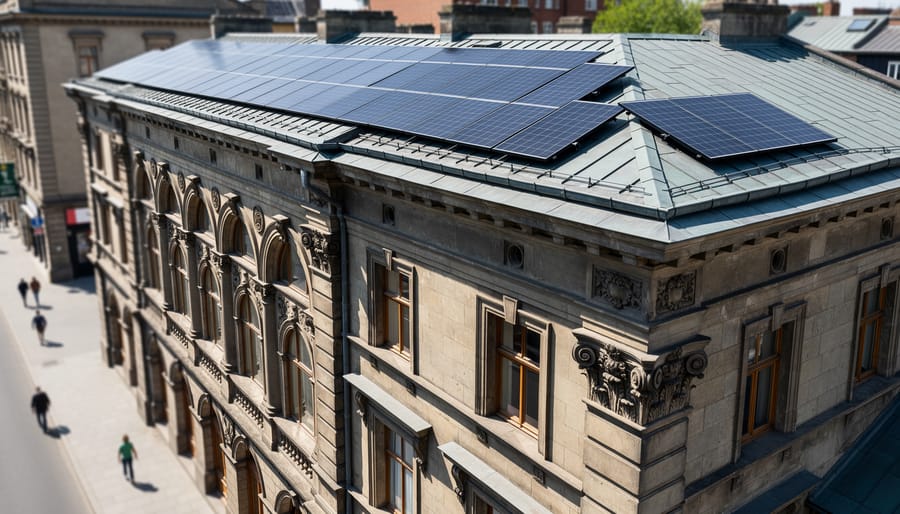
Industrial facilities represent exceptional opportunities for solar integration due to their expansive roof areas and substantial daytime energy consumption. Warehouses and manufacturing buildings typically feature 50,000 to 500,000 square feet of unobstructed roofing, capable of hosting megawatt-scale solar arrays that can offset 40-70% of operational electricity costs.
The primary consideration for these facilities involves structural load capacity assessment. While metal roofing systems are common in industrial construction, many were not originally engineered for additional photovoltaic loads averaging 3-5 pounds per square foot. Professional structural evaluations identify whether reinforcement is necessary or if lighter thin-film alternatives provide viable solutions without costly modifications.
High-bay manufacturing environments benefit from strategic system design that addresses both roof-mounted arrays and ground-mount installations when available land exists. A Midwest automotive parts manufacturer recently completed a 2.8 MW retrofit combining both approaches, achieving a four-year payback period through federal tax credits and accelerated depreciation benefits.
Electrical infrastructure compatibility proves critical in industrial retrofits. Facilities operating heavy machinery often require three-phase power systems with specialized inverter configurations to ensure seamless grid integration without disrupting production operations. Energy storage integration increasingly complements these installations, allowing facilities to shift solar generation to align with peak demand periods and reduce demand charges that constitute 30-50% of industrial electricity expenses.
Production scheduling alignment with solar generation patterns enables manufacturers to optimize energy utilization, running high-consumption processes during peak solar hours to maximize direct consumption and minimize grid dependency.
Overcoming Common Retrofit Challenges
Addressing Roof Age and Condition Issues
Roof condition represents a critical decision point in solar retrofit planning, as photovoltaic systems typically carry 25-30 year warranties that should align with underlying roof longevity. A comprehensive roof assessment should occur early in project evaluation, examining remaining service life, structural integrity, and waterproofing condition. When existing roofs have less than 10-15 years of remaining life, coordinating replacement with solar installation typically delivers superior long-term economics despite higher upfront costs.
The decision framework involves comparing two scenarios: installing solar immediately on aging infrastructure versus deferring installation until after roof replacement. While sequential projects incur higher total costs due to mobilization redundancies and potential system removal fees, immediate installation may prove advantageous for roofs with 15-20 years remaining life, allowing owners to capture solar incentives and energy savings earlier. Conversely, roofs requiring replacement within five years should undergo renovation first, avoiding costly panel removal and reinstallation.
Financial optimization strategies include bundling contracts when feasible, negotiating warranty overlaps between roofing and solar contractors, and exploring whether solar providers offer integrated roofing services. Several manufacturers now provide combination proposals that streamline procurement while ensuring compatible warranties. This coordinated approach reduces project risk, minimizes building downtime, and creates clear accountability for long-term performance.
Working Within Building Code and Zoning Restrictions
Navigating regulatory requirements represents a critical phase in any building retrofit project. Before installation begins, facility managers must secure appropriate permits from local building departments and potentially electrical utilities. Most jurisdictions require structural engineering assessments to verify that existing roofs can support additional solar panel loads, particularly for older commercial buildings not originally designed for such applications.
Zoning restrictions often dictate panel placement, height limitations, and setback requirements from property lines. In historic districts or areas with strict aesthetic guidelines, additional approvals may be necessary. Many municipalities have established streamlined permitting processes specifically for solar installations, reducing approval timeframes from months to weeks in some cases.
Recent solar ordinances in progressive cities offer expedited reviews and fee reductions for commercial retrofits meeting specific criteria. However, interconnection agreements with utility providers remain a distinct requirement separate from building permits. These agreements establish technical specifications for connecting your system to the grid and clarify net metering arrangements.
Working with experienced solar contractors familiar with local regulations significantly reduces project delays. Many successful retrofits benefit from pre-application consultations with building departments, identifying potential compliance issues before formal submission. Understanding these regulatory frameworks early in your planning process ensures realistic timelines and budgets while avoiding costly redesigns.
Minimizing Operational Disruption During Installation
Successful retrofit implementations require strategic planning to minimize disruption to daily operations. Phased installation approaches allow businesses to maintain functionality while upgrading their facilities. This methodology divides the project into manageable segments, enabling work to proceed during off-hours, weekends, or periods of reduced activity.
Conducting thorough pre-installation assessments identifies potential operational conflicts and allows teams to develop mitigation strategies. Coordination between retrofit contractors and facility management ensures clear communication channels and established protocols for addressing urgent building needs during construction phases.
Safety protocols remain paramount throughout the installation process. Establishing designated work zones, implementing proper signage, and maintaining clear access routes protects both building occupants and installation crews. For occupied buildings, creating temporary barriers and scheduling noise-intensive activities during low-traffic periods demonstrates consideration for ongoing business activities.
A notable manufacturing facility in Ohio completed a comprehensive solar retrofit while maintaining full production capacity. By scheduling rooftop installations during second shift operations and coordinating electrical tie-ins during planned maintenance windows, the company experienced zero downtime and achieved operational status within projected timelines. This systematic approach demonstrates that strategic planning transforms complex retrofits into manageable projects with measurable business continuity.
Real-World Solar Retrofit Applications
Manufacturing Facility Energy Independence
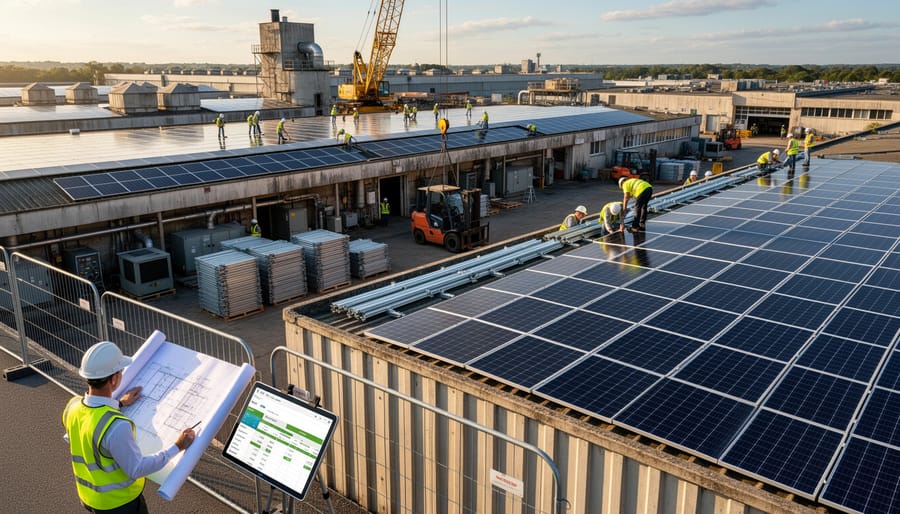
A mid-sized automotive parts manufacturing facility in Ohio exemplifies the transformative potential of comprehensive solar retrofitting. The 85,000-square-foot facility faced mounting energy costs exceeding $180,000 annually, prompting management to explore renewable solutions without disrupting ongoing operations.
The retrofit project integrated a 500-kilowatt rooftop solar array with a 200-kilowatt-hour battery storage system, strategically designed around the building’s existing mechanical systems and structural capacity. Engineering assessments confirmed the roof could support the additional load with minimal reinforcement, reducing preliminary costs by 18 percent.
Implementation occurred in phases over six months, maintaining full production schedules. The solar installation now generates approximately 625,000 kilowatt-hours annually, covering 78 percent of the facility’s energy needs. During peak production hours, excess generation flows to the battery system, providing backup power and demand charge management.
Financial performance exceeded projections, with energy costs declining by $142,000 in the first year. The project achieved a 6.2-year payback period when factoring in federal tax incentives and state renewable energy credits. Beyond cost savings, the facility reduced its carbon footprint by 420 metric tons annually while enhancing resilience against grid disruptions. This case demonstrates how industrial retrofits can deliver substantial operational and environmental benefits through strategic planning and phased implementation.
Government Institution Leading by Example
The Denver Federal Building exemplifies how government institutions can lead sustainability initiatives while demonstrating fiscal responsibility. This 700,000-square-foot facility underwent a comprehensive retrofit in 2015, incorporating a 375-kilowatt rooftop solar array alongside enhanced insulation, LED lighting systems, and upgraded HVAC controls. The integrated approach reduced energy consumption by 42 percent annually.
The solar installation generates approximately 450,000 kilowatt-hours yearly, offsetting a significant portion of the building’s electrical demand. Combined with other efficiency measures, the retrofit saves taxpayers an estimated $750,000 annually in operational costs. The project achieved a payback period of 9.7 years, well within the 25-year warranty period of the photovoltaic panels.
Beyond financial returns, the retrofit demonstrates measurable environmental impact with carbon emissions reduced by 320 metric tons annually. The project utilized performance contracting to eliminate upfront capital requirements, allowing energy savings to fund the improvements over time.
This case illustrates how public sector buildings can implement solar retrofits without burdening government budgets. The Denver Federal Building serves as a replicable model for other institutions seeking to modernize aging infrastructure while advancing sustainability goals and delivering long-term value to constituents.
Financial Incentives and Support for Building Retrofits
Navigating the financial landscape of commercial solar retrofits has become significantly more accessible through diverse funding mechanisms designed to accelerate clean energy adoption. Understanding these opportunities is essential for optimizing project economics and achieving faster returns on investment.
The federal Investment Tax Credit (ITC) remains the cornerstone incentive, currently offering a 30% tax credit on eligible solar installation costs through 2032. This substantial reduction in upfront capital requirements dramatically improves project feasibility for commercial property owners. Additionally, the Modified Accelerated Cost Recovery System (MACRS) allows businesses to depreciate solar installations over five years, further enhancing tax benefits and cash flow positions.
State and local governments provide complementary incentive programs that vary by jurisdiction. Many states offer performance-based incentives, paying building owners based on actual energy production over extended periods. Property Assessed Clean Energy (PACE) financing programs enable property owners to finance solar retrofits through property tax assessments, with repayment periods extending up to 25 years. This approach eliminates upfront costs while allowing payments through existing tax bills.
Utility companies frequently administer rebate programs and net metering policies that compensate commercial facilities for excess energy fed back into the grid. These mechanisms create additional revenue streams that accelerate payback periods. Green banks and specialized lenders now offer competitive financing products specifically tailored to renewable energy projects, including low-interest loans and power purchase agreements (PPAs).
For public sector buildings and nonprofit organizations, federal grant programs through agencies like the Department of Energy provide direct funding opportunities. The recently expanded Inflation Reduction Act includes provisions for direct payment options, making tax credits accessible to organizations without sufficient tax liability.
Commercial building owners should conduct comprehensive financial analyses incorporating available incentives. Case studies demonstrate that combining multiple funding mechanisms can reduce net project costs by 50-70%, transforming typical 7-10 year payback periods into 3-5 year returns while simultaneously increasing property values and demonstrating environmental leadership.
Planning Your Building’s Solar Retrofit Journey
Selecting Accredited Installation Partners
Selecting the right installation partner significantly impacts your retrofit project’s success and long-term performance. Begin by verifying that potential contractors hold NABCEP (North American Board of Certified Energy Practitioners) certification, the industry’s gold standard for solar professionals. Request documentation of their commercial retrofit experience, specifically projects involving structural assessments and complex electrical integrations similar to your facility’s requirements.
Evaluate their portfolio by examining at least three completed commercial retrofits, focusing on system size, building type, and operational performance data. Strong candidates should provide verifiable references from facility managers who can discuss project timeline adherence, post-installation support, and actual versus projected energy production.
Confirm adequate licensing, bonding, and insurance coverage for commercial installations in your jurisdiction. Review their partnerships with reputable equipment manufacturers and inquire about warranty administration processes. Experienced retrofit specialists will conduct thorough preliminary assessments before providing proposals, including structural load calculations, electrical infrastructure evaluations, and shading analysis.
Request detailed project timelines, safety protocols, and contingency plans for addressing unexpected structural or electrical challenges. The ideal partner demonstrates transparent communication, provides comprehensive documentation, and offers ongoing monitoring services to ensure your system maintains optimal performance throughout its operational lifetime.
Timeline Expectations and Project Milestones
Building retrofit projects typically require 12 to 24 months from initial assessment to full commissioning, though timelines vary significantly based on project scope and complexity. The preliminary energy audit and feasibility study consume the first 4 to 8 weeks, establishing baseline performance metrics and identifying optimization opportunities. Design development and engineering phases generally span 3 to 5 months, during which your team finalizes system specifications, structural assessments, and integration strategies.
Permitting and regulatory approvals represent a critical juncture that can extend timelines by 6 to 12 weeks, depending on local jurisdictional requirements and building code complexities. Construction and installation phases typically require 4 to 8 months for comprehensive retrofits involving solar integration, HVAC upgrades, and envelope improvements.
Several factors influence project duration, including building occupancy requirements, phasing constraints to minimize operational disruption, supply chain considerations for specialized equipment, and weather dependencies for exterior work. Properties exceeding 50,000 square feet or those with historical designations often require extended timelines. A mid-sized commercial office retrofit in Portland, Oregon demonstrated this variability, completing a 75,000-square-foot solar and efficiency upgrade in 14 months through strategic phasing that maintained 90 percent occupancy throughout construction. Early stakeholder engagement and decisive action at permit approval stages significantly accelerate project completion while maintaining quality standards.
Solar retrofits represent a strategic investment in building modernization that delivers measurable returns across multiple dimensions. By integrating photovoltaic systems into existing structures, property owners secure energy independence, reduce operational costs, and enhance asset value while contributing to broader sustainability objectives. The evidence from successful implementations across commercial, industrial, and institutional sectors demonstrates that solar retrofits are not merely environmentally responsible choices but financially sound business decisions with proven return on investment.
The pathway to successful solar integration begins with understanding your building’s unique characteristics and energy profile. Modern assessment tools and experienced professionals can accurately evaluate structural capacity, solar potential, and financial projections specific to your facility. With current incentive structures, improved technology efficiency, and flexible financing options, the barriers to entry have decreased significantly while the long-term benefits continue to strengthen.
Whether your motivation centers on cost reduction, corporate sustainability goals, regulatory compliance, or competitive advantage, solar retrofits offer a practical solution aligned with contemporary business priorities. The technology has matured beyond experimental status into a reliable, bankable infrastructure investment with performance guarantees and predictable outcomes.
Take the next step by engaging qualified solar professionals to conduct a comprehensive site assessment. A thorough evaluation will provide the data-driven insights necessary to make informed decisions about integrating solar capabilities into your building infrastructure, positioning your organization for sustained operational efficiency and financial resilience in an evolving energy landscape.