

The solar industry faces a mounting challenge: over 78 million metric tons of photovoltaic panels will reach end-of-life by 2050, representing either a $15 billion waste crisis or a significant materials recovery opportunity. Advanced recycling technology has emerged as the definitive solution, transforming decommissioned panels into valuable raw materials while generating measurable returns for commercial solar operators.
Modern recycling systems now recover up to 95% of materials from end-of-life panels, including high-purity silicon, silver, copper, and aluminum. This recovery rate translates directly to reduced disposal costs and new revenue streams from reclaimed materials. Thermal, mechanical, and chemical separation processes have matured beyond pilot stages into commercially viable operations, with facilities across Europe processing thousands of tons annually.
The business case extends beyond material recovery. Organizations implementing comprehensive recycling programs demonstrate enhanced sustainability credentials, satisfy Extended Producer Responsibility requirements, and position themselves ahead of tightening regulatory frameworks. The EU’s Waste Electrical and Electronic Equipment Directive already mandates specific collection and recovery targets, with compliance costs favoring proactive adopters.
For decision-makers evaluating recycling partnerships, the technology landscape divides into three primary approaches: mechanical processing for aluminum frame and junction box separation, thermal treatment for polymer removal and cell liberation, and chemical methods for high-purity material extraction. Each offers distinct cost-benefit profiles depending on panel types, volumes, and target material values.
Understanding these technologies, their economic implications, and implementation pathways enables commercial solar operators to transform end-of-life management from a compliance burden into a strategic advantage. The following analysis examines specific recycling methodologies, quantifies financial returns, and provides actionable implementation frameworks for organizations managing solar assets at scale.
The Solar Waste Challenge: Why Recycling Technology Matters Now
The Scale of Solar Panel Retirement
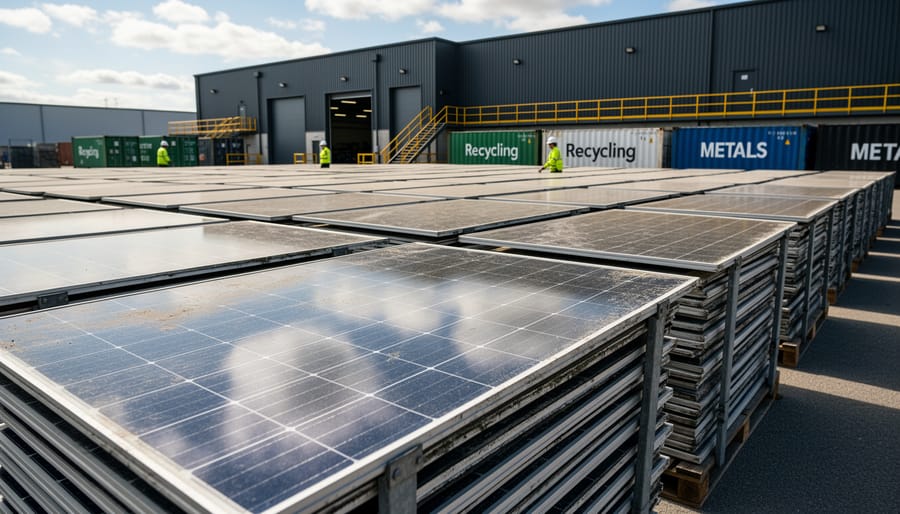
The solar industry faces an unprecedented challenge as the first generation of panels approaches end-of-life. According to the International Renewable Energy Agency, global solar panel waste could reach 78 million metric tonnes by 2050, with projections showing approximately 8 million tonnes requiring disposal by 2030. Given that most solar installations have a 25-30 year operational lifespan, panels installed during the 2000s boom are now entering retirement phase.
In Europe alone, analysts estimate that over 130,000 tonnes of photovoltaic waste will need processing annually by 2025, increasing exponentially as deployment rates accelerated throughout the 2010s. The United States faces similar trajectories, with the Solar Energy Industries Association reporting that cumulative waste volumes could exceed 10 million tonnes by 2050. This scale represents both a significant environmental responsibility and a substantial business opportunity, as each panel contains valuable materials including silver, copper, silicon, and aluminum. For commercial facility managers and business owners with aging installations, understanding these timelines is essential for budget planning and sustainable decommissioning strategies. The wave of retirements creates immediate demand for economically viable recycling solutions that recover maximum material value while meeting regulatory compliance requirements.
Regulatory Drivers and Compliance Requirements
Solar panel recycling has rapidly transitioned from voluntary best practice to regulatory mandate across multiple jurisdictions. The EU Waste Electrical and Electronic Equipment (WEEE) Directive established the foundational framework, classifying solar panels as electronic waste requiring proper end-of-life management. Under current provisions, producers must ensure that at least 85% of a panel’s weight is collected for recycling, with material recovery targets reaching 80%. These requirements apply to all photovoltaic modules placed on the EU market since 2012, creating immediate compliance obligations for solar operators and manufacturers.
Extended Producer Responsibility (EPR) schemes further strengthen these mandates by holding manufacturers financially accountable for collection, transportation, and processing costs throughout a product’s lifecycle. France implemented pioneering EPR regulations for photovoltaics in 2007, followed by comprehensive EU-wide adoption. This regulatory architecture fundamentally shifts disposal costs from facility owners to producers, though operators remain responsible for ensuring proper decommissioning procedures.
Recent legislative developments signal increasingly stringent requirements. The EU’s Circular Economy Action Plan and updated WEEE Directive proposals target higher recovery rates and expanded material categories, including critical raw materials like silver and silicon. Several member states have introduced additional national requirements, with Germany mandating take-back guarantees and Italy establishing dedicated collection infrastructure. For commercial solar operators, these evolving regulations transform recycling from optional consideration to essential compliance requirement, with non-compliance penalties including substantial fines and potential operational restrictions. Proactive recycling strategies not only ensure regulatory adherence but position organizations favorably for anticipated future mandates.
Advanced Recycling Technologies: From Mechanical to Thermal Innovation
Mechanical Separation Techniques
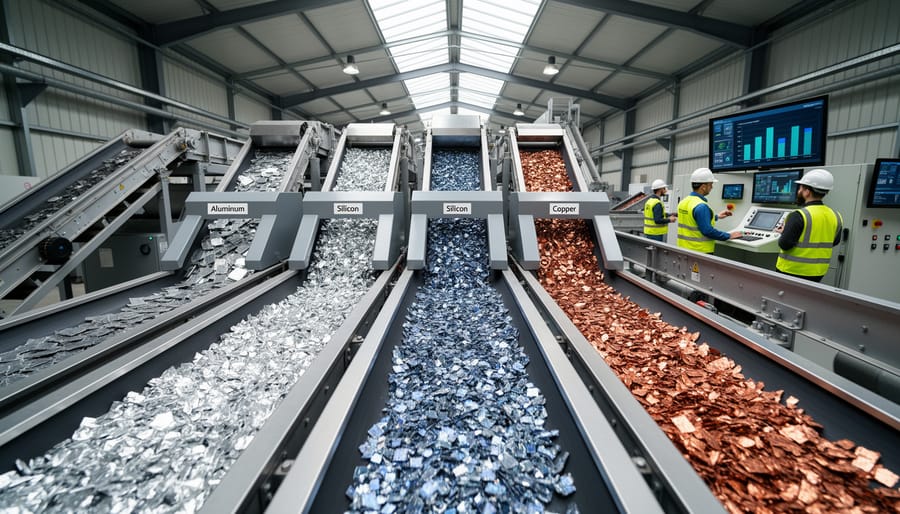
The foundation of effective solar panel recycling technology begins with mechanical separation processes that dismantle decommissioned modules into their primary components. These automated systems employ industrial-grade crushers and shredders to separate aluminum frames, which account for approximately 10% of panel weight and achieve recovery rates exceeding 95%. The liberated aluminum maintains commodity-grade quality, making it immediately marketable to metal recyclers.
Following frame removal, specialized grinding equipment processes the remaining laminate structure into fragments measuring 3-5mm, facilitating the separation of glass, silicon cells, and polymeric materials. Advanced vibrating screens and density-based separation tables isolate tempered glass particles, recovering 85-90% of this material for reuse in fiberglass manufacturing or as construction aggregates. Junction boxes and cabling undergo separate mechanical processing, yielding copper wire and plastic housings with recovery rates around 90%.
These mechanical techniques generate minimal waste streams and operate cost-effectively at scale. Leading European facilities report processing costs between $12-18 per panel while recovering materials valued at $15-20, demonstrating positive economics. The material quality achieved through mechanical separation meets industry specifications for secondary manufacturing applications, establishing a viable circular economy for photovoltaic components.
Thermal and Chemical Processing
Modern thermal and chemical processing represents the most sophisticated phase of solar panel recycling, extracting maximum value from end-of-life modules. These advanced techniques target the valuable materials embedded within laminated panels, including high-purity silicon, silver contacts, and copper interconnects that conventional mechanical methods cannot fully recover.
Pyrolysis serves as the primary thermal treatment, applying controlled heat between 400-600°C in oxygen-limited environments. This process breaks down the ethylene-vinyl acetate encapsulant that binds layers together, cleanly separating glass, silicon cells, and metal components without combustion. The result is material streams with purities exceeding 95%, suitable for reintegration into manufacturing supply chains.
Chemical treatments complement thermal processing through targeted dissolution techniques. Acidic and alkaline solutions selectively remove metal contacts and anti-reflective coatings from silicon wafers, recovering silver at approximately 90% efficiency—significant considering silver comprises roughly 6% of a panel’s total value despite representing less than 0.1% of its weight.
Leading European facilities have demonstrated the commercial viability of these combined approaches. A French recycling plant processes 4,000 metric tons annually, recovering materials valued at approximately €400 per ton while maintaining operational costs below €250 per ton. The recovered silicon achieves semiconductor-grade purity, commanding premium prices from manufacturers.
These processing methods align with circular economy principles while delivering measurable returns, transforming end-of-life panels from disposal liabilities into revenue-generating material sources for forward-thinking organizations.
Emerging Hybrid Technologies
The recycling industry is experiencing a technological revolution through hybrid systems that integrate multiple processing methods to maximize material recovery from solar panels. These next-generation facilities combine thermal, mechanical, and chemical approaches in sequential stages, achieving recovery rates exceeding 95% while maintaining material purity levels suitable for direct reintegration into manufacturing supply chains.
Automated optical sorting represents a cornerstone of these hybrid operations. Advanced spectroscopy systems can identify and separate different materials at processing speeds of up to 2 tons per hour, distinguishing between various glass types, metal grades, and encapsulant materials with 99% accuracy. This precision dramatically reduces contamination that historically plagued recycling operations and limited the market value of recovered materials.
Artificial intelligence now drives process optimization throughout these facilities. Machine learning algorithms analyze real-time data from sensors monitoring temperature, chemical composition, and material flow, automatically adjusting processing parameters to maximize yield. One European facility implementing AI-driven controls reported a 23% improvement in silicon recovery and 18% reduction in processing costs within the first operational year.
These hybrid systems also address the economic challenges that previously hindered widespread adoption. By recovering high-purity silicon, silver, and rare metals alongside standard glass and aluminum, facilities generate revenue streams that offset operational expenses. The combination of automated sorting reducing labor costs and AI optimization minimizing energy consumption creates a business model where recycling approaches cost-competitiveness with raw material extraction. For organizations managing large solar installations approaching end-of-life, partnering with facilities utilizing these hybrid technologies ensures both environmental compliance and potential value recovery from decommissioned assets.
Circular Technology Innovations: Closing the Loop in Solar Manufacturing
Material-to-Manufacturing Integration
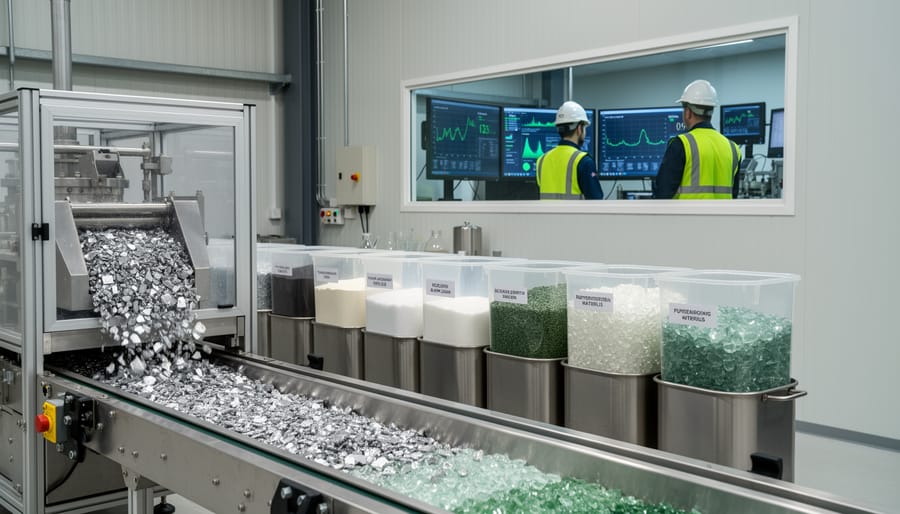
Advanced recycling technologies have created pathways for recovered materials to re-enter manufacturing streams, establishing a circular supply chain that reduces dependency on virgin raw materials. Silicon recovered from decommissioned panels achieves purity levels of 99.97% through refined processing methods, making it viable for new photovoltaic cell production or semiconductor applications. This reintegration reduces manufacturing costs by approximately 15-20% compared to mining and refining virgin silicon.
Glass extracted from recycled panels finds applications across multiple industries, from construction materials to new solar module production. Leading manufacturers report that recycled solar glass meets the same optical and structural standards as newly produced glass while reducing energy consumption in the manufacturing process by 25%.
Aluminum frames and junction boxes are reprocessed and returned to metal supply chains, where they retain 95% of their original value. The precious metals copper and silver, critical for cell connectivity, are recovered at rates exceeding 90% and command premium prices in commodity markets.
European manufacturers like Meyer Burger have successfully integrated recycled silicon into their production lines, demonstrating that end-of-life materials can meet stringent quality standards. This material recovery not only reduces environmental impact but also creates economic value, with recovered materials generating revenue streams that offset recycling program costs by 30-40% in established operations.
Design Evolution for Easier Recycling
Manufacturing innovations are transforming solar panel design to prioritize recyclability from the outset. Leading manufacturers now produce panels with mechanical fasteners instead of permanent adhesives, enabling straightforward disassembly at end-of-life. This design-for-recycling approach reduces processing costs by up to 40% compared to traditional panel deconstruction methods.
Modular component architecture represents a significant advancement, allowing facility managers to replace individual parts rather than entire panels. Frame designs now feature standardized attachment systems that separate easily from glass and silicon components, streamlining material recovery. Australian commercial installations have demonstrated that these solar technology innovations maintain identical energy output while reducing future disposal expenses.
Material selection has evolved toward mono-material backing sheets and recyclable encapsulants that dissolve without harsh chemicals. Several commercial projects in Melbourne and Sydney have adopted these next-generation panels, reporting seamless integration with existing systems. These design improvements deliver dual benefits: maintaining 25-year performance warranties while ensuring 95% material recovery rates. For organizations planning long-term solar investments, recyclable panel specifications provide measurable advantages in total lifecycle cost analysis and sustainability reporting requirements.
Circular Business Models and Partnerships
Leading solar manufacturers have established comprehensive take-back programs that enable commercial operators to return end-of-life panels through designated collection channels. These programs typically offer rebates or credits toward new equipment purchases, creating financial incentives that offset recycling costs while supporting fleet modernization. Companies like First Solar have demonstrated the viability of closed-loop systems, recovering over 90% of materials from returned panels and reintegrating them into new manufacturing processes.
Strategic partnerships between commercial operators and certified recyclers streamline logistics and ensure compliance with evolving regulations. Several European nations now mandate producer responsibility schemes requiring manufacturers to finance recycling infrastructure, which translates to reduced costs for facility managers. Commercial solar operators can participate by establishing contracts with recycling partners before installation, incorporating decommissioning plans into project financing, and tracking panel warranties to optimize replacement timing. Forward-thinking organizations are negotiating multi-site recycling agreements that leverage volume pricing, achieving cost reductions of 20-30% compared to individual project approaches. These circular systems transform end-of-life management from a liability into a strategic advantage that enhances sustainability credentials while protecting long-term investment value.
The Business Case: ROI and Strategic Advantages for Commercial Solar Operators
Direct Financial Benefits
Advanced recycling technology delivers measurable financial returns that significantly offset initial investment costs. Material recovery from end-of-life solar panels captures valuable commodities including aluminum frames, glass, silicon cells, copper wiring, and silver contacts. Current market analysis indicates recovered materials generate approximately $3-$12 per panel, depending on technology type and processing efficiency. High-purity silicon recovered through advanced thermal and chemical processes commands premium pricing, often exceeding $15 per kilogram in industrial markets.
Disposal cost avoidance represents another substantial benefit. Landfill fees for solar panel waste range from $50-$150 per ton across most regions, with specialized hazardous waste designation potentially doubling these costs. Facilities managing large-scale decommissioning projects can redirect these expenses into recycling programs that generate positive returns rather than pure cost centers.
Revenue streams extend beyond raw material sales. Several commercial operations have established profitable business models selling certified recycled materials to manufacturers at 60-70% of virgin material costs while maintaining quality standards. Extended Producer Responsibility regulations in multiple jurisdictions now require manufacturers to fund recycling programs, creating additional financial mechanisms that reduce net costs for facility operators. Real-world implementations demonstrate payback periods of 3-5 years for dedicated recycling infrastructure, with ongoing operations generating 15-25% annual returns on invested capital through combined material sales and disposal cost elimination.
Strategic and Reputational Value
Advanced recycling technology creates significant strategic value for organizations pursuing leadership in sustainability. Companies implementing comprehensive solar panel recycling programs demonstrate measurable commitment to circular economy principles, directly strengthening Environmental, Social, and Governance metrics that investors and stakeholders increasingly prioritize.
Organizations with established recycling protocols position themselves advantageously when pursuing contracts with environmentally conscious clients. Government agencies, educational institutions, and corporations with stringent sustainability requirements frequently include end-of-life management provisions in procurement criteria. Companies demonstrating proactive recycling capabilities secure competitive differentiation in bid processes where sustainability credentials influence purchasing decisions.
The reputational benefits extend beyond client acquisition. A manufacturing facility in Germany reported 34% improvement in community relations and reduced regulatory scrutiny after implementing transparent solar recycling practices. Their commitment to circular materials management generated positive media coverage and enhanced stakeholder trust, demonstrating the broader business sustainability benefits of responsible resource stewardship.
Forward-thinking organizations recognize that early adoption of recycling infrastructure establishes market leadership before regulatory mandates intensify. As industry standards evolve and extended producer responsibility legislation expands globally, companies with established recycling partnerships avoid reactive compliance costs while capitalizing on first-mover advantages.
The strategic value compounds when organizations communicate their recycling commitments through sustainability reporting, marketing materials, and stakeholder engagement. Transparent disclosure of recovery rates, materials reclaimed, and circular economy contributions transforms operational necessity into competitive advantage, attracting environmentally aware customers and talent while building brand equity aligned with global sustainability expectations.
Real-World Implementation: Case Studies and Success Stories
Commercial Facility Recycling Integration
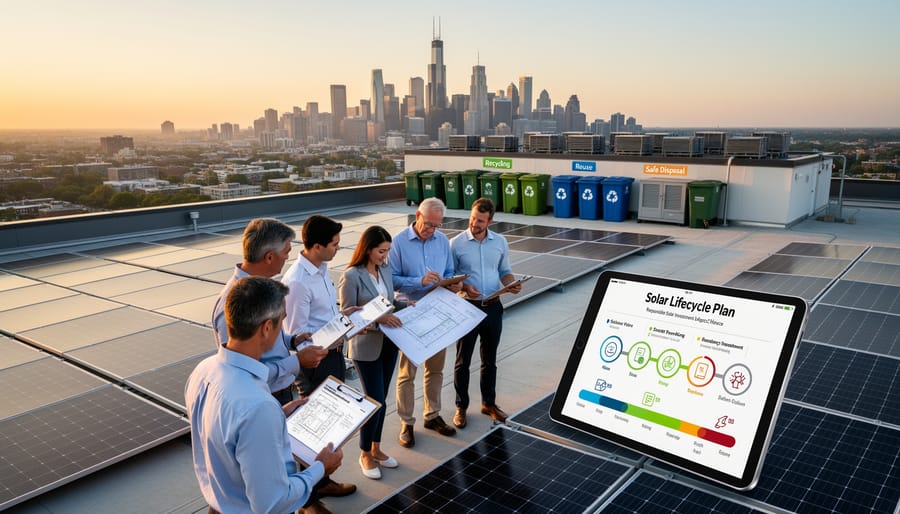
A multinational manufacturing corporation recently partnered with a leading solar installer and recycling technology provider to develop a 5-megawatt rooftop installation with integrated end-of-life planning. This project demonstrates how forward-thinking organizations can address sustainability concerns while optimizing long-term asset management.
The facility’s design phase included a comprehensive recycling agreement establishing collection protocols, material recovery targets, and financial arrangements for panel disposal scheduled for 2050. The partnership structure involves three key parties: the manufacturing client, the solar installation company, and a certified recycling facility specializing in photovoltaic materials. This collaborative approach ensures clear accountability and streamlined processes when panels reach end-of-life.
Financial projections indicate the pre-negotiated recycling arrangement will reduce future disposal costs by approximately 40 percent compared to current market rates, while guaranteeing 95 percent material recovery rates for silicon, glass, and metals. The manufacturer estimates this proactive approach will recover materials valued at $180,000, offsetting initial planning investments within the first decade of operation.
The partnership also includes quarterly technology assessments to incorporate emerging recycling innovations, ensuring the facility benefits from advancing recovery techniques. This case demonstrates how integrating recycling considerations during procurement rather than deferring them creates measurable financial advantages while strengthening corporate sustainability credentials and reducing environmental liability.
Government and Industrial Leadership
Leading organizations across public and private sectors are demonstrating the commercial viability of advanced solar panel recycling programs. The European Union has established comprehensive take-back schemes through the WEEE Directive, requiring manufacturers to finance collection and recycling operations. France’s PV CYCLE program has successfully processed over 150,000 tonnes of solar panels since inception, achieving recovery rates exceeding 95% while creating employment opportunities in the circular economy sector.
In the industrial sector, First Solar operates the world’s largest panel recycling facility in Ohio, processing modules at scale while recovering valuable materials including tellurium, cadmium, and glass. The company reports recycling more than 90% of semiconductor materials and reintegrating them into new manufacturing processes, reducing raw material costs by approximately 15%.
Municipal governments are also taking action. The City of San Diego partnered with specialized recyclers to establish a pilot program for decommissioned panels from public facilities, demonstrating that even mid-sized operations can implement economically sustainable recycling initiatives. Early program data shows material recovery costs offset by resale value of reclaimed materials, approaching cost-neutrality within the first operational year.
These pioneering efforts provide replicable frameworks for organizations evaluating their own end-of-life solar management strategies, proving that responsible recycling aligns environmental stewardship with sound financial planning.
Planning Ahead: Integrating Recycling Into Your Solar Strategy
Questions to Ask Your Solar Provider
Before committing to a solar installation, decision-makers should evaluate providers based on their commitment to sustainable lifecycle management. Start by inquiring about manufacturer take-back programs and whether the provider facilitates end-of-life panel collection. Request specific recyclability ratings for proposed equipment, as panels vary significantly in material recovery potential—some achieve recovery rates exceeding 95 percent while others fall below 80 percent.
Ask whether the provider offers extended producer responsibility agreements that guarantee proper disposal or recycling services. Understanding warranty terms related to panel degradation and replacement is essential, as these directly impact your long-term asset management planning. Inquire about tracking systems that document panel serial numbers, installation dates, and projected end-of-life timelines.
Request information about certified recycling partners in your region and associated costs for decommissioning services. Providers with established relationships can often negotiate better rates and ensure compliance with emerging regulations. Additionally, ask how recycling considerations integrate with your overall commercial solar strategy, including system design choices that facilitate future disassembly. Finally, inquire about documentation and reporting capabilities that support sustainability credentials and ESG reporting requirements, increasingly important for corporate stakeholders and regulatory compliance.
Building Recycling Into Procurement and Operations
Integrating recycling considerations at the procurement stage significantly reduces future administrative burden and costs. Begin by maintaining comprehensive documentation for each solar installation, including panel serial numbers, manufacturer details, installation dates, and material composition reports. This information proves essential when coordinating with recycling facilities decades later.
Financial planning should account for end-of-life management from project inception. Allocate approximately 1-2% of initial capital expenditure for future recycling costs, either through reserve funds or extended producer responsibility programs where available. Many manufacturers now offer take-back programs that can be negotiated during procurement, potentially reducing long-term expenses.
Establish partnerships with certified recyclers before systems reach end-of-life. Verify certifications through R2 (Responsible Recycling) or e-Stewards standards, and request transparency reports showing actual recovery rates rather than theoretical capabilities. Companies like First Solar have demonstrated successful closed-loop systems, recovering over 90% of materials from returned panels.
Incorporate recycling requirements into service contracts with installation and maintenance providers. Specify responsibilities for decommissioning, transportation logistics, and documentation requirements. Regular audits of recycling partners ensure continued compliance with environmental standards and optimize recovery value as market conditions evolve.
The transition from traditional linear energy consumption to a circular solar economy represents more than an environmental imperative—it’s a strategic business opportunity. Advanced recycling technology fundamentally transforms how organizations approach solar investments, extending value far beyond the operational lifespan of individual panels while addressing the mounting challenge of electronic waste management.
Forward-thinking organizations are already integrating end-of-life planning into their solar strategies, recognizing that comprehensive lifecycle management delivers measurable returns through recovered materials, reduced disposal costs, and enhanced sustainability credentials. Companies like Veolia and First Solar have demonstrated that circular economy principles can generate both economic value and environmental impact, with recovery rates exceeding 95 percent for key materials and creating new revenue streams from secondary raw materials markets.
The evidence is clear: solar installations designed with recyclability in mind and supported by robust end-of-life partnerships outperform those relying on traditional disposal methods. Organizations gain predictable cost structures, minimize regulatory risks, and position themselves as sustainability leaders in increasingly competitive markets. The economic case strengthens as recycling infrastructure expands and material recovery technologies improve, making circular solar systems progressively more viable across diverse applications.
Now is the time to evaluate your current solar strategy through a circular economy lens. Review your existing installations and upcoming projects to identify opportunities for incorporating recyclability considerations. Engage with recycling partners early in the procurement process, establish material recovery protocols, and develop comprehensive end-of-life plans that maximize asset value while minimizing environmental impact. Organizations that act now will secure competitive advantages as regulatory requirements tighten and stakeholder expectations for genuine sustainability continue to rise. The circular solar economy isn’t a future concept—it’s an actionable strategy delivering results today.