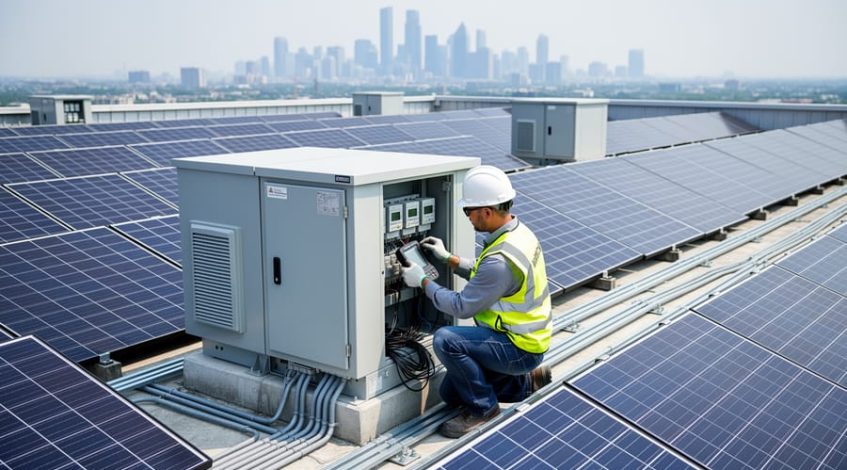
Solar system monitoring transforms your photovoltaic investment from a passive asset into an actively managed revenue generator. Without real-time visibility into performance metrics, commercial solar installations lose an average of 20-25% of potential output annually due to undetected inefficiencies, equipment failures, and grid integration issues. The financial impact is measurable: a 500kW commercial installation experiencing just 15% underperformance costs approximately $18,000 yearly in lost production value.
Modern monitoring platforms deliver granular insight into every component of your solar array, from individual panel performance to inverter efficiency and grid connection status. These systems detect anomalies within minutes rather than months, enabling rapid intervention that prevents small issues from cascading into expensive failures. For facility managers overseeing multiple installations, centralized dashboards consolidate performance data across portfolios, revealing system-wide patterns and optimization opportunities invisible through manual inspection.
The business case extends beyond damage prevention. Advanced monitoring platforms provide the operational intelligence required for accurate energy forecasting, demand response optimization, and regulatory compliance documentation. Organizations implementing comprehensive monitoring solutions typically achieve full system payback periods 12-18 months faster than those relying on basic monitoring or periodic manual assessments. Strategic monitoring selection directly influences long-term installation profitability, making the evaluation process critical for maximizing solar investment returns over 25-year operational lifespans.
The Hidden Cost of Unmonitored Solar Systems
When Performance Drops Go Unnoticed
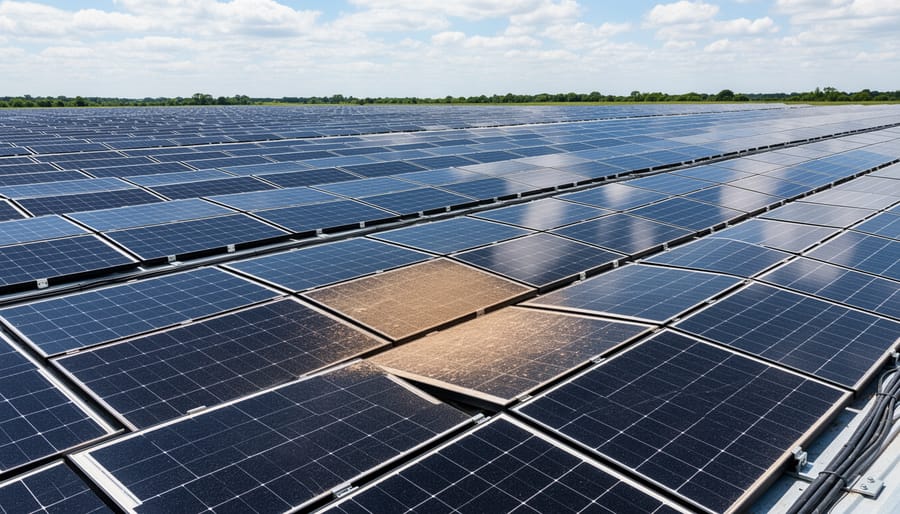
Solar installations can experience significant performance degradation without triggering any visible warning signs, resulting in substantial financial losses that accumulate over time. Unlike conventional power systems that typically fail completely and obviously, solar arrays often continue generating electricity even when operating at reduced capacity, masking underlying issues that erode return on investment.
Inverter malfunctions represent one of the most common yet difficult-to-detect problems. These devices can experience partial failures where they continue converting DC to AC power but operate at diminished efficiency. Without real-time monitoring, facility managers may remain unaware that their inverter is only processing 60-70% of available solar energy, translating to thousands of dollars in lost production annually.
Panel soiling accumulates gradually, with dust, pollen, bird droppings, and atmospheric pollutants creating a film that reduces light absorption. Research indicates that soiling can decrease output by 15-25% in certain environments, yet this degradation occurs so slowly that it escapes casual observation. A manufacturing facility in Arizona discovered through monitoring data that accumulated dust had reduced their system output by 22% over eight months, representing nearly $18,000 in unrealized energy generation.
Shading patterns change seasonally and as surrounding vegetation grows or new structures are built nearby. What began as an optimally positioned array can gradually experience increased shade exposure, reducing generation without any apparent system malfunction.
Connection problems, including corroded terminals and loose wiring, create resistance that diminishes power transfer. These issues rarely cause complete system failure but steadily compromise performance, making comprehensive monitoring essential for maintaining optimal financial returns.
Calculating Your Potential Revenue Loss
Understanding your potential revenue loss requires calculating three key factors: system capacity, local electricity rates, and downtime duration. For a commercial installation, consider this framework: multiply your system’s kilowatt capacity by your average daily production hours, then by your electricity rate. A 500kW commercial system producing at 80% efficiency for 5.5 peak hours daily generates approximately 2,200 kWh. At commercial rates of $0.15 per kWh, each day of complete downtime costs $330, or nearly $10,000 monthly.
Government facilities face additional considerations. A municipal building with a 250kW array losing 20% efficiency due to undetected issues forgoes roughly $4,000 annually in energy savings. When factoring in performance-based incentives and renewable energy credits, actual losses often exceed initial calculations by 30-40%.
Real-world application demonstrates impact: a distribution center in Queensland discovered through enhanced monitoring that partial shading reduced output by 15% for three years, representing $47,000 in lost generation. This example illustrates how monitoring saves money by identifying problems before they compound. Calculate your exposure by documenting baseline performance metrics and establishing acceptable variance thresholds for immediate investigation.
What Advanced Solar Monitoring Systems Actually Do
Real-Time Performance Tracking
Modern solar monitoring platforms deliver comprehensive visibility into system operations through continuous data acquisition and analysis. These systems capture energy production metrics at the inverter and panel level, measuring voltage, current, and power output in real time. By polling equipment every few seconds to minutes, monitoring solutions create a detailed performance profile that reveals exactly how much electricity your installation generates throughout each day.
Beyond production tracking, advanced monitoring systems simultaneously measure consumption patterns across your facility. This dual-stream data collection enables precise analysis of how generated solar energy offsets grid consumption, helping identify opportunities to shift high-energy operations to peak production hours. Facility managers gain actionable intelligence about load profiles and can optimize equipment scheduling to maximize self-consumption rates.
System health metrics provide equally critical insights. Monitoring platforms track operational parameters such as inverter temperature, connection status, and grid synchronization quality. Automated alerts notify designated personnel immediately when performance deviates from expected baselines, whether due to equipment malfunction, shading issues, or grid disturbances. A commercial installation in Phoenix demonstrated this capability when monitoring detected a 12% production decline within two hours, enabling same-day technician dispatch and preventing an estimated $3,400 in monthly revenue loss. This rapid response capability transforms monitoring from passive observation into proactive asset management.
Automated Fault Detection and Alerts
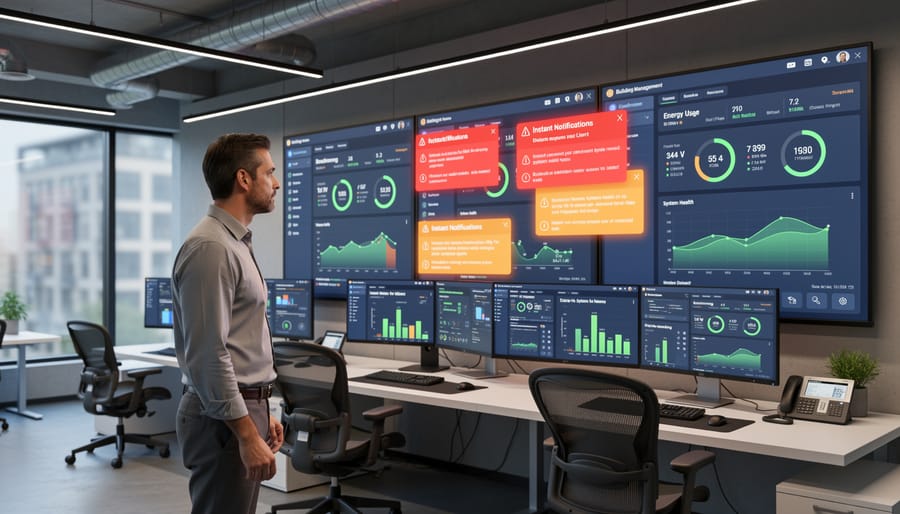
Modern solar monitoring platforms employ sophisticated algorithms to detect performance anomalies in real-time, identifying issues such as inverter malfunctions, panel degradation, shading problems, or grid connection failures. These systems continuously analyze production data against expected output parameters, immediately flagging deviations that indicate potential problems. When combined with AI predictive maintenance, facilities can address issues before they escalate into costly failures.
Alert notifications reach facility managers through multiple channels including email, SMS, mobile app push notifications, and dashboard warnings, ensuring critical information arrives promptly regardless of location. Advanced systems prioritize alerts based on severity, distinguishing between minor efficiency drops and urgent failures requiring immediate attention. For example, a commercial facility in Melbourne avoided $45,000 in lost production when automated alerts detected an inverter fault within minutes, enabling same-day repairs. The system can also generate automated work orders and integrate with facility management software, streamlining the response process. This proactive approach minimizes downtime, reduces emergency repair costs, and ensures optimal system performance throughout the installation’s lifetime.
Data Analytics and Reporting
Modern monitoring platforms transform raw performance data into actionable business intelligence through sophisticated analytics engines. These systems aggregate historical production metrics, weather patterns, and equipment performance indicators to identify trends and anomalies that might escape routine observation. Advanced platforms generate automated performance reports on customizable schedules, delivering key metrics such as capacity factor, performance ratio, and specific yield directly to stakeholders.
The analytical capabilities extend beyond basic reporting to provide predictive insights that inform strategic decisions. By comparing actual output against expected production based on solar irradiance and system specifications, facilities managers can quantify underperformance and prioritize corrective actions. Financial reporting features calculate real-time return on investment, track energy cost savings, and project payback timelines with precision.
Leading platforms incorporate benchmarking tools that compare individual system performance against industry standards or portfolio averages, enabling organizations to identify top and bottom performers across multiple installations. For example, a commercial property management firm reduced operational costs by 18 percent after analytics revealed systematic inefficiencies at three facilities, prompting targeted maintenance interventions. Custom dashboards allow decision-makers to visualize complex data sets through intuitive graphics, facilitating executive-level discussions about system optimization, expansion opportunities, and long-term energy strategy without requiring technical expertise.
Key Features That Separate Basic from Advanced Monitoring
String-Level vs. Panel-Level Monitoring
Commercial solar operators face a crucial decision between string-level and panel-level monitoring, each offering distinct advantages at different price points. String-level monitoring tracks the performance of entire strings of panels connected in series, providing cost-effective oversight for most installations. This approach identifies issues affecting multiple panels while maintaining manageable system complexity and lower upfront costs.
Panel-level monitoring, conversely, tracks each solar panel individually, offering granular visibility into system performance. This detailed approach proves particularly valuable for installations facing complex shading patterns, mixed panel orientations, or high-value applications where maximum output justification is essential. A retail distribution center in Phoenix implemented panel-level monitoring across its 500kW installation and identified 12 underperforming panels within the first month, recovering $8,400 annually in lost production.
For commercial applications, the investment in panel-level monitoring typically justifies itself when shade variability exists, when demonstrating precise ROI to stakeholders matters significantly, or when the installation exceeds 250kW. Facilities with uniform exposure and minimal shading often achieve sufficient oversight with string-level systems, reducing monitoring costs by 40-60 percent while maintaining adequate performance visibility for operational decision-making.
Weather Integration and Predictive Analytics
Modern solar monitoring platforms integrate real-time weather data to provide sophisticated predictive analytics that help facility managers distinguish between normal weather-related variations and actual system malfunctions. By incorporating meteorological forecasts, cloud coverage patterns, and historical weather trends, these systems establish accurate performance baselines that account for environmental conditions. This capability proves particularly valuable during cloudy periods or seasonal transitions when production naturally fluctuates.
Advanced weather integration enables predictive modeling that forecasts energy generation days in advance, allowing businesses to optimize energy procurement strategies and better manage grid interactions. When actual output deviates significantly from weather-adjusted predictions, the system immediately flags potential equipment issues rather than misattributing losses to weather conditions. This precision reduces unnecessary service calls and accelerates genuine problem identification.
For organizations managing multiple installations across different geographic regions, weather-integrated monitoring provides comparative performance analysis that accounts for local climate variations. A commercial solar array in Phoenix experiencing reduced output can be quickly assessed against weather-normalized expectations, while simultaneously comparing performance metrics with similar installations in comparable conditions. This intelligent analysis translates to faster response times, reduced operational costs, and maximized energy production throughout varying weather conditions.
Remote Diagnostics and Control Capabilities
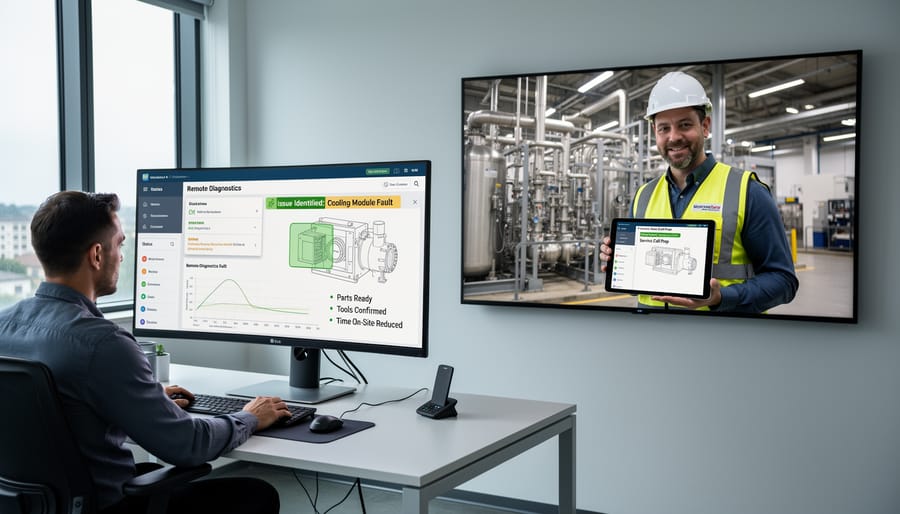
Modern advanced monitoring systems enable technicians to diagnose and resolve performance issues without dispatching field teams, significantly reducing operational costs and system downtime. Remote access allows operators to adjust inverter settings, reset communication errors, and recalibrate sensors from any location with internet connectivity. When performance anomalies occur, automated alerts provide technicians with real-time data to determine whether issues require physical intervention or can be resolved digitally. This capability proved valuable for a Queensland distribution center that resolved 73% of system alerts remotely over 18 months, reducing service call expenses by $42,000 and minimizing production disruptions. Remote control functions also facilitate firmware updates and system optimization adjustments as weather patterns or energy consumption needs change, ensuring installations maintain peak efficiency throughout their operational lifespan.
The ROI of Professional Solar Monitoring
Maximizing System Uptime and Energy Production
Advanced monitoring systems deliver measurable financial returns by minimizing downtime and maximizing energy generation. Industry data demonstrates that monitored solar installations achieve 95-98% operational uptime compared to 85-92% for unmonitored systems. This difference translates directly to revenue gains.
A 500 kW commercial installation generating $75,000 annually can lose $4,500-$11,250 per year from undetected faults. Real-time monitoring reduces mean time to repair from weeks to hours, preventing extended production losses. A manufacturing facility in California documented a 12% increase in annual energy production after implementing comprehensive monitoring, recovering $18,000 in previously lost generation within the first year.
Rapid fault detection proves particularly valuable for string-level issues like module degradation or inverter failures. Systems equipped with granular monitoring identify these problems immediately, while unmonitored installations may operate at reduced capacity for months. A municipal solar array in Arizona detected and resolved underperforming strings within 48 hours, preventing an estimated $8,500 in annual losses. The cumulative effect over a 25-year system lifespan represents substantial value protection, with monitored systems consistently delivering 8-15% higher lifetime energy production than their unmonitored counterparts.
Protecting Warranty Claims and Asset Value
Comprehensive monitoring systems create an auditable trail of performance data that proves invaluable when filing warranty claims with equipment manufacturers. Most solar components carry warranties ranging from 10 to 25 years, but successfully claiming coverage requires documented evidence of system underperformance or component failure. Without continuous monitoring records, manufacturers may dispute claims or attribute issues to improper maintenance rather than defective equipment.
Monitoring platforms automatically timestamp performance deviations, making it straightforward to demonstrate when specific panels, inverters, or other components began underperforming relative to specifications. This documentation eliminates ambiguity during warranty negotiations and accelerates claim resolution. For example, a 500kW commercial installation in Phoenix successfully recovered $47,000 in inverter replacement costs by presenting six months of granular monitoring data showing consistent underperformance, despite proper maintenance protocols.
Beyond warranty protection, detailed performance records significantly enhance asset valuation during refinancing, property sales, or lease negotiations. Prospective buyers and financial institutions assign higher values to systems with documented performance histories that verify projected energy production. A manufacturing facility in North Carolina increased their property valuation by demonstrating five years of monitoring data that confirmed their solar array consistently exceeded production estimates by 8 percent.
Regular monitoring documentation also satisfies due diligence requirements for insurance claims, renewable energy credit verification, and compliance audits. This comprehensive record-keeping transforms your solar investment from a passive asset into a well-documented, high-value infrastructure component with quantifiable returns.
Real-World Applications: How Businesses Use Monitoring Data
Commercial Facilities: Optimizing Operations
A 250kW commercial facility in Sydney demonstrates how advanced monitoring systems transform energy management strategies. The property manager integrated smart control systems with their solar array, enabling real-time coordination between energy production and consumption patterns.
The monitoring platform identifies peak production periods and automatically adjusts non-essential operations to align with solar generation. High-energy processes like HVAC cycling and equipment charging now occur during maximum sunlight hours, reducing grid dependency by 68% during peak-rate periods. This strategic load management delivered $47,000 in annual savings through reduced demand charges and time-of-use optimization.
The system provides predictive analytics that forecast production levels 48 hours ahead, allowing facility managers to schedule energy-intensive activities proactively. When production falls below consumption thresholds, automated alerts enable immediate response, preventing costly grid purchases during premium pricing windows. The facility achieved a 14-month payback period on the monitoring investment, establishing a replicable model for similar commercial properties seeking operational efficiency and cost reduction through data-driven energy management.
Industrial Applications: Ensuring Reliability
A precision manufacturing facility in the automotive sector deployed an advanced solar monitoring system across its 2.5-megawatt rooftop installation to safeguard against production disruptions. The facility operates automated assembly lines requiring uninterrupted power, where even brief outages can result in production losses exceeding $50,000 per hour.
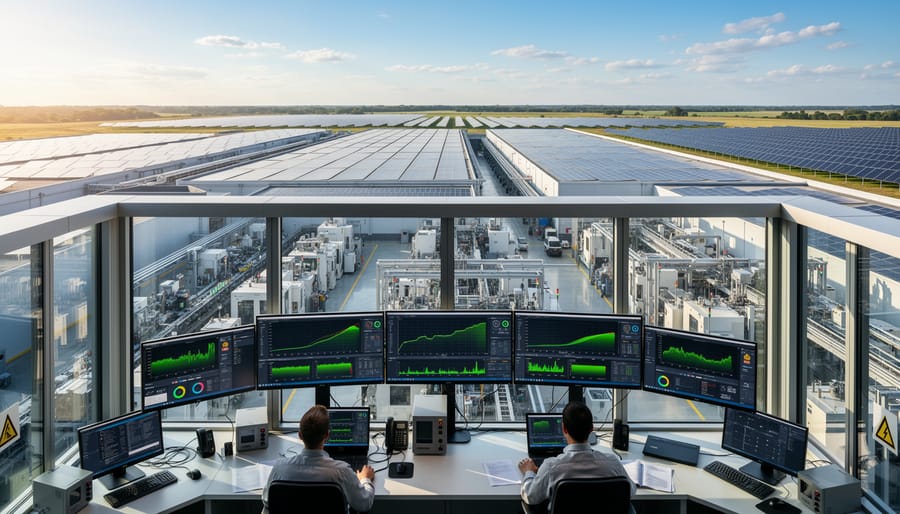
The monitoring platform provides real-time performance tracking across 7,200 individual solar panels, with automated alerts configured to notify facility managers within 60 seconds of detecting anomalies. This rapid response capability enabled the maintenance team to identify and address a failing inverter before it impacted production, preventing an estimated $300,000 in potential downtime costs.
Historical performance data allowed engineers to optimize energy storage dispatch strategies, ensuring sufficient backup capacity during peak production hours. The system’s predictive maintenance features analyze performance trends to schedule repairs during planned maintenance windows rather than responding to unexpected failures. Over 18 months of operation, the facility achieved 99.7 percent solar system uptime, directly supporting their commitment to sustainable manufacturing while maintaining operational reliability. The monitoring investment represented just 1.2 percent of total installation costs but delivered measurable protection for critical manufacturing operations.
Government Institutions: Accountability and Reporting
Public sector organizations leverage solar monitoring systems to meet increasingly stringent sustainability mandates and demonstrate fiscal responsibility to constituents. These platforms provide the documented performance data essential for environmental impact reports, carbon reduction goals, and renewable energy compliance certifications required by regulatory frameworks.
For municipal facilities, schools, and government buildings, monitoring data serves as concrete evidence of taxpayer investment returns. System dashboards quantify energy savings in dollar terms, enabling budget officers to justify initial capital expenditures and secure funding for expansion projects. Many agencies now incorporate real-time monitoring displays in public spaces, transforming solar installations into visible demonstrations of environmental stewardship.
The accountability dimension extends to grant compliance and renewable energy credit verification. Federal and state programs funding solar projects require detailed performance reporting, which monitoring systems automatically generate. This eliminates manual data collection and reduces administrative burden while ensuring accuracy for audits.
A notable application involves California school districts using monitoring platforms to meet Proposition 39 reporting requirements. These systems track energy generation and cost savings across multiple campuses, providing standardized reports that satisfy both state mandates and community transparency expectations. The data also supports educational initiatives, allowing students to engage with real-world sustainability metrics while administrators maintain operational oversight of critical infrastructure investments.
Selecting the Right Monitoring Solution for Your Installation
Critical Questions to Ask Your Solar Provider
Before committing to a solar monitoring solution, ask your provider these essential questions to ensure long-term success:
What real-time metrics does your monitoring system track, and how quickly are performance issues identified? Understanding detection speed is critical for minimizing revenue losses from system downtime.
Is the monitoring platform accessible across multiple devices, and what level of technical expertise is required to interpret the data? Your facility team needs intuitive access without extensive training requirements.
What are the total costs over the system’s 25-year lifespan, including software updates, data storage, and technical support? Hidden subscription fees can significantly impact your return on investment calculations.
How does your system handle data security and comply with industry cybersecurity standards? Commercial installations require robust protection against potential vulnerabilities.
What level of technical support is included, and what are typical response times for system alerts? Define service level agreements upfront to ensure adequate operational support.
Can the monitoring system integrate with our existing building management systems or energy management platforms? Seamless integration maximizes operational efficiency and reduces redundant data collection.
What historical performance data and reporting capabilities are available for financial audits and stakeholder communications? Comprehensive reporting supports accurate ROI documentation and informed decision-making for future energy investments.
Integration with Existing Building Management Systems
Modern solar monitoring systems offer seamless integration with existing Building Management Systems (BMS), creating a centralized platform for comprehensive facility oversight. This compatibility enables facility managers to view solar performance alongside HVAC, lighting, and other building operations through a single interface, eliminating the need to manage multiple disconnected systems.
Integration typically occurs through industry-standard protocols such as BACnet, Modbus, or RESTful APIs, ensuring compatibility across different manufacturers and platforms. IoT sensors further enhance this connectivity by providing real-time data exchange between solar arrays and central management systems.
The benefits of unified energy management are substantial. A commercial office complex in Melbourne reduced operational costs by 23% after integrating their solar monitoring with their BMS, enabling automated responses to energy demand fluctuations. Facility managers can now correlate solar production with building consumption patterns, optimize energy storage deployment, and automatically adjust non-essential loads during peak demand periods.
This integration also simplifies compliance reporting and sustainability tracking, providing consolidated data for environmental certifications and regulatory requirements. For organizations managing multiple sites, unified dashboards deliver portfolio-wide visibility, enabling strategic energy decisions based on comprehensive performance metrics across all facilities.
For commercial solar installations, monitoring systems represent essential infrastructure, not optional add-ons. The financial stakes are too high to rely on reactive maintenance or periodic manual inspections. Without real-time visibility into system performance, organizations risk revenue loss, accelerated equipment degradation, and compromised return on investment.
The data is compelling. Facilities with comprehensive monitoring consistently achieve 95-98% uptime compared to 85-90% for those relying on periodic inspections. This 5-10% performance differential translates directly to bottom-line impact. For a 500 kW commercial installation, this difference can represent $15,000-30,000 in lost annual revenue—far exceeding the cost of implementing robust monitoring infrastructure.
Consider the experience of organizations that have integrated advanced monitoring capabilities. Manufacturing facilities identify production issues within minutes rather than days. Municipal installations optimize energy distribution across multiple sites from centralized dashboards. Commercial property owners provide transparent performance data to stakeholders, building confidence in their renewable energy investments.
The distinction between basic and comprehensive monitoring matters significantly. Systems offering granular, equipment-level diagnostics, predictive analytics, and automated alerting deliver measurably superior outcomes compared to simple production meters.
When evaluating solar investments, prioritize partnerships with providers offering integrated monitoring solutions backed by technical support. Verify that monitoring systems include real-time data access, comprehensive analytics, and responsive customer service. The initial investment in quality monitoring infrastructure pays dividends throughout your installation’s 25-30 year operational life. Protecting your solar investment begins with visibility into its performance—make monitoring a non-negotiable requirement in your procurement process.