
Distributed Energy Resources (DER) solar systems represent a fundamental shift in how commercial facilities generate and manage electricity, but success hinges on understanding the regulatory frameworks that govern grid interconnection, technical standards, and market participation. Commercial decision-makers entering this space face a complex landscape of federal regulations, regional transmission organization rules, state-level requirements, and utility-specific connection procedures that directly impact project timelines, costs, and operational capabilities.
The regulatory environment for DER solar determines everything from inverter specifications and power quality standards to revenue opportunities through capacity markets and demand response programs. Organizations that navigate these requirements effectively can reduce interconnection costs by 15-30% and accelerate project commissioning by several months compared to those approaching compliance reactively. The stakes are significant: non-compliance can result in project delays, costly equipment modifications, or inability to participate in lucrative grid service markets that enhance project economics.
This comprehensive guide examines the regulatory frameworks shaping commercial DER solar deployment, from IEEE 1547 interconnection standards to FERC Order 2222 market access requirements. Drawing on real-world commercial installations across diverse regulatory jurisdictions, we provide facility managers and energy professionals with practical implementation strategies for meeting technical requirements, streamlining approval processes, and leveraging regulatory mechanisms to maximize project value. Whether deploying a single rooftop array or a portfolio of distributed solar assets with battery storage, understanding these regulatory foundations is essential for project success.
Understanding DER Solar in Today’s Energy Landscape
What Makes DER Solar Different
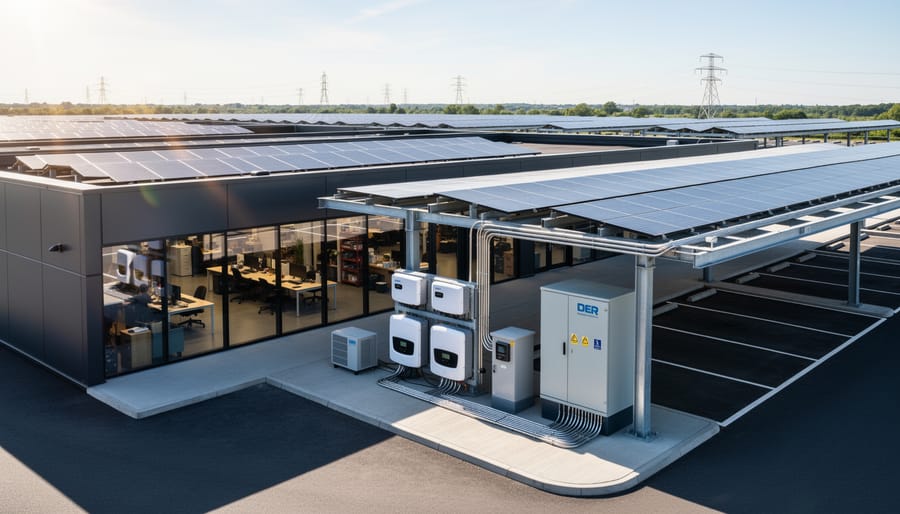
Unlike traditional centralized power generation, DER solar systems operate at the grid edge, introducing distinctive characteristics that necessitate specialized regulatory frameworks. These distributed systems are typically located at or near the point of consumption, ranging from rooftop installations to ground-mounted arrays at commercial and industrial facilities.
The defining feature of DER solar is its bidirectional power flow capability. While conventional electricity grids operate with one-way power delivery from central stations to end users, DER systems can both consume and generate electricity, feeding excess power back into the distribution network. This two-way energy exchange creates technical and regulatory complexities that traditional frameworks were not designed to address. Grid operators must now manage variable generation sources, voltage fluctuations, and power quality issues that arise when thousands of distributed systems interact with the network simultaneously.
Grid-edge capabilities further distinguish DER solar from conventional generation. Modern installations incorporate advanced inverters, battery storage, and smart grid integration technologies that enable real-time communication with grid operators. These systems can provide ancillary services such as frequency regulation, voltage support, and demand response capabilities, transforming commercial solar installations from simple generation assets into active grid resources.
These unique characteristics require regulatory frameworks that address connection standards, export limitations, metering requirements, and grid service compensation mechanisms. Understanding these distinctions is essential for commercial decision-makers planning DER solar deployments, as compliance requirements vary significantly based on system capacity, location, and intended operational mode within the distribution network.
The Commercial Advantage of DER Solar Systems
Businesses implementing DER solar systems gain substantial competitive advantages through reduced operational costs and improved energy security. On-site generation eliminates transmission and distribution charges, which typically account for 30-50% of commercial electricity bills. This proximity between generation and consumption also minimizes power losses that occur during long-distance transmission, improving overall system efficiency by 5-8% compared to centralized grid sources.
DER solar installations provide enhanced energy resilience during grid disruptions. When paired with battery storage, commercial facilities maintain critical operations even during outages, protecting revenue streams and preventing costly downtime. Manufacturing facilities and data centers have reported avoided losses exceeding six figures during single outage events through properly designed DER systems.
The financial returns prove compelling for commercial applications. Businesses typically achieve payback periods of 4-7 years, with systems generating positive cash flow for 20-25 years thereafter. Additionally, DER solar assets increase property values while demonstrating corporate sustainability commitments to stakeholders and customers. Many jurisdictions offer accelerated depreciation schedules and tax incentives specifically for commercial renewable installations, further improving return on investment calculations. Forward-thinking organizations recognize that DER solar represents both immediate cost reduction and long-term strategic positioning in an evolving energy landscape.
Regulatory Frameworks Shaping DER Solar Integration
EU-Level Directives and Standards
The European Union has established a comprehensive regulatory framework governing distributed energy resources through several key policy instruments that directly impact commercial solar deployment. At the foundation of this framework lies the Clean Energy for All Europeans Package, adopted between 2018 and 2019, which fundamentally reshaped how distributed solar systems interact with electricity markets and grid infrastructure.
The revised Renewable Energy Directive (RED II) sets binding renewable energy targets and establishes critical rights for distributed energy resource operators. Under this directive, commercial facility owners gain the legal right to self-consume electricity generated on-site without facing discriminatory charges or administrative barriers. The directive also introduces provisions for collective self-consumption and renewable energy communities, enabling multiple businesses to share solar generation across premises. For facility managers planning multi-site installations, these provisions create new operational and financial optimization opportunities.
The Electricity Market Directive and Regulation complement RED II by defining how distributed solar systems participate in electricity markets. These regulations require member states to ensure that distribution system operators provide transparent, non-discriminatory grid connection procedures. Connection requirements must be proportionate to system size, with streamlined processes for smaller installations. The regulations also mandate that distributed resources can access balancing markets and other ancillary services, creating revenue opportunities beyond simple energy generation.
Technical standardization occurs through harmonized grid codes established by the European Network of Transmission System Operators for Electricity. These codes specify technical requirements for frequency stability, voltage control, and grid support functions that commercial solar installations must meet. While requirements vary by system size and connection voltage level, understanding these standards proves essential for project planning and equipment procurement.
For business owners navigating these frameworks, successful implementation requires coordination between legal compliance, technical specifications, and local utility requirements. The regulatory environment continues evolving, with upcoming revisions expected to further facilitate distributed solar deployment while maintaining grid stability and market efficiency.
National Implementation Variations
While EU directives establish the overarching framework for distributed energy resources, member states retain significant discretion in translating these regulations into national law. This variation creates a complex landscape for organizations planning cross-border solar investments or multi-site deployments across Europe.
Germany’s approach exemplifies comprehensive implementation through its revised Energy Industry Act (EnWG), which defines precise technical requirements for grid connection and establishes clear timelines for distribution system operators to process applications. German regulations mandate specific inverter capabilities and provide detailed grid codes that streamline the approval process for commercial installations. The country’s straightforward permitting structure has enabled faster deployment timelines, with many commercial projects achieving grid connection within six to eight months.
France has implemented a more centralized permitting system through its Plan Solaire initiative, requiring commercial installations above certain capacity thresholds to undergo regional energy commission reviews. However, France offers streamlined procedures for rooftop installations under 500 kW, recognizing the lower grid impact of these systems.
Spain’s regulatory evolution demonstrates how national frameworks can rapidly adapt. Recent reforms simplified administrative procedures, reduced permitting timeframes, and clarified grid access rights. Spanish regulations now distinguish between self-consumption installations and those participating in wholesale markets, with different technical and administrative requirements for each category.
The Netherlands focuses on local grid capacity studies, requiring developers to demonstrate compatibility with regional infrastructure constraints before receiving connection approval. This localized approach ensures grid stability but demands thorough pre-installation assessments.
Understanding these national variations is essential for successful project execution and realistic timeline planning across different EU jurisdictions.
Technical Standards and Grid Code Compliance
DER solar installations must adhere to stringent technical standards to ensure safe, reliable grid integration. The primary requirements center on voltage regulation, where systems must maintain voltage levels within 5-10% of nominal values to prevent equipment damage and power disruptions. Modern inverters automatically adjust reactive power output to support grid voltage stability, a critical function during peak demand periods.
Frequency response capabilities are equally essential. Grid codes typically mandate that DER solar systems detect frequency deviations within milliseconds and respond appropriately—either reducing output during over-frequency events or providing support during under-frequency conditions. This active frequency regulation helps maintain grid stability as renewable penetration increases.
Power quality standards address harmonics, flicker, and power factor requirements. Total harmonic distortion must generally remain below 5%, while power factor should operate between 0.95 leading and 0.95 lagging. Advanced inverter functionality enables these systems to provide grid services previously offered only by conventional power plants.
Compliance verification involves comprehensive testing and certification processes. A commercial solar installation for a manufacturing facility in Germany demonstrated successful grid code compliance by implementing real-time monitoring systems that tracked voltage, frequency, and power quality parameters, ensuring continuous adherence to technical standards while optimizing energy production and reducing operational costs by 32%.
Storage Integration: The Regulatory Frontier
Dual Role Classification Challenges
Battery energy storage systems present a unique regulatory challenge within the distributed energy resource framework, as they function simultaneously as both generation and consumption assets. When charging from the grid or solar arrays, storage systems operate as loads, consuming electricity. Conversely, when discharging, they function as generators, supplying power back to the facility or grid. This dual nature creates complex classification requirements under current regulatory frameworks.
From a compliance perspective, facility managers must navigate registration processes that account for both operational modes. Many jurisdictions require separate registrations or dual classifications, with storage systems needing to meet technical standards for both generation assets and controllable loads. This includes adhering to voltage ride-through capabilities, frequency response requirements, and power quality standards in generation mode, while also complying with demand response protocols and load management requirements during charging cycles.
The dual classification creates strategic opportunities for commercial operators. Storage systems can participate in multiple revenue streams, including demand charge reduction during consumption periods and wholesale market participation during generation periods. However, this requires careful coordination with network operators and market bodies to ensure compliance with interconnection agreements and market participation rules.
Real-world applications demonstrate how businesses successfully navigate these challenges. Commercial facilities often work with experienced solar integrators to develop comprehensive compliance strategies that address both operational modes, ensuring their storage investments meet all regulatory obligations while maximizing economic benefits through optimized charge-discharge cycles and market participation opportunities.
Aggregation and Virtual Power Plant Regulations
Regulatory frameworks are evolving rapidly to enable distributed energy resources to participate in grid services through aggregation platforms. These emerging regulations allow commercial solar installations and battery storage systems to function collectively as a virtual power plant, creating new revenue opportunities for facility owners while supporting grid stability.
The Australian Energy Market Operator has established technical standards and market participation rules that permit aggregated DER systems to provide frequency control, demand response, and network support services. These frameworks require compliance with AS/NZS 4777.2 connection standards and registration through approved aggregator platforms. Commercial facilities with solar and storage capacity exceeding 200kW can now access wholesale energy markets and ancillary service payments previously limited to utility-scale generators.
Recent regulatory developments in Victoria and South Australia demonstrate practical applications. A manufacturing consortium successfully aggregated 15MW of rooftop solar and battery capacity across multiple facilities, generating additional revenue of approximately 12 percent beyond standard electricity savings. The aggregated system responded to 47 grid stabilization events in the first operational year, earning performance-based payments while maintaining uninterrupted facility operations.
Understanding aggregator contracts, technical requirements, and performance obligations is essential for commercial operators considering participation. Network service providers increasingly offer incentive programs for facilities willing to provide demand flexibility through aggregation platforms, creating measurable financial benefits while contributing to grid modernization objectives.

Behind-the-Meter vs. Front-of-Meter Considerations
Understanding the regulatory distinction between behind-the-meter and front-of-meter DER solar installations is essential for commercial deployment strategies. Behind-the-meter systems, installed on the customer’s side of the utility meter, primarily serve on-site energy needs and operate under net metering frameworks or self-consumption tariffs. These installations face less stringent interconnection requirements but must comply with local building codes and utility technical standards. Front-of-meter systems connect directly to the distribution grid and participate as independent power producers, subject to wholesale market regulations and grid code compliance. The metering approach significantly impacts revenue opportunities: behind-the-meter projects typically benefit from retail rate savings and demand charge reduction, while front-of-meter installations access wholesale markets and capacity payments. Storage systems add complexity, as battery placement relative to the meter determines whether energy arbitrage qualifies as self-consumption or grid services. Commercial facility managers should evaluate their regulatory environment carefully, as some jurisdictions offer enhanced incentives for customer-sited storage that reduces peak demand, while others provide better returns through grid-connected assets participating in ancillary service markets.
Grid Connection and Interconnection Requirements
Application and Approval Procedures
Navigating the application and approval process for distributed energy resource solar installations requires careful preparation and documentation. The typical timeline spans 8 to 16 weeks, depending on system size and grid complexity.
The process begins with a preliminary grid connection inquiry submitted to your distribution network operator. This initial assessment determines available capacity and identifies potential technical constraints. Business owners should prepare basic information including facility load profiles, proposed system capacity, and site location details.
Following preliminary approval, submit a formal connection application accompanied by comprehensive technical documentation. Required materials include detailed electrical engineering plans, equipment specifications certified to applicable standards, and structural calculations for mounting systems. Your installation contractor typically prepares these documents, ensuring compliance with grid codes and safety requirements.
The network operator conducts a technical review, which may necessitate grid impact studies for larger installations exceeding 100 kW. These studies assess voltage stability, fault current contributions, and potential reinforcement needs. Budget an additional 4 to 6 weeks for complex assessments.
Upon technical approval, you’ll receive a connection offer outlining terms, conditions, and any required grid upgrades. Cost allocation for network reinforcements varies by jurisdiction, though recent regulatory reforms increasingly favor developer-friendly arrangements.
A real-world example demonstrates efficiency gains: A 500 kW manufacturing facility installation in the Netherlands completed the entire approval process within 10 weeks through proactive documentation preparation and early stakeholder engagement. This strategic approach minimized delays and accelerated commissioning timelines, enabling faster return on investment realization.
Smart Inverter and Control System Requirements
Modern distributed energy resources must incorporate advanced smart inverter functionality to meet evolving grid integration standards. These requirements ensure that commercial solar installations can actively support grid stability while maximizing operational efficiency.
Voltage and frequency ride-through capabilities are now mandatory across most jurisdictions. These features enable solar systems to remain connected during brief grid disturbances, preventing cascading outages that could occur if multiple systems disconnected simultaneously. For facility managers, this translates to improved system reliability and reduced downtime during minor grid events.
Reactive power control represents another critical requirement. Smart inverters must dynamically inject or absorb reactive power to maintain local voltage levels within specified ranges. This capability is particularly valuable for large commercial installations, where proper voltage management can reduce equipment wear and optimize power quality throughout your facility.
Communication protocols form the backbone of modern grid integration. IEEE 2030.5, Modbus, and SunSpec standards enable real-time data exchange between your solar system and grid operators. This connectivity allows network operators to manage distributed resources effectively while providing you with valuable system performance data.
Compliance with these requirements positions your solar investment for long-term viability. As regulatory frameworks continue evolving toward more sophisticated grid management, systems equipped with advanced inverter capabilities will maintain their grid connection eligibility and potentially access new revenue opportunities through ancillary service markets.
Market Participation and Revenue Optimization Within Regulatory Bounds
Net Metering, Feed-in Tariffs, and Self-Consumption Models
Understanding the financial compensation structure for excess solar generation is fundamental to evaluating distributed energy resource project economics. Three primary models dominate the global landscape, each significantly impacting return on investment calculations.
Net metering allows facilities to receive full retail credit for electricity exported to the grid, effectively running the meter backward during peak production periods. This mechanism, prevalent in many U.S. states and select European markets, provides the most favorable economic returns. However, regulatory trends show a gradual shift toward less generous compensation as grid operators assess infrastructure costs.
Feed-in tariffs guarantee a fixed price per kilowatt-hour for solar generation over extended contract periods, typically 15-20 years. Germany pioneered this approach, offering predictable revenue streams that simplified project financing. While rates have declined as solar costs dropped, this model remains attractive for long-term investment planning and provides certainty for commercial budgeting purposes.
Self-consumption models prioritize on-site energy use, compensating excess generation at wholesale rather than retail rates. This approach, increasingly common across the European Union, incentivizes battery storage integration and demand-side management strategies. Projects maximize value by aligning consumption with production patterns, often requiring sophisticated energy management systems.
Commercial facility managers must evaluate these mechanisms within their specific jurisdiction, considering regulatory stability, utility policies, and technical capabilities. The compensation structure directly influences payback periods, with net metering typically offering 5-8 year returns, while self-consumption models may extend timelines to 8-12 years depending on consumption patterns and storage deployment.
Flexibility Services and Grid Support Revenue
Distributed energy resource solar installations paired with battery storage now present significant revenue opportunities beyond energy cost savings through ancillary grid services. Modern inverter technology enables DER solar systems to provide frequency regulation services, rapidly adjusting output to maintain grid stability within milliseconds. These fast-response capabilities are increasingly valued by transmission system operators seeking flexible resources to balance variable renewable generation.
Demand response programs represent another substantial income stream, particularly for commercial facilities with solar and storage systems. By strategically deploying stored energy during peak demand periods or temporarily reducing grid consumption, businesses can earn capacity payments while supporting grid reliability. Current frameworks in many jurisdictions offer lucrative incentives for facilities that can reliably curtail or shift load during system stress events.
A manufacturing facility in Germany successfully implemented a 500kW solar array with 750kWh battery storage, generating approximately €35,000 annually through frequency regulation services alone, supplementing their primary energy savings. Similarly, a logistics center in the Netherlands participates in demand response programs, contributing to grid stability while reducing operational costs by 22 percent.
Modern energy management systems enable automated participation in these markets, optimizing revenue generation while maintaining facility operations. As grid modernization continues, regulatory frameworks increasingly recognize and compensate the flexibility services that DER solar systems provide, creating compelling financial cases beyond traditional energy arbitrage.
Real-World Application: Manufacturing Facility DER Solar Integration
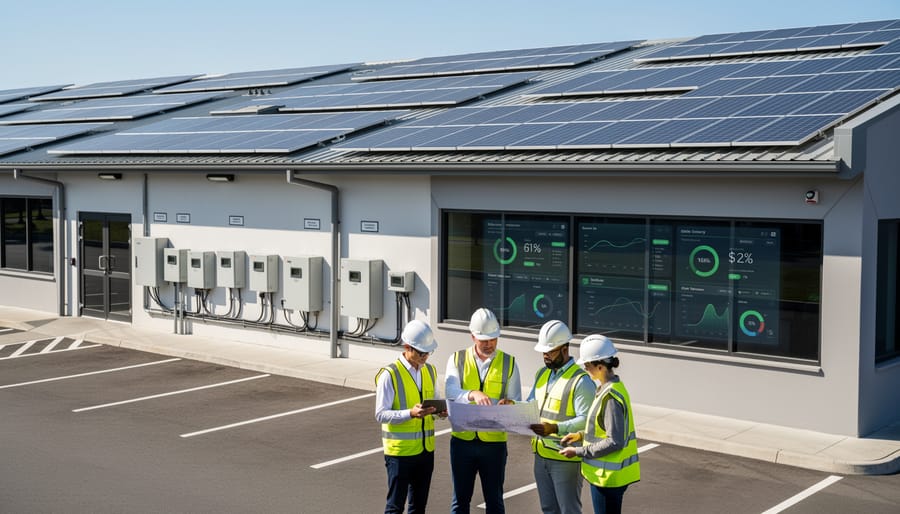
A mid-sized automotive components manufacturer in Bavaria demonstrated the tangible benefits of strategic DER solar implementation when they deployed a 750 kW rooftop solar array integrated with 500 kWh of battery storage in 2022. The facility, which operates three production shifts daily, sought to reduce energy costs while maintaining uninterrupted manufacturing operations.
The project faced immediate regulatory complexity under the German EEG 2021 framework. The facility manager worked closely with the local distribution system operator to secure grid connection approval, a process that required detailed technical documentation including system specifications, protection schemes, and inverter certifications meeting VDE-AR-N 4105 standards. The approval timeline extended to four months, primarily due to grid capacity studies required for the storage component.
Compliance challenges centered on three key areas. First, the company navigated meter configuration requirements to optimize self-consumption while maintaining eligibility for feed-in tariff payments on surplus generation. Second, they implemented real-time monitoring systems to satisfy DSO visibility requirements for grid stability management. Third, the battery storage system required additional safety certifications and fire suppression infrastructure to meet local building codes.
Despite these hurdles, the financial outcomes proved compelling. The installation reduced grid electricity purchases by 62 percent during daylight hours, with the storage system providing an additional 18 percent savings through peak demand management. The total project investment of 680,000 euros achieved a payback period of 6.8 years, factoring in available tax incentives and reduced EEG surcharges for self-consumed electricity.
The facility now participates in the regional frequency regulation market through their battery system, generating approximately 12,000 euros annually in ancillary service revenues. Monthly energy cost reductions average 8,500 euros, while carbon emissions decreased by 340 metric tons annually. This case illustrates how thorough regulatory planning and professional system design transform compliance requirements into competitive advantages for commercial operations.
Preparing Your Organization for Regulatory Compliance
Selecting Accredited Installation Partners
Partnering with accredited installation professionals is fundamental to achieving regulatory compliance throughout your DER solar project lifecycle. Certified installers possess comprehensive knowledge of current technical standards, grid connection protocols, and safety requirements mandated by regulatory authorities. Their expertise ensures that system design, equipment selection, and installation procedures align with applicable codes from the outset, preventing costly modifications or project delays.
Professional certification demonstrates that installers maintain current training in evolving regulations, metering configurations, and protection systems required for grid interconnection. These qualified partners manage essential documentation, including connection applications, technical specifications, and commissioning reports that regulatory bodies require for project approval. Their systematic approach to quality assurance minimizes the risk of non-compliance issues that could jeopardize grid connection approval or system warranties.
Beyond initial installation, certified professionals provide ongoing support for regulatory reporting, system modifications, and periodic inspections mandated by compliance frameworks. This continuity ensures your DER solar installation maintains regulatory standing throughout its operational lifetime, protecting your investment and enabling seamless participation in energy markets or incentive programs that require verified compliance status.
Monitoring and Reporting Obligations
DER solar installations operate under stringent compliance frameworks that mandate continuous system oversight and transparent reporting to network operators and regulatory authorities. Commercial facility operators must implement comprehensive monitoring and reporting protocols to ensure their systems meet performance standards and grid stability requirements.
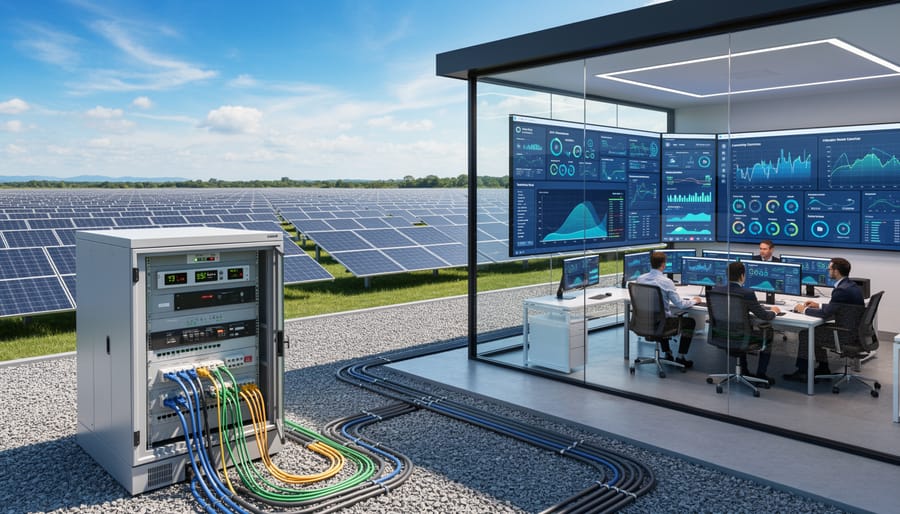
Real-time data collection systems track key metrics including generation output, power quality parameters, voltage levels, and frequency compliance. This information must be transmitted to distribution network service providers at intervals specified by connection agreements, typically ranging from every five minutes to hourly reporting cycles. Advanced metering infrastructure enables automated compliance reporting while providing facility managers with actionable insights for performance optimization.
System maintenance obligations extend beyond monitoring to include regular equipment inspections, inverter functionality testing, and safety compliance verification. Documentation requirements encompass maintenance logs, performance reports, and incident notifications. Non-compliance can result in curtailment orders or disconnection from the grid, making robust monitoring infrastructure essential for commercial operations.
Modern monitoring platforms integrate seamlessly with building management systems, enabling automated alerts for performance deviations and streamlined regulatory reporting. This integration reduces administrative burden while ensuring continuous compliance with evolving standards, protecting your investment and maintaining uninterrupted operation of distributed energy resources.
Understanding the regulatory frameworks governing distributed energy resources represents a strategic imperative for commercial entities pursuing solar investments. As grid modernization accelerates and interconnection standards evolve, organizations that prioritize regulatory compliance position themselves to capitalize on emerging market opportunities while avoiding costly delays and penalties. The trajectory is clear: regulatory requirements will continue to increase in sophistication, with greater emphasis on grid services, cybersecurity protocols, and performance verification.
Forward-thinking businesses recognize that proactive engagement with regulatory frameworks delivers measurable advantages beyond simple compliance. Early adoption of advanced interconnection standards, participation in utility pilot programs, and investment in monitoring capabilities create competitive differentiation in energy procurement strategies. Organizations implementing DER solar projects today should anticipate future requirements by designing systems with upgradeability, incorporating smart inverter functionality, and establishing robust data management protocols from the outset.
The commercial solar landscape rewards preparation and strategic planning. Working with experienced installation partners who maintain current knowledge of evolving regulations ensures projects meet today’s requirements while remaining adaptable to tomorrow’s standards. As distributed generation becomes increasingly central to grid operations, businesses that understand and embrace regulatory frameworks will achieve superior project outcomes, enhanced return on investment, and greater operational flexibility. The question for commercial decision-makers is not whether to engage with DER solar regulatory requirements, but how quickly they can leverage this knowledge to secure their position in the transformed energy marketplace.