
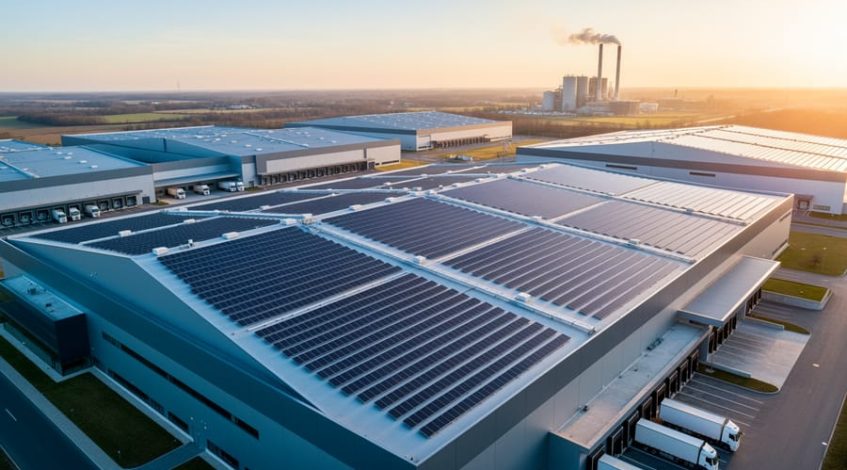
Manufacturing facilities consume approximately 54% of global industrial energy, presenting a substantial opportunity for cost reduction and operational improvement through strategic efficiency measures. Industrial energy efficiency represents the systematic optimization of energy consumption in production processes, where even marginal improvements translate to significant financial returns and competitive advantages.
Solar integration stands at the forefront of industrial efficiency strategies, offering manufacturing operations a proven pathway to reduce grid dependency while stabilizing long-term energy costs. Commercial solar installations now deliver returns on investment within 4-7 years for most industrial applications, with system lifespans exceeding 25 years. The technology has matured beyond experimental adoption—leading manufacturers across Europe report 30-50% reductions in operational energy expenses following solar implementation.
The business case extends beyond immediate cost savings. Energy-intensive industries face increasing pressure from regulatory frameworks, supply chain partners, and investors to demonstrate measurable sustainability improvements. Solar infrastructure provides quantifiable emissions reductions while enhancing facility resilience against grid disruptions and volatile energy markets.
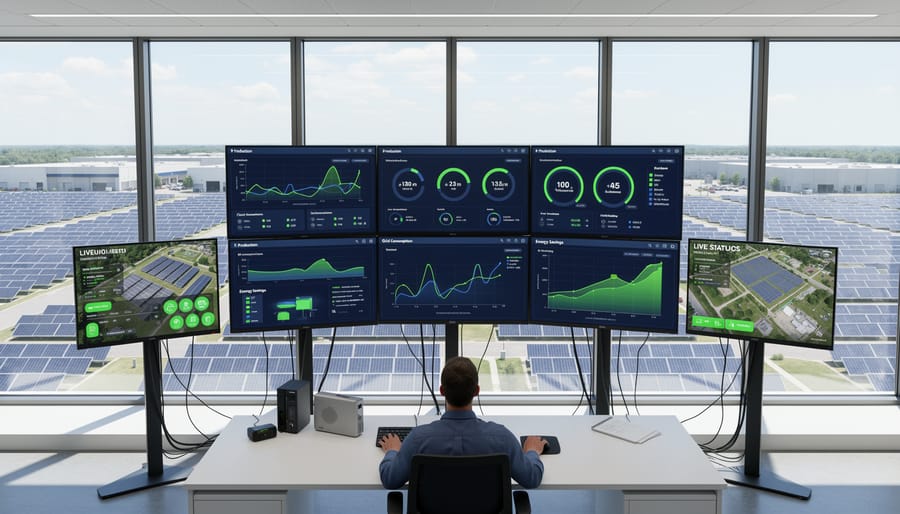
Modern industrial solar systems integrate seamlessly with existing operations through modular design approaches. Rooftop installations, ground-mount arrays, and carport structures utilize underutilized facility space without disrupting production workflows. Advanced monitoring systems enable real-time performance tracking and optimization, ensuring maximum energy generation aligned with manufacturing demand cycles.
This comprehensive examination explores practical implementation strategies, financial modeling approaches, and proven case studies demonstrating how manufacturing facilities successfully leverage solar technology to achieve both operational efficiency and strategic business objectives.
The Energy Challenge Facing Modern Manufacturers
Why Manufacturing Energy Costs Keep Climbing
Manufacturing facilities face an increasingly complex energy cost landscape that extends far beyond simple kilowatt-hour rates. Peak demand charges represent a significant cost driver, with utility companies imposing substantial fees based on the highest power consumption during specific intervals. These charges can account for 30-70% of a facility’s total electricity bill, even if that peak usage occurs for just 15 minutes during a billing cycle.
Grid infrastructure costs continue escalating as aging electrical networks require substantial upgrades to meet modern demands. Utilities pass these modernization expenses to commercial and industrial consumers through higher transmission and distribution fees. Manufacturing operations, with their intensive power requirements, bear a disproportionate share of these infrastructure investments.
Supply chain vulnerabilities in global energy markets have introduced unprecedented price volatility. Natural gas price fluctuations, geopolitical tensions affecting fuel supplies, and extreme weather events disrupting generation capacity all contribute to unpredictable energy expenses. The manufacturing sector, operating on tight margins, finds planning increasingly difficult when energy costs can spike unexpectedly by 20-40% within a single quarter.
Additionally, carbon pricing mechanisms and emissions regulations in many jurisdictions are creating indirect cost pressures. Facilities drawing power from fossil fuel-heavy grids face growing financial exposure as environmental compliance requirements expand. These combined factors make traditional grid-reliant operations financially vulnerable, prompting forward-thinking manufacturers to explore on-site generation alternatives that offer cost predictability and operational resilience.
The Hidden Cost of Energy Inefficiency
Energy inefficiency extends far beyond elevated utility bills, creating cascading financial impacts that erode profitability across manufacturing operations. Production downtime ranks among the most significant hidden costs, with voltage fluctuations and power quality issues forcing unexpected shutdowns that can cost manufacturers thousands per hour in lost output and delayed deliveries.
Equipment stress from inconsistent power supply accelerates asset degradation, reducing machinery lifespan by up to 30% and increasing maintenance expenditures substantially. Motors, drives, and precision equipment operating under suboptimal conditions experience premature failures, requiring costly repairs or replacement far earlier than anticipated. This creates an ongoing cycle of unplanned capital expenditure that strains operational budgets.
Manufacturing facilities burdened with high operating costs face serious competitive disadvantages in price-sensitive markets. A recent industry analysis revealed that energy-inefficient operations typically allocate 12-15% of production costs to power consumption, compared to 6-8% for optimized facilities. This disparity directly impacts profit margins and pricing flexibility, potentially excluding businesses from lucrative contracts where cost efficiency determines market access. Forward-thinking manufacturers recognize these hidden expenses as compelling drivers for comprehensive energy modernization initiatives.
Solar Power as a Manufacturing Energy Solution
How Commercial Solar Systems Work for Industrial Facilities
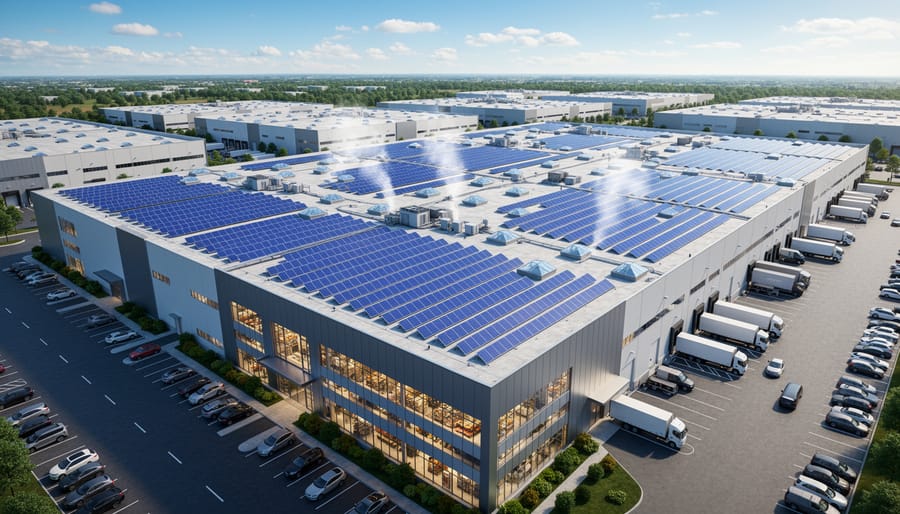
Commercial solar systems for industrial facilities represent sophisticated energy solutions designed to meet the substantial power demands of manufacturing operations. These systems typically range from 100kW to several megawatts in capacity, comprising high-efficiency photovoltaic panels, inverters that convert DC power to usable AC electricity, mounting structures engineered for large roof spans or ground installations, and advanced monitoring systems that track performance in real-time.
The integration process connects solar generation directly to the facility’s electrical infrastructure, allowing manufacturers to consume power as it’s produced while maintaining grid connection for supplementary needs. Modern commercial solar installations utilize smart inverters and energy management systems that optimize power flow between solar generation, facility consumption, battery storage when present, and grid interaction.
A key advantage for industrial facilities lies in the natural alignment between solar generation patterns and manufacturing schedules. Peak solar production typically occurs between 9 AM and 3 PM, coinciding with standard operational hours when machinery, lighting, HVAC systems, and production lines demand maximum electricity. This synchronization enables facilities to offset substantial portions of grid consumption during premium rate periods, directly reducing energy costs.
For facilities operating multiple shifts, the self-consumption rate during daylight hours often exceeds 80 percent, meaning the majority of generated solar power is immediately utilized rather than exported. This maximizes return on investment by displacing expensive grid electricity with free solar energy. Advanced systems incorporate real-time load monitoring that adjusts production schedules to capitalize on solar availability, further enhancing efficiency.
Battery storage integration is increasingly common, allowing facilities to store excess midday generation for use during evening shifts or peak demand periods when grid rates escalate, creating additional cost savings and operational flexibility.
Matching Solar Production to Manufacturing Demand
One of the most compelling advantages of solar energy for manufacturing facilities lies in the natural alignment between production schedules and solar generation patterns. Most manufacturing operations run primarily during daylight hours, precisely when photovoltaic systems produce peak electricity. This synchronicity creates exceptional opportunities for self-consumption, where facilities directly utilize solar-generated power rather than exporting it to the grid.
Manufacturing facilities typically experience their highest energy demand between 8 AM and 6 PM, corresponding closely with optimal solar production hours. This alignment can result in self-consumption rates exceeding 70-80% for many industrial operations, significantly improving return on investment compared to residential or commercial applications with different usage patterns.
Consider a metal fabrication plant operating two shifts from 6 AM to 10 PM. Analysis shows that approximately 75% of their annual electricity consumption occurs during peak solar hours. By installing a properly sized solar array, the facility achieves substantial utility bill reductions while minimizing grid dependency. The economic benefits multiply when factoring in demand charge reductions, as solar production helps flatten peak consumption profiles during the costliest billing periods.
This natural production-demand harmony means manufacturers can often achieve payback periods of 4-7 years, with systems continuing to generate savings for 25 years or more.
Quantifying Energy Efficiency Gains Through Solar Integration
Direct Energy Cost Reduction
Solar energy delivers quantifiable cost reductions by directly displacing grid electricity purchases during operational hours. Manufacturing facilities typically consume substantial power during daylight periods when production lines run at full capacity, creating optimal alignment with solar generation patterns. This synchronization enables immediate offset of expensive grid electricity, translating to predictable monthly savings on energy bills.
Demand charge reduction represents one of the most significant financial benefits for industrial operations. Utilities assess these charges based on peak power consumption during billing periods, often constituting 30-50% of total electricity costs for manufacturers. On-site solar generation reduces grid draw during peak production hours, lowering maximum demand thresholds and delivering substantial recurring savings that compound over system lifespan.
Time-of-use rate optimization further amplifies cost benefits. Industrial electricity rates vary throughout the day, with premium pricing during afternoon and early evening hours when grid demand peaks. Solar generation naturally coincides with these high-cost periods, allowing facilities to avoid the most expensive kilowatt-hours while maintaining full operational capacity. Manufacturing operations running multiple shifts benefit particularly from this strategic timing advantage.
Real-world implementation demonstrates compelling returns. A European automotive components manufacturer reduced annual energy costs by 42% after installing a 2.5 MW rooftop system, achieving payback within 6.8 years. The facility eliminated 68% of demand charges while maintaining uninterrupted production schedules. Similarly, a textile processing plant documented €180,000 in first-year savings through combined demand charge reduction and time-of-use optimization, with savings projected to increase as utility rates rise over the system’s 25-year operational lifetime.
Long-Term Financial Impact and ROI
Industrial solar installations typically deliver payback periods between 3-7 years, depending on facility energy consumption, local electricity rates, and available incentives. Manufacturing facilities with high daytime energy demand often see accelerated returns, as solar generation aligns perfectly with operational hours.
Lifetime savings projections extend 25-30 years, the typical warranty period for commercial solar panels. A medium-sized manufacturing facility investing 500,000 euros in solar infrastructure can expect cumulative savings exceeding 2 million euros over the system’s lifetime. These projections become increasingly conservative as conventional energy prices continue their upward trajectory.
Solar installations function as a hedge against energy price volatility. Historical data shows European industrial electricity rates increasing 3-5% annually, while solar production costs remain fixed after installation. This dynamic amplifies ROI over time, with some facilities reporting actual returns 30-40% higher than initial projections after just 10 years.
Real-world applications demonstrate compelling results. A German automotive parts manufacturer achieved full payback in 4.2 years and now saves approximately 180,000 euros annually. Another case involves a Spanish food processing plant that reduced energy costs by 62% while simultaneously increasing property valuation by 8% due to the solar asset. These installations also provide predictable budget forecasting, eliminating exposure to market fluctuations and enabling more strategic financial planning.
Operational Efficiency Benefits Beyond Energy Costs
Industrial energy efficiency delivers strategic advantages extending well beyond immediate utility cost reductions. Enhanced budgeting predictability emerges as organizations transition to solar, with energy-intensive operations gaining greater control over monthly expenditures through fixed solar generation costs rather than volatile grid pricing. This financial certainty supports more accurate long-term planning and capital allocation decisions.
Compliance requirements become substantially easier to manage as facilities reduce their carbon footprint through renewable integration. Manufacturing sites implementing solar systems benefit from simplified environmental reporting, meeting increasingly stringent emissions regulations while building credibility with sustainability-focused stakeholders. Additionally, operational resilience improves through diversified energy sourcing, reducing vulnerability to grid disruptions and supply chain volatility that can halt production. These combined benefits create competitive advantages that strengthen market positioning and operational continuity.
Real-World Applications: Manufacturing Solar Success Stories
Food and Beverage Processing Facilities
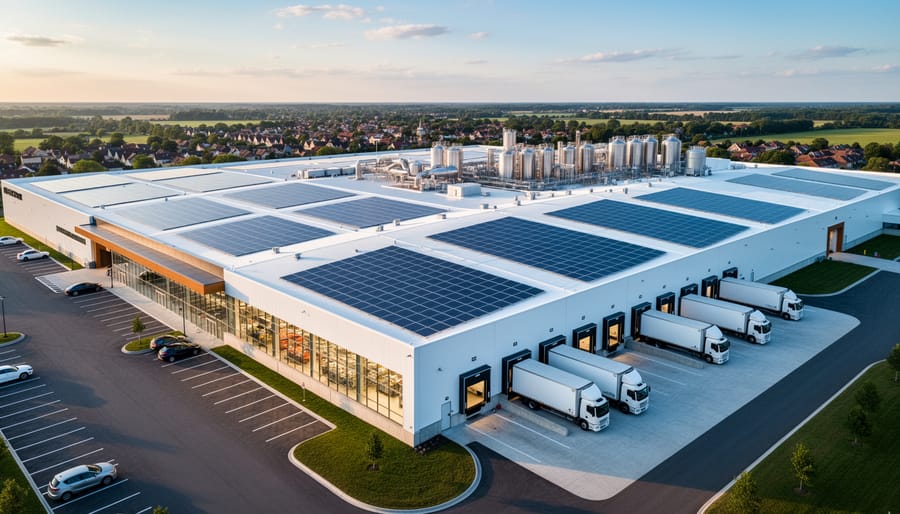
Food and beverage processing facilities face unique energy challenges due to their continuous operation requirements and temperature-sensitive production environments. A regional dairy manufacturer in Victoria implemented a 500kW solar array to address escalating electricity costs while maintaining strict refrigeration standards. The facility’s 24/7 cold storage operations previously consumed approximately 1.2 million kWh annually, with energy expenses representing 18% of operational costs.
The solar installation now generates 685,000 kWh annually, offsetting 57% of daytime energy consumption during peak production hours. Strategic system design incorporated advanced monitoring to ensure uninterrupted power supply to critical refrigeration units. The manufacturer achieved payback within 4.8 years while reducing carbon emissions by 520 tonnes annually.
Temperature-controlled processing environments benefit significantly from solar integration, as production schedules typically align with peak solar generation periods. The facility’s success demonstrates how energy-intensive manufacturing operations can enhance profitability while meeting sustainability targets. Similar corporate solar success stories across the food processing sector confirm that well-designed systems deliver measurable returns without compromising operational integrity or product quality standards.
Metal Fabrication and Heavy Manufacturing
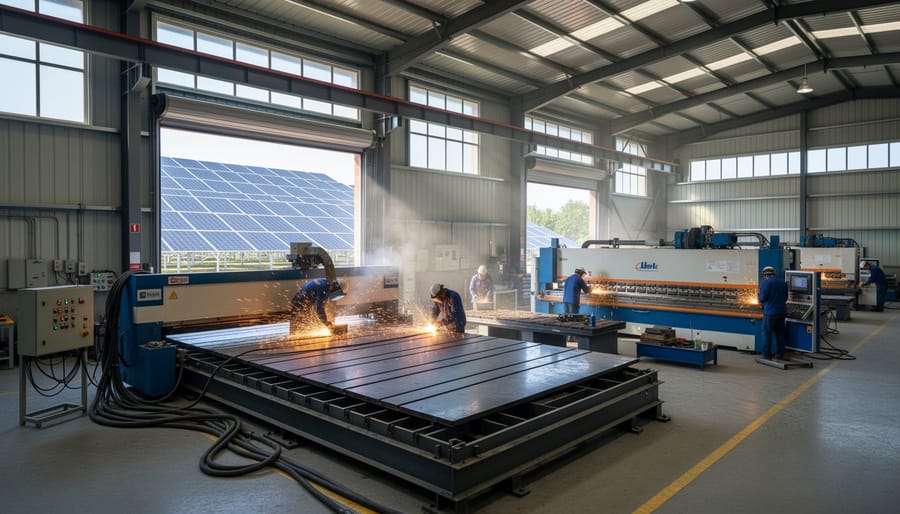
Metal fabrication and heavy manufacturing facilities represent some of the most energy-intensive industrial operations, with welding equipment, CNC machines, and forge presses demanding substantial electrical capacity. A notable example demonstrates the viability of solar integration in this challenging environment: a steel fabrication facility in northern Europe implemented a 2.5 MW rooftop solar system combined with a 1 MW battery storage solution. This configuration specifically addresses the facility’s peak demand periods during daytime production hours, when energy costs reach their highest levels.
The installation reduced grid dependency by 35% annually, with even greater impact during summer months when solar generation peaks align with maximum production schedules. The battery system plays a crucial role in managing instantaneous power spikes from heavy machinery, effectively smoothing demand curves and avoiding costly peak tariffs. Power quality improvements also resulted in fewer equipment disruptions.
Financial analysis revealed a payback period of 6.8 years, accounting for equipment costs, installation, and maintenance. Beyond direct energy savings, the facility qualified for accelerated depreciation benefits and renewable energy certificates, further enhancing return on investment. This case demonstrates that even energy-intensive operations can successfully integrate solar technology when properly scaled and strategically designed around operational load profiles.
Warehouse and Distribution Centers
Warehouse and distribution centers represent exceptional opportunities for solar energy deployment due to their expansive roof surfaces, which often exceed 100,000 square feet. A leading European logistics provider recently transformed five distribution facilities across Germany and the Netherlands, installing 15 MW of combined solar capacity. The implementation leveraged existing roof structures without disrupting 24/7 operations, utilizing installation schedules during off-peak hours and phased deployment strategies.
The facilities now generate approximately 14 million kWh annually, covering 65% of their energy consumption. This reduces operational costs by €1.8 million per year while supporting sustainability commitments required by major retail clients. The solar installations provided additional benefits through improved roof insulation and temperature regulation, reducing cooling costs by 12% during summer months.
The project demonstrated a 6.5-year payback period, accelerated by EU renewable energy incentives and power purchase agreements that stabilized long-term energy costs. For logistics operations facing increasing pressure to meet environmental standards while controlling costs, solar installations offer a practical solution that aligns financial performance with corporate responsibility objectives.
Implementation Considerations for Manufacturing Facilities
Facility Assessment and System Sizing
A comprehensive facility assessment forms the foundation of successful solar integration in manufacturing operations. Begin by evaluating available installation space, examining roof conditions including age, material composition, and load-bearing capacity. Industrial roofs must support approximately 15-25 kilograms per square meter for standard photovoltaic arrays. Ground-mounted systems offer alternatives when rooftop installations prove impractical, though they require consideration of land use optimization and operational space requirements.
Energy consumption analysis is equally critical. Review historical utility data spanning at least 12-24 months to identify peak demand periods, seasonal variations, and baseload requirements. Manufacturing facilities typically exhibit distinct consumption patterns tied to production schedules, making this analysis essential for accurate system sizing. A properly sized solar installation should offset 40-70 percent of annual electricity consumption, balancing investment costs with energy independence goals.
Structural engineering assessments verify whether existing infrastructure can accommodate solar equipment without costly reinforcements. Consider future expansion plans, as modular solar systems allow phased implementation aligned with business growth. Professional energy audits, often subsidized through government efficiency programs, provide detailed recommendations on optimal system capacity, expected generation output, and anticipated return on investment timelines typically ranging from 5-8 years for industrial applications.
Incentives, Tax Benefits, and Financing Options
Manufacturing facilities investing in solar energy can leverage substantial financial incentives that significantly reduce implementation costs and accelerate return on investment. The Modified Accelerated Cost Recovery System (MACRS) allows businesses to depreciate solar installations over five years, providing immediate tax advantages that can recover 20-30% of system costs. Many EU member states offer additional investment grants and feed-in tariffs specifically designed for commercial-scale solar projects, with some programs covering up to 40% of capital expenditure.
Power Purchase Agreements (PPAs) have emerged as particularly attractive financing structures for industrial applications, eliminating upfront capital requirements entirely. Under PPA arrangements, third-party investors own and maintain the solar installation while manufacturers purchase electricity at predetermined rates typically below grid prices. This approach preserves capital for core business operations while delivering immediate energy cost reductions. Alternative financing options include green loans with favorable interest rates and energy-as-a-service models that bundle installation, maintenance, and performance guarantees into predictable monthly payments. Leading manufacturers have successfully combined multiple incentive programs, achieving payback periods as short as 4-6 years while maintaining full operational control of their facilities.
Installation Timeline and Operational Continuity
Professional solar installations for manufacturing facilities typically follow a phased approach spanning 3-6 months, depending on system scale and complexity. Initial engineering assessments and permitting procedures generally require 4-8 weeks, while physical installation can often be completed within 2-4 weeks for standard rooftop systems. Experienced installers prioritize operational continuity by scheduling work during off-peak hours, weekends, or planned maintenance periods. Ground-mounted installations minimize disruption to ongoing production since construction occurs away from active manufacturing areas. Pre-installation planning includes detailed structural assessments, electrical integration strategies, and coordination with facility managers to identify optimal timing windows. Most industrial solar projects achieve grid connection without requiring production shutdowns. Professional installers provide comprehensive project timelines, assign dedicated project managers for communication, and implement safety protocols that meet industrial standards. Post-installation commissioning typically takes 1-2 weeks, with monitoring systems activated immediately to verify performance benchmarks and energy generation targets.
Future-Proofing Your Manufacturing Operation
Meeting Corporate Sustainability Mandates
Modern manufacturing faces mounting pressure from stakeholders to demonstrate environmental responsibility. Customers increasingly prioritize suppliers with verified carbon reduction strategies, while institutional investors now evaluate ESG performance as a critical factor in funding decisions. Industrial solar installations provide quantifiable metrics that directly address these expectations, generating documented emissions reductions and renewable energy percentages essential for comprehensive sustainability reporting.
Solar energy systems enable manufacturers to establish measurable progress toward carbon neutrality targets, with real-time monitoring systems producing the data transparency required for third-party verification. Many organizations discover that meeting sustainability mandates through solar adoption simultaneously strengthens competitive positioning in tenders that prioritize environmental credentials.
The tangible nature of solar infrastructure also enhances stakeholder communication, transforming abstract sustainability commitments into visible demonstrations of climate action. Facilities with prominent solar arrays consistently report improved brand perception among environmentally conscious business partners and enhanced employee engagement around corporate environmental initiatives.
Energy Independence and Grid Resilience
Solar power installations paired with battery storage systems deliver significant energy independence and resilience for manufacturing facilities. By generating electricity on-site, facilities reduce exposure to grid disruptions that can halt production lines and cause costly downtime. This autonomy becomes particularly valuable during extreme weather events or grid instability periods.
Battery storage systems enhance this independence by storing excess solar generation for use during peak demand periods or grid outages. Manufacturing operations can maintain critical processes even when utility power fails, protecting production schedules and preventing revenue loss. Additionally, on-site generation shields businesses from energy market volatility and unpredictable utility rate increases.
For facilities in regions with unreliable grid infrastructure, solar-plus-storage configurations provide a hedge against operational disruptions. The system’s ability to island from the grid during emergencies ensures business continuity while maintaining climate control for sensitive equipment and materials. This operational security increasingly factors into risk management strategies for forward-thinking manufacturers.
Solar energy represents a proven pathway to achieving measurable cost reductions while simultaneously enhancing long-term operational efficiency in manufacturing environments. The convergence of declining technology costs, favorable policy frameworks, and demonstrated performance across diverse industrial applications has positioned solar as a strategic investment rather than an experimental initiative. Manufacturing facilities that integrate solar solutions benefit from predictable energy expenses, reduced exposure to utility rate fluctuations, and strengthened sustainability positioning in increasingly environmentally conscious markets.
The evidence from facilities already operational confirms that solar implementations deliver both immediate financial returns and sustained competitive advantages. However, success requires careful planning aligned with specific operational requirements, energy consumption patterns, and facility characteristics.
Facility managers and business owners should take the next step by conducting comprehensive energy assessments to identify optimization opportunities unique to their operations. These evaluations provide the foundation for designing customized solar solutions that address actual consumption profiles, available space constraints, and financial objectives. Engaging qualified solar professionals to analyze your manufacturing facility’s energy landscape enables informed decision-making and positions your organization to capture the substantial benefits that industrial solar energy offers.