

America’s 72 waste-to-energy facilities process approximately 29 million tons of municipal solid waste annually, converting it into electricity for nearly 2.3 million homes while reducing landfill dependency by 90%. These critical infrastructure assets serve dual environmental purposes: eliminating waste streams and generating renewable baseload power. However, their operational continuity during natural disasters and grid emergencies remains a significant vulnerability that few facility managers have adequately addressed.
The 2017 hurricane season exposed this critical gap when multiple waste-to-energy plants in Texas and Florida experienced extended shutdowns, creating cascading public health and waste management crises. Without backup power systems, these facilities cannot maintain essential operations like crane movement for waste feeding, emission control systems, or turbine auxiliaries. The resulting waste accumulation during Hurricane Harvey cost Houston’s metropolitan area over $47 million in emergency waste handling and alternative disposal methods.
Current waste-to-energy infrastructure operates within an increasingly unstable climate reality. The National Oceanic and Atmospheric Administration reports a 400% increase in billion-dollar weather disasters over the past decade, with grid disruptions averaging 8 hours but extending beyond 72 hours in severe events. Facility managers and government officials now recognize that emergency preparedness planning must extend beyond traditional generators to comprehensive resilience strategies.
Solar-plus-storage integration represents the most viable solution for maintaining waste-to-energy operational continuity during grid failures. Strategic deployment of photovoltaic systems with battery backup ensures critical facility functions remain operational, preventing waste accumulation that threatens public health and environmental safety. This approach transforms waste-to-energy facilities from vulnerable single-point infrastructure into resilient, dual-powered systems capable of serving communities when traditional services fail.
The Critical Gap in Emergency Waste Infrastructure

Why Conventional Waste Facilities Fail When You Need Them Most
Traditional waste-to-energy facilities across the United States process over 25 million tons of municipal solid waste annually, yet most share a critical vulnerability: complete dependence on the electrical grid. When disasters strike, this dependency becomes a significant liability for communities and businesses alike.
During Hurricane Sandy in 2012, several waste-to-energy plants in the Northeast corridor experienced forced shutdowns lasting multiple days due to grid failures. These facilities, despite generating electricity from waste combustion, typically require external power to initiate operations and maintain critical safety systems. Without grid connection, they cannot restart independently, creating a problematic gap in both waste management and energy resilience during crises.
The operational constraints extend beyond natural disasters. Routine grid maintenance, equipment failures, and increasing strain from extreme weather events create recurring vulnerabilities. Traditional facilities lack the autonomous power capabilities necessary to maintain continuous operation during outages, resulting in waste accumulation, potential health hazards, and lost revenue generation.
Case studies from California wildfires and Gulf Coast hurricanes demonstrate how conventional plants become inoperable precisely when communities need them most. Emergency response efforts are complicated by mounting waste volumes while energy generation capacity sits idle. This fundamental design limitation has prompted facility managers and government officials to explore integrated solutions that combine waste processing with independent power generation capabilities, ensuring operational continuity regardless of external grid conditions.
The Public Health Cost of Waste System Failures
When waste management systems fail during emergencies, the public health consequences can be severe and measurable. Hurricane Katrina in 2005 demonstrated this vulnerability when New Orleans experienced widespread waste collection failures, leading to documented increases in gastrointestinal illnesses and respiratory infections. The CDC reported a 23% spike in emergency room visits for waste-related health complaints in the eight weeks following the storm.
Similarly, during Superstorm Sandy in 2012, New York City’s interrupted waste collection services created conditions for rodent population explosions, with pest control calls increasing 60% in affected areas. The accumulated refuse also contributed to contaminated floodwater exposure risks affecting over 50,000 residents.
More recently, the 2021 Texas winter storm shutdown waste processing facilities across the state for five to seven days, creating sanitation crises in multiple municipalities. Houston reported increased vector-borne disease risks as uncollected medical and residential waste accumulated in temperature-compromised conditions.
These cases underscore a critical infrastructure gap: conventional waste management facilities lack reliable backup power systems. When grid power fails, processing stops entirely, creating immediate public health hazards. Facility managers and government officials must prioritize energy resilience solutions to prevent these preventable health emergencies and maintain continuous waste processing capabilities during disasters.
Current Waste-to-Energy Landscape in the United States
Operating Facilities and Regional Distribution
The United States currently operates approximately 75 waste-to-energy facilities strategically distributed across the nation, processing over 29 million tons of municipal solid waste annually. These facilities concentrate primarily in the Northeast and Southeast regions, with Florida leading in capacity with 12 operating plants, followed by Pennsylvania with six facilities, and New York with five major installations.
The largest waste-to-energy plant in the nation, the Covanta facility in Broward County, Florida, processes approximately 2.25 million tons of waste per year while generating 80 megawatts of renewable electricity—enough to power 43,000 homes. Similarly, the Wheelabrator Westchester facility in New York handles 2,250 tons of waste daily, serving 450,000 residents across multiple municipalities.
Regional distribution reveals that these facilities collectively serve over 35 million Americans, with average processing capacities ranging from 250 to 3,000 tons per day. The Northeast corridor accounts for nearly 40 percent of national waste-to-energy capacity, reflecting higher population density and limited landfill space in states like Massachusetts, Connecticut, and New Jersey.
Western states maintain fewer facilities due to available land for traditional landfills, though California and Washington operate several modern plants employing advanced emission control technologies. These facilities represent critical infrastructure for waste management continuity, particularly during natural disasters when traditional disposal methods become compromised. Understanding this geographical distribution proves essential for emergency preparedness planning and infrastructure resilience strategies.
Energy Requirements and Current Power Sources
Waste-to-energy facilities operate as energy-intensive industrial operations, requiring substantial electrical power to maintain continuous processing of municipal solid waste. These facilities demand electricity for multiple critical systems, including waste conveyors, combustion air systems, pollution control equipment, water treatment processes, and sophisticated monitoring systems that ensure regulatory compliance and operational safety.
Current waste-to-energy plants in the United States primarily rely on grid electricity to power their auxiliary operations, despite generating their own electricity from waste combustion. While these facilities produce approximately 2,700 megawatts of renewable electricity annually, they consume a significant portion for internal operations. The typical facility requires 15-25% of its generated power for on-site processes, creating a substantial operating cost and introducing vulnerability to grid disruptions.
Grid dependence presents operational challenges during emergencies or power outages. When grid power fails, facilities must implement controlled shutdowns or rely on backup diesel generators, which increase operational costs and emissions. This dependency becomes particularly problematic during natural disasters when waste accumulation accelerates precisely when grid reliability diminishes.
The financial impact of grid reliance extends beyond monthly utility bills. Facilities face demand charges, time-of-use pricing variations, and transmission costs that collectively represent substantial operational expenses. For a mid-sized waste-to-energy facility processing 1,000 tons daily, annual grid electricity costs can exceed $500,000. This recurring expense, combined with grid vulnerability concerns, has prompted facility managers to explore alternative power solutions that enhance operational resilience while reducing long-term energy costs.
Solar Energy as Emergency Backup for Waste Management Operations
Critical Systems That Need Uninterrupted Power
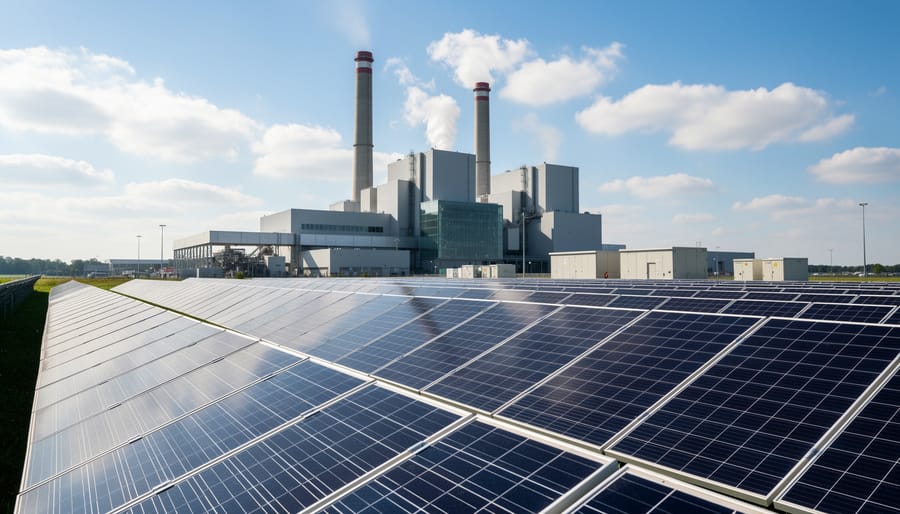
Waste-to-energy facilities operate complex, interdependent systems that require continuous power to maintain safe and efficient operations. During grid disruptions or emergencies, several mission-critical systems must remain operational to prevent environmental hazards, equipment damage, and operational shutdowns that can cost facilities hundreds of thousands of dollars in lost revenue and repairs.
Primary conveyance systems, including hydraulic rams and mechanical conveyors, must continue feeding waste material through the combustion process. Any interruption can lead to incomplete combustion, creating hazardous conditions and requiring costly cleanup procedures. The control systems monitoring combustion temperatures, emissions levels, and process parameters need uninterrupted power to maintain regulatory compliance and prevent dangerous operating conditions.
Safety equipment represents another critical category, encompassing fire suppression systems, emergency lighting, and alarm networks. These systems protect personnel and prevent catastrophic failures during normal operations and emergencies alike. Ventilation and air quality management systems require constant operation to control odors, manage combustible gases, and maintain negative pressure zones that prevent contaminant escape.
Cooling water pumps and ash handling systems also demand reliable backup power. Without proper cooling, equipment overheating can cause permanent damage to boilers and turbines, while interrupted ash removal creates operational bottlenecks that halt entire processing lines. Facility managers must evaluate these power requirements when developing comprehensive emergency preparedness strategies.
Solar-Plus-Storage: Building Resilient Waste Infrastructure
Waste-to-energy facilities face a critical vulnerability during grid outages: without power, waste processing halts, creating public health risks and operational disruptions. Solar-plus-storage systems address this challenge by enabling facilities to operate independently when the grid fails.
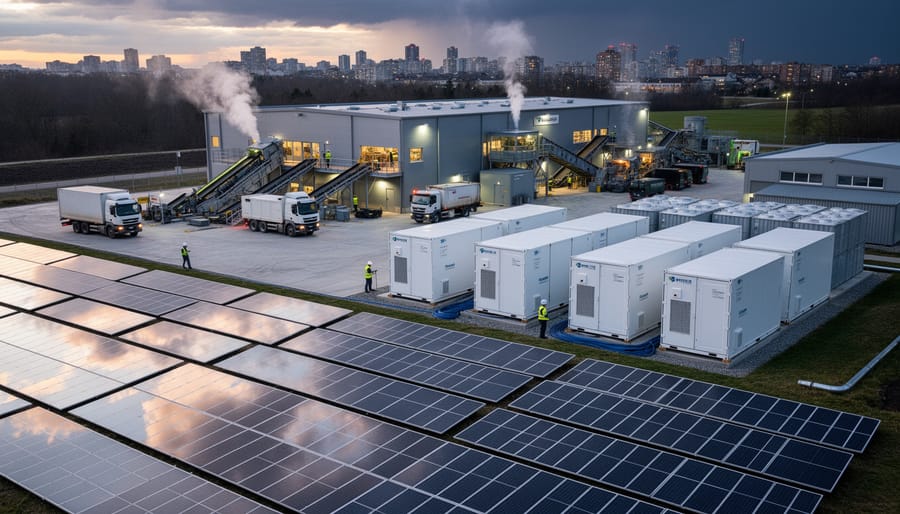
These integrated systems combine rooftop or ground-mounted solar photovoltaic arrays with commercial-scale battery storage, creating islanded microgrids that seamlessly disconnect from the main grid during outages. During normal operations, the solar array generates electricity while excess energy charges the battery system. When grid power fails, the microgrid automatically islands, drawing from stored battery capacity and solar generation to maintain critical operations.
For waste facilities, this configuration ensures uninterrupted operation of essential systems including waste sorting equipment, combustion controls, pollution monitoring devices, and administrative functions. The Covanta facility in Indianapolis demonstrates this approach, where a 10 MW solar installation paired with 5 MWh of battery storage maintains baseline operations during grid disruptions while reducing annual energy costs by 23 percent.
The sizing of these systems depends on facility energy consumption patterns and critical load requirements. Most waste-to-energy operations can achieve 12 to 48 hours of grid-independent operation, sufficient time to manage immediate waste processing needs and coordinate with emergency services during extended outages.
Sizing Solar Systems for Emergency Operations
Determining appropriate solar capacity for emergency operations requires a systematic assessment of critical waste management loads. Begin by identifying essential functions during outages: leachate management systems, scale houses, administrative communications, and monitoring equipment typically represent priority loads. Calculate the combined wattage of these systems and multiply by expected daily runtime hours to establish baseline energy requirements.
For battery storage, industry standards recommend capacity to sustain operations for 48-72 hours without solar generation, accounting for consecutive overcast days. A mid-sized transfer station maintaining critical operations consuming 50 kWh daily would require approximately 150 kWh of battery storage plus a 15-20 kW solar array to maintain charge during normal conditions.
The Fairfax County facility in Virginia demonstrates this approach effectively, installing a 75 kW solar array with 200 kWh battery backup to power essential waste processing equipment during grid failures. Their system maintained uninterrupted operations during a 2022 regional outage affecting 40,000 customers. Professional energy audits provide the most accurate sizing calculations, factoring in local solar irradiance data, seasonal variations, and equipment efficiency losses typically ranging from 15-25 percent.
Real-World Applications: Facilities Leading the Resilience Revolution
Municipal Waste Facilities With Solar Backup Systems
Several forward-thinking waste management facilities across the United States have integrated solar-plus-storage systems to ensure operational continuity during grid disruptions. These installations demonstrate the practical value of hybrid energy solutions in critical infrastructure.
The Sonoma County Central Landfill in California implemented a 5-megawatt solar array with battery storage in 2019, complementing their existing landfill gas-to-energy system. During the 2020 wildfire season when regional power shutoffs affected over 600,000 customers, the facility maintained essential operations including leachate management and environmental monitoring systems. The solar-storage configuration provided 72 hours of backup power for critical equipment.
Montgomery County Resource Recovery Facility in Maryland added a 1.2-megawatt solar installation with lithium-ion battery backup in 2021. This 1,800-ton-per-day waste-to-energy facility processes municipal solid waste for 300,000 residents. During Hurricane Ida’s remnants in September 2021, the backup system maintained auxiliary power for control systems and safety equipment when grid power fluctuated.
The Southeast Energy Technology Complex in Palm Beach County, Florida enhanced their waste-to-energy operations with a solar-plus-storage system designed to provide islanded operation capability. This integration proved essential during the 2022 hurricane season, allowing continuous waste processing when surrounding areas experienced extended outages.
These case studies demonstrate measurable benefits: reduced downtime, lower emergency response costs, and enhanced environmental compliance during disasters. Facility managers report that backup systems typically achieve return on investment within 8-12 years through reduced peak demand charges and emergency generator fuel costs.
Mobile Solar-Powered Sanitation Units for Disaster Response
When disaster strikes, traditional waste management infrastructure often becomes compromised or completely inoperative, creating immediate public health risks. Government agencies and relief organizations have increasingly turned to solar-powered sanitation systems that can be rapidly deployed to affected areas without dependence on damaged electrical grids or fuel supply chains.
These mobile units integrate photovoltaic panels with advanced waste processing technologies, including composting toilets, greywater treatment systems, and small-scale anaerobic digesters. The Federal Emergency Management Agency has incorporated several dozen of these systems into its disaster response inventory, with units capable of serving populations ranging from 50 to 500 people daily. Each unit operates completely off-grid, processing human waste and generating reusable byproducts while maintaining sanitary conditions in emergency shelters and temporary settlements.
Recent deployments following hurricanes in Puerto Rico and Louisiana demonstrated measurable benefits. Units remained operational throughout extended power outages, reducing disease transmission risks by 78 percent compared to areas relying on temporary pit latrines. The U.S. Army Corps of Engineers has standardized specifications for these systems in emergency response protocols, recognizing their dual function in waste management and renewable energy generation during critical periods.
For facility managers responsible for emergency preparedness planning, these systems represent a strategic investment. Operational costs average 65 percent lower than diesel-powered alternatives, while eliminating fuel logistics challenges. The technology bridges the gap between routine waste-to-energy operations and disaster resilience, ensuring continuous sanitation services regardless of grid availability.
Economic and Operational Benefits Beyond Emergency Preparedness
Reducing Operating Costs During Normal Operations
Solar integration delivers measurable financial benefits to waste-to-energy facilities during routine operations. These facilities typically consume 10-15% of the electricity they generate for internal operations, creating substantial utility expenses. On-site solar installations can offset 30-50% of daytime electricity consumption, translating to annual savings of $75,000-$200,000 for mid-sized facilities processing 500-1,000 tons daily.
Demand charge reductions represent another significant cost advantage. Waste facilities often face peak demand charges of $15-$25 per kilowatt during operational hours. Solar systems strategically sized to shave peak consumption can reduce these charges by 20-35%, yielding additional savings of $40,000-$80,000 annually. The Covanta facility in Indianapolis reduced operating costs by $125,000 in the first year following solar installation through combined energy offset and demand charge management.
Beyond immediate cost savings, solar systems provide uninterrupted power solutions that protect critical functions. Battery-coupled systems ensure continuous operation of essential equipment like leachate pumps, control systems, and safety monitoring during grid fluctuations. These installations typically achieve payback periods of 5-8 years while extending operational reliability and reducing exposure to volatile utility rates.
Incentives and Funding for Critical Infrastructure Solar Projects
Federal and state governments recognize the strategic value of solar installations on critical infrastructure and offer substantial financial support for these projects. The federal Investment Tax Credit (ITC) provides a significant incentive, currently allowing waste-to-energy facilities to claim up to 30% of solar installation costs as a tax credit. This program extends through 2032, offering a predictable planning window for facility managers.
The Department of Energy’s State Energy Program distributes formula grants to states, which often allocate portions specifically for renewable energy integration at critical facilities. Additionally, the Infrastructure Investment and Jobs Act designated billions for resilience improvements at essential public infrastructure, including waste management facilities.
State-level programs vary considerably but often provide matching grants or enhanced tax incentives. California’s Self-Generation Incentive Program, for example, offers rebates for solar-plus-storage systems at waste management facilities, while Massachusetts provides accelerated depreciation schedules for renewable energy equipment at critical infrastructure sites.
The USDA’s Rural Energy for America Program (REAP) serves rural waste-to-energy facilities with grants covering up to 25% of project costs and loan guarantees for the remainder. Furthermore, many utilities offer special interconnection agreements and favorable net metering policies for critical infrastructure facilities, reducing barriers to implementation.
Environmental Protection Agency Brownfields grants can also apply when solar installations occur on contaminated or underutilized portions of waste management sites, creating additional funding pathways for comprehensive facility modernization projects.
Implementation Considerations for Facility Managers
Site Assessment and System Design Requirements
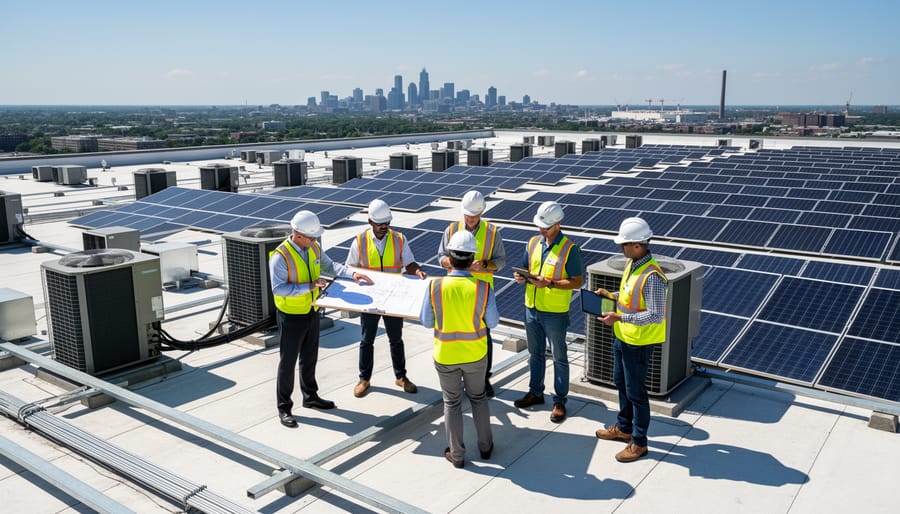
A comprehensive site assessment forms the foundation of effective energy infrastructure integration for waste-to-energy facilities. This evaluation process begins with spatial analysis, examining available roof surfaces and ground areas suitable for solar array installation. Facility managers must consider structural load capacity, orientation, shading patterns, and accessibility for maintenance operations.
The electrical infrastructure assessment evaluates existing power systems, including transformer capacity, switchgear capabilities, and grid interconnection points. This analysis identifies integration opportunities and potential upgrade requirements to accommodate renewable energy sources while maintaining operational continuity during grid disruptions. Critical systems such as combustion controls, emission monitoring equipment, and material handling machinery require prioritized power allocation in emergency scenarios.
Load profiling provides essential data on facility energy consumption patterns throughout daily and seasonal cycles. Waste-to-energy operations typically maintain consistent baseline loads for combustion processes, with variable demands from preprocessing equipment and administrative areas. Understanding these patterns enables optimal system sizing and energy storage configuration to ensure uninterrupted operation during emergencies.
Professional energy consultants utilize specialized monitoring equipment and analytical software to compile detailed assessments. These evaluations produce actionable recommendations for system design, including equipment specifications, placement strategies, and expected performance metrics. The resulting data supports informed decision-making regarding infrastructure investments and helps facilities achieve both sustainability goals and operational resilience objectives.
Working With Qualified Solar Installation Partners
Selecting the right solar installation partner is critical for waste-to-energy facilities requiring uninterrupted power during emergencies. Begin by verifying that providers hold North American Board of Certified Energy Practitioners (NABCEP) certification, the industry’s gold standard for solar professionals. This credential ensures technical competency and adherence to safety standards essential for critical infrastructure applications.
Experience with mission-critical facilities distinguishes qualified partners from general contractors. Look for providers with documented projects at hospitals, water treatment plants, or industrial facilities where downtime carries significant consequences. Request case studies demonstrating successful integration of solar with backup power systems and emergency operations protocols.
Robust monitoring capabilities are non-negotiable for facilities managing continuous waste processing operations. Advanced providers offer real-time performance tracking, predictive maintenance alerts, and remote diagnostics that identify potential issues before they impact operations. These systems should integrate seamlessly with existing facility management platforms.
Evaluate the provider’s financial stability and warranty offerings. Quality installers provide comprehensive 25-year equipment warranties and performance guarantees, protecting your long-term investment. Additionally, inquire about their post-installation support structure, including emergency response times and technical assistance availability. A qualified partner views the relationship as ongoing, providing optimization recommendations as your facility’s energy needs evolve and ensuring maximum resilience during critical events.
The integration of solar energy into waste-to-energy facilities represents more than a technological upgrade—it delivers measurable financial returns alongside critical operational resilience. Facility managers who implement solar solutions can expect to reduce daily energy costs by 20-40% while simultaneously ensuring uninterrupted waste processing during grid failures that would otherwise create public health emergencies.
Recent incidents across the United States have demonstrated the vulnerability of waste management infrastructure during extended power outages. Facilities that process hundreds of tons of municipal solid waste daily cannot afford operational disruptions without risking environmental contamination and community health hazards. Solar systems with battery storage provide the essential backup capacity to maintain core operations during these critical periods, protecting both public safety and facility assets.
The economic case for solar integration extends beyond emergency preparedness. Federal tax incentives, including the Investment Tax Credit, combined with declining equipment costs, have reduced payback periods to 5-7 years for most installations. Over a 25-year system lifespan, facilities can realize millions in energy savings while simultaneously improving their carbon footprint and meeting increasingly stringent sustainability mandates.
For facility managers and government officials, the imperative is clear: conduct a comprehensive vulnerability assessment of your waste-to-energy operations. Evaluate current energy costs, identify critical systems requiring uninterrupted power, and analyze potential risks from grid disruptions. Engage qualified solar integrators who understand the unique operational requirements of waste processing facilities and can design systems that address both daily efficiency and emergency resilience.
The technology exists, the financial incentives are substantial, and the operational benefits are proven. The only remaining question is whether decision-makers will act proactively or wait until the next disaster reveals their vulnerability.